
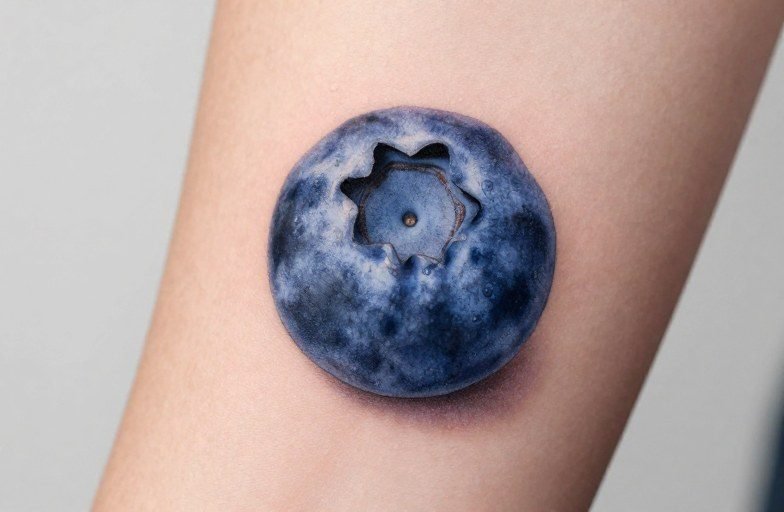
A blueberry tattoo most commonly symbolizes abundance, protection, and the quiet resilience of things that grow wild. The small berry carries weight in North American Indigenous traditions and regional folklore as a gift of the land, a sustainer through harsh winters, and a protective charm against harm. For many wearers, it marks a connection to northern landscapes, childhood summers, or a preference for understated sweetness over flashier symbols.
Mythology & Folklore
Indigenous Narratives
Among several Northeastern Woodlands and Great Lakes peoples, the blueberry, called by various names including miin in some Ojibwe dialects, holds a recognized place in food systems and oral tradition. Star stories sometimes link the berry’s flared crown to celestial patterns, though specific narratives vary by community and should be understood as belonging to their keepers. What remains consistent across sources is the berry’s role as a reliable, nutritious food that appears when needed, reinforcing its symbolic tie to providence and care.
Regional Folk Beliefs
In Appalachian and northern New England folk practice, blueberry bushes planted near homes were sometimes thought to discourage negative influences. The thornless but dense growth created a living barrier. This protective association translates naturally to tattoo form, small clusters tucked behind ears or along collarbones functioning as personal talismans without announcing themselves as such.
Similar & Related Symbols
The blueberry sits within a broader family of fruit and floral tattoos that carry overlapping but distinct meanings. Understanding these adjacent symbols helps clarify what makes the blueberry specifically appealing.
- Strawberry: More overtly romantic and sensual; the heart shape and red color push toward passion rather than quiet sustenance.
- Blackberry/raspberry: Thorned canes introduce struggle and protection through defense; the blueberry offers protection through abundance and unassuming growth.
- Lavender: Similar regional specificity (often linked to Provence or English gardens) but carries cleansing and calm associations rather than nourishment.
- Pine cone: Another northern woodland symbol, but masculine-coded and associated with longevity; the blueberry reads as softer, more ephemeral.
- Wild rose: Shares the “tough beauty growing in rough conditions” quality, but with sharper visual contrast and more romantic baggage.
The blueberry occupies a unique position: sweet without decadence, wild without danger, specific without being exotic.
Color vs Black and Grey
The Blue Problem
Blue ink presents genuine technical challenges that affect long-term appearance. Cobalt and cerulean pigments, common in blueberry tattoos, tend to fade faster than blacks and earth tones, shifting toward grey or greenish casts as they age. UV exposure accelerates this. A color blueberry tattoo requires commitment to sun protection and likely future touch-ups to maintain vibrancy.
Black and Grey Solutions
Many artists solve the blue-fade issue through stippled shading, using dense black dotwork to create the illusion of deep blue without relying on unstable pigments. Others lean into the botanical illustration tradition: fine line work with selective blue accents on the berry’s crown or a single highlighted fruit. This approach ages more gracefully while still reading as “blueberry” rather than generic berry.
Skin tone significantly impacts this choice. On deeper complexions, blue pigment can heal muted or ashier; consultation with an artist experienced in your specific skin type prevents disappointing results. Black and grey with strategic blue often proves the more reliable path.
Symbolism & Core Meaning
Layered Readings
The blueberry’s small size invites close inspection, rewarding the viewer who takes time. This mirrors its symbolic function: meaning that reveals itself gradually rather than shouting. Core associations include:
- Abundance through modesty: Bushes produce gallons of tiny fruits, none individually impressive, collectively sustaining. A tattoo can mark appreciation for accumulated small blessings.
- Regional identity: Strong ties to Maine, Michigan, Quebec, and other northern growing regions make this a coded local pride symbol.
- Childhood and memory: Picking berries connects to specific sensory memories, stained fingers, summer heat, patience rewarded.
- Feminine ecology: The berry’s association with women’s gathering practices and lunar planting calendars in some traditions gives it quiet feminist resonance.
Placement as Meaning
Where the blueberry sits on the body shapes its reading. Wrist and ankle placements suggest picked fruit, something carried or gathered. Behind the ear or along the hairline references the berry’s hidden-in-plain-sight growth habit, there if you look, easily missed if you don’t. Ribcage and shoulder placements allow for fuller branch compositions, emphasizing connection to living systems rather than isolated fruit.
History & Cultural Roots
Cultivated blueberry history begins definitively in the early twentieth century with Elizabeth White and Frederick Coville’s breeding work in New Jersey, transforming a wild-foraged food into commercial agriculture. Before this, the berry existed entirely outside cultivation, purely wild, purely regional. This recent domestication matters symbolically: the blueberry carries less colonial agricultural baggage than wheat, corn, or apple imagery, yet remains genuinely North American rather than imported symbolism.
The berry’s role in Indigenous food systems extends far deeper. Dried blueberries (pemmican components, among other preparations) sustained travel and trade across vast networks. A tattoo referencing this history should be approached with respect for specific tribal contexts rather than generic “Native American spirituality” appropriation.
European settlers adopted blueberry imagery more slowly than strawberry or rose motifs, which carried ready-made symbolic language from home. The blueberry’s tattoo popularity surged more recently alongside regional food movements, foraging revival, and renewed interest in place-based identity.
Common Variations & Styles
Botanical Illustration
Scientific accuracy dominates: cross-sections showing internal seed structure, leaves with precise venation, stems with authentic color gradation. This style appeals to foragers, biologists, and those who value the berry as actual plant rather than pure symbol. Fine single-needle work captures detail but requires larger sizing than many expect, rushing to tiny scale loses the precision that makes this style meaningful.
American Traditional & Neo-Traditional
Bolder outlines, limited but saturated color palettes, and decorative elements like banners or scrolls frame the berry in established tattoo vocabulary. Neo-traditional allows more naturalistic color blending while maintaining the readable graphic punch. These versions travel well across skin types and age more predictably than hyper-realistic approaches.
Minimalist and Abstract
Single-line blueberries, negative-space fruit clusters, or geometric reductions appeal to those wanting the symbol without literal depiction. A small circle with five pointed crown leaves, barely recognizable as blueberry to the uninitiated, functions as private code. This restraint demands particularly thoughtful placement; too small or too hidden, the reference becomes indecipherable even to the wearer over time.
Compositional Approaches
Popular arrangements include: single berry with leaf (simplicity, focus); dangling cluster (abundance, natural growth pattern); berry branch with flowers and unripe fruit (life cycle, patience); scattered loose berries (chance, memory fragments). Each carries distinct emotional weight.
The Takeaway
The blueberry tattoo offers something increasingly rare: a symbol with genuine regional roots, technical variety that rewards skilled execution, and layered meaning that doesn’t require explanation. It suits those drawn to understated abundance, northern landscapes, or the particular sweetness of things that must be sought out rather than presented. The technical realities of blue ink demand honest conversation with your artist about longevity and placement. What you get in return is a mark that feels both personal and grounded, connected to actual places, actual plants, actual history rather than imported generic symbolism. Choose it for the right reasons, place it with intention, and maintain it with the same patience the berry itself demands: slow growth, careful tending, eventual reward.
Frequently Asked Questions
Do blueberry tattoos work well in small sizes?
They can, but extremely tiny versions lose the color variation and crown detail that make a blueberry recognizable. Most artists recommend at least 1.5 inches for single berries, or clustering very small berries where individual detail matters less than overall composition.
Why do some blueberry tattoos look purple or black after healing?
Blue pigments often settle darker than they appear fresh, and cheaper blues can shift toward purple or grey as they heal. Quality ink and proper aftercare help, but some darkening is normal. Discuss specific pigment brands with your artist if color accuracy matters deeply to you.
Is there a specific season that’s best for getting a blueberry tattoo?
No medical seasonality applies, but many people schedule berry-themed tattoos in late summer to coincide with actual harvest, or in winter as anticipatory memory. The practical concern is sun exposure during healing, winter and early spring reduce UV damage risk for color work.
Can a blueberry tattoo incorporate other elements without losing its meaning?
Absolutely. Common additions include pine needles (northern forest context), bees or butterflies (pollination, ecological web), ceramic bowls (domestic transformation), or handwritten place names (specific memory anchoring). The core abundance and regional associations remain intact with thoughtful pairing.
Related Tattoo Meanings
- Born to Die Tattoo Meaning: Mortality, Rebellion Acceptance
- Bow Back Thighs Tattoo Meaning: Symbolism Design Guide
- Bullet Tattoo Meaning: Power, Speed Mortality
- Explore more









