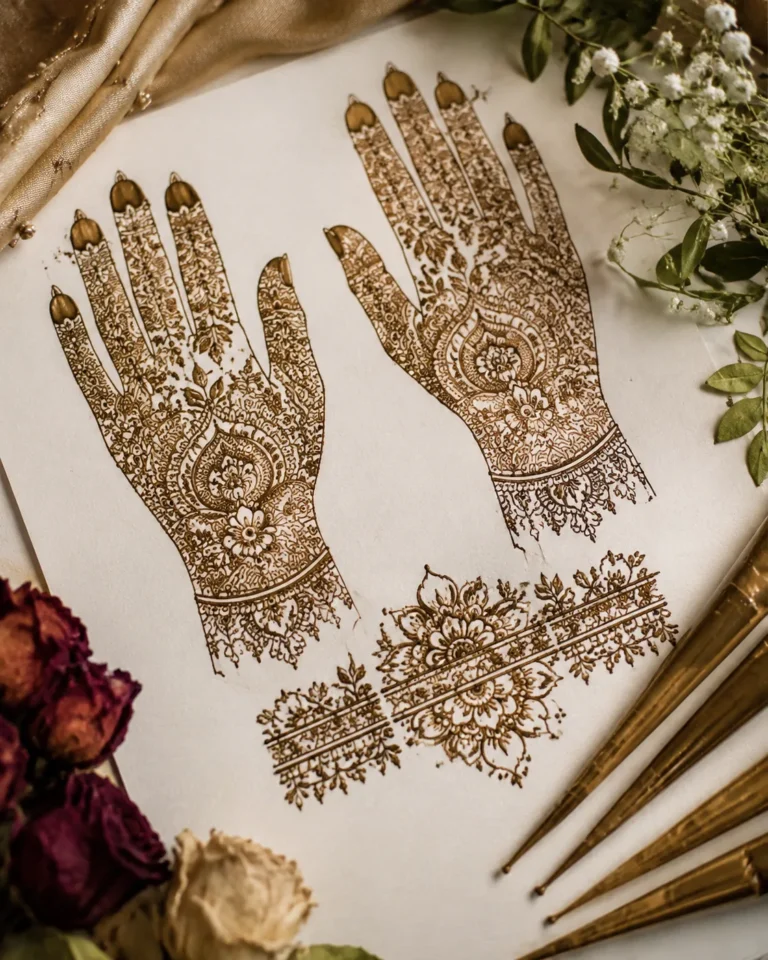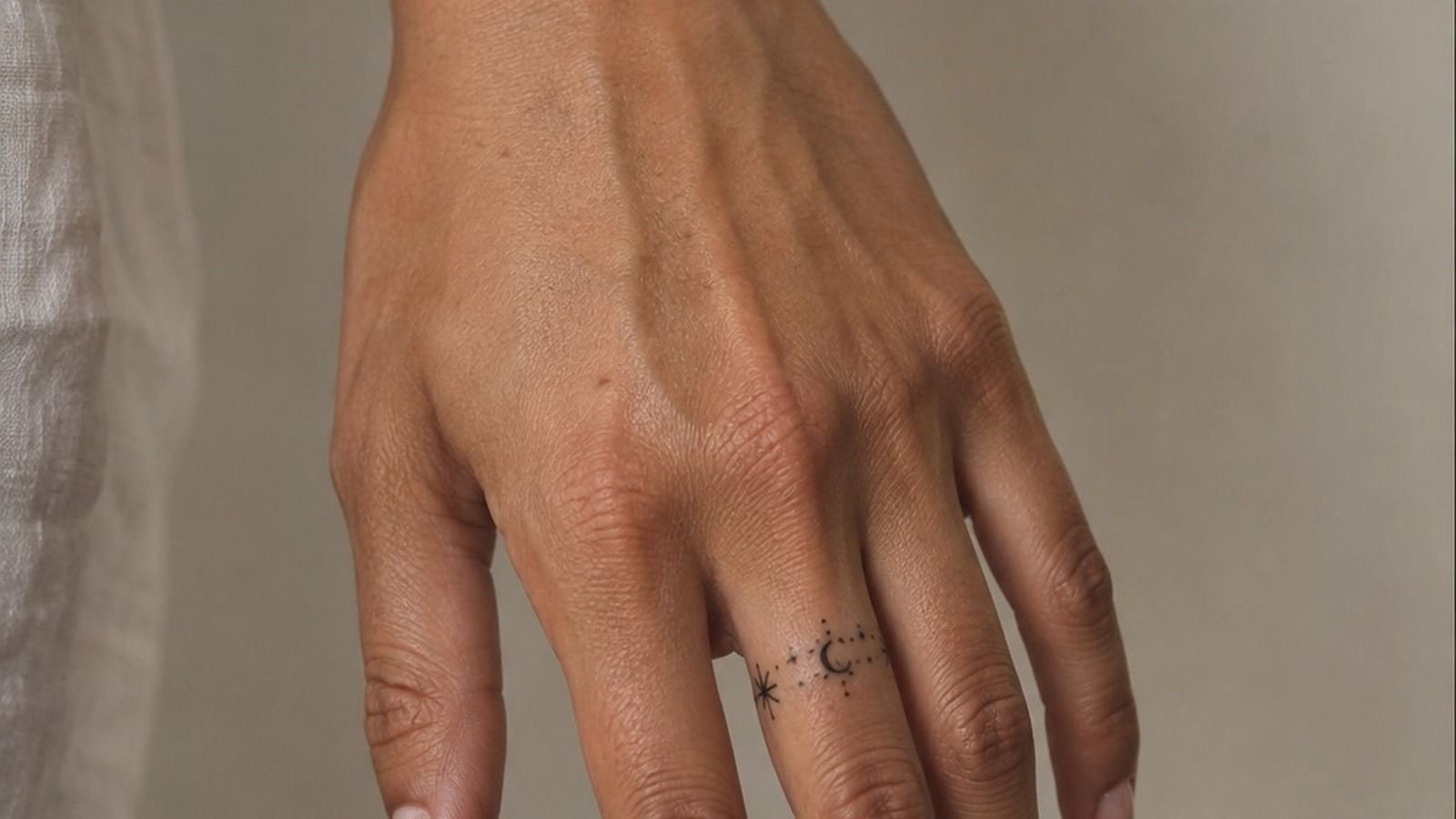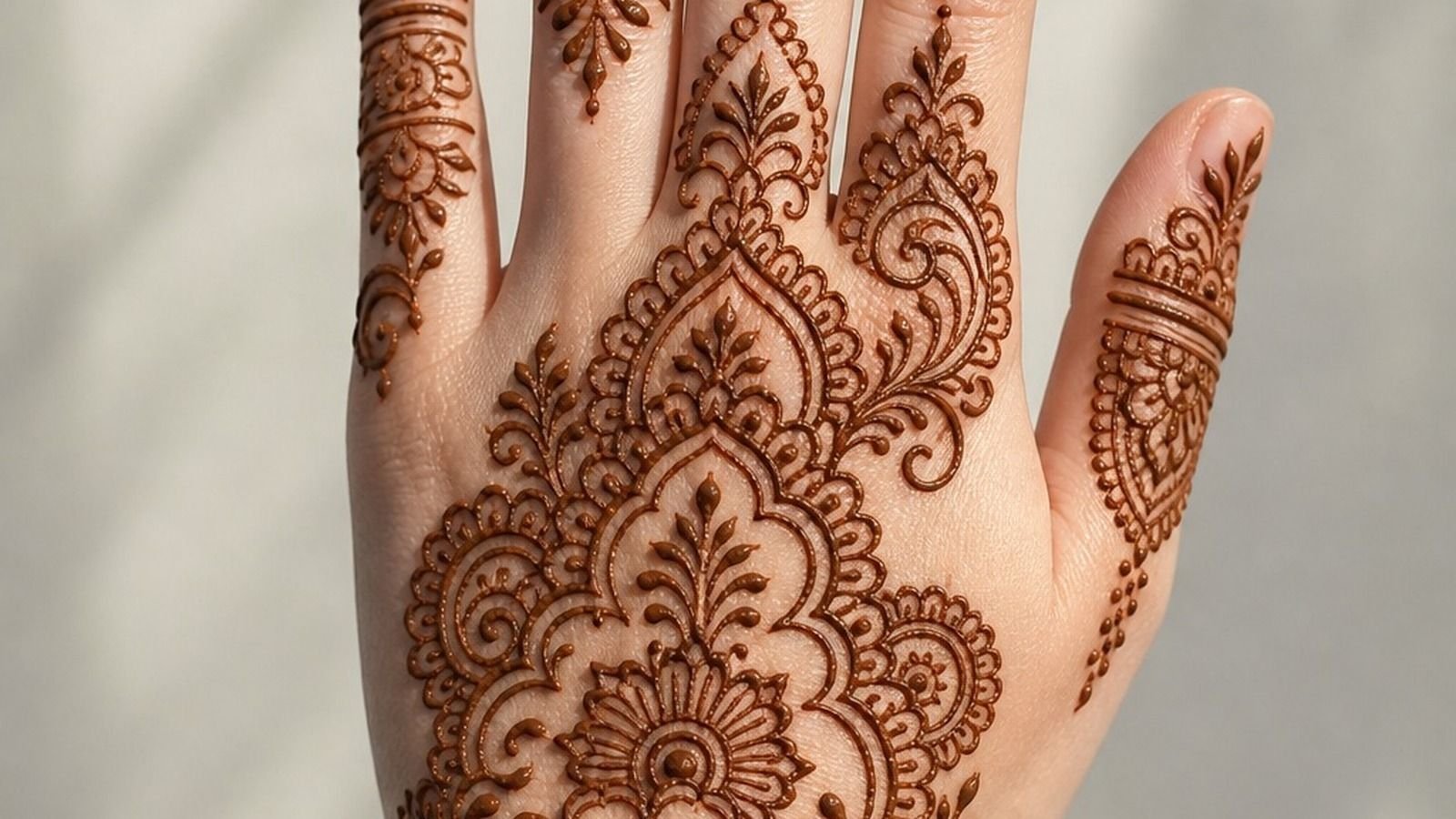
Trendy mehndi designs for the front hand kept failing me, and I’ll tell you why. Every Pinterest-perfect pattern I tried either turned to brown mush in a week or didn’t translate to the permanent ink I actually wanted. Then I stopped copying and started designing. Here’s the whole process, step by step.
Here’s what it looked like before
My left hand was a patchwork of disappointment. Faded henna ghosts from three different weddings, one sad attempt at a jagua mandala that stained uneven and peeled in weird patches, and zero permanent ink because I couldn’t commit to a design that wouldn’t survive my knuckles.
I’d been saving that hand for the right idea for almost two years. Every design I saved looked gorgeous on the reference photo and wrong on my actual skin.
The front of your hand isn’t a flat canvas. It bends, it creases, it washes fifty times a day.
Nobody’s Pinterest board tells you that part.
- I Map the Front Hand as a Fine-Line Canvas
- I Choose Delicate Vines Over Heavy Palm Blocking
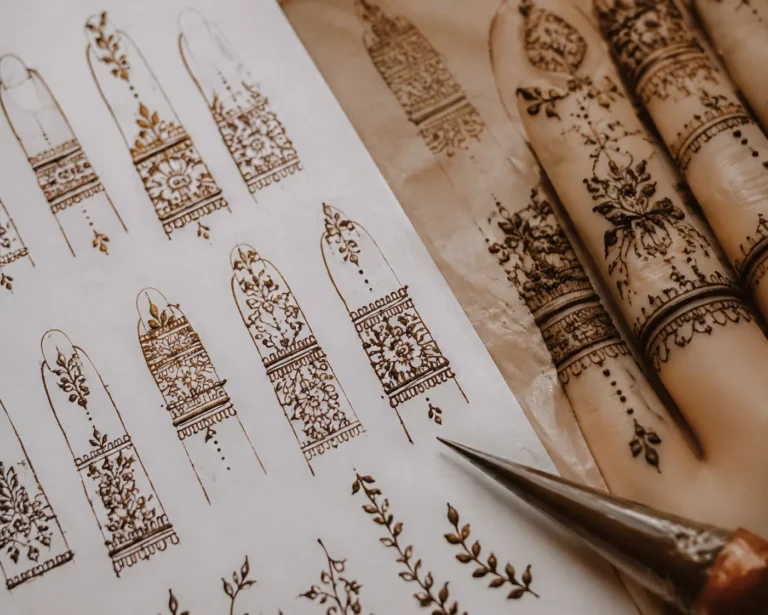
- I Sketch Finger Trails That Stay Readable
- I Anchor Modern Mehndi With Permanent Black Ink
- I Place a Mandala at the Index Finger Base
- I Decide Between One-Day Henna and Tattoo Ink
- I Leave Negative Space Open on the Front Hand
- I Trace a Peacock Feather Along the Thumb
- I Match Bridal Patterns to Fine-Line References
- I Watch How Henna Stains Differ From Ink
- I Recommend a Patch Test Before Any Tattoo
- I Balance Symmetry Across Both Front Hands
- I Use Fine Red Ink to Mimic Faded Henna
- I Avoid Knuckle Crowding for Long-Term Clarity
- I Explain Why Front-Hand Ink Fades Faster
- I Combine Arabic Swirls With Minimalist Wrist Lines
- I Plan Aftercare Around Hand Washing and Sanitizer
- I Select Artists Who Understand Mehndi Geometry
- I Price Sessions by Detail Density and Time
1I Map the Front Hand as a Fine-Line Canvas
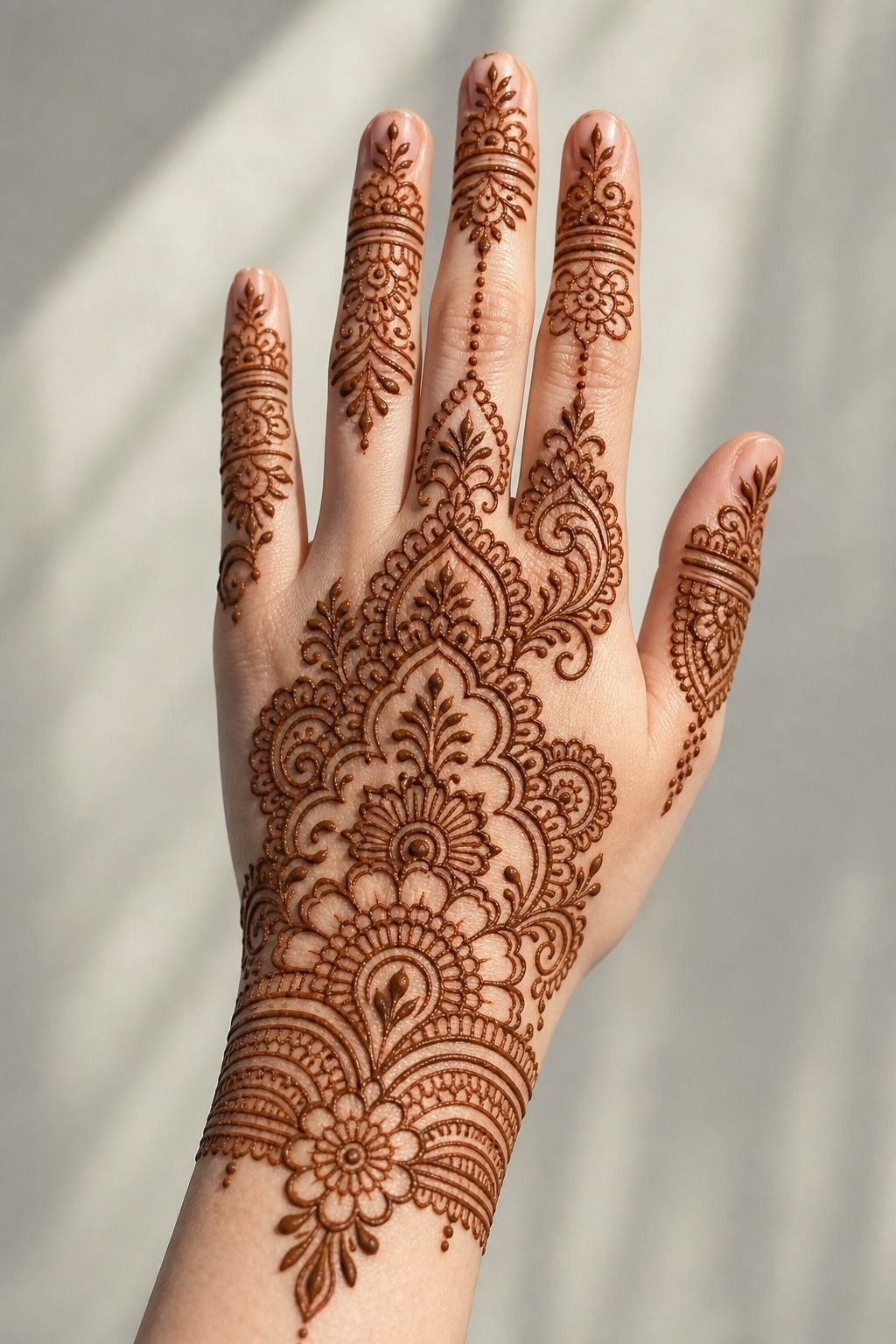
First thing I did was stop treating my hand like a square of paper. Your front hand has zones. The palm holds henna stain darker than almost anywhere on your body, but it also sheds skin fast.
The finger webs crease. The wrist flexes every time you move.
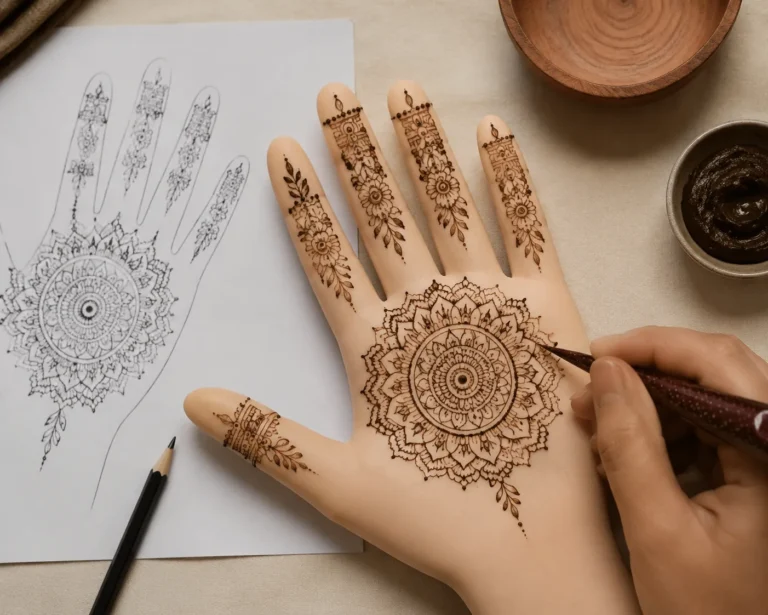
So I drew my own map. Palm center for the anchor motif.
Fingers for trails. Wrist for the exit line.
If you’re planning your own layout, sketch the zones on your hand with a washable marker before any paste touches skin. You’ll see immediately where a design fights your anatomy instead of flowing with it.
That map changed everything. Same designs, suddenly they made sense on me.
2I Choose Delicate Vines Over Heavy Palm Blocking
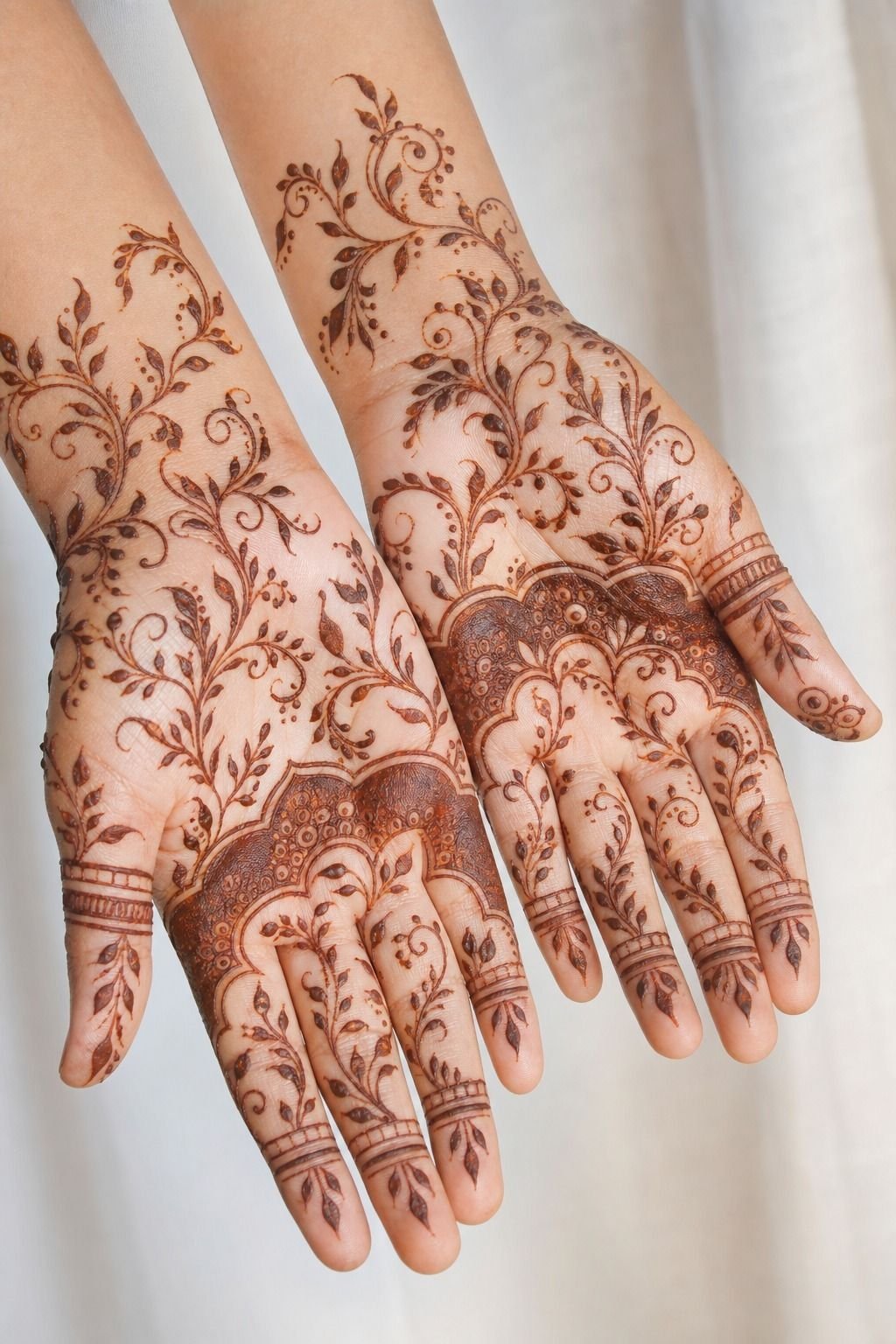
Heavy palm filling looks rich for about four days. Then the stain starts breaking down and those thick blocks fade patchy, and your palm looks bruised instead of decorated. I learned that one the ugly way at my cousin’s wedding.
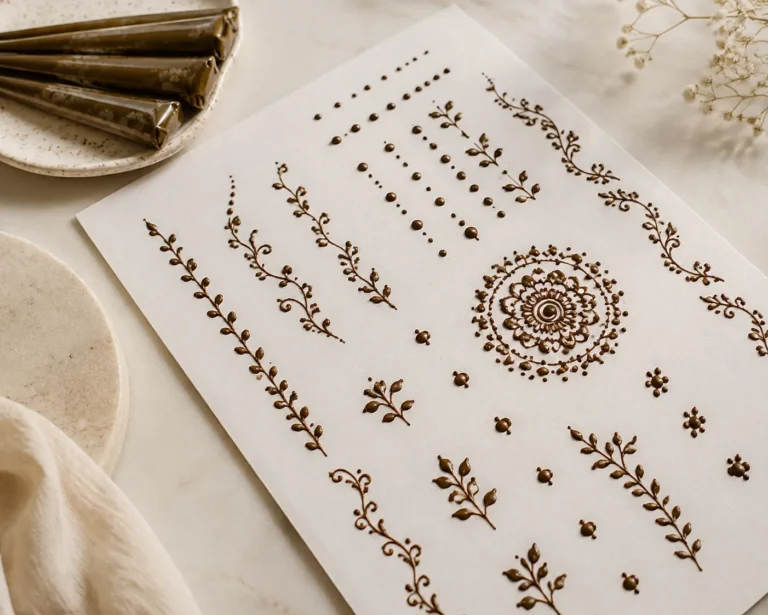
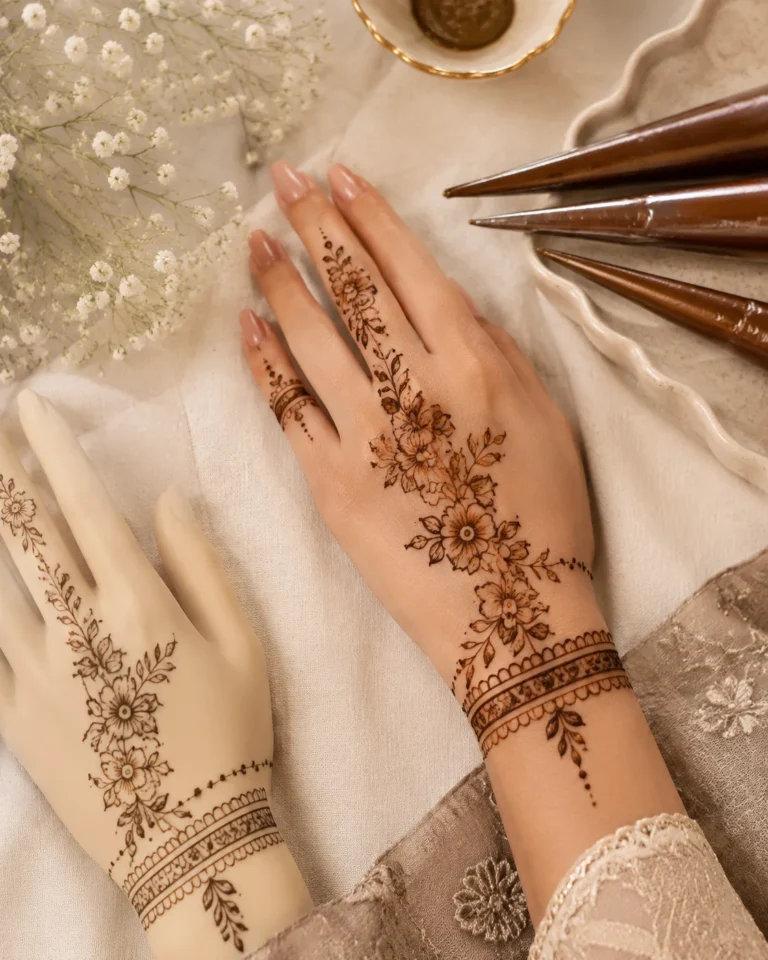
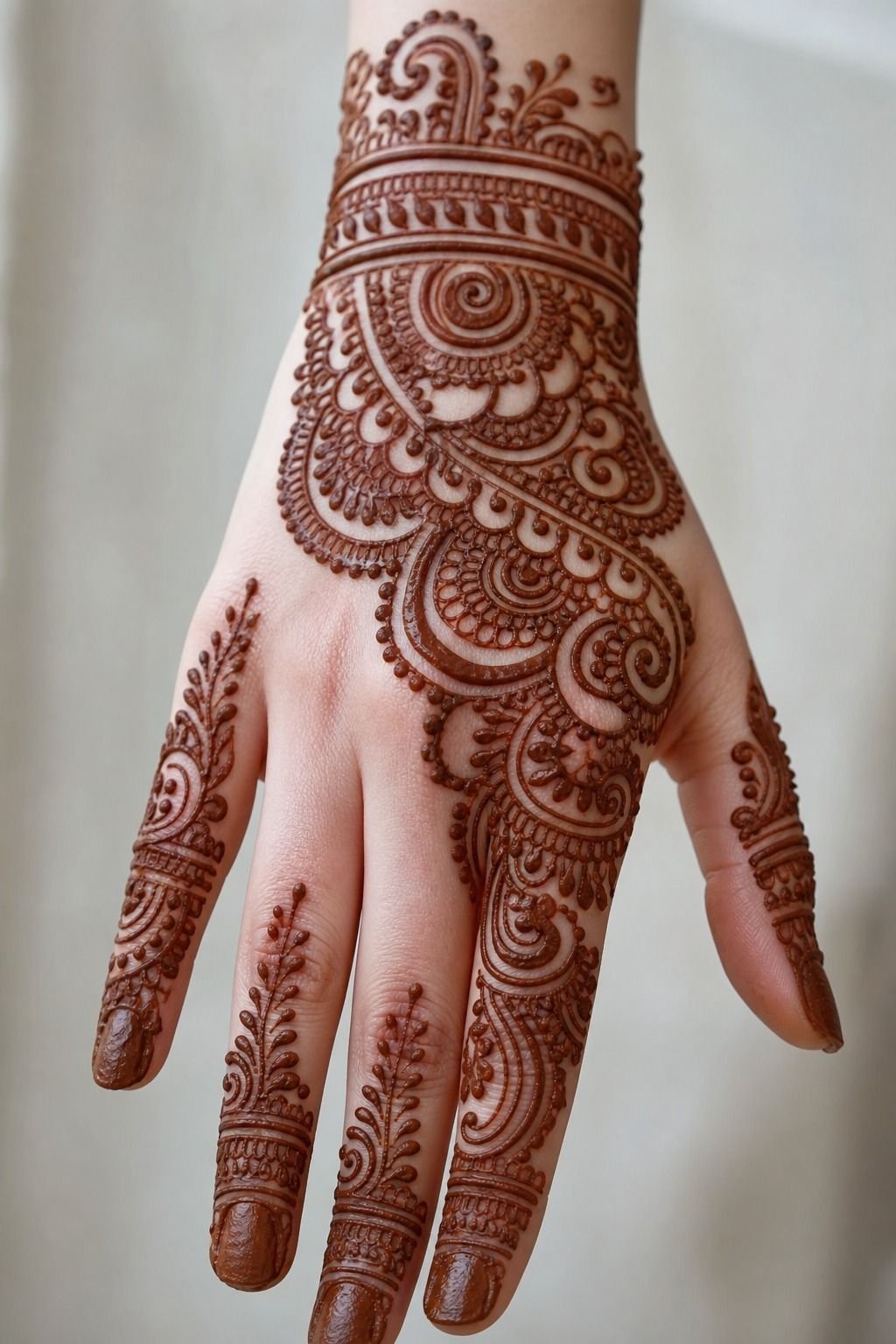
Delicate vines with breathing room between them stain more evenly and age more gracefully, both in henna and in permanent fine-line ink. Think thin running stems, small leaves, tiny dots as connectors. Nothing wider than a couple millimeters.
If you want to see how that lighter touch plays out, my breakdown of stylish mehndi designs for front hand shows the difference between dense and airy layouts. Spoiler: airy wins on real hands.
3I Sketch Finger Trails That Stay Readable
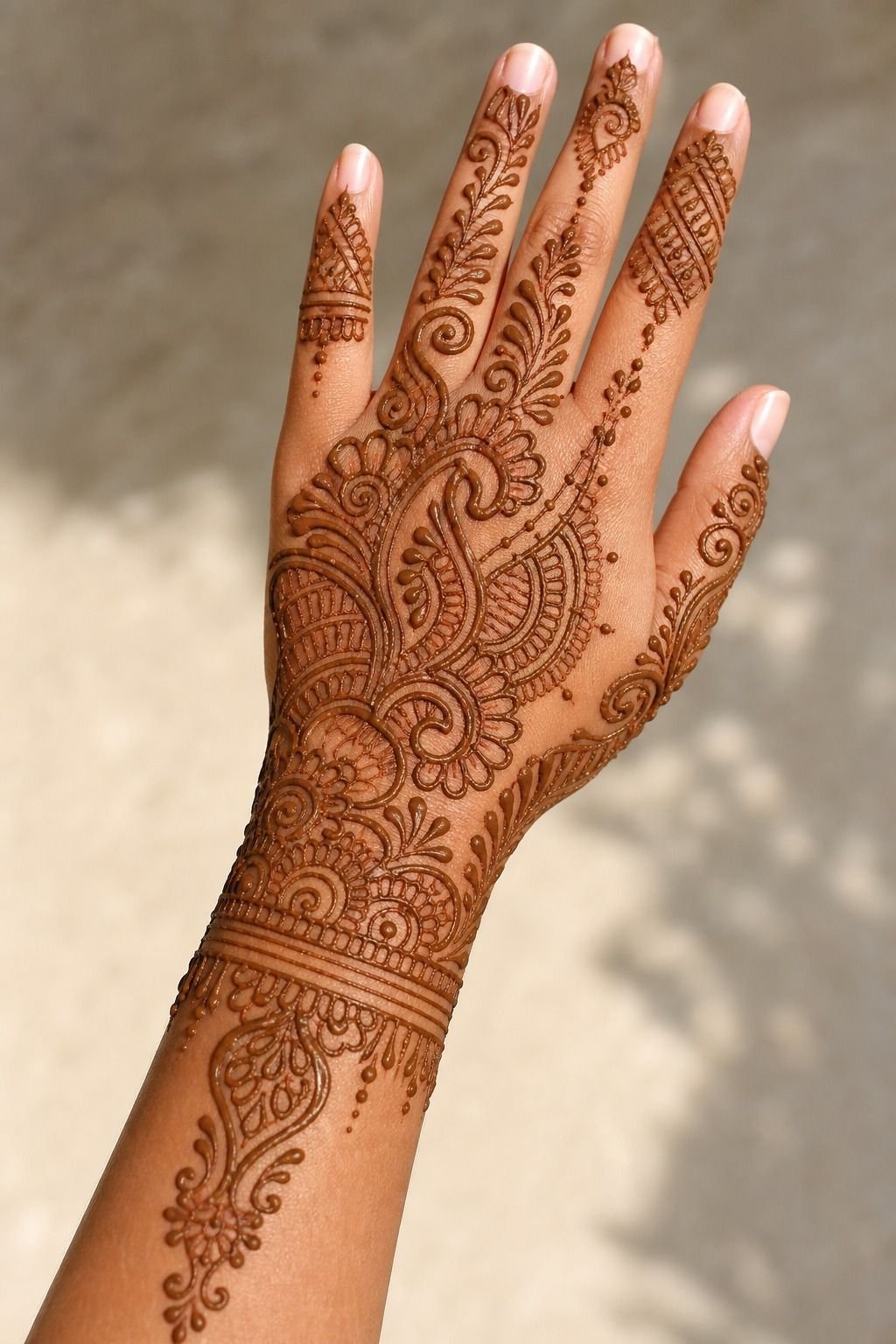
Finger designs are where most trendy mehndi goes to die.
4I Anchor Modern Mehndi With Permanent Black Ink
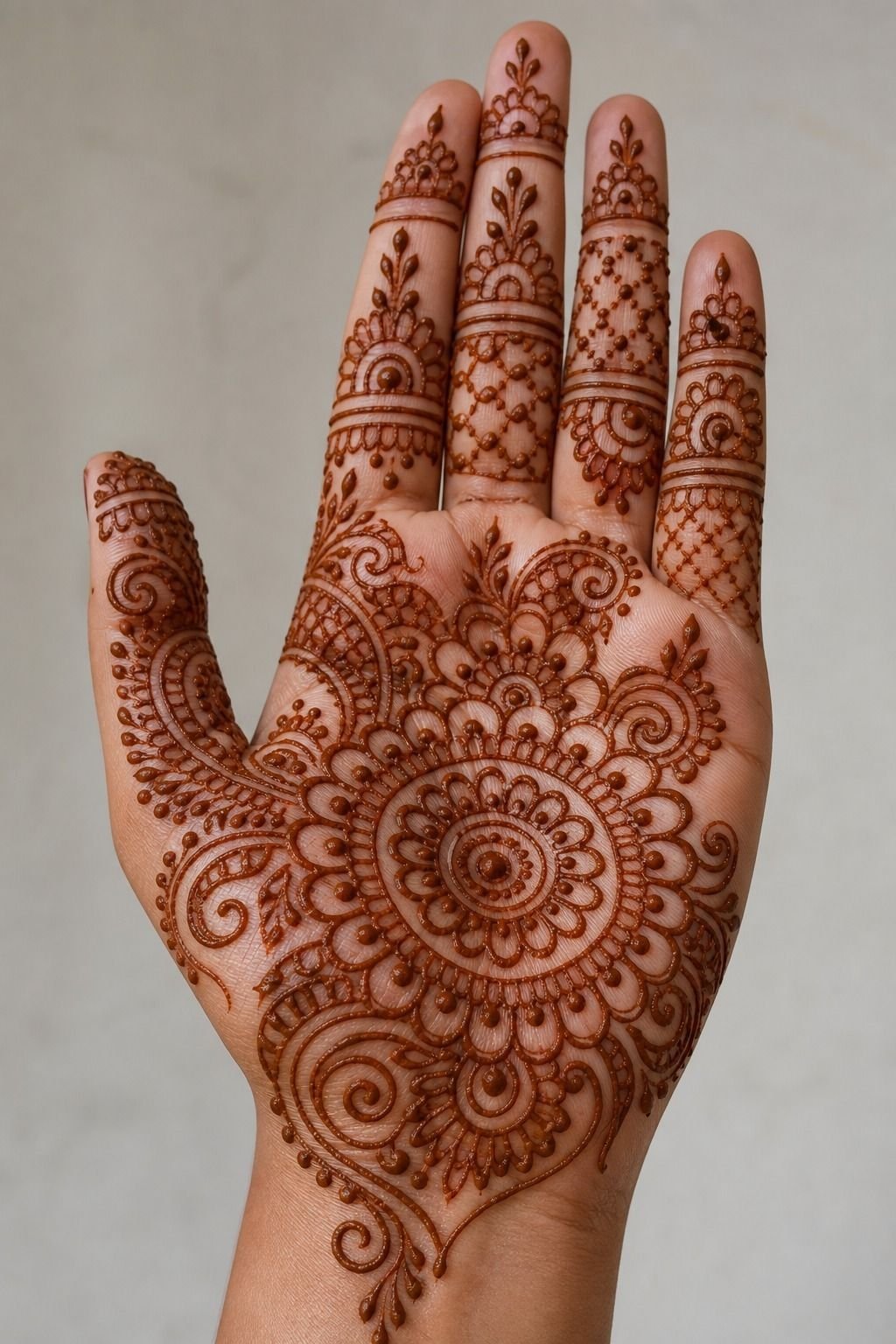
Here’s where tattooer brain kicked in. Henna fades. That’s the whole deal with henna.
But I’d fallen hard for two or three motifs I wanted to keep, and I wasn’t about to re-stain them every month.
So I picked one element, a small geometric lotus at my wrist, and got it done in fine-line black ink, single needle, about an inch and a half across. Black is your best friend for longevity. It reads from across the room in ten years if the lines are confident.
The move is restraint. One permanent anchor, and let the henna rotate around it seasonally. You get permanence without locking in a full design you might outgrow!
5I Place a Mandala at the Index Finger Base
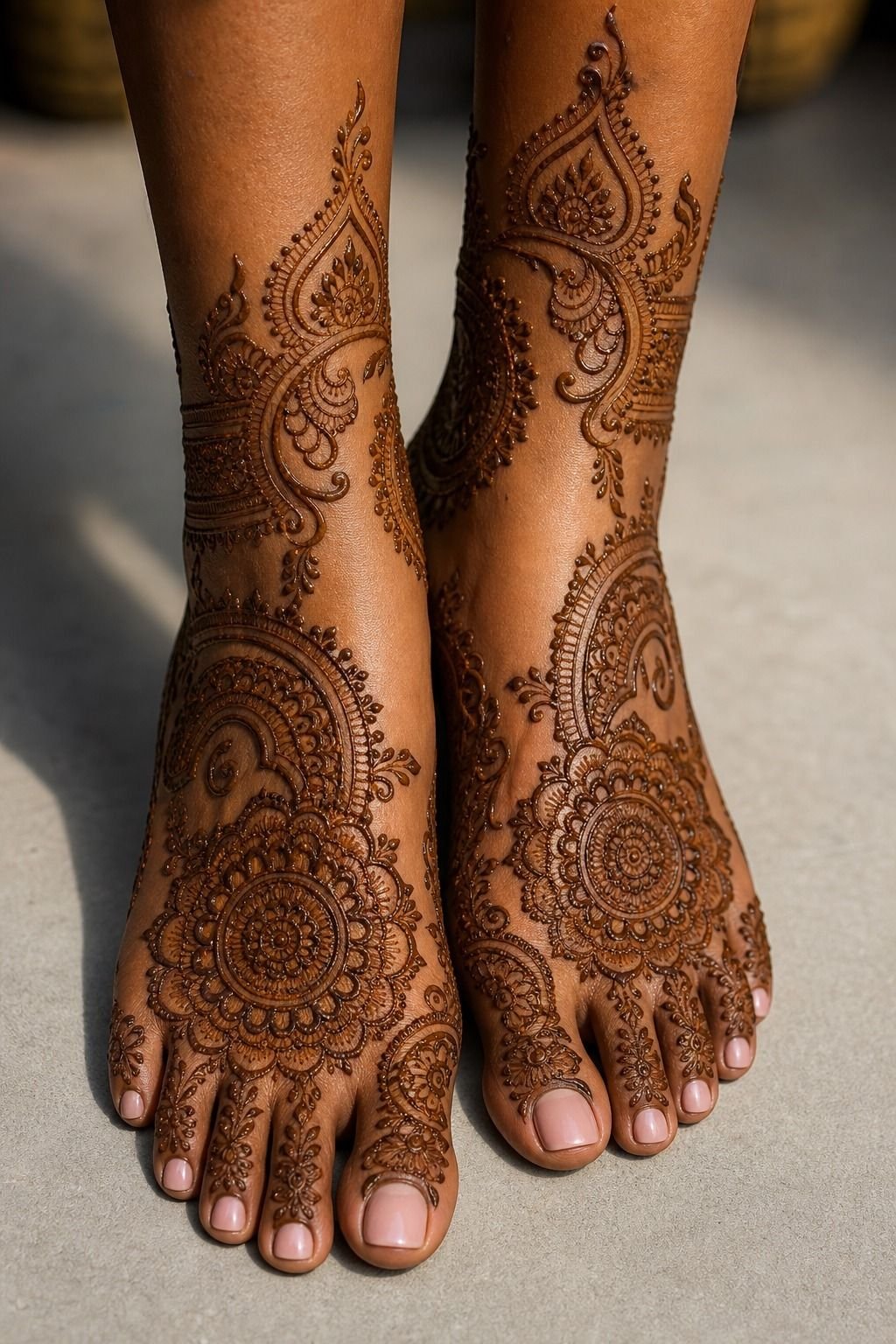
Placement is everything with mandalas. Dead center of the palm is traditional, but your palm creases constantly and the center of a mandala sitting on a crease will crack visually every time you close your hand.
I moved mine to the base of my index finger, that flat-ish triangle of skin between the knuckle and the palm. It flexes less, it’s visible when your hand is at rest, and it frames beautifully with a trail running up the finger.
Keep the mandala small. One inch across, max. Big palm mandalas are gorgeous for a photo shoot and chaotic in real life.
And if you’re browsing layouts, the front hand mehndi designs roundup has several index-base placements worth saving.
6I Decide Between One-Day Henna and Tattoo Ink
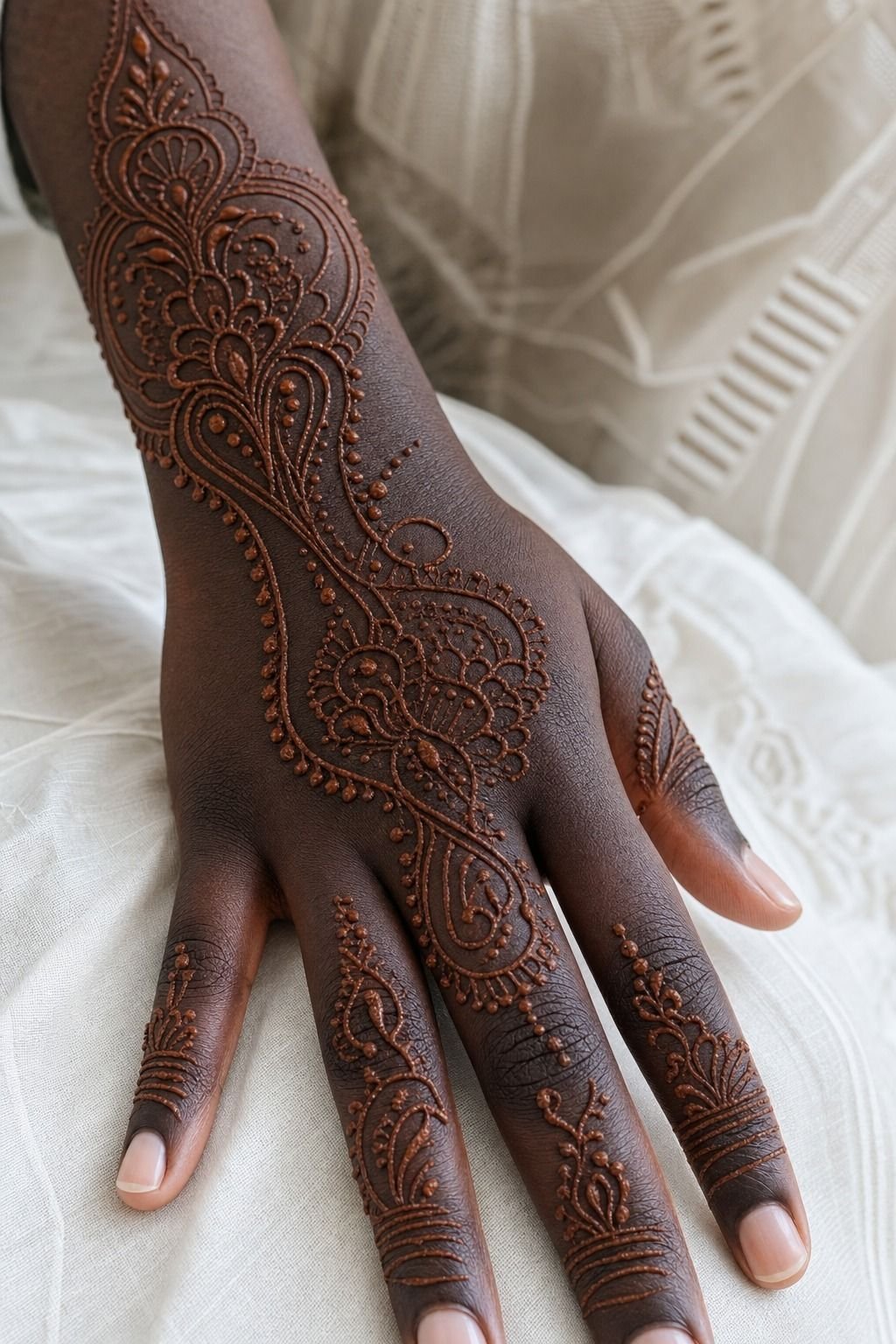
This was the real fork in the road, so let me lay out the honest math. Henna paste stains the top layers of skin and fades over one to three weeks depending on placement and how often you wash. Tattoo ink sits in the dermis and stays, with fading over years.
My verdict: henna first, always. Live with a design for two or three rounds of staining before you needle anything. If you still love it the third time, that’s your answer.
7I Leave Negative Space Open on the Front Hand
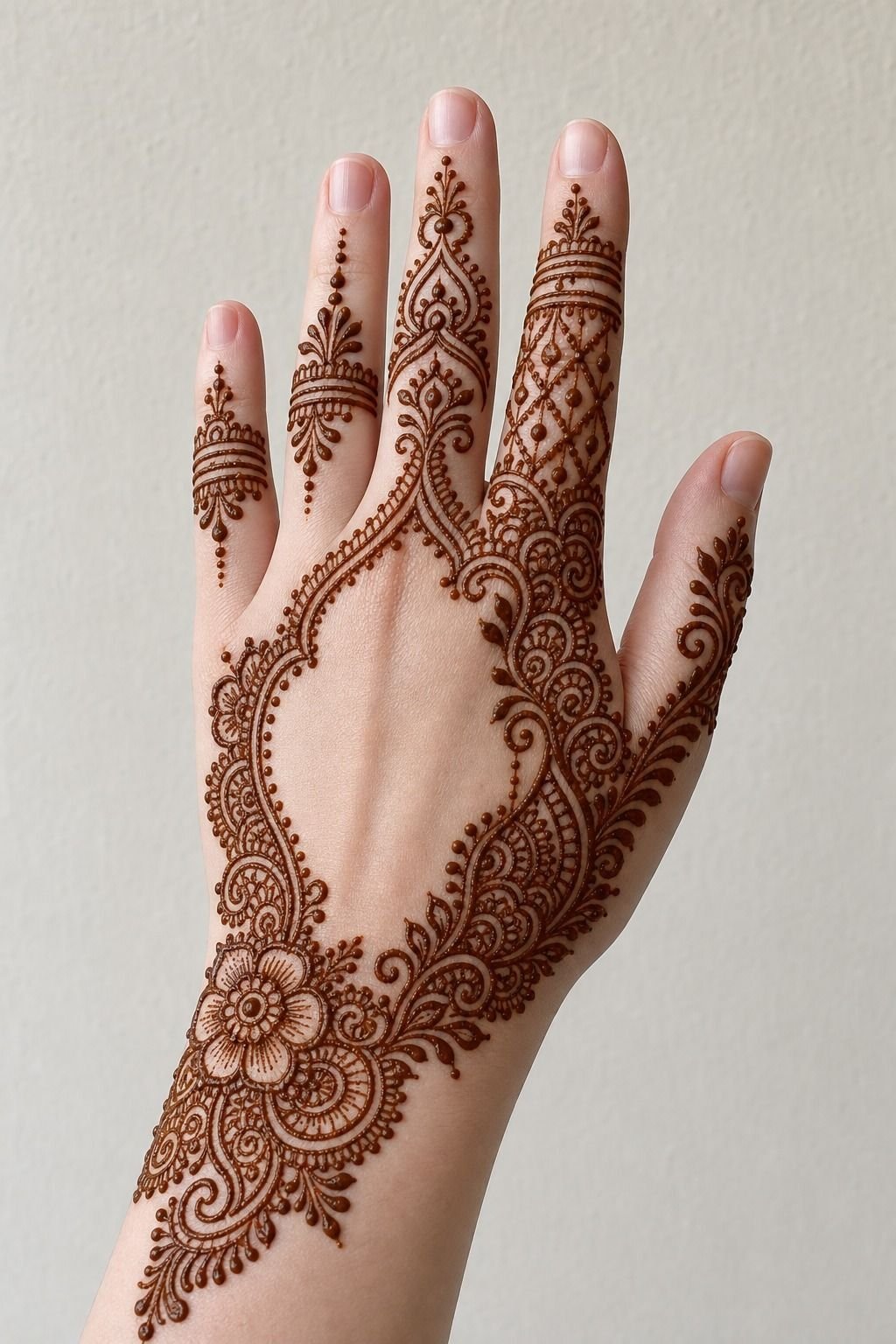
The single biggest upgrade I made was subtracting, not adding. Modern mehndi that reads as “stylish” instead of “busy” is mostly about what you don’t fill.
I aim for roughly half open skin on any front-hand layout now. Bare strips between vine runs.
An empty gap between the wrist line and the first motif. That breathing room is what makes the pattern read clean from a few feet away instead of blurring into a brown wash.
If you’re going permanent with any of it, negative space matters even more. Ink spreads a tiny bit over the years, and designs packed tight will close up. Give your lines room to age.
8I Trace a Peacock Feather Along the Thumb
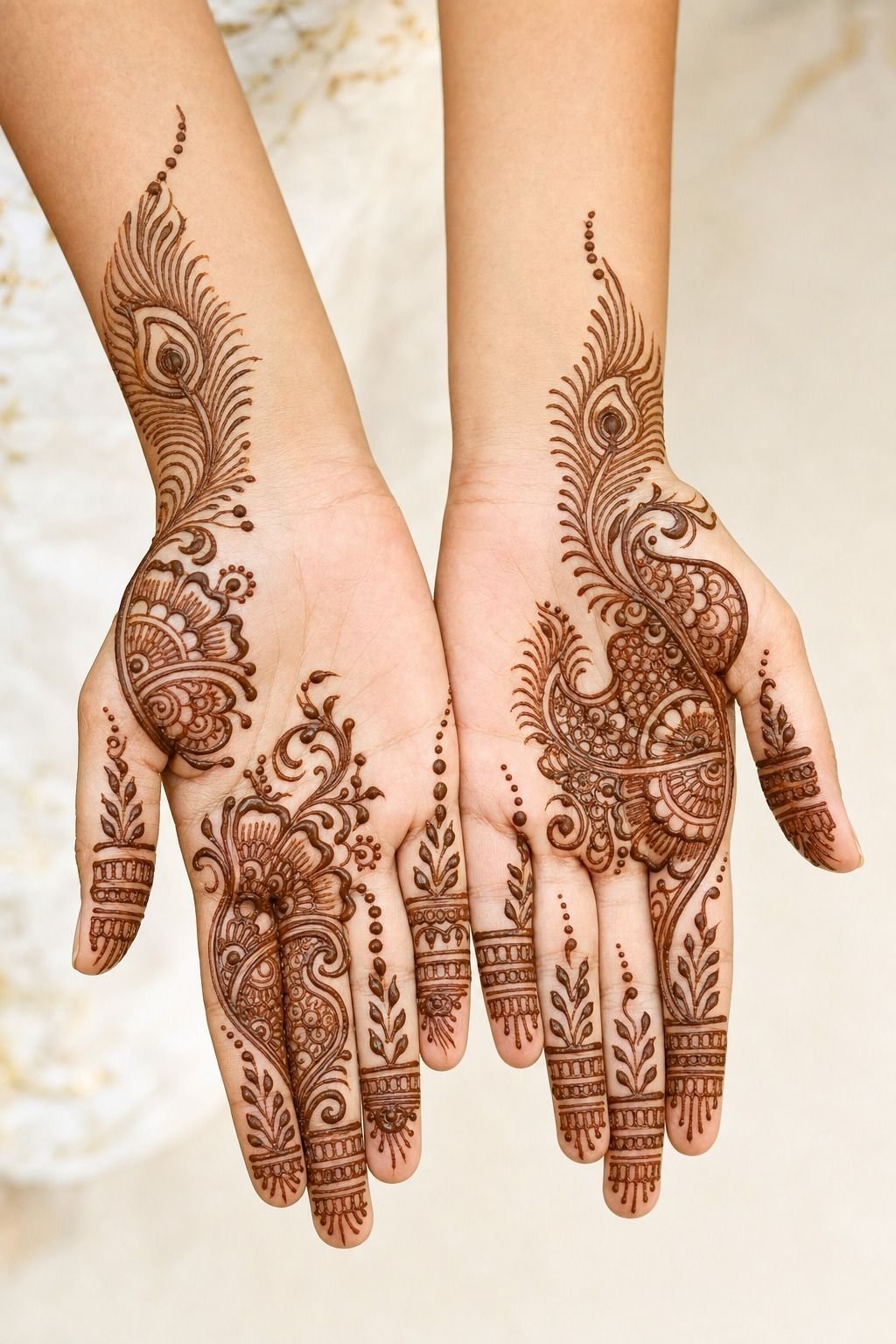
The thumb is the most ignored real estate on the front hand, and a peacock feather is the perfect shape for it.
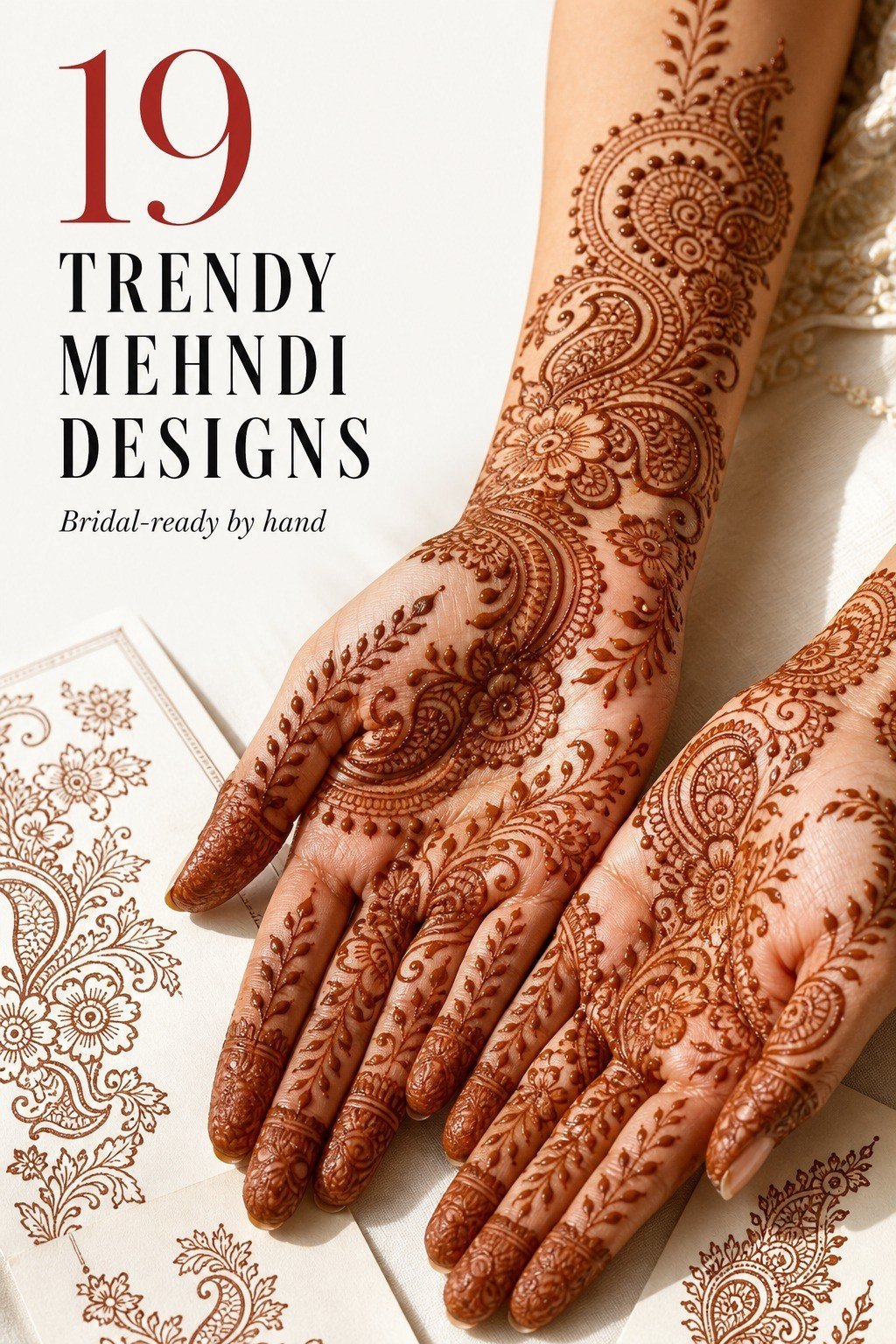
9I Match Bridal Patterns to Fine-Line References
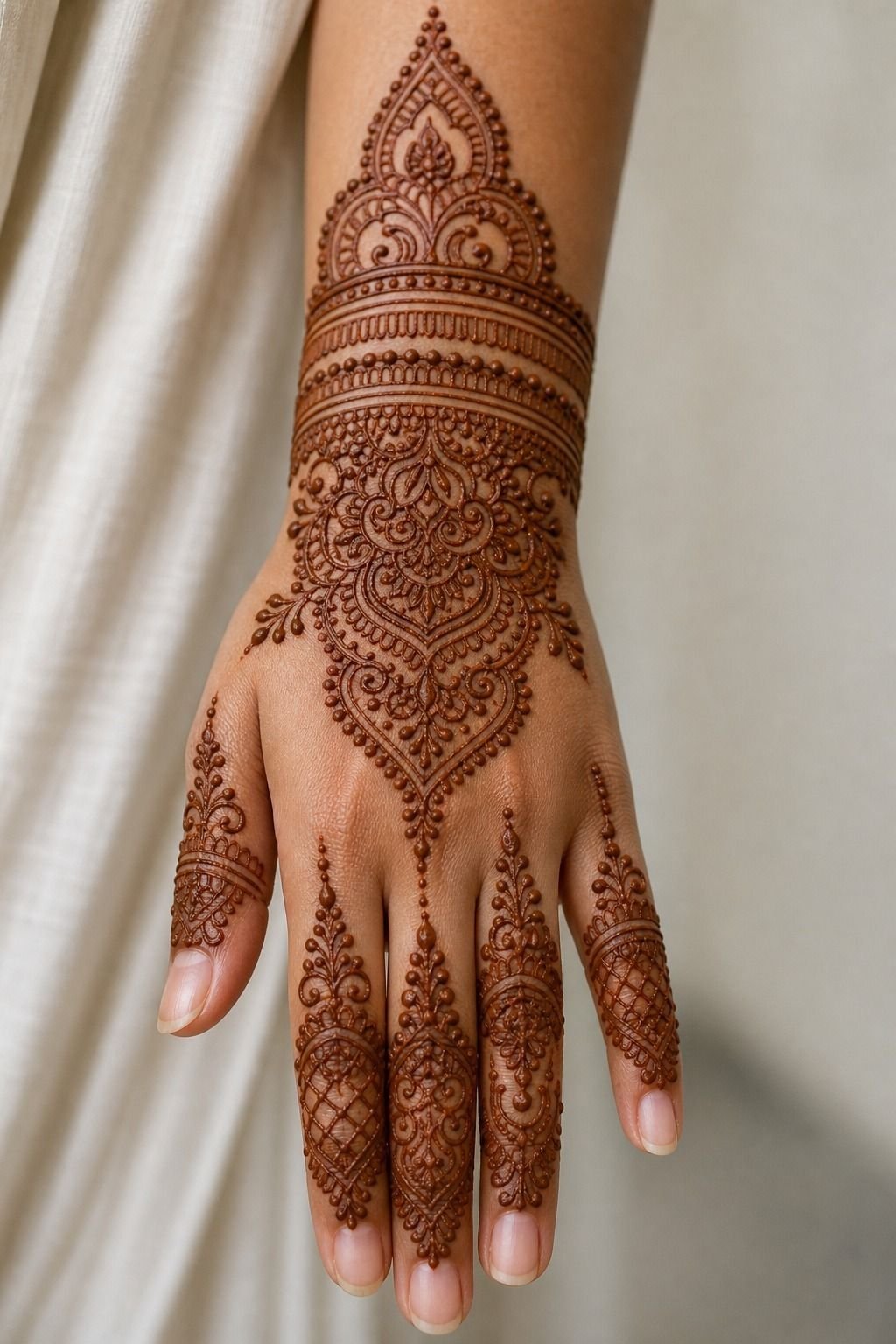
Bridal mehndi is a different beast. Full palms, both hands, sometimes up the forearms, hours of application. If that’s your brief, bring your artist references that show structure, not just density.
What I look for in bridal references: a clear central motif, symmetrical but not identical hands, and fine-line details rather than heavy fills so the whole thing photographs crisp. The sets I keep coming back to are in these 15 stylish mehndi designs for front hand that flow right, because flow matters more than coverage.
Book a trial run weeks before the event. A full bridal application takes two to four hours, and you want zero surprises on the day.
10I Watch How Henna Stains Differ From Ink
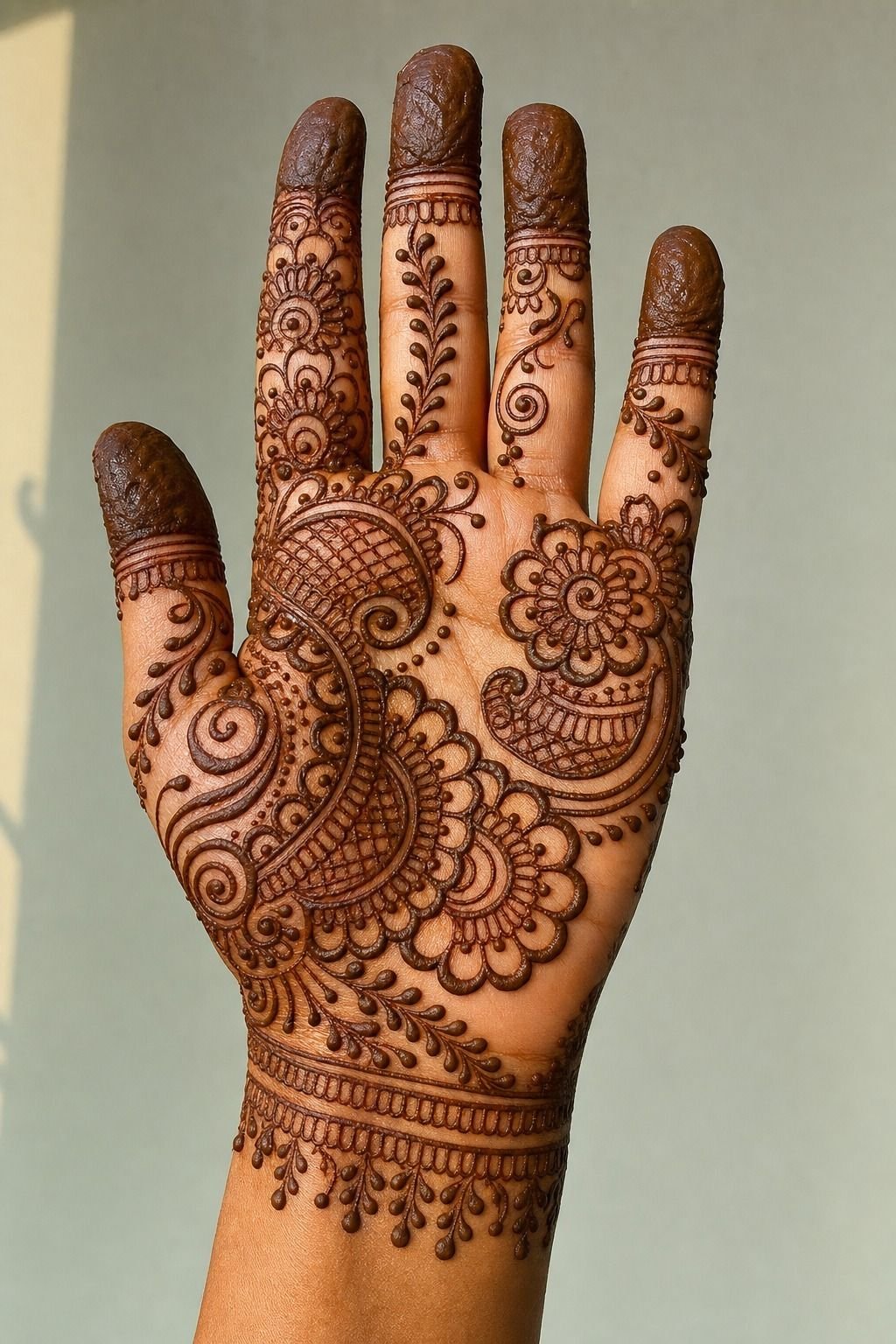
Henna is a surface stain, so it oxidizes. It goes on greenish-brown, darkens over 24 to 48 hours to that deep reddish-brown, then fades from the edges inward as your skin exfoliates.
On palms it goes darkest. On fingers and the back of the hand, lighter and faster to leave.
Tattoo ink doesn’t oxidize at all. What you see healed at four weeks is roughly what you keep, with slow fading over years.
Black stays black-ish. Color shifts.
Why does this matter for your design? A pattern that depends on dark-to-light contrast works beautifully in henna but needs to be rebuilt in line weight and spacing for ink.
Don’t assume one translates directly to the other. It won’t.
11I Recommend a Patch Test Before Any Tattoo
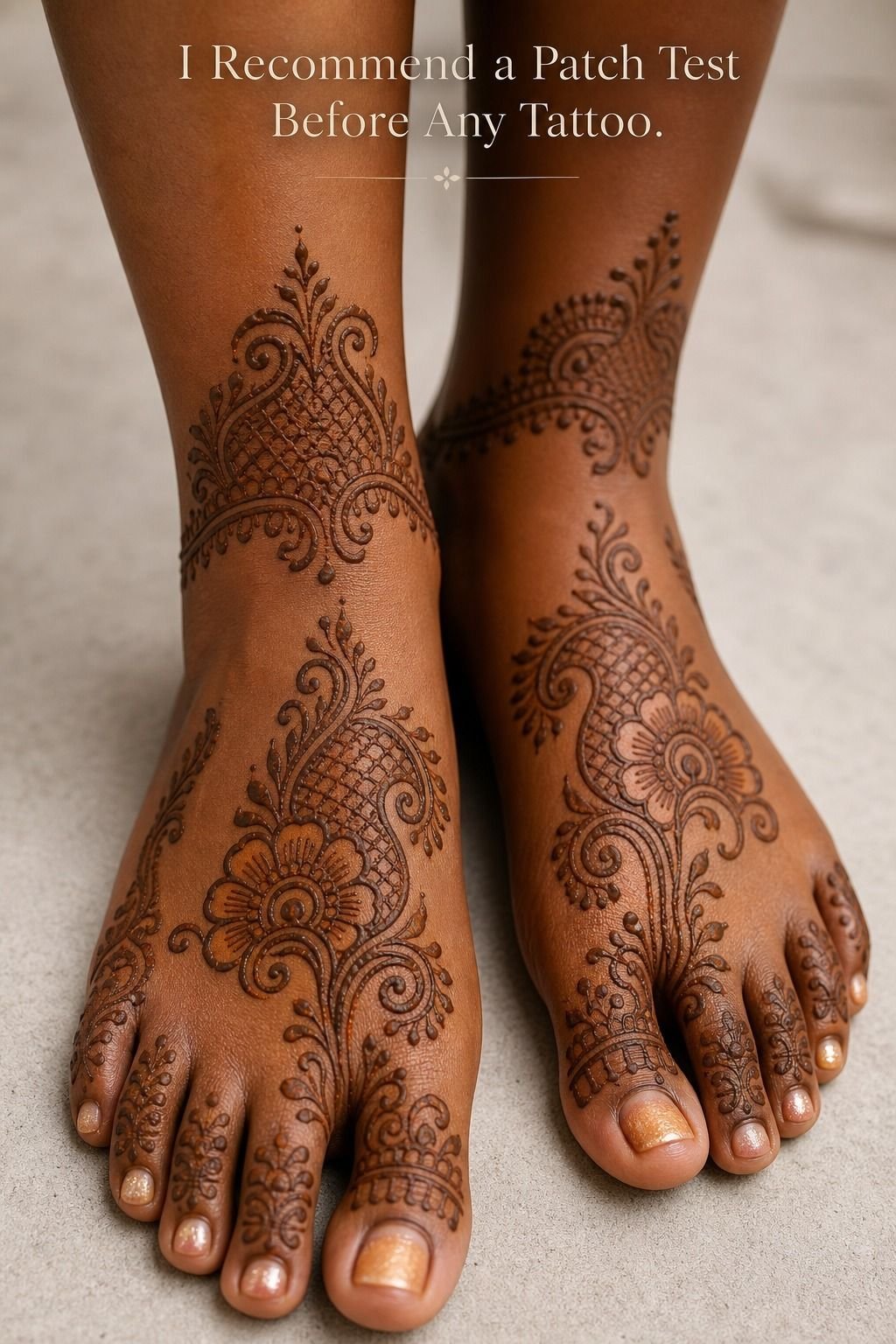
Non-negotiable, and I mean it for both henna and ink. For henna: a dot of paste behind your ear or on your inner arm, left on for a few hours, watched for 48 hours.
Reactions to natural henna are rare, but “black henna” with PPD is genuinely dangerous and can scar you. If a paste promises jet-black stain in an hour, walk away.
For tattoo ink, especially red inks, a small test dot in a hidden spot tells you how your skin handles it before you commit a whole hand to it.
I know patch tests feel like a buzzkill when you’re excited. Do it anyway. A week of patience beats a reaction on the most visible skin you own!
12I Balance Symmetry Across Both Front Hands
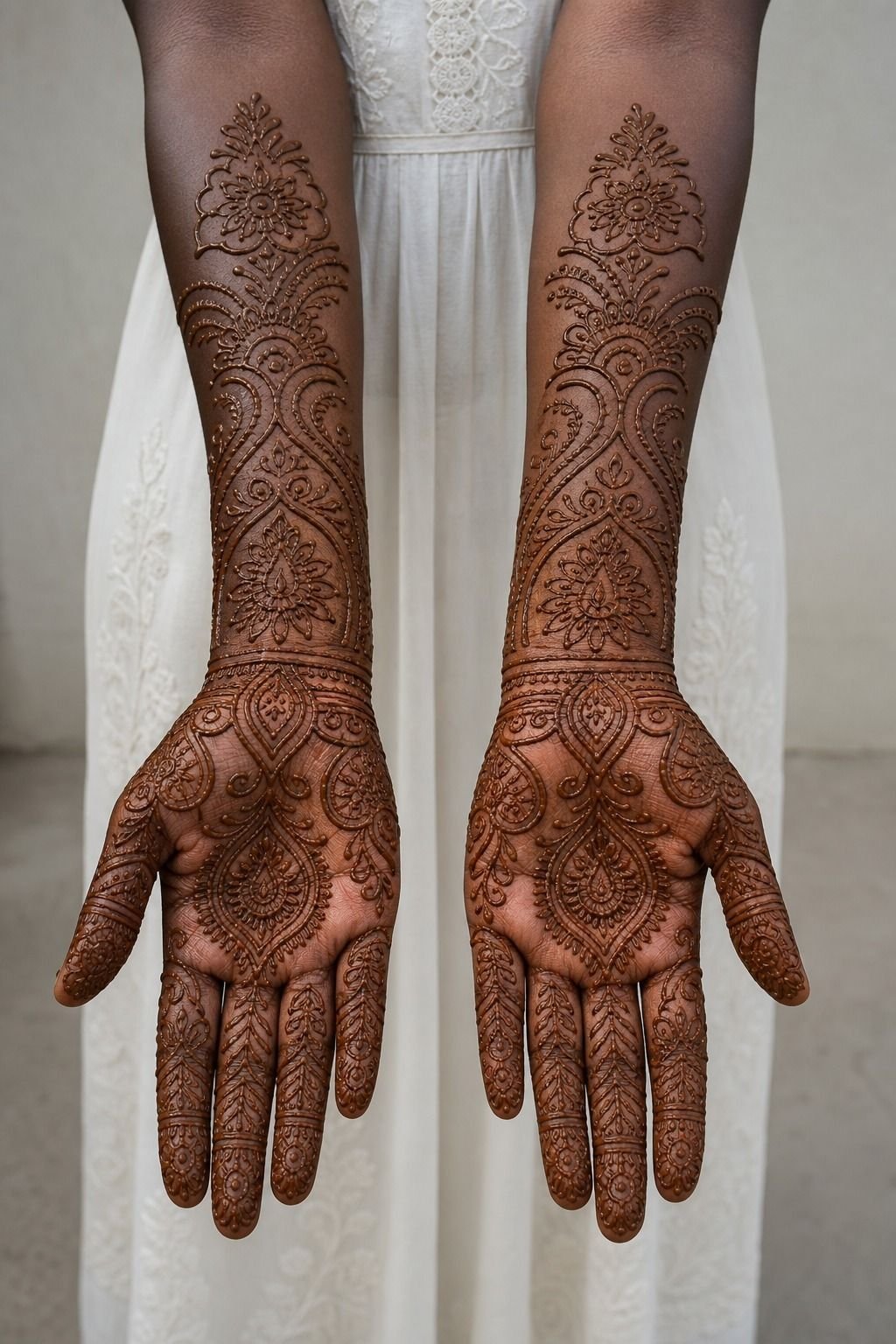
Perfect mirror symmetry on both hands sounds right and usually looks stiff.
13I Use Fine Red Ink to Mimic Faded Henna
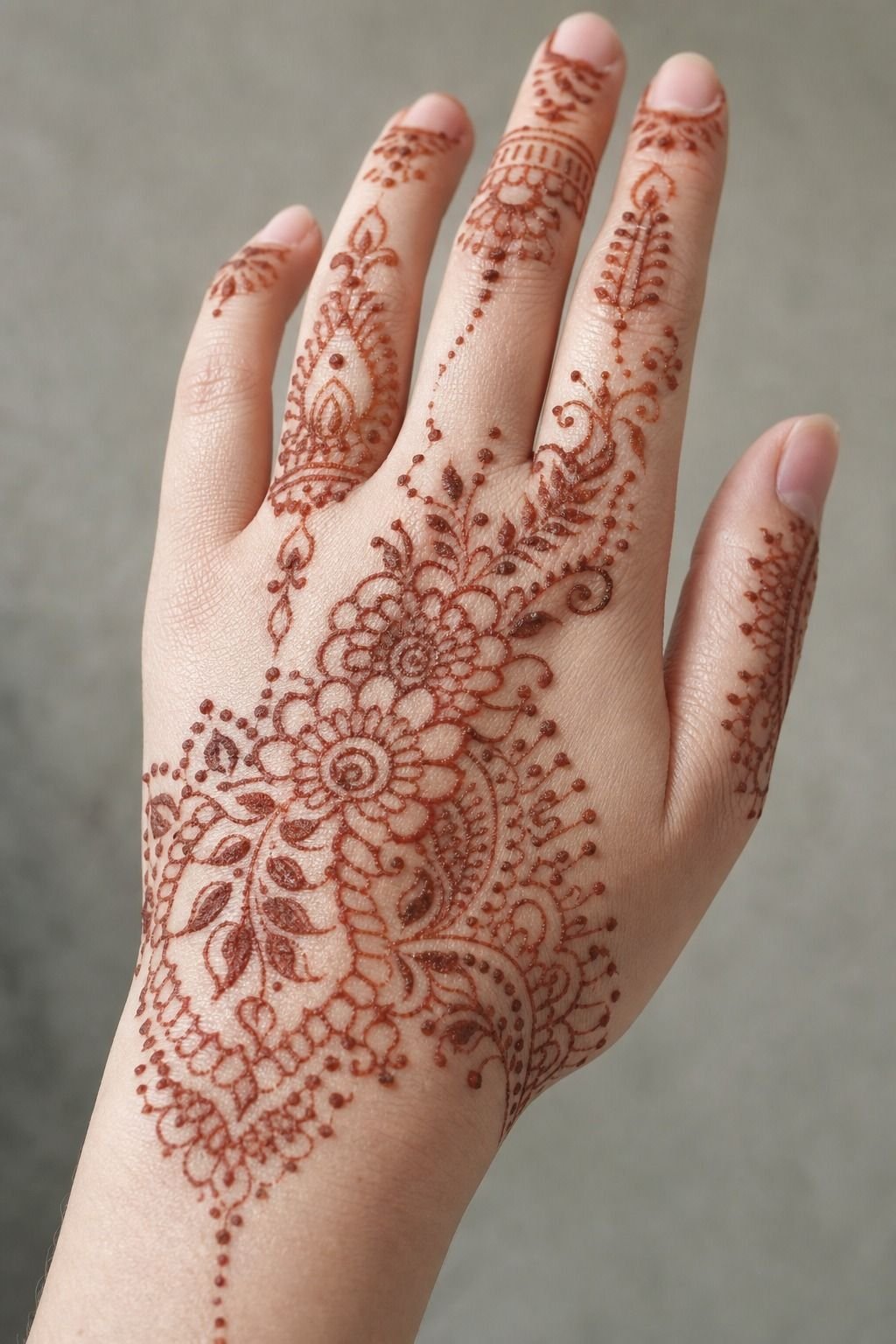
This is my favorite move in the whole playbook, and it’s very me. Fine-line red ink, done softly, reads almost exactly like week-old henna. That warm rust tone on the skin, the way it sits quiet instead of shouting.
The catch: red ink is the diva of the ink world. Some people’s skin loves it.
Some people’s skin pushes it out or reacts. Red also fades faster than black, so a red mehndi-style hand piece will need touch-ups, especially on fingers.
That’s why the patch test from section 11 matters double here. If your skin takes red well, this look is genuinely special. If it doesn’t, black fine line gives you the same geometry with half the maintenance.
14I Avoid Knuckle Crowding for Long-Term Clarity
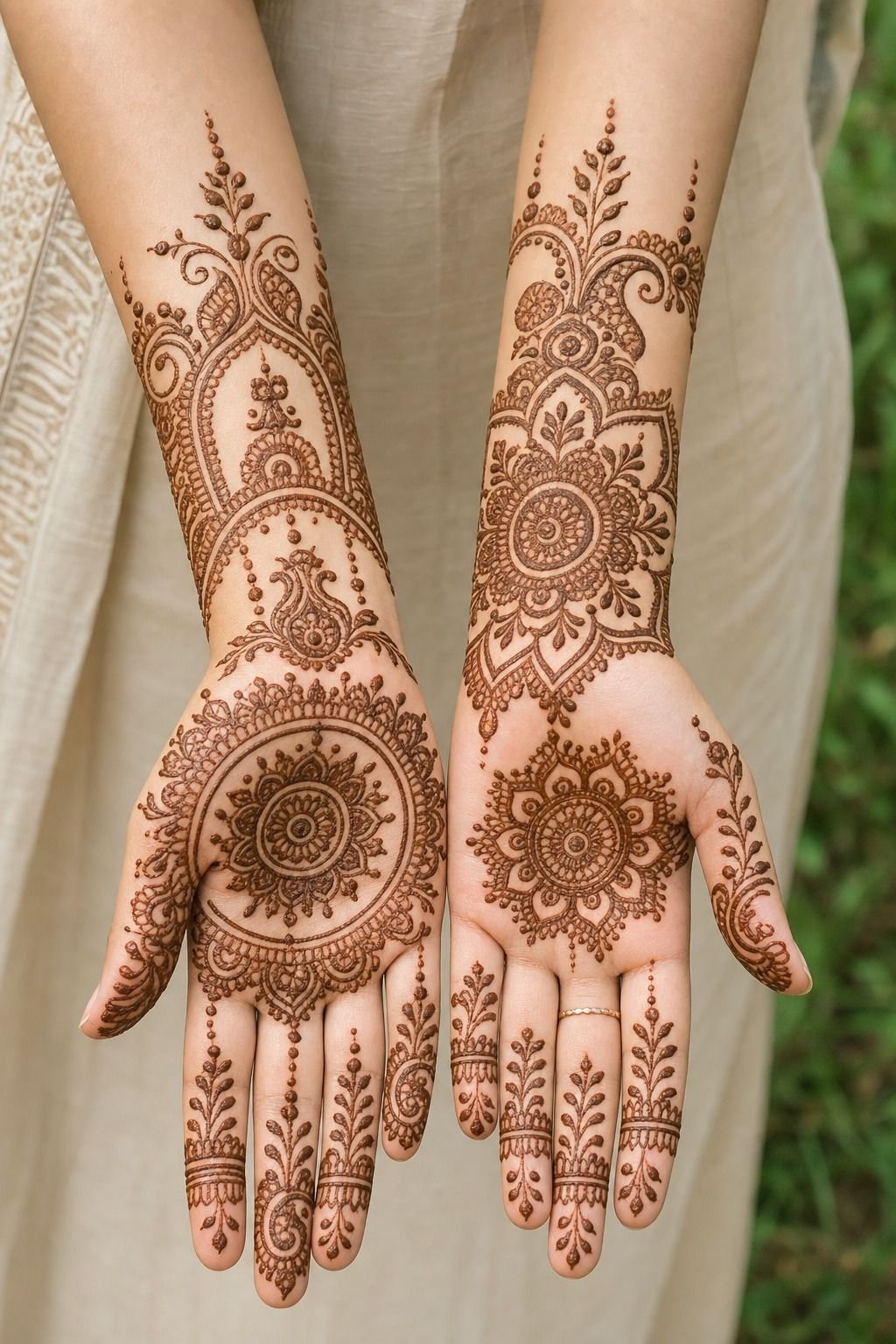
Knuckles crease. Every fold of your finger drags across them thousands of times a day. Any design element sitting right on a knuckle will blur faster than the same element an inch away, whether it’s henna or ink.
My Knuckle Gap rule: keep a clear band of empty skin across each knuckle line, and let trails pass above or below it. In henna this keeps the stain looking intentional as it fades. In ink, it’s the difference between a design that reads at year five and one that chews up.
I made this mistake on my first permanent finger accent. Tiny dot right on the knuckle crease.
It’s a smudge now. Learn from me, skip the crease.
15I Explain Why Front-Hand Ink Fades Faster
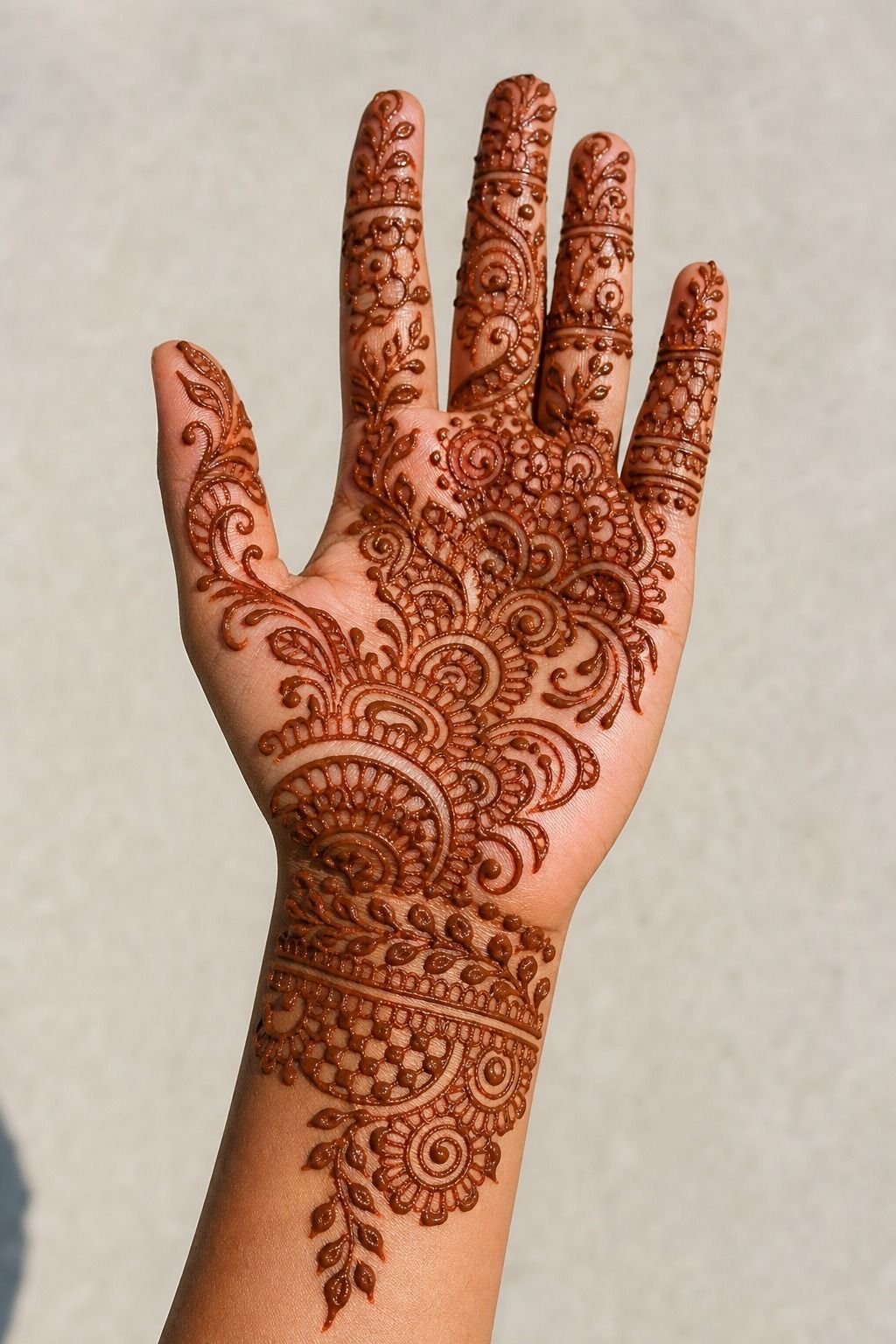
If you’re converting a mehndi design to a tattoo, you need the truth about hands. They’re a high-wear zone.
Constant washing, sanitizer, sun exposure, friction from everything you touch. Hands shed skin faster than your forearm or thigh, and the dermis there is thin.
Realistic expectation: a hand tattoo often needs a touch-up within the first year or two, and fine line on fingers may need refreshing every few years to stay crisp. Artists who specialize in hands will tell you this upfront. If yours doesn’t, ask.
Surface healing runs about two to three weeks, same as anywhere, but hands heal fussier because you can’t stop using them. More on that in section 17. And if you want lower-maintenance inspiration, compare with back hand mehndi designs, since the back of the hand wears a bit kinder than the palm side.
16I Combine Arabic Swirls With Minimalist Wrist Lines
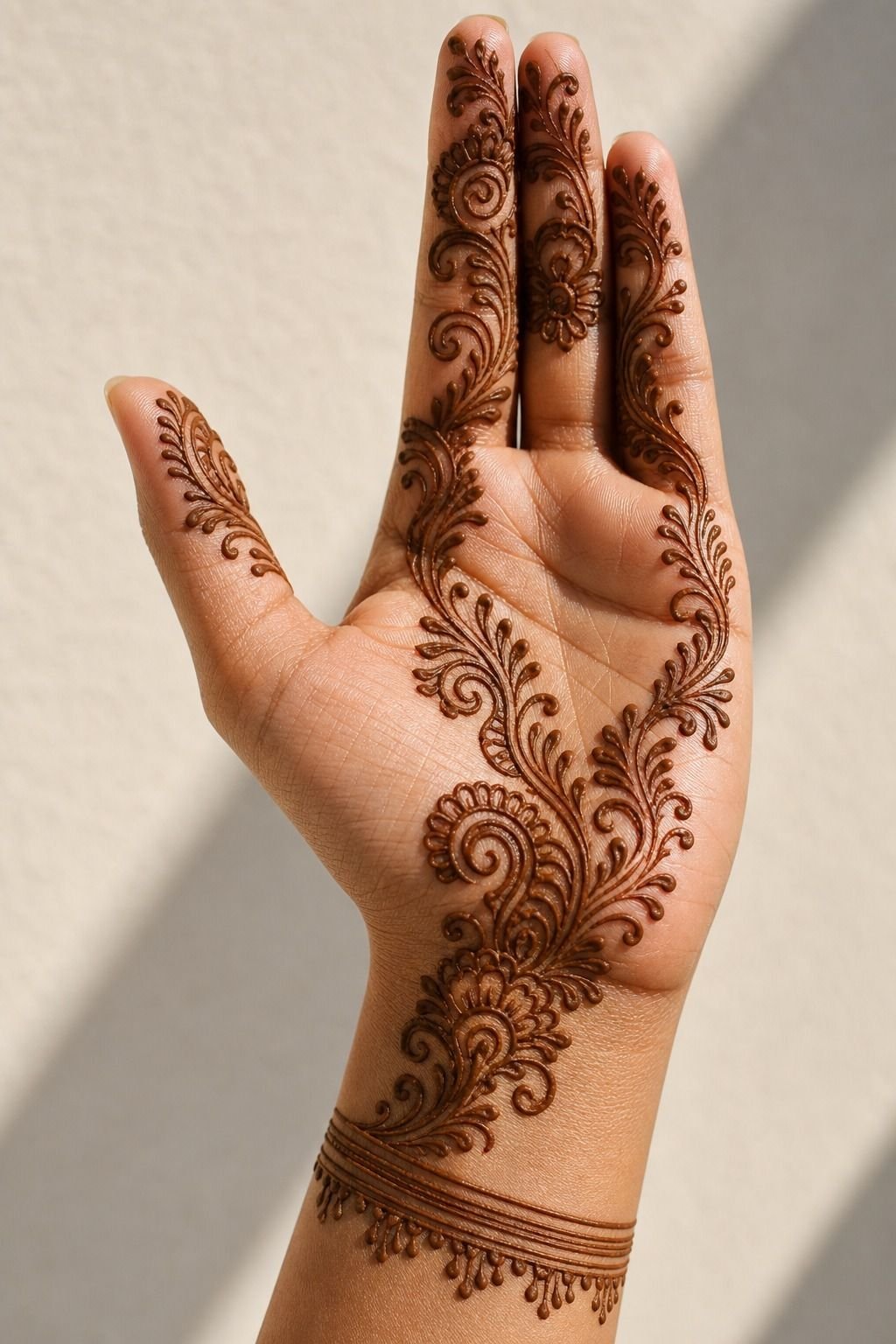
Arabic-style mehndi is built on bold, flowing swirls with open space, and it pairs beautifully with the minimalist wrist-line trend. One big confident swirl crossing the palm diagonally, then two or three thin parallel bands wrapping the wrist like a bracelet.
The contrast is what makes it work. Lush and curved on the palm, clean and geometric at the wrist. If you fill both zones equally, nothing stands out and the design goes flat.
For permanent versions, the wrist bands are the safest part to tattoo. Inner wrist is more tolerable pain-wise than palm-adjacent skin, it heals predictably, and thin bands age decently if the lines aren’t microscopic. Keep them at least a couple millimeters wide.
17I Plan Aftercare Around Hand Washing and Sanitizer
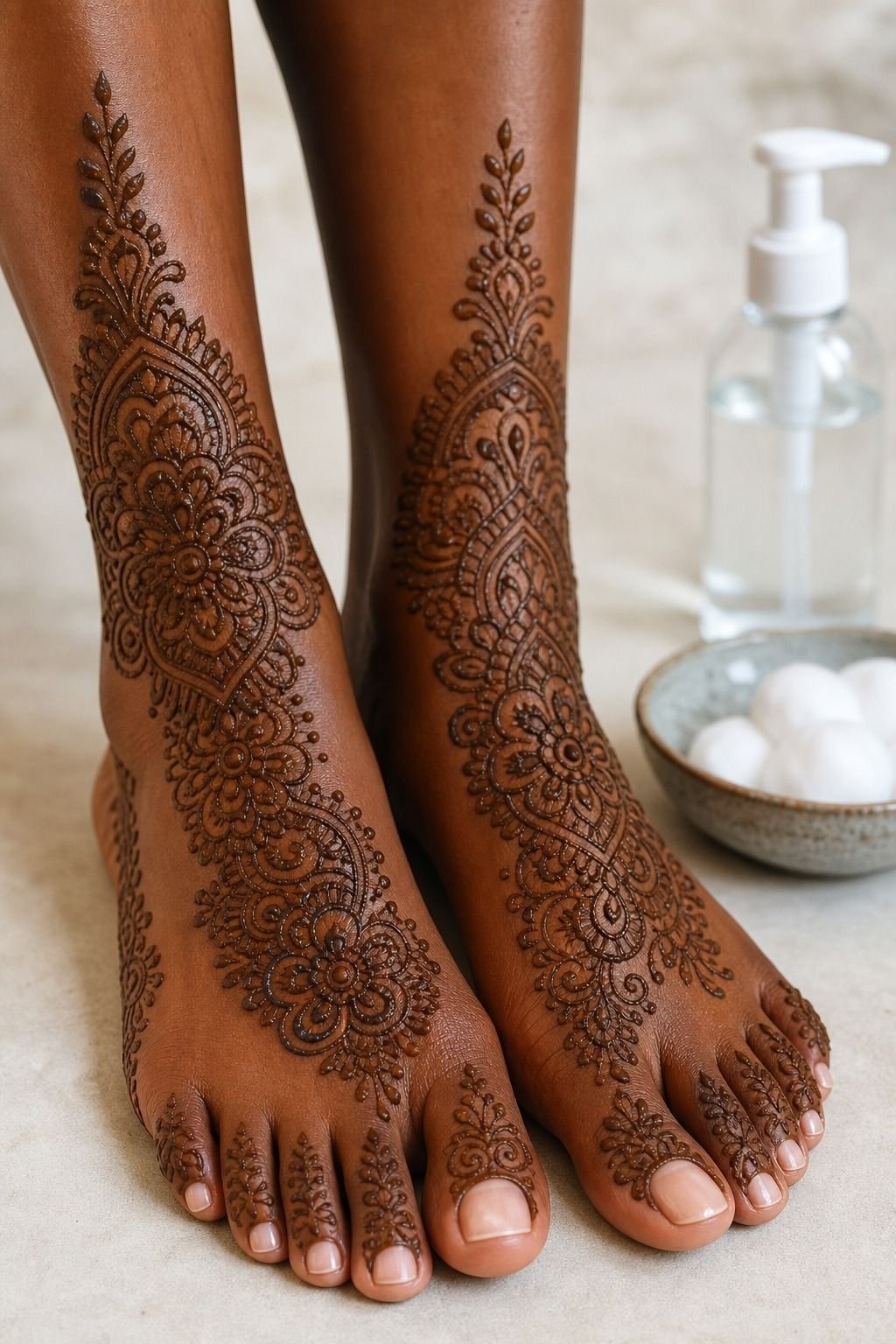
Here’s the practical nightmare nobody warns you about: a healing hand tattoo, and you still have to wash your hands all day. First few days it’s an open wound, and you can’t exactly wrap your hand in plastic and stop living.
What works: gentle unscented soap, lukewarm water, pat dry, thin layer of fragrance-free moisturizer, repeat. Sanitizer stings like crazy on fresh ink and dries the skin, so soap and water wins whenever you have the choice.
It’ll peel like a sunburn around days three to seven. Don’t pick the flakes or you’ll pull color out.
For henna, the opposite problem: you want to avoid water for the first 12 to 24 hours after paste removal so the stain can oxidize deep. Plan your staining around a day you can keep your hands dry-ish.
18I Select Artists Who Understand Mehndi Geometry
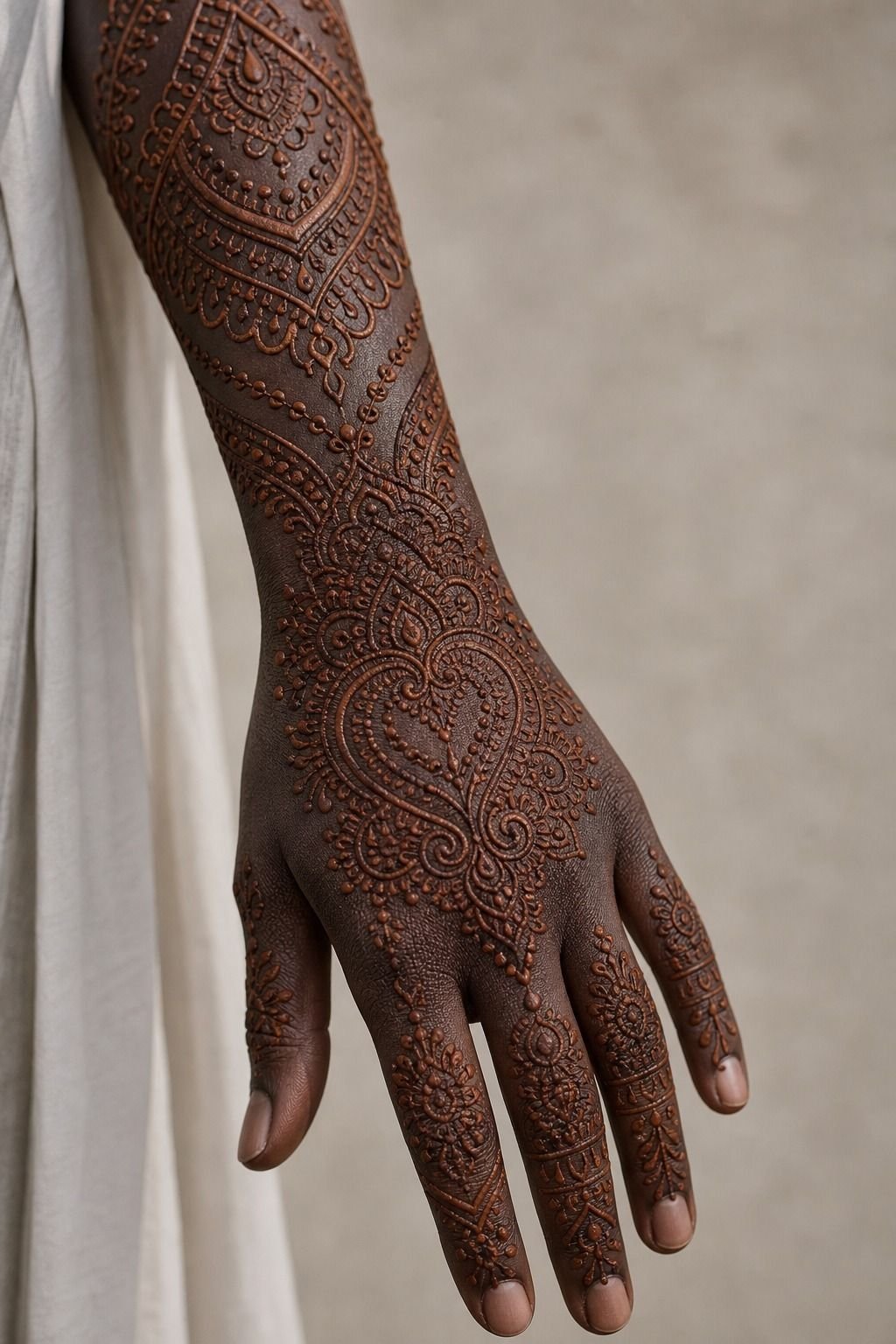
Not every tattooer can translate mehndi, and not every mehndi artist understands skin as a permanent medium.
19I Price Sessions by Detail Density and Time
Let’s talk money honestly. For henna in the US, a simple front-hand design typically runs $20 to $50, and full bridal coverage can run $150 to $300 or more depending on the artist’s reputation and the hours involved.
For tattoo work, most US shops have a minimum around $50 to $100, and hourly rates run $100 to $250 depending on artist and region. A small fine-line hand anchor piece might land near the shop minimum. A full mehndi-style hand and wrist piece could take three to six hours, so do that math before you book.
Density drives time, time drives price. That’s why my negative-space philosophy from section 7 isn’t just aesthetic. Open skin is free skin.
How much it cost
Full transparency, because I always want this number before I read an article like this. Here’s my actual spend across the whole journey.
Total across two years: about $705. The trials felt expensive at the time, but they saved me from tattooing at least two designs I’d have regretted. Cheap insurance, honestly.
Why I Almost Quit, and What Changed My Mind
I want to be straight with you about the year I nearly gave up on all of this. I’d stained my hands four times in five months chasing designs that looked incredible on other people and wrong on me.
Different skin tone, different hand shape, different stain depth. Every time the paste dried and flaked off, I felt like I was failing at something thousands of women make look effortless.
The turning point was embarrassingly simple. I stopped copying finished designs and started stealing structures.
A trail here, a gap there, an anchor where my anatomy actually wanted one. Once I treated the front hand as a map with zones instead of a rectangle to fill, every design I tried got better.
Not because my taste improved, but because I finally understood what the canvas was doing.
The second shift was accepting that temporary and permanent don’t have to compete. For a while I thought I had to choose: henna girl or tattoo girl. Turns out the best version is both, deliberately.
One small permanent anchor in black fine line, the lotus at my wrist, gives me a fixed point I love every single day. Then henna rotates around it with the seasons and the events, and I get the variety without committing my whole hand to ink that fights the highest-wear skin on my body.
If you’re sitting where I was, saving designs and never pulling the trigger because nothing feels exactly right, here’s what I’d tell you. The design isn’t the problem.
The map is. Draw your zones, test in paste, keep your knuckles clear, and leave half your skin open.
And please, run the patch test before anything permanent. Your hands are the most seen, most used, most washed skin you have.
They deserve the extra week of patience, and so do you.
The Questions I Get Asked Most
How much does a trendy mehndi front hand design usually cost?
For henna, expect about $20 to $80 for a front-hand session in the US, more for bridal. For a permanent fine-line version, shop minimums run $50 to $100 and hourly rates hit $100 to $250 depending on artist and region. Density drives the total.
Is a front hand design a good idea for a first tattoo?
Honestly, I’d say no for a first-ever tattoo. Hands are high-wear, they fade faster, and they hurt more than the forearm. Get your first piece somewhere forgiving, learn how your skin heals, then commit your hand once you know what you’re signing up for.
How do I choose an artist for mehndi-style tattoo work?
Portfolio first, always. Look for healed photos of fine-line ornamental work, especially on hands.
Ask how their line work holds up at one year. A clean studio and a willingness to say “that won’t age well” are both green flags.
How much do front hand tattoos hurt?
More than most spots. The palm side, fingers, and knuckle areas are spicy because the skin is thin and full of nerve endings. Lines feel sharper, shading is a duller burn.
The wrist is the most tolerable part if you want to start easy.
How long does a front hand tattoo take to heal?
Surface healing runs two to three weeks, full settling takes a couple months. Hands heal fussier because you can’t stop washing and using them. Gentle soap, thin moisturizer, no picking flakes, and keep fresh ink out of pools and direct sun.
What’s the best placement on the front hand for designs that last?
The wrist and the base of the fingers age better than fingertips, knuckles, or palm creases. Flat zones that flex less hold detail longer. If you want ideas organized by placement, the 18 simple mehndi designs front hand you can copy fast post breaks it down nicely.
The One I’d Tell You to Do First
If I had to pick one, I’d do the henna trial rounds first. Paste fades, regret doesn’t, and three sessions of testing cost less than one bad tattoo. Find your anchor motif in henna, live with it, then make only that one permanent.