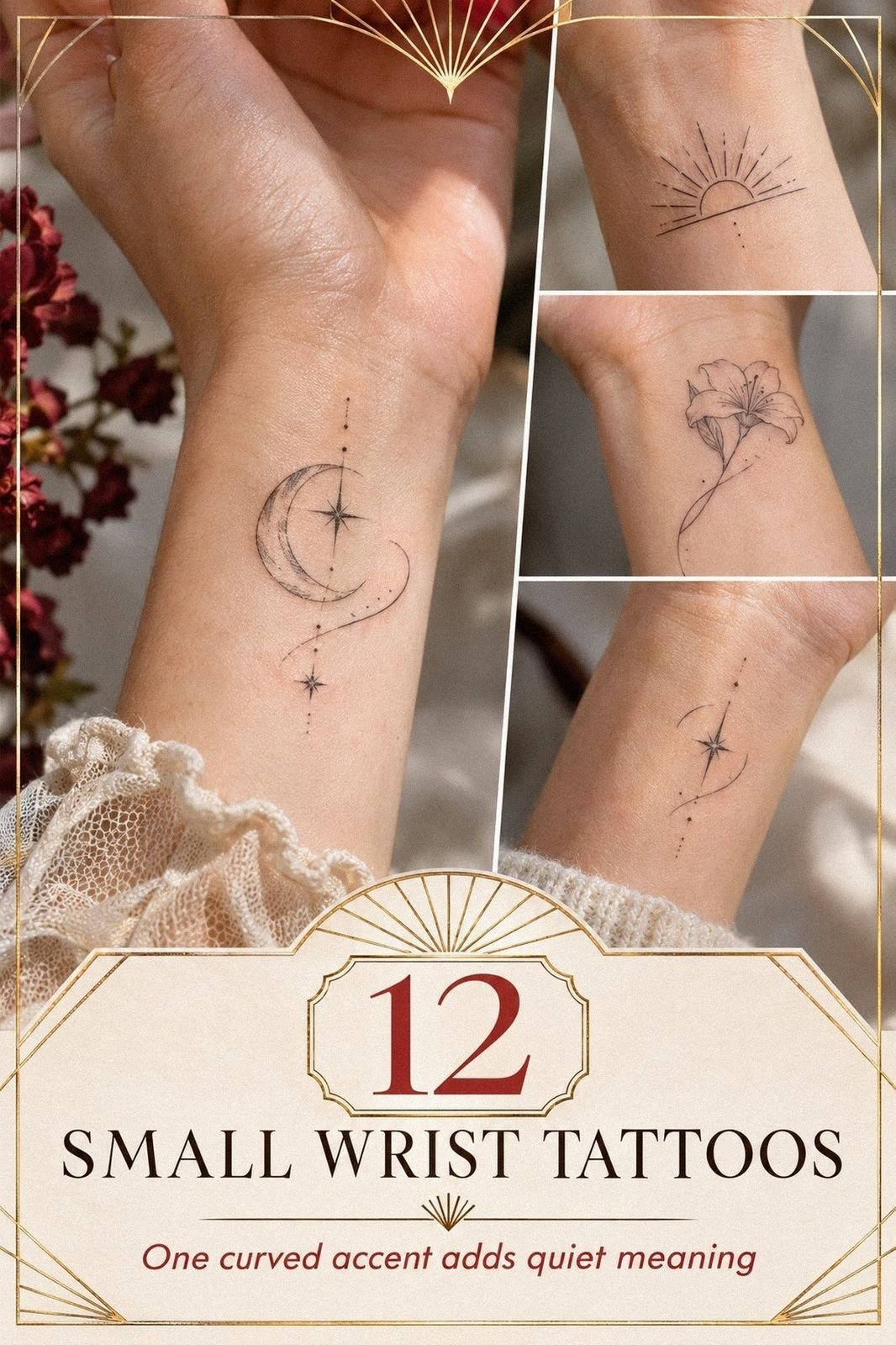
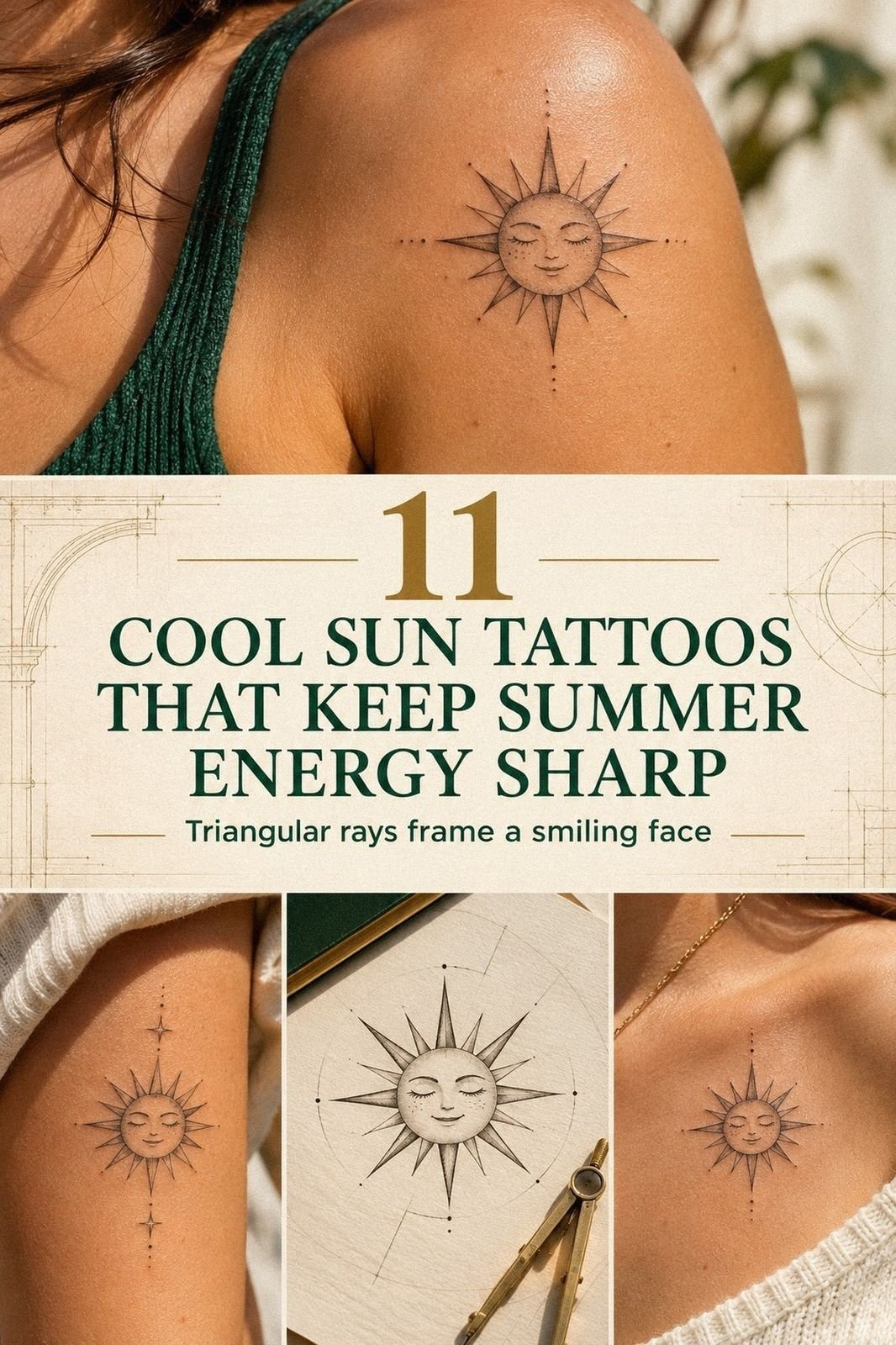
Cool sun tattoos can be a smart first tattoo when the design stays readable, the placement suits your tolerance, and the line weight matches your skin and lifestyle. I once chose a piece that was too fine for its size, and it softened faster than I expected. These ideas show what I’d choose now. Start small, but don’t play it safe.
Editor’s note: The best first tattoo isn’t always the smallest one. It’s the design whose silhouette, spacing, and meaning still make sense after the surface settles.
- Dainty Sun Tattoo With Fine Line Rays
- Can Minimal Black Ink Keep a Sun Tattoo Readable?
- The Antique Face Rule for a Vintage Sun
- Build a Sketch-Style Sun With Controlled Marks
- Why a Fierce Shoulder-Blade Sun Can Work
- Keep a Tiny Crescent Sun Open on the Wrist
- The Celestial Pair: Sun, Moon, and Small Stars
- Frame the Geometric Sun With Purposeful Linework
- When Color Earns Its Place in a Sun Tattoo
- What the Inner Forearm Reveals After Healing
- Dotwork Texture for a Sacred Sun
1Dainty Sun Tattoo With Fine Line Rays

This dainty sun tattoo uses short, even rays around a circular center. The delicate shape feels personal without disappearing, especially when your artist leaves enough open skin between each ray. If you’re drawn to quiet symbolism, this is an elegant way to mark energy, renewal, or a private beginning.
I’d keep the circle crisp and slightly smaller than a coin-sized emblem, but your artist should judge the final scale against your upper back. The upper-back placement gives the tattoo room to breathe and avoids constant friction from watchbands or tight cuffs. It’s understated, yet it still feels meaningful when someone catches it above a shirt collar.
The best version uses black ink with a single consistent needle grouping, not several competing line weights. Ask for black tattoo ink that reads cleanly in healed examples. You’ll want to see the artist’s healed work because hair-thin lines can soften as skin settles.
And don’t let “dainty” push you toward an unreadably tiny tattoo. I made that mistake once. A slightly larger circle can keep the rays distinct, and your design won’t need a touch-up simply because the gaps vanished.
Compare these women’s back tattoo ideas if you’re weighing upper-back shapes against shoulder placement.
For your consultation, bring the concept and point out the even rays, open center, and restrained expression. You can make it more personal with one longer ray at the top or a tiny initial inside the sun, but I’d skip heavy shading here. The charm is the crisp rhythm around your skin.
If you’re watching your tattoo budget, this style can offer good value because the design stays focused. A smaller, carefully spaced piece may be worth it when the artist’s healed work proves that the detail will remain legible.
2Can Minimal Black Ink Keep a Sun Tattoo Readable?

This sun tattoo aesthetic belongs on an inner forearm when you want a visible design that still feels polished and minimal. The short rays, clear circular face, and minimal blackwork sun make the idea sleek and expressive without relying on color. It’s easy to read from a few feet away!
Your inner forearm gives you a practical balance between visibility and control. You’ll see the tattoo often, but you can cover it for work or formal events without much effort. The placement is also more tolerable for many people than ribs, feet, hands, or sternum, though every body reacts differently.
I’d ask your artist to keep the rays slightly separated from the center instead of crowding them into one dark ring. That small gap creates a sharp negative-space edge. If you’re considering a first tattoo, this choice is less intimidating than a dense sleeve and more personal than a generic symbol.
But minimal doesn’t mean unfinished. Your artist should show confident circles, balanced spacing, and healed photos.
Look for single-needle linework only when the portfolio supports it; the finest needle isn’t automatically the right tool. I’d choose clarity over microscopic detail every single time!
You can compare this design with cool small tattoos before your appointment, especially if you’re deciding between wrist, forearm, and ankle scale. Keep the shape black, crisp, and slightly larger than a postage stamp if you want the rays to remain distinct as your skin changes.
Ask what the quote includes, whether the artist charges a shop minimum, and whether a future touch-up would cost extra. The total tattoo cost matters, but healed quality matters more than chasing the lowest number.
3The Antique Face Rule for a Vintage Sun

A vintage sun tattoo with a face brings more personality than a plain circle, and the wrist gives it a charming old-illustration quality. The ornate sun face includes fine hair-like details, a calm expression, and short rays that keep the image connected to classic engraving rather than cartoon styling.
Your wrist is a demanding placement because the skin moves, folds, and meets daily friction. I’d keep the facial details selective instead of filling every open area with tiny marks. One curved brow, a small nose, and a restrained mouth can make the design expressive without turning it muddy.
The design can feel intricate without becoming crowded. Ask your artist to show healed wrist tattoos on a similar skin tone when possible. Black linework can look different across undertones and lighting, and your consultation should include real healed photographs rather than only fresh work.
I’d call this the Antique Face Rule: one memorable expression beats ten decorative details. If you’re tempted to add rays of several shapes, don’t. A clean ring of short rays will keep the tattoo iconic, while too many flourishes can make your wrist look crowded.
For a masculine interpretation, the face can carry a fierce stare or sharper rays. A feminine version might use a graceful brow or a more playful mouth, but the core identity can stay unchanged. These wrist tattoos for guys show how scale and orientation can shift the impression.
This choice is worth it when the face is the reason you want the tattoo. It may not be the lowest-cost option if the details require careful placement, but the value comes from a recognizable expression rather than a generic circle.
4Build a Sketch-Style Sun With Controlled Marks

This sun tattoo sketch translates a loose pencil feeling into controlled tattoo marks. The sketch-style sun has confident construction beneath the rougher surface, so the design feels raw and expressive rather than accidental. On a golden tan forearm, those short rays can look especially graphic.
Your artist shouldn’t copy random pencil noise line by line. Ask for a few intentional doubled strokes, a slightly irregular circle, and open areas where your skin can show through.
That gives you a whimsical edge without sacrificing readability. You’ll want the main outline to remain stronger than the surrounding sketch marks.
The forearm is a useful placement because you can monitor the tattoo while it heals and protect it from direct sun more easily than a hand. Use a healed black sketch tattoo as your comparison point, not a fresh photograph with surface redness. Fine stray marks may soften, so the underlying structure matters.
But I’d skip an overly distressed version for a first tattoo. Too much looseness can look fashionable in a drawing and confusing on skin. The best option is a crisp center with a few imperfect rays, giving you a polished foundation and a gritty outer rhythm.
If you want to extend the concept, add one tiny star or a broken circle, but keep the additions subordinate. Browse cool arm tattoos for placement references, then ask your artist how the sketch marks may behave at your chosen size.
A moderate tattoo price can be enough for this design if you keep the composition focused. More marks don’t automatically create better value. The artist’s ability to control the irregularity is what makes the result feel intentional.
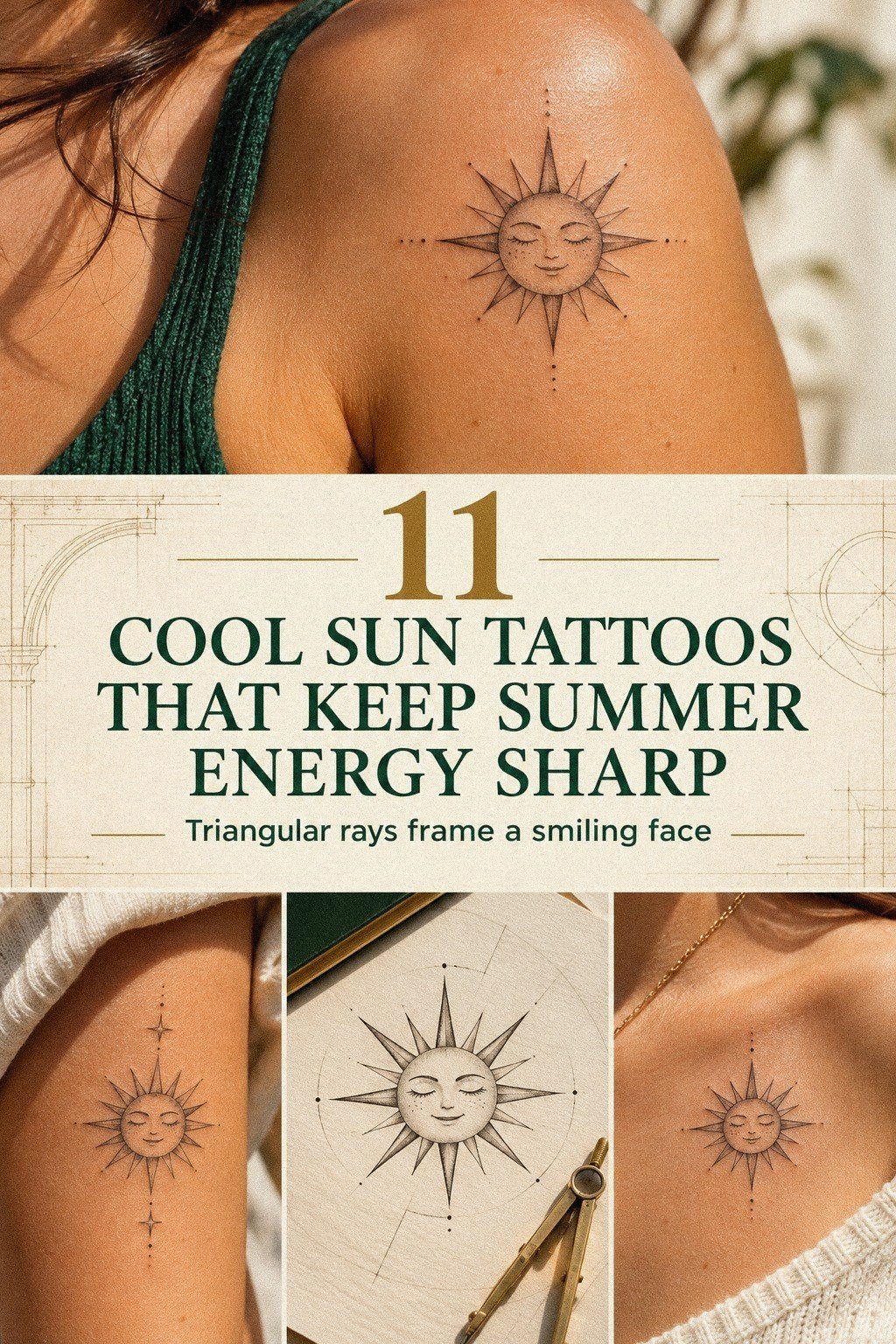
5Why a Fierce Shoulder-Blade Sun Can Work

The fierce sun concept works especially well as a traditional flash-inspired tattoo before it becomes a permanent piece.
6Keep a Tiny Crescent Sun Open on the Wrist

This tiny crescent sun tattoo keeps the wrist design almost weightless, with a curved center and short rays that follow the crescent’s edge. On deep ebony skin, the crescent black ink symbol can look striking when the artist uses clear spacing and enough contrast. The concept feels delicate, sacred, and personal.
Your wrist will expose the tattoo to washing, movement, and regular friction, so tiny does not mean careless. I’d ask for a scale that lets each ray remain separate after healing. A design that looks crisp on the stencil may lose definition if the openings are too narrow.
The hair-thin linework should be treated as a visual direction, not a demand for the smallest possible needle. Your artist may recommend a slightly stronger line so the crescent stays readable over time. You’ll want to trust that adjustment if the artist can show healed work on comparable skin.
I call this the Crescent Gap Rule: leave visible skin between the curve and the rays, or the whole symbol can close into a dark comma. If you’re nervous about pain, the wrist is commonly more tolerable than feet, hands, ribs, or sternum, though the bony edge can feel sharp.
A tiny piece can still carry a large meaning. You might connect the crescent to change, protection, or a private phase of life. Compare it with wrap-around wrist tattoos if you’re tempted to extend the rays around the side, but I’d keep this version facing forward for maximum clarity.
The wrist tattoo cost may be close to a shop minimum even when the piece is tiny. Ask whether the quote reflects the artist’s time, setup, and specialty. A low price isn’t good value if the design needs an avoidable correction later.
7The Celestial Pair: Sun, Moon, and Small Stars

The celestial concept pairs a defined sun with a crescent moon and a few small stars, so the sun-and-moon symbolism feels balanced rather than moon-led.
8Frame the Geometric Sun With Purposeful Linework
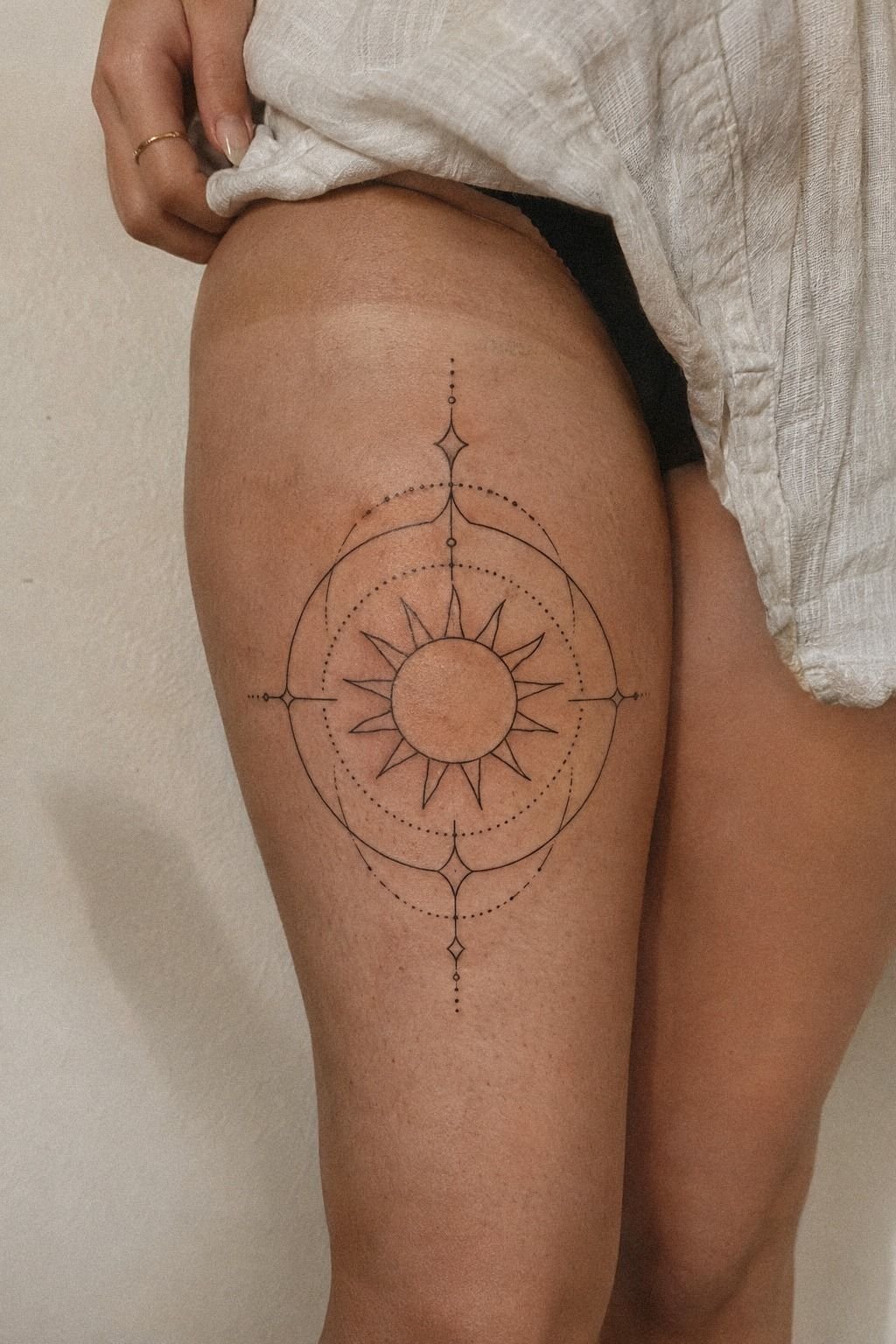
This geometric sun tattoo uses a precise frame around short, even rays, giving the composition a sleek and structured quality. The geometric sun frame feels sharp and polished without becoming sterile. Your artist can build the design from circles, triangles, or a simple angular border.
The thigh is forgiving enough for a larger composition, and you’ll have room to keep the frame proportional to the central sun. I’d begin with the circle, then set the surrounding lines at equal intervals. Uneven spacing will show quickly in a geometric tattoo, especially when the frame is meant to look deliberate.
Use measured geometric linework rather than decorative filler. Your artist should explain how they’ll place the stencil while you’re standing and sitting, because the skin shifts with movement. I’d also ask to see healed geometric work; crisp edges matter more here than elaborate shading.
And don’t let symmetry become a trap. A perfectly measured frame can still feel personal if one side carries a small break or a single symbolic mark. You’ll want enough order to make the design readable and enough restraint to keep it from looking like a diagram.
If you’re choosing between thigh and forearm, consider visibility first. The thigh offers more privacy and space, while the forearm makes the design part of your daily style. Browse best friend tattoo ideas for alternate placement thinking, then choose the location that matches how often you want to see the piece.
The geometric tattoo investment is worth considering because precision takes time. Ask for a complete quote instead of assuming the small footprint means a low cost. Careful stencil placement is part of what you’re paying for.
9When Color Earns Its Place in a Sun Tattoo
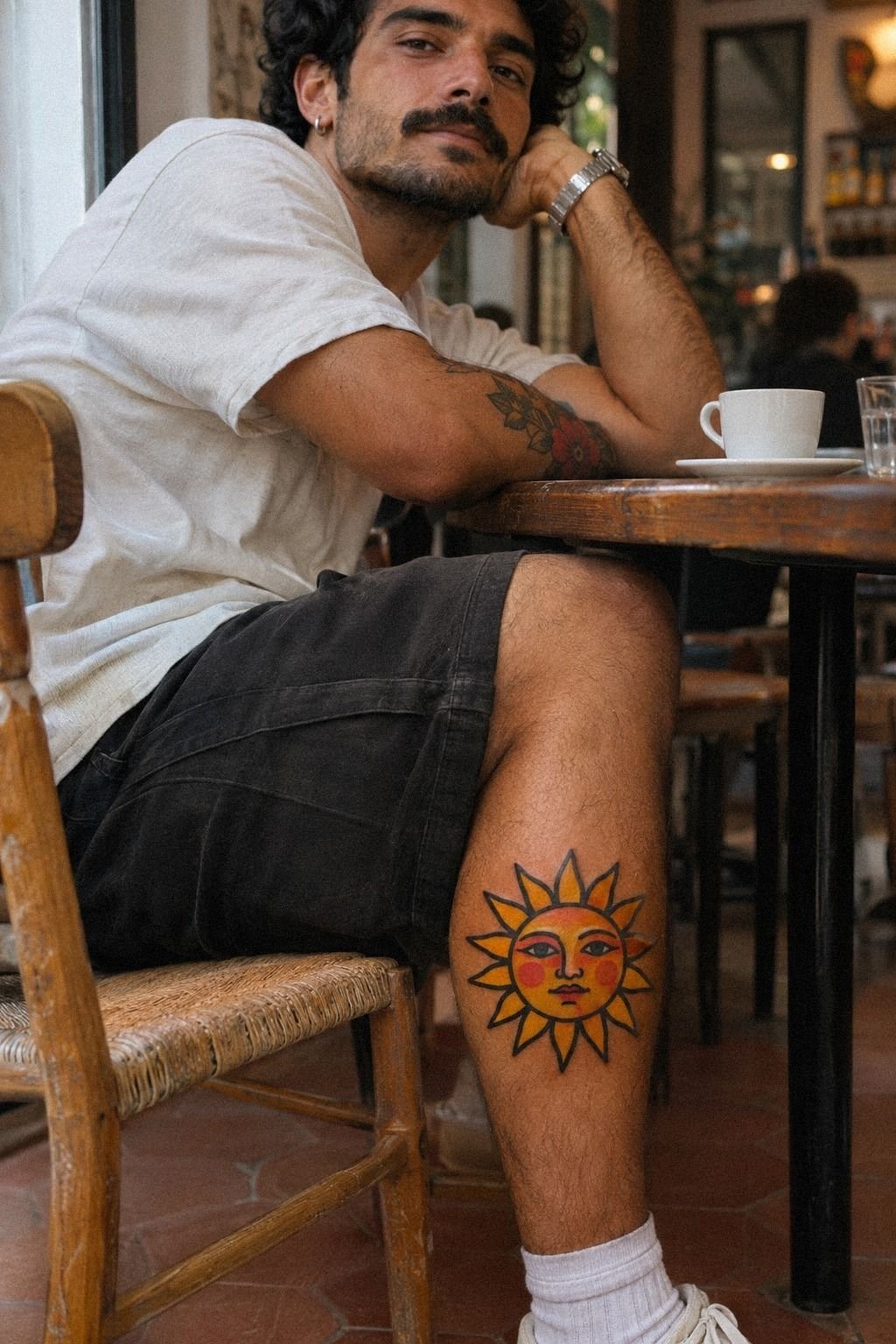
This colorful sun tattoo uses a neo-traditional approach, with vibrant golden rays and a stronger silhouette across the calf.
10What the Inner Forearm Reveals After Healing

The split concept is useful because it compares a stencil with the same design after healing. That makes the stencil-to-healed tattoo process easier to understand, especially when you’re deciding whether a fine-line sun will remain readable on your inner forearm.
Your artist should explain what changes after the surface settles. Fresh ink can look darker and sharper, while healed lines may appear softer and more integrated with your skin. I’d ask to see several healed examples, not just one carefully chosen photograph, so you’re judging the artist’s normal results.
The healed inner-forearm tattoo is a practical choice for visibility, aftercare, and future touch-up decisions. You’ll be able to monitor the surface during the first weeks, and you can protect it from direct sun more easily than a hand tattoo. Keep the design clear rather than overloaded with micro-detail.
But don’t compare the stencil and healed sides as if they should look identical. Skin has texture, light shifts, and healing changes the finish. The goal is a crisp symbol with stable spacing, not a permanent copy of the first-hour photograph.
For aftercare, wash gently, moisturize as directed, and avoid swimming and direct sun while the surface heals. Surface healing commonly takes about 2 to 3 weeks, while complete settling can take around 2 to 3 months. Your artist’s instructions should lead, and small tattoos with deep meaning can help you compare alternate scales.
The inner-forearm tattoo value comes from being able to assess the design often and protect it more easily than a hand piece. Ask about the artist’s aftercare guidance before booking. Clear expectations are worth more than a confident promise about perfect healing.
11Dotwork Texture for a Sacred Sun

This sacred sun tattoo uses dotwork texture instead of heavy solid shading, creating a refined pattern around the central face and short rays. On deep brown skin with a warm undertone, the dotwork sun texture can feel intricate, powerful, and symbolic when the dots have enough spacing to breathe.
Your upper arm gives the design a stable area and enough width for gradual shading. I’d ask for the darkest dots near the center and lighter spacing toward the outer rays. That creates depth without turning the entire tattoo into one dark mass.
The black dotwork shading should look intentional from close up and readable from farther away. Your artist needs consistent dot placement, but you don’t need every section packed tightly. A sacred design benefits from pauses, and your skin should remain part of the composition.
I call this the Three-Ring Method: central face, textured middle band, open outer rays. It gives you a clear structure and keeps the tattoo from becoming visually noisy. If you’re comparing dotwork with solid black, I’d choose dotwork when you want ritual feeling and solid black when maximum distance-readability matters.
You can personalize the design with a small star, a crescent, or a single geometric mark, but don’t add symbols without knowing why they belong. Your tattoo should feel meaningful rather than merely ornate. For more masculine placement references, visit men’s wrist tattoos and compare how black density changes across skin and scale.
The dotwork tattoo budget should include the time needed for consistent spacing. It may cost more than a simple outline, but the added value is visible in the texture. Ask for healed dotwork before deciding whether the investment fits your priorities.
What I’ve Learned Before Booking a Sun Tattoo
I’ve changed my mind about sun tattoos more than once. At first, I thought the smallest design would be the safest first choice. Then I saw a healed piece where the rays had softened into the center, and I understood that restraint isn’t the same as shrinking everything.
The artist, placement, and spacing have to agree.
My strongest preference is simple: choose the design you can still describe without pointing at it. A sun with short even rays, a calm face, or a clear geometric frame has a better chance of staying legible than a crowded emblem full of tiny promises. You’ll know the concept is working when the silhouette survives at a glance.
I also wouldn’t choose an artist from fresh social media photographs alone. Ask for healed examples, inspect the line consistency, and look at tattoos on skin tones close to yours.
A polished portfolio can still hide weak healing if every photograph was taken on appointment day. That question may feel awkward, but it protects your money and your skin.
The practical part matters too. Surface healing often takes about 2 to 3 weeks, while complete healing can take around 2 to 3 months.
During that time, you’ll need gentle washing, light moisturizing as directed, and a break from swimming and direct sun. It’s not dramatic, but it does require patience.
And yes, fine lines can spread or soften over time. Strong black placement, sensible scale, and UV protection give you better odds.
If I were booking today, I’d choose a clean inner-forearm or upper-arm design with enough open skin to age gracefully. That’s the balance I trust.
Healed Photos Tell the Truth
Fresh tattoos are exciting, but healed tattoos tell you more about an artist’s actual results. Look for consistent line weight, readable gaps, and edges that still feel intentional after the initial redness disappears. A haunting concept deserves evidence that it can survive the healing process.
Ask how old the healed examples are and whether they were photographed in ordinary light. One perfect photo doesn’t establish a pattern. Several healed pieces with different placements and skin tones give you a more honest sense of what you may receive.
The healed portfolio should match the style you want. A delicate fine-line piece, a bold traditional sun, and a dotwork face require different skills. Don’t assume an artist who excels at one style will automatically deliver another.
You can also ask whether the artist expects any touch-up after the first healing period. Some skin releases pigment unevenly, and a small correction can be normal. The important thing is understanding the policy before you pay a deposit.
Placement Should Match Your Daily Life
Placement affects visibility, comfort, friction, sun exposure, and how often you’ll think about the tattoo. An inner forearm feels direct and personal.
An upper arm or shoulder blade can feel more private. A thigh offers width when you want a larger, more intricate design.
Think about clothing, exercise, and your work routine. A visible tattoo may feel empowering now but require regular coverage later. A hidden tattoo may feel understated but still carry deep meaning every time you see it.
If you’re comparing wrist and forearm options, use wrist tattoo ideas alongside your artist’s advice. The right placement isn’t only about pain. It’s about whether the design has enough room to remain crisp.
Your body can also change over time. That doesn’t mean you need to predict every future change, but it does make sensible scale and strong spacing valuable. A graceful design can remain personal without demanding constant maintenance.
A tattoo budget should cover the artist’s skill, preparation, hygiene, time, and follow-up policy. It shouldn’t be based only on the smallest number you can find online. The cheapest quote may not offer the best value if the design needs correction.
Ask whether the artist charges by the hour or by the piece. Confirm the deposit, minimum, expected session length, and touch-up terms. A clear conversation about tattoo pricing can prevent awkward surprises.
If the design is too detailed for your budget, simplify it rather than forcing the artist to rush. Remove a few stars, widen the gaps, or reduce the shading. A crisp, restrained tattoo is often more timeless than a crowded design with every idea included.
The most worthwhile upgrade is usually healed expertise. I’d spend more on an artist with strong healed work before spending more on extra symbols or color. Your skin is the part you’re carrying forward.
The Design Question I Ask First
Before booking, I ask one question: what should someone notice first? If the answer is the face, keep the rays quiet.
If the answer is the crescent, protect the gap. If the answer is color, build the silhouette around it.
That decision gives the artist a useful hierarchy. It also prevents a personal tattoo from becoming a collection of unrelated details. The most expressive designs usually have one clear thought at their center.
Bring two or three references, but explain what you like about each one. You might prefer the rays from one concept, the face from another, and the placement from a third. Your artist can turn those preferences into a cohesive, personal drawing.
Leave room for professional judgment. A daring idea may need a stronger line, a wider gap, or a slightly larger scale.
Those changes don’t erase your vision. They help it survive on skin.
The Questions I Get Asked Most
How much do Cool Sun Tattoos usually cost?
A small tattoo in the United States typically starts around $50 to $100 at a shop minimum, while hourly rates often run about $100 to $250. The final tattoo price varies by artist, region, size, placement, and detail. Ask for a quote before booking, and don’t choose solely by the lowest number.
Are Cool Sun Tattoos a good idea for a first tattoo?
Yes, cool sun tattoos can work well as a first tattoo because you can choose a manageable size and a tolerable placement. Clear linework keeps the symbol readable, while the meaning can remain personal. Inner forearm, upper arm, thigh, and shoulder are often easier starting points than ribs, feet, hands, or sternum.
How do I choose a tattoo artist for Cool Sun Tattoos?
Choose an artist with healed examples of the style you want, especially fine-line, dotwork, geometric, or neo-traditional work. A healed portfolio matters most because fresh ink can hide how lines settle. Check hygiene standards, ask about their specialty, and compare related arm tattoo ideas before your consultation.
How much do Cool Sun Tattoos hurt?
Pain depends on your body and placement, but ribs, feet, hands, and sternum are commonly more painful than forearm, thigh, shoulder, or upper-arm areas. Placement usually affects comfort more than the sun symbol itself. Your artist can suggest a tolerable location if you’re nervous about your first session.
How long do Cool Sun Tattoos take to heal?
The surface commonly heals in about 2 to 3 weeks, while complete healing can take around 2 to 3 months. Gentle aftercare supports clean healing: wash as directed, moisturize lightly, avoid swimming during the early stage, and protect the healed tattoo from direct sun.
What’s the best placement for Cool Sun Tattoos?
Inner forearm, upper arm, thigh, shoulder, and upper back are strong choices because they offer useful visibility, workable scale, and generally manageable sensitivity. Your placement controls the experience as much as the design does. Compare wrist proportions with wrap-around wrist tattoo references before choosing a smaller piece.
Where can I buy a Cool Sun Tattoos design?
You don’t need to buy a finished tattoo design online. Work with a licensed tattoo artist who can create or adapt a reference for your body and style. A custom consultation protects originality and fit, and there’s no affiliate product or required purchase behind these ideas.
You’ll want the final stencil made for you.
Where I’d Start First
If I had to pick one, I’d start with the inner-forearm minimal sun. Its open spacing stays readable, the placement is usually manageable, and you can judge the healing without guessing. Pin this guide for later and compare your favorite with your artist’s healed portfolio before booking!