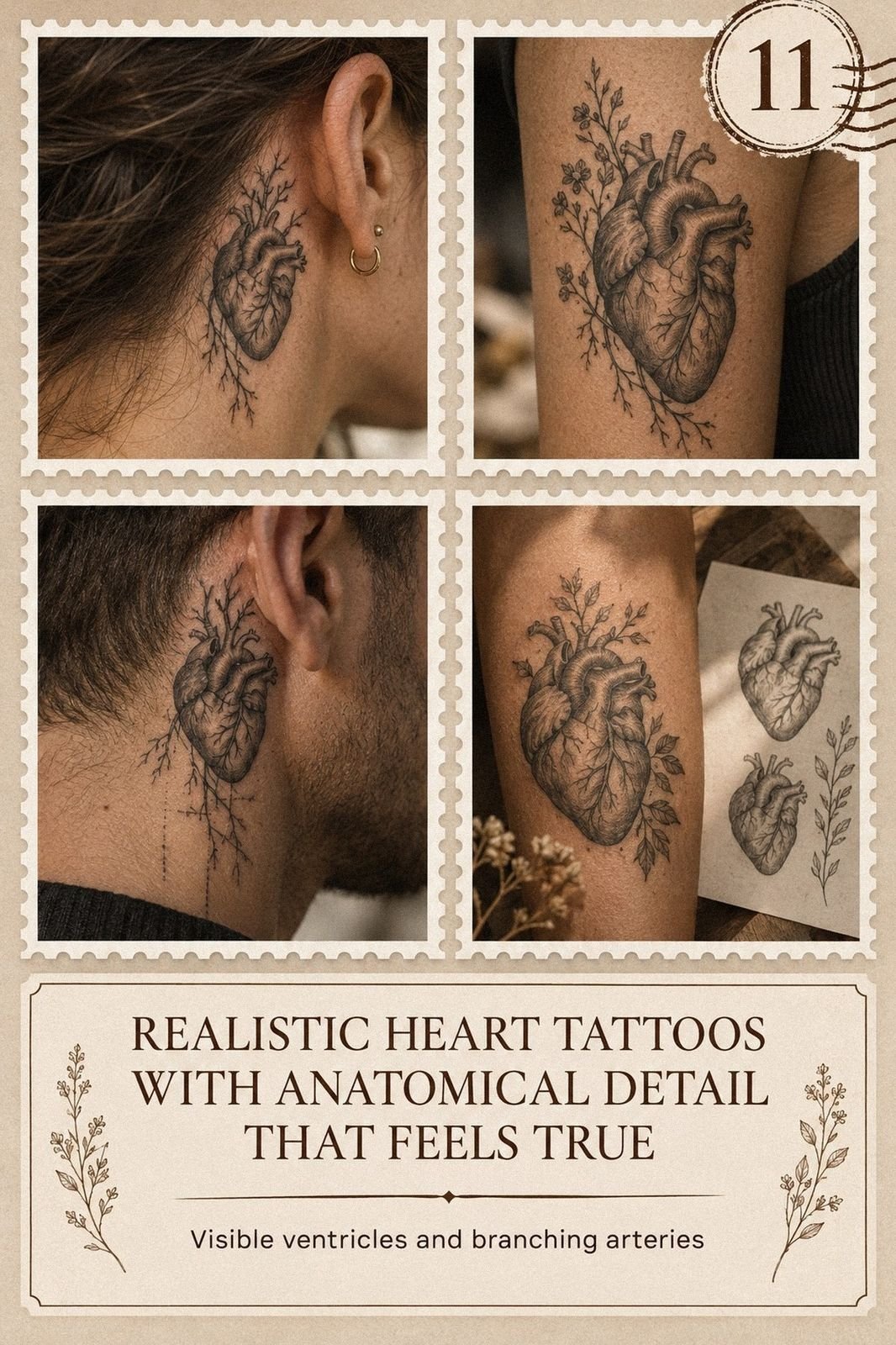
Realistic heart tattoo ideas don’t have to mean a long, brutal appointment. I once chose placement before thinking about skin movement, and the result looked less crisp than I wanted. Now I’d start with a symbolic design, a steady artist, and a spot that lets your skin stay calm. That’s the whole game!
- ✓ Start With an Anatomical Heart Behind the Ear
- ✓ Can Cast Shadows Make a Tiny Heart Look Three-Dimensional?
- ✓ Let a Wildflower Frame Guide the Heart
- Start With an Anatomical Heart Behind the Ear
- Can Cast Shadows Make a Tiny Heart Look Three-Dimensional?
- Let a Wildflower Frame Guide the Heart
- Choose a Bleeding Heart With One Fierce Color Note
- Sacred Heart, Classic Flame, Personal Meaning
- Where Should a Realistic Heart Sit Across the Sternum?
- Put a Miniature Human Heart on the Wrist
- Use Surgical Sutures for an Edgy, Symbolic Break
- Black-and-Grey Heart or Color? My Quiet Pick
- Let Red Arteries Carry the Emotional Weight
- Build a Full-Sleeve Heart Around One Personal Mark
1Start With an Anatomical Heart Behind the Ear
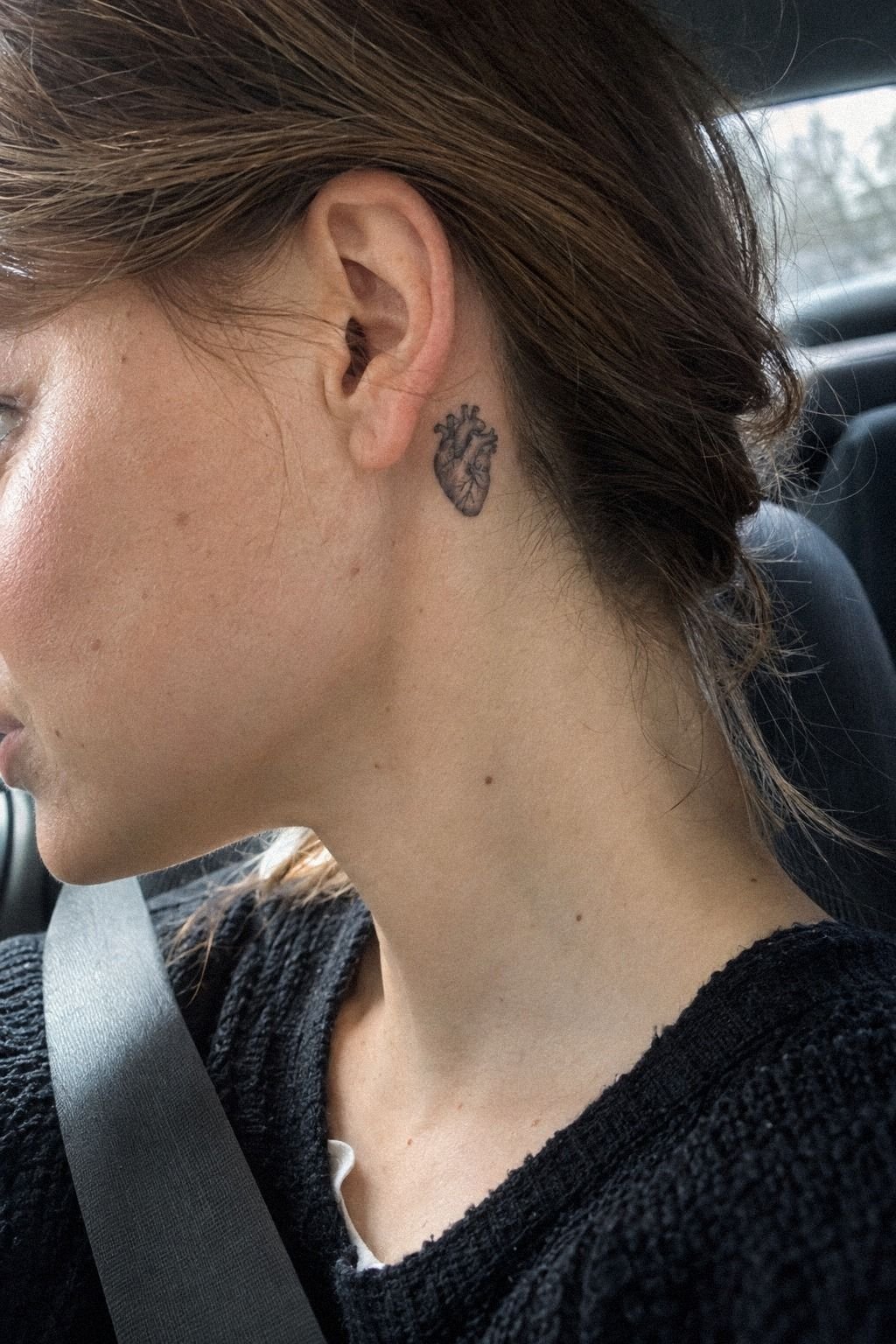
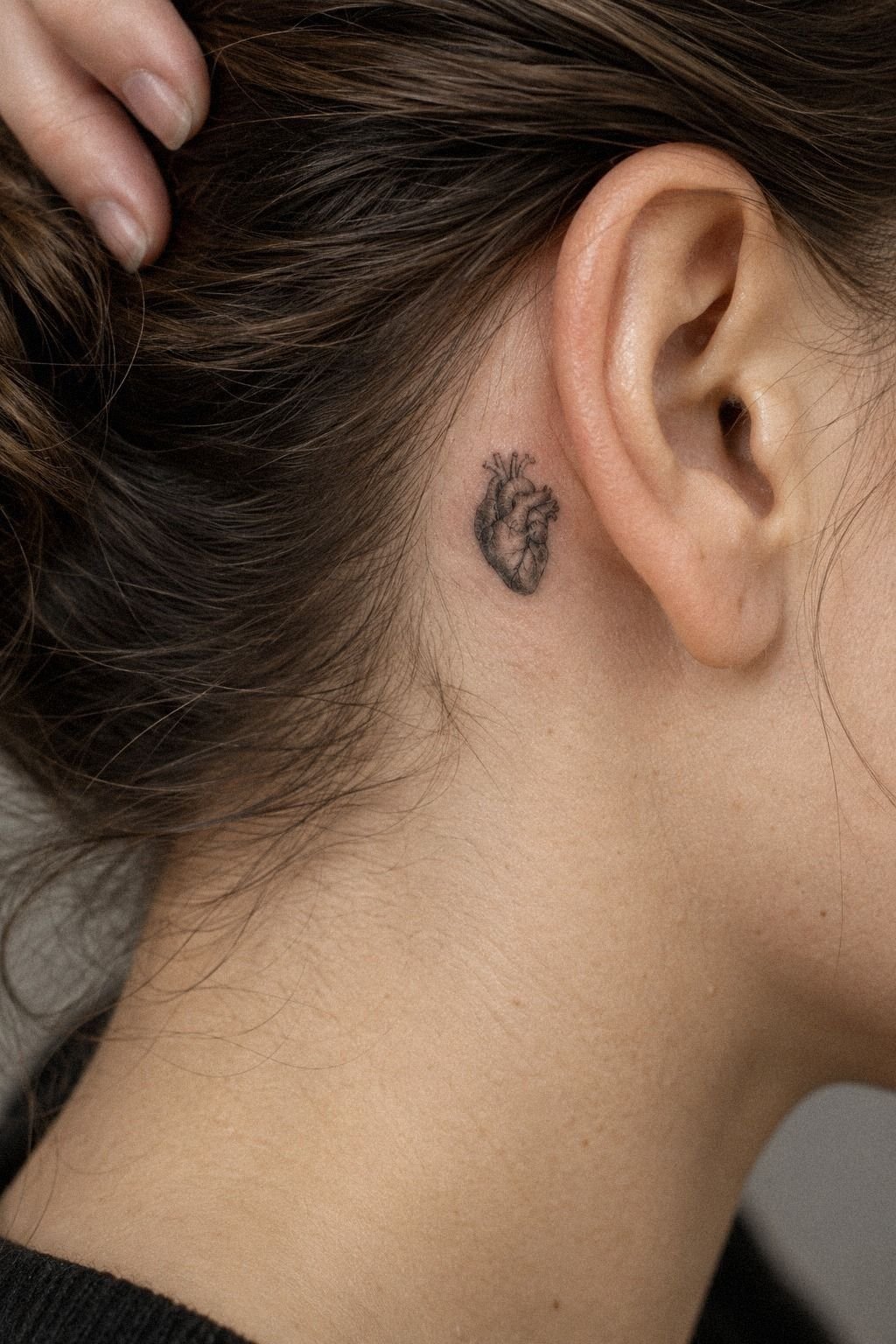
Behind the ear gives this small design an intimate, understated feel. A micro-realism heart can read clearly without heavy shading when you leave enough skin showing between the valves and veins. If you want a personal mark that stays mostly hidden, you’ll get more impact from a crisp outline than from extra detail.
I’d ask your artist to keep the veins selective. Too many tiny branches can blur as the tattoo ages, especially in a design under one inch.
The behind-the-ear placement works best with one dominant contour, a few meaningful veins, and open skin around the heart. That restraint feels elegant.
Clean linework. A tiny anatomical silhouette.
Terracotta and olive accents. Your tattoo doesn’t need to shout.
You’ll want to compare healed examples before booking, not only fresh work. The line weight matters more than the number of details, and I’d choose a delicate outline when the design is this small. The realistic heart tattoo guide can help you judge how different lines behave after healing.
2Can Cast Shadows Make a Tiny Heart Look Three-Dimensional?
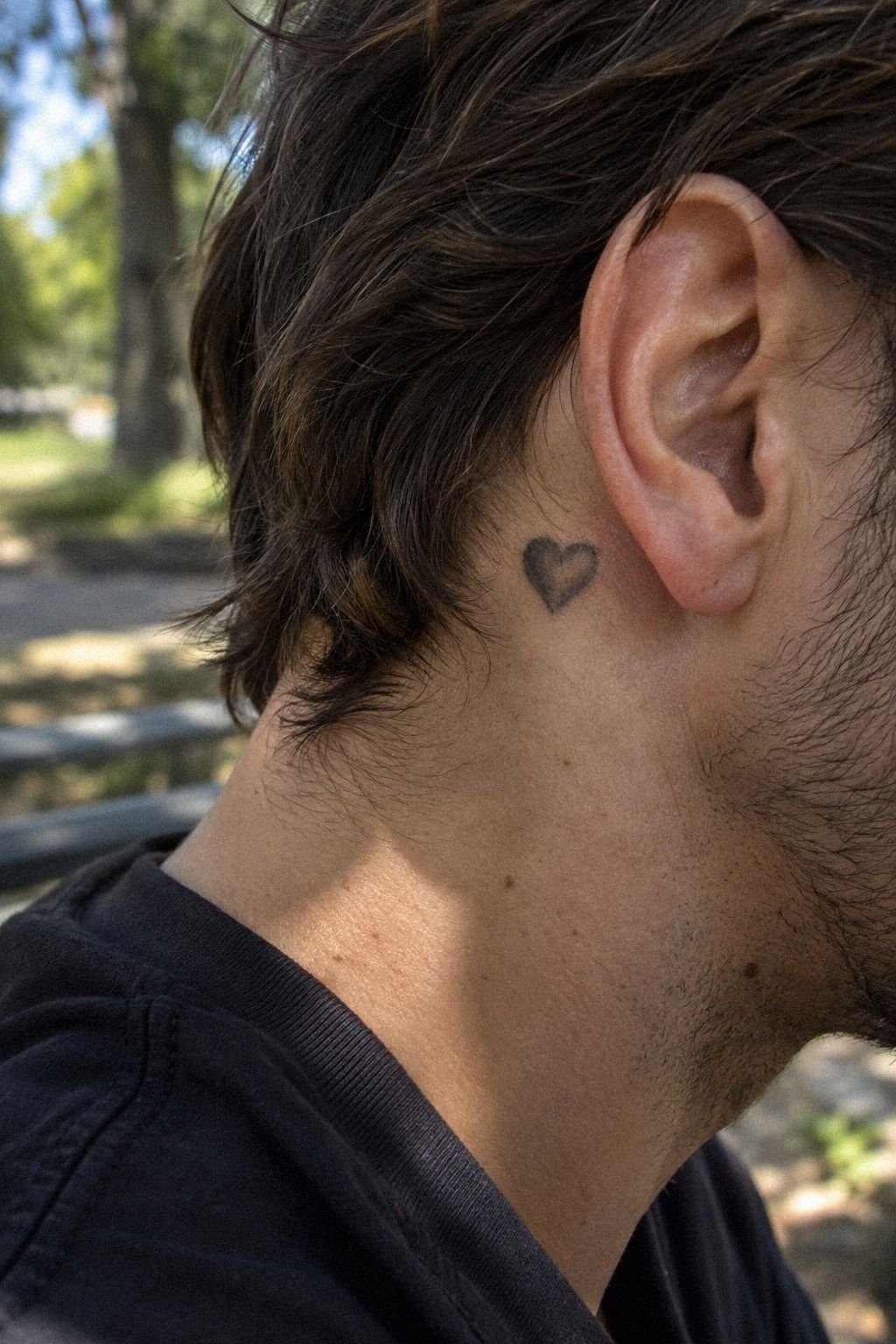
A small 3D heart behind the ear can look surprisingly powerful when the three-dimensional shading is placed carefully. You’ll want the shadow beside the heart, not over its edge, so the shape keeps a sharp silhouette. That contrast gives the design depth without turning it into a dark patch.
The shadow needs a direction. I’d choose one soft underside and one sharper contact point, then leave the upper curve clean. The cast shadow works because your eye reads the darkest tone first, the middle grey second, and the skin break last.
A lifted heart. A narrow highlight. One sharp edge.
You can keep the illusion bold without making it heavy.
If you’re considering a 3D heart tattoo, bring your artist a reference at the same scale and placement. A large forearm example won’t translate perfectly behind the ear. Ask for an actual-size stencil before you commit, because final size affects both cost and readability.
I’d skip a full black background here. A clay-toned shadow may look dramatic while keeping the miniature heart lighter than a solid black field.
A focused shadow gives you better value for the space. You can also compare healed examples in this heart tattoo reference guide.
3Let a Wildflower Frame Guide the Heart
The botanical version uses a single stemmed flower around the heart, which makes the composition feel flowing rather than crowded. On medium olive skin, botanical linework can look crisp when the artist leaves clean gaps between petals, stem, and heart. You’ll want every line to have a job.
I like one flower better than a bouquet in this placement. A crowded frame would compete with the heart’s shape and make the design less delicate. The wildflower stem should guide your eye toward the center, not become a second focal point.
One curved stem. Small petals.
A meaningful center. That’s enough for a playful, personal mark.
If you’re collecting realistic heart tattoo designs, ask for a flower that carries personal meaning instead of choosing one only for its outline. A rose feels classic, while a wildflower feels more personal.
The heart outline should still lead the composition. The red heart tattoo collection has ideas for adding restrained color later.
I’d keep this version mostly plum, grey, and rose-gold. Open skin makes the rose-gold accent feel lighter when color is added sparingly.
You’ll preserve more value if the flower supports the heart instead of competing with it. A second look at the realistic heart tattoo guide may help you simplify the anatomy.
4Choose a Bleeding Heart With One Fierce Color Note
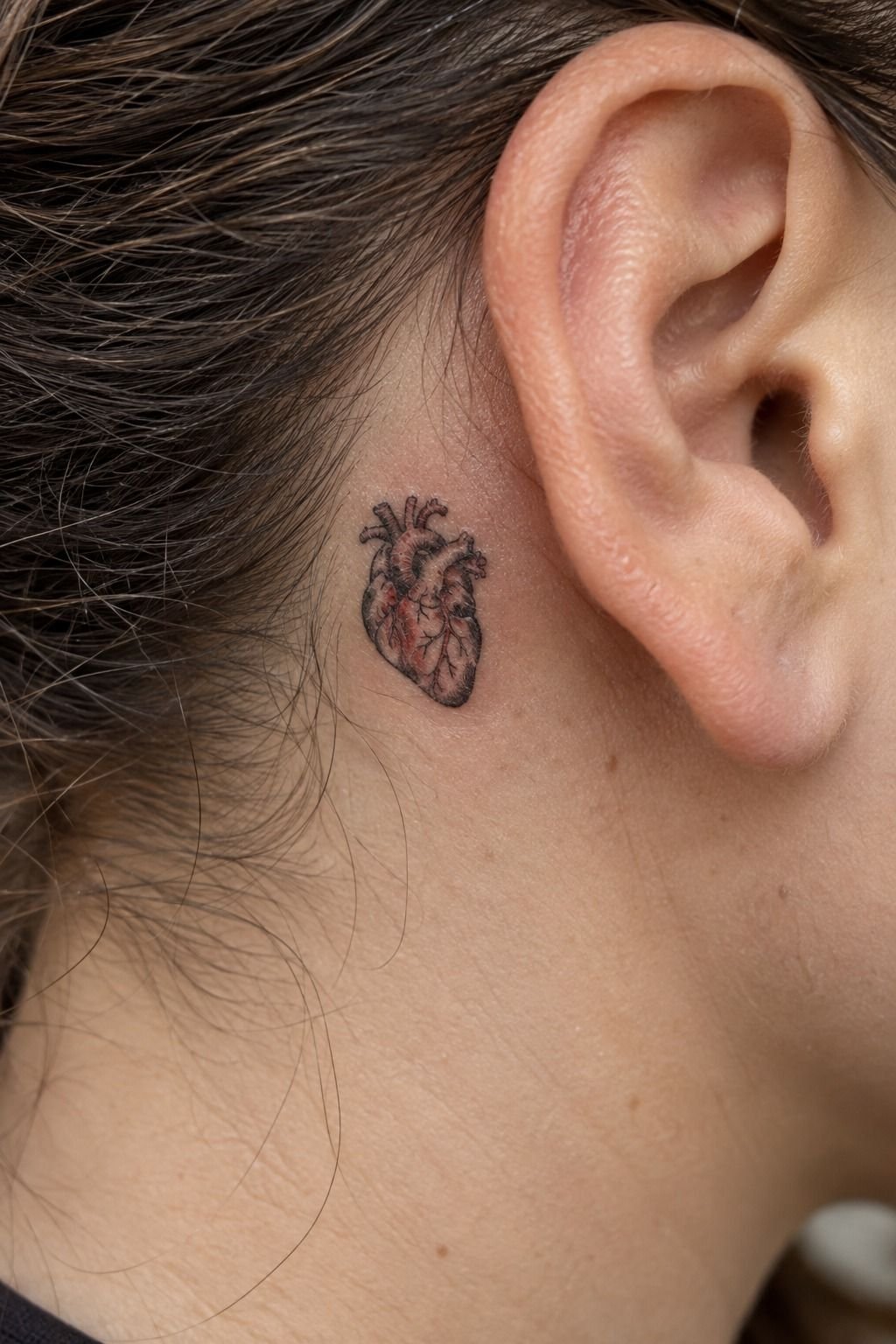
This design keeps the heart small but gives it a raw, expressive mood through a few downward marks. The deep navy ink can look vibrant when the artist uses color sparingly. You’ll want the bleeding effect to look intentional, not like loose lines falling away.
I’d limit the drips to three or four shapes. Too many will make the tattoo resemble a melting symbol, which changes the message.
A tiny highlight on the upper curve creates sharp contrast against the darker texture. That balance feels haunting without becoming theatrical.
A sharp contour. Controlled drops.
One vibrant accent. Your meaning can stay private.
Who says a meaningful tattoo needs a long explanation? Your heart might represent grief, recovery, love, or a private turning point.
The bleeding effect should support that story, not explain it for you. If you’re unsure about navy, test the idea on paper first.
I’d choose navy ink with one ivory detail over a fully colored heart every time. The navy ink gives the design structure, while the light accent remains expressive. The sacred heart tattoo meaning guide can help you separate traditional symbolism from your own story.
5Sacred Heart, Classic Flame, Personal Meaning
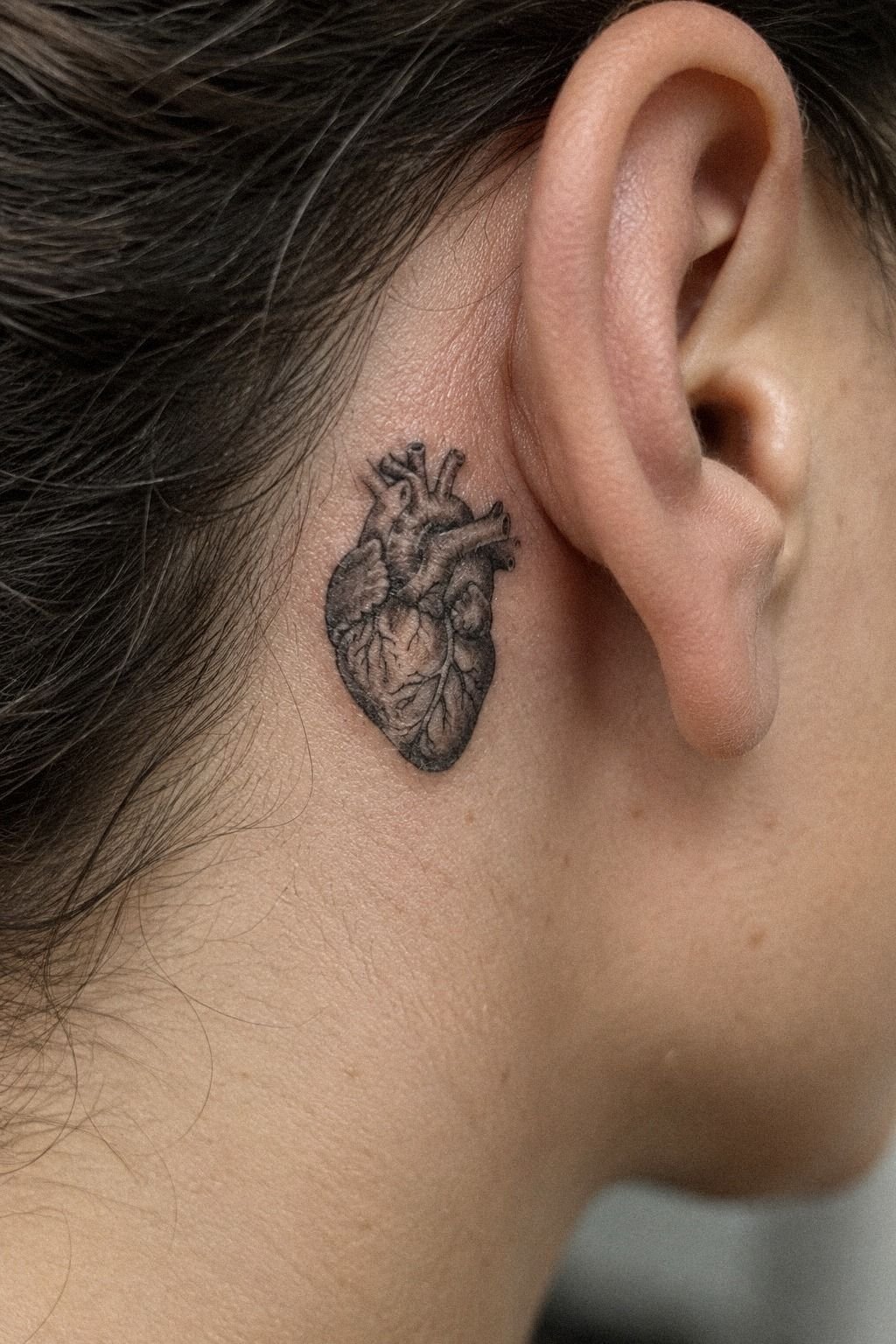
A sacred heart can combine a recognizable symbol with intricate flame shapes, a crown, or a small banner. The sacred heart feels powerful when the artist edits the ornament instead of copying every available detail. You can make the design personal through one symbol that actually matters to you.
I’d keep the flames clean and directional. Too many points can blur around a small heart, while a few bold shapes will stay more readable.
The flamework should frame the heart without swallowing it. That balance makes the piece ornate but still crisp.
If you want a vintage mood, consider a restrained crown or a narrow halo. I’d avoid adding every classic element at once. The ornamental frame should have one clear focal point, whether that’s the heart, the flame, or the lettering.
Before you book, ask to see healed work in a similar size. Fresh ink can look polished while hiding how fine lines will settle. Checking an artist’s healed portfolio is worth the extra time, especially when your budget is limited and you want lasting value.
For more symbolism, compare the love heart tattoo ideas before deciding whether your heart should feel traditional or more personal.
6Where Should a Realistic Heart Sit Across the Sternum?
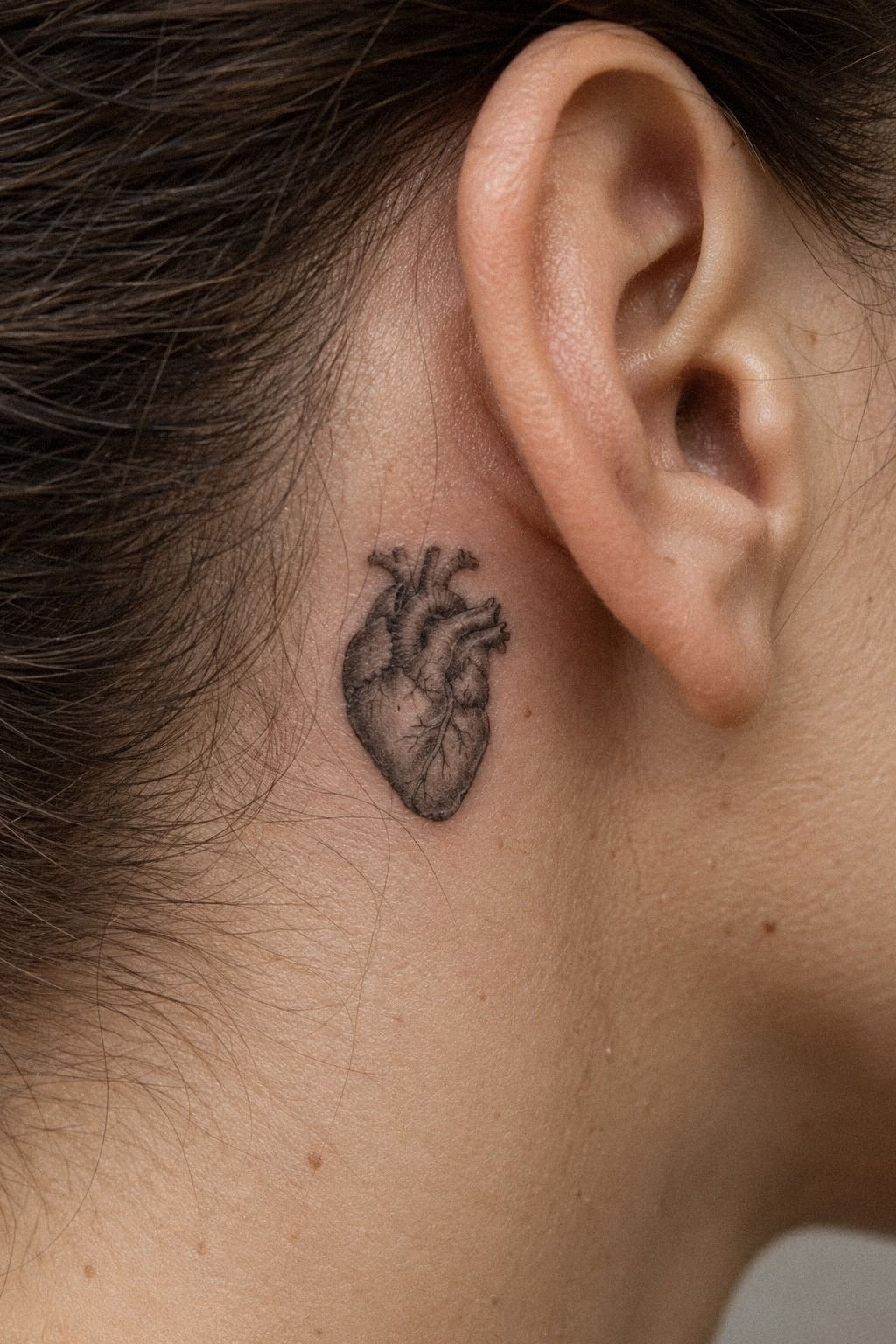
A sternum heart creates a centered, intimate composition, and a forest-green heart with rust accents can have a striking presence there.
7Put a Miniature Human Heart on the Wrist
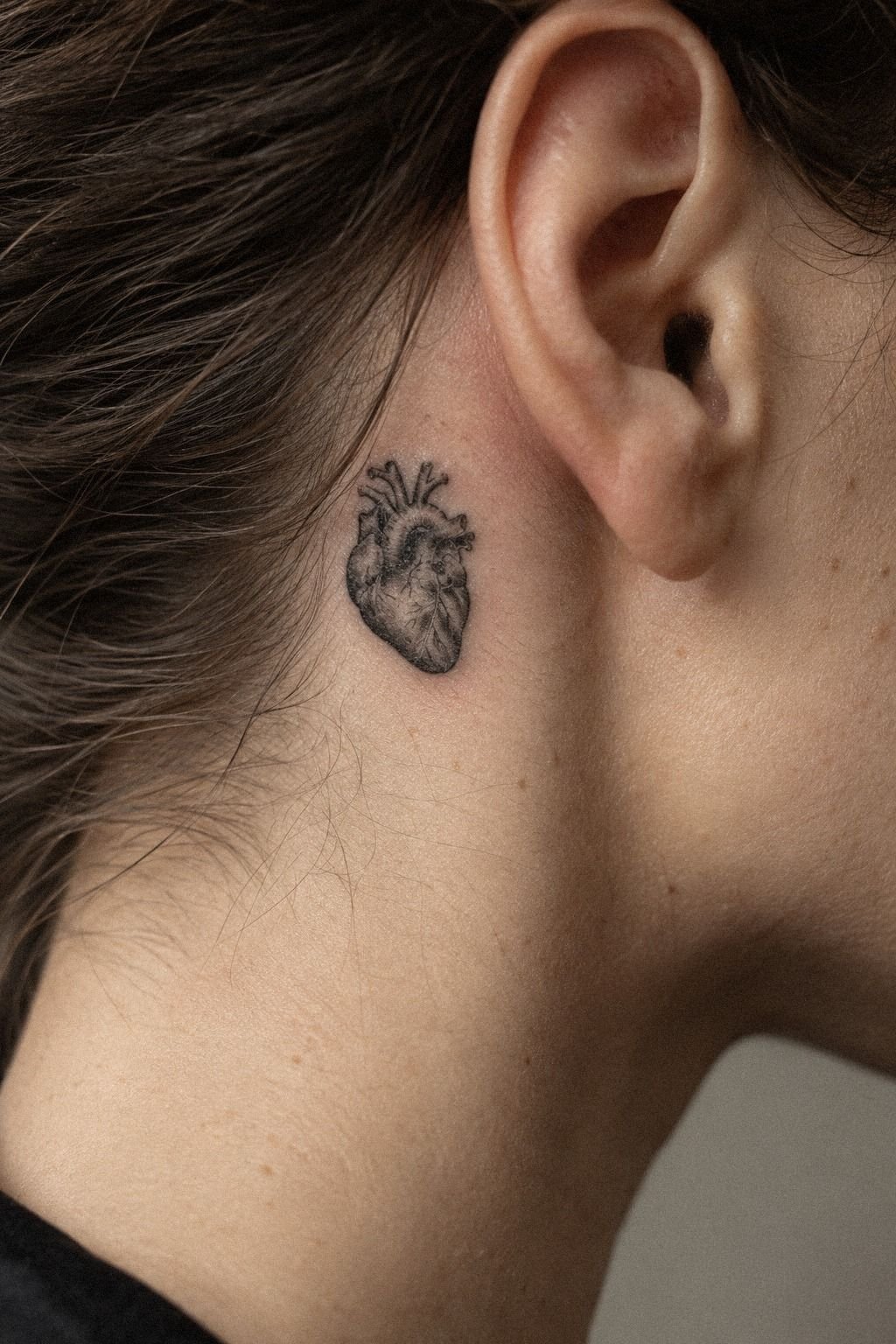
The wrist version is visible, direct, and easy to personalize. A dusty-rose accent with charcoal shading and brass-toned detail can read like a quiet signature rather than a loud statement. You’ll see it often, so choose a design that still feels meaningful on an ordinary morning.
The wrist moves constantly, and the skin receives plenty of sun. Very fine lines may soften or spread over time, especially without careful sun protection. I’d keep the main contour sleek and let one or two interior marks carry the anatomy.
The “Wrist Visibility Rule” is practical: use a clean outer contour, avoid microscopic interior clutter, and let the heart remain readable from several feet away. Your tattoo can be expressive without becoming busy.
A sleek outline. A crisp valve shape.
One understated detail. That’s a strong formula for a personal wrist mark.
If you’re comparing human heart tattoo designs, ask whether the artist has healed wrist work in their portfolio. The healed wrist work will tell you more than a perfect fresh example. The realistic wave tattoo guide also shows how flowing lines and open skin can work in compact compositions.
I’d avoid placing the smallest details directly over the wrist crease. That area flexes too much, and your fine line tattoo deserves a steadier surface.
A slightly higher placement may be worth it if longevity matters to you. You can also revisit the realistic heart tattoo guide before finalizing scale.
8Use Surgical Sutures for an Edgy, Symbolic Break
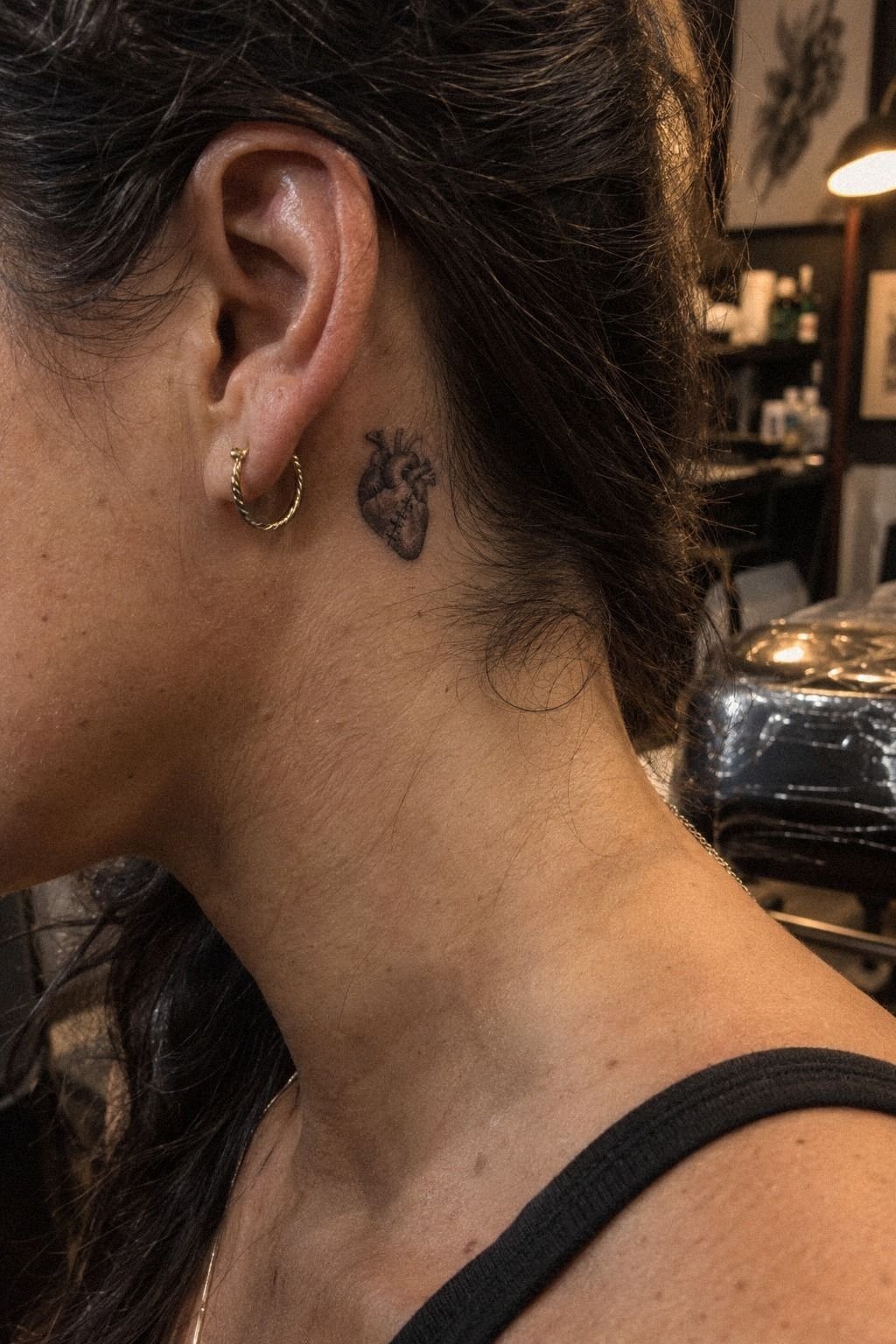
Surgical sutures give a small realistic heart a meaningful, slightly edgy story. Stitched heart detailing can stay readable when the loops are spaced generously and follow the heart’s curve rather than sitting like separate decorations.
I’d use four to six visible stitch marks, depending on the final size. Tiny repeated marks can merge as the tattoo settles, so spacing matters more than the number. The suture marks should feel expressive, but they shouldn’t make the design busy.
When you’re planning a unique heart tattoo, ask your artist to show the design at actual size on paper. A drawing that looks intricate on a screen can become unreadable at one inch. An actual-size test can save you money and protect your budget.
I’d skip bright color here. A neat black outline with warm-white and camel accents makes the surgical reference feel sharper and more timeless.
You’ll get better value from controlled spacing than from extra texture. The 555 tattoo meaning guide may also help if the number of stitches carries personal significance.
9Black-and-Grey Heart or Color? My Quiet Pick
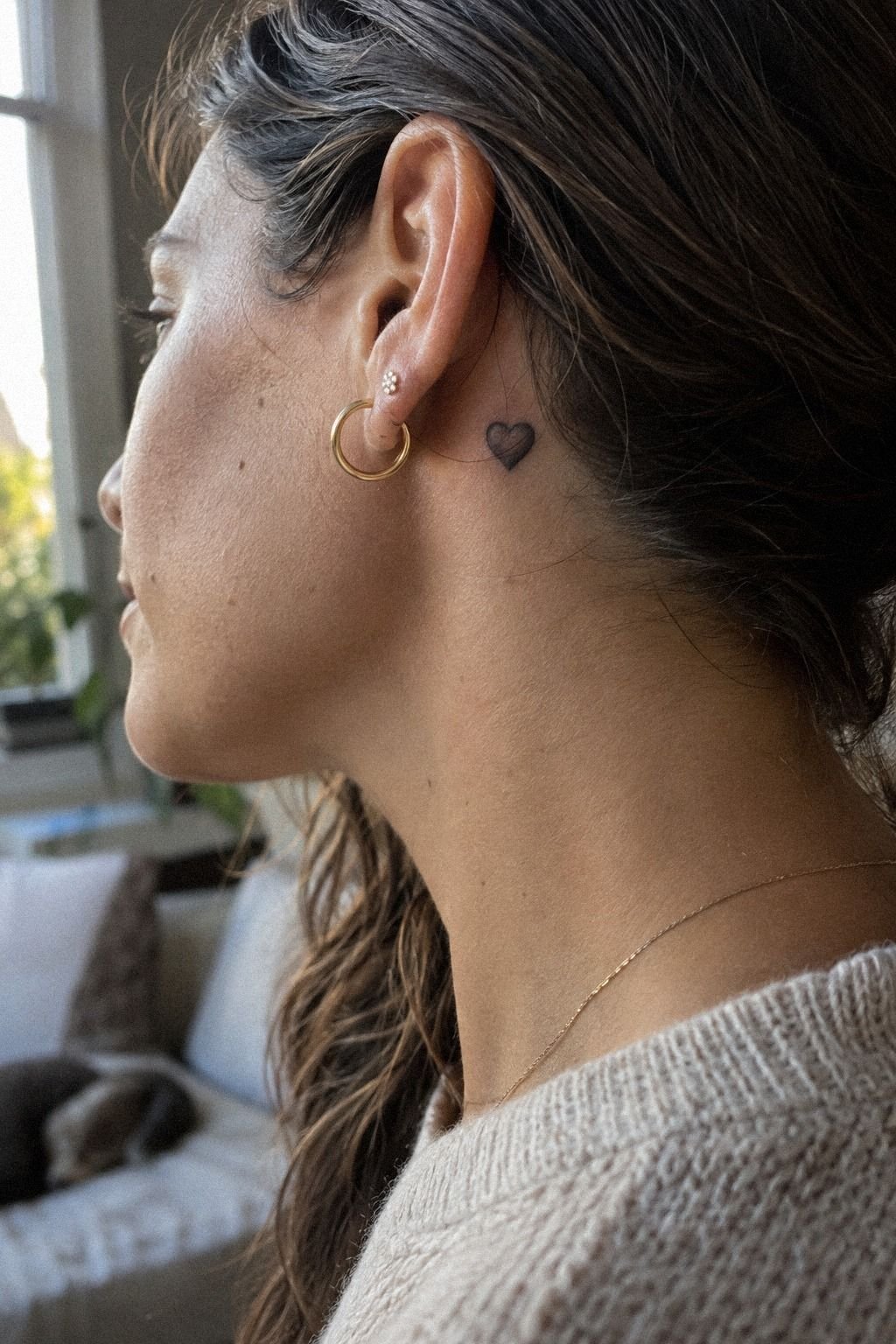
This version uses a small anatomical heart with midnight-blue and copper shading. The soft ivory highlight gives the folds depth while leaving the upper planes lighter, so the shape doesn’t flatten. You’ll want the darkest tone under the heart’s natural folds.
Black and grey isn’t automatically easier than color. The artist still needs to control saturation, edge softness, and the transition between ink and skin.
I once assumed a grey piece would require less planning, but the opposite was true. Every gradient shows.
A polished shadow. A crisp rim.
A quiet, haunting finish. You can keep the result elegant without making it severe.
If you’re choosing between color and monochrome, I’d pick this approach when your priority is longevity and subtlety. Solid black and thoughtful placement generally hold their structure better than extremely fine pale details. A midnight-blue tattoo can also offer strong value when you want a timeless result without a complicated palette.
Browse the realistic portrait tattoo guide to see how black-and-grey artists build depth. You’ll notice the best work has clear value contrast, not endless shading. The black-and-grey artist you choose matters more than the trend.
10Let Red Arteries Carry the Emotional Weight
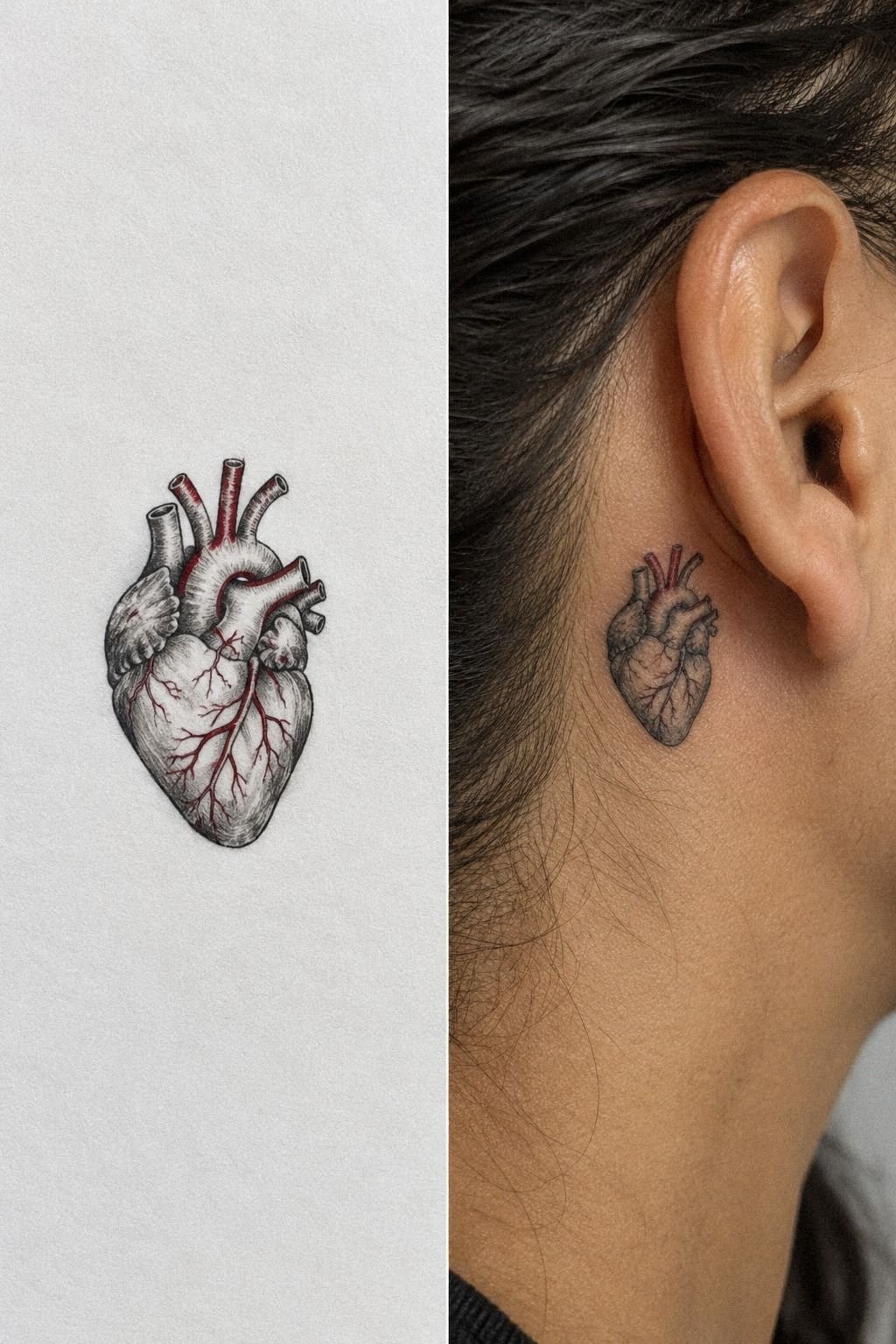
The artery details should appear only where the anatomy calls for them. I’d use sage-green and warm-cream accents around the arterial lines, keeping any red restrained so the heart stays expressive rather than loud.
11Build a Full-Sleeve Heart Around One Personal Mark
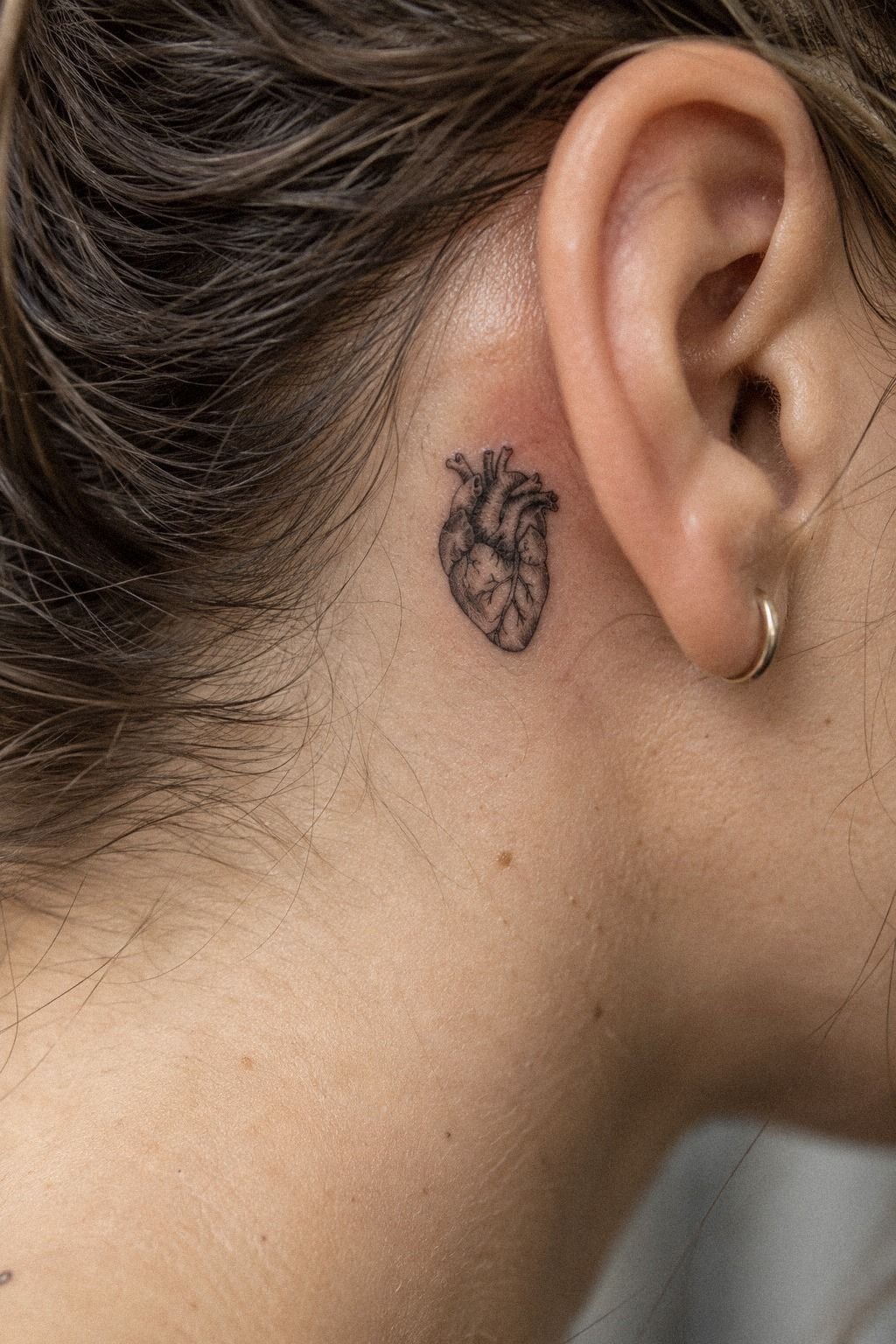
The forearm sleeve doesn’t need to begin with a giant centerpiece. You can start with one personal heart and build around it later. A forearm sleeve composition feels more intentional when the first design has room to develop.
The forearm is usually more tolerable than the sternum, ribs, feet, or hands, though everyone experiences placement differently. You’ll want to consider how future pieces might connect through scale, direction, and negative space. Your first heart can stay small and still guide the larger story.
A sleeve can look intentional when the small heart has a clear visual relationship to the next tattoo. The sleeve planning matters before any additional work begins. I’d sketch possible future paths, then choose the first placement that leaves you options.
One central symbol. Open skin between pieces.
A strong, flowing path. You don’t need to fill every inch.
If you’re planning big heart tattoo ideas later, don’t oversize this first design just to fill space. The negative-space path will help future pieces breathe. The realistic werewolf tattoo guide shows how larger compositions can use movement and contrast without crowding every inch.
I’d begin with the heart, live with it healed, and let your next decision come after you’ve settled into it. A healed heart tattoo gives you a better reference for scale than a fresh appointment result. You can also study the realistic portrait tattoo guide for ideas about value and movement.
Start With Skin Movement, Not Size
Before you choose a design, watch how your skin moves during a normal day. Your wrist bends, your sternum expands, and your forearm rotates. A skin-movement test can reveal whether a delicate detail will stay visible from the position you actually see.
I’d place a paper stencil at final size and look at it while standing, sitting, and moving naturally. You’ll learn more from that quick test than from comparing ten dramatic references. The right placement should feel personal, practical, and visually clear.
Which Heart Tattoo Details Are Worth the Budget?
Your budget should follow the details that survive. Spend on a strong artist, clean anatomy, and placement advice before adding extra grey tones or ornamental marks. That’s where the tattoo consultation earns its value.
If you’re comparing artists, ask what the quoted price includes. A low price isn’t always a bargain if the design needs correction later. I’d rather choose a smaller, polished heart than stretch my budget for detail that won’t remain crisp.
The Behind-the-Ear Test
Behind the ear is discreet, but it isn’t automatically easy. The space is narrow, the skin is sensitive, and your artist has less room to correct a crowded design. A placement stencil lets you see whether your preferred heart still looks graceful at its real size.
You’ll also want to consider visibility at work, sun exposure, and how often you touch the area. A personal mark can be hidden or visible, but you should make that choice deliberately. The best placement is the one that still feels right after the novelty fades.
For another look at small-scale anatomy, revisit the realistic heart tattoo guide before you approve the stencil.
Black-and-Grey Versus Red
Black and grey gives you a classic, understated result, while red can make the heart feel more vibrant and emotionally direct. Neither choice is automatically better. Your color consultation should focus on skin tone, healing history, and the mood you want.
I’d choose red when one accent carries real meaning. I’d choose black and grey when you want a timeless piece that can connect easily to future tattoos. Both can be expressive when the artist keeps the structure clear.
The realistic wave tattoo guide offers another useful comparison of open skin, contrast, and flowing marks.
A Small Heart, A Personal Signal
A realistic heart doesn’t need to explain your whole story. It can be symbolic, romantic, empowering, or simply personal. The design meaning belongs to you, even when the symbol is familiar.
If you’re worried that a small tattoo won’t feel important enough, look at the mark from normal conversation distance. You may find that restraint makes it more powerful. A dainty heart can still carry a fierce memory.
What I’d Decide Before Booking
I’ve changed my mind about realistic tattoos after seeing how much placement controls the final mood. Behind the ear feels secretive and dainty.
The wrist feels direct and visible. The sternum feels intimate, but it can demand more patience during the appointment.
None of those choices is automatically better.
I’d separate the design you love on a screen from the design your skin can carry. A reference may show ten veins, six grey tones, and a sharp highlight, but a one-inch tattoo needs editing. That isn’t losing detail.
It’s protecting the important detail.
My own mistake was treating “realistic” as a request for maximum texture. It isn’t.
Realism comes from proportion, value, and one or two believable marks. A bold black anchor can make delicate lines feel clearer, while too much pale shading disappears early.
If you’re unsure, ask for a stencil at final size and look at it from normal conversation distance. That small step can tell you whether the design is worth it, whether the cost matches the detail, and whether your placement still feels personal.
Then think about healing. The surface often settles in about 2 to 3 weeks, while complete healing can take about 2 to 3 months. Gentle washing, light moisturizing, and avoiding direct sun and swimming during the early stage will help you protect the result.
You don’t need a complicated routine. You need consistency, patience, and an artist whose healed work looks as good as the fresh result.
That’s where the real value appears. The 555 tattoo meaning guide is also useful if a number or repeated mark is part of your concept.
What People Always Want to Know
How much does a Realistic Heart Tattoo usually cost?
A small realistic heart tattoo in the US often costs about $100 to $300, depending on size, placement, artist, and region. Some shops charge a shop minimum, while common hourly rates run about $100 to $250.
You’ll get a better estimate after showing the artist your reference and placement. The love heart tattoo ideas can help you compare small and detailed designs before discussing price.
Are Realistic Heart Tattoos a good idea for a first tattoo?
Yes, a realistic heart can be a strong first tattoo when you choose a tolerable placement and keep the lines readable. A small heart design is personal without requiring a huge commitment.
Your forearm, thigh, or shoulder may feel easier than the sternum, ribs, hands, or feet. I’d choose a design that still feels meaningful after the novelty fades.
For many people, that makes the appointment worth it. The realistic heart tattoo guide can help you compare levels of detail.
How do I choose a tattoo artist for Realistic Heart Tattoos?
Choose an artist with clean linework, healed portfolio examples, and clear studio hygiene. Their healed tattoo portfolio matters more than a polished fresh-ink example.
You’ll also want someone who regularly works in micro-realism or black and grey. Ask how they’d simplify your reference so the important anatomy stays crisp. The realistic portrait tattoo guide can help you recognize controlled shading and value contrast.
How much do Realistic Heart Tattoos hurt?
Pain varies, but the sternum, ribs, feet, and hands are often more sensitive than the forearm, thigh, or shoulder. A forearm placement is usually a more tolerable starting point for many people.
Your appointment may feel sharper over bone and softer over padded areas. Eat beforehand, stay hydrated, and tell your artist if you need a pause. You don’t have to prove anything.
How long does a Realistic Heart Tattoo take to heal?
The surface usually takes about 2 to 3 weeks to settle, while complete healing can take about 2 to 3 months. Your aftercare routine should include washing softly and applying a light moisturizer.
You’ll want to avoid direct sun, swimming, and picking at flakes during the early stage. Follow your artist’s instructions if they differ from general guidance. Patient aftercare protects the value of the work.
What’s the best placement for Realistic Heart Tattoos?
The best placement depends on visibility, pain tolerance, and how much detail you want. Behind the ear feels discreet, the wrist feels expressive, and the forearm gives steady working space.
Your artist can help you test several stencil sizes. I’d avoid forcing a very detailed heart into a crease or highly mobile area. The sacred heart tattoo meaning guide may also help you choose a symbol with lasting personal weight.
Where I’d Start First
If I had to pick one, I’d start with the miniature human heart on the wrist. You’ll see it often, and the forearm-side skin gives fine details more breathing room than a crease.
Pin that reference for later and compare healed portfolios before you book! Your best choice will be the one that still feels meaningful, readable, and personal.