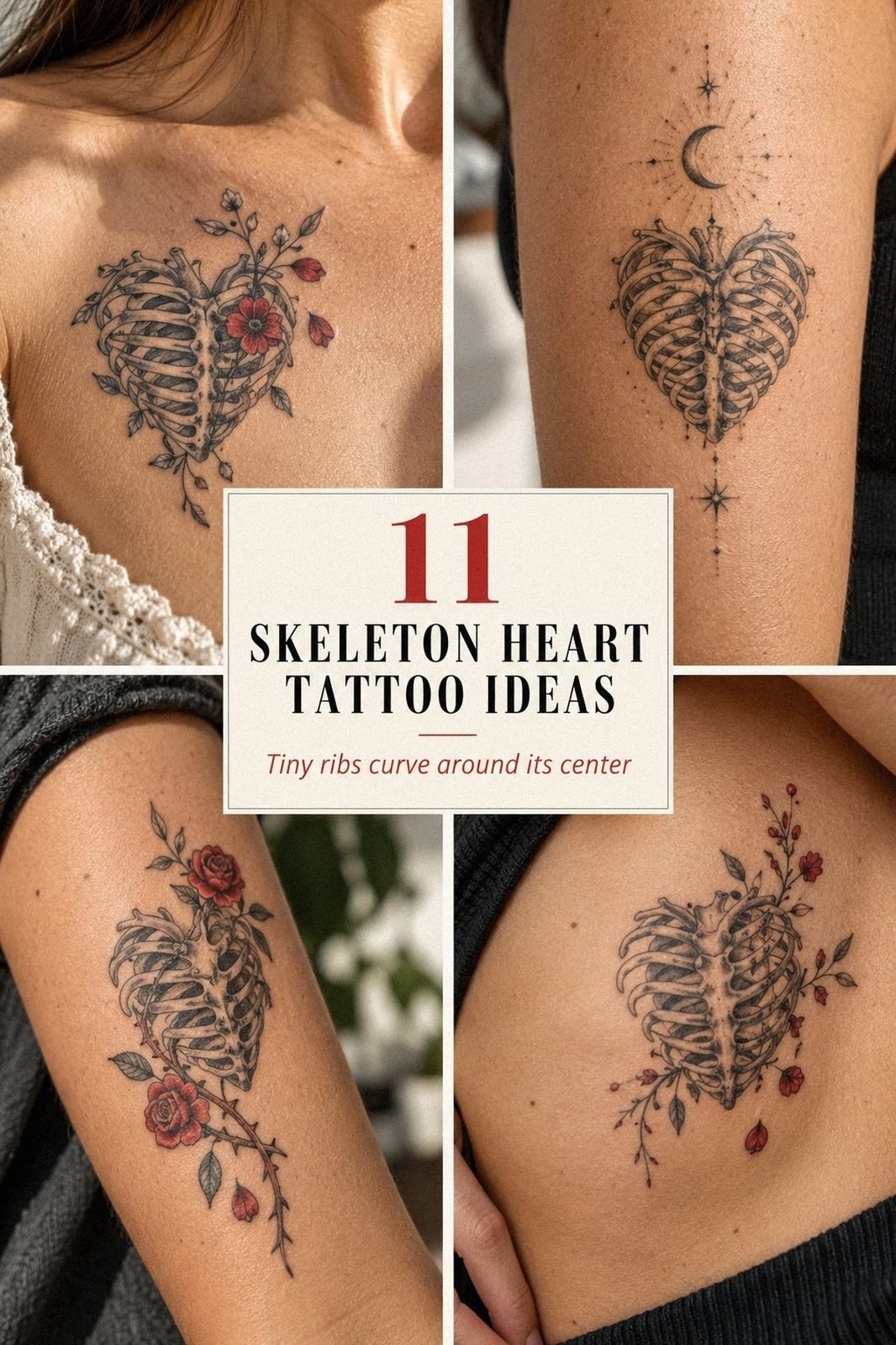
A skeleton heart tattoo on a tight budget works best when you choose the drawing before you choose the size. I learned that after redrawing the same heart three times because the first version was too intricate for clean, lasting ink. You’ll get a more meaningful result by planning line weight and placement before booking. Small choices matter!
Editor’s note: Keep the heart silhouette personal, then let your artist simplify the anatomy around it. A striking idea does not need a crowded stencil, and a tight budget can still produce an expressive, timeless result.
What You’ll Need Before You Start: The Three-Weight Skeleton Rule
Start with three references: one heart shape, one skeleton detail, and one placement reference. Your artist can combine them into an original stencil instead of copying a finished tattoo. Save a black ink example with crisp outlines, then mark the details you’d remove if the design becomes crowded.
The Three-Weight Skeleton Rule keeps your concept readable. Choose a primary outline, a secondary bone detail, and one tiny accent such as a vein, crack, or rib opening.
If every mark has the same visual importance, your tattoo won’t have a clear focal point. You’ll want contrast, not visual noise.
Bring a printed sketch or a clean phone folder, but don’t arrive with twenty unrelated designs. I’d start with the skeleton lovers tattoo references and then narrow your choices to one heart shape, one emotional mood, and one body location. That makes the concept feel personal rather than random.
Your basic budget should cover the artist minimum, the appointment, and aftercare. A typical US shop minimum may sit around $50 to $100, while hourly rates often fall near $100 to $250. You don’t need a large tattoo to pay for professional judgment.
The Two-Reference Artist Check
Choose one reference for the skeleton anatomy and another for the heart silhouette. That’s enough direction for a custom concept. If you send your artist one finished tattoo and ask for an identical copy, you may lose the personal meaning that makes the design feel symbolic rather than borrowed.
The Two-Reference Artist Check also protects your budget. A focused brief means fewer revisions, fewer redraws, and a shorter consultation. You’ll still get an expressive tattoo, but you won’t be paying for a long search through every possible skull, rib, and vein arrangement.
Look for healed portfolio work, not only fresh work. Fresh carbon stencil paper can make a line look sharper than it will after the skin settles. I’d rather choose an artist with understated healed examples than someone whose portfolio shows only dramatic appointments.
You can compare the hand imagery in this skeleton hand tattoo meaning guide before you decide how much anatomy belongs inside your heart. You’re looking for a clean balance, not the most complicated drawing available. Ask about the artist’s healed portfolio before you book.
How To Keep A Tight Budget From Weakening The Design
Set a spending limit before discussing optional details. Put the appointment cost first, then reserve a small amount for aftercare or a future touch-up. That order keeps a meaningful tattoo within reach without forcing you to accept rushed work.
Ask whether the quoted price includes a custom drawing, stencil changes, and the final placement check. Some artists include those steps, while others charge separately for a custom drawing fee. Clarity protects both your money and your expectations.
A small tattoo can still look polished when the main contour is strong. Spend your budget on a skilled artist, safe practice, and a design that will remain readable. Decorative additions can wait if the outer contour is doing its job.
You should never choose an artist solely because the price is unusually low. Check hygiene, healed results, communication, and style first. A fair quote for a focused, minimal concept is more valuable than a cheap session that leaves you with a crowded or uneven tattoo.
- Start With A Striking Skeleton Heart Tattoo Concept
- Pick Intricate Skeleton Heart Hands Linework
- Place Two Skeletons In Love Tattoo
- Keep Human Heart Tattoo Designs Symbolic
- Plan A Fierce Skeleton Lovers Tattoo
- Choose Delicate Anatomical Heart Details
- Shape Bold Bone And Vein Contrasts
- Match Meaningful Symbols To The Heart
- Position The Tattoo For Graceful Visibility
- Balance Minimal Linework With Ornate Details
- Protect Your Ink Through Careful Healing
1Start With A Striking Skeleton Heart Tattoo Concept
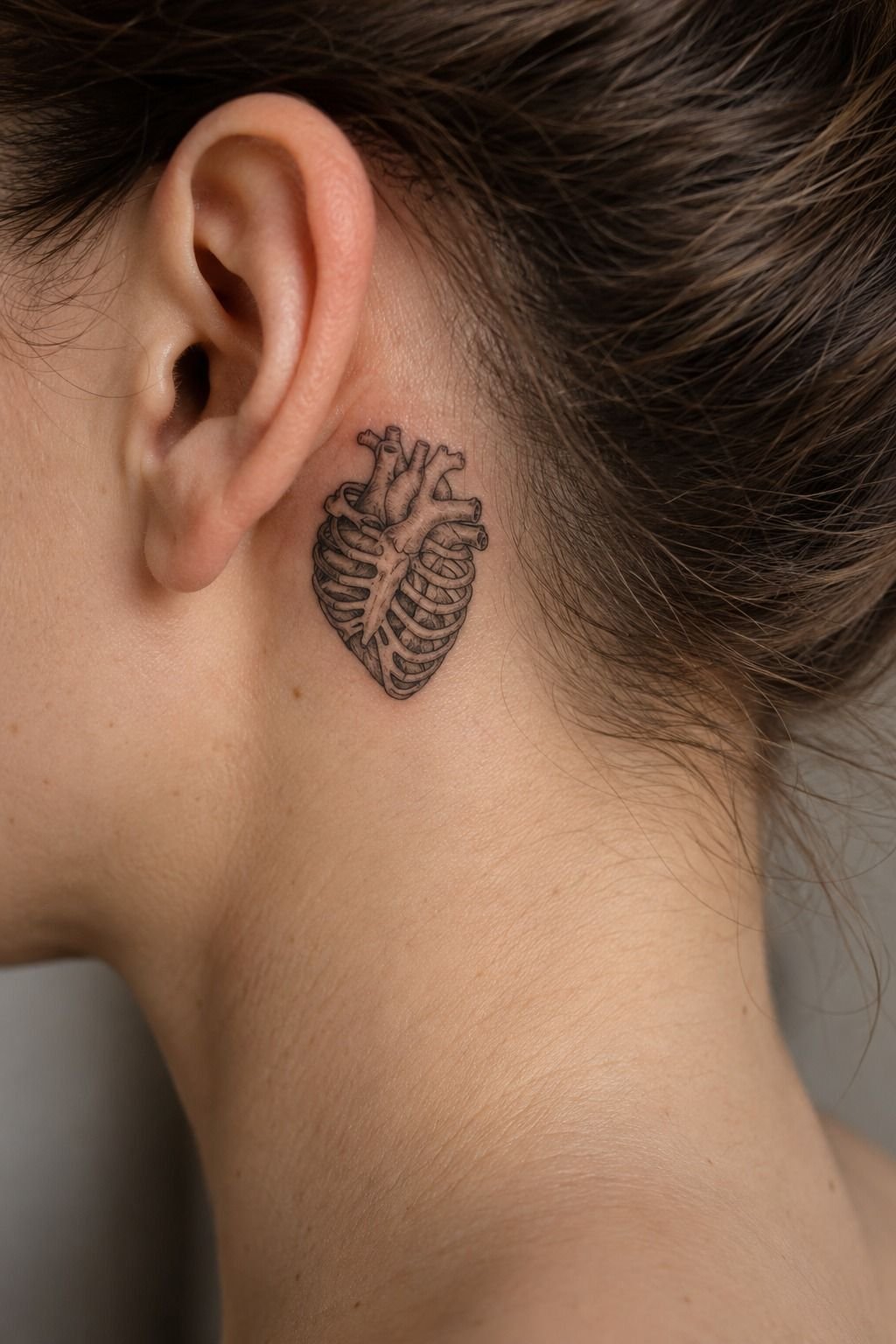
Begin with the main silhouette. A small heart behind the ear needs a clear outline because the design is read quickly when the hair moves away from the ear. Keep the upper lobes distinct and give the pointed base enough space to stay recognizable.
Keep your first sketch simple: two rounded upper lobes, a narrow center opening, and a pointed base. You can add a tiny skull suggestion or exposed bone line later. If you start with every anatomical feature, you’ll spend your budget refining details that may disappear at a small scale.
Ask yourself what the heart represents before you add decoration. Is it grief, survival, devotion, or a dark sense of humor?
Your answer should control the expression. A meaningful heart with three precise lines will say more than an ornate sketch with no emotional anchor.
I’ve seen small behind-the-ear tattoos become too busy because the wearer wanted ribs, teeth, flowers, and lettering in one outline. Don’t force all of that into your first appointment. You’ll find stronger ideas in this human heart tattoo guide, then you can remove anything that doesn’t serve your concept.
2Pick Intricate Skeleton Heart Hands Linework
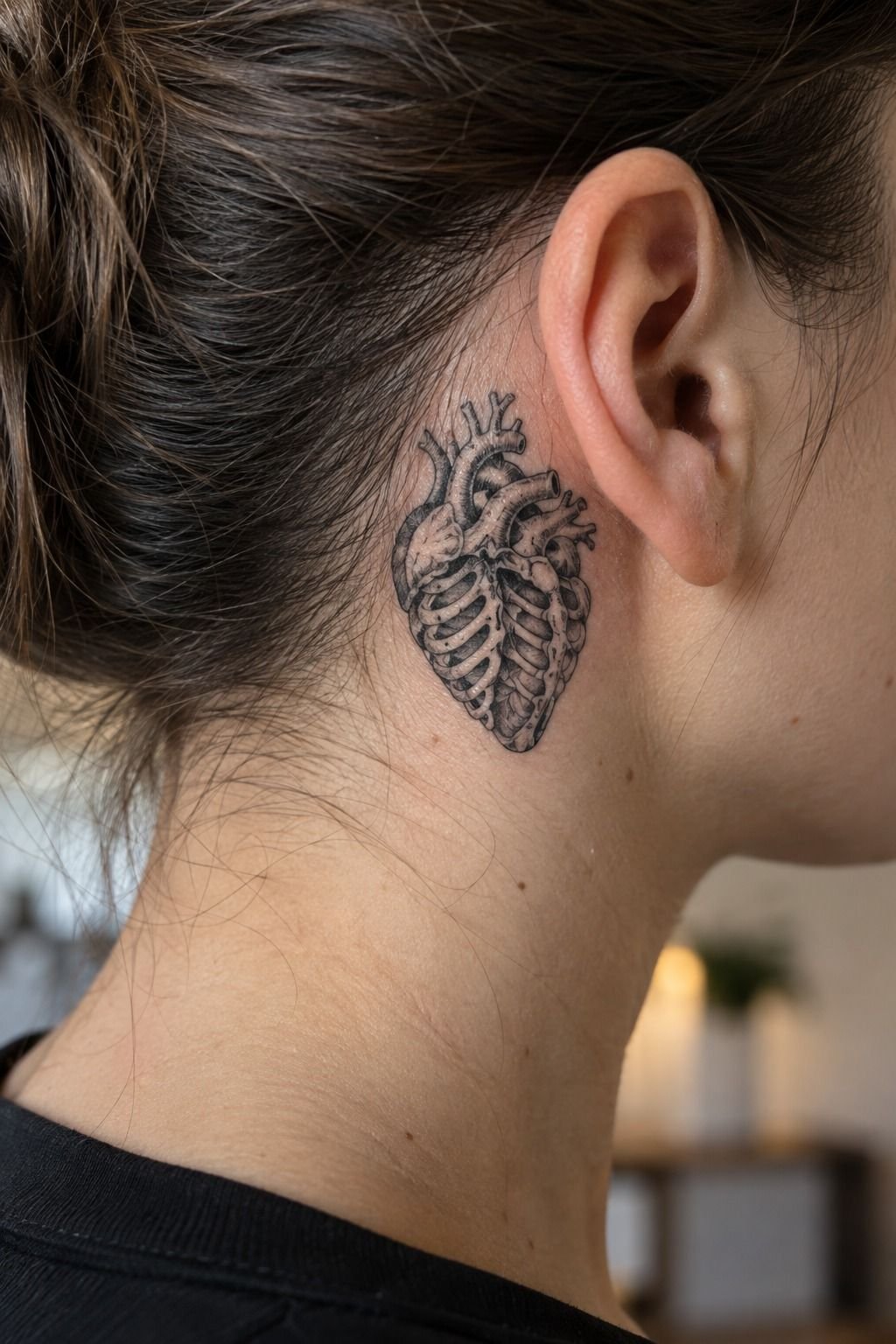
Use the hand placement as a test for restraint. Two hands can cradle the heart, reach toward it, or form a sharp, symbolic frame around it.
Keep the fingers readable and leave enough open skin between each hand contour. That keeps the idea delicate without making it fragile.
A graceful hand shape usually needs fewer marks than people expect. Choose one knuckle suggestion, one palm crease, and one bone connection.
If you add every joint, the design can lose its emotional center. A sleek outline with one expressive gesture may feel more personal than a dense anatomical study.
Ask your artist to simplify the smallest fingers at the final size. You want the pose to remain recognizable after healing, especially if the tattoo sits behind the ear, on the wrist, or along the collarbone. That restraint matters!
3Place Two Skeletons In Love Tattoo
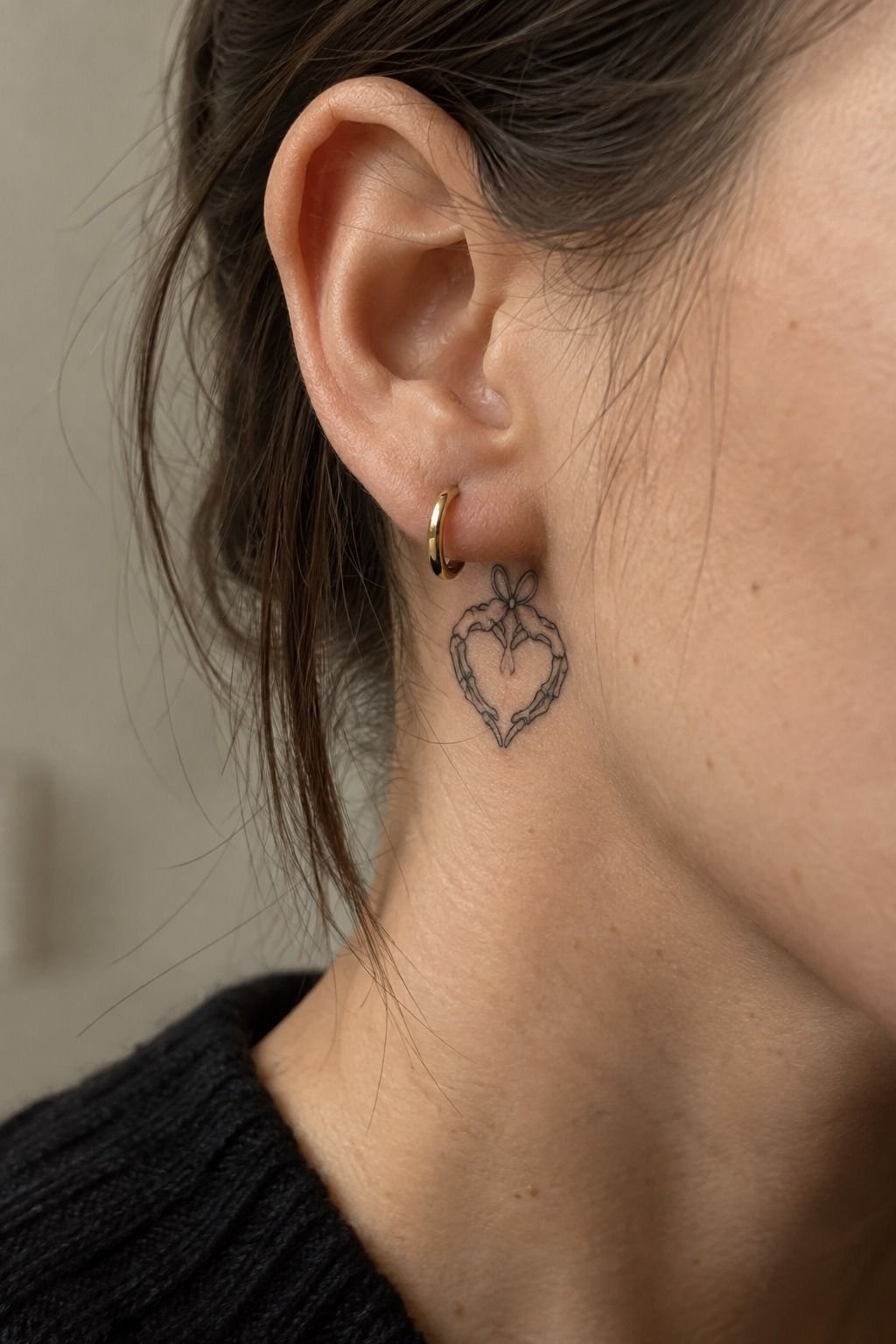
Build the romantic idea with two figures that curve toward one another. Your version can show two tiny skeleton profiles, two hands, or paired rib shapes meeting at the center. Let the central opening keep the heart recognizable.
Keep the two figures uneven in scale. A perfectly mirrored design can look stiff, while one slightly smaller figure creates a more personal, playful relationship. You’ll want the heart to remain obvious, so leave open skin between them.
Ask your artist to test the stencil at the intended location before any ink goes in. The ear area bends, and a straight paper sketch won’t show every curve. I’d rather spend five minutes checking the stencil placement than discover that one skeleton disappears into the hairline.
This idea works beautifully as a private symbol, but it doesn’t need a name or date. Your story can stay yours. For more direction, browse these Two Skeletons In Love Tattoo ideas and choose the pose that feels romantic without becoming overly literal.
4Keep Human Heart Tattoo Designs Symbolic
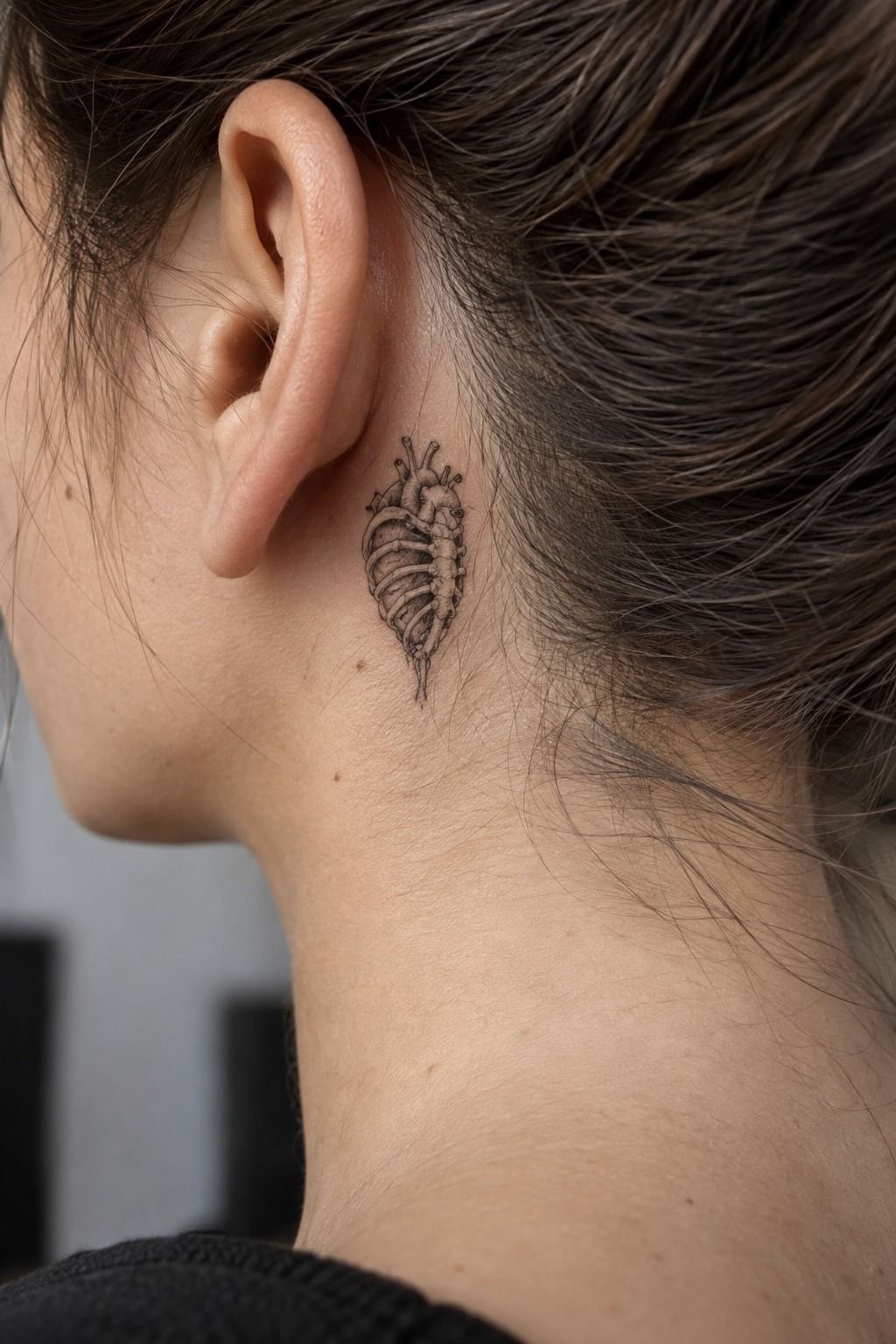
Use symbolism instead of adding random anatomy. Your design could include one split line, a small opening, or a tiny flame-like shape to suggest change. Give the symbolic accent one clear job.
A symbolic heart should have one dominant message. If you want grief, keep the contour raw and slightly fractured.
If you want devotion, use a more flowing curve. If you want survival, show a strong outer boundary with one repaired break.
Don’t use every traditional symbol at once. A crown, dagger, rose, wings, and script can overwhelm a small design. I’d choose one accent, such as deep navy tattoo ink in a tiny heart center, only if your artist believes the color placement will age well on your skin.
The best symbolic tattoo gives you a private meaning and a readable shape. You’ll still be able to explain it, but you won’t have to. This human heart tattoo collection can help you compare anatomical, romantic, and more abstract directions.
5Plan A Fierce Skeleton Lovers Tattoo
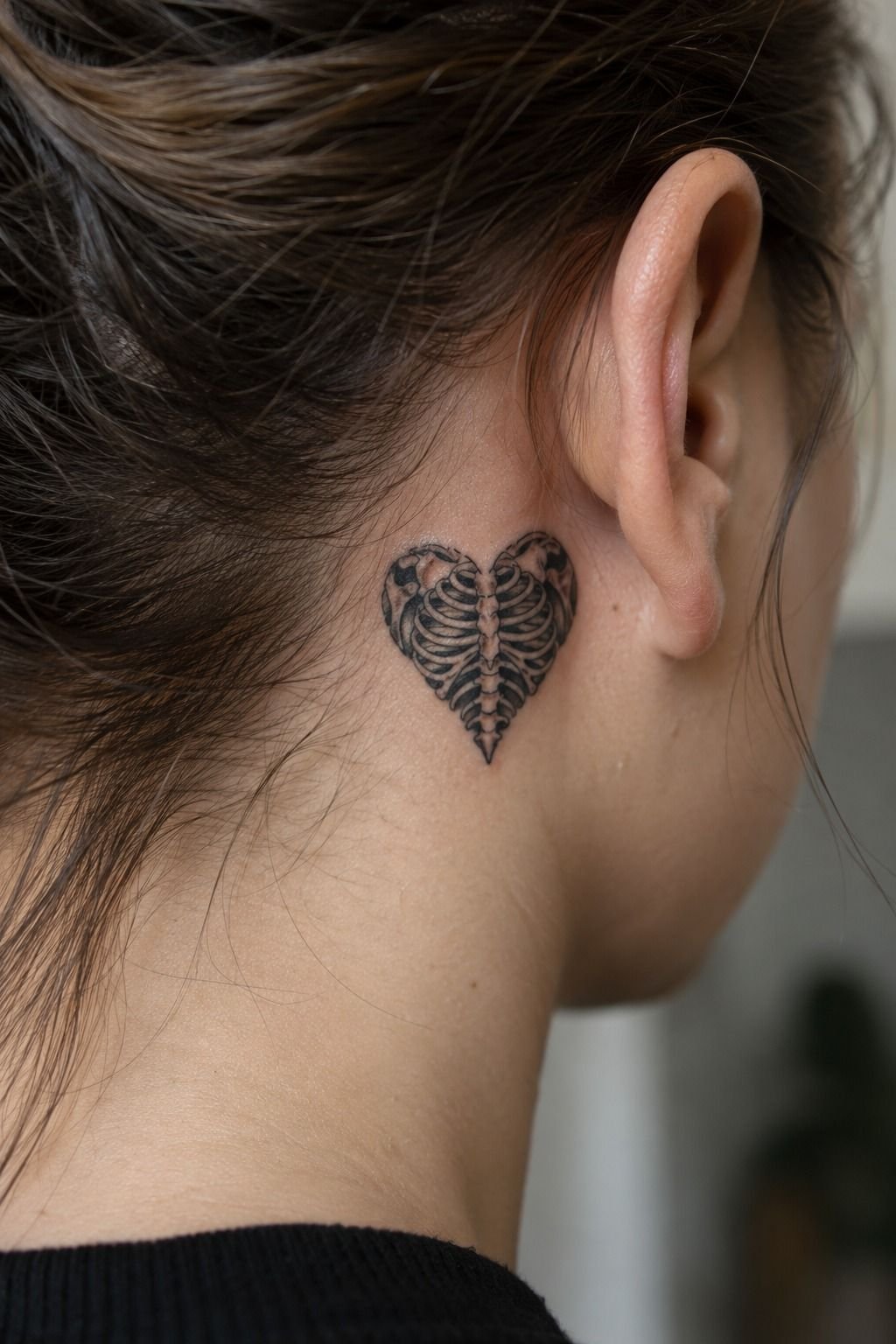
Use a flash sheet to control your budget. A flash design lets you compare a paper version before you commit to a custom redraw. Look for a flash design that already works at the size you want.
Choose the design that reads fastest, not the one with the most marks. A fierce skeleton lovers tattoo might show two skull profiles, crossed arms, or a heart held between bony hands. Your artist can make the pose expressive without filling the page with tiny anatomy.
Ask whether the artist charges for a custom drawing or includes a simple stencil in the appointment. Prices vary by artist and region, so you’ll want the quote in writing before booking. A clear price estimate can save money because it reduces changes during the appointment.
I’d avoid paying for a large flash design and then shrinking it dramatically. Details that look sharp on paper can collide when reduced.
Instead, pick an outer contour that already works at the final size. You can compare more romantic versions through this skeleton lovers tattoo guide.
6Choose Delicate Anatomical Heart Details
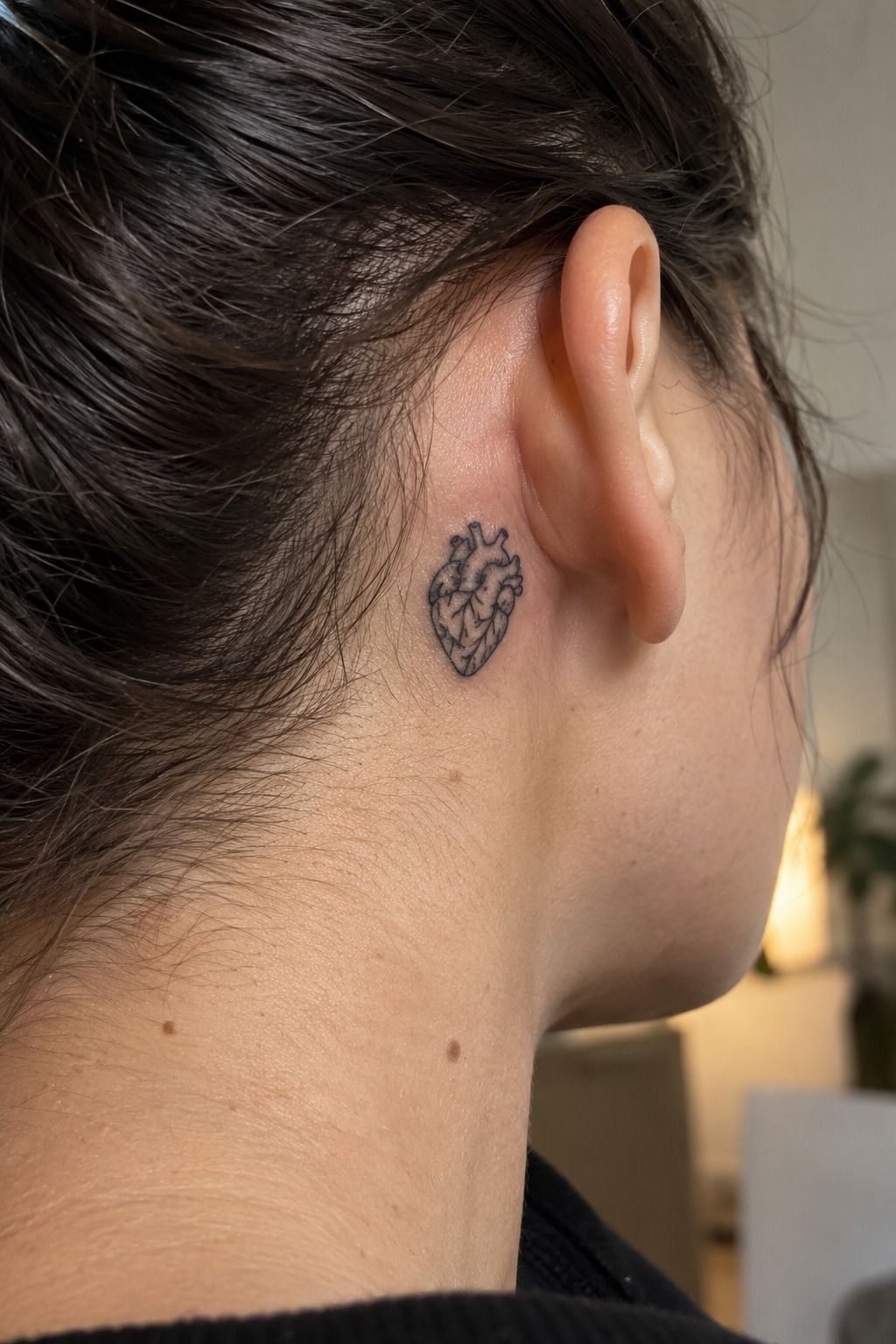
Add anatomy in layers. Start with the outer shape, then choose only the chambers, vessels, or bone openings that support your meaning. The anatomical detail should reinforce the heart rather than hide it.
Your artist should consider contrast against your natural skin tone without treating one skin tone as a problem to solve. Ask to see healed examples on skin similar to yours. A sterile tattoo needle and clean technique matter more than chasing the thinnest possible mark.
Delicate doesn’t mean weak. A graceful line can look expressive when it has enough breathing space around it. You’ll want the central detail to remain open, because crowded anatomy may blur into one dark patch as the tattoo settles.
I’d skip microscopic veins unless your artist has shown healed work with that approach. The idea sounds intricate, but a slightly thicker vessel can stay clearer for longer. The realistic heart tattoo guide offers useful anatomy references without forcing your design into a realistic style.
7Shape Bold Bone And Vein Contrasts
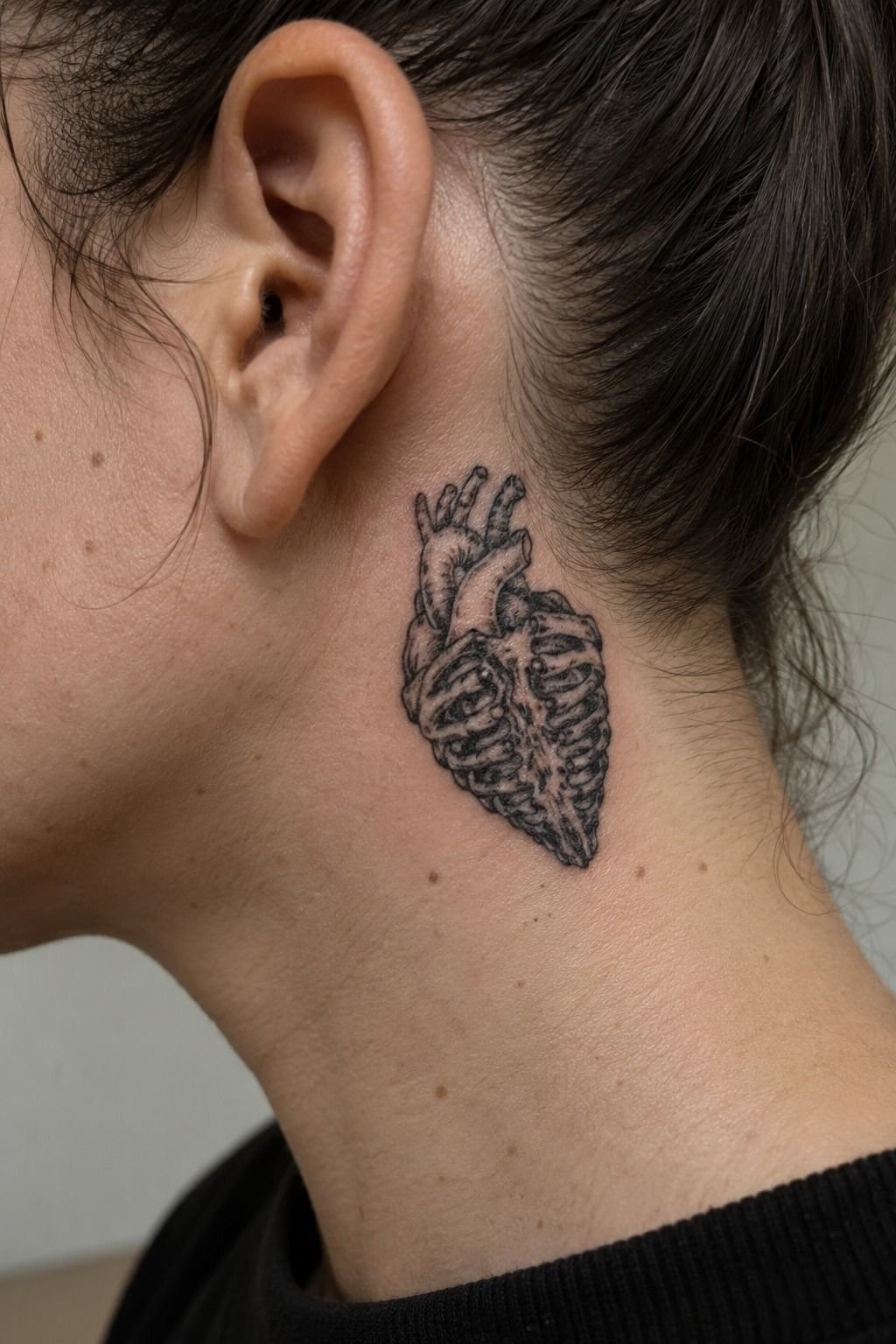
Create contrast by pairing a strong outer bone line with lighter interior veins. A bold skeleton heart can feel gritty, sharp, and expressive when the outside stays decisive while the inner marks remain selective.
Ask your artist to reserve the darkest ink for the places that explain the anatomy. A small shadow under a bone, a short vein near the heart opening, or one dark crack can create a powerful focal point. You don’t need heavy fill everywhere.
If the design includes both bone and vein details, check that each element has its own path. Overlapping marks can turn into a single patch during healing. Keep the contrast plan simple enough to read without explanation.
A daring contrast can suit an edgy tattoo, but it still needs breathing room. I’d choose one sharp fracture and one flowing vein before adding extra shading. The result can feel fierce without becoming visually crowded.
8Match Meaningful Symbols To The Heart
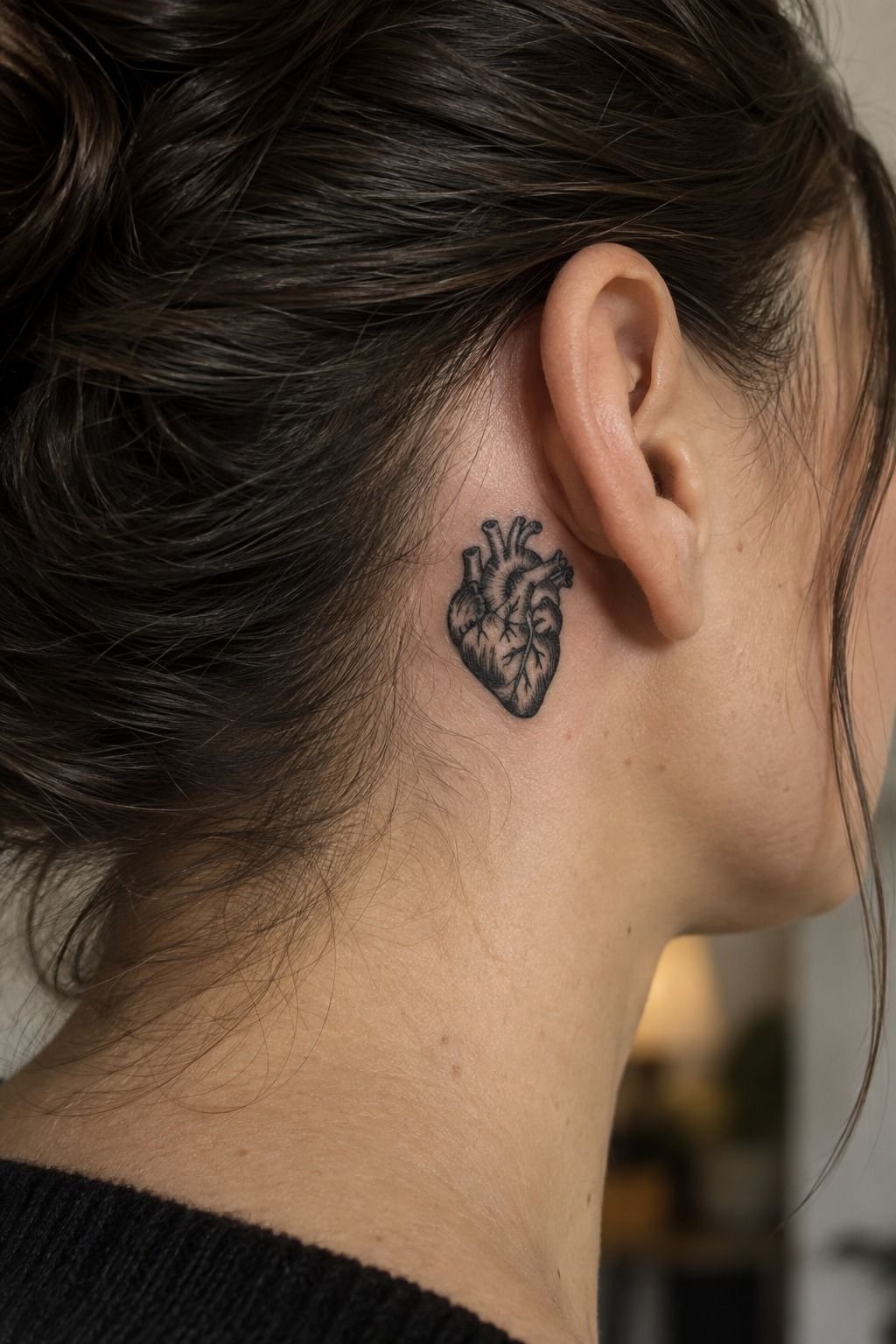
Choose a symbol that explains your relationship with the heart. Your symbol could be a tiny star, lock, thorn, flame, or broken chain. The symbol choice should feel personal, not like a collection of popular tattoo motifs.
Write down the meaning in one sentence before your appointment. If you can’t explain why the symbol belongs there, your artist won’t know how prominently to draw it. Your final design should have one emotional center.
Use transfer gel carefully during the stencil stage so the placement stays clean and readable. You’ll want the artist to check the symbol’s direction, especially if it has a point, letter, or recognizable face. A tiny angle can change the stencil direction.
I’d choose one meaningful accent over three decorative ones. That keeps the tattoo understated and gives the heart a stronger emotional center. For a more sacred direction, look through these sacred heart tattoo meanings and borrow the idea of symbolism, not the finished arrangement.
9Position The Tattoo For Graceful Visibility
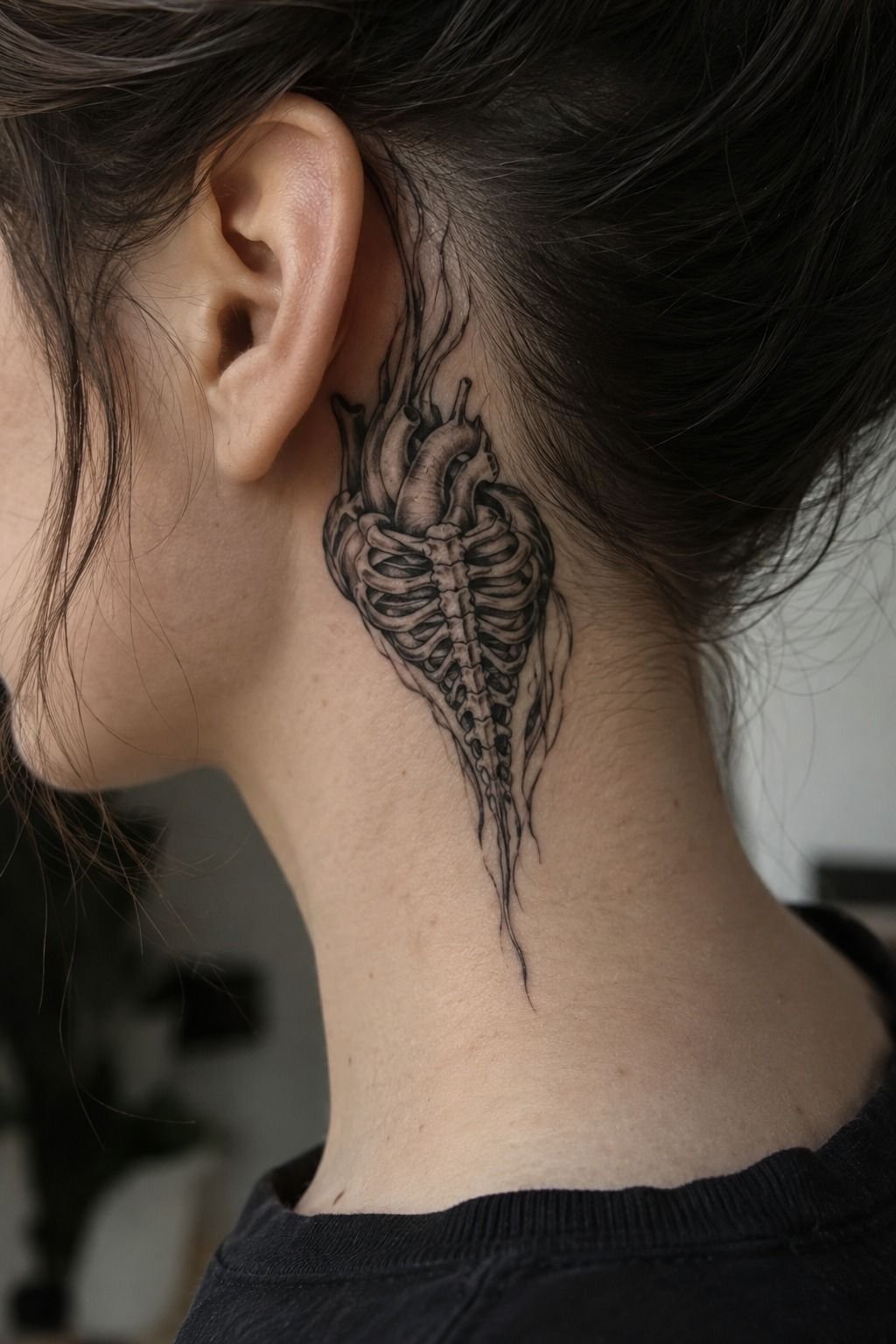
Place the tattoo according to how often you want to see it. Behind the ear is discreet when your hair is down and visible when your hair is pulled back. Your artist should account for the ear’s curve, hair movement, and how the heart will face when your head is upright.
Compare the sensitivity of different zones before you book. Ribs, feet, hands, and sternum are often more painful because they have more bone and less padding.
Forearm, thigh, and shoulder placements are commonly more tolerable. Your experience can differ, so ask your artist for a direct opinion.
A small heart can look graceful on the forearm, shoulder, or upper thigh if you want easier viewing and simpler aftercare. I’d avoid choosing a hidden location only because it looks delicate in a reference. Your daily life matters more than the trend.
Use a placement stencil and move naturally before approving it. Bend your neck, raise your arm, and check how the heart shifts.
You’ll catch awkward angles before they become permanent. This love heart tattoo guide can help you compare visible and private placements.
10Balance Minimal Linework With Ornate Details
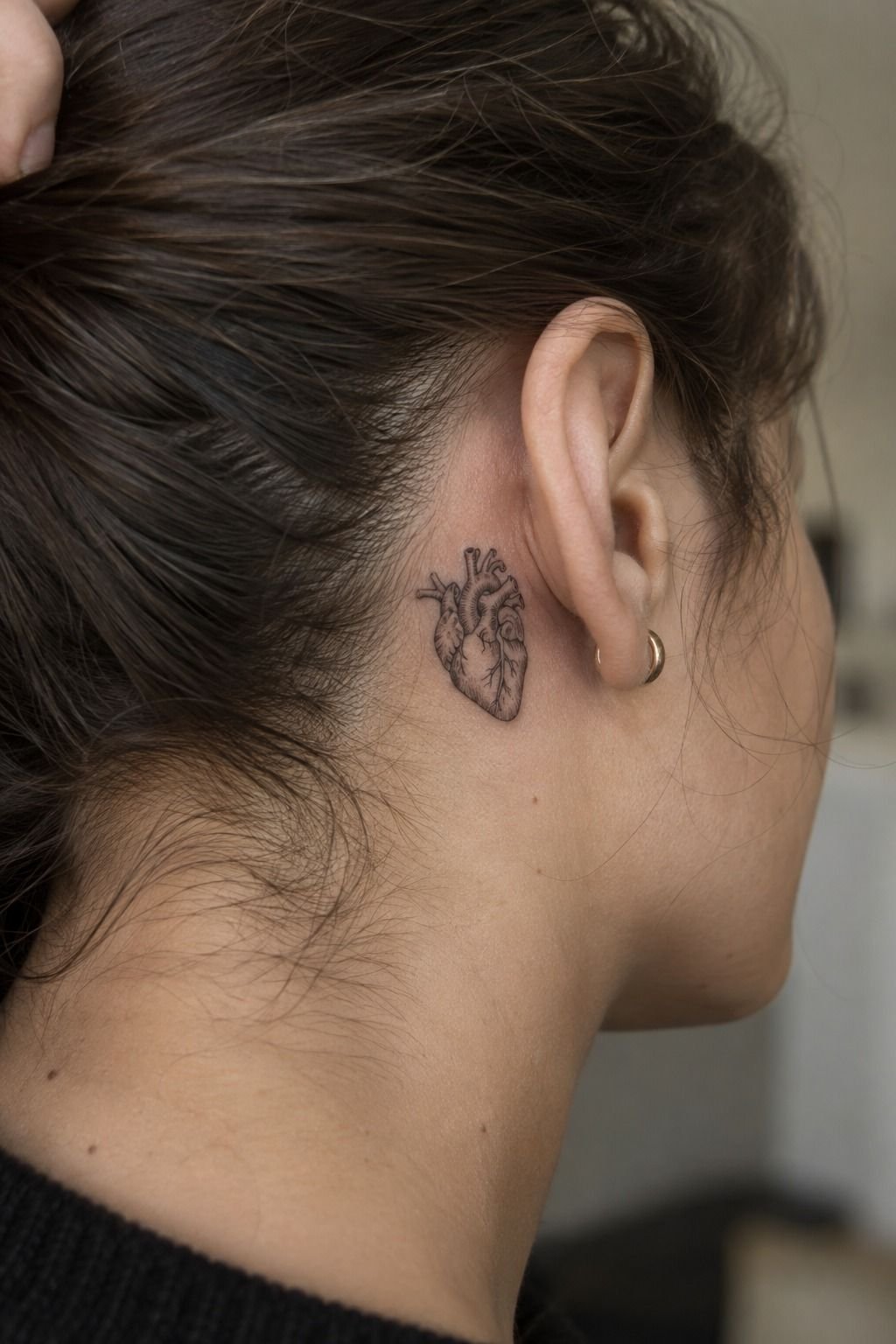
Use the split-image idea to compare the stencil with healed ink. One half can hold a minimal heart outline, while the other carries a more ornate bone or vein detail. This makes the tradeoff easy to discuss with your artist.
A polished design usually gives one treatment priority. Let the heart stay sleek if the skeleton details are intricate, or let the anatomy become ornate while the outer contour stays simple. Too many equally strong elements can compete for attention.
You might prefer a dainty result with one tiny crack, or an iconic version with a heavier outer edge. Both directions can work when the linework balance matches the final size and placement.
I’d make the decision before the appointment begins. A clear choice saves time, protects your budget, and gives the artist a confident brief. The most stylish tattoo is often the one with a decisive visual hierarchy.
11Protect Your Ink Through Careful Healing
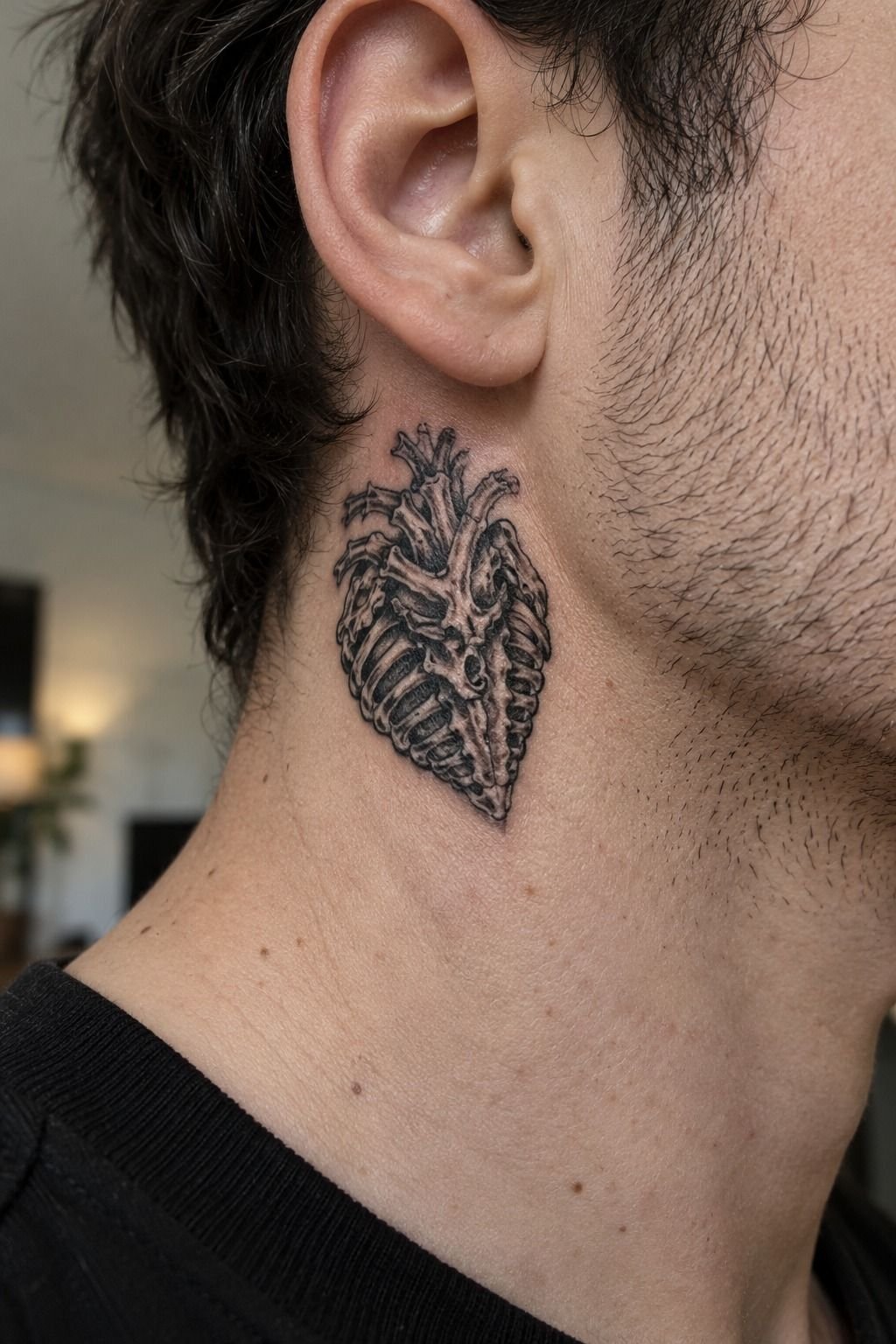
Follow your artist’s aftercare instructions exactly. Wash gently, pat dry, apply the recommended moisturizer sparingly, and don’t scratch peeling skin. Your tattoo needs time to settle, even if the surface looks calm after several days.
Keep fresh ink away from direct sun and swimming while it heals. UV exposure can soften fine lines over time, and soaking can irritate new skin. A fragrance-free moisturizer is usually easier on healing skin than a heavily scented product, but your artist’s instructions come first.
Watch for normal peeling, mild tenderness, and temporary dullness. You’ll see the design change as the surface settles. If something looks unusual or your discomfort worsens, contact your artist or a qualified medical professional instead of guessing.
Your budget tattoo becomes more valuable when you protect the work you already paid for. I’d also take one clear reference after healing so you can compare the lines over time. For another symbolic reference, browse this Karol G heart tattoo meaning guide and notice how placement affects the emotional read.
Which Details Should Stay Small?
Tiny cracks, veins, teeth, and lettering can look charming in a sketch but disappear when reduced. Keep the smallest detail optional until your artist confirms that it will remain readable at the final size.
A dainty accent works best when it has open skin around it. If the tattoo already includes two skeletons, a heart outline, and a symbolic mark, you may not need another decorative feature. Restraint can feel more powerful than excess.
Ask for a final-size drawing rather than judging the idea only on a large screen. Your artist can tell you which marks need more space or a stronger line. That conversation is especially useful when your budget allows only one appointment.
I’d preserve the silhouette, emotional symbol, and one anatomical detail first. Everything else is negotiable. The result can stay feminine, masculine, romantic, or neutral depending on the shape and placement you choose.
Why Choose Fine Line Over Heavy Fill? The Readable-Age Rule
I don’t think a small skeleton heart needs heavy shading to feel powerful. Fine linework gives the concept a crisp, intimate quality, especially behind the ear or on the forearm. The risk is that extremely thin marks can widen or soften with age, so the goal isn’t the smallest possible needle line.
The Readable-Age Rule is simple: protect the silhouette first, the symbolic detail second, and the tiny decoration last. If your budget only covers a short appointment, spend it on placement and clean contours. You can always add a small accent later, but repairing a crowded design is harder.
I’ve gone back and forth on ornate anatomy because it looks captivating in a stencil. On skin, though, the strongest result is often the more restrained one. A bold outer heart with one haunting break can feel more meaningful than a dense collection of vessels, teeth, and lettering.
The best choice depends on your priorities. Choose an edgy, intricate design if you’re comfortable with future touch-ups.
Choose a minimal, timeless design if you want the clearest long-term shape. Either can be elegant, personal, and expressive when your artist understands healed linework.
What People Always Want to Know
How much does a Skeleton Heart Tattoo usually cost?
A Skeleton Heart Tattoo usually costs about $100 to $300 in the US, depending on the artist, region, size, placement, and detail. Some shops have minimums around $50 to $100, while experienced artists may charge about $100 to $250 per hour. Ask for a written cost estimate before booking.
A custom drawing fee may be separate from the appointment. Your best move is confirming whether the stencil, placement changes, and any later touch-up are included in the total quote.
Are Skeleton Heart Tattoo a good idea for a first tattoo?
Yes, a Skeleton Heart Tattoo can be a strong first tattoo when you choose readable linework and a manageable placement. A small, symbolic design gives you a personal idea without requiring a long appointment. Start with a clear silhouette.
You’ll still want to avoid very sensitive zones if you’re nervous, and your artist should show healed work in the style you want. A shorter session may feel easier, but never rush the design simply to save time.
How do I choose a tattoo artist for Skeleton Heart Tattoo?
Choose an artist with clean linework, healed portfolio examples, and strong hygiene practices. Your artist should be comfortable explaining how the design will age rather than promising that every tiny detail will stay identical. Review the healed examples carefully.
Look for someone whose work feels polished and consistent. You can also compare the visual language in this skeleton hand tattoo meaning guide before your consultation. Pay attention to the artist’s fine-line portfolio.
How much do Skeleton Heart Tattoo hurt?
Pain depends on placement, size, line weight, and your own sensitivity. Ribs, feet, hands, and sternum are often more painful, while the forearm, thigh, and shoulder are commonly more tolerable. Discuss the placement sensitivity honestly.
You can ask your artist to pause, but don’t choose a placement only because it looks delicate in a reference. Your comfort matters, and your personal pain tolerance may differ from someone else’s.
How long does a Skeleton Heart Tattoo take to heal?
The surface usually heals in about 2 to 3 weeks, while complete healing can take about 2 to 3 months. During that time, wash gently, moisturize as directed, and avoid sun and swimming. Follow the aftercare instructions closely.
Your tattoo may look dull or peel before it settles, so don’t judge the final result too soon. Avoid early soaking and use only the recommended moisturizer.
What’s the best placement for Skeleton Heart Tattoo?
The best placement depends on visibility, pain tolerance, and how you want the lines to age. Behind the ear is discreet and graceful, while the forearm is easier to view and often more tolerable. Consider the daily visibility you want.
If you want a romantic but visible option, compare it with this love heart tattoo reference before choosing your final location. Check the angle, clothing friction, and practical aftercare first.
Where I’d Start First
If I had to pick one step, I’d start with the outer heart concept. A clean silhouette gives your artist room to protect the lines, even on a tight budget.
Keep the anatomy secondary, save the reference, and book only when the stencil still feels personal. Pin it for later, then let the design breathe.
Trust that feeling!