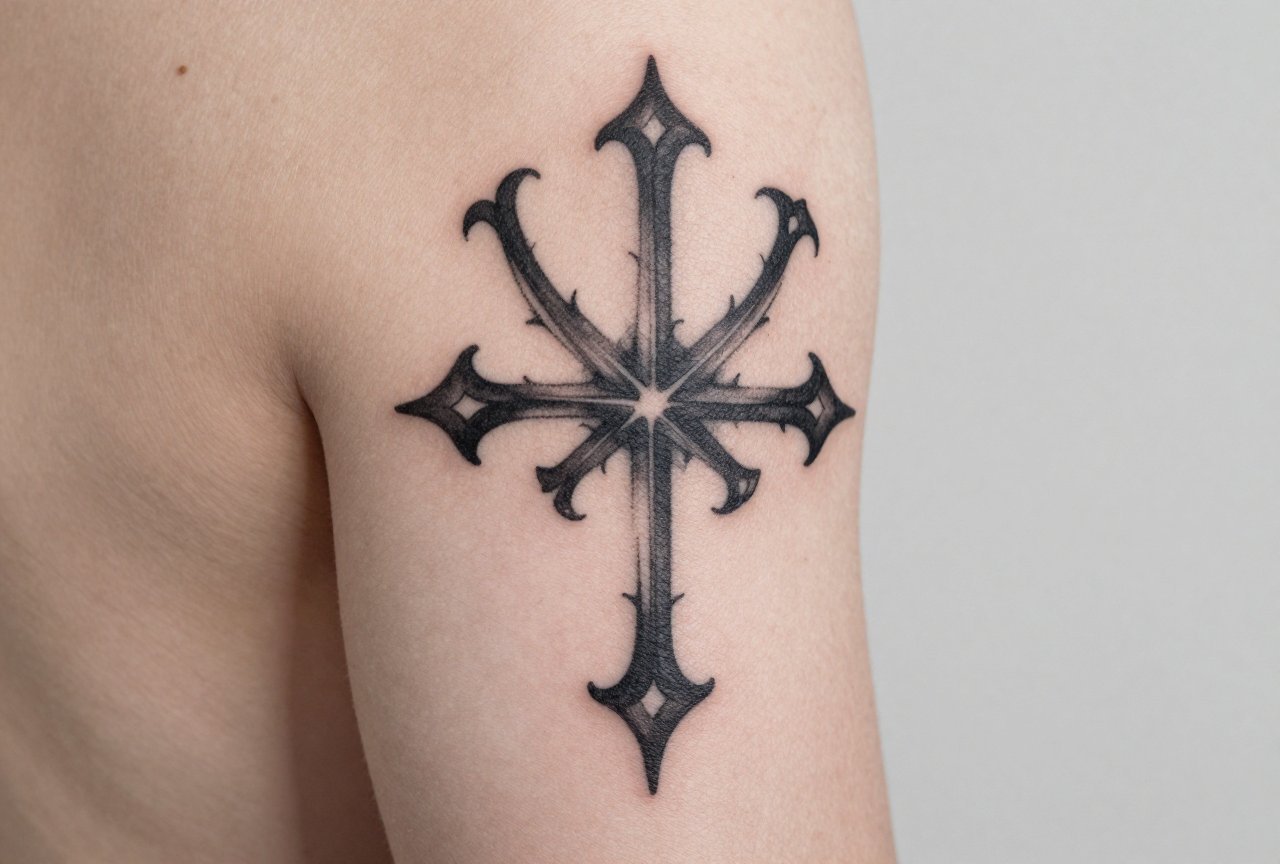
A curse mark tattoo typically symbolizes protection through darkness, a warning to others, or a personal transformation through struggle. It’s the visual equivalent of saying “I’ve been through something” or “don’t cross me”, sometimes sincere, sometimes purely aesthetic. The meaning shifts dramatically depending on the cultural source, the specific design, and who’s wearing it.
Symbolism & History
I’ve had clients ask for curse marks from three main streams: anime and manga culture, historical occult symbols, and personal sigils they’ve developed with spiritual practitioners. Each carries completely different weight in the chair.
Anime & Pop Culture Roots
The most common request I get is the Juinjutsu from Naruto, the cursed seal Sasuke receives from Orochimaru. That three-tomoe spiral with flame-like extensions. Kids who grew up on that show are adults now with disposable income and nostalgia. They tell me it represents power that comes with a cost, or the struggle against something corrupting inside you. I tattooed one on a guy’s shoulder blade last year who said it reminded him of his own recovery from addiction, the high that felt like strength but was slowly destroying him.
Other anime sources pop up too. The Fullmetal Alchemist Ouroboros mark on homunculi. The curse marks in Jujutsu Kaisen. These clients usually want clean black lines, anime-accurate, sometimes with color. They age okay if they’re bold enough, fine detail in those spiral extensions can blur after five years.
Historical & Occult Sources
Then there’s the client who brings in a hand-drawn sigil from a grimoire or a witchcraft practice. The Malocchio protection symbols from Italian folk magic. Nordic runes combined in bind-rune form for cursing or warding. I’ve done alchemical symbols that supposedly “mark” the wearer as protected from specific harm.
These designs tend to be more angular, less flowing than anime work. They hold their lines better over time because the geometry is simpler. I always tell these clients: the meaning lives in your intention, not my needle. I’m just making it permanent.
Common Variations & Styles
Style choice changes everything about how this tattoo reads and how it ages.
- Blackwork bold lines: The classic approach. Heavy black, high contrast, readable from across a room. These last decades. I recommend this for anyone who wants the mark to stay legible.
- Dotwork/stippled: Creates a softer, almost bruised or scarred appearance. Very popular for “organic” curse marks that look like they erupted from the skin. Needs touch-ups sooner, those tiny dots spread.
- Red accent or full red: Blood, violence, warning. The color of curses in many traditions. Red ink fades faster than black, especially on sun-exposed areas. I warn clients about this every time.
- Scarification-style tattooing: White ink over black, or heavy black with negative space cuts. Mimics the look of a brand or scar. High maintenance, high impact.
- Biomechanical integration: The curse mark as something technological or alien embedded under skin. Popular with Alien franchise fans and cyberpunk aesthetics. Complex, expensive, requires a specialist.
We see a lot of combination requests too. The anime mark rendered in dotwork. The historical sigil with modern geometric framing. Cross-cultural fusion that would make a purist wince but makes the client happy.
Best Placements
Where you put a curse mark changes its social function completely.
Visible & Confrontational
Neck, hands, face, these placements say “I want you to see this before you speak to me.” I’ve done curse marks on throats for musicians and performers who want that immediate visual impact. The neck hurts like hell. The skin moves constantly, so healing is tricky. But the effect is undeniable. One rapper client told me his neck piece got him more attention than his music initially.
Hand tattoos, especially the back of the hand or knuckles, function like a warning label. They also age the fastest. The skin on hands sheds and regenerates constantly. I tell clients: expect touch-ups every few years, and accept that the crisp lines will soften.
Hidden & Personal
Shoulder blade, upper arm under a sleeve, ribs, thigh, these are for the wearer, not the viewer. The curse mark as private talisman. I tattooed one on a woman’s ribcage, a personal sigil she designed with her sister before her sister died. She said it was “to keep the bad luck away from what little family I have left.” That’s heavy. That’s real. The ribs hurt, she teared up, we took breaks. Worth it for her.
Upper back, centered between shoulder blades, is almost spiritual in placement. The spot you can’t see yourself without mirrors. Requires trust in the artist, trust in the meaning.
Who Chooses This Tattoo / Personal Meanings
In my chair, I’ve heard versions of the same few stories.
- Survivors: Cancer, assault, addiction, abusive relationships. The curse mark as “I survived something that should have destroyed me.”
- Protective personalities: Bouncers, security workers, people who’ve been robbed or attacked. The mark as “don’t try me.”
- Spiritual practitioners: Witches, occultists, people who genuinely believe in the functional power of symbols. They research the design carefully. They bring reference books.
- Aesthetic collectors: They just think it looks cool. Nothing wrong with this. Not every tattoo needs a eulogy.
- Fandom members: The anime and manga crowd. Their connection is narrative, emotional, tied to character arcs they saw themselves in.
What unifies them is a desire for edge, the curse mark carries darkness without full nihilism. It’s “I’ve seen the bad side” rather than “I am the bad side.” Subtle distinction, but it matters in the psychology of the choice.
Similar Symbols
Clients often come in asking for curse marks but end up with something adjacent after we talk.
- Evil eye: Protection through malevolent gaze. More universally recognized, less aggressive. The blue-and-white Turkish nazar is almost friendly compared to a curse mark.
- Ouroboros: Self-devouring snake. Cyclical destruction and renewal. Less “curse,” more “eternal process.”
- Bind runes: Combined Norse runes for specific magical purposes. More customizable, more historically grounded.
- Hex signs: Pennsylvania Dutch folk art. Originally protective, now decorative. Softer visual language.
- Scar or brand replicas: Some clients want the curse mark to literally look like a scarification or burning. I’ve referred these to actual scarification artists, tattoo can mimic but never fully replicate that texture.
The conversation in the shop usually goes: “Show me what you like about the curse mark concept. Is it the danger? The protection? The fandom connection?” Then we find the right visual language.
Final Thoughts
A curse mark tattoo is whatever you make it, but it carries social weight you can’t control. I’ve watched clients realize mid-session that they’re permanently marking themselves with something that reads as threatening, damaged, or occult to strangers. That’s not necessarily bad. Just something to sit with before the needle starts.
The best curse mark work I’ve done combined personal meaning with visual boldness. The worst was rushed anime copies on impulse. Take time. Find an artist who does the style you want, not just any shop. And understand that “curse” can mean protection, transformation, warning, or pure aesthetic, sometimes all four at once. The meaning lives in your skin, your story, how you carry it forward.
Frequently Asked Questions
Do curse mark tattoos have to be black, or can I use color?
Color works fine, but black holds longest and reads as more traditional for this theme. Red accents are common for blood or danger symbolism. I always warn clients that bright colors fade faster, especially on high-movement areas like hands or wrists.
Will people think I’m into dark magic if I get a curse mark?
Some will, especially older or more conservative viewers. Anime-inspired designs usually read as fandom to younger people. Historical occult symbols draw more genuine concern. Placement matters too, visible curse marks get more reactions than hidden ones.
How much does a curse mark tattoo typically cost?
Simple blackwork starts around $150-300 for palm-sized pieces. Intricate dotwork, biomechanical fusion, or large placements run $500-1500+. Custom-designed sigils from specialist artists command premium rates. Always book a consultation, not a walk-in, for this style.
Do curse mark tattoos age badly compared to other designs?
They age like any detailed blackwork, fine lines soften, dots spread, solid black stays readable. Anime-style curse marks with thin flame extensions blur faster than bold geometric versions. I recommend bolder designs for longevity, with touch-ups every 5-10 years.
Related Tattoo Meanings
- Sand Dollar Tattoo Meaning: Symbolism, Styles Personal Stories
- Sukuna Tattoo Meaning: Power, Duality Cursed Energy
- Penguin Tattoo Meaning: Loyalty, Resilience Playful Spirit
- Explore more