
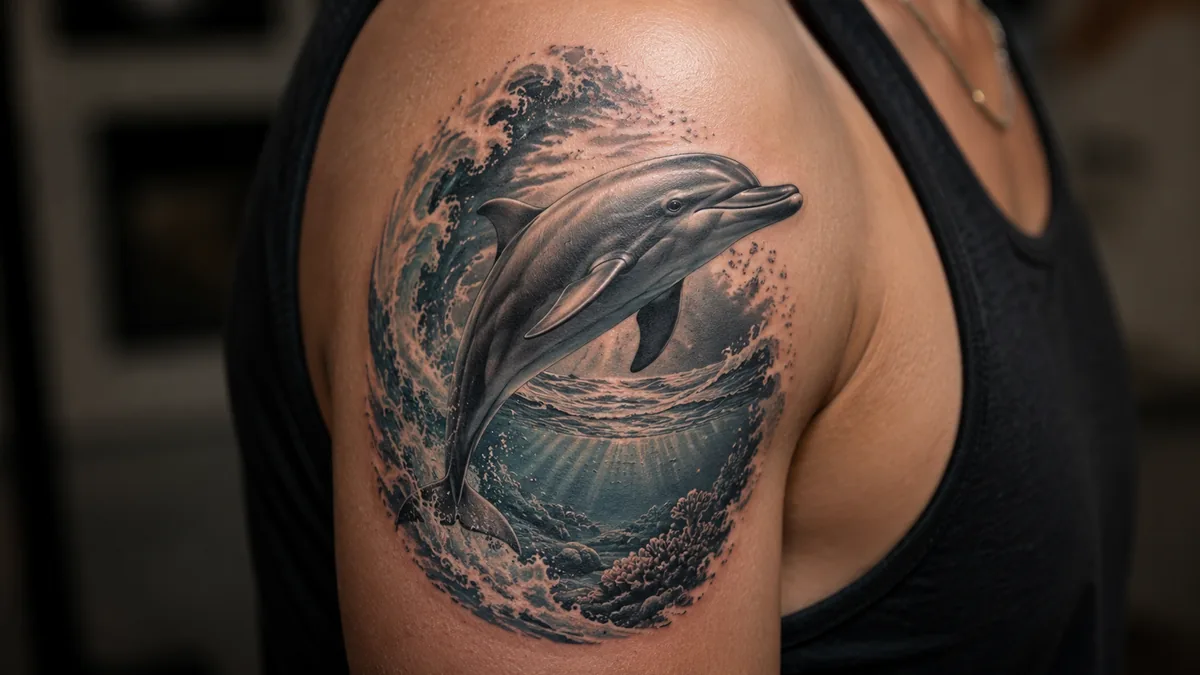
The dolphin tattoo has been around a long time, and it earns its spot. People get it because they actually connect with what the animal stands for: freedom, joy, intelligence, and that bond between humans and the ocean. It’s not a random flash pick. There’s real weight behind it.
Whether you go bold and traditional or whisper-thin fine line, the meaning holds. This is a tattoo about who you are, not just what looks cool on your wrist. Let’s break down what it actually means and how to get it right on skin.
Core Symbolism: What the Dolphin Actually Represents
The dolphin is one of the few animals that genuinely earns every meaning people attach to it. Intelligence, playfulness, empathy, community, and freedom. These aren’t invented tattoo-shop poetry. Dolphins are cognitively complex, socially bonded creatures. People who get this tattoo usually identify with at least one of those traits on a personal level.
Joy is the big one. Dolphins are associated with pure, unforced happiness. A lot of clients describe wanting a permanent reminder to not take life too seriously, to stay light. Others lean into the freedom angle, that sense of moving through life on your own terms, unbounded. Both readings are valid and common.
Historical and Cultural Background
A dolphin tattoo means something. Make sure you know what before you sit.
Ancient Greeks had deep respect for dolphins. Sailors saw them as good omens, protectors of ships crossing open water. Greek mythology ties dolphins to Poseidon and Apollo. There are real accounts of dolphins guiding stranded sailors to shore, and that built a centuries-old association between the animal and safe passage.
Celtic traditions also honored the dolphin as a symbol of water’s life-giving power and renewal. In many Indigenous coastal cultures across the Pacific and Americas, dolphins represent harmony with nature and the sea. None of this is invented lore. It’s documented symbolism that gives your tattoo genuine historical roots if you want them.
Design Variations: From Traditional to Fine Line
Traditional American dolphin tattoos run bold outlines, saturated blues and grays, clean simple forms. They read from across the room and hold up for decades. Neo-traditional versions add more detail, shading, florals, or geometric framing while keeping that strong linework backbone. Both styles age well because bold will hold.
Fine line dolphin tattoos are extremely popular right now, especially minimalist single-line silhouettes or small realistic pieces. These look incredibly crispy fresh off the needle but require a skilled artist and careful placement. They live and die by zone. Fine line on a high-wear area like a finger or wrist inner fold will fade and spread faster than the same piece on a rib or shoulder blade.
Color vs. Black and Grey
Color dolphin tattoos open up a lot. Ocean blues, teal, seafoam green, gradient backgrounds, watercolor washes. A dolphin jumping through a sunset is a classic concept that lets a colorist go wild. The key is saturation. A color piece that’s not fully packed fades blotchy. Make sure your artist actually loads the pigment, especially in lighter areas.
Black and grey dolphin tattoos are understated and timeless. Whip shading gives you that smooth ocean water texture without needing any color at all. A well-executed black and grey dolphin in a detailed nautical scene, surrounded by waves or coral, can be genuinely stunning. It also ages more predictably than color on most skin tones, which matters for long-term wearability.
Placement and How It Ages by Zone
The forearm, upper arm, and shoulder are the go-to spots for good reason. These zones have consistent skin texture, low friction, and your artist has room to work. A dolphin with any background scenery, waves, water, or a nautical compass, needs space to breathe. Cramming it into a tight spot kills the composition and speeds up mudding.
The ankle and foot are popular placements for smaller dolphin pieces but be honest with yourself about upkeep. Foot tattoos take a beating from shoes and sun and need touch-ups more often. Ribs and sternum are spicy, no sugarcoating that, but they heal beautifully and the skin is stable. Avoid knuckles and inner fingers for anything with detail. Blowout risk is real there.
Who Gets Dolphin Tattoos and How to Make Yours Personal
Ocean people get this tattoo. Surfers, divers, sailors, marine biologists, people who grew up near the water. But plenty of landlocked clients get it too because they connect with the meaning, not the geography. A parent who lost a child sometimes chooses a dolphin as a memorial piece, linked to that joy and free spirit the kid carried. It works as a tribute without being heavy-handed.
To make yours personal, anchor it to something real. Add a specific species if it matters to you, a bottlenose reads different than a spinner dolphin or an orca adjacent killer whale. Incorporate a date, coordinates of a meaningful spot, or pair it with another symbol that tells your story. A dolphin with a nautical star or a wave pattern from a specific ocean you crossed means something. Generic is forgettable. Specific lasts.









