That coiled rattlesnake. The yellow field. Four words that land like a gut punch. The Gadsden flag has been around since 1775, but it’s still walking into shops every single week. I’ve tattooed it on bikers and history teachers, on vets who want it for their brothers and on kids who just turned eighteen and think it looks badass. Sometimes they’re right. Sometimes they haven’t thought past the Instagram photo. Here’s what actually works for a Don’t Tread on Me tattoo, what falls apart in five years, and how to get something you’ll still want when the political winds shift.
Popular Styles
The Gadsden imagery breaks down into two camps: faithful reproduction and creative reinterpretation. Both can sing. Both can bomb. It depends on your artist’s specialty and how much you’re willing to trust the process.
Traditional American
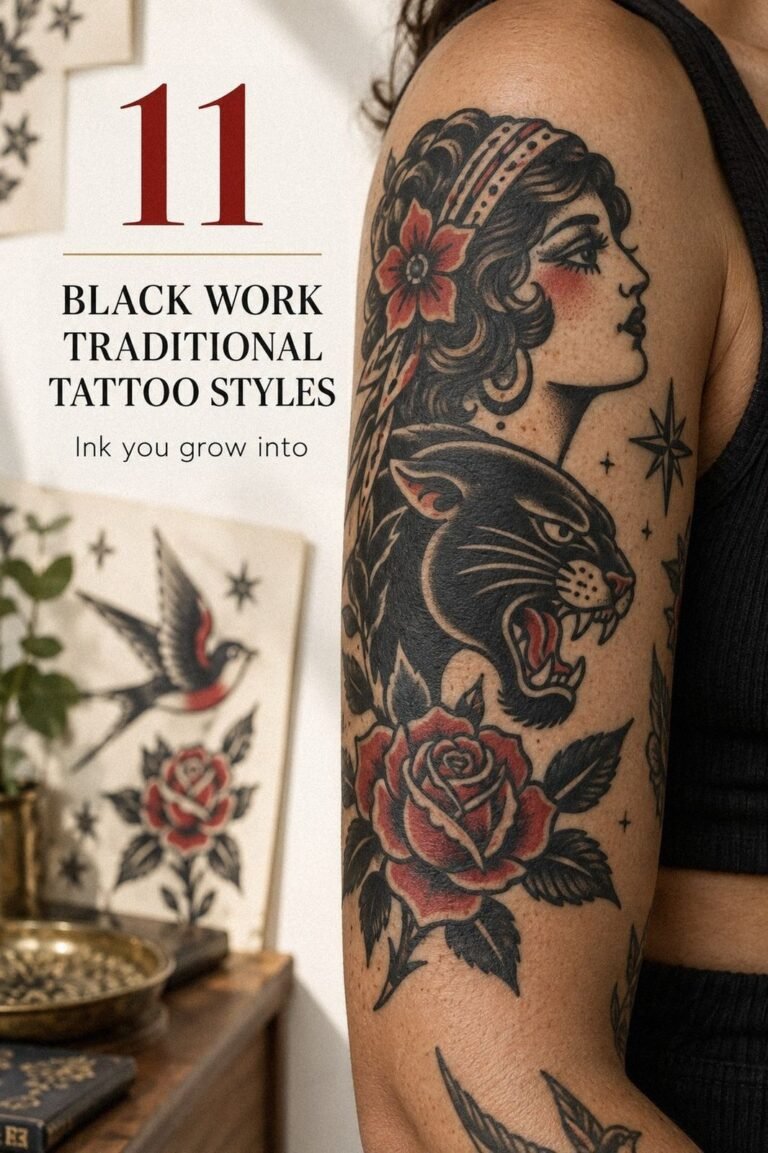
This is the bread and butter. Bold black outlines, limited color palette, that snake rendered with just enough cartoon menace to read from across a room. Traditional ages like a brick. The thick lines hold, the simple color blocks don’t muddy together, and in ten years you still know exactly what you’re looking at. I’ve seen 1980s trad Gadsdens that look like they were done last year. The downside? It can feel generic if your artist is phoning it in. Ask to see their flash sheets. If every snake looks identical, keep walking.
Realism and Neo-Traditional
Realistic scales. Individual rattles you could count. Yellow eyes with actual reflection mapped in. It looks incredible on day one. I’ve done a few that made me stop and photograph mid-session. But realism is a demanding mistress. The fine detail that makes it pop at first is the same detail that falls out as your skin regenerates. Those tiny scale highlights? Gone in three years. The subtle yellow-to-brown gradients? They muddy. If you go this route, commit to size. Palm-sized minimum. Anything smaller is a waste of everyone’s time and your money.
Neo-traditional splits the difference: bolder outlines than realism, more detail than trad. The snake might wrap through roses or a compass. It holds up better than photorealism but still gives you room to personalize.
Black and Grey
Surprisingly effective. The Gadsden flag is so associated with that specific yellow that people forget the snake itself is a powerful standalone image. Black and grey coiling serpents, heavy on the shadows, can feel more timeless and less tied to a particular moment. I’ve done them on forearms with the text bannered below in clean script. No color needed. The image carries itself.
Design Ideas
Here’s where people get stuck staring at Pinterest until 2 AM. Some directions that actually work in skin:
- The full flag treatment: Yellow field, snake, text. Classic for a reason. Works best on flat planes, thigh, outer arm, back of calf. The rectangle needs space to breathe.
- Snake only, coiled: More versatile. Can wrap around limbs, sit on a chest, coil up a ribcage. The text becomes optional or gets worked into a banner.
- Distressed/weathered: Torn edges, faded color, that “been through it” look. Popular with military clients. Be careful, too much distressing and it just looks like a bad tattoo in five years. Subtlety is everything.
- Combined imagery: Snake with dog tags, with a unit patch, with a birth flower for a memorial piece. The personal additions are what separate a tattoo from a bumper sticker.
- Minimalist line work: Single needle, no fill, just the snake’s silhouette and the words. Trendy right now. Some artists execute this beautifully. Others leave you with a wispy nothing that won’t last two summers. Vet your artist hard on this one.
One thing I steer people away from: trying to cram too many symbols into one piece. The Gadsden snake plus an eagle plus a flag plus a quote plus dates. I’ve had to talk people down from designs that looked like a history textbook threw up on their arm. Pick your primary image. Let it have room.
Best Placements
Arms and Forearms
Most common. Most visible. The outer forearm gives you a clean canvas, easy to show or cover with a long sleeve. The snake can coil with the natural curve of the muscle. Inner forearm hurts more, the skin’s thinner, the nerve endings closer, but the visibility is prime. I’ve done full Gadsden flag rectangles on forearms that read like a sleeve patch. Works.
Chest and Back
Big statement territory. Chest pieces with the snake emerging from the sternum, fangs toward the collarbone. Dramatic. Heals a bit rough, chest skin moves constantly with breathing, and the pec stretch can distort lines if your artist doesn’t account for it. Back pieces give you the most real estate for detail. Upper back/shoulder blade is classic. Full back? I’ve seen it once. The client was committed. It was… a lot.
Legs
Thigh is underrated for this imagery. Flat, stable, plenty of room. Calf works too, though the curve can make rectangular compositions tricky. Shins hurt like hell and the skin doesn’t always hold color evenly. Ankle and foot? I’ve done them. Small snakes, simplified. They age fast down there. The constant friction from socks and shoes, the thinner skin. Not my first recommendation.
Hands and Neck
Job stoppers. You know this. I still tattoo them, but I make sure people know what they’re choosing. A Gadsden snake on the hand reads a particular way to a particular audience. That’s not a judgment, it’s a reality. If you’re committed, the web of the hand between thumb and index can hold a small coiled snake nicely. The neck, side of the throat, is visible from every angle. Some people want that. Some haven’t thought about every job interview for the next forty years.
Color Choices
That yellow. It’s iconic. It’s also a nightmare.
Yellow ink is notoriously finicky. Lighter yellows fade fastest. The sun eats them. Older yellow pigments had reputation issues with reactions; modern ones are better, but still. If you want that flag-yellow field, I push for a deeper, more mustard tone than the bright digital version you see on screens. It settles better, lasts longer, and doesn’t look like a highlighter accident in year three.
Some alternatives that work:
- Black and grey with selective yellow: Snake in greyscale, eyes and tongue in yellow. The yellow becomes an accent instead of a field. Holds up better.
- Olive drab and black: Military aesthetic. Subdued. Reads as Gadsden without screaming it.
- Full color trad: Yellow, green, red banner. The classic Americana palette. These age predictably if your artist knows their pigments.
One note on green: snake green varies wildly. Too bright and it looks like a cartoon. Too dark and it goes black in five years. I mix custom for Gadsden pieces now, somewhere between sage and forest, tested on my own skin before it goes in a client.
Tips for Choosing
Know Your Why
I’m not your therapist, but I am the person who has to put this on you permanently. The clients who come back for cover-ups are often the ones who got it for a moment, not a meaning. The Gadsden flag carries weight. Political weight. Historical weight. Personal weight for people who’ve actually had their autonomy threatened. If you’re getting it because it looked cool on a truck decal, maybe sit with that. The tattoo won’t care. But you might, later.
Find the Right Artist
Not every artist wants to do this imagery. Some refuse. Others specialize in it. Look for clean lines in their portfolio, healed photos not just fresh ones, and experience with the specific style you want. A realism specialist might struggle with traditional boldness. A trad artist might not have the patience for your reference-photo snake. Ask to see healed work from two-plus years ago. That’s the truth of their skill.
Size and Detail Reality
That intricate scale pattern you love? It needs space. A Gadsden snake the size of a half-dollar is going to be a green blob in a decade. I tell people: measure the area you want, then add 30% to the design size they imagined. The text especially needs room. “DON’T TREAD ON ME” in tiny letters becomes “DON’T T…D ON ME” faster than you’d think.
Healing and Aftercare
Standard stuff, but worth saying: keep it clean, keep it moisturized, keep it out of the sun while healing. After that? Sunscreen. Forever. Yellow and green fade fastest under UV. I’ve seen beautiful Gadsdens ruined by tanning beds and beach vacations. Your artist can’t control what you do after you leave the chair.
Final Thoughts
The Don’t Tread on Me tattoo isn’t going anywhere. It’s been around longer than most countries, and it’ll outlast trends that come and go every season. That staying power is double-edged. It means the imagery is proven, recognizable, loaded with history. It also means you need to bring something personal to it, or you’re just wearing someone else’s statement.
I’ve watched this design evolve in my chair over fifteen years. The clients have changed. The political context has shifted. The core image, that snake, coiled, ready, warning, stays potent. Get it because it means something specific to you. Get it big enough to last. Get it from an artist who respects the history even if they don’t share your politics. And then wear it like you mean it. Because a tattoo this loaded deserves that honesty.
More Tattoo Ideas
- Original Tattoo Ideas That Actually Feel Like You
- Realistic Octopus Tattoos: Style Guide
- Realistic Spider Tattoos: A Complete Style Guide
- Explore more
Frequently Asked Questions
What does a Don’t Tread on Me tattoo symbolize?
The Don’t Tread on Me tattoo, featuring the Gadsden flag rattlesnake, symbolizes American independence, liberty, and resistance to government overreach. It has roots in the Revolutionary War and remains popular among libertarians, veterans, and Second Amendment advocates.
Where is the best placement for a Don’t Tread on Me tattoo?
Popular placements include the forearm, shoulder, and calf for visibility, while the chest or back allow for larger, more detailed snake designs. Many choose spots that can be shown or covered depending on the social setting.
Can I combine the Don’t Tread on Me snake with other patriotic imagery?
Yes, many people blend the Gadsden snake with American flags, eagles, the Liberty Bell, or military insignia to personalize the design. Just be mindful that adding certain elements can shift how the tattoo is perceived politically.
Is a Don’t Tread on Me tattoo considered offensive or controversial?
The tattoo carries strong political associations and has been adopted by some extremist groups, so it can draw mixed reactions depending on context and location. Many wearers simply value its historical meaning of individual freedom and personal sovereignty.