
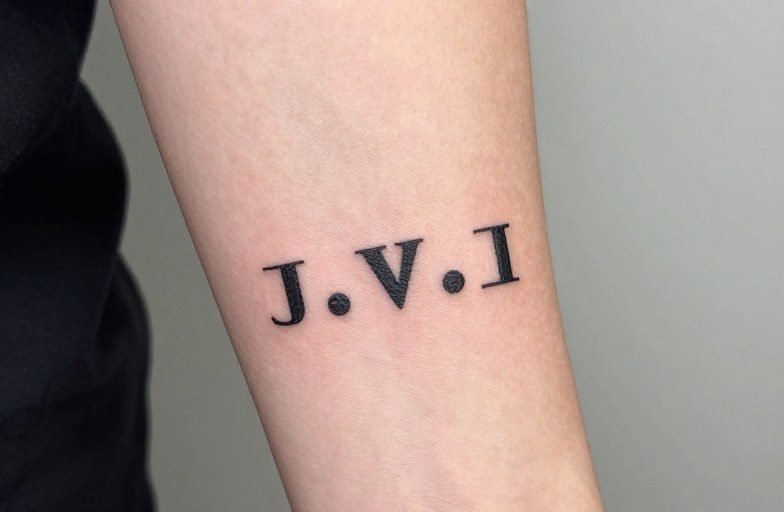
The ellipsis tattoo, three simple dots, usually in a row, represents the unsaid, the ongoing, and the not-yet-determined. Unlike a period that ends a sentence, these dots create space for continuation. People choose this mark to honor grief without closing the door, to acknowledge mental health struggles as processes rather than endpoints, or to claim agency over narratives still being written.
Who Chooses This Tattoo
Walk into enough shops and you’ll notice patterns without them being universal rules. The ellipsis tends to draw people who resist tidy conclusions, writers who distrust final chapters, survivors of suicide loss who refuse to say “over,” anyone who has learned that endings are mostly provisional.
Placements That Match the Message
Behind the ear keeps it intimate, a private signal rather than an explanation. The inner wrist invites conversation; the ribs, closer to the heart, suit memorial pieces. Finger placement looks clean fresh but blurs faster than most spots because of constant movement and thin skin. For longevity, the outer forearm or upper arm trades some visibility for staying power.
- Behind the ear: discreet, personal, easily concealed
- Inner wrist: visible, prompts questions when you’re ready
- Ribs: paired with names or dates for memorial work
- Fingers: stylish but high-maintenance, expect touch-ups
Single Dot or Three: The Variation
Some people split the ellipsis across three fingers, one dot each. Others cluster all three on one spot. The scattered version reads as more playful or distributed; the cluster feels deliberate, almost grammatical. Both work. The choice usually comes down to pain tolerance, finger tattoos smart, and whether you want the dots to read as a single unit or a sequence.
Color vs Black and Grey
Black dominates. The ellipsis derives its power from restraint, and color risks turning punctuation into decoration. That said, subtle applications exist: a faint blue wash behind the dots for depression awareness, a soft red for heart-related grief. These work best when the color recedes and the dots remain dominant.
Watercolor backgrounds behind an ellipsis rarely age well. The dots themselves are small; surrounding blur becomes illegible blur within a few years. If you want color, commit to bolder saturation or accept that the piece will need refreshing sooner than black line work.
History & Cultural Roots
The ellipsis as a typographic mark dates to sixteenth-century printing, where it indicated omitted text or trailing thought. Its tattoo adoption is harder to trace precisely. Some link it to early internet culture, AIM away messages, the pause between typed lines, while others see parallel use in literary communities where the mark signified intentional silence.
The semicolon tattoo, widely recognized for mental health advocacy through Project Semicolon, sometimes gets confused with the ellipsis. They share territory but differ in emphasis: the semicolon asserts continuation despite struggle, the ellipsis leaves more room for ambiguity. Both emerged more prominently in tattoo culture during the 2010s as mental health discourse became more public, though neither originated in shops.
How It Ages on Skin
Small tattoos face disproportionate aging challenges. Three dots, each maybe two millimeters across, can spread into indistinct blobs over a decade. The spaces between them, where the meaning lives, are what disappear first.
Line Weight and Spacing
Experienced artists will use slightly heavier line weight than intuition suggests, with generous spacing between dots. Too tight and they merge; too fine and they fade into the skin’s texture. A good rule: the gap between dots should equal at least one dot’s width, preferably more. This looks slightly awkward fresh but settles correctly.
Touch-Up Reality
Expect to need refreshment. Not because the tattoo was poorly done, but because small, simple designs have no complexity to hide behind. A faded tribal sleeve still reads as tribal; three faded dots read as a skin blemish. Budget for a 15-minute touch-up every 5-8 years, sooner on hands or areas with frequent sun exposure.
Symbolism & Core Meaning
The ellipsis operates on multiple registers simultaneously. Grammatically, it indicates omission or trailing thought. Emotionally, it becomes a container for what cannot be fully stated.
Grief and Memorial
For those who have lost someone to suicide, the ellipsis refuses the false closure of “at peace now” or “in a better place.” It sits with the unfinishable. Often placed near a date or initials, it signals that the relationship continues in altered form. The dots don’t explain; they witness.
Mental Health and Ongoing Process
Depression and anxiety resist narrative resolution. The ellipsis acknowledges this without requiring public disclosure. Someone might see the tattoo and ask; you answer or don’t. The mark carries meaning even when unobserved, a private acknowledgment that today’s state is not the final draft.
Creative and Literary Affinity
Writers, editors, and readers sometimes choose the ellipsis as a profession-adjacent symbol that avoids the obviousness of quotation marks or pen nibs. It signals relationship to language itself, the gaps, the hesitations, the deliberate unsaid.
Design Tips & Pairings
The ellipsis plays well with others when given space. Crowding it into a busy composition undermines its essential quality: pause.
- With text: “to be continued…” where the ellipsis is the tattoo and the words are just reference
- With dates: a birth date, ellipsis, no death date, refusing finality
- With arrows: ellipsis before an arrow, suggesting forward motion after hesitation
- With constellations: three dots as stars in a larger sky pattern
Font matters if you add text. The tattoo dots should match the typeface’s ellipsis character, not look like afterthoughts. A serif ellipsis has different spacing and weight than a sans-serif one. Bring reference images from actual fonts, not generic “dot dot dot.”
Negative space versions, three uninked dots within a black field, require extremely confident execution. The skin’s natural tone shifts with sun and age, making the “dots” appear to move. Generally, stick to positive space for this particular mark.
Before You Decide
The ellipsis tattoo’s strength is also its risk: it means everything and nothing without your context. Strangers will project their assumptions. Some will confuse it with the “Mi Vida Loca” three dots associated with gang culture, though that placement (typically near the eye or in a triangle) differs. Be prepared for occasional misreading.
Consider whether you want to explain. The wrist invites questions; the ribs don’t. If you’re in a profession with visible-tattoo restrictions, the ellipsis is small enough to cover but common enough that people recognize it as intentional. That recognition can be connection or intrusion depending on your mood.
Most importantly, sit with the design. The ellipsis is about waiting, after all. If after months the impulse holds, the meaning has probably found its form. If it fades, you’ve practiced the pause without marking it permanently.
Frequently Asked Questions
Does an ellipsis tattoo have the same meaning as a semicolon tattoo?
No, though they overlap in mental health symbolism. The semicolon specifically represents continuing a story that could have ended, while the ellipsis leaves more room for ambiguity, pause, and the unknown. They can complement each other but carry distinct emphases.
Can three dots in a triangle mean something different than three dots in a line?
Yes. Three dots in a triangle formation has different cultural associations, including some gang-related usage. The linear ellipsis is the grammatical mark and carries different, more open-ended symbolism. Placement and arrangement matter significantly.
How small can an ellipsis tattoo be before it becomes unreadable?
Below about 3-4 millimeters per dot, the risk of spreading and fading into unrecognizable blobs increases substantially. Most experienced artists recommend slightly larger than clients initially request, with generous spacing between dots to preserve legibility over time.
Is it okay to get an ellipsis tattoo if I’m not a writer or dealing with mental health issues?
The ellipsis is broad enough to accommodate personal meaning without requiring specific credentials. However, be aware that it carries strong associations in those communities, so understanding the context helps you respond if asked about it.
Related Tattoo Meanings
- Courtney Hope Say Tattoo Meaning: Symbolism Design Guide
- Question Mark Tattoo Meaning: Mystery, Doubt Curiosity
- Three Dot Hand Tattoo Meaning: Symbolism, Styles Placement
- Explore more









