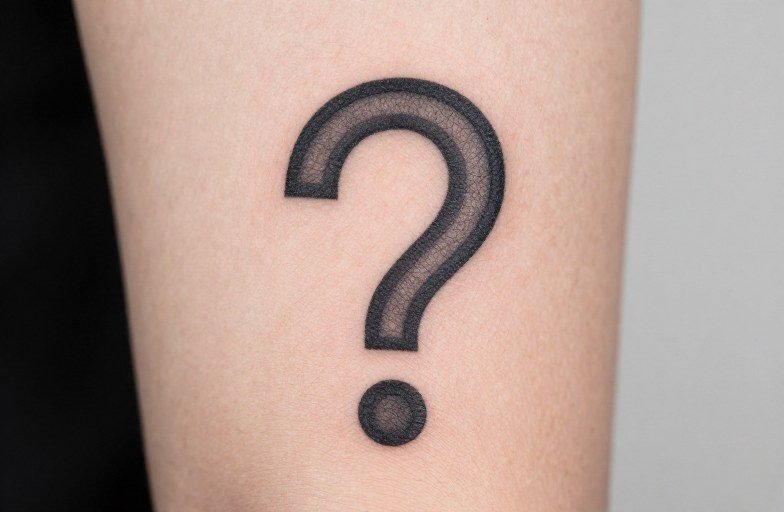
A question mark tattoo typically signals uncertainty, intellectual curiosity, or an embrace of life’s unanswered questions. For some, it marks a period of doubt or searching; for others, it’s a permanent reminder to keep questioning rather than settling. The symbol carries weight precisely because it’s incomplete, it demands something from the viewer, and from the wearer.
Symbolism & History
The question mark itself emerged from Latin quaestio (question), abbreviated over centuries into the curved and dotted form we recognize. Its tattoo usage lacks the ancient lineage of crosses or snakes, but the symbol’s psychological pull runs deep.
Core Meanings
Most people choose this mark for one of several resonances:
- Unanswered questions, about identity, purpose, relationships, or belief
- Intellectual stance, skepticism, agnosticism, or refusal of easy answers
- Life transitions, divorce, recovery, career collapse, spiritual departure
- Rebellion against certainty, pushback on dogma, family expectations, or cultural scripts
- Mystery and the unknown, comfort with not knowing, even celebration of it
The punctuation mark functions as a small, loaded container. Unlike a word tattoo, it doesn’t preach. It invites interpretation, which means it also invites conversation, sometimes welcome, sometimes exhausting.
Historical & Cultural Threads
The symbol’s tattoo history is often linked to 20th-century counterculture movements, particularly among writers, artists, and political dissidents who valued questioning authority. Some trace it to prison and military tattoo traditions where coded symbols carried covert meanings. In Russian criminal tattoo culture, for instance, a question mark could indicate uncertainty about sentence length or fate. These associations linger in the background for some wearers, though most contemporary choices stem from personal rather than subcultural signaling.
Common Variations & Styles
The basic mark adapts surprisingly well to different visual treatments, each shifting its tone.
Typography & Line Work
A clean, single-needle question mark reads as minimal and modern. Fine line work suits smaller scales, wrist, behind the ear, collarbone. The dot becomes a period of emphasis; the curve, a graceful sweep. Black ink holds crispness longer than color here, since the symbol’s power is in its silhouette.
Hand-drawn or “sketchy” styles introduce imperfection that mirrors the theme: the mark looks provisional, like a note in a margin. This works well for people who want to avoid the tattoo feeling too finished, too decided.
Integrated Imagery
- With a heart, romantic uncertainty, past heartbreak, or openness to love despite risk
- With a cross or religious symbol, faith questioning, spiritual searching, or post-religious identity
- With a semicolon, mental health struggles, survival, and the question of continuing
- With an exclamation point, the tension between doubt and conviction, often as interrobang (‽)
- Dissolving or incomplete, the question fading, or the answer proving unreachable
Color choices matter. Red suggests urgency or blood. Blue reads cooler, more intellectual. No color, just black, keeps it universal and avoids dating the piece to a trend.
Best Placements
Size and visibility shape how the tattoo functions socially. A question mark is small enough to hide or display at will, which matters for a symbol about uncertainty, you may not want to explain it daily.
- Inner wrist or forearm, visible to the wearer, easy to show or cover; good for daily reminder function
- Behind the ear, semi-private, discovered in intimate moments or mirrors
- Ribcage or side, personal, protected, often chosen for deeper significance
- Between shoulder blades, unseen by the wearer, seen by others; shifts the meaning outward
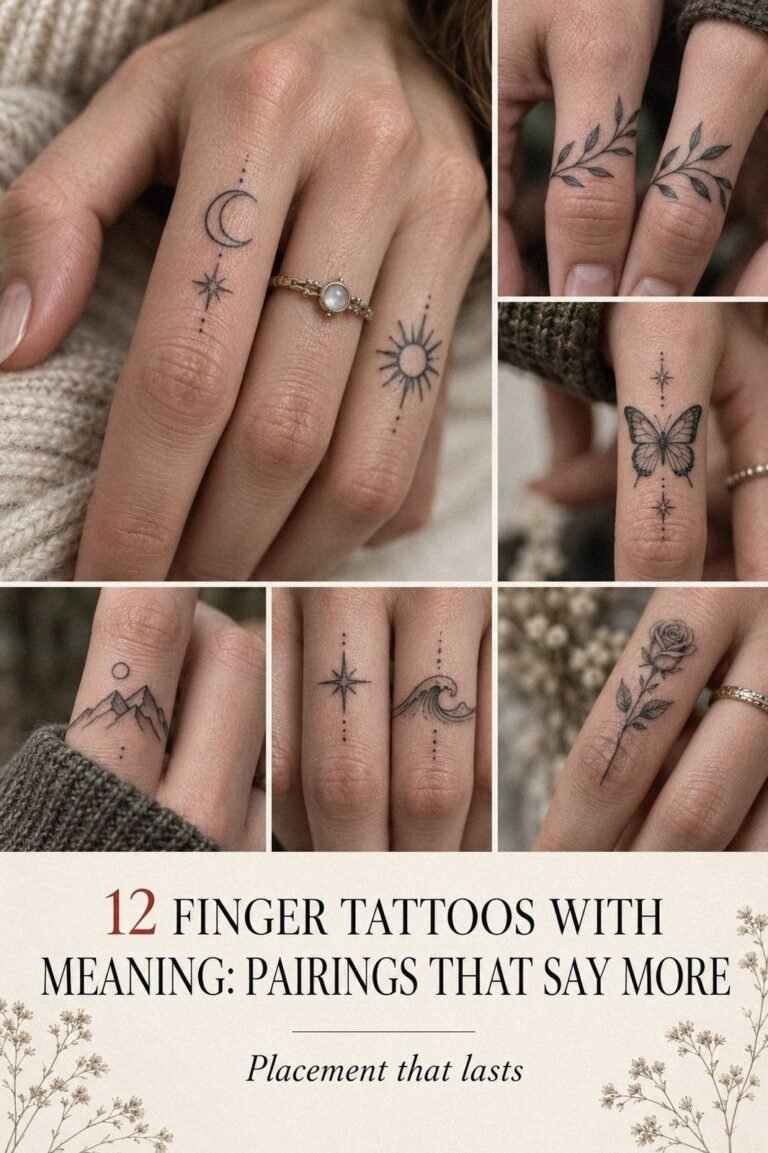
- Finger or hand, bold, unavoidable, commits to the question publicly
Finger placements age poorly. The skin there regenerates fast, blurs lines, and sheds ink. A question mark on a finger will need touch-ups to remain legible. Behind the ear and inner arm hold detail better long-term.
Who Chooses This Tattoo / Personal Meanings
There’s no single demographic. The choice crosses age, profession, and background. What unites wearers is a particular relationship to uncertainty, not paralysis, but occupation with it.
Common Motivations
Philosophy students and teachers sometimes choose it as professional identity, though this can edge toward affectation if the tattoo outpaces the reading. People exiting rigid belief systems, religious, political, familial, often mark the transition with this symbol. It says: I was sure, now I’m not, and that’s active territory.
Others get it during depression or anxiety, not as cure but as naming. The question mark holds the feeling without resolving it. Some recovery narratives prefer the semicolon for its explicit survival message; the question mark stays more open, less triumphant.
Writers and journalists occasionally choose it, though the irony of permanent punctuation merits consideration. A tattoo is a statement, however provisional it claims to be.
Social Reception
The question mark generally reads as benign. It doesn’t carry the aggressive associations of some tattoos, nor the sentimental weight of others. Strangers may ask what you’re questioning, which can be connection or intrusion depending on your mood. The symbol’s ambiguity is its protection and its burden.
Similar Symbols
People considering a question mark sometimes weigh alternatives that approach related territory:
- Semicolon, more specific to mental health continuation; less open to general interpretation
- Ellipsis, pause, trailing off, incompleteness; softer, less confrontational
- Ouroboros, cyclical return, self-eating; answers its own question in a way the question mark refuses
- Compass or north star, searching with direction; the question mark lacks this implied goal
- Open door or window, possibility, transition; more visual, less linguistic
The question mark’s advantage is its immediate recognition and its refusal to settle. An ellipsis suggests continuation; a question mark demands response.
Final Thoughts
A question mark tattoo works best when the wearer has lived with the symbol’s tension, genuine uncertainty, not performance of depth. It’s small enough to be spontaneous, but its meaning rewards deliberation. The mark ages like any fine-line tattoo: the dot may blur slightly, the curve soften, but the shape remains readable for years if placed well and cared for properly.
What separates meaningful from trendy here is the relationship to the question itself. If you know what you’re questioning, or are actively in that questioning, the tattoo holds. If you’re seeking a symbol of mystery without the experience of it, the mark may hollow over time. The best question mark tattoos come from people who haven’t found the answer yet, and have made peace with that search.
Frequently Asked Questions
Does a question mark tattoo always mean something negative or troubled?
Not at all. Many people choose it to celebrate curiosity, intellectual openness, or comfort with ambiguity. The tone depends on context, accompanying imagery, and the wearer’s own relationship to the symbol.
How small can a question mark tattoo be before it becomes unreadable?
Below half an inch, the dot risks becoming a blur and the curve loses definition over time. For longevity, aim for at least three-quarters of an inch in height, with clean line weight that won’t close in as the ink spreads slightly.
Is the interrobang (‽) a common tattoo variation?
It’s less common than the standalone question mark, but growing in popularity. It captures the specific tension of shocked uncertainty, useful for people who want to emphasize the emotional charge alongside the intellectual one.
Can a question mark tattoo be easily covered or removed later?
Its small size makes both cover-up and laser removal relatively straightforward. A skilled artist can incorporate it into larger designs, or fade it with a few laser sessions given its typically minimal ink load.
Related Tattoo Meanings
- Ram Head Tattoo Meaning: Power, Stubbornness Astrology
- Rare Meanings Tattoo: Symbolism of Obscure Ink
- Razor Blade Tattoo Meaning: Sharp Edges and Deeper Symbolism
- Explore more