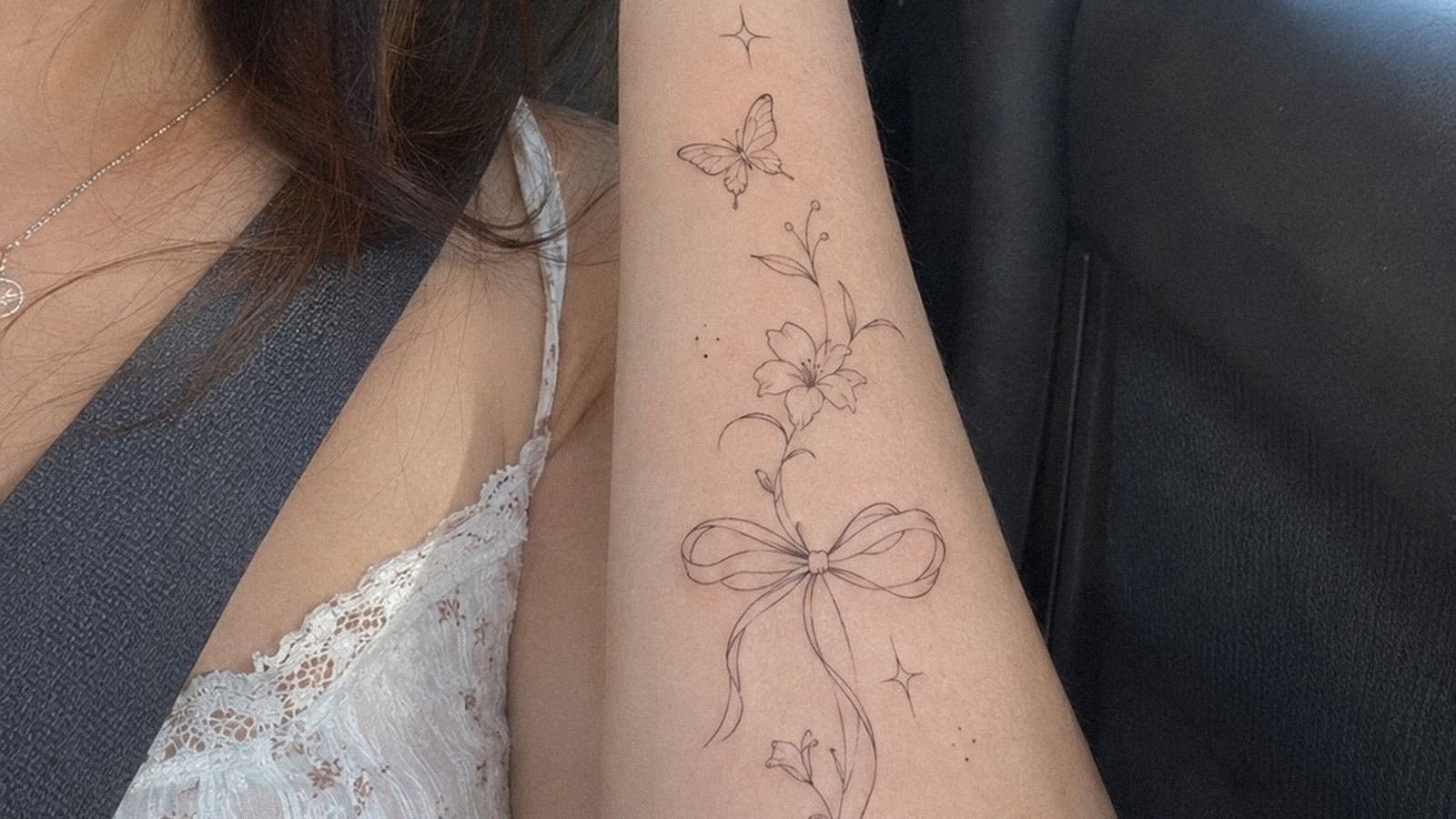

The first half mandala I noticed wasn’t the largest one around. It was a compact, negative-space design curving along someone’s forearm, with enough skin showing through to make every point feel intentional. That’s when the appeal clicked for me: you can get intricate geometry and a meaningful silhouette without automatically choosing the most punishing placement.
These ideas move from delicate spine work to bold forearm geometry, with options for different visibility preferences, body shapes, and comfort levels. You’ll see what makes each design work, where I’d place it, and which details are worth protecting during the consultation!
- Choose a Delicate Half Mandala Tattoo For Women
- Why a Bold Half Mandala Tattoo On The Forearm Works
- Ornamental Half Mandala Tattoo Across The Shoulder
- Pair a Feminine Half Sleeve Mandala With Florals
- Is a Minimal Half Mandala Tattoo On The Wrist Worth It?
- Go Intricate Along The Ribcage
- Build a Sacred Half Mandala With Dotwork Details
- Behind the Ear, Keep It Edgy
- Let a Flowing Half Mandala Move With The Upper Arm
- Can a Symbolic Half Mandala Include Crescent Elements?
- A Graceful Half Mandala Tattoo On The Ankle
1Choose a Delicate Half Mandala Tattoo For Women
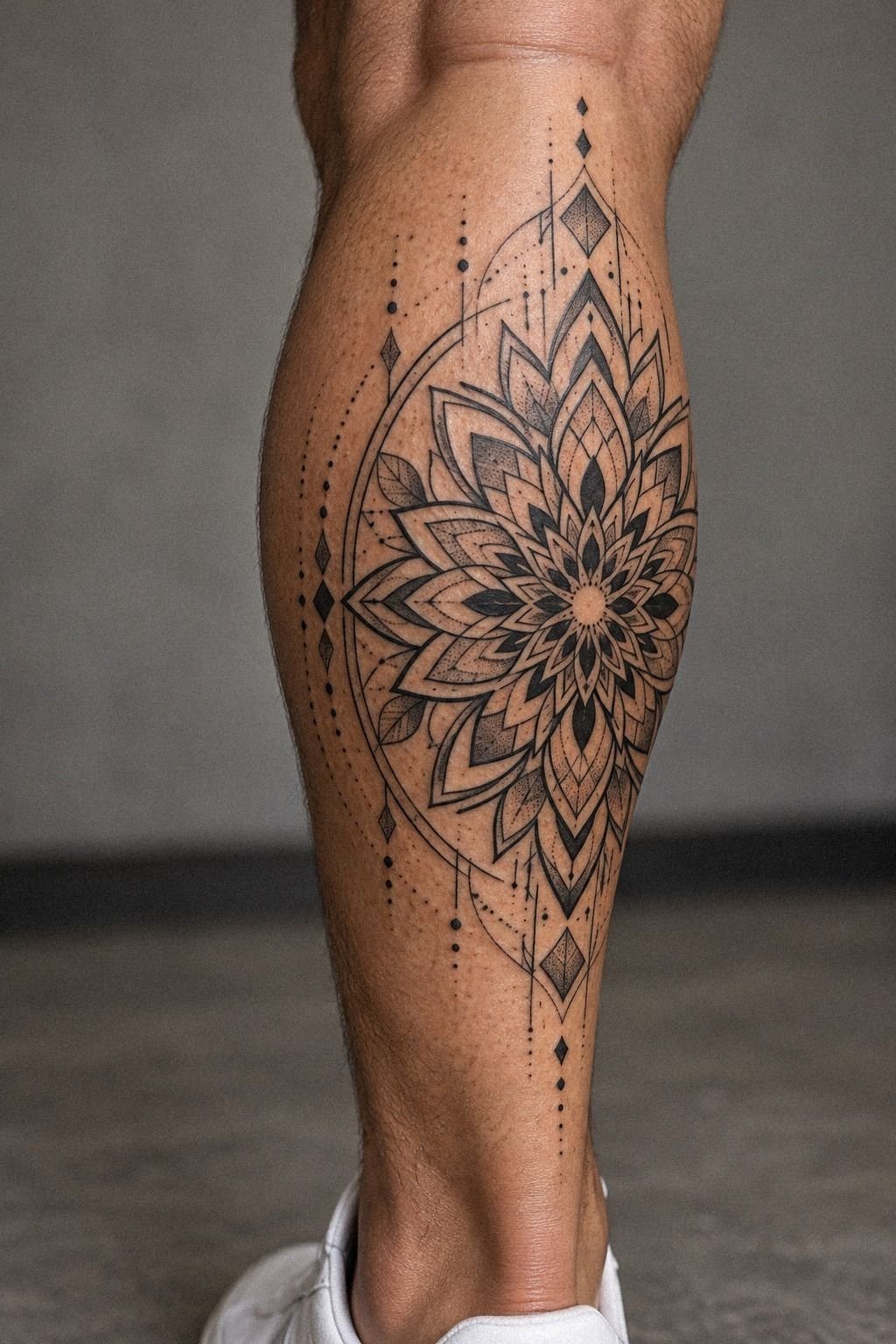
This delicate half mandala sits along the spine with precise ruled lines and a clean open edge. Warm terracotta and olive ink accents keep the geometry crisp without making the design feel heavy. You’ll want the central axis aligned carefully, because even a small shift can make the arcs look uneven.
I’d choose a restrained design here, not a dense field of shading. A few tiny dots, narrow petals, and symmetrical points give you an elegant result while leaving open skin around the vertebrae. The effect is symbolic and personal, especially if your mandala represents balance or a private turning point.
The spine can be more sensitive than the forearm, so you shouldn’t plan a long first session without discussing breaks. A palm-sized design may be easier to manage than a broad piece that runs from the upper back downward. Your artist can mark the centerline while you’re standing, then check it again when your posture relaxes.
If you’re comparing delicate layouts, browse these 20 mandala tattoo designs that reward a steady hand. You’ll notice that the best fine-line examples don’t crowd every gap. That understated restraint is what keeps this option timeless instead of busy.
2Why a Bold Half Mandala Tattoo On The Forearm Works
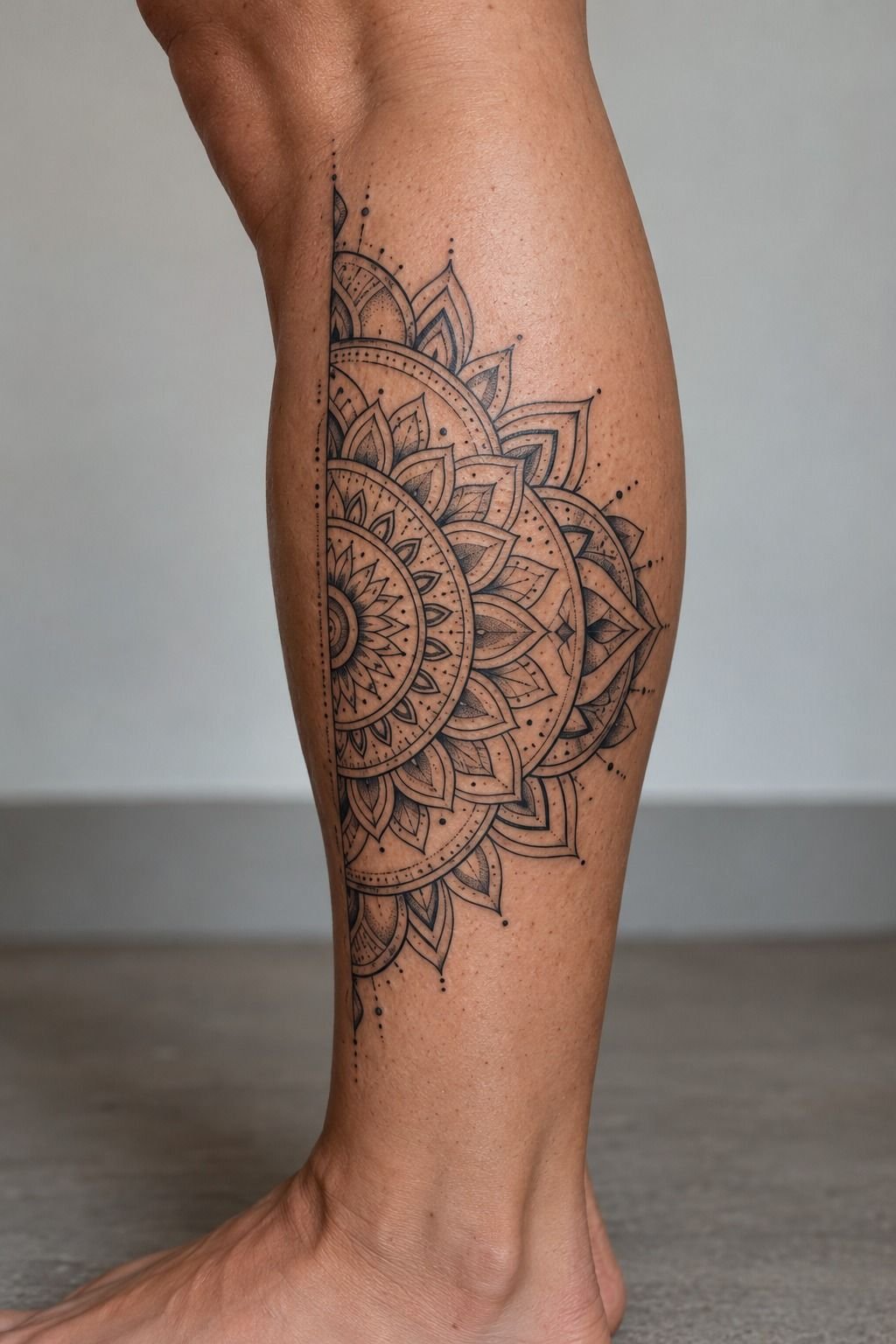
A bold half mandala on the forearm gives you strong visibility, a flatter working surface, and a fierce graphic quality. The contrast between skin and clay-toned and muted-brass ink makes pointed petals and curved bands read clearly. I’d pick this placement before the ribs for a first geometric piece!
The forearm rewards sharp planning. You’ll want the open half to follow the arm’s length rather than point awkwardly toward the wrist. A slightly tapered composition can make the design look intentional as your arm turns, while overly round geometry may lose its structure from the side.
I’ve seen people choose ultra-thin lines because they seem softer, then regret the lack of contrast once the skin settles. Here, a narrow solid anchor gives your artist something durable to build around. The fine details can remain delicate, but the outer contour needs enough visual weight to survive daily movement.
Don’t treat visibility as a flaw. Your forearm can make this expressive tattoo easy to live with and easy to show. Compare it with a geometric mandala tattoo before you commit.
Less guessing means a more polished appointment.
3Ornamental Half Mandala Tattoo Across The Shoulder
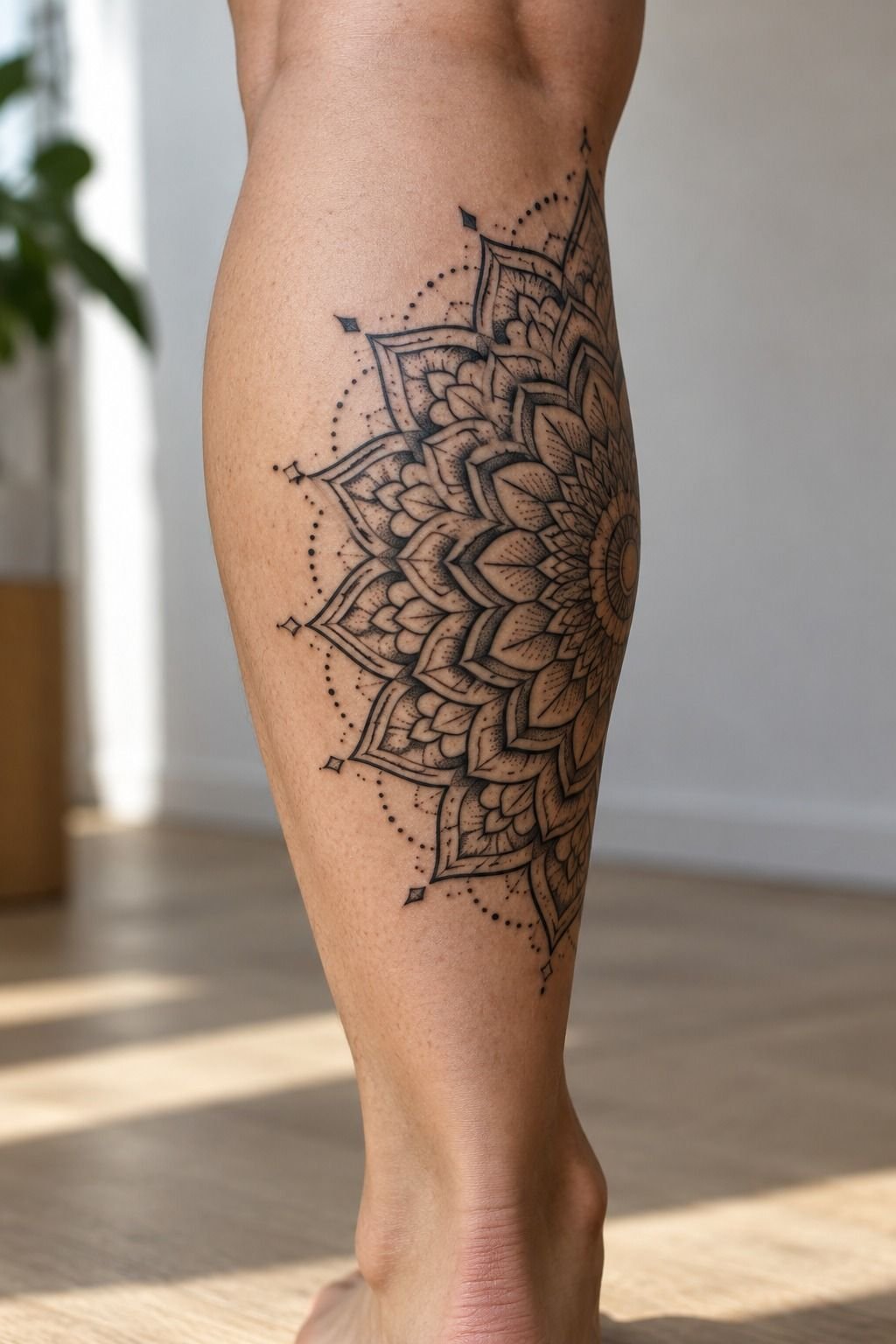
This ornamental half mandala spreads across the shoulder with curved geometry that follows the rounded muscle. Plum, gray, and rose-gold ink can separate the inner spokes from the outer ornament without flattening the whole design. You’ll want the top edge placed where your shoulder naturally slopes.
The shoulder gives you space for a design that feels ornate rather than tiny. I’d skip an overly symmetrical circle here, because it can look pasted on when your arm drops. A half composition with a longer lower point follows the body better and gives your artist a more graceful silhouette.
Your artist should stencil the design while you move your arm through a few positions. That simple check matters. The shoulder changes shape when you lift, relax, or rotate, and a layout that looks perfect while standing still may pull strangely when you reach forward.
The effect comes from contrast: precise geometric linework, stippled shadows, and untouched skin. If you’re collecting inspiration, the blackwork geometric tattoo and dotwork mandala guide can help you compare dense and open structures. Your final choice should look graceful in motion, not only while still.
4Pair a Feminine Half Sleeve Mandala With Florals
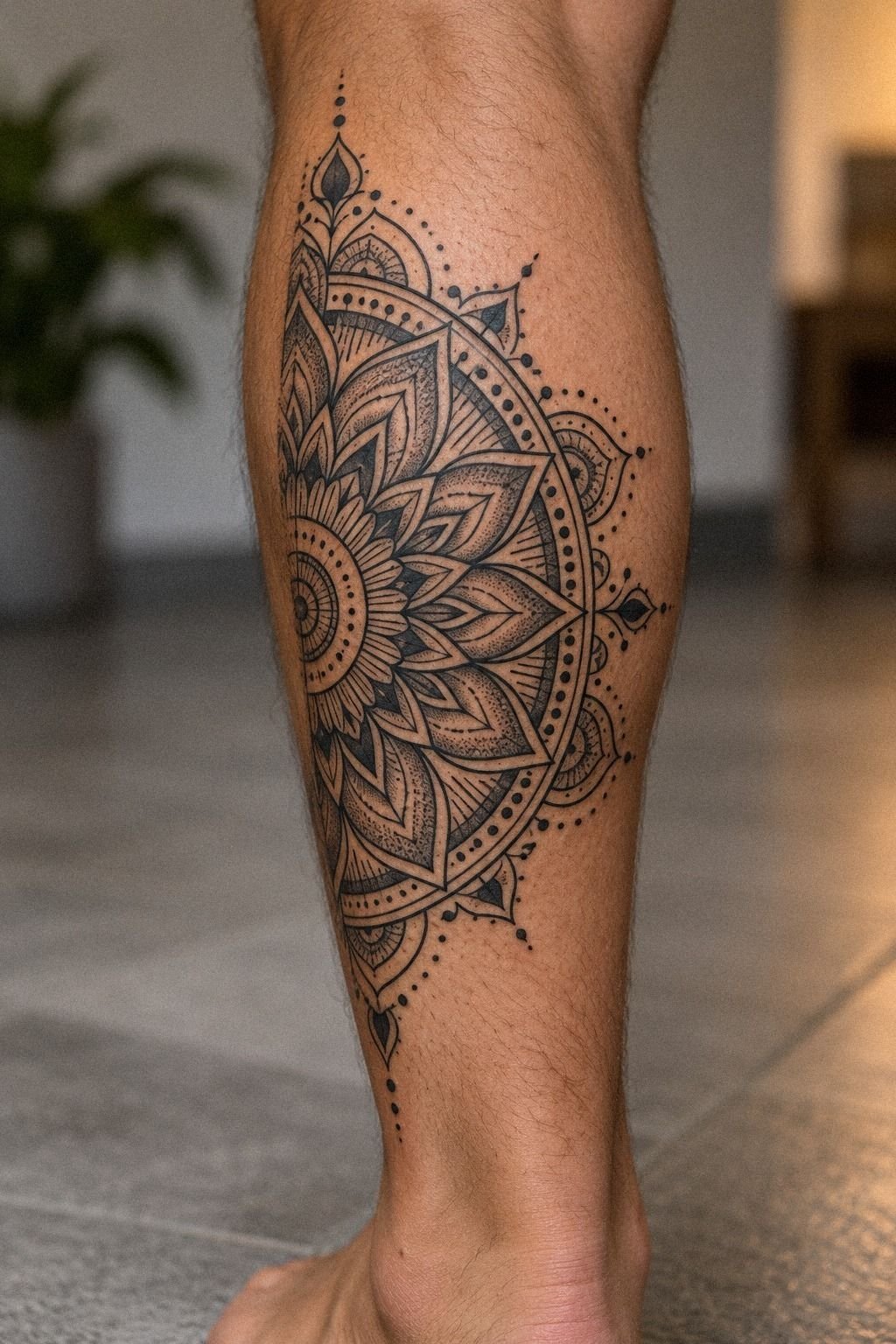
This feminine half sleeve combines a delicate wildflower sprig with a half mandala structure. I’d let the floral element interrupt the geometry slightly rather than forcing both motifs into identical symmetry. A thin stem can follow the upper arm, while the mandala fans outward toward the shoulder or inner bicep.
For a more romantic result, choose one flower with a recognizable shape instead of a crowded bouquet. A rose can make the design feel bold and classic, while a small daisy or jasmine sprig keeps it dainty and playful. The flower should support the mandala’s rhythm, not hide the central structure.
Think carefully about the transition between the two elements. A floral accent can begin at the mandala’s open edge, echo one of its points, or trail away in a separate direction. I prefer a slight difference in scale because it makes the composition feel drawn for the body rather than copied from a flat reference.
Ask your artist to show the stencil with your arm relaxed and slightly bent. The upper arm changes considerably between those positions, and the flower may need to rotate so its stem doesn’t appear to break when the skin folds. This is where a graceful adjustment can turn a pretty idea into an iconic one.
5Is a Minimal Half Mandala Tattoo On The Wrist Worth It?
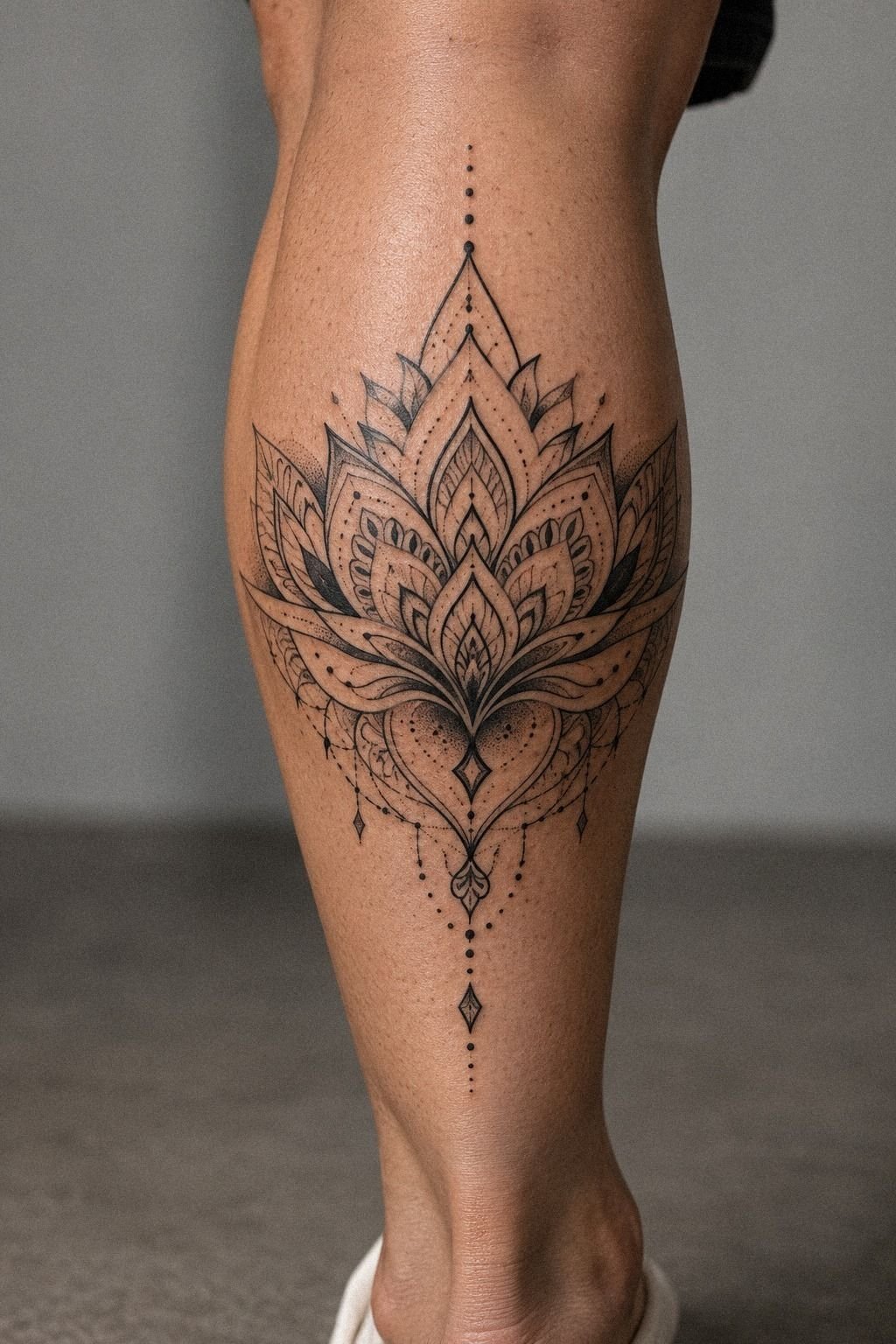
A minimal half mandala on the wrist works best when the design is small, clean, and deliberate. Emerald, gold, and cream ink accents can give the structure personality without combining every possible symbol. Crisp lines help the central arcs stay readable as the tattoo settles.
The wrist is visible and practical, but it doesn’t offer much space for crowded detail. I’d choose three or four main arcs, one central point, and a controlled dot pattern. A tiny piece may look dainty on day one, yet lines can soften over time, especially with frequent sun exposure.
Your artist should show you the stencil from both the palm side and the outer wrist. That placement changes as you bend your hand, so the lower edge needs to stop before the crease becomes a problem. A narrow composition can look more polished than a miniature version of a huge mandala.
For more placement context, compare this with a mandala wrist tattoo. You’ll see why minimal doesn’t mean unfinished. It means every mark has a job, and the finished piece stays understated instead of disappearing into visual noise.
6Go Intricate Along The Ribcage
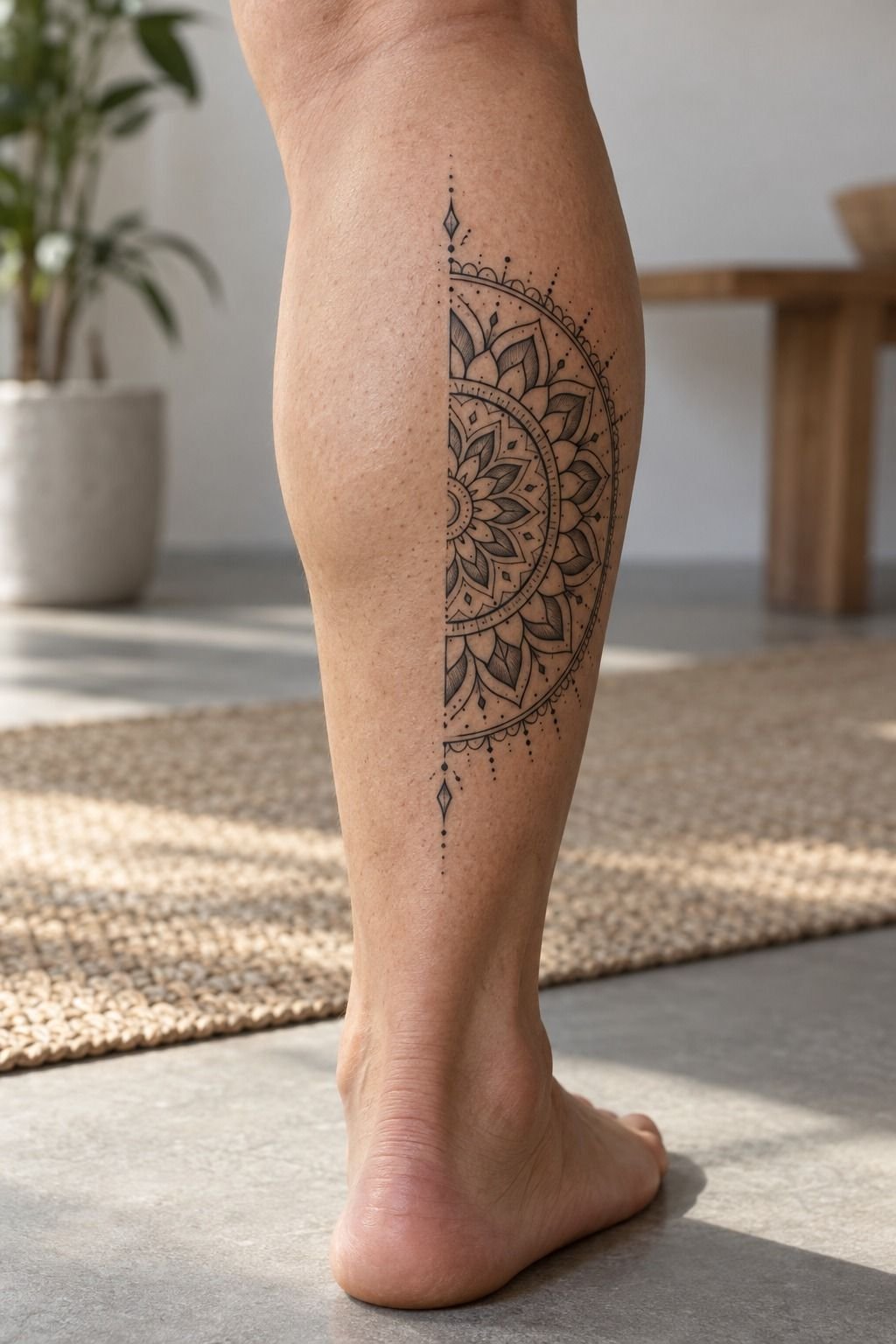
An intricate half mandala along the ribcage creates a haunting, high-contrast design with a private feel. The natural vertical curve gives the open edge somewhere to travel, especially when the design begins below the chest and narrows toward the waist.
I’d avoid placing the widest part directly over the most sensitive center of the ribs. A slightly lateral position can preserve the striking silhouette while giving you a more manageable area to discuss with your artist. The stencil should follow your breathing rather than fight it.
Choose details that reward close viewing. Stippled shadow can create depth between petals, while a few bold points keep the design readable from farther away. Tiny symbols should have generous separation, because compressed detail can blur into a dark patch after the skin settles.
This is a placement where session planning matters. You might prefer two shorter appointments, especially if the mandala includes dense ornament or multiple passes of shading. Wear clothing that gives clear access without rubbing the fresh tattoo, and agree on break signals before the session begins.
7Build a Sacred Half Mandala With Dotwork Details
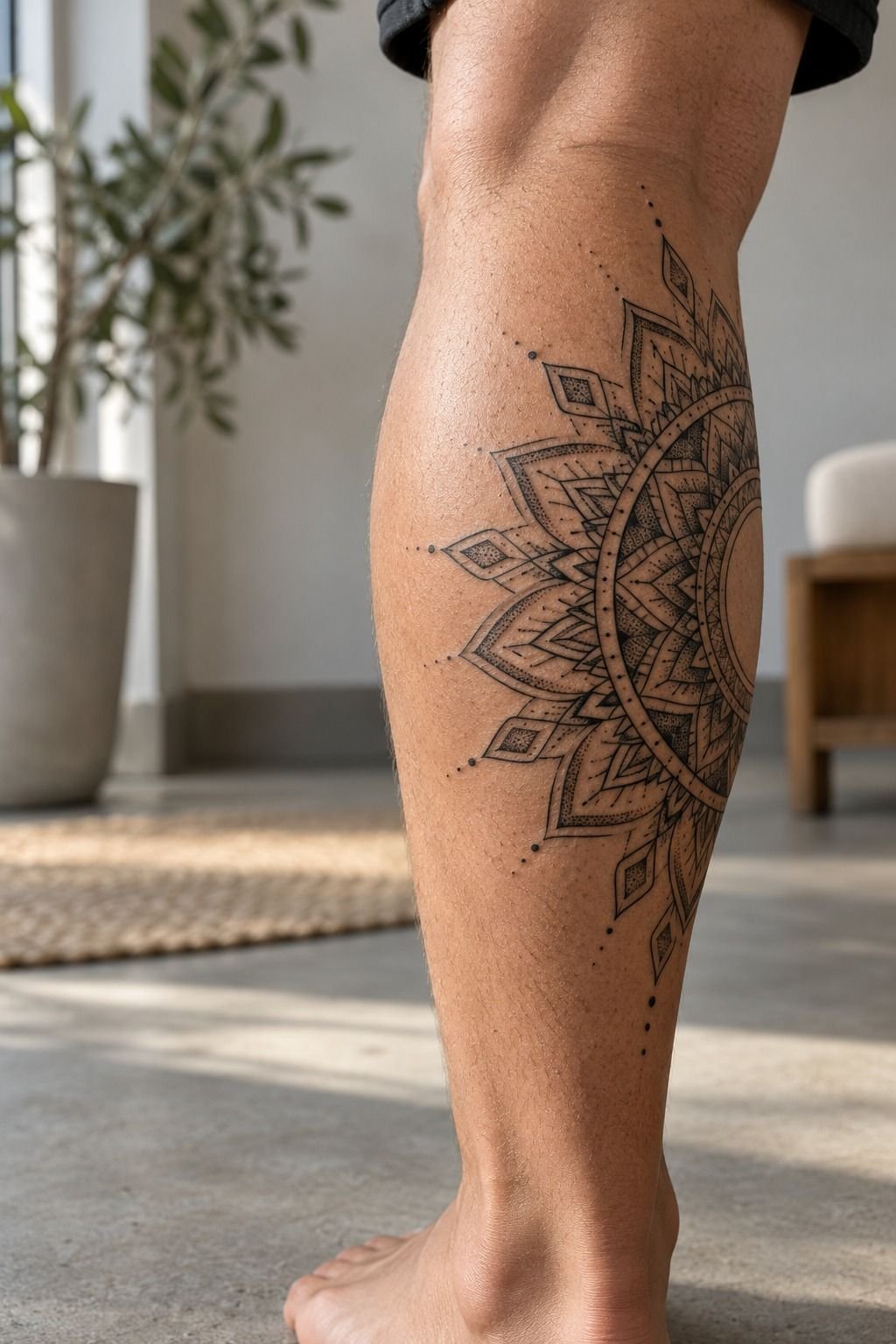
This sacred half mandala uses stippled shading to create depth without relying on large solid areas. Dusty rose, charcoal, and muted-gold ink give the design a soft visual fade around the central geometry. You’ll get a meaningful tattoo that feels detailed without becoming aggressively dark.
The calf is often more tolerable than the ribs, feet, hands, or sternum, though everyone’s experience differs. I’d place the open edge toward the side of the leg so the design follows the calf’s vertical shape. A centered layout can feel more balanced when you’re standing.
Your artist should keep the dot spacing consistent. Tight dots near the center and wider dots toward the edge create a controlled gradient, while random spacing can make the design look muddy. This is where a steady hand matters more than adding extra symbols.
If sacred geometry interests you, compare the visual language with this blackwork geometric tattoo dotwork mandala guide. You’ll want your chosen symbols to mean something to you, even if nobody else knows the story. That private meaning makes the piece empowering.
8Behind the Ear, Keep It Edgy
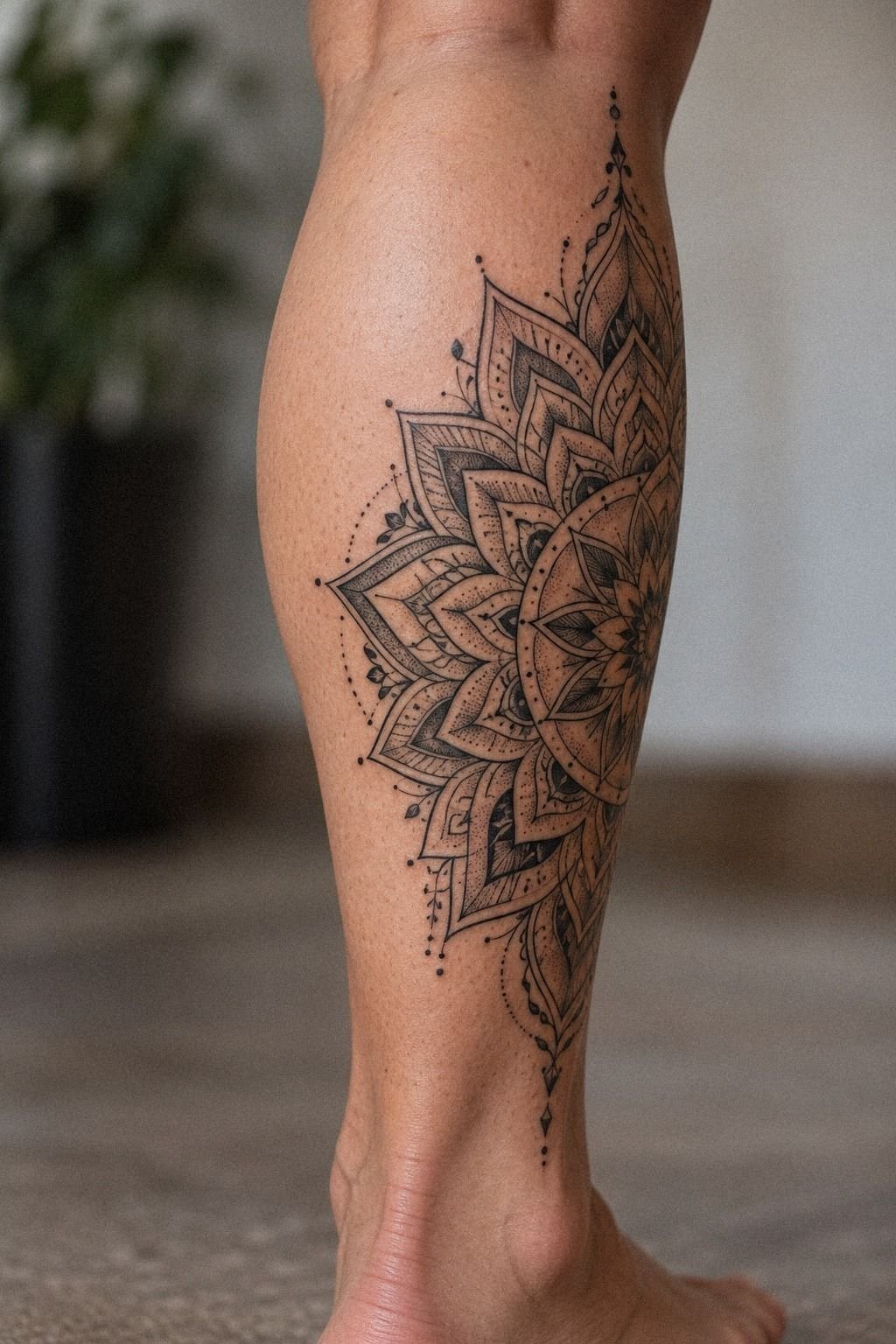
An edgy half mandala behind the ear keeps the design compact, sharp, and easy to conceal with your hair. The contrast from camel and black ink makes small arcs and points readable without needing a large area. You’ll want to keep the shape simple enough to survive its tiny scale.
Behind the ear isn’t the place for six layers of micro-detail. I’d choose one central fan, a short row of dots, and two clean outer curves. A crowded design may look impressive on a screen, but the real placement needs enough line separation to remain crisp.
Your artist should stencil the piece while you’re sitting naturally, not only with your head tilted. The ear’s curve changes the composition, and the design may need a slight adjustment so it doesn’t look like it’s sliding backward. This is a small tattoo with a surprisingly technical setup.
For a moon-inspired variation, look at these half moon tattoo ideas and compare their open shapes. You can make this version playful or mysterious, but I’d skip a heavy black block. The edgy quality should come from the geometry, not visual bulk.
9Let a Flowing Half Mandala Move With The Upper Arm
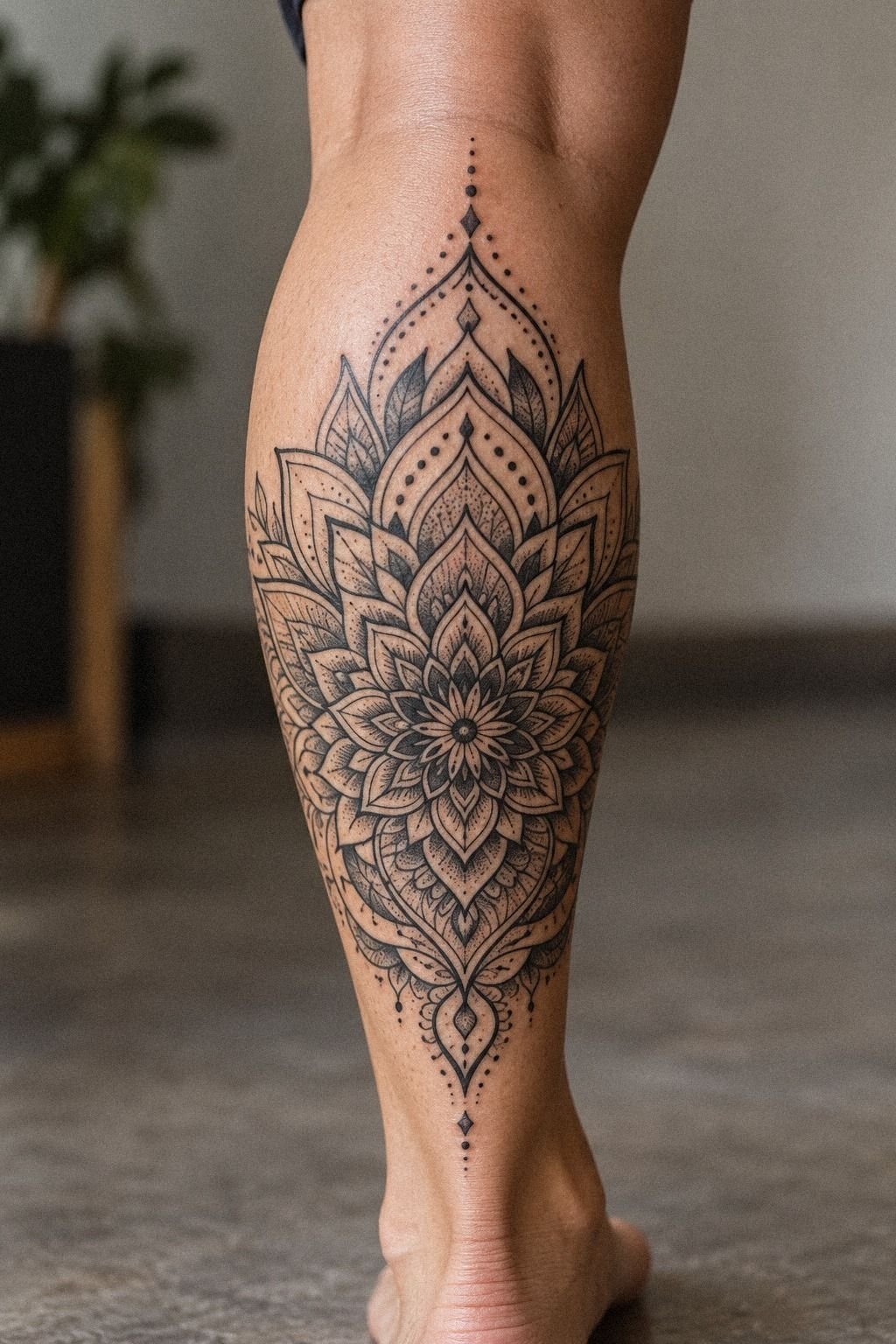
A flowing half mandala on the upper arm lets curved lines move with the body instead of sitting like a sticker. I’d begin with a midnight-blue and copper central curve, then let the smaller arcs open toward the shoulder or triceps.
This placement is especially useful if you want a design that feels expressive without being constantly visible. A front-facing composition can peek out with short sleeves, while an outer-arm version creates a sharper, more daring statement. Decide how often you want to see it before choosing the placement.
The strongest flowing designs don’t force every petal into a rigid grid. A curved central axis can make the mandala feel graceful, while repeated points preserve its symbolic structure. Ask for enough open skin between the curves so the movement remains clear.
I’d also test the stencil with your arm hanging naturally, raised overhead, and turned slightly inward. The upper arm changes shape in each position. If the open edge still looks balanced across all three, you probably have a composition that will age well visually.
10Can a Symbolic Half Mandala Include Crescent Elements?
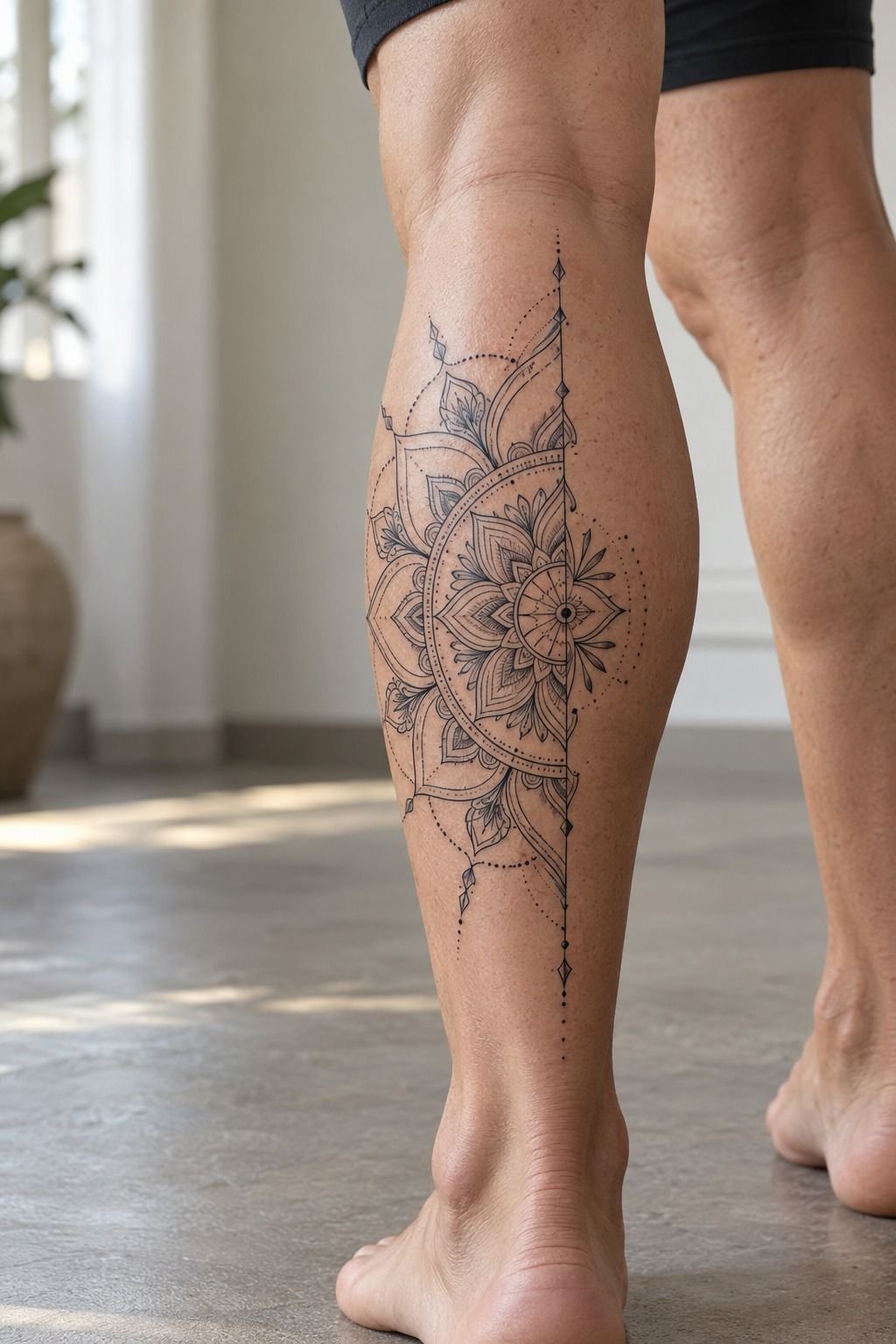
This symbolic design uses a clean split between geometric structure and crescent details. Sage-green and warm-cream ink can create an ethereal contrast between cycles, protection, time, or something entirely personal.
You’ll want to decide what the crescent represents before your appointment. I’d keep it slightly open rather than filling it solid, because untouched skin lets the half mandala remain the main subject. Too many symbols can weaken the story.
The surface layer may take about 2 to 3 weeks to heal, while the tattoo can take roughly 2 to 3 months to settle completely beneath the skin. Don’t judge it on day three. Gentle aftercare gives the lines time to settle.
If your symbolism leans toward balance, this yin-yang tattoo meaning reference may help you clarify the idea before your appointment. You’ll want the design to feel personal without needing a paragraph of explanation. That’s what makes symbolic work timeless.
11A Graceful Half Mandala Tattoo On The Ankle
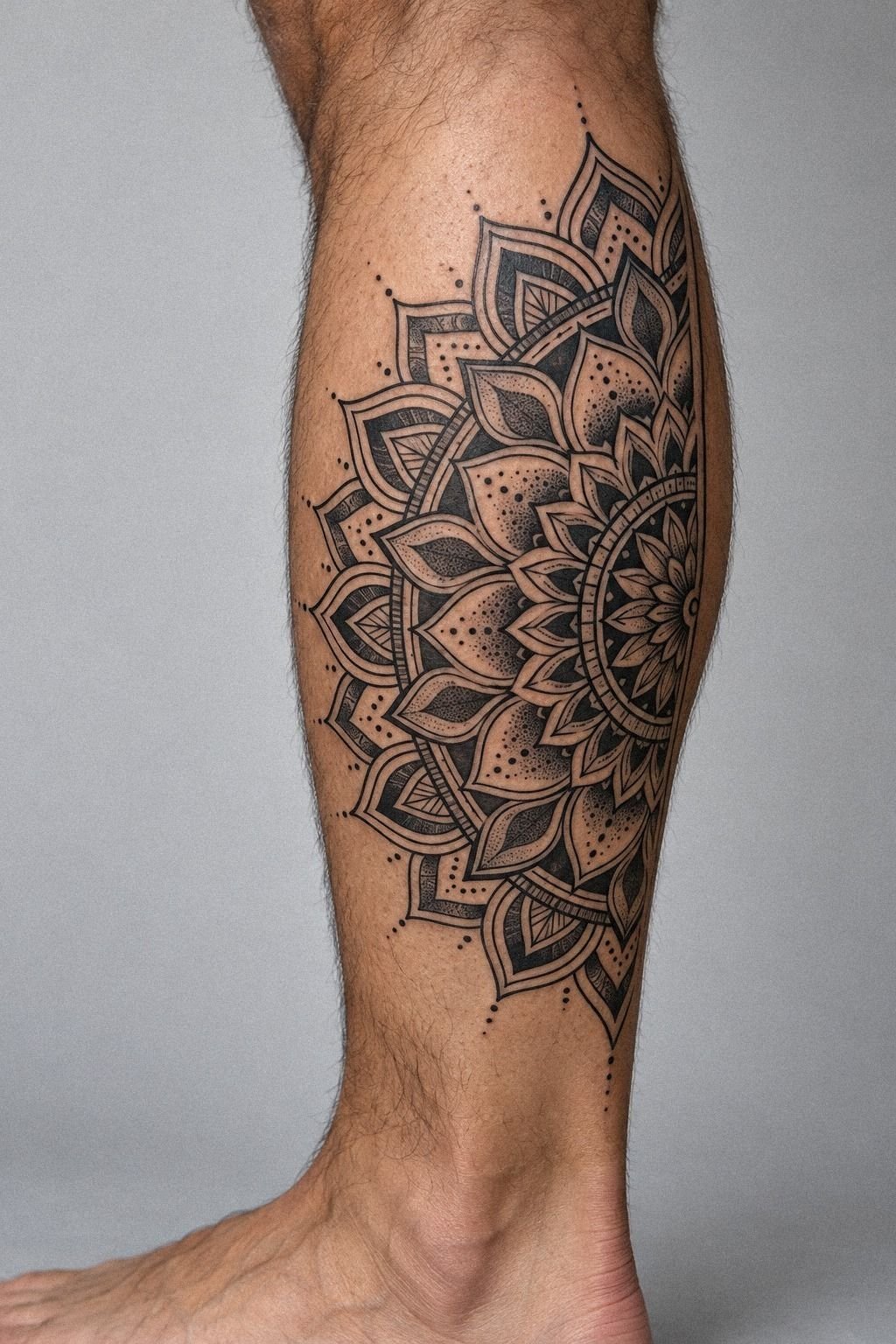
A graceful half mandala on the ankle uses the body’s narrow vertical shape to create a refined, memorable result. Terracotta, olive, and warm-gray ink can reinforce the open edge’s natural direction, then let the lower points taper slightly toward the foot.
The ankle can support a dainty design, but it doesn’t reward excessive detail. Choose a clear outer contour, two or three inner arcs, and perhaps a small symbolic center. A tapered ankle composition will usually look more intentional than a round mandala squeezed into a narrow area.
Think about friction before you book. Socks, shoes, and daily movement can irritate a fresh tattoo, so the appointment date should give you time to protect the area afterward. Your artist may also recommend adjusting the design away from the sharpest crease.
For a more striking version, add one ornamental border or a small crescent instead of filling every section. That single daring decision can make the ankle tattoo feel iconic while preserving its delicate character. Keep the shape crisp and let the skin do some of the visual work!
What Half Mandala Tattoo Costs and How It Heals
The price depends on your artist, region, size, placement, and session time. In the US, a shop minimum commonly falls around $50 to $100, while hourly rates often sit near $100 to $250.
A typical small or medium piece may land around $100 to $300, but you should request a quote directly. Tattoo pricing depends on more than size.
I’d ask whether the quote includes consultation, stencil revisions, and a touch-up policy. You shouldn’t choose solely by the lowest price, because precise geometry demands a steady hand. Comparable healed examples often give you better value than a rushed appointment.
Your aftercare matters just as much as the session. Keep the area clean, moisturize lightly as directed, and avoid prolonged sun or swimming during the early healing period. Use the product your artist recommends rather than adding a new treatment halfway through.
Fine lines can spread or soften over time, while solid black anchors and sensible placement usually age better. This is where patient care pays off! Don’t judge the result too early, and don’t book a touch-up before the skin has fully settled.
Map a Half Mandala Around Your Anatomy
Start with the body’s natural direction. A shoulder design can follow a slope, a calf design can travel vertically, and a forearm design can use the arm’s length. Anatomical flow should guide the shape instead of forcing a perfect circle onto every area.
Ask your artist to test the stencil while you move. Lift your arm, bend your wrist, rotate your shoulder, or sit naturally with your head upright. You’ll notice quickly whether the open edge looks intentional from more than one angle.
The best value comes from adapting the design before the needle touches skin. A small stencil adjustment can protect the symmetry, improve comfort, and prevent costly correction later. Discuss stencil revisions before you pay a deposit.
Which Details Are Worth The Budget?
If your budget is limited, spend first on placement, line quality, and a strong central structure. A meaningful symbol doesn’t need ten layers of decoration. Geometric precision will influence the finished result more than a crowded collection of tiny accents.
Dotwork, floral details, and crescent elements can be added selectively. I’d rather see one expressive detail placed well than a dozen decorative marks competing for attention. That approach can make a modest tattoo feel iconic.
Ask what the artist would simplify if the quote rises above your planned amount. You’ll get a clearer answer about value, session time, and priorities. A stylish tattoo should still feel financially sensible after the excitement fades!
Why Half Mandala Tattoos Keep Returning
Half mandalas keep returning because they give you structure without requiring a complete circle or a perfectly centered body placement. The open edge can follow a shoulder, calf, wrist, or ankle, which makes the design feel more organic. That flexibility is why this style remains stylish instead of fleeting.
I’ve noticed that the strongest versions don’t chase every trend at once. They choose one visual language, such as delicate linework, dotwork, ornamental curves, or bold blackwork, then let the negative space carry part of the meaning. Your tattoo can feel modern without being disposable.
The style also works across different skin tones when the artist understands contrast and healed results. You’ll want portfolio examples on skin close to yours, especially if the design uses fine lines or subtle grey shading. Similar healed work is stronger evidence than a fresh result.
The half shape leaves room for your own story. You might connect it to a moon phase, family symbol, spiritual practice, or a simple love of geometry. The best tattoo isn’t the one that copies a popular image perfectly.
It’s the one that still feels personal when the trend cycle moves on.
Contrast Heavy Blackwork With Open Negative Space
A dense half mandala can look fierce and powerful, but solid areas aren’t the only way to create impact. Open skin breaks can make the geometry feel crisp, sleek, and easier to read from a distance.
I’d place heavier blackwork near one anchor point, then let the surrounding arcs become lighter. That contrast keeps the tattoo from looking flat and can make the design feel more daring without adding unnecessary size.
If you’re unsure which direction offers better value, ask your artist to quote both versions. The more intricate option may take longer, while the minimal version may age with a cleaner silhouette. Your budget should support the style you’ll still want years from now.
My Honest Take On Choosing A Half Mandala
I think half mandalas work best when they stop trying to prove how much detail they can contain. The most memorable pieces usually have one bold decision: an unusually graceful curve, a fierce black anchor, a symbolic crescent, or a surprisingly delicate edge. That decision gives the tattoo a point of view.
Before booking, I’d choose the placement based on how I want the tattoo to participate in daily life. A forearm piece can become part of your visible style.
An ankle or rib design can feel more private. Neither is automatically better, but they create very different relationships with the mark.
I’d also be skeptical of any design that looks impressive only when enlarged on a screen. Readable scale matters more than microscopic detail. If the outer contour, central symbol, and open edge still make sense at a normal viewing distance, the tattoo has a stronger chance of staying expressive as it settles.
My preference is usually a moderately sized design with clear spacing and one memorable detail. That might be a sharp crescent, a floral interruption, or a darker geometric core. I’d rather see a confident, polished composition than a maximalist piece where every symbol competes for attention.
What I’d Ask Before Booking
I’d ask to see at least three healed examples of comparable geometric work, preferably on placements similar to yours. Fresh tattoos can look crisp, dark, and flawless; healed work shows whether the lines remain separated and whether the shading settled evenly. Healed geometric examples should influence your decision.
You should also ask how the artist handles stencil changes. Can the design be shifted half an inch?
Will the open edge follow your anatomy? Does the artist prefer one longer session or two shorter appointments? These questions sound small, but they protect the final composition.
I once assumed a smaller tattoo would automatically mean an easier session. It wasn’t.
The rib placement made staying still harder than expected, and the dense detail took longer than a larger, simpler forearm design would have. Session length can affect comfort and total cost.
Look for clean studio practices, clear consent procedures, and an artist who answers without rushing you. If you’re considering sacred symbolism, the YHWH tattoo meaning guide may also help you think through personal context before you book. A meaningful choice should feel calm and deliberate.
Make The Session More Comfortable
Eat beforehand, stay hydrated, and wear clothing that gives your artist easy access to the placement. Comfort planning won’t erase every sensation, but it can make a long appointment easier to manage.
Tell your artist when you need a break. You don’t have to prove anything by staying silent through an exhausting session. A short pause can help you remain still, which may support cleaner geometric work.
For a first tattoo, I’d choose a manageable placement and a design with enough open space. A shorter appointment can be a better value than pushing through an intricate rib piece before you know how your body responds.
The Questions I Get Asked Most
How much does a half mandala tattoo usually cost?
A half mandala tattoo usually costs about $100 to $300 in the US for a small or medium piece. Shop minimums may be about $50 to $100, while hourly rates often run around $100 to $250. Your artist’s region will influence the final quote.
Ask for the price before your appointment and clarify whether revisions or touch-ups are included. A careful consultation matters more than choosing the cheapest available rate when your design depends on precise geometry.
Are half mandala tattoos a good idea for a first tattoo?
Yes, half mandala tattoos can suit a first tattoo because you can choose a tolerable placement such as the forearm, upper arm, shoulder, or calf. Clear geometry gives you a focused design without requiring a huge commitment.
You’ll still want to avoid choosing an overly dense rib or sternum piece first. A manageable session can make the experience feel more controlled, especially if you’re unsure how your body responds.
How do I choose a tattoo artist for half mandala tattoos?
Choose an artist who regularly shows clean geometric work, healed photographs, and tattoos on skin tones similar to yours. Portfolio consistency reveals how well the artist handles spacing, curves, and dotwork.
You should also check the studio’s hygiene practices, consultation process, and communication style. A patient artist will discuss placement, stencil adjustments, and aftercare before starting.
How much do half mandala tattoos hurt?
Pain varies, but ribs, feet, hands, and sternum are often more painful than the forearm, thigh, shoulder, or upper arm. Placement sensitivity usually matters more than the tattoo’s symbolism when you’re estimating discomfort.
You’ll want to eat beforehand, stay hydrated, and tell your artist when you need a break. Shorter sessions can be a sensible choice for intricate work.
How long does a half mandala tattoo take to heal?
The surface usually heals in about 2 to 3 weeks, while complete settling can take roughly 2 to 3 months. Gentle washing supports the early stage.
Avoid picking, prolonged sun, and swimming while the skin heals. Your final lines may soften as the tattoo settles, so wait before judging the result.
Where I’d Start First
If I had to pick one, I’d start with the bold forearm half mandala. It gives your artist a stable surface, keeps the geometry visible, and is usually easier to tolerate than the ribs. A forearm design offers strong value for a first geometric tattoo.
I’d keep the composition moderately open, add one personal symbol, and ask to see healed work before confirming the appointment. That combination feels confident without being overworked.
The right half mandala should suit your anatomy, your comfort level, and the meaning you want to carry. For me, a bold forearm version is the clearest starting point, but a private rib, ankle, or shoulder design may be more personal if visibility isn’t your priority.