Hibiscus flower tattoos are one of those rare ideas that can stay soft and still hold up. I almost talked myself into going too tiny on my first floral piece, and that would have healed into soup fast. The fix was not going bigger everywhere. It was picking cleaner placement, enough open skin, and linework that could breathe.
- Pink Fine Line Hibiscus Wrist Tattoo
- Single Needle Hibiscus Collarbone Tattoo
- Let a Hawaiian Hibiscus Open Across the Shoulder
- Blackwork Hibiscus Sternum Tattoo
- Watercolor Hibiscus Forearm Tattoo
- Ankle Wrap or Foot Drift? Pick the Cleaner Edge
- Minimal Hibiscus Behind Ear Tattoo
- Hibiscus Tattoo Sleeve With Tropical Leaves
- Red Ink Hibiscus Rib Tattoo
- Tiny Hibiscus Finger Tattoo
- Plumeria + Hibiscus: Keep Both Blooms Breathing
- Bold Traditional Hibiscus Calf Tattoo
- Hibiscus Spine Tattoo With Soft Shading
- Why Does a Hip Hibiscus Flow So Well?
- Realistic Hibiscus Upper Arm Tattoo
- Add Script Last, Not First
- Matching Hibiscus Friendship Tattoos
- Cover Old Ink Without Killing the Flower
1Pink Fine Line Hibiscus Wrist Tattoo
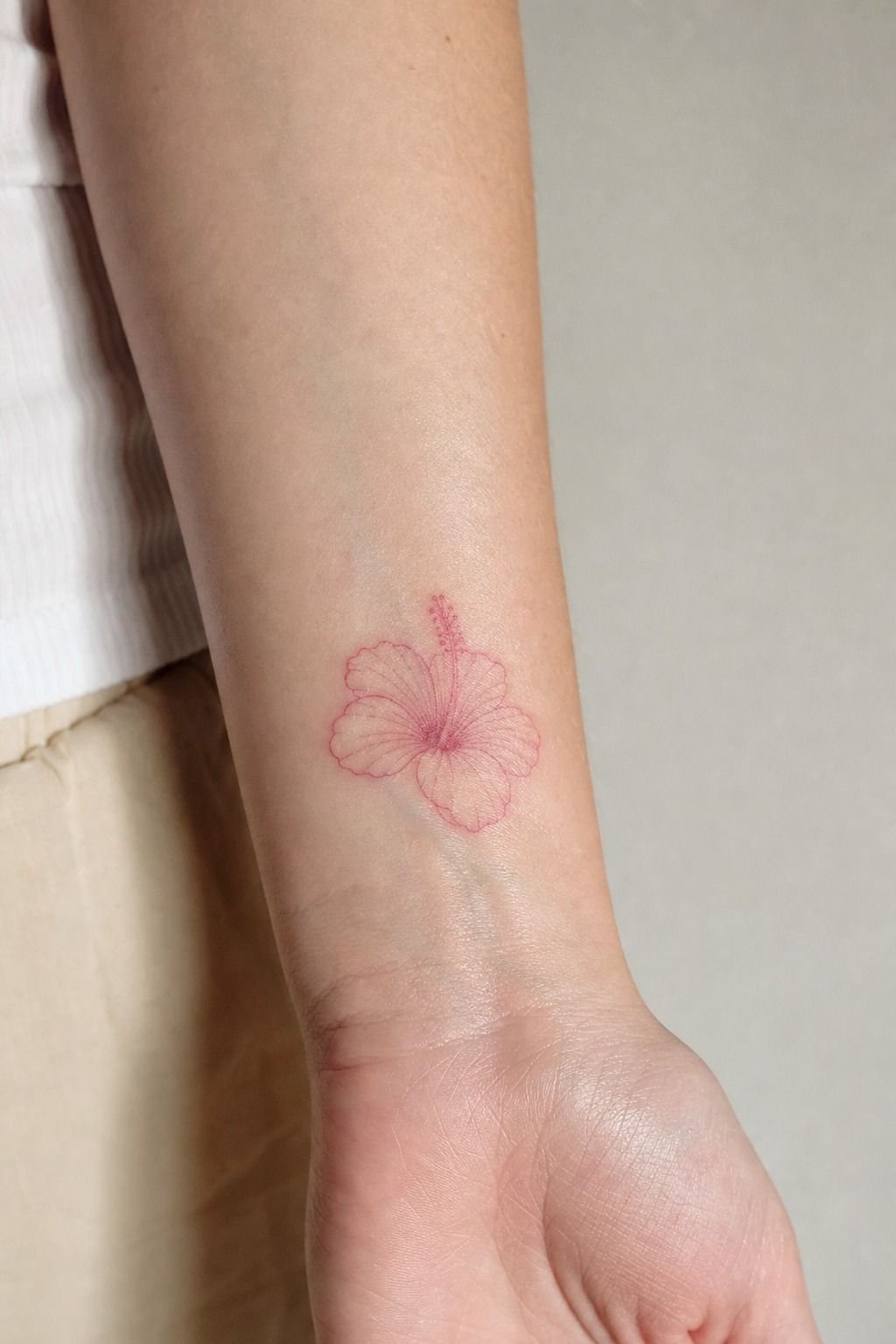
A Pink Hibiscus Tattoo on the wrist works when you keep the bloom open and the linework light, not fussy. On a fair cool-pink wrist like this, the soft pink read is pretty because the petals sit clean against the skin instead of fighting it.
I wouldn’t cram three extra buds into a 2-inch tattoo here. Your wrist flexes all day, and tiny inner details can blur sooner than you think.
Go closer to 2.5 to 3 inches if you want it to heal nice and still feel worth it. That gives your artist enough width for one clean pull through each petal and a little open skin between the lines. If you’re into softer floral ideas, the scale on these minimalist flower tattoos is a smart reference point.
And yes, this spot is visible, but it’s still chill for a first-timer compared with ribs or sternum. From a payoff angle, a clean wrist tattoo is usually a better call than paying for a tiny over-detailed piece that needs a touch-up early.
2Single Needle Hibiscus Collarbone Tattoo
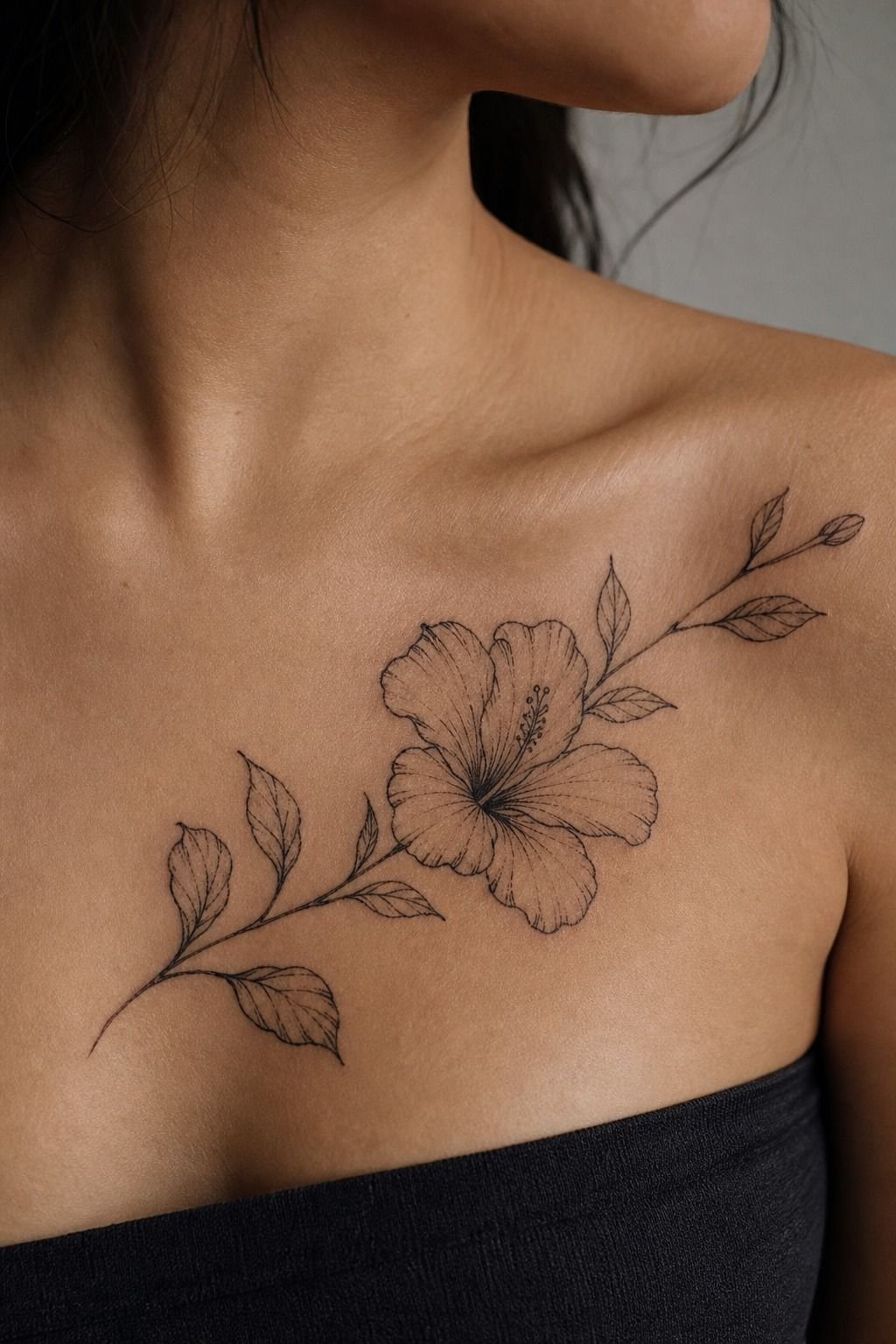
A single needle hibiscus on the collarbone looks expensive even when it’s simple, because the bone gives the flower a natural sweep. In a macro close-up like this, you can see why restraint matters.
One bloom. A clean stem.
Maybe one leaf. That’s it.
If you ask for lacey texture in every petal, your artist will either overwork the skin or leave you with lines that fade patchy.
I would keep this one around 3 to 4 inches across so it stays crispy without looking heavy. Collarbone tattoos feel sharper on the line pass, then settle down once shading starts.
But placement is doing a lot of the work for you here. The flower follows your anatomy, so you don’t need extra clutter to make it read.
If pain is making you hesitate, read where tattoos hurt less before you book.
3Let a Hawaiian Hibiscus Open Across the Shoulder
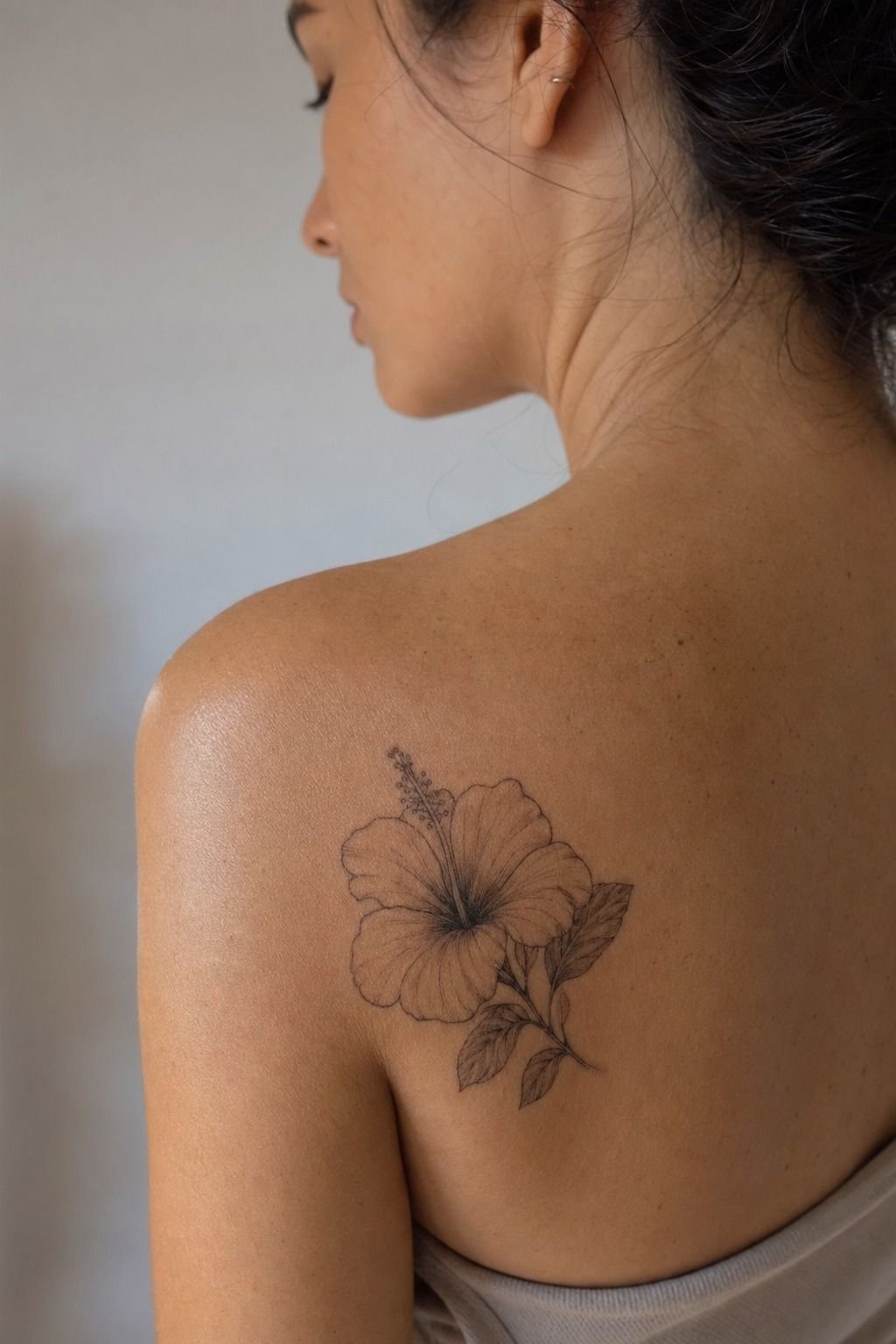
A healed Hawaiian flower tattoo on the shoulder is one of my favorite first bigger florals because the skin there ages well.
4Blackwork Hibiscus Sternum Tattoo
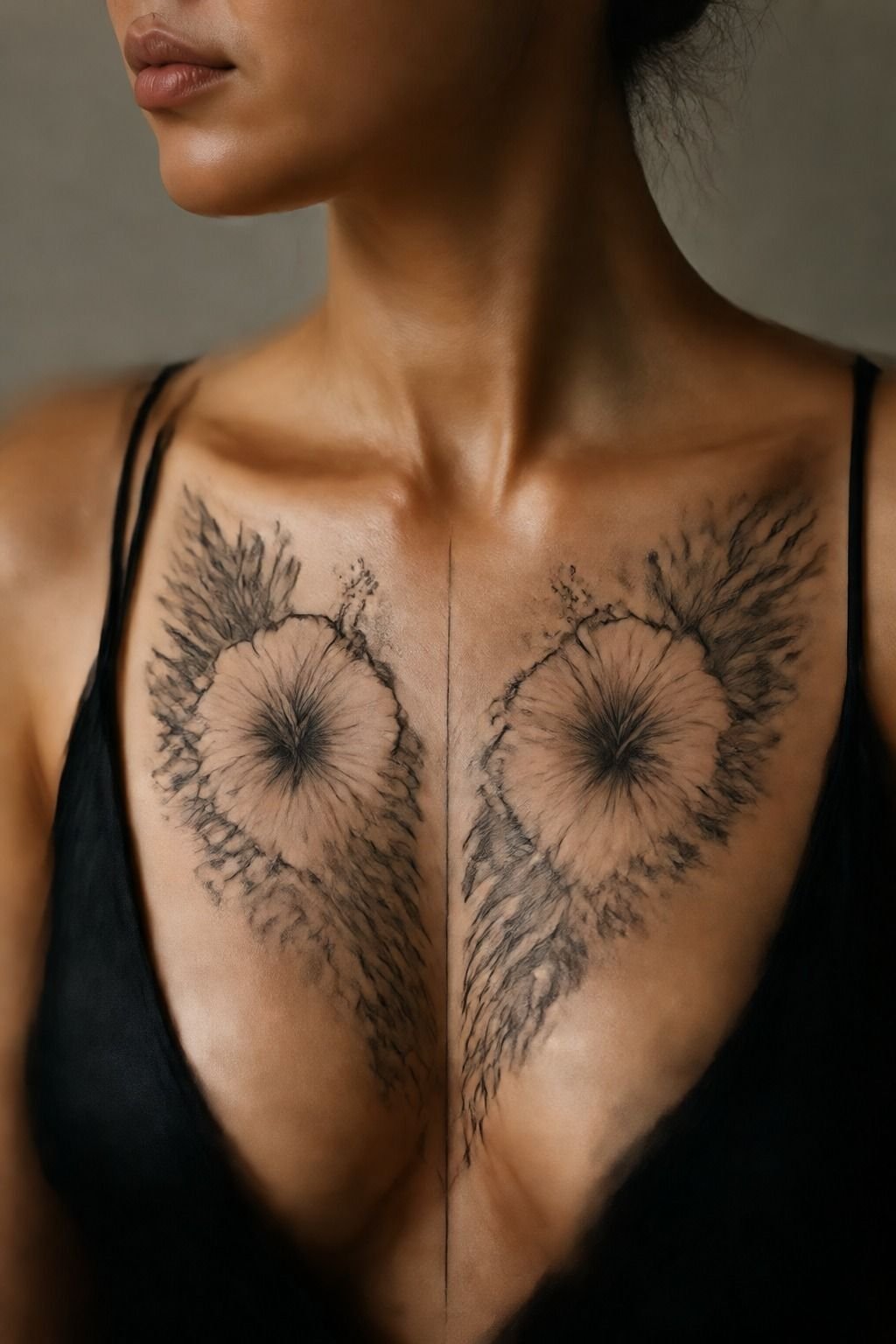
A blackwork hibiscus over the sternum looks tough and elegant at the same time, but this is not a casual placement. Your center chest is bony, spicy, and hard to sit through if you came in underfed or tired.
The upside is huge. The wrap under the breasts and along the sternum gives the flower a clean mirrored flow that a flat paper sketch can’t show.
If you want this placement to age soft instead of turning muddy, skip thin filler lines and ask for shape hierarchy. Bigger petals up top. Darkest black where the design anchors.
Open skin through the middle so it never feels chewed up. But be real with yourself.
A sternum tattoo is not where I send someone for their first five-minute test. If you’re curious about how black-heavy styles compare, the contrast in this traditional tattoos females guide is worth looking at.
5Watercolor Hibiscus Forearm Tattoo
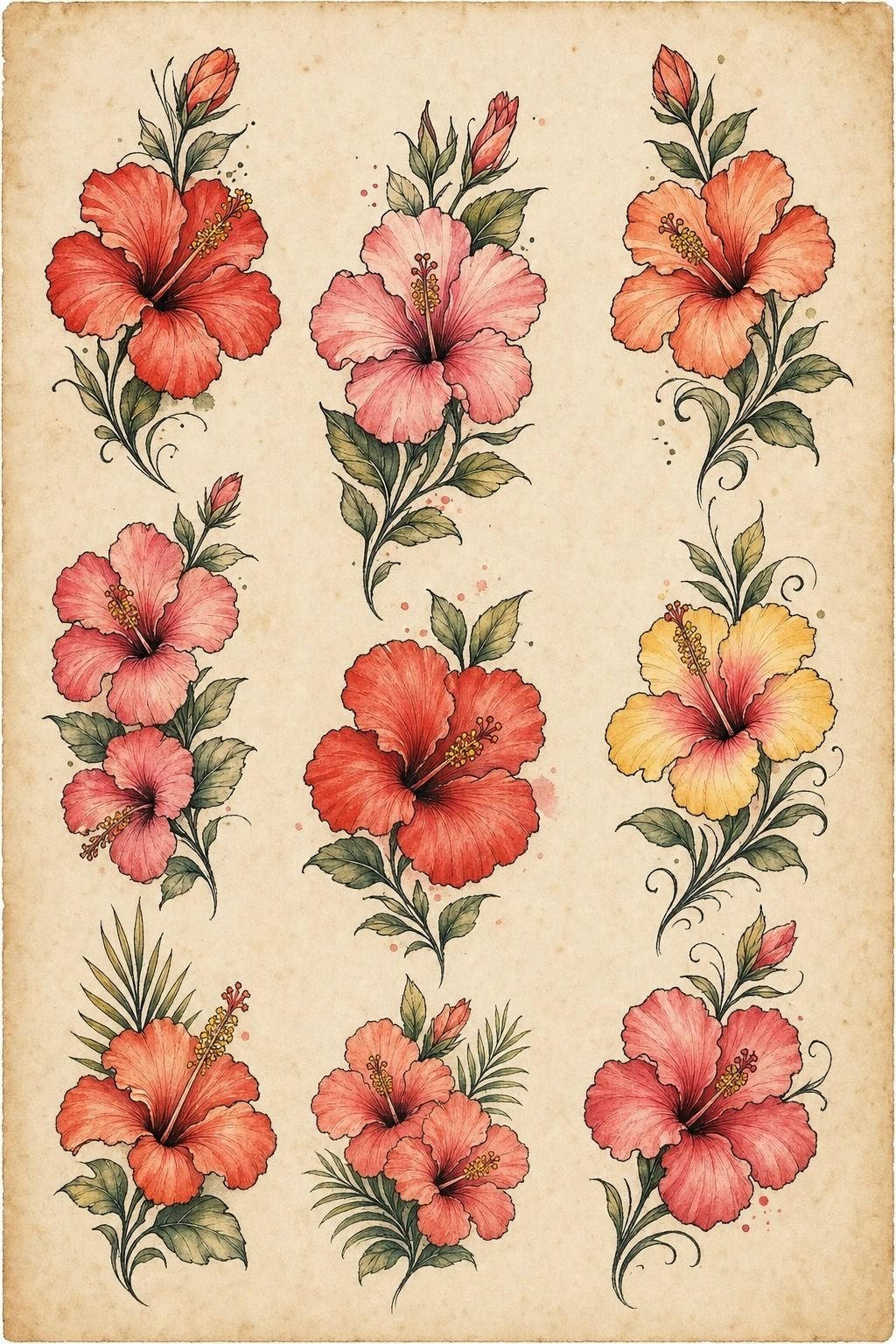
This watercolor hibiscus forearm idea works best when it’s anchored with line. Always.
On the flash sheet, the black framework is what saves the pink and coral wash from healing flat later. I know watercolor gets sold as airy and effortless, but the tattoos that last are built like real tattoos first.
Color is spice. Structure is the meal.
Your forearm gives you enough width for a 4 to 5 inch design that still feels light, and it is one of the more forgiving placements for healing. Ask for saturated color in the petals, not scratchy little passes that beat up the skin.
One solid pass does more than ten fuzzy ones. If you’re drawn to lighter tones, compare it with the fade behavior in white ink tattoos.
Most people get better longevity from black support lines and selective color than from all-pastel everything. It is cheaper to refresh a tattoo that already has structure than to rescue one that healed flat.
6Ankle Wrap or Foot Drift? Pick the Cleaner Edge
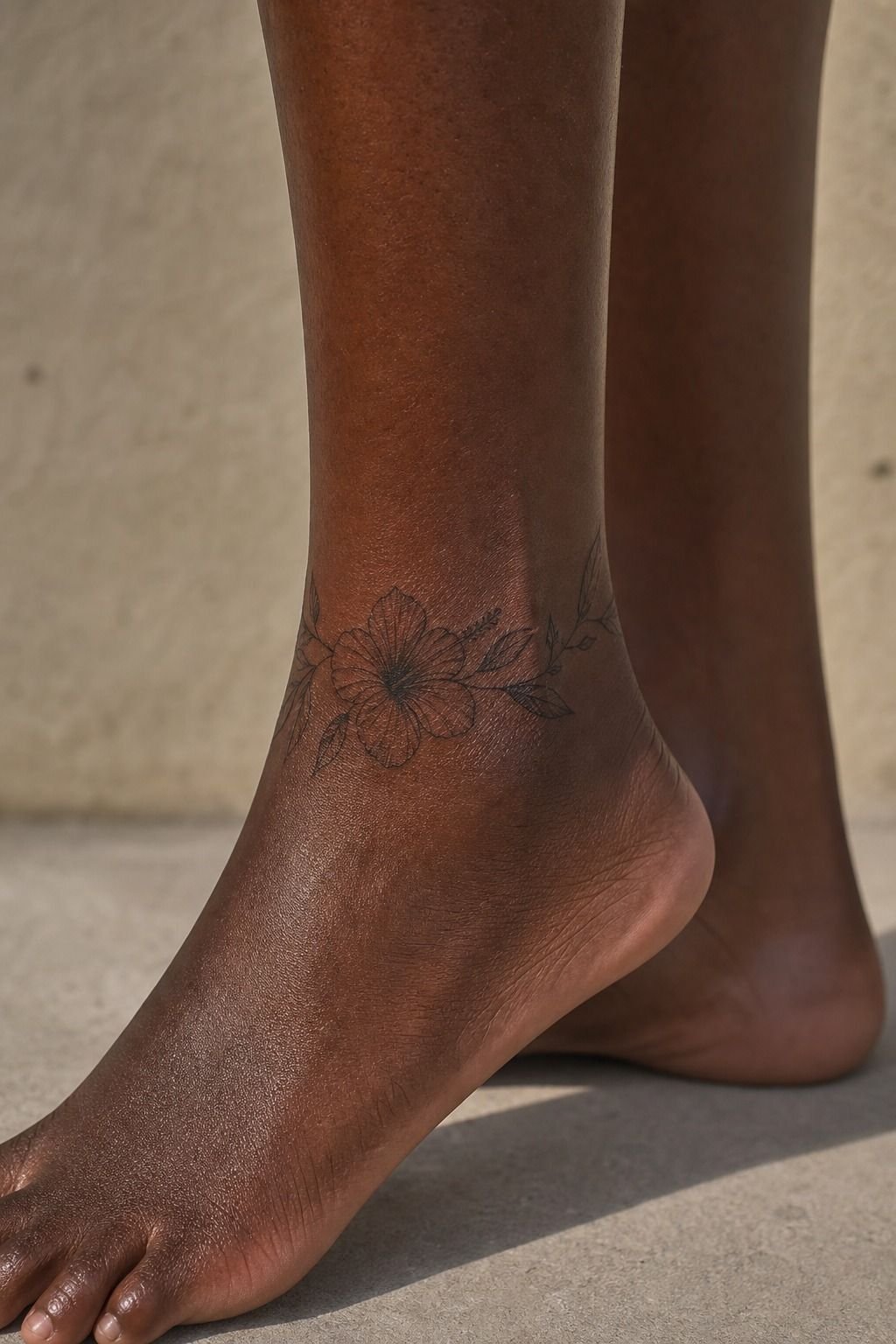
An ankle wrap hibiscus is pretty, but you need to respect the wear factor.
7Minimal Hibiscus Behind Ear Tattoo
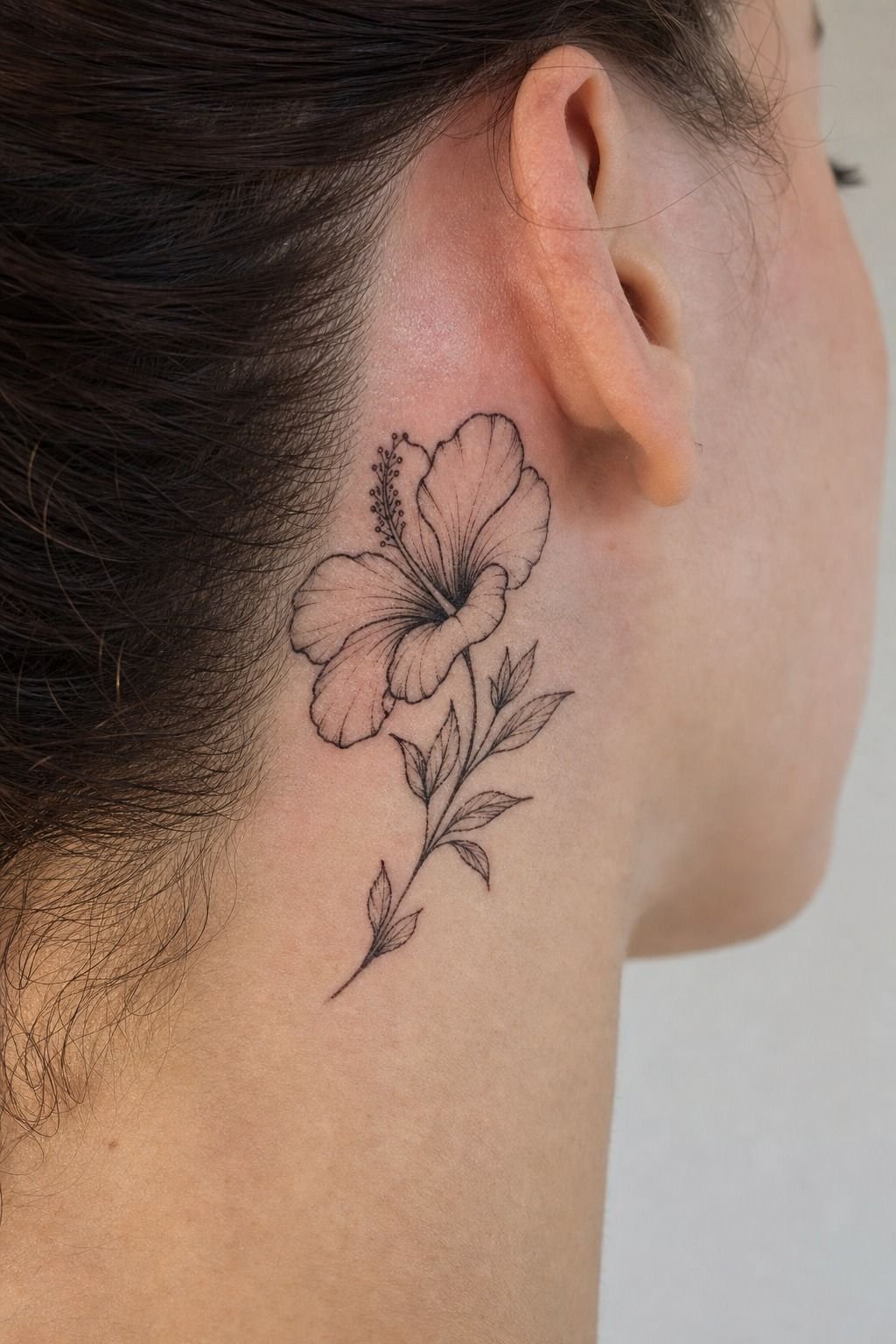
A minimalist flower tattoo behind the ear only works when you treat minimal like a design choice, not a budget cut. In a close crop like this, the whole point is one soft bloom sitting tight to the hairline with clean spacing around it.
Too many leaves back there and the tattoo turns into static. I like a tiny stem or one petal overlap, then I stop.
This spot heals better when you leave it alone. No tight headphones.
No hair product packed into it. No picking the little flakes when it peels like sunburn.
And yes, it’s a spicy placement because the skin is thin and the buzz is loud near the skull. But if you want a discreet floral that still feels feminine, this one does the job.
You can pair the vibe with other small-scale minimalist flower tattoos without cloning them line for line.
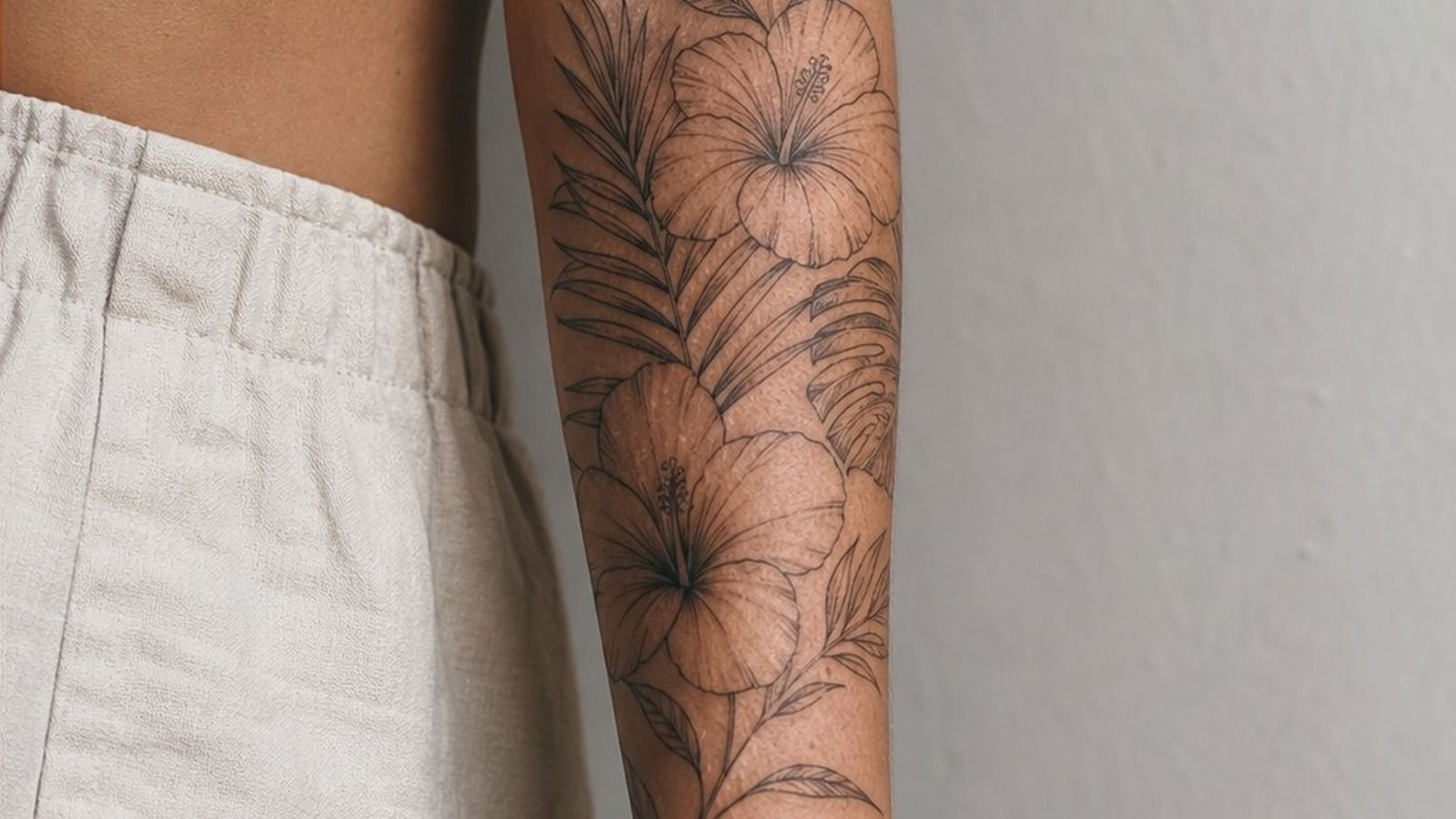
8Hibiscus Tattoo Sleeve With Tropical Leaves
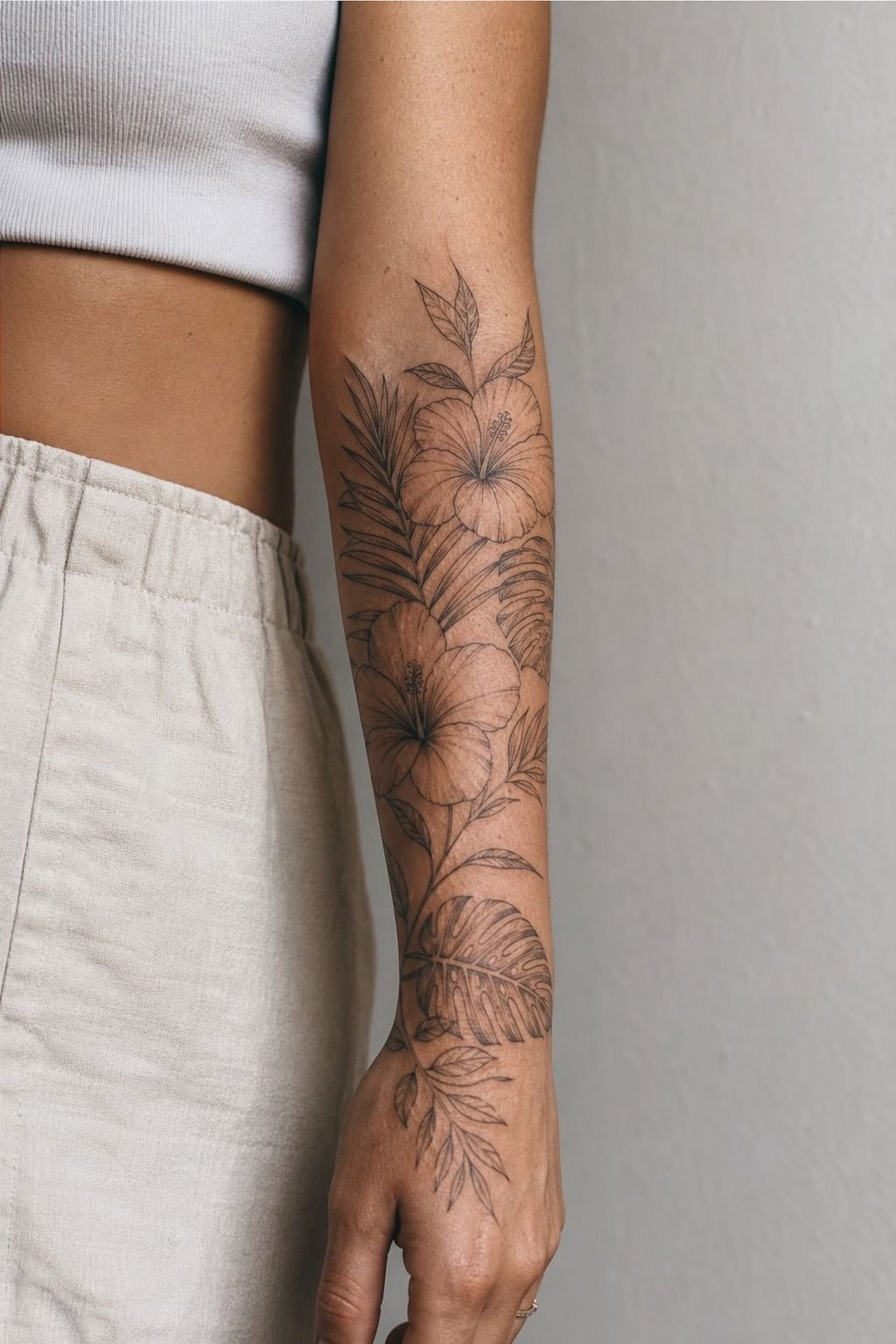
A Hibiscus Tattoo Sleeve with tropical leaves needs rhythm, not random filler. On a healed forearm sleeve, the hibiscus should lead and the leaves should move your eye, not swallow the flower whole.
I usually tell clients to think in three beats: hero bloom, supporting leaves, breathing gaps. That’s the part that keeps a botanical sleeve from looking like green soup six years later.
Forearms are low-wear enough that a fine line sleeve can age cute on you if the artist pushes contrast in the leaf edges and keeps the stem directions clean. But don’t ask for twelve species in one 7-inch panel.
Pick hibiscus, maybe plumeria, maybe monstera, and let the black do the organizing. If you love symbolic floral mixes, the layering in 18 lotus flower tattoos that carry real symbolic weight is a useful reference for keeping each bloom distinct.
9Red Ink Hibiscus Rib Tattoo
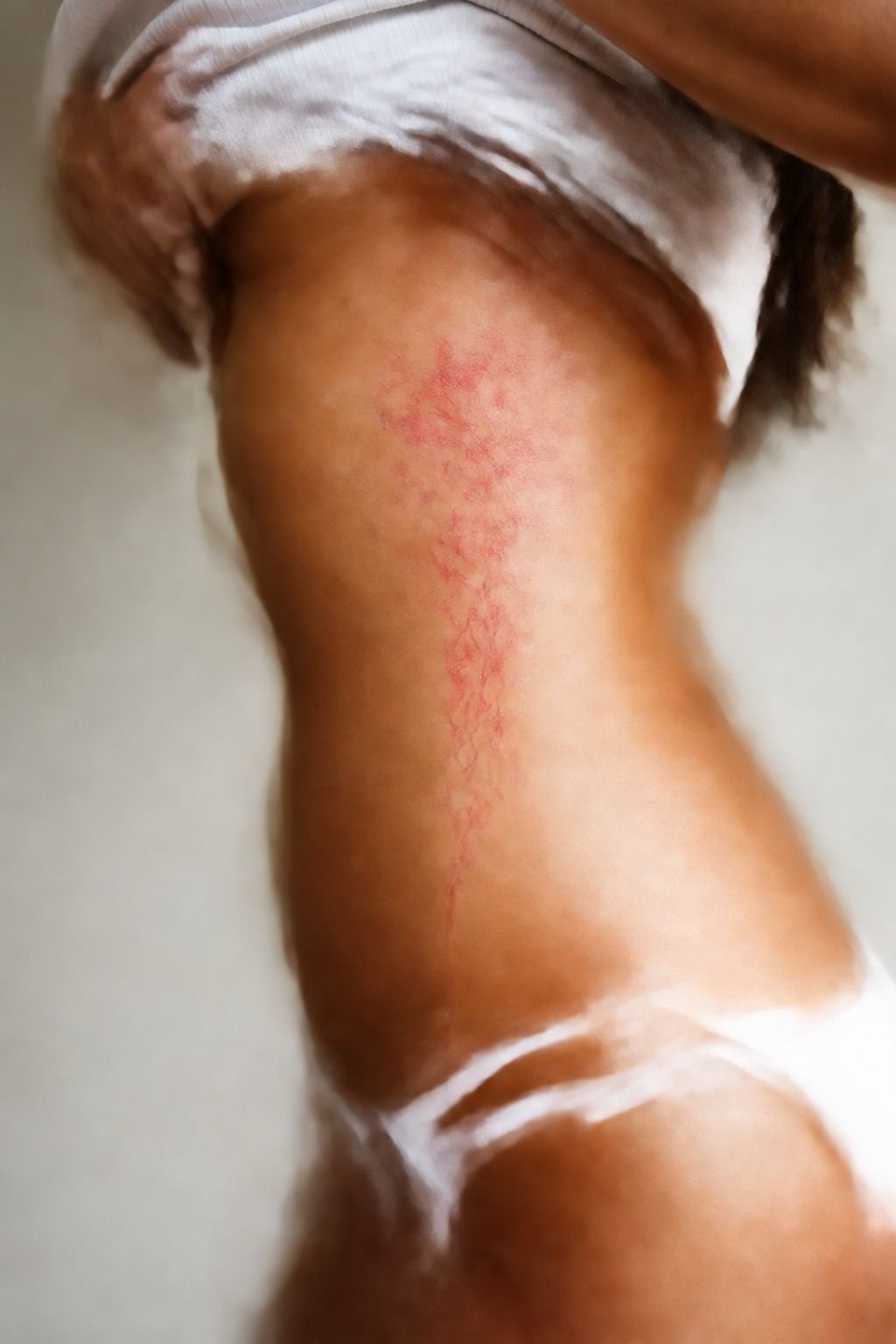
A red ink hibiscus on the ribs looks soft and sharp at once, but ribs are spicy and red fades differently than black. That’s not fear talk. It’s just the job.
In an anatomical wrap like this, the curve of the flower matters as much as the color. Long petals that follow the rib line will feel elegant.
A squat flower dropped sideways can look pasted on.
If you want red, choose a brick red instead of pale candy pink. Deeper tones tend to hold their shape better, especially when they are outlined with a whisper of darker red or black.
And keep the design big enough to breathe, around 4 to 6 inches for most rib placements. Would I put your tiniest, most detailed dream tattoo here?
No. I would save micro detail for a calmer zone and let ribs do what they do best: long, clean flow with attitude.
10Tiny Hibiscus Finger Tattoo
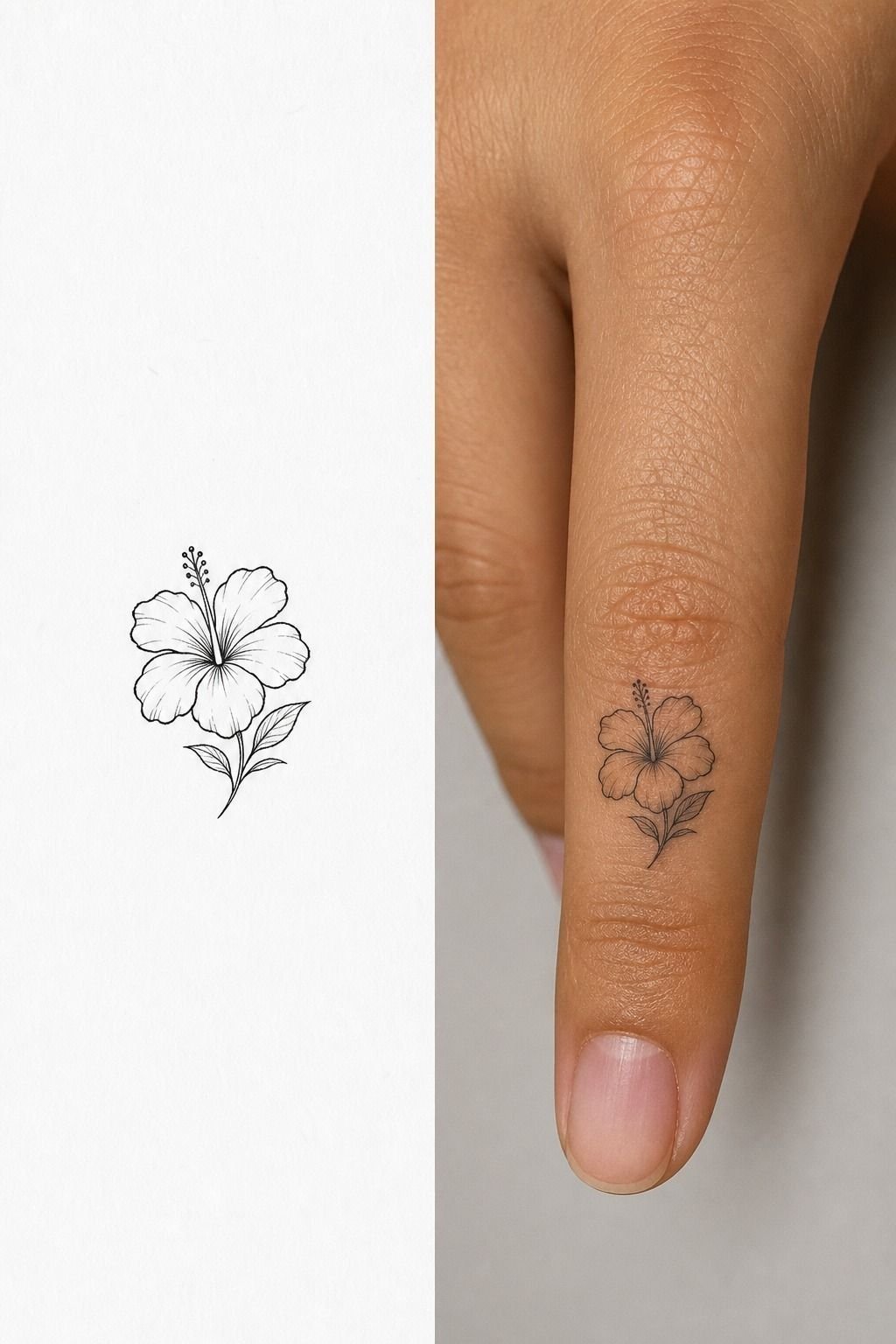
A tiny finger tattoo is cute in the healed photo and risky in real life, both things can be true. Fingers are high-wear, high-movement, and famous for needing touch-ups.
The split image here tells the story well. The stencil can look crisp as hell on paper, then the healed version loses some edge because hand skin just does not play fair.
So if you still want it, simplify hard. One bloom shape.
No fussy center texture. A line weight your artist trusts, not the thinnest needle in the tray just because it photographs delicate.
But go in knowing maintenance is part of the deal. This is the placement for people who accept touch-ups, not for people who will be mad in 18 months.
If longevity is your top priority, why tattoos blur over time will probably push you toward forearm or calf instead.
11Plumeria + Hibiscus: Keep Both Blooms Breathing
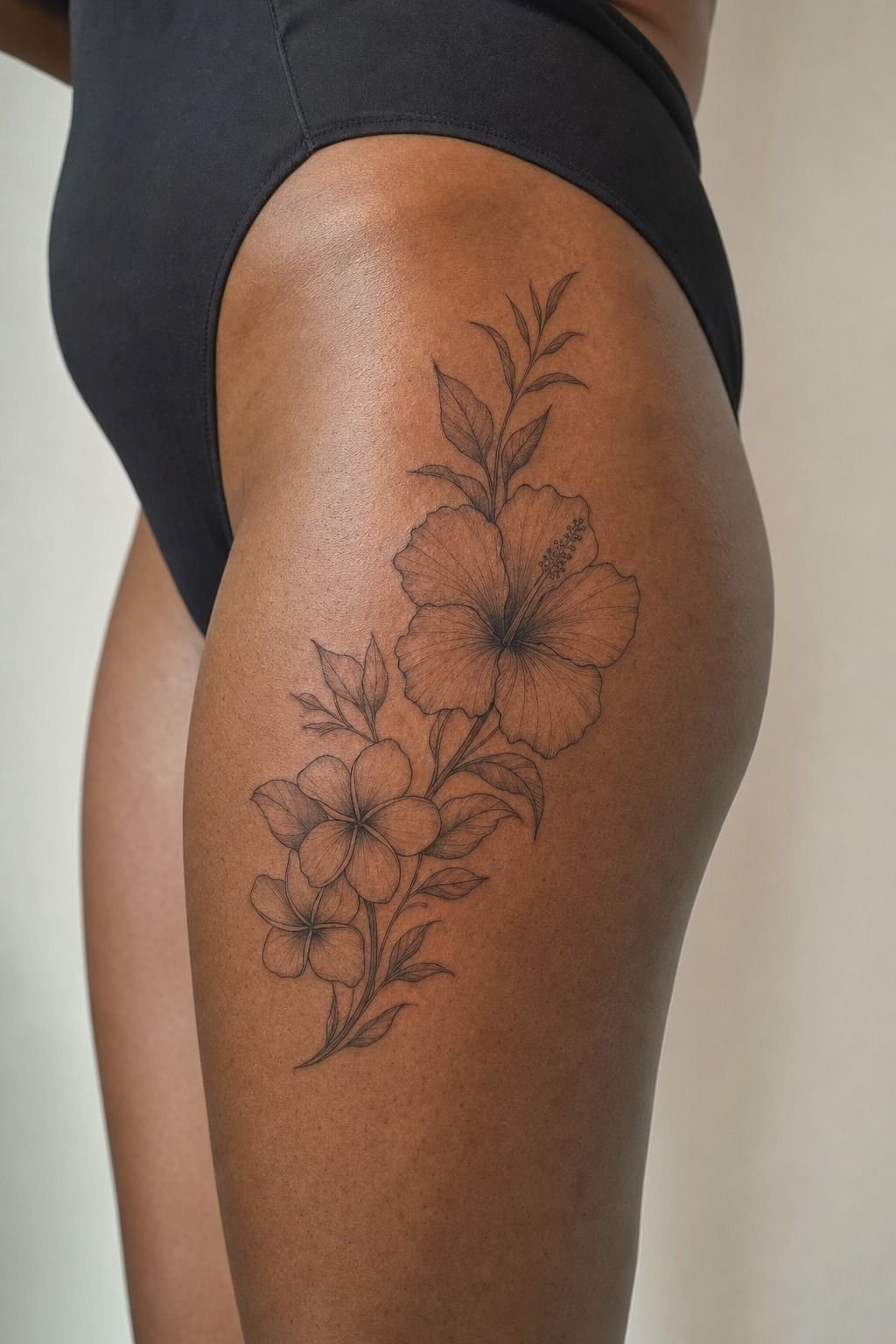
A thigh piece with hibiscus and plumeria gives you the luxury of scale without needing a full-day session. On deep brown skin with a warm undertone, I love this combo in black and grey with selective soft shading because both flowers stay readable and the contrast heals velvety, not patchy.
The thigh also lets your artist stretch the petals properly. Nothing feels cramped.
This is a smart call if you want something meaningful that still feels private. You can angle the two flowers with the curve of the leg, then leave enough open skin between them that each bloom keeps its own identity.
I usually sketch this around 5 to 7 inches so the plumeria does not disappear beside the hibiscus. For more floral symbolism pairings, hibiscus flower tattoo meaning is worth a quick read before you lock your final composition.
From a size standpoint, thigh florals often give you strong payoff. You can go bigger without chasing the session count that a more complex sleeve or cover up would need.
12Bold Traditional Hibiscus Calf Tattoo
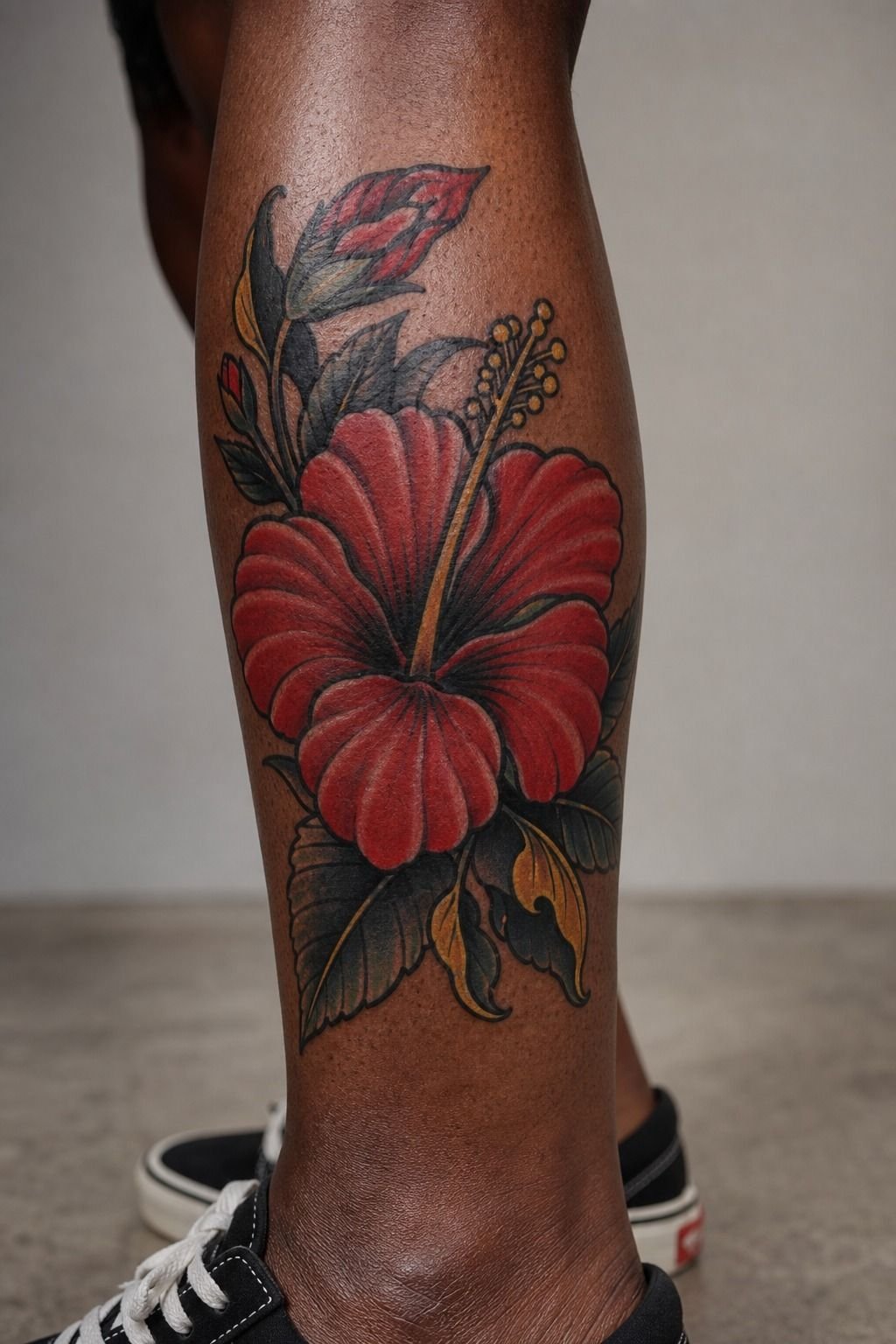
A traditional tattoo hibiscus on the calf is the opposite of fragile, and that’s why it lasts. Thick outline.
Saturated red. Deep green leaves.
Maybe some black and grey whip shade if the artist wants to soften a petal edge. This style reads from a few feet away and keeps reading years later because the shapes are simple enough to stay simple.
Calves are one of the easier places to sit for, especially compared with ribs, feet, or sternum. That makes them great for first bold color.
But do not let a scratcher talk you into making trad delicate. Bold will hold because it is built to.
If you want to compare how floral pieces shift when the line gets heavier, the examples in this traditional tattoos females guide make that point fast. And yes, this is one of the safest bets if longevity matters most!
13Hibiscus Spine Tattoo With Soft Shading
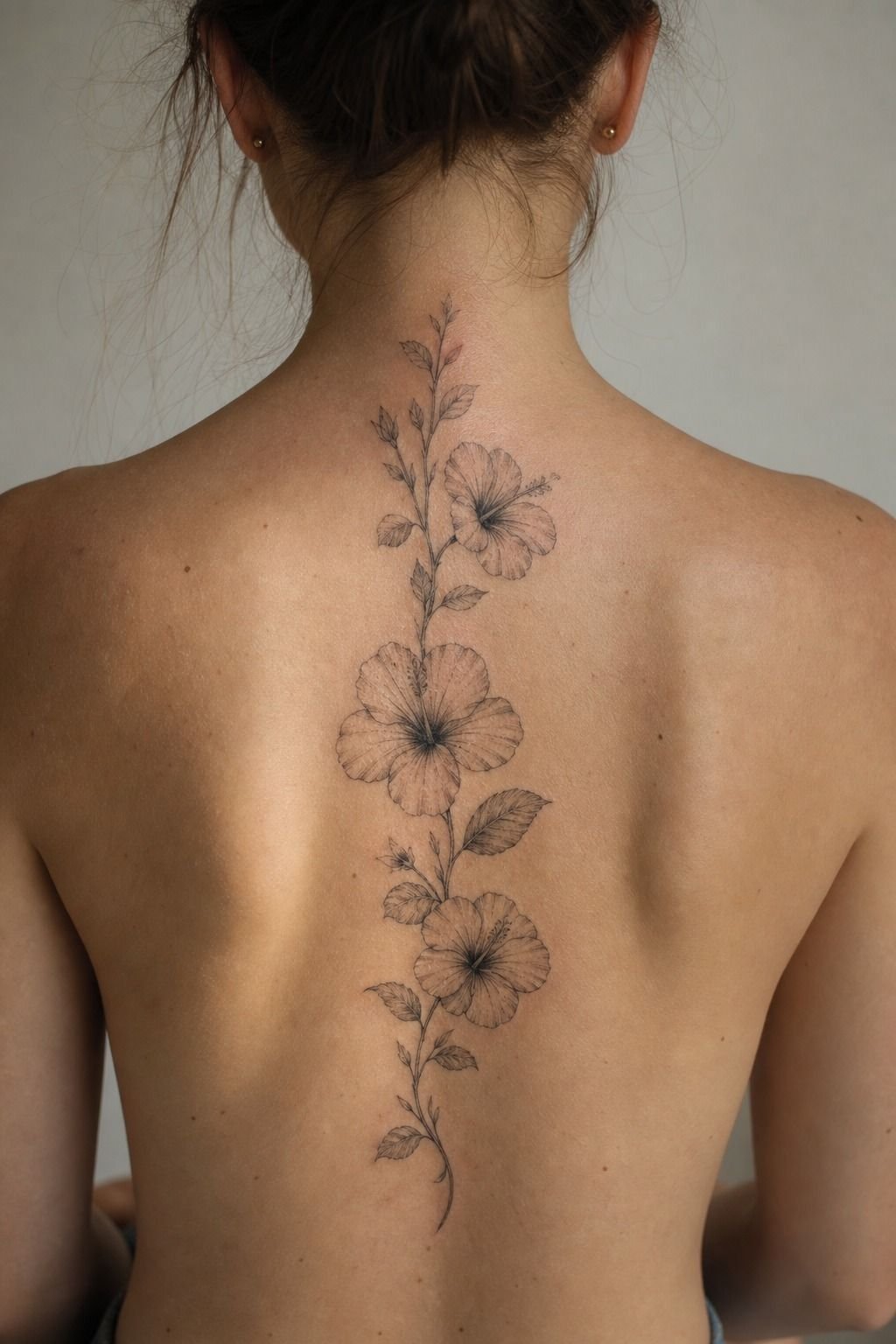
A spine tattoo with soft shading looks graceful because the body is doing half the composition for you. The flower climbs vertically, the stem can taper with the line of the back, and the shading can stay airy if your artist uses a light grey wash instead of trying to fill every petal. On fair cool-pink skin, that soft smoke effect heals sweet when the black outline underneath is confident.
But do not mistake soft shading for easy tattooing. A spine tattoo needs clean symmetry and a client who can stay still.
Tiny wobbles show. I would ask for one main bloom with a second smaller note above or below, not five stacked flowers chasing your whole back. Your healing routine matters too.
Loose shirts. Gentle soap.
Thin ointment. Let it peel on its own. If you want a breakdown of pain zones first, where tattoos hurt less gives you the honest version.
14Why Does a Hip Hibiscus Flow So Well?
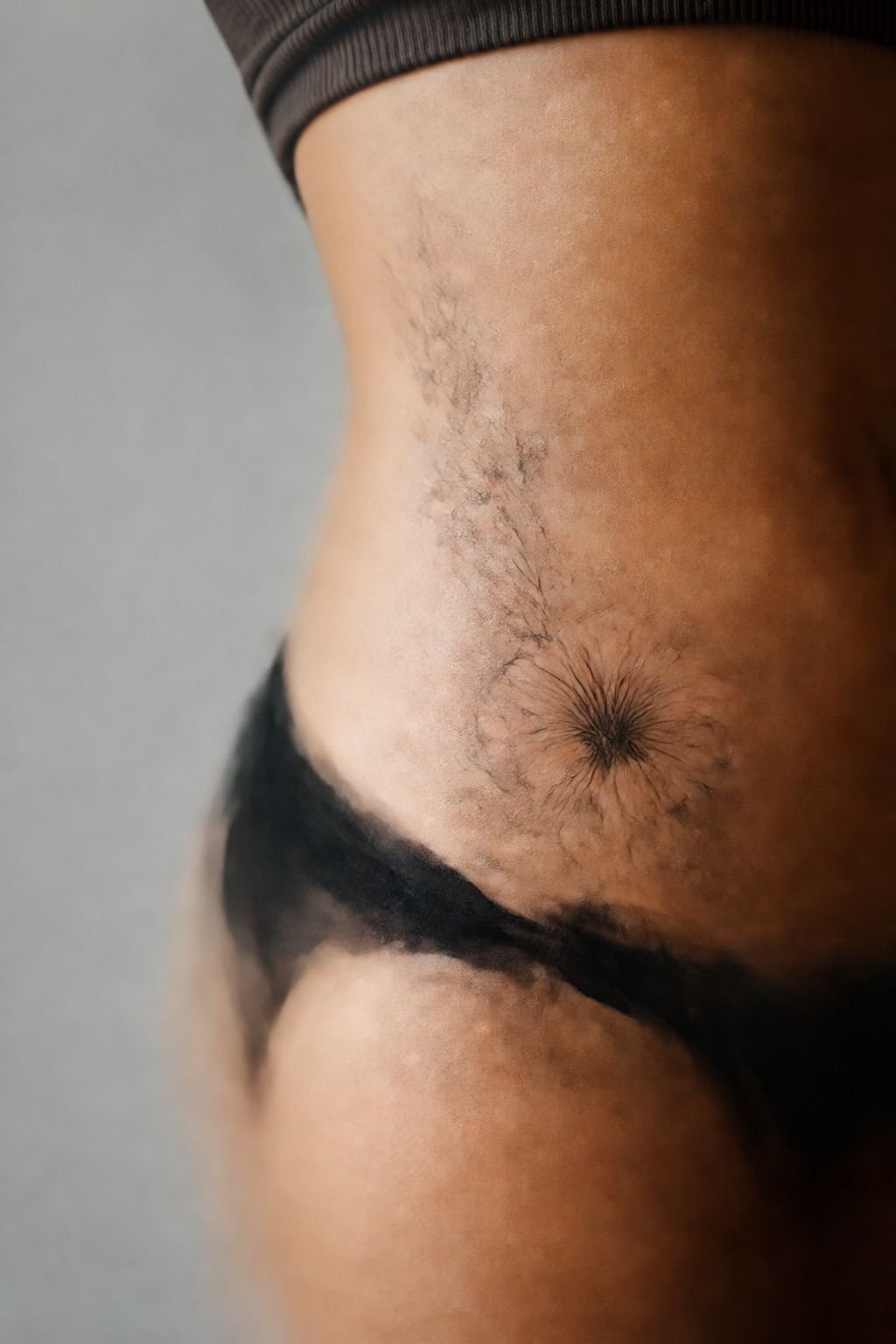
A hip tattoo lets a hibiscus wrap with the body in a way paper never can.
15Realistic Hibiscus Upper Arm Tattoo
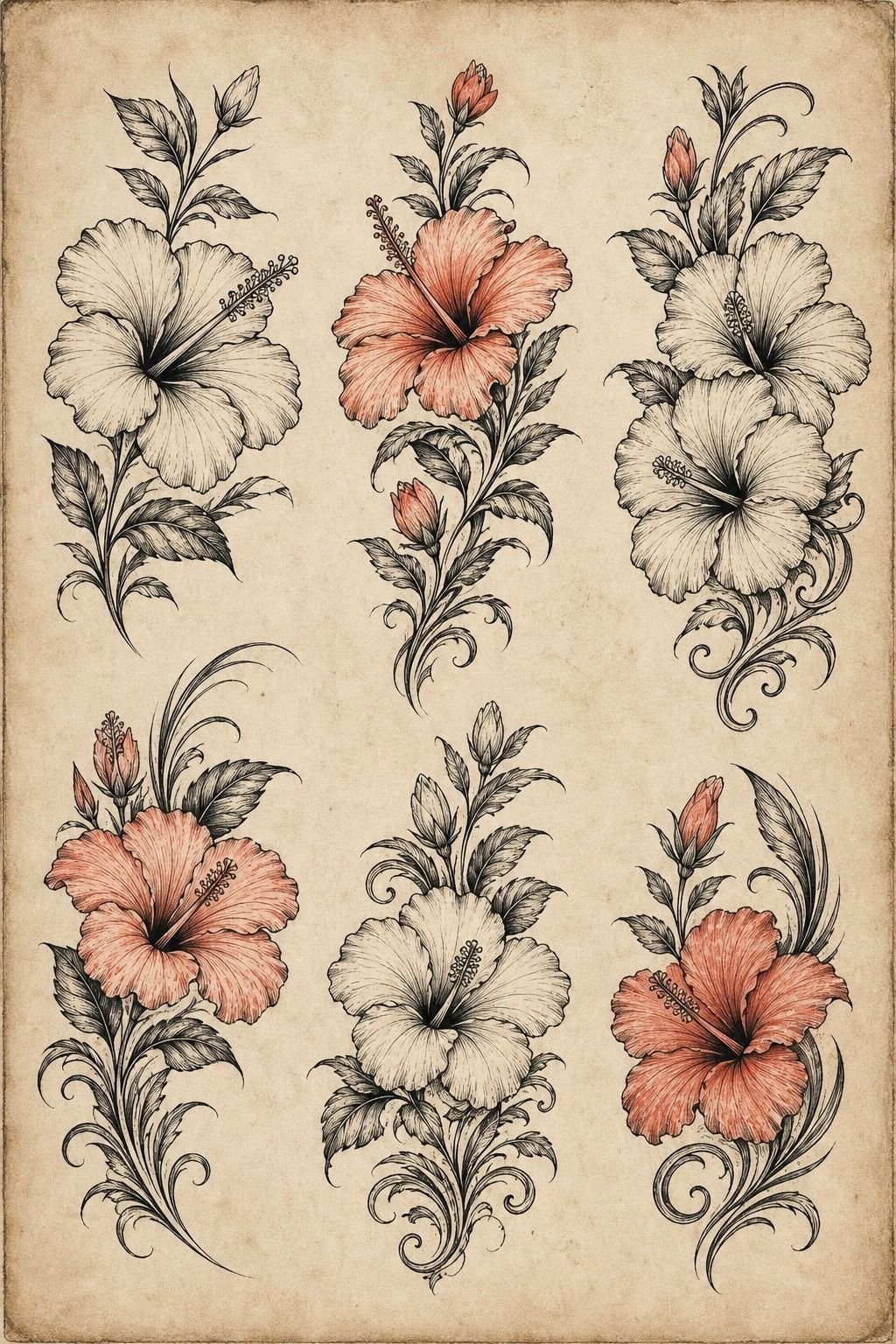
A realism hibiscus on the upper arm needs a different mindset from fine line botanical work. Even on a flash sheet, you can tell the better designs have shadow structure first. The petal folds are mapped with darker shadow, lighter mid-tones, and a clear center.
That is what gives realism depth. Not random soft blur. If the stencil already looks muddy, the healed tattoo will not save it.
Upper arm is a strong placement for this because you can go 4 to 6 inches, give the shading proper width, and still heal in a fairly low-wear zone. I tell clients to bring references for vibe only, not a Pinterest-exact flower.
Your artist needs to translate the shape to your arm and skin tone. If you want all symbolism and no texture, fine line may fit better. If you want the flower to look almost touchable, realism earns its keep.
16Add Script Last, Not First
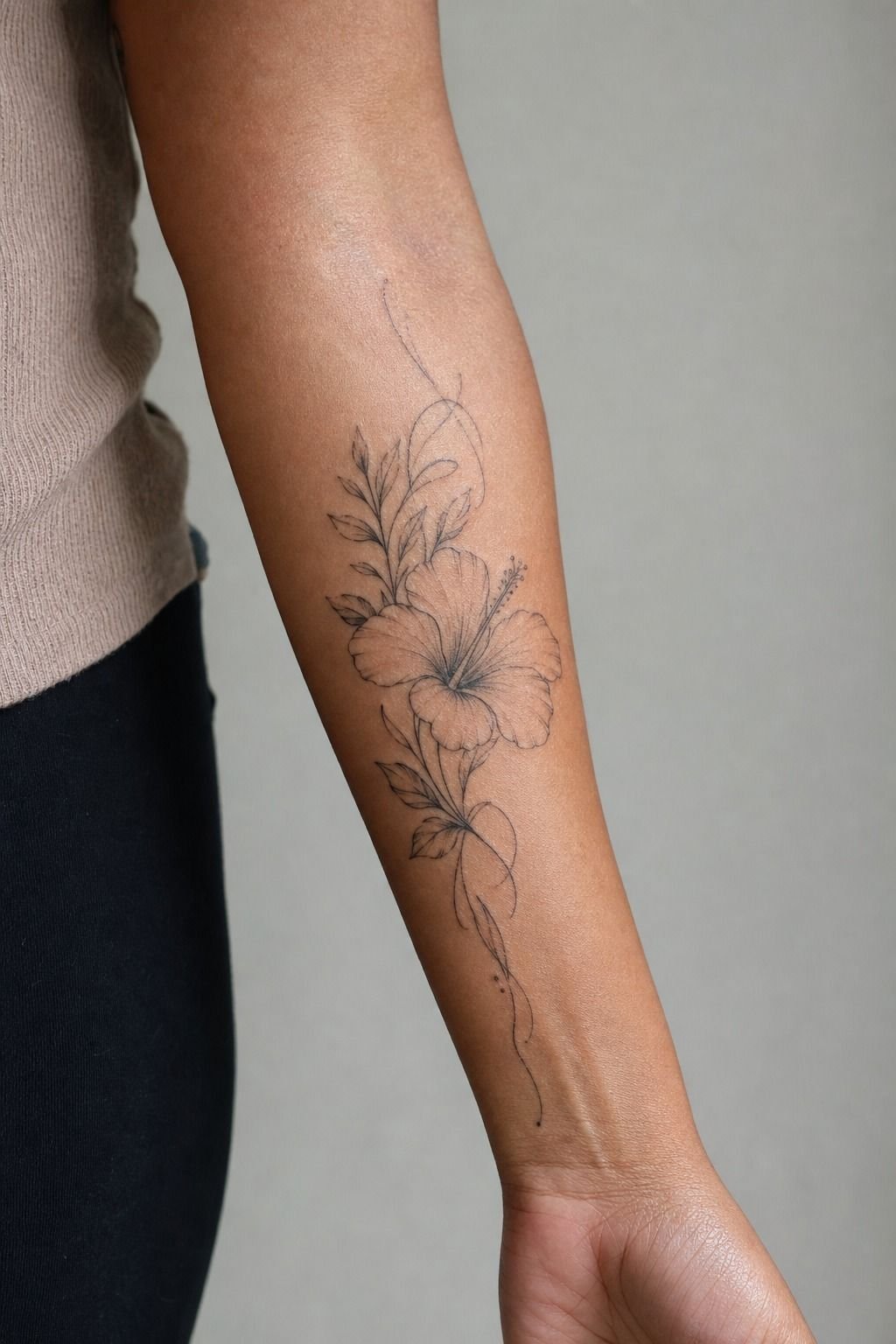
A Hibiscus Tattoo Design with script can be gorgeous or cheesy fast, and the difference is editing.
17Matching Hibiscus Friendship Tattoos
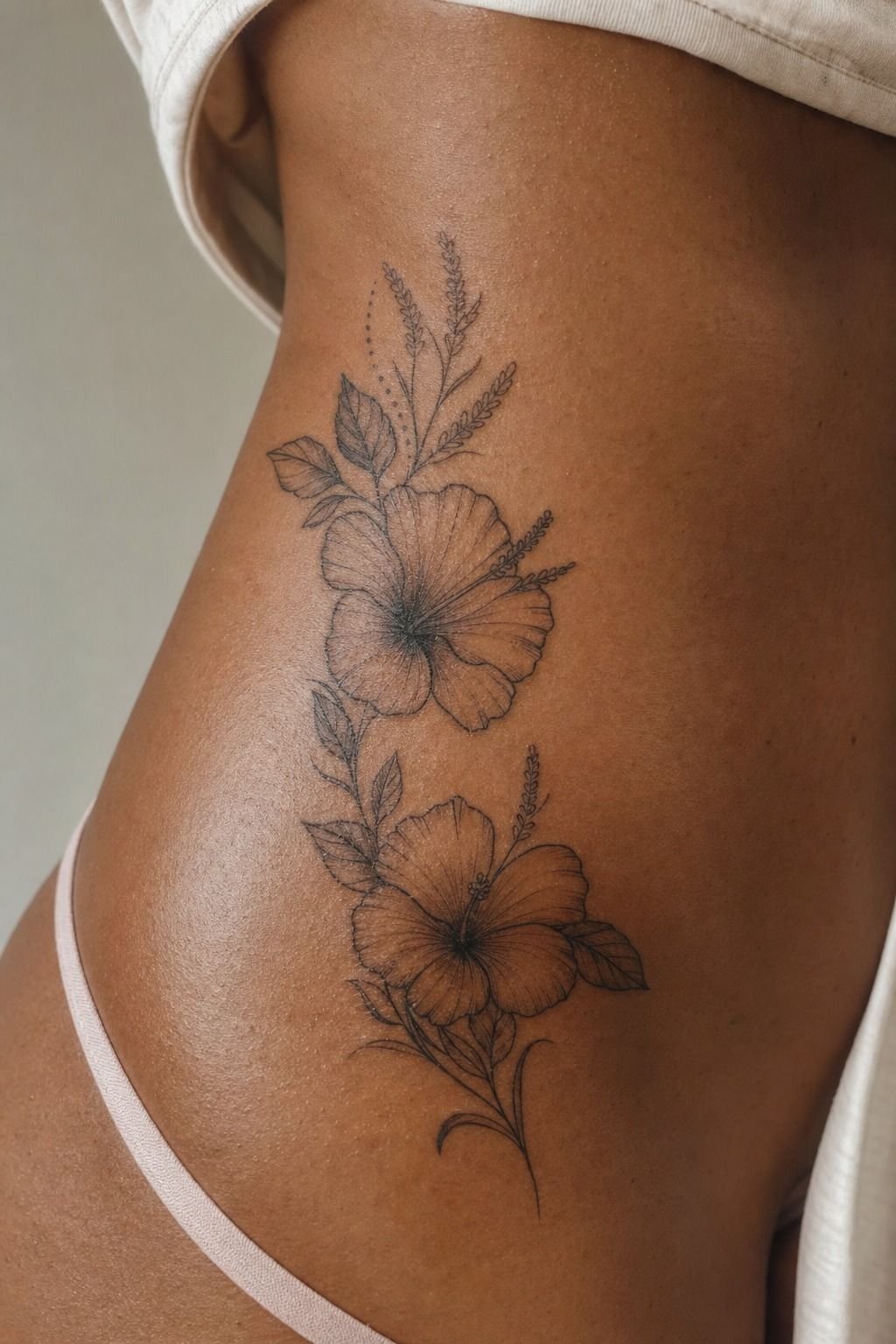
Matching tattoos don’t need to be identical to feel bonded, and honestly, they usually look better when they are not. A hibiscus friendship piece can share the same flower shape while changing placement, line weight, or a small leaf direction so each tattoo fits the person wearing it. In a close-up composition like this, you can see how tiny differences keep the design personal instead of copy-paste.
I tell friends to agree on the core idea, then let the artist fit each one to the body. One on the hip, one on the forearm.
Same bloom, different scale. Clean linework in both.
That is smarter than forcing one stencil onto two different frames. And if the point is shared symbolism, not perfect duplication, you’ll probably love it longer.
The emotional logic behind that is similar to what makes 18 lotus flower tattoos that carry real symbolic weight work so well.
18Cover Old Ink Without Killing the Flower
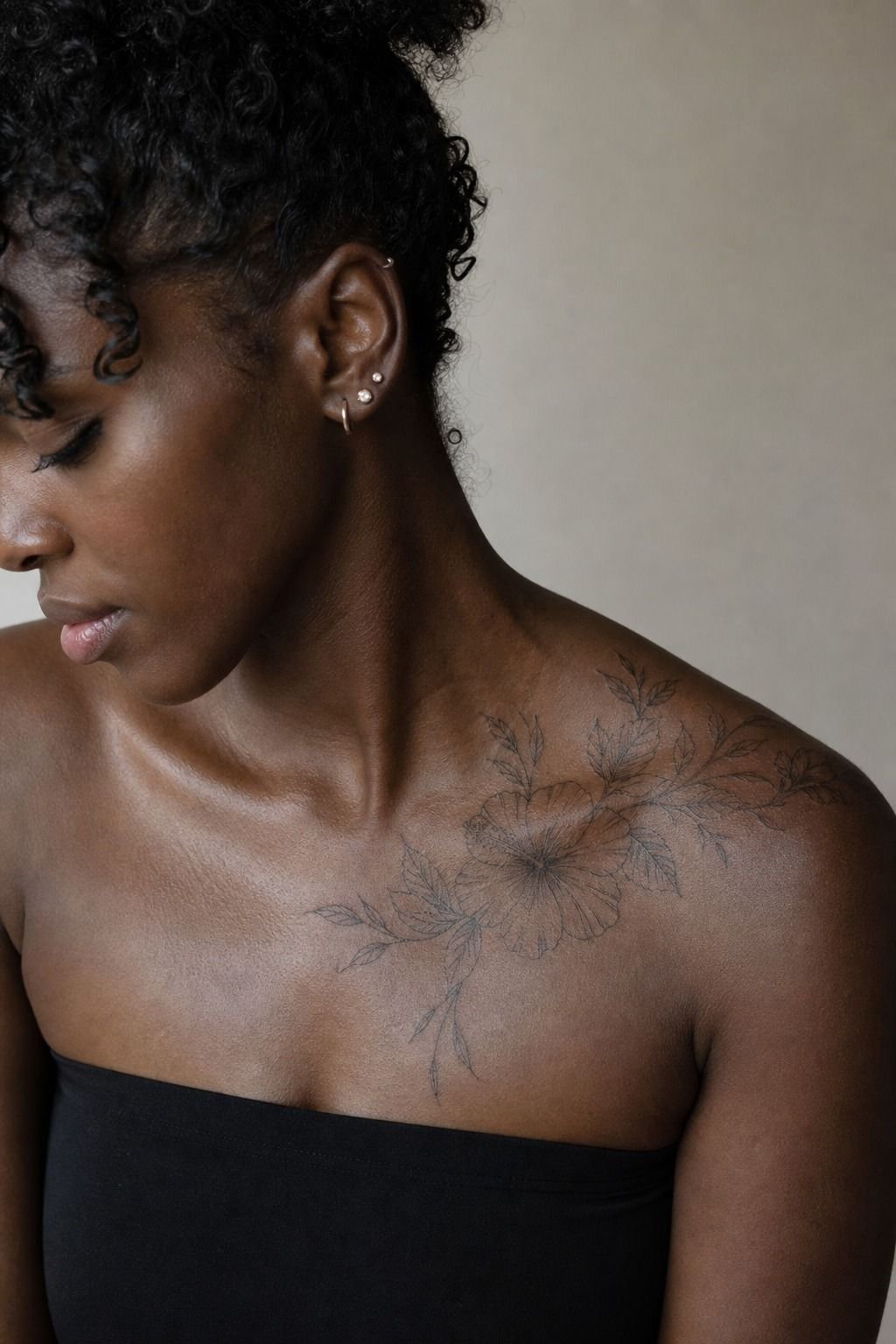
A cover up hibiscus with leaves is where design discipline really shows.
The Clean-Heal Rule
I’ve seen people obsess over style labels and ignore the three things that matter more: size, placement, and skin-friendly execution. That’s backwards.
A hibiscus can be fine line, single needle, blackwork, red ink, or trad color, but if it is too small for the amount of detail, it will not matter how pretty the draft looked on your phone. It will heal busy.
Then it will age busier.
My rule is simple. Give petals breathing width.
Put delicate linework in lower-wear zones when you can. And match the technique to the body part instead of forcing one trend everywhere.
Wrist, forearm, shoulder, upper arm, thigh, and calf are usually kinder to floral tattoos than fingers, feet, ribs, and sternum. That does not mean high-wear zones are off-limits. It means you go in with open eyes and better design.
Here is the price guide and healing reality I give clients before they book. Nothing glamorous. Just useful.
And here is the part nobody respects enough: fresh tattoos are open wounds for the first few days. Wash with gentle unscented soap.
Use a thin layer of ointment, not a greasy blanket. Keep gym friction, pools, and full sun off it while it is healing.
Pick at the flakes and you can pull color right out. Not worth it.
Tattoo Price Reality and What I’d Skip
I’ve had plenty of clients come in convinced the cheapest version of their hibiscus idea was the smart move, and it usually isn’t. The better question is what gives you real payoff once the tattoo heals.
A clean 4-inch shoulder hibiscus from a steady artist might cost more up front than a tiny wrist piece from whoever had a slot this weekend, but the shoulder tattoo often heals nicer, needs less maintenance, and keeps its shape longer. That’s a better return, even before you count touch-ups.
Here is where people overspend. They chase too many extras at once.
Script, extra buds, tiny dots, three leaves, a second flower, color fades, white highlights. Suddenly the tattoo costs more, takes longer, and reads worse.
I’d rather see you spend your money on one strong bloom with crispy lines and enough width to age soft. That’s the part that’s worth it.
And yes, price matters. Most clean hibiscus tattoos land between a shop minimum and a half-day session, depending on scale, color, and whether you’re covering old ink.
But I wouldn’t shop this one by price alone. If an artist’s healed floral work looks patchy, scratchy, or timid, the lower cost is fake savings.
Real talk: the smartest move is usually simpler design, calmer placement, and an artist whose healed work proves they can pack color or pull clean black in one pass.
The Questions Worth Answering First
How much does a Hibiscus Flower Tattoos usually cost?
About $100 to $300 is common for a small to medium hibiscus, though tiny pieces may still hit a $50 to $100 shop minimum. Price shifts with placement, artist demand, and detail.
Wrist or ankle can be quick. Cover ups, color, and script usually take longer.
Are Hibiscus Flower Tattoos a good idea for a first tattoo?
Yes, they are a solid first tattoo when you keep the design clean and place it well. Shoulder placement, outer forearm, and thigh are easier starts than ribs or fingers. If you’re still deciding on scale, compare them with these minimalist flower tattoos.
How do I choose a tattoo artist for Hibiscus Flower Tattoos?
Look for healed photos, not just fresh ones. You want crispy lines, smooth shading, and floral work that still reads clearly after healing.
Check whether the artist does fine line, blackwork, or color well, then match your design to that lane. And yes, studio hygiene matters every single time!
Clean beats flashy, always!
How much do Hibiscus Flower Tattoos hurt?
Pain depends on placement, but the honest version is simple. Ribs, sternum, fingers, and ankles are spicier.
Shoulder placement, outer forearm, thigh, and calf are more chill. Lines feel sharper, shading is a dull burn, and color packing is usually the hottest part.
How long does a Hibiscus Flower Tattoos take to heal?
Surface healing is usually 2 to 3 weeks, and the full settle is more like 2 to 3 months. Wash gentle.
Use a thin layer of ointment. Skip pools, long sun exposure, and picking. If you need a pain-versus-placement breakdown too, where tattoos hurt less is helpful.
What’s the best placement for Hibiscus Flower Tattoos?
For most people, outer forearm, shoulder, thigh, and calf are the sweet spots. You get enough width for petals to breathe, pain stays manageable, and the tattoo usually ages cleaner than it would on fingers or feet. Low-wear skin gives fine details a better shot.
Where I’d Start First
If I had to pick one, I’d start with the Hawaiian shoulder hibiscus. That placement gives delicate petals enough width to heal clean, and you will not blow your spend chasing touch-ups on a high-wear zone. Pin that direction for later and read hibiscus flower tattoo meaning before you book.