Most tattoos look healed on the surface in two to four weeks, but full healing, meaning the skin has completely settled, the ink has locked in, and you can stop babying the thing, takes about two to three months. Some artists will tell you three months to be safe. That’s the real answer, and everything else is understanding what your skin is doing during that stretch.
What “Healed” Actually Means
There’s a difference between looking fine and being fine. Your tattoo might stop peeling after ten days and seem ready for the beach. It’s not. The top layer has closed up, sure, but the dermis underneath is still organizing collagen, settling pigment, and figuring out what just happened. Think of it like a house: the drywall’s up, but the foundation’s still curing.
Surface Healing vs. Deep Healing
Surface healing is what you see: no more scabs, no more shiny skin, the redness gone. That two-to-four-week window. Deep healing is what you don’t see: the immune system finishing its work, the ink particles fully encapsulated in fibroblasts, the skin texture returning to something like normal. Rush this and you’ll get faded spots, raised lines, or that weird ashy look that makes good work look cheap.
- Surface healed: Can touch it without wincing, lotion absorbs normally, no visible peeling
- Deep healed: Skin texture matches surrounding area, no raised lines when you run your finger across it, color fully settled
The Day-by-Day Reality
Every tattoo heals differently, but most follow a pattern artists recognize immediately. Here’s what actually happens, not the sanitized version.
Days 1-3: The Open Wound Phase
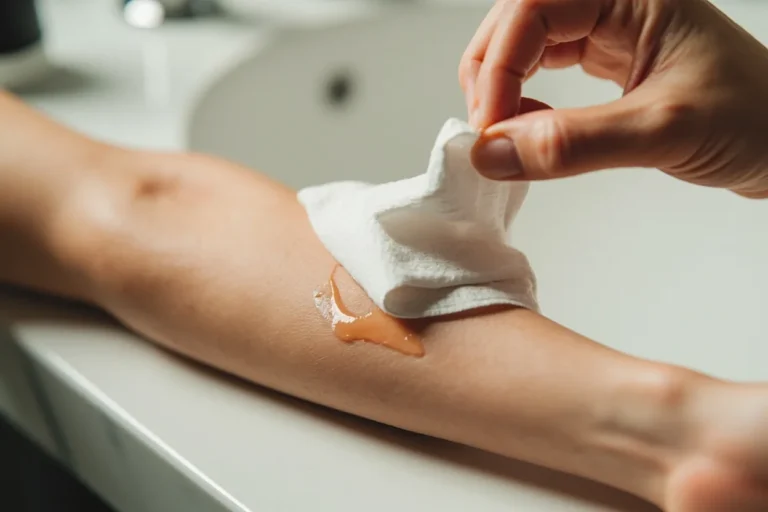
Your artist wrapped you in something, SaniDerm, Tegaderm, or good old plastic wrap and medical tape. That first night, you’ll leak plasma and ink. It’s gross. It’s normal. The wrap is there to keep bacteria out and your sheets from looking like a crime scene. You’ll feel a hot, tight sensation, like a sunburn someone keeps pressing on. Sleep on clean sheets you don’t care about. Trust me.
By day two or three, the plasma starts drying. This is where people panic and over-moisturize. Don’t. A thin layer of fragrance-free lotion, nothing more. Your artist’s aftercare card exists for a reason. Follow it, not your cousin’s blog from 2012.
Days 4-14: The Peeling and Itching Hell
This is when tattoos look terrible. The top layer flakes off in sheets, carrying ink with it. The color looks muted, patchy, almost gray. This is normal. The ink isn’t leaving; the dead skin is. The ink’s already in the dermis. What you’re seeing is the equivalent of a snake shedding, necessary, ugly, temporary.
The itching is maddening. Slap it before you scratch. Seriously. A firm slap disrupts the itch signal without dragging bacteria across fresh skin. I’ve seen people ruin beautiful line work with one fingernail at 3 AM. Keep it clean, keep it lightly moisturized, and wait.
- White flakes: normal peeling
- Thick yellow scabs: you overworked it or got it too wet
- Clear plasma weeping after day 5: possible infection, call your artist
Days 15-30: The Ghost Period
The peeling stops. The tattoo looks… okay? Maybe a little shiny, a little waxy. The color seems to have returned, but it’s not quite right. This is the “ghost phase”, healed enough to look presentable, but not healed enough to judge. The skin is still thin here, still rebuilding. Sun exposure now will fade it permanently. Swimming in pools or hot tubs can still introduce bacteria through microscopic openings.
Your artist probably told you to come back for a touch-up around four to six weeks. This timing isn’t random. It’s when the skin can handle more needle trauma without double-damaging the area.
What Slows Healing Down
Some tattoos just take longer. Location matters enormously. Inner bicep? Soft, protected, usually heals clean. Ankle bone? Constant friction from socks and shoes, slower by weeks. Fingers and hands? They’re basically designed to shed skin fast, which means ink loss and longer settling time. I’ve seen palm tattoos take four months to truly settle.
Your body matters too. Diabetes, autoimmune conditions, poor circulation, these aren’t judgments, they’re realities. Smokers heal slower. It’s the vasoconstriction; less blood flow means less delivery of the cells that repair tissue. Don’t lie to your artist about this stuff. They’re not your doctor, but they need to know whether to adjust their technique or their timeline expectations.
- Fast healers: Younger skin, good hydration, minimal sun damage, upper arms and thighs
- Slow healers: Lower legs, feet, hands, anywhere with thin skin over bone, older skin, compromised circulation
Aftercare That Actually Works
The best aftercare is boring. That’s the point. Your artist isn’t being mysterious; they’re trying to get you to do less.
The First 48 Hours
Keep the wrap on per instructions, usually 12-24 hours for plastic wrap, 3-5 days for SaniDerm if your artist uses it. Wash with unscented soap, pat dry with paper towels (clean ones, not the bathroom hand towel that’s been there since Tuesday). Apply a thin layer of recommended ointment or lotion. Thin means barely shiny. Goop attracts lint, breeds bacteria, and suffocates the skin.
The Long Middle
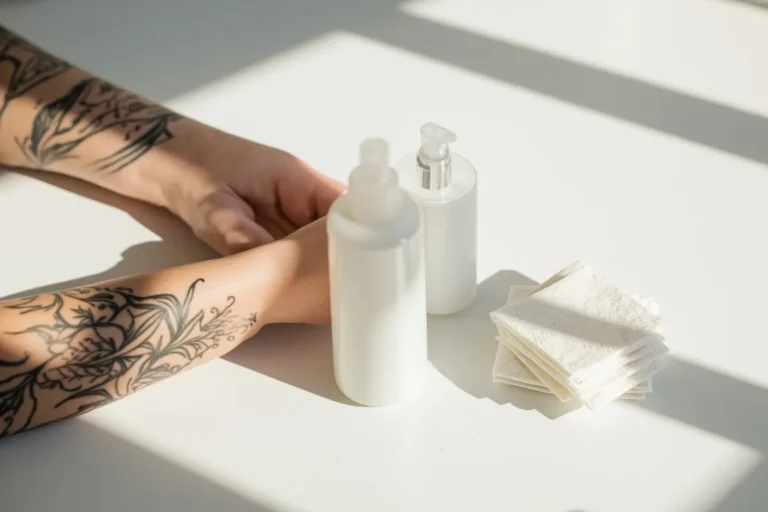
After day three, switch to lotion only. Aquaphor is great for the first couple days; beyond that, it’s too heavy. Lubriderm, Curel, anything fragrance-free and basic. Apply 2-3 times daily or when it feels tight. Don’t let it dry out completely, but don’t marinate it either.
Clothing matters. Loose cotton. That new synthetic workout shirt? It’ll stick to plasma and peel off half your healing skin with it. Sleep positions matter. Fresh back piece? You’re on your stomach for two weeks. Accept it.
Red Flags vs. Normal Weirdness
Not everything that looks scary is scary. Heavy scabbing happens, especially with color packing or solid black fills. A little redness around the edges for two weeks is normal. But spreading redness, heat that increases after day three, red streaks, or foul-smelling discharge, those are doctor territory. Not artist territory. Your artist can spot it, but they can’t treat it. Don’t make them awkwardly suggest you see someone with an actual medical degree.
- Normal: localized warmth for 3-4 days, clear or slightly yellow plasma, mild swelling, itching
- See a doctor: fever, spreading redness, pus, red streaks, worsening pain after initial improvement
Touch-Ups and Long-Term Care
Most artists include one touch-up in the price because they know how skin works. Not because they did bad work. Plan for 4-6 weeks out, when the tattoo’s healed enough to work on but not so old that it’s considered a new piece. After that, sunscreen is your religion. SPF 30 minimum, reapply every two hours if it’s showing. A healed tattoo in the sun without protection will fade in a single summer. I’ve watched it happen.
Moisturized skin holds ink better. Dry skin reflects light differently and makes tattoos look chalky. This isn’t complicated. Lotion. Sunscreen. Time.
Key Takeaways
Surface healing takes 2-4 weeks. Full healing takes 2-3 months, sometimes longer for problematic placements. The peeling phase looks worse than it is. Touch-ups are normal, not failures. Boring aftercare beats creative aftercare every time. And when in doubt, call your artist, they’ve seen it all, and they’d rather answer a text than fix a disaster.
Related Tattoo Guides
- How Much to Tip Your Tattoo Artist: A Real Shop Guide
- How to Care for a New Tattoo: A Real Shop Guide
- How to Delete a Tattoo: Your Real Guide to Fading Ink
- Explore more
Frequently Asked Questions
How long does a tattoo take to heal fully?
Most tattoos take 2-4 weeks to heal on the surface, but complete healing of the deeper skin layers can take 2-3 months. The timeline varies based on tattoo size, location, your immune system, and how well you follow aftercare instructions.
What are the stages of tattoo healing?
The healing process typically has three stages: the initial weeping and scabbing phase (days 1-6), the peeling and itching phase (days 7-14), and the final settling phase (weeks 2-4). Each stage requires different care to protect your new ink.
Can a tattoo look healed but still be healing underneath?
Yes, the surface may look completely healed while the deeper dermis layers are still repairing. This is why artists recommend waiting at least 4-6 weeks before getting touch-ups or exposing the tattoo to prolonged sun or swimming.
Why is my tattoo still raised after a month?
A slightly raised texture can persist for several weeks as collagen continues rebuilding the damaged skin. If the raised areas are accompanied by redness, heat, or pain, consult your artist or a doctor to rule out infection or an allergic reaction.