The first thing to know: your artist already told you how to care for your new tattoo. Write it down. Take a photo of their aftercare sheet. Most healing problems happen because people panic-Google at 2am and start layering on random advice from Reddit. Here’s the grounded reality from people who’ve watched thousands of tattoos heal: keep it clean, keep it slightly moist but not soggy, keep your hands off it, and let your body do the actual work. The rest is details, and the details matter.
Those First 24 Hours
Your artist wrapped you for a reason. That bandage, Saniderm, Tegaderm, or old-school plastic wrap, is keeping bacteria out and keeping your plasma from drying into a crust that’ll pull ink out with it. Leave it on for the time you were told. Usually that’s 2-6 hours for traditional wrap, or several days for a second-skin film.
Removing the Wrap
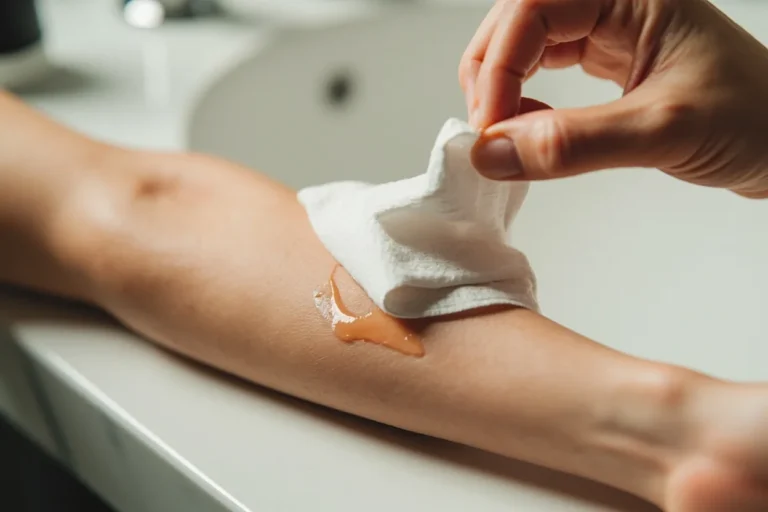
Wash your hands first. Seriously. I watched a guy at our shop in Austin peel off his Saniderm with barbecue-slick fingers after lunch. Don’t be that guy. Peel slowly, in the direction of hair growth if there’s any overlap. If it sticks, warm water helps it release. Don’t yank.
First Wash
Lukewarm water. Unscented soap, Dove sensitive, Dr. Bronner’s unscented, whatever your artist recommended. No scrubbing. No washcloth. Your palm, gentle circles, rinse until the slimy plasma-feeling is gone. Pat dry with a clean paper towel. Don’t rub. Don’t use your bathroom towel that your cat sleeps on.
- Water temperature: lukewarm, never hot
- Soap: fragrance-free, dye-free, simple
- Drying: pat, don’t rub; use disposable paper towels
- Hands: wash before touching the tattoo, every single time
The Peeling Phase (Days 3-7)
This is where people lose their minds. Your tattoo will look terrible. Dull, flaky, maybe patchy, maybe shiny in spots. The ink isn’t falling out. Your skin is shedding its top layer, and the ink sits deeper, in the dermis, where you can’t see it yet. The flakes look like colored dandruff. That’s normal. The urge to pick them is primal and you must resist it.
Picking = scarring = ink loss = touch-up needed = more money and more pain. I’ve heard artists call it “the tax on impatience.” One of my regulars in Denver calls it “the ugly week” and plans her social calendar accordingly.
Moisturizing Without Drowning It
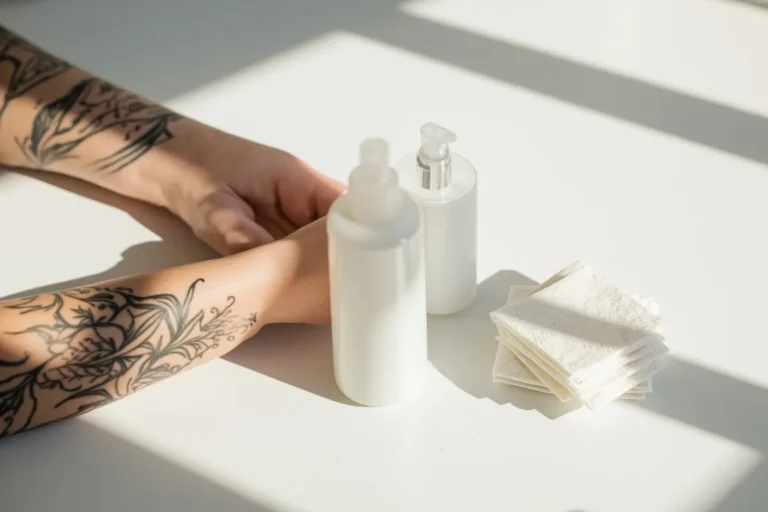
Thin layer. Think dew on a leaf, not butter on toast. Your artist probably suggested something specific, Aquaphor for the first few days, then unscented lotion, or maybe a dedicated tattoo balm. Follow their lead. They’re the ones doing your touch-up for free if you mess this up.
Over-moisturizing traps bacteria and keeps the skin too soft to form that protective top layer. Under-moisturizing lets it crack and bleed. You’re aiming for the middle. Apply 2-3 times daily, or when it feels tight and itchy, whichever comes first.
- Aquaphor: thin layer, first 2-3 days for many artists’ protocols
- Unscented lotion: Lubriderm, CeraVe, whatever your artist names
- Red flag: whiteheads or bumps around the tattoo = too much product
- Red flag: cracking, bleeding lines = too little product
What to Actually Avoid
The internet will tell you a hundred things. Here’s what matters in real shops, year after year.
Water and Sun
No swimming. No hot tubs. No long baths where you soak. Showers are fine, let water run over it, don’t blast it directly. Submerging a fresh tattoo is asking for trouble. The ocean is dirty. Pools are chemical soups. Baths are bacterial petri dishes. Wait 2-4 weeks minimum, and ask your artist because bigger pieces need longer.
Sun is your tattoo’s worst long-term enemy and it’s also bad fresh. UV burns healing skin, fades settling ink, and can cause blistering. Keep it covered. Loose clothing, not tight synthetic stuff that’ll stick and sweat. No sunscreen until it’s fully healed, sunscreen on open skin is a chemical irritant.
Life Stuff That Gets Complicated
Pets: your dog sleeps on your bed. Your cat walks through litter and then across your pillow. Be aware. Change your sheets more often. Sleep on clean towels if you’re worried about your bedding.
Work: if you’re in construction, food service, healthcare, anything dirty or sweaty, talk to your artist before getting tattooed. Placement matters. A forearm piece under a hot glove all day heals differently than a shoulder piece under a loose shirt.
Exercise: light is fine. Heavy sweating, friction from equipment, and gym equipment bacteria are not. Skip the direct chest press if your chest is fresh. Skip the gi if your ribs are new. Use judgment. Your artist has seen it all and will give you real talk.
- Swimming pools: 2-4 weeks minimum
- Direct sun: avoid entirely until healed, then SPF forever
- Tight clothing: loose, breathable cotton
- Gym: avoid direct friction and heavy sweating for 1-2 weeks
Reading Your Tattoo: Normal vs. Problem
Healing isn’t uniform. Some spots peel fast, others lag. Color packing heals differently than fine lines. A solid black sleeve weeps more than a delicate single-needle piece. Here’s how to read what’s happening without spiraling.
Normal Healing Signs
Redness that fades over days, not spreads. Warmth that lessens, not intensifies. Plasma and ink on the bandage initially. Tightness, itching, flaking, mild swelling. These are your body doing its job. The itch can be intense, slap it gently, don’t scratch. Some artists suggest tapping with a clean hand or blowing cool air across it.
When to Contact Your Artist
Spreading redness after day three. Heat that builds instead of fading. Yellow or green discharge, not clear plasma. A smell that’s wrong, plasma has a metallic, raw smell, but infection smells foul and sweet in a bad way. Fever. Red streaks radiating outward. These are artist-call and possibly doctor-call situations. Your artist wants to know. They’d rather reassure you or catch something early than fix a blown-out mess later.
One thing: allergic reactions to red ink happen, especially with certain older red formulations. Bumpy, itchy, persistent reaction just in the red areas, your artist needs to know, and future artists need to know too. It’s in your file forever after that.
- Normal: fading redness, decreasing warmth, flaking, mild itch
- Contact artist: spreading redness, building heat, odd discharge
- Doctor territory: fever, red streaks, rapidly worsening symptoms
- Red ink watch: localized persistent bumps in red areas only
Long-Term Care: Beyond the Heal
Aftercare doesn’t end when the peeling stops. A tattoo is healed when the skin feels normal again, not shiny or tight, usually 3-4 weeks, sometimes 6 for dense work. But the ink settles for months. Colors shift slightly as your skin’s undertone interacts with the pigment. Blacks soften from that harsh fresh intensity into their living tone.
Moisturize your tattooed skin like you moisturize the rest of you. Dry skin makes tattoos look ashy and aged. Sunscreen, always, forever. SPF 30 minimum. A sunburned tattoo fades and blurs faster than protected work. I’ve seen twenty-year-old tattoos that look crisp because of consistent sun protection, and five-year-old pieces that look decades older because of beach summers and tanning beds.
Touch-ups are normal. Some skin just doesn’t hold certain tones. Some spots heal harder. Most artists include one touch-up in the original price if you come back within a reasonable window, usually 3-12 months. Don’t wait two years and expect free work. Respect the policy. Building that relationship matters if you plan more work.
Key Takeaways
Your artist’s specific instructions trump everything you read online, including this. Write them down. Follow them. The core principles are universal: cleanliness, appropriate moisture, patience, and protection from sun and water. The peeling phase looks worse than it is. Picking makes it actually worse. Over-moisturizing is as bad as under-moisturizing. Swimming and sun are your enemies in the short term and long term. Know the difference between normal healing and real problems, and don’t hesitate to call your artist when you’re unsure. They’ve seen every variation and they’d rather answer your text than fix your mistake. Healed tattoos last decades with basic care, sunscreen, lotion, and not treating your skin like leather. The work you put in now shows every time you roll up your sleeve.
Related Tattoo Guides
- How to Delete a Tattoo: Your Real Guide to Fading Ink
- How to Use Tattoo Transfer Paper: A Complete Guide
- How Much Does Tattoo Removal Cost in 2024?
- Explore more
Frequently Asked Questions
How long should I keep the bandage on my new tattoo?
Keep the initial bandage on for 2 to 6 hours depending on your artist’s instructions. Some artists recommend leaving it on overnight if it is a second skin or saniderm, but always follow what your specific shop tells you.
Can I shower with a new tattoo?
Yes, you can shower with a new tattoo but avoid soaking it. Keep showers brief and do not let the water hit the tattoo directly at high pressure.
When can I start using lotion on my tattoo?
Wait until the tattoo starts to feel tight and dry, usually after 2 to 3 days of washing with unscented soap. Then apply a thin layer of fragrance free lotion 2 to 3 times daily.
Is it normal for my tattoo to peel and itch?
Peeling and itching are completely normal parts of the healing process. Do not pick or scratch the skin, as this can pull out ink and cause scarring.