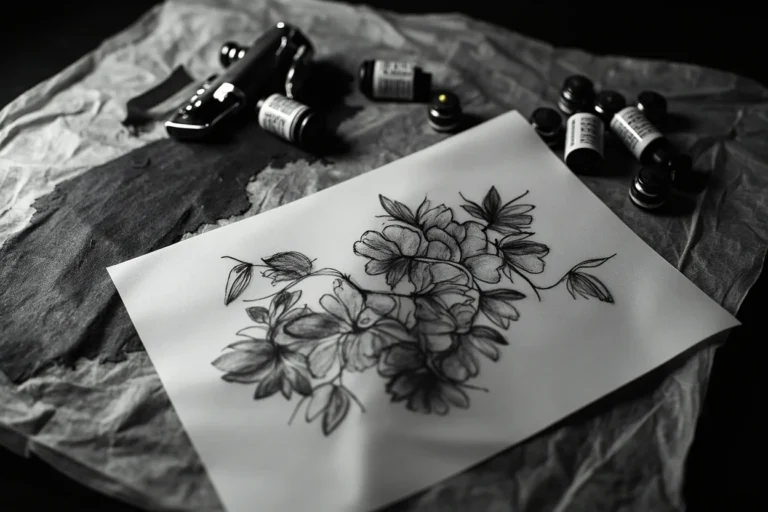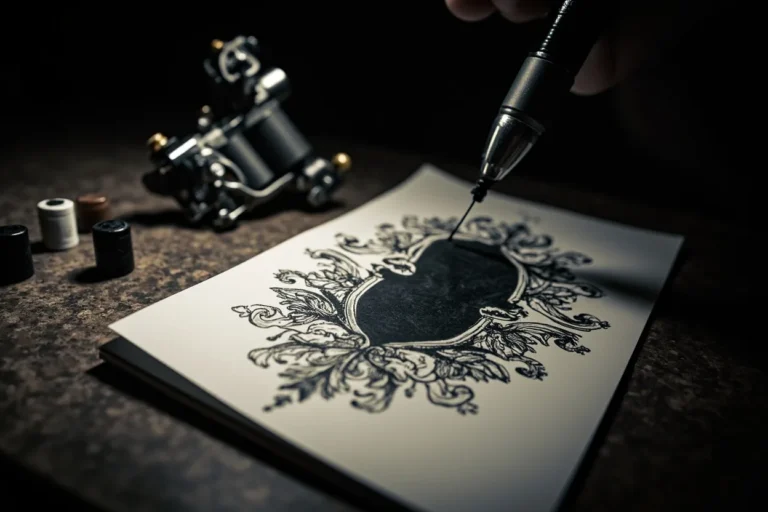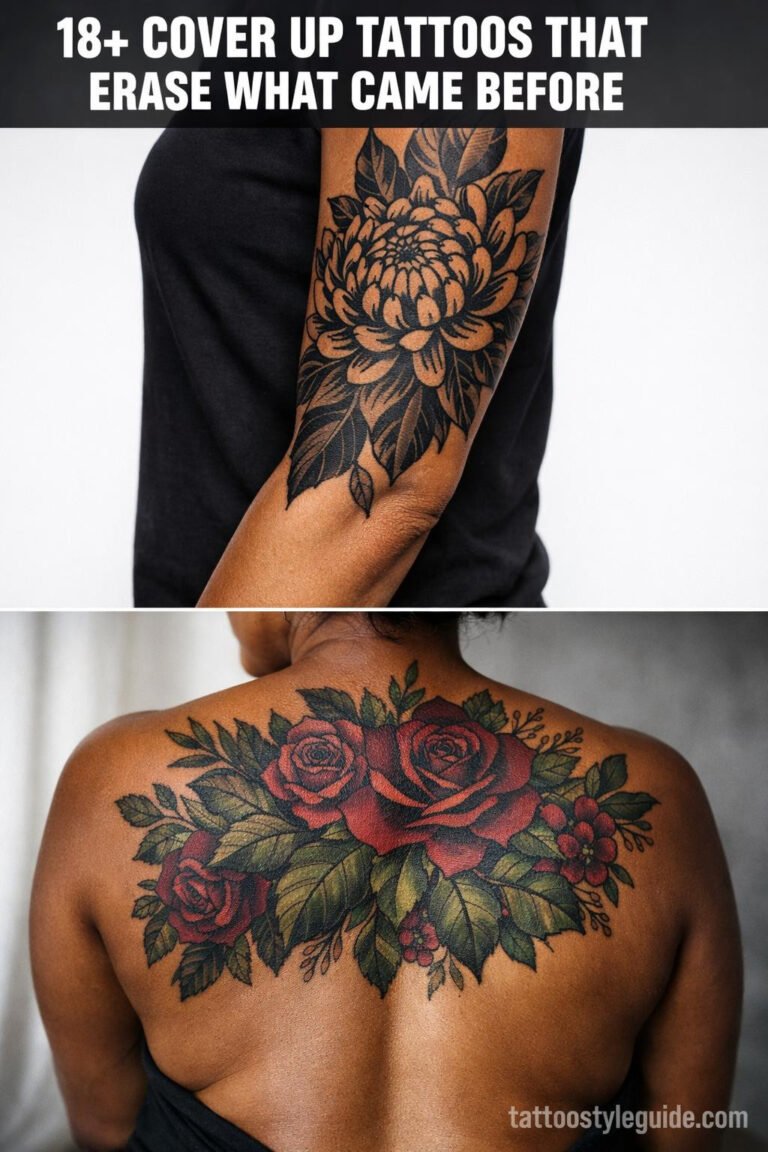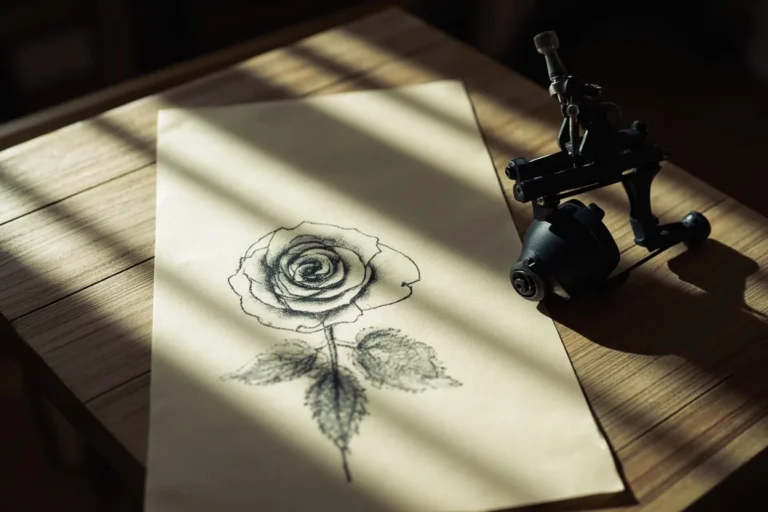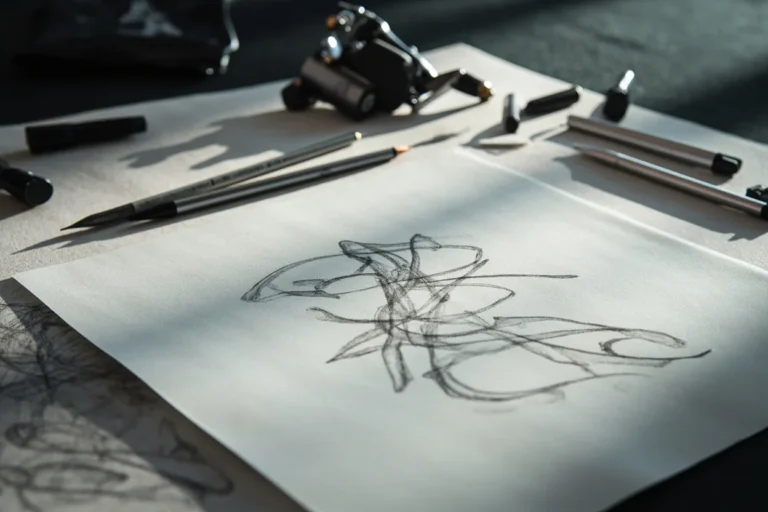
Yes, you can absolutely make your own tattoo, meaning you design it yourself and bring that vision to a professional artist. What you shouldn’t do is try to tattoo yourself at home with a kit from Amazon. I’ve tattooed for years, and I’ve seen the aftermath of DIY attempts in my chair: blown-out lines, infections, scar tissue that no cover-up can fully fix. The real path is designing your own piece, understanding how it translates to skin, and collaborating with an artist who can make it live there permanently. Here’s everything that actually matters.
Designing Something That Works on Skin
Paper and skin are not the same canvas. I’ve had clients walk in with gorgeous watercolor paintings that would turn to mud in two years. Others bring tiny, intricate designs packed with detail that’ll blob together by year five. The skin moves, stretches, and ages. Your design needs to account for that.
Line Weight and Detail
Thin lines look delicate fresh, but they spread. I tell clients: if you want fine linework, keep it simple. A single needle script word? Beautiful, but it’ll need touch-ups. Dense geometric patterns with hairline spacing? That gap fills in. Bold lines hold. Simpler shapes read clearer from across the room. Think about your favorite tattoos you’ve seen, they probably scan instantly even at distance.
Color vs. Black and Grey
Color pops fresh but fades faster. Yellows and pastels need more maintenance. Black and grey ages gracefully, stays readable longer. I’ve tattooed full color sleeves and minimalist blackwork, both work, but your aftercare commitment and budget for future touch-ups should factor in. If you’re designing your own piece, ask yourself: do I want this to look best at month three, or year fifteen?
- High contrast designs last longer, deep blacks against clean skin
- Avoid tiny text under 10pt equivalent; it blurs
- Negative space is your friend; let the skin breathe
- Flow with the body part, not against it
Placement: Where It Actually Goes
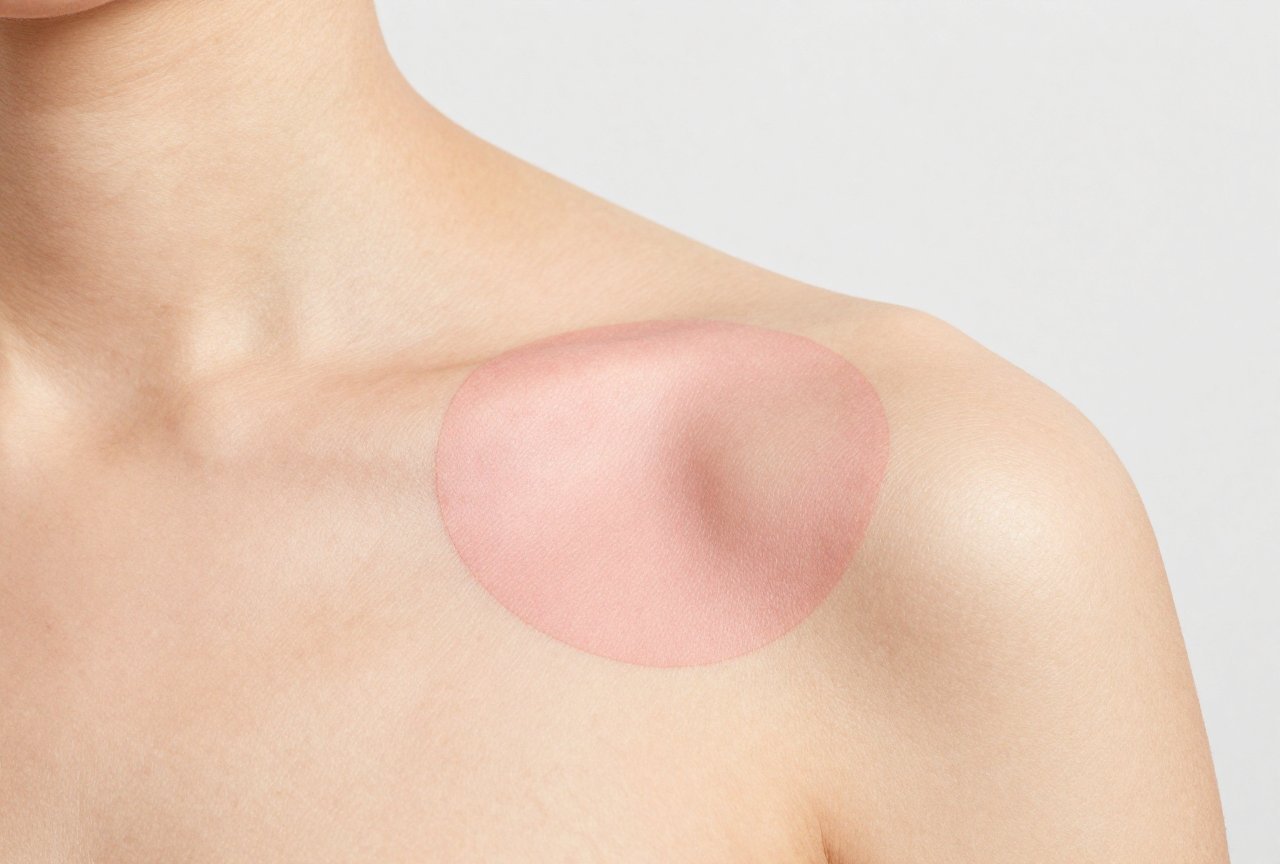
Not every design fits every spot. I’ve had to gently redirect clients who wanted a perfect circle on the shoulder, it’ll distort when they move. Or elaborate finger tattoos that fade to grey within months because hands shed skin constantly.
High-Movement vs. Stable Areas
Your ribs expand when you breathe. Your inner bicep twists. Your knee cap shifts. Stable areas like the outer forearm, upper arm, calf, and thigh hold ink better and hurt less. We see this a lot: clients want rib pieces for the “aesthetic,” then tap out twenty minutes in. Design for where your body can actually carry it.
That said, some spots are worth the pain if the design demands it. A sternum piece framed perfectly? Stunning. But know what you’re signing up for. I always have clients flex, stretch, and look at the area in a mirror before we stencil. Your design should move with you, not fight your anatomy.
Finding the Right Artist (Not Just Any Shop)
This is where your design lives or dies. Every artist has strengths. I specialize in blackwork and botanicals; my colleague across the shop crushes Japanese traditional. A realism artist will struggle with your stick-and-poke inspired flash. Look at portfolios obsessively. Not Instagram highlights, healed work, preferably a year or more old.
When you find someone whose healed tattoos look like their fresh ones, that’s your person. Email them. Be specific: “I designed this floral piece with bold outlines and limited shading, inspired by your healed peony from March 2023.” Artists get fifty “I want something custom and cool” emails a week. Stand out by showing you actually looked.
- Check their booking process, good artists often book months out
- Ask about their stencil process; will they adjust your design for flow?
- Budget for their rate, not their minimum; quality costs
- Consultations are normal; don’t skip them
Pain: What It Actually Feels Like
There’s no honest way to say it doesn’t hurt. It does. But it’s specific, not universal. The needle buzzes; it’s a hot, scratchy vibration that becomes dull after the first few minutes. Endorphins kick in. Then they wear off. The outline is sharp and focused. Shading is broader, more diffuse, sometimes easier, sometimes worse depending on the area.
In my chair, the ones who struggle most are the tense ones. Fighting it burns energy fast. Breathe steady. Eat beforehand. Bring headphones if the shop allows it. Some spots, the sternum, ribs, ditch of the elbow, back of the knee, are genuinely rough. Others, like the outer forearm or calf, surprise first-timers with how manageable they are. I’ve had people fall asleep during long sessions on the thigh. Your mileage varies, but it’s never the horror stories people imagine.
Healing: The Real Timeline
Fresh tattoos look perfect. Day three, they itch and flake. Week two, they look terrible, dull, peeling, maybe scabby. This is normal. I tell clients: your tattoo is not a wound to “heal” in the clinical sense, it’s ink settling into dermis while your skin regenerates. Don’t pick. Don’t soak it. Keep it clean, keep it lightly moisturized, keep it out of sun and dirty water.
What Actually Happens
Plasma and ink seep the first day. A thin, hard “tattoo film” forms, this is not a scab to remove, it’s protective. By day four to seven, peeling starts. Color looks muted underneath. Around week three, the top layer settles and brightness returns. Full settling takes two to three months. That’s when you see the true, healed result. We see this a lot: panicked texts at day ten. I always say, wait six weeks before judging.
- Wash gently with unscented soap, pat dry
- Thin layer of recommended aftercare ointment or lotion
- No swimming, hot tubs, or submerging until fully peeled
- Sunscreen forever after healing; UV fades ink fast
Cost: What You’re Actually Paying For
Good tattoos aren’t cheap. Cheap tattoos aren’t good. The hourly rate in most US shops runs $150-$300+, with minimums around $100-$150 for anything small. A full day session might be $1,000-$1,500. You’re paying for years of technical skill, sterile equipment, the shop’s overhead, and the artist’s time designing and executing.
I never negotiate my rate. No artist I respect does. If your design is complex, budget for multiple sessions. If you’re designing your own piece, be flexible, sometimes simplifying saves money and ages better anyway. Tip your artist. Twenty percent is standard. They remember.
Key Takeaways
Designing your own tattoo is one of the most personal things you can do, but the execution belongs in a professional shop. Keep your design bold and readable, choose placement with your body’s movement in mind, find an artist whose healed work matches your vision, and respect the process: pain is temporary, healing takes patience, and quality costs what it costs. I’ve tattooed thousands of pieces, and the ones clients love longest are never the trend-chasers. They’re the ones with intention, good design, and proper care. Bring your idea. Let an artist make it real. Your future skin will thank you.
Frequently Asked Questions
Can I tattoo myself at home safely?
No. Home tattooing without proper sterilization, training, and equipment leads to infections, scarring, and permanent damage. Professional shops use autoclaves, single-use needles, and years of technique that can’t be self-taught from videos.
How do I know if my design will age well?
Simplify. Bold lines, high contrast, and readable shapes from a distance hold up over decades. Show your design to an experienced artist during consultation, they’ll spot problems you can’t see yet.
Why do some tattoos fade faster than others?
Placement matters, hands, feet, and inner lips shed skin constantly. Sun exposure degrades ink. Color choice affects longevity too, with lighter pigments fading faster than deep black and grey.
Is it rude to bring a design from another artist?
It’s fine to bring reference and your own sketches, but expect the tattooing artist to redraw and adapt it. Never ask them to copy another tattooer’s finished piece exactly, that’s considered theft in shop culture.
Related Tattoo Guides
- How to Operate a Tattoo Machine: A Working Artist s Guide
- How to Reduce Tattoo Swelling: A Working Artist s Guide
- How to Remove Eyebrow Tattoo: A Complete Guide
- Explore more