
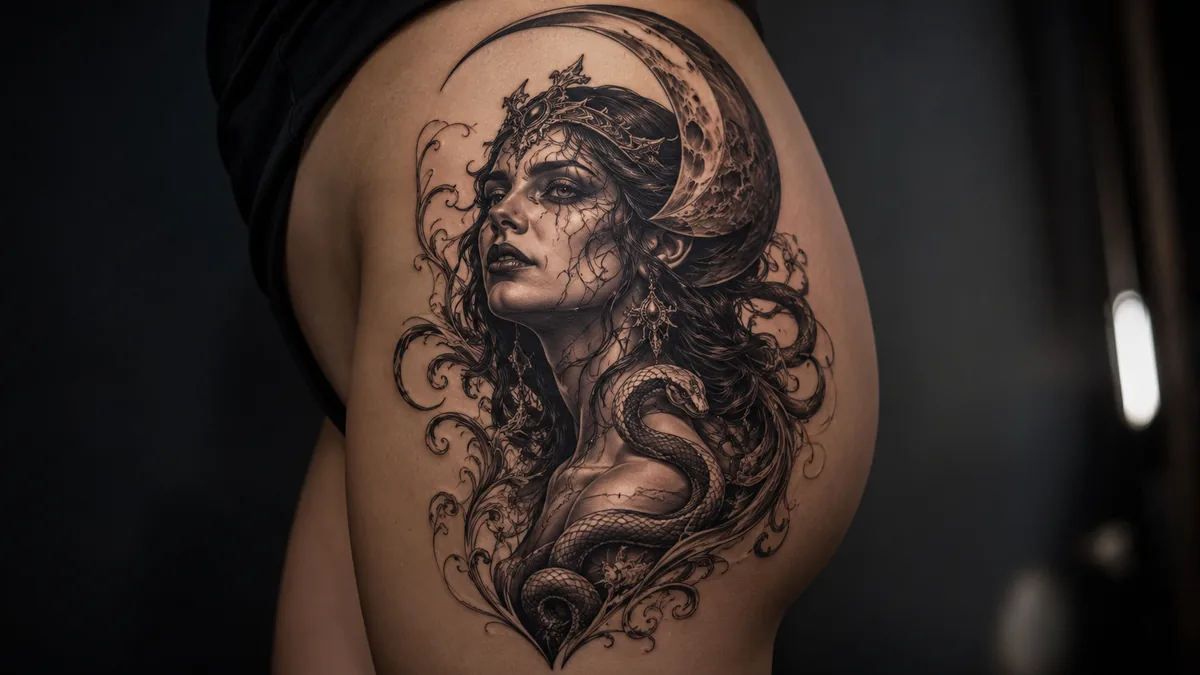
Lilith is one of the most loaded symbols you can put on your body. She’s rebellion, raw feminine power, and refusal to submit, all wrapped into one figure. People don’t get this tattoo casually. It carries weight.
The designs range from serpentine demon queens to minimalist crescent moon sigils, but the core meaning stays the same across all of them: Lilith stands for autonomy, dark femininity, and the parts of yourself that refuse to be tamed. Here’s what it really means and how to wear it right.
Core Symbolism: What a Lilith Tattoo Actually Means
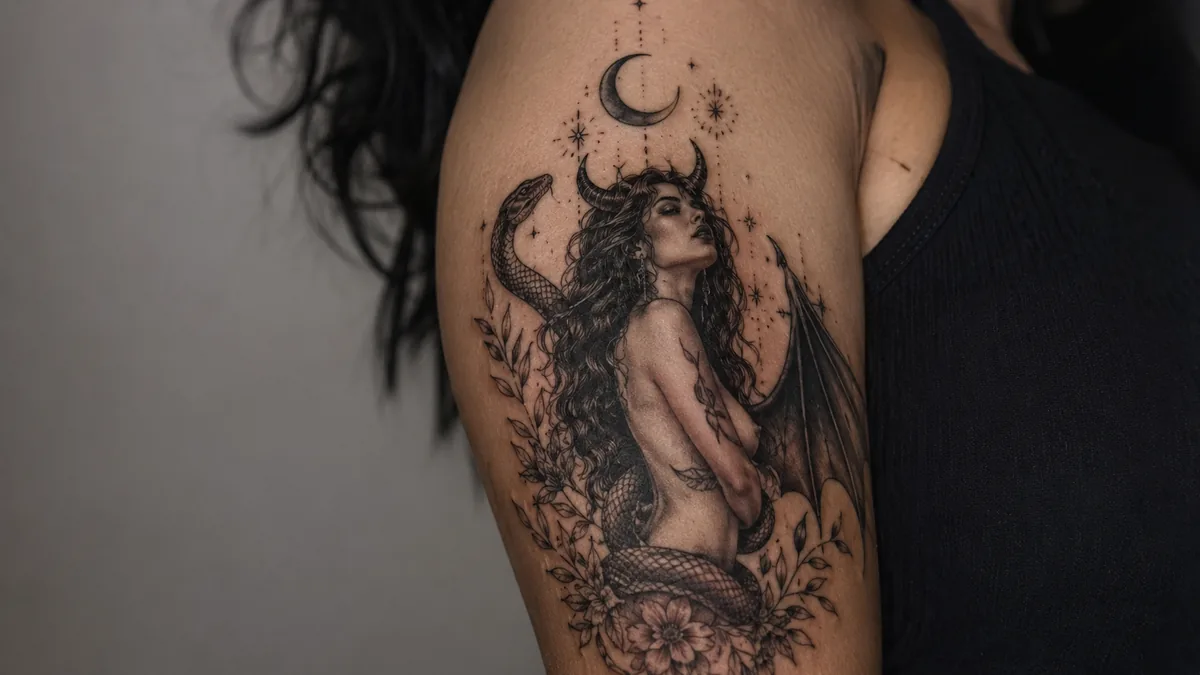
At its heart, a Lilith tattoo is about reclaiming power. She represents radical self-ownership, refusal to be controlled, and embracing the shadow side of the self. Clients who get this piece usually connect with themes of independence, sexual autonomy, and breaking free from roles imposed on them by others. It’s a declaration, not decoration.
She also carries associations with the night, the moon, and the wild untamed natural world. Some people read her as a symbol of feminine rage channeled into strength rather than submission. Others connect her to shadow work in a psychological sense, owning the darker, less socially acceptable parts of your personality instead of suppressing them.
Who Is Lilith? The Real Historical and Cultural Background
She didn't fall from Eden. She walked out.
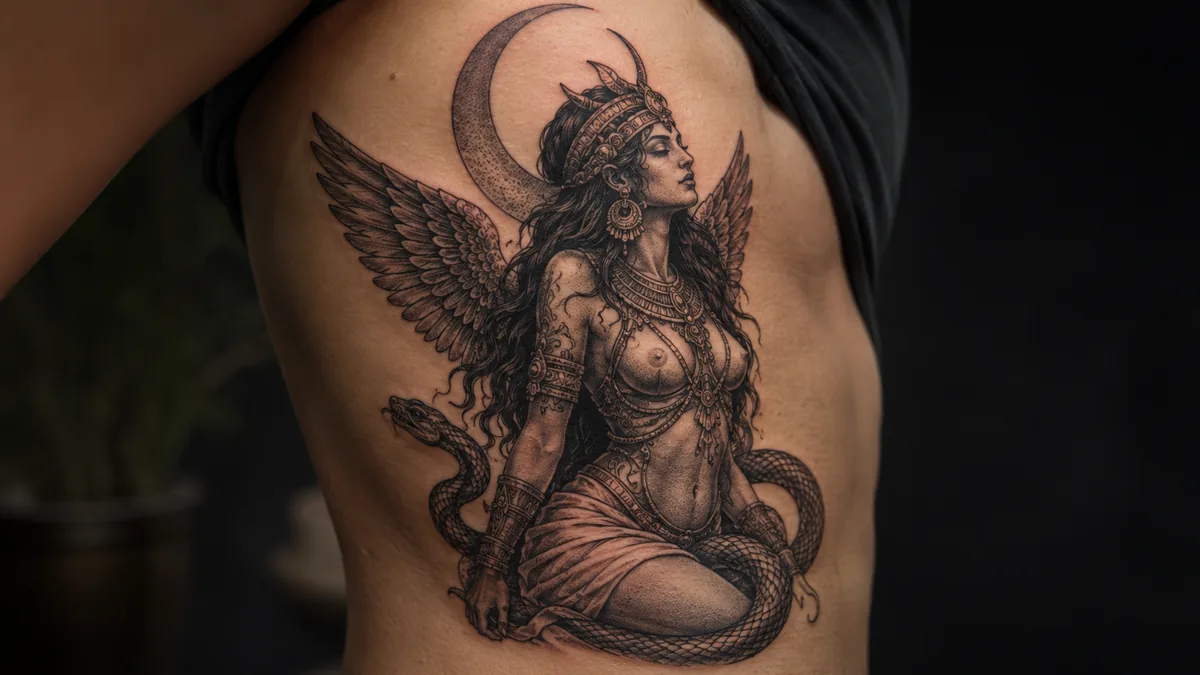
Lilith comes from Jewish folklore and appears in the Alphabet of Ben Sira, a medieval text. She’s described as Adam’s first wife, created from the same earth, who refused to lie beneath him and left the Garden of Eden rather than submit. That story never made it into mainstream Genesis, but it survived in folk tradition and Kabbalistic texts. She’s not a biblical invention, she’s a folklore figure with real documented history.
In ancient Mesopotamian tradition, a figure called Lilitu, a storm demon associated with wind and disease, may be a precursor. The overlap is debated by scholars, so don’t treat it as settled. What’s solid is her role in Jewish mysticism and her modern reclamation by feminist movements starting in the 1970s, which is what drives most of the tattoo symbolism today.
Design Variations: What People Actually Get
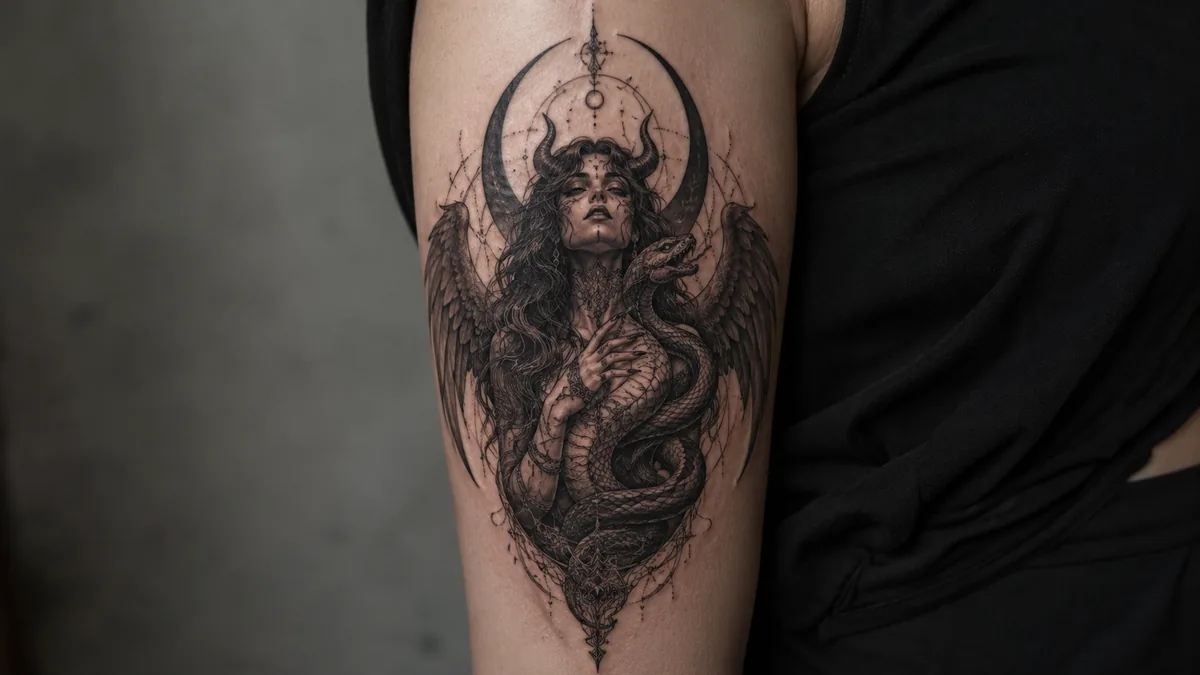
The most popular designs fall into a few clear camps. Portrait style shows her as a woman with wild hair, often surrounded by serpents, owls, or crescent moons. These read strong from across the room when done in a solid black and grey realism style. The owl is directly tied to her, pulled from Isaiah 34:14 where a night creature haunts the ruins. Serpent imagery shows up constantly, connecting her to the snake in the garden narrative.
Sigil-style Lilith tattoos are a different animal entirely. Some clients want the astrological symbol for Black Moon Lilith, a small glyph that looks like a cross with a crescent on top. Fine line versions of this stay small and subtle. Others go full illustrative, mixing her figure with tarot imagery, sacred geometry, or dark florals. Geometric interpretations and neo-traditional renderings with heavy black work and bold fills are both solid choices that hold up well over time.
Color vs Black and Grey: Which Holds Up Better
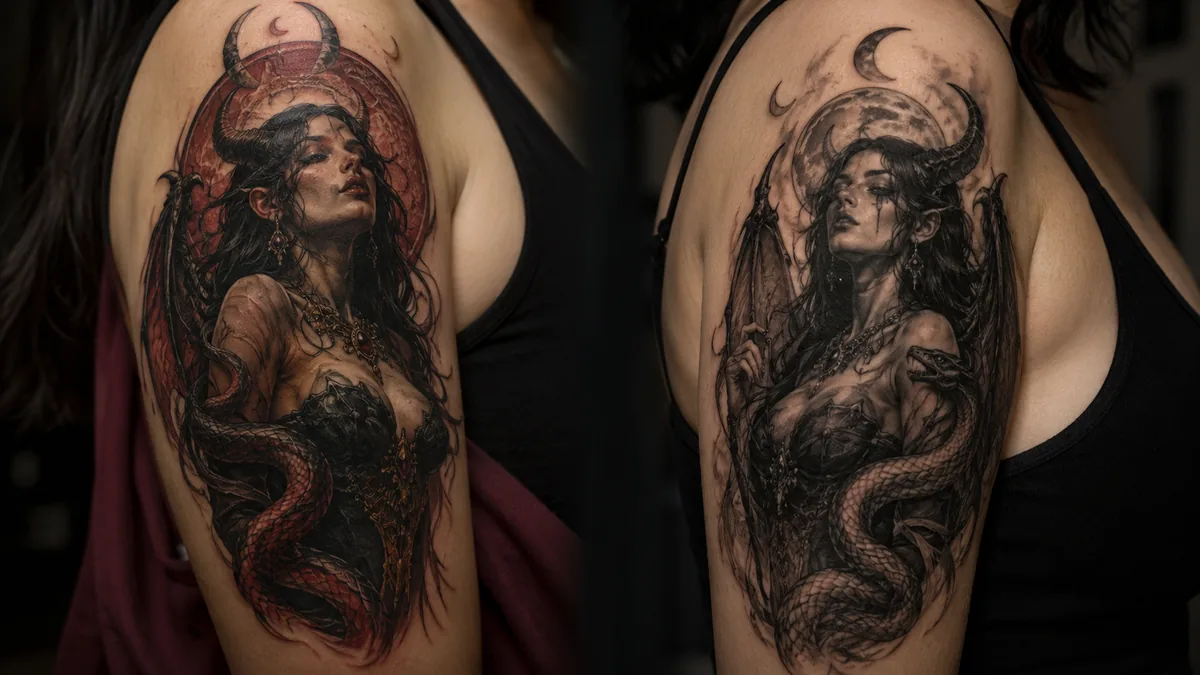
Black and grey is the dominant choice for Lilith pieces and for good reason. Deep contrast, smooth whip shading on flowing hair and fabric, and crisp linework on serpents, moons, and wings all read cleanly for decades. A well-executed black and grey portrait with saturated blacks in the shadows will still look sharp at the fifteen-year mark if it’s placed right and kept out of high-wear zones.
Color work is absolutely viable, especially jewel tones, deep purples, blood reds, and midnight blues, but it asks more of you. UV exposure breaks down pigment fast, so if your placement gets sun, you’re reapplying sunscreen religiously or watching those colors fade out. If you go color, commit to the aftercare. A washed-out Lilith piece loses the whole point. Bold will hold, dull will disappoint.
Placement: Where It Reads Best and How It Ages
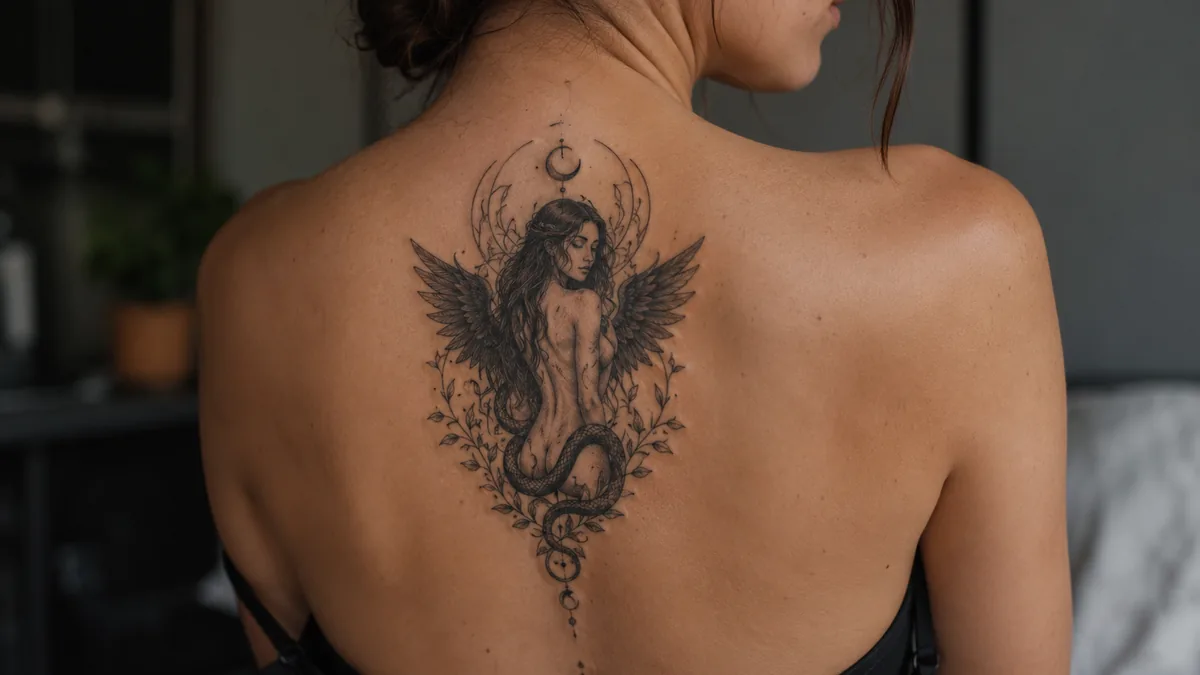
Thigh, back, and upper arm are the gold standard for larger Lilith pieces. The thigh gives you a wide, mostly flat canvas that heals nice and stays hidden or shown on your terms. Full back pieces let the composition breathe, especially for portrait work with a lot of surrounding detail. These are lower-wear zones, so the ink stays crisp longer without the constant friction you get on hands or feet.
Forearm is popular for medium-sized designs and keeps her visible, which a lot of clients want intentionally. Ribs and sternum placements get chosen for their intimacy, keeping the piece personal and private. Both zones are spicy to sit through. Collarbone and upper chest work for smaller sigil versions. Avoid the inner wrist for any intricate detail, the skin thins there and fine lines can blow out or fade patchy over time.
Pain Zones: Straight Talk on What to Expect
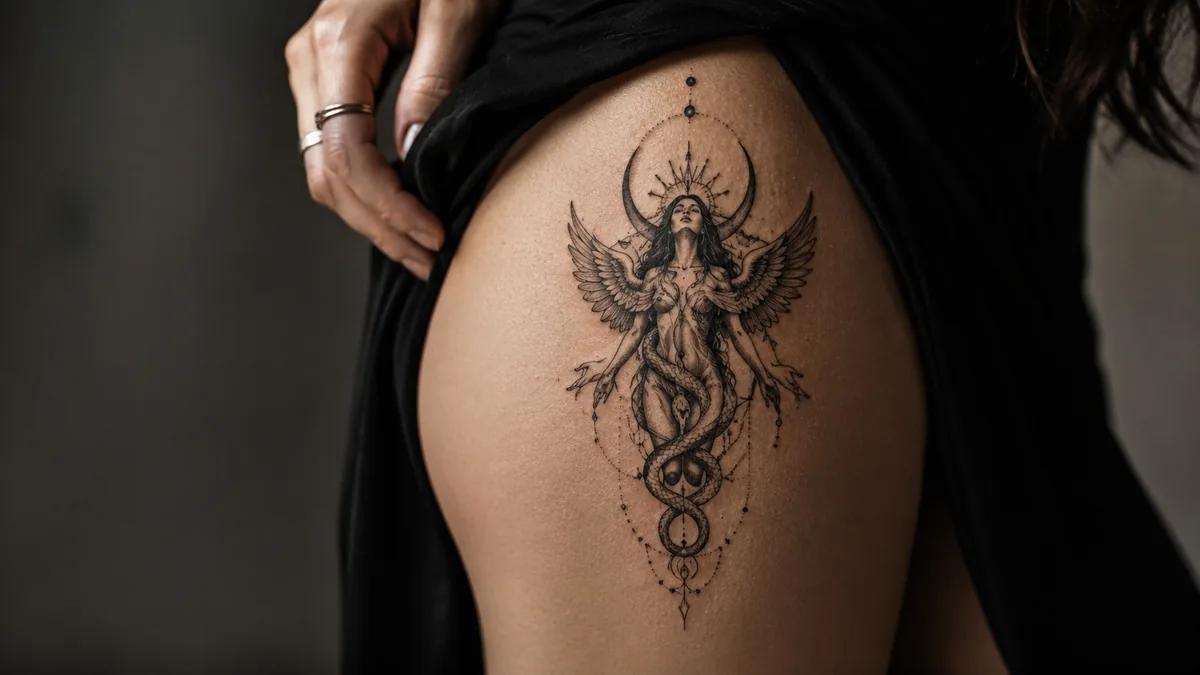
If you’re going for a thigh or upper arm placement, you’re in reasonable territory. The muscle and fat cushion the needle work and most clients describe it as uncomfortable but manageable. A full session on the thigh for a detailed portrait is doable without breaks for most people. Upper arm, same deal. These are the zones where you can actually sit still long enough to get clean, solid work done.
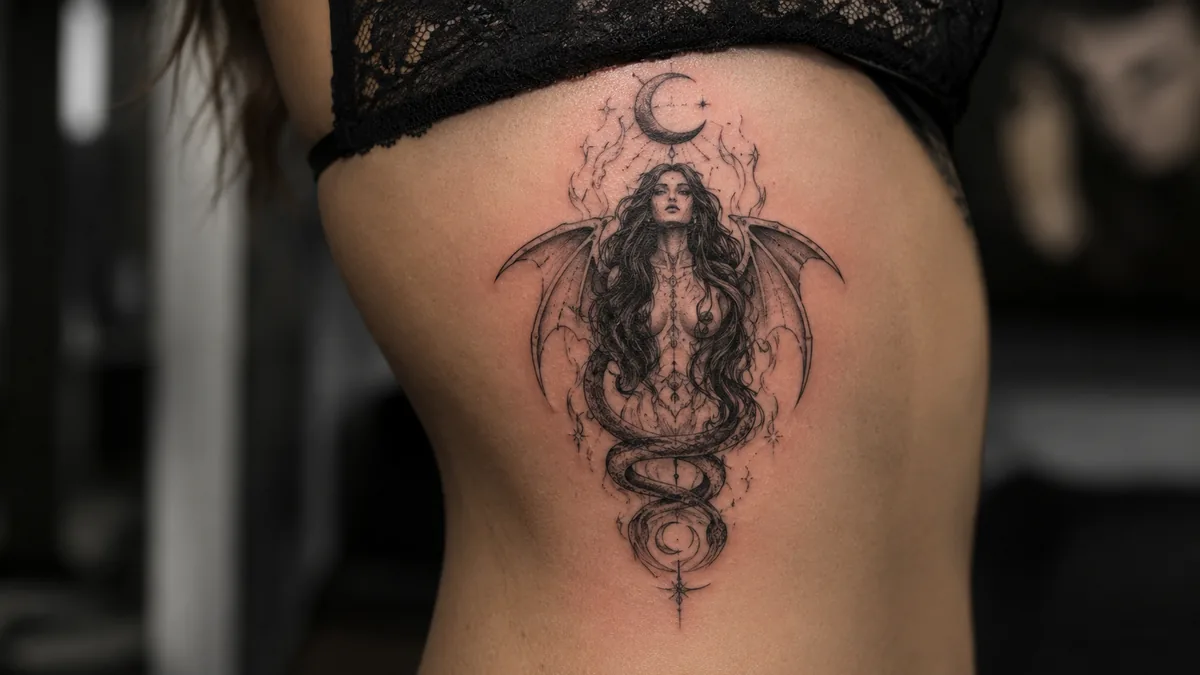
Ribs, sternum, and spine placements are genuinely spicy. Breathing into the needle on a rib piece is its own experience. Ditch the caffeine before your appointment, eat a full meal, and stay hydrated. If you’re getting a detailed black and grey portrait on your ribs, plan for multiple shorter sessions rather than one brutal marathon. Your artist will put in cleaner work if you’re not white-knuckling the table by hour three.
Who Gets This Tattoo and How to Make It Personal
The client profile for a Lilith tattoo skews heavily toward people processing reclaimed identity. Survivors of controlling relationships, people stepping into their own after years of shrinking themselves, and folks with a genuine interest in mythology and occult symbolism all show up for this one. It’s also popular among practitioners of modern witchcraft and those drawn to Jungian shadow work concepts. It’s rarely an impulse piece.
To make it yours rather than a copy of the next person’s, bring something specific to your artist. A particular pose, a cultural reference from the Mesopotamian angle versus the Kabbalistic one, a specific animal companion, an environment that means something. Tell your artist what draws you to her, not just what she looks like. The best Lilith tattoos carry the owner’s story in the composition, not just the subject.









