
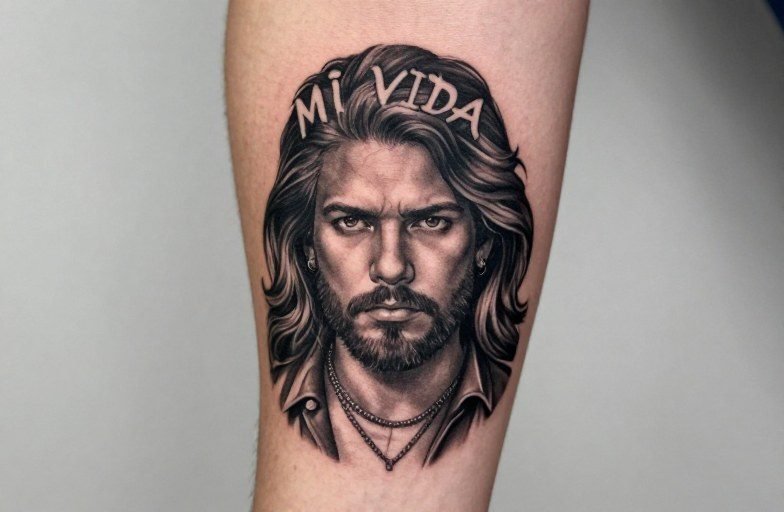
“Mi vida loca” translates to “my crazy life,” and as a tattoo, it signals a life shaped by struggle, street culture, and often the pain of watching friends or family die young. The phrase emerged from Chicano barrio culture, particularly in Southern California and Texas during the late 20th century, and carries weight that casual wearers sometimes underestimate. Three dots placed near the eyes or in a triangular pattern often accompany the words, forming a visual shorthand for the same concept.
Symbolism & Core Meaning
The Three Dots Connection
The three dots tattoo, usually placed between the thumb and index finger or beside the eye, predates and frequently pairs with “mi vida loca” lettering. Each dot represents a word: mi, vida, loca. Together they form a compact declaration of identity. In prison and street contexts, this marking often indicated gang affiliation or a willingness to live dangerously. The placement mattered: face and hand tattoos signaled commitment because they couldn’t be hidden. Someone with “mi vida loca” across the knuckles or beside an eye had crossed a line where normal employment and mainstream acceptance became difficult.
Beyond Gang Association
Not everyone bearing this tattoo has gang ties. For some, particularly those who grew up in affected communities but avoided active membership, the phrase memorializes survival. It acknowledges friends lost to violence, incarceration, or overdose. The tattoo becomes a grave marker carried on living skin. This distinction matters when interpreting what you see on someone else, or when considering the design yourself. Context shapes meaning heavily here.
Color vs Black and Grey
Black and Grey Realism
Traditional Chicano tattooing almost exclusively used black and grey ink, and this remains the dominant approach for “mi vida loca” pieces. The style developed partly from prison constraints where color ink wasn’t available, but evolved into an aesthetic preference. Soft grey wash creates depth in lettering, allowing script to appear raised from the skin or carved into it. Skilled black and grey work ages better than color in many cases, the grey tones fade gradually into softer versions of themselves rather than turning muddy or blotchy. For script-heavy designs like this phrase, readability over decades favors the restrained palette.
Color Accents and Modern Takes
Contemporary artists sometimes incorporate color, deep reds for roses, teardrops, or blood imagery; muted greens for dollar bill backgrounds; brown tones for religious figures like the Virgin of Guadalupe. These additions connect the phrase to broader Chicano tattoo iconography. However, pure color “mi vida loca” lettering without supporting imagery tends to look disconnected from the tradition. If you want color, integrate it through surrounding elements rather than coloring the words themselves. Bright primary colors in the lettering itself often read as costume rather than commitment.
Common Variations & Styles
Lettering Approaches
Script dominates. Old English or “Chicano script”, elaborate, flowing letters with sharp serifs and decorative flourishes, remains the standard. Some artists specialize in “fine line” script that looks almost like handwriting, delicate and personal. Others work in “bold Chicano,” heavy black letters with strong contrast. The phrase might appear as a straight banner, curve with the body, or wrap around another central image. Placement often dictates layout: a forearm piece reads differently than something across the upper back or circling a neck.
- Single line of text, often arched or straight
- Three dots standalone, sometimes with “mi vida loca” added later
- Phrase integrated with payasa faces, clown girls, or religious iconography
- Memorial pieces incorporating names, dates, or RIP elements
- Full sleeves where the phrase anchors a larger narrative scene
Accompanying Imagery
Roses, skulls, praying hands, and female faces with theatrical makeup (payasas) frequently surround the text. Each adds layers: roses for love and death, skulls for mortality, praying hands for guilt or hope of redemption. The clown imagery specifically references the dual nature of barrio life, smiling through pain, performing normalcy while living chaos. These aren’t random decorations; they’re a visual vocabulary developed over generations.
Best Placements
Visibility carries meaning with this tattoo. The face, particularly beside the eye or along the temple, makes the statement impossible to retract. Hands, knuckles, fingers, between thumb and forefinger, similarly broadcast commitment. These placements historically signaled serious involvement; adopting them casually risks being read as appropriation or ignorance.
More neutral placements include the forearm, upper arm, chest, and calf. These allow coverage when needed and don’t automatically trigger assumptions about the wearer’s history. The upper back across the shoulders provides a broad canvas for the phrase with supporting imagery. For those with genuine connection to the culture but no street involvement, these placements allow personal expression without claiming experiences not lived.
Neck placement sits in ambiguous territory, visible, serious, but not as specifically coded as face or hand work. Consider how the tattoo will read at job interviews, with family, in different neighborhoods. This isn’t about respectability politics; it’s about understanding the signals you’re sending.
Who Chooses This Tattoo
Those With Lived Connection
People who grew up in barrios, lost people to street violence, or carry family members in prison sometimes choose this tattoo as honest documentation. The phrase describes their actual experience, not an aesthetic preference. For them, the tattoo often comes after years of consideration, sometimes after leaving active involvement. It marks a period, not a current status.
Outsiders and Appropriation Risks
The design has spread beyond its origins through tattoo culture generally, music, and fashion. Some wearers have no Chicano heritage or street involvement. This generates understandable tension. The tattoo isn’t merely decorative in its original context, it functioned as identification, warning, and memorial. Wearing it without that background can read as tourism in others’ trauma. If you’re drawn to the aesthetic, consider whether the specific phrase serves you better than original imagery from your own background.
Religious & Spiritual Angles
Catholic Iconography
Chicano culture maintains strong Catholic roots, and “mi vida loca” tattoos frequently incorporate religious elements. The Virgin of Guadalupe, crosses, and praying hands appear regularly. These additions complicate the phrase’s meaning, introducing guilt, hope for forgiveness, or protection requested for dangerous living. Some pieces explicitly contrast the sacred and profane: “mi vida loca” above, a rosary below. This tension reflects real experience, not contradiction. Many who lived the life maintained faith simultaneously, however conflicted.
Redemption Narratives
For those who’ve left active street life, the tattoo sometimes functions as a reminder of where they’ve been rather than where they are. Religious imagery can reinforce this: the Virgin watching over, the cross marking a different kind of death and rebirth. The tattoo becomes a scar rather than a uniform. Cover-ups and modifications happen too, adding dates that mark turning points, or surrounding the original phrase with new growth imagery.
Before You Decide
Research your artist thoroughly. This style requires specific expertise, Chicano script isn’t generic lettering, and bad work in this tradition ages particularly poorly. Blown-out lines in fine script become illegible fast; uneven grey wash turns to grey blur. Look for artists with documented experience in this specific style, not just general lettering ability.
Consider timing. Face and hand tattoos should never be first tattoos, most reputable artists won’t do them on the uninitiated. The commitment level this phrase historically represents deserves serious reflection. Sleep on it for months, not days.
Understand that meaning travels with the tattoo. Even if you intend personal significance, others will read their own interpretations. In some contexts, this marking could endanger you; in others, it might open connection. You can’t control reception, only prepare for it. The phrase “mi vida loca” carries weight earned through real suffering, make sure your reasons for wearing it can bear that weight.
Frequently Asked Questions
Can I get a mi vida loca tattoo if I’m not Chicano?
This is complicated. The tattoo carries specific cultural weight rooted in Chicano barrio experience. Some within that community view outside adoption as appropriation, especially without genuine connection. If you’re drawn to the aesthetic, consider working with a Chicano artist and approaching the design with respect, or choosing imagery from your own background instead.
Does the three dots tattoo always mean the same thing as mi vida loca?
The three dots often represent the same three words, but interpretations vary by region and individual. In some contexts it specifically indicates gang affiliation; in others, it’s a more general statement about difficult life circumstances. Placement matters, face and hand dots carry stronger associations than dots hidden elsewhere.
How well does script lettering like this age over time?
Fine line script blurs faster than bolder work. Black and grey generally ages more gracefully than color in this style. Sun exposure accelerates fading, so plan for touch-ups and use sun protection. The best aging happens with slightly heavier initial lines and consistent aftercare during healing.
What should I expect to pay for quality mi vida loca lettering?
Script work from specialists in this style typically runs higher than generic lettering due to the skill required. Small pieces might start around a few hundred dollars, with larger or more elaborate designs increasing from there. Avoid bargain hunting, bad script is permanently legible as bad work.
Related Tattoo Meanings
- Grace Pauline Kelley Face Tattoo Meaning: Ink, Faith, and Controversy
- Jailhouse Tattoo Meanings: Symbolism, Styles, and Placement
- Mob Tattoo Meaning: Symbolism, History What It Actually Represents
- Explore more









