
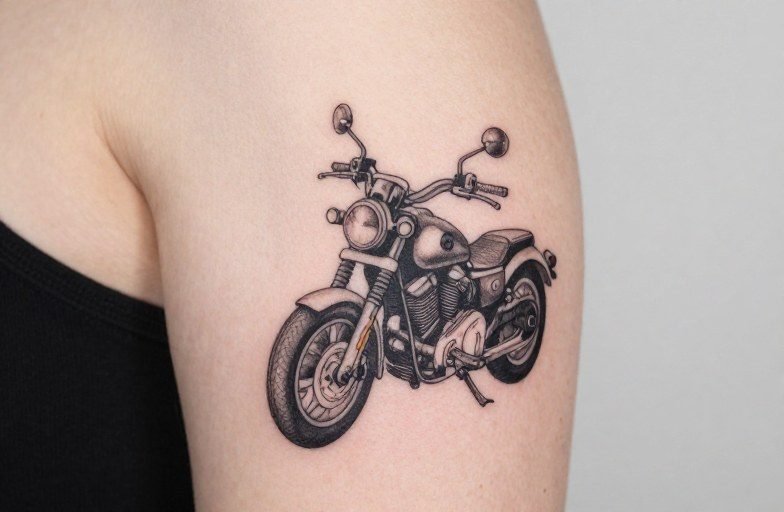
A mob tattoo marks affiliation with organized crime, prison hierarchy, or underground brotherhoods. The imagery functions as coded language: specific symbols denote rank, crimes committed, territory claimed, and loyalty tested through violence. These tattoos carry weight because they’re earned, not chosen from a flash sheet on a whim.
Symbolism & History
The visual vocabulary of mob and prison tattooing developed across decades of incarceration and criminal subculture. Symbols emerged organically, often linked to Russian vor v zakone (thieves-in-law) traditions, Italian-American Mafia culture, and various street organizations. Crossed guns, spider webs, teardrops, and clock faces each accumulated specific, localized meanings that shift between institutions and regions.
The Russian System
Russian prison tattoos operate as perhaps the most codified system. Stars on the knees mean the wearer won’t kneel to authority; on the shoulders, they denote rank and experience. A cat symbolizes a thief. Religious imagery, Madonna and Child, crucifixes, often marks a “thief’s” status within the vor hierarchy, not devotion. These tattoos were traditionally applied with crude tools: melted boot heels for ink, guitar strings for needles, urine as a primitive mixing agent. The technical limitations shaped the aesthetic, bold lines, heavy black, minimal shading, because subtle gradation was impossible.
American Mob and Prison Traditions
Italian-American mob tattoos never achieved the same visual uniformity as Russian systems. Made men often avoided tattoos entirely, preferring discretion. Associates and street-level members sometimes wore Catholic imagery, crosses, saints, praying hands, as cultural markers rather than organizational insignia. Prison environments produced different symbols: three dots in a triangle (mi vida loca, or “my crazy life”), teardrops whose meaning varies wildly by location and era, and gang-specific lettering. The teardrop exemplifies how symbols fragment: in some California prisons, it marks a murder; in Texas, it might signal loss of a loved one or time served.
Common Variations & Styles
Contemporary mob-themed tattoos fall into two categories: authentic criminal insignia and stylistic homage. The latter borrows visual language without claiming earned status, though wearing certain symbols without the background can be dangerous in the wrong context.
- Traditional American/Old School: Bold black outlines, limited color palette, heavy saturation. Ships, daggers, panthers, and pin-up women framed by banners with names or dates. This style ages well because the thick lines hold definition as ink spreads slightly over decades.
- Black and Grey Realism: Portraits of figures like Al Capone, John Gotti, or fictional mob characters (Tony Soprano, Vito Corleone). Requires a specialist; poorly executed realism turns muddy as grey tones blur together. Expect touch-ups every 5-8 years on detailed work.
- Lettering and Script: Family names, organization acronyms, code phrases. Old English and Chicano blackletter dominate. These demand precise line weight; thin scripts feather and become illegible on aging skin, especially on hands and fingers where regeneration is rapid.
- Symbol Clusters: Combining multiple elements, cards, dice, guns, cash, clocks set to significant times. The composition tells a specific narrative to those who can read it.
Line work versus shading matters enormously for longevity. Pure linework tattoos (outlines only) often look washed out after 10-15 years as lines thicken and lose their crisp edge. Strategic black fill and grey shading provide structural support, creating contrast that maintains readability as the tattoo ages. A solid black spider web on an elbow holds up; a web rendered in fine single-needle greywork dissolves into a bruise-like smear.
Best Placements
Placement in mob and prison tattooing was never arbitrary. Visibility signaled status or warning; concealment served practical survival. These traditions inform where contemporary pieces work best.
High-Visibility Locations
Hands, fingers, neck, and face carry the most historical weight. Russian vory wore stars on knees and shoulders specifically so they remained visible even in prison uniforms. Teardrops near the eye announce affiliation to anyone who recognizes the code. These placements commit fully, there’s no hiding for job interviews, family gatherings, or legal proceedings. Finger tattoos, particularly across knuckles, fade fastest due to constant use and rapid skin turnover. Expect significant blurring within 2-4 years; many require annual reinforcement.
Concealable Options
Chest panels, upper arms, back pieces, and thighs allow personal significance without public declaration. A full chest piece in traditional style, crossed guns, roses, a scroll with a name, reads as classic tattooing rather than specific affiliation when glimpsed at a sleeve edge. The chest provides flat, stable skin that ages predictably; the tattoo maintains integrity longer than equivalent work on joints or thin-skinned areas. Upper outer arms offer similar stability with easy coverability.
One practical consideration: mob and prison imagery often involves heavy black. Large saturated areas on lower legs or forearms can cause significant swelling during healing and may require longer recovery before returning to physical work. Plan timing accordingly.
Who Chooses This Tattoo / Personal Meanings
The audience for mob-themed tattoos spans several genuine motivations, none requiring fabricated backstories.
- Family heritage: Descendants of immigrants whose communities intersected with organized crime sometimes memorialize ancestors through period-appropriate imagery. A grandfather’s nickname in vintage script, a neighborhood referenced through old street maps or landmarks.
- Film and media influence: The Godfather, Goodfellas, Scarface, and The Sopranos created visual archetypes that resonate independently of criminal reality. These tattoos function as pop culture homage, similar to Star Wars or band tattoos.
- Survival and resilience narratives: Some wearers with actual incarceration history use the imagery to mark periods survived, not crimes committed. The distinction matters; a prison clock face can represent time served and release, not ongoing affiliation.
- Aesthetic preference: Traditional American tattooing’s boldness appeals visually regardless of subject matter. The mob theme provides narrative content for a style choice driven by how it looks, not what it says.
Critical context: wearing specific symbols without corresponding background carries genuine risk in certain environments. A teardrop, spider web on an elbow, or specific numeric codes can provoke confrontation from those who earned or suffered under those marks. Research thoroughly; don’t treat serious criminal insignia as decorative.
Similar Symbols
Several tattoo traditions overlap visually or conceptually with mob imagery without carrying identical weight.
- Chicano black and grey: Developed in East Los Angeles prisons and barrios, featuring religious figures, payasa (clown) faces, and fine-line realism. Shares technical approach with some mob realism but derives from distinct cultural roots.
- Military insignia: Unit patches, combat records, memorial pieces. Similar function, group identity, experience documentation, but institutionally legitimate rather than criminal.
- Japanese irezumi and yakuza tradition: Full bodysuits with specific rules about coverage and placement. The yakuza’s organizational structure parallels Western mob hierarchy, and both use tattooing to mark membership, though irezumi carries broader cultural significance beyond criminality.
- Outlaw biker imagery: MC (motorcycle club) patches and tattoos follow their own strict protocols about who can wear what. Crossed pistons, club names, 1%er diamonds, these operate similarly to mob symbols in being earned, not purchased.
The convergence point across all these traditions: tattooing as credential. The pain endured, the permanent alteration accepted, the public visibility risked, all demonstrate commitment that words can’t match. That function explains why criminal organizations adopted the practice universally.
Final Thoughts
Mob tattoo meaning sits at an intersection of genuine danger, cultural fascination, and aesthetic tradition. The imagery commands attention because it references real violence and real hierarchy, not imaginary ones. If you’re drawn to these symbols, understand precisely what you’re invoking, whether historical reference, media homage, or something more personal. Choose placement with awareness of how the tattoo will read at 60, not just 30. Prioritize technical execution: heavy black, solid lines, and artists who understand how this specific iconography functions. The difference between a meaningful piece and an embarrassing mistake often comes down to whether the wearer understood the language they were speaking.
Frequently Asked Questions
Can I get a teardrop tattoo without having killed someone?
You can technically get any tattoo, but wearing a teardrop without the corresponding background is risky in environments where the symbol is recognized. Meaning varies by region, sometimes it marks murder, sometimes prison time, sometimes personal loss. Research your specific area’s conventions and consider if you’re prepared for potential confrontation.
Do real mobsters still get tattoos today?
Contemporary organized crime generally favors discretion over visible markings that aid law enforcement identification. Russian prison tattoos remain active within incarceration systems, but modern professional criminals rarely wear obvious insignia. Most mob-themed tattoos today are worn by civilians referencing history or media.
What’s the best style for a mob tattoo that will age well?
Traditional American with bold outlines and heavy black fill ages most predictably. Avoid fine-line realism on hands or fingers; these blur into unrecognizable smears within years. Chest and upper arm placements on flat, stable skin maintain clarity longest. Plan for touch-ups regardless of initial quality.
Are there specific numbers or letters that are dangerous to tattoo?
Yes. Certain numeric codes (14, 88, various area codes used as gang identifiers) and organizational acronyms carry active territorial significance. Wearing these without affiliation can provoke violent response in gang-active areas. Always verify whether specific combinations are claimed by active organizations in your region before committing.
Related Tattoo Meanings
- OTF Tattoo Meaning: Loyalty, Family Street Codes
- Pizza Inside Lip Tattoo Meaning: Symbolism Style Guide
- Please Lip Tattoo Meaning: Symbolism, Styles Placement
- Explore more









