
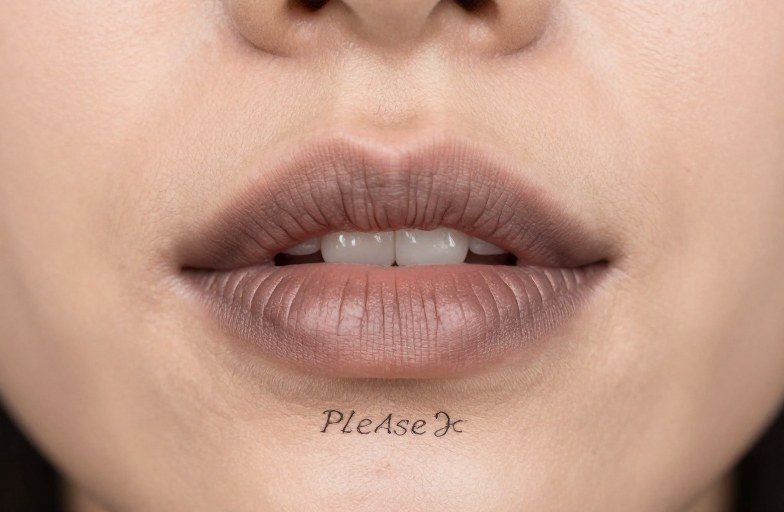
The “please” lip tattoo is a small, often hidden piece of text inked on the inner or outer lip, carrying meanings of vulnerability, desperation, or quiet pleading. It can signal a personal struggle, a moment of surrender, or an inside reference to something the wearer can’t or won’t say aloud. The placement itself is half the message: lips are where words form, so tattooing “please” there creates a tension between spoken and unspoken need.
Symbolism & History
Where the Phrase Connects
“Please” sits at an emotional threshold. It’s the word before a request becomes a beg, before hope becomes need. In tattoo form, that single word compresses a lot of feeling into very little space. Some trace the lip placement trend to early 2000s celebrity culture, when inner-lip ink became a visible rebellion against visible rebellion, tattoos you could hide. The “please” variation emerged later, often linked to people processing grief, addiction recovery, or relationships where they felt unheard.
The symbolism shifts hard depending on context. Paired with nothing else, it’s stark. Paired with a name, date, or small image, it becomes part of a larger sentence the wearer is constructing on their own body. The word itself is polite, which makes its placement on the body, especially the lip, feel almost confrontational. That friction is intentional for most people who choose it.
Religious and Cultural Threads
Christian imagery sometimes connects to the “please” lip tattoo through prayer language, “please, God” as a fragment of desperation. Some wearers with Catholic backgrounds reference the pleading Virgin Mary or the agony in the garden, where Christ asks for the cup to pass. These aren’t universal meanings, but they’re common enough that artists in religious areas recognize the reference. Outside Christian contexts, the word often stands alone as secular vulnerability without needing a spiritual frame.
Common Variations & Styles
Text Treatments That Work
Line weight matters enormously on the lip. The skin there is thin, mobile, and prone to blowout, so most artists stick to bold, simple lettering. Script fonts are popular but risky, fine lines blur faster here than almost anywhere else on the body. Block letters, typewriter-style fonts, or handwritten caps tend to hold better. All-caps “PLEASE” reads as more demanding; lowercase “please” feels more wounded or intimate.
- Inner lip: Hidden, fades faster, more personal. Text usually faces outward so the wearer can read it in a mirror.
- Outer lip (above or below): Visible when talking, eating, kissing. Higher commitment, sharper aging.
- With accompanying imagery: Small roses, broken chains, or tear drops sometimes frame the text, though minimalism dominates this design.
- Matching or paired pieces: Couples or friends sometimes split phrases, “please” on one lip, “stay” on another, or similar constructions.
Color and Aging Reality
Black ink only. Color on the lip is technically possible but heals poorly and disappears into the mucosal tissue’s natural pink. Even black ink on the inner lip typically fades significantly within 2-5 years, sometimes sooner depending on saliva chemistry, oral hygiene products, and how much the person smokes or drinks acidic beverages. Touch-ups are common but never guaranteed to hold. The outer lip ages more like regular skin but with extra movement and sun exposure if not covered.
Best Placements
The inner lip (mucosal surface) is the classic spot for “please” tattoos. It’s concealed, heals quickly in terms of surface closure, and carries that sense of a secret pressed against your teeth. Pain levels are moderate to high, the area is sensitive and the artist needs to stretch the lip firmly. Most people tear up. Swelling is significant for 24-48 hours, making speech temporarily awkward.
Outer lip placements, either on the vermilion border or just above/below it, are less common but more visually striking. They read as more confrontational, less private. The philtrum (center groove above the upper lip) occasionally hosts vertical “please” text, though this is rare and requires an artist experienced with that specific real estate. Lower lip center placements happen but interfere more with daily movement and tend to blur from talking and eating.
Corner-of-mouth placements can work for tiny pieces but risk looking like smeared makeup as they age. The skin there creases deeply with expression, so “please” becomes illegible faster than in more stable locations.
Who Chooses This Tattoo / Personal Meanings
Patterns in Clientele
People drawn to “please” lip tattoos often share certain backgrounds: survivors of suicide attempts or self-harm who want a private reminder of the moment they asked for help; those processing parental relationships where love felt conditional on begging; individuals marking recovery milestones where they finally said “please help me” out loud. It’s also chosen by people in subcultures, punk, emo revival, certain queer communities, where emotional rawness is valued over stoicism.
The tattoo functions as a private signal. Unlike a wrist piece or chest quote, the inner lip “please” is seen only when deliberately shown. That control matters to people who’ve felt exposed in ways they didn’t choose. It’s also popular among people who work in visible professions and can’t have obvious tattoos, though the outer lip version obviously fails that requirement.
What It Doesn’t Mean
There’s no broad cultural appropriation concern with this design, it’s not tied to a specific tradition that requires membership. However, getting it because it “looks edgy” without connecting to the word’s emotional weight tends to produce regret. The placement is uncomfortable enough and the word loaded enough that purely aesthetic motivation rarely sustains satisfaction.
Similar Symbols
People considering “please” often look at related designs before deciding. The word “help” in similar placements carries more direct crisis energy but less nuance. “Sorry” lip tattoos exist but trend toward guilt rather than need. Single-word text pieces on fingers, “pray,” “breathe,” “stay”, offer visibility the lip lacks but sacrifice privacy.
The broken heart as lip or face ink shares emotional territory but is more universally recognizable, less personally specific. Semicolon tattoos (often on wrists) overlap in the mental health awareness space but read as more public statement than private plea. For those wanting the begging aspect specifically, kneeling figures or clasped hands appear in larger pieces but lack the linguistic directness of “please.”
Some artists report clients pairing “please” with later additions, a small dot or line beneath the eye, a word on the collarbone, building a fragmented sentence across the body. The lip becomes the origin point of something that expands over years.
Final Thoughts
The “please” lip tattoo works because it’s small, hidden, and heavy with unspoken context. It ages fast, hurts more than you’d expect, and requires touch-ups to maintain legibility. Those drawbacks are features for most people who choose it, the impermanence mirrors the feeling, the pain is part of the point, and the hiding matches the history of not being able to ask out loud. If you’re drawn to it, sit with the word for a while. Say it in your head, then whisper it, then see if you still want it pressed into your mouth where only you control who sees.
Frequently Asked Questions
How long does a lip tattoo usually last before fading?
Inner lip tattoos typically start fading within 2-5 years, sometimes sooner. Saliva, acidic drinks, and oral care products all accelerate breakdown. Outer lip ink lasts longer but still blurs faster than most body placements due to constant movement.
Is getting a lip tattoo more painful than other spots?
Yes, the lip ranks high on pain scales. The mucosal tissue is sensitive, and the artist must stretch it firmly to create a stable surface. Most people experience significant tearing and swelling that affects speech for a day or two.
Can you get any font style for a lip tattoo?
Bold, simple lettering works best. Script and fine details blur quickly in this location. Most experienced artists will steer you toward block letters, all-caps, or minimal handwritten styles that can tolerate some spreading.
Why do people choose ‘please’ specifically over other words?
The word captures a specific emotional moment, vulnerability, need, the threshold before begging. It resonates with people who’ve struggled to ask for help, survived relationships where they felt unheard, or marked recovery from crisis.
Related Tattoo Meanings
- Love Yourz Tattoo Meaning: J. Cole s Message of Self-Acceptance
- Match Tattoo Meaning: Symbolism, Fire Fragility
- Mayan Tattoos and Meanings: Symbols Carved in Skin
- Explore more









