
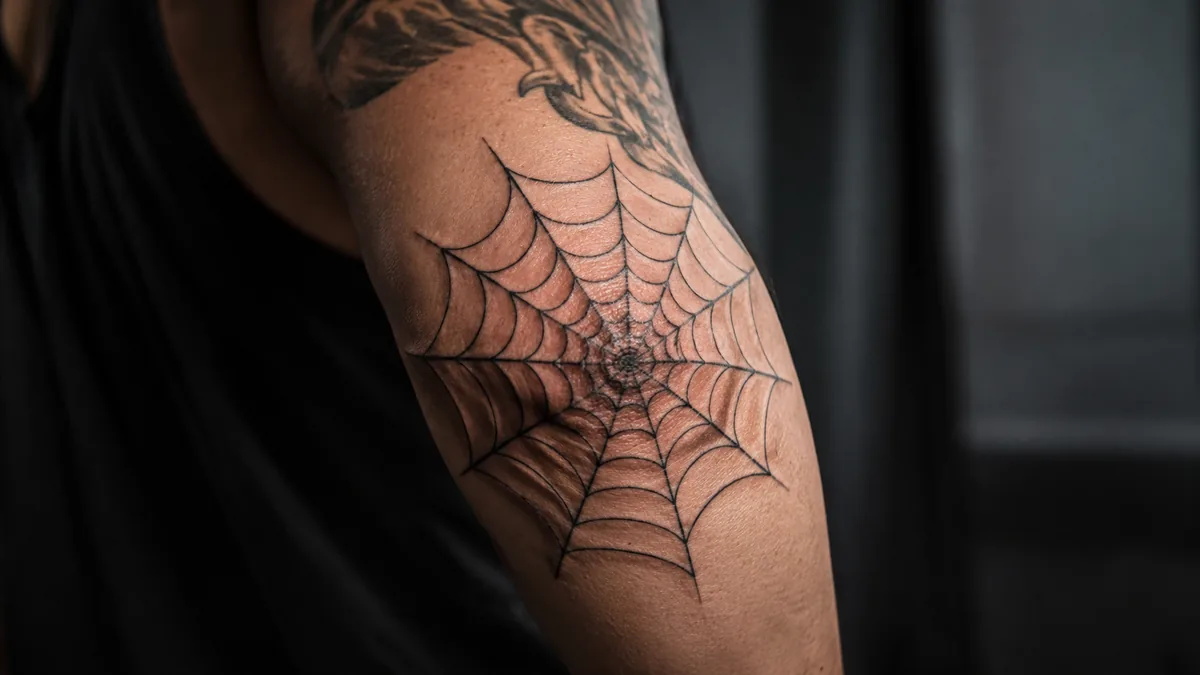
The cobweb tattoo carries more weight than most people expect. It’s not just a Halloween design or a spooky filler piece. This symbol has real history, multiple layers of meaning, and it reads differently depending on where you put it and how you wear it.
a cobweb tattoo represents being trapped, stuck, or caught in something you can’t escape. Time wasted. A period of waiting. Some people wear it as a badge of hard years survived. Others just love the geometry and the dark aesthetic. Either way, you should know what you’re walking into before you sit down.
The Core Meaning: Being Caught in the Web
A spider’s web catches things and holds them. That’s the central idea behind this tattoo. People who get cobweb tattoos are often marking a period where they felt trapped, whether by addiction, a relationship, a system, or their own mind. It’s a symbol of stagnation, of time passing while you’re stuck in place. Not always negative, though. For some, it’s a reminder of what they came through.
The web can also represent fate and entanglement. Life pulls you in directions you didn’t choose, and sometimes you don’t have full control. Some wearers see the cobweb as a meditation on helplessness turned into acceptance. It’s heavy imagery done right when it’s intentional. Come in with a clear reason and the tattoo lands with real weight.
Prison Culture and the Elbow Web
A cobweb says you sat still long enough for life to grow around you.
The elbow cobweb is the most loaded placement in the game. It comes straight out of American prison tattoo culture, where it traditionally meant time served, usually a year for each ring of the web radiating from the elbow. The idea was simple: you sat in a cell, spiders spun webs around you while you waited, and you marked that time on your body.
That origin is real and documented by researchers and tattoo historians. It’s not a myth. Outside prison, the meaning shifted. Plenty of civilians wear elbow cobwebs now as a nod to the aesthetic or as a general symbol of hard times. But be aware, some people will still read that placement as a prison reference. Know your audience and know what you’re putting on your body permanently.
Symbolism Across Subcultures
Beyond prison, cobweb tattoos got picked up hard by punk, goth, and rockabilly subcultures from the 1970s onward. In those scenes, the web became a symbol of outsider identity, darkness, and rejection of mainstream values. It fit right alongside skulls, roses, and black cats. The design worked because it’s graphic, bold, and immediately readable from a distance.
White supremacist groups also adopted the elbow cobweb at one point, which is documented fact and worth knowing. That association is not universal, and the tattoo has been reclaimed by people across every background. Full transparency matters in this work. If someone asks, you should be able to explain your personal meaning clearly. The symbol carries history whether you claim it or not.
Design Variations: Traditional to Fine Line
Traditional cobweb tattoos are bold, with thick clean outlines and solid black fill between the threads. They read from across the room and hold up over decades. This is the style you see in classic American tattooing, often on elbows, shoulders, or knees. The design is simple enough that a skilled artist can knock it out clean in one sitting, but it takes a steady hand to keep those radiating lines crisp and evenly spaced.
Fine line cobwebs are a newer trend. Delicate, close-set lines, sometimes with a single spider, sometimes with dewdrops or florals woven in. They look stunning fresh but require a low-wear placement to age well. High-wear zones like hands and elbows will blur those thin lines fast. Fine line on the ribcage or upper arm holds longer. Ask your artist honestly where the design will survive long-term.
Color vs. Black and Grey
Most cobweb tattoos are done in solid black or black and grey. That’s traditional, and it makes sense visually. The geometry of the web pops hardest in high-contrast black. Grey wash can add dimension and make the threads look three-dimensional, like the web is sitting on top of the skin. Whip shading in the negative space gives it real depth without overcomplicating the design.
Color cobwebs exist too. Purple, deep blue, or blood red can work if the palette fits the rest of your sleeve or your personal style. Some artists add a colored spider at the center, which shifts the focal point and adds narrative. Just make sure the color is saturated enough to hold. Pale or pastel fills in a cobweb will fade and muddy fast, especially in high-wear zones. Go bold or go black.
Best Placements and How It Ages
The elbow is the most iconic placement, but it’s also one of the spiciest spots on the body and notoriously hard to heal. Skin over the elbow flexes constantly and takes a beating daily. Blowout risk is real if your artist doesn’t know the zone. A solid artist who works elbows regularly will stretch the skin properly and pack the ink right. Give it time to heal and stay out of the sun.
Shoulders, knees, and the back of the neck are all strong placements for cobwebs. The shoulder and upper arm age beautifully, hold line work well, and give you room to build out a larger piece. Knees are high-wear and spicy, similar to elbows. The neck and chest carry cobwebs with attitude. Avoid hands and fingers for fine line work. For bold traditional cobwebs, hands can work but expect touch-ups over the years.
Who Gets This Tattoo and How to Make It Personal
Cobweb tattoos attract people who’ve been through something and want to mark it. Former addicts who clawed their way out. People who lost years to grief, bad situations, or time behind bars. Artists and misfits who connect with the dark geometric beauty of it. You don’t need a heavy backstory to wear one, but having a personal meaning makes the tattoo hit harder for you every time you look at it.
To make it personal, think about what you’re adding. A single spider mid-web changes the story. Incorporating a name, a date, or a specific flower caught in the threads adds layers. Some people get a broken web to symbolize escape or freedom, the threads torn open rather than intact. Talk to your artist about those details before the session. A cobweb is simple enough to customize without losing the core readability that makes it work.









