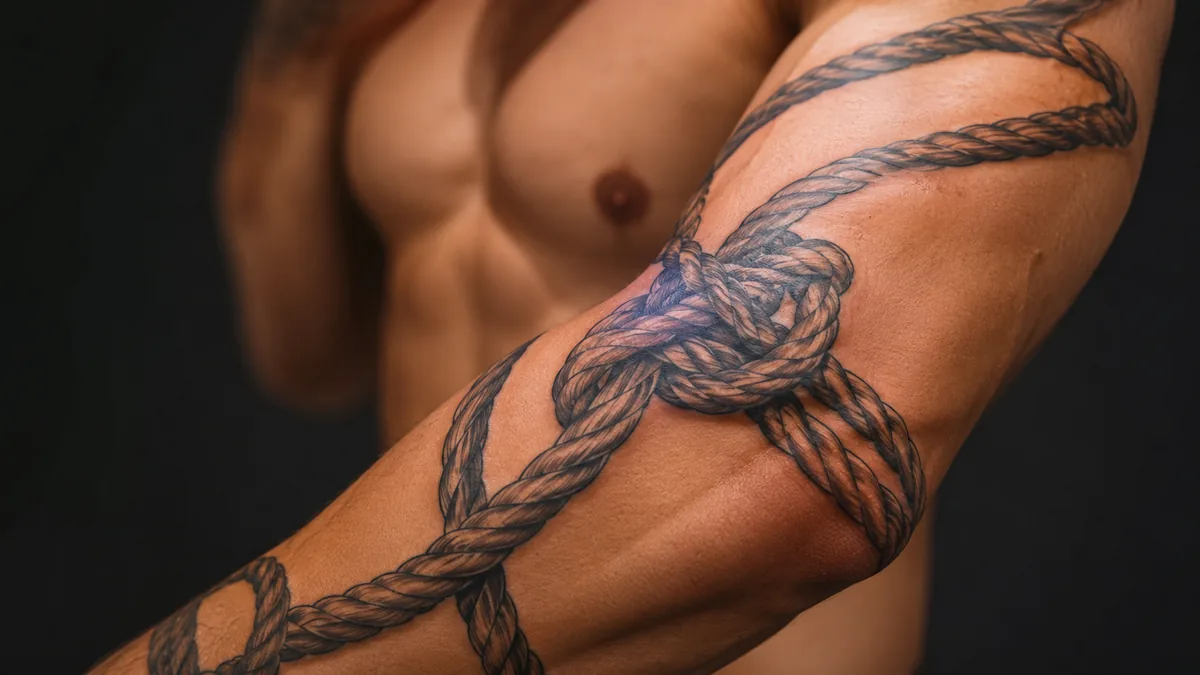
A rope tattoo is one of those designs that looks deceptively simple and hits way deeper than people expect. rope symbolizes connection, strength under tension, and the ability to hold things together when everything else is falling apart.
The meaning shifts depending on context. A single coiled rope reads differently than a noose, a knotted rope, or two ropes braided together. Before you sit in the chair, it pays to know what you’re actually putting on your skin, and why it lands the way it does.
Core Symbolism of the Rope Tattoo
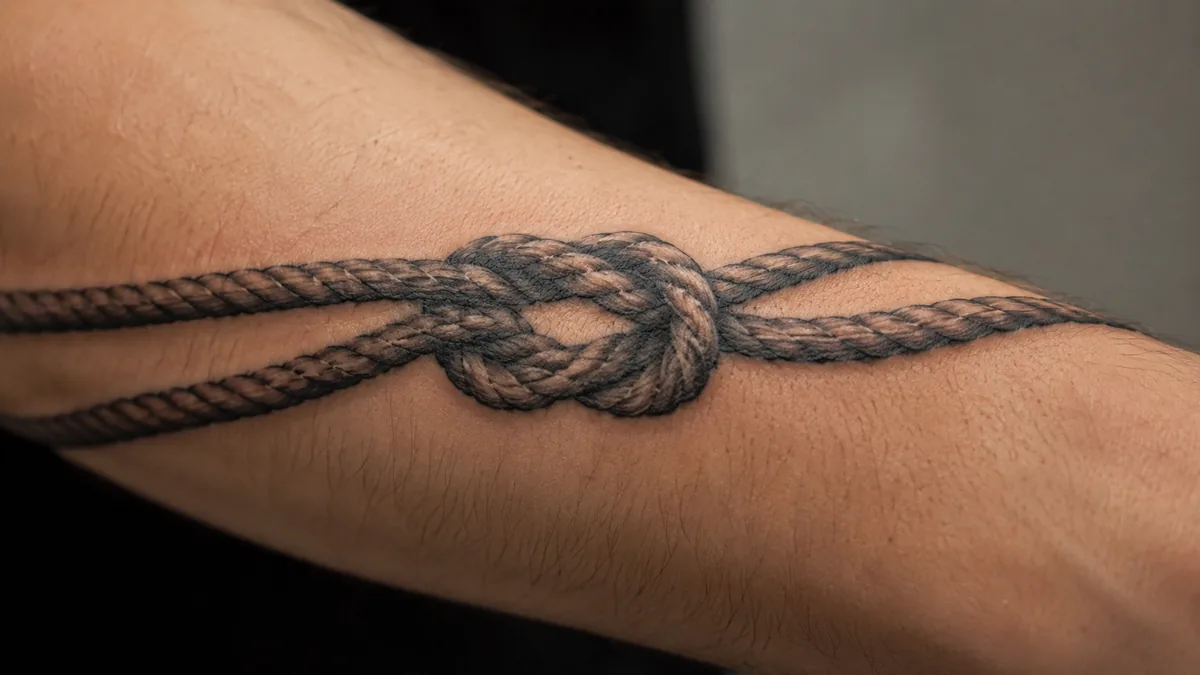
Rope is fundamentally about holding on. It binds things together, it secures, it lifts, it restrains. That tension is exactly what makes it such a loaded symbol. Most people who get a rope tattoo are drawn to the idea of resilience. You stretch under pressure but you don’t snap. That’s the rope’s whole deal.
Beyond resilience, rope also speaks to connection between people, between a person and their past, or between a person and something they refuse to let go of. It can mean commitment, loyalty, or the kind of bond that doesn’t break easy. Some wear it as a reminder that they’re the anchor for the people they love.
The Noose Variation: What It Actually Means
The same rope that ties you down can be the one that pulls you back up.
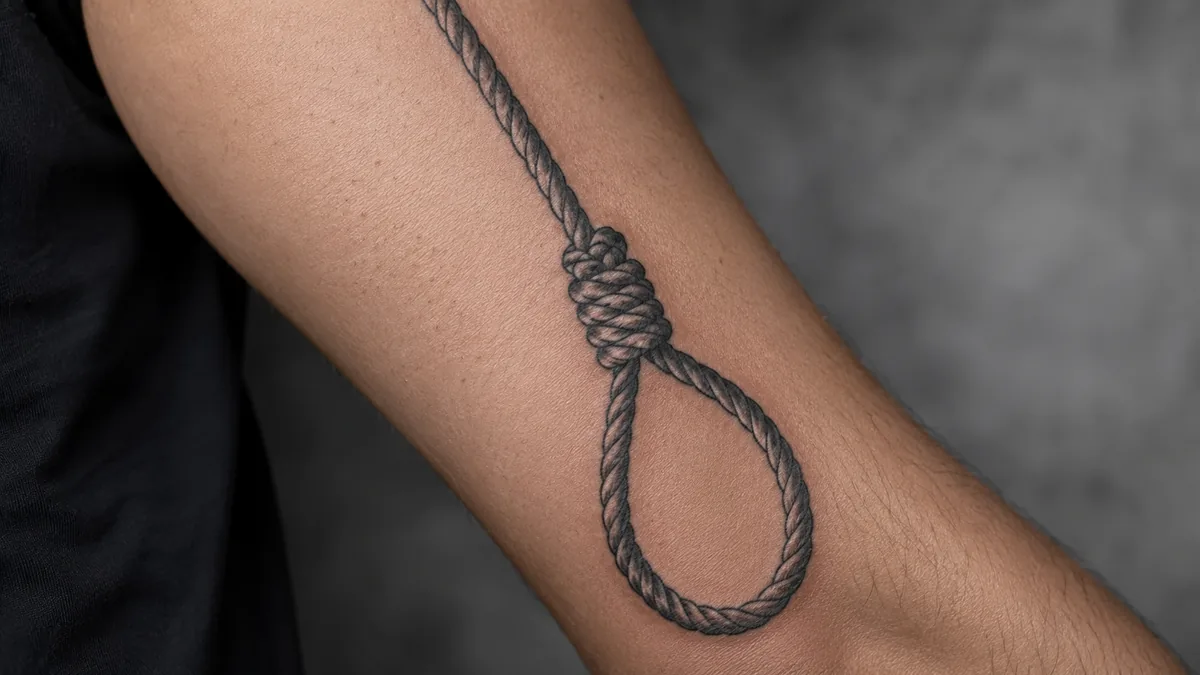
A noose is a specific form of the rope tattoo and it carries heavy, intentional weight. For some wearers it represents surviving a dark period, a near-miss, a chapter they came out the other side of. It’s a raw, unflinching symbol of that edge between life and death, and people who’ve been there sometimes want that documented permanently.
Others use the noose to represent mortality in a broader sense, a memento mori vibe without reaching for a skull. It’s not a design you get by accident. Anyone serious about this placement should think hard about the personal narrative they’re attaching to it, because strangers will have their own read on it, and it won’t always match yours.
Knots and What They Change About the Meaning
The type of knot changes everything. A sailor’s knot or a Celtic knot wrapped into rope form reads as tradition, skill, and permanence. Sailors historically relied on knots as life-or-death tools, and the tattooed knot carried over as a symbol of seamanship, loyalty to crew, and safe return home. That lineage is real and it still resonates.
A lovers’ knot or infinity knot leans into commitment and partnership. A hangman’s knot, as discussed, pulls toward mortality or survival. A simple slipknot can suggest things are held together loosely, by choice or by circumstance. If you’re going with a knot design, make sure your artist knows exactly which knot you want. The details matter and a misdrawn knot will bug you every time you look at it.
Cultural and Historical Background

Rope as a symbol goes back across cultures without much debate. In maritime tradition, rope was essential to every voyage, and tattoos of ropes, anchors, and rigging were common among sailors in the 18th and 19th centuries. The rope bracelet or wrist wrap, in particular, was a sailor’s tattoo that marked time at sea. That nautical heritage is one of the most documented threads in Western tattoo history.
In Japanese tattooing, rope imagery connects directly to shibari, the art of decorative rope binding. Rope tattoos in this context often carry meanings of surrender, trust, and beauty within restraint. In Celtic cultures, knotwork including rope-like patterns represented eternity and the interconnection of all things. These roots are legitimate, and they’re worth knowing if you’re pulling from one of them.
Style Variations and How They Read on Skin
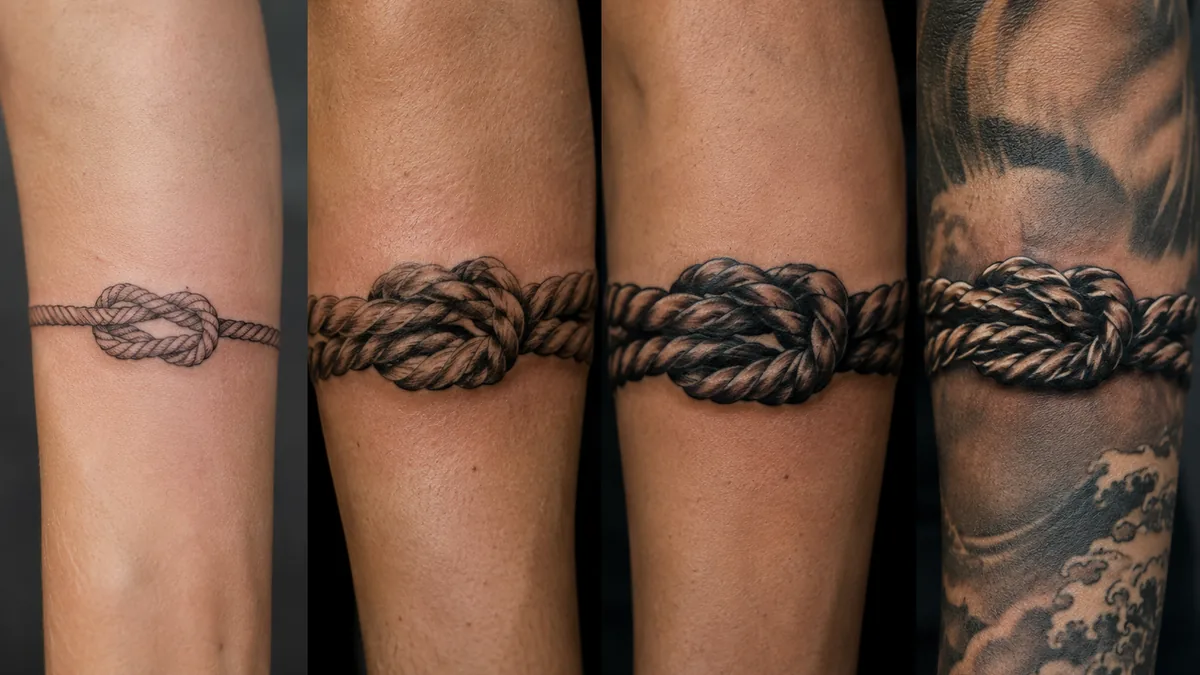
A thick nautical rope rendered in black and grey with strong contrast is a classic approach. The texture of twisted fibers gives your artist real room to show off shading technique, whip shading the shadows between the strands and keeping the highlights crisp. Done right, it reads from across the room and stays bold as it ages. This is a design that rewards a confident hand.
Fine line rope tattoos are having a moment right now. Single needle or fine line work can capture the braided texture with incredible detail, but be honest with yourself about placement. Fine line on a high-wear zone like the wrist or finger will blur fast. If you want that delicate look, put it somewhere protected. A rope wrapped around the forearm in fine line with a bit of negative space can be genuinely striking when it heals clean.
Best Placements and How the Tattoo Ages
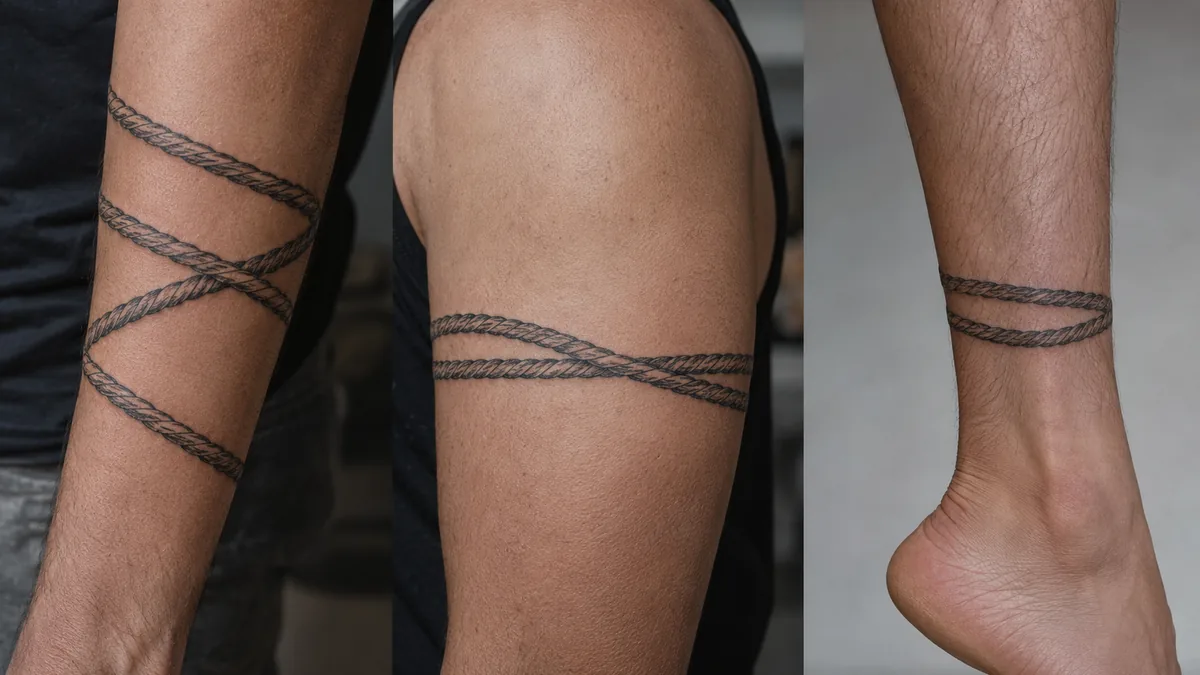
The forearm is the most natural home for a rope tattoo. A coiled rope, a wrapped rope bracelet, or a rope running along the length of the arm all make anatomical sense there. The muscle provides a flat working surface, the placement gets visibility when you want it, and the skin holds ink reasonably well long term. Avoid the inner wrist for anything with fine detail since it’s a high-wear, high-fade zone.
The upper arm and bicep are solid for larger rope designs, especially anything with a knot centerpiece or a coiled loop. The calf works well too, and the skin there tends to age nicely. Ribs and chest can accommodate rope designs that follow the body’s natural lines, but those spots are spicy and require a sitter. Wherever you go, bold line weights and strong contrast will hold up better over the years than overly delicate work.
Who Gets Rope Tattoos and How to Make It Yours
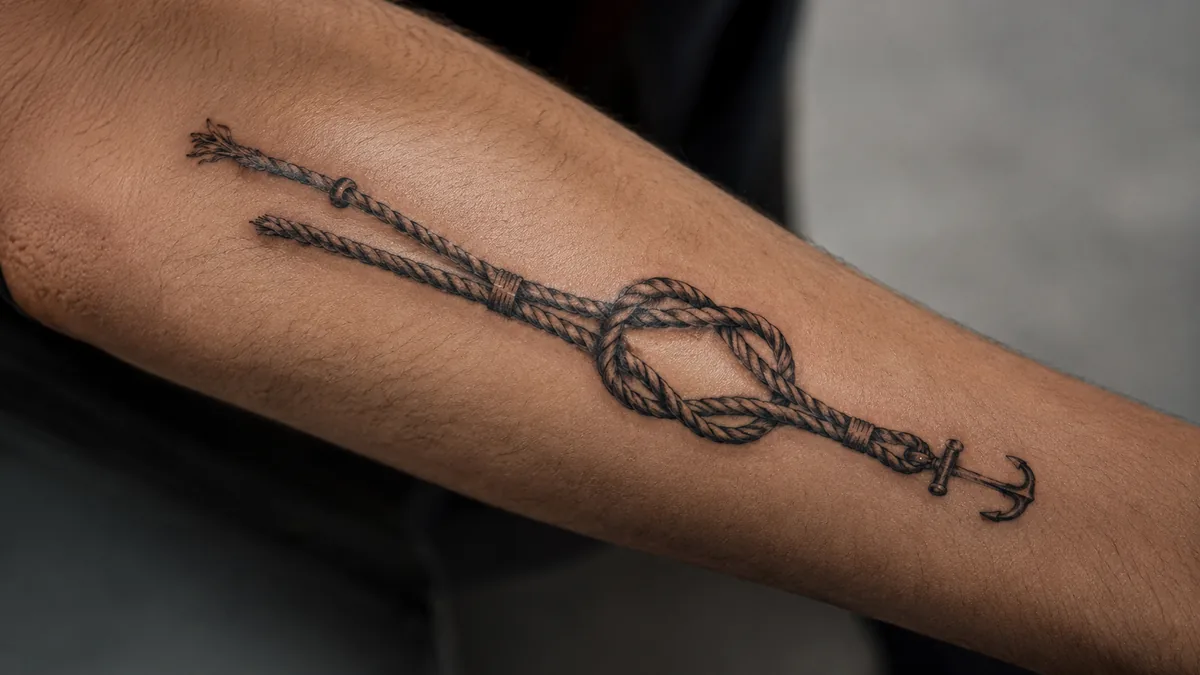
Rope tattoos draw a wide crowd. Sailors, military, people who work with their hands, rock climbers, and anyone who’s gone through something that tested how much they could hold before breaking. The symbol is practical and honest, which is part of the appeal. It doesn’t need to be dressed up with wings or flowers to mean something, though those additions are definitely on the table if that’s your direction.
To personalize it, think about what the rope is doing. Is it tied around something meaningful, a date, a name, a compass? Is it fraying at one end to show you almost didn’t make it? Is it braided with another rope to represent a specific relationship? Those narrative details are what separate a generic rope tattoo from something that’s actually yours. Talk through the concept with your artist. A good one will help you build a composition that holds up as a complete piece, not just a sketch of a rope dropped on your arm.