
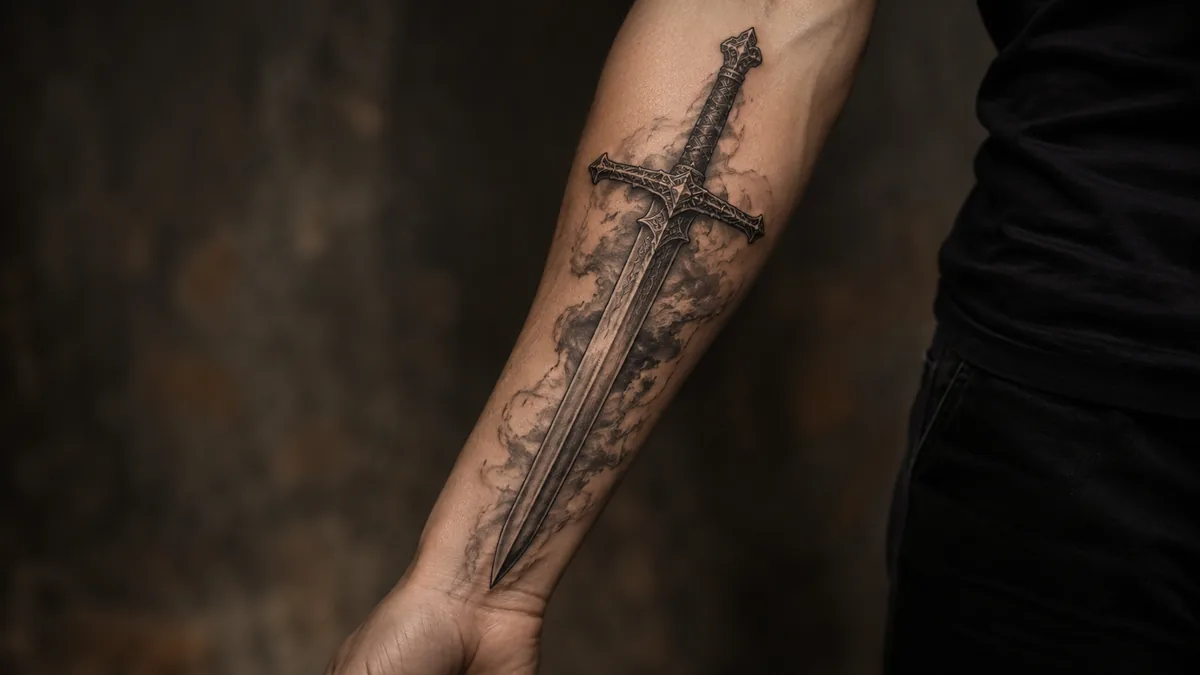
The sword is one of the oldest tattoo symbols out there, and it still hits hard. At its core it stands for strength, courage, and the willingness to fight for something. Whether you want a sleek Japanese katana or a medieval longsword dripping in detail, the meaning runs deep and holds up.
People pick sword tattoos for a ton of different reasons. Some want a reminder that they can cut through hard times. Some are honoring a warrior ancestor or a military background. And some just love the shape. The sword is a visually dominant piece that reads well at any size, and that matters as much as the symbolism when you’re thinking about a forever piece.
Core Symbolism: What a Sword Tattoo Really Means
The sword means power, protection, justice, and sacrifice. That combo is why it shows up across every culture that ever put blade to stone or ink to skin. A drawn sword signals readiness, courage under pressure, the decision to act. A sheathed sword signals restraint and wisdom. Same image, totally different message depending on context.
Duality is baked into the design. The double-edged sword is the classic symbol of choices that cut both ways, of truth that can wound as easily as it defends. Add a flame and you push it toward purification. Add a serpent and it tilts toward temptation or healing. The sword alone carries weight, but what surrounds it shapes the story completely.
Historical and Cultural Roots Worth Knowing
The sword does not ask for permission, neither does the person who wears it.
The sword has real symbolic weight across dozens of cultures. In Western tradition it shows up on tarot cards as the suit of intellect and conflict. In Christianity, the archangel Michael carries a sword of divine justice. In Japanese tradition, the katana represents the soul of the samurai, a code of honor called Bushido, not just a weapon. The Norse cultures tied swords directly to the gods, Odin especially.
Celtic warriors were buried with their swords because the blade was considered an extension of the warrior’s spirit. The Excalibur legend tied swords to rightful authority and destiny. These are documented, centuries-deep associations that give your piece a foundation beyond aesthetics. Know which tradition you’re pulling from, and your tattoo carries that lineage.
Popular Design Variations and What They Say
A straight symmetrical sword reads classic and authoritative, clean lines, solid shape, reads from across the room with zero effort. Wrap a snake around it and you have an ancient symbol of transformation or danger depending on how the snake is posed. Surround it with roses and you’re speaking to the balance of beauty and pain, love and loss. A broken sword shifts the meaning toward defeat or sacrifice, sometimes honoring someone lost.
Flaming swords pull from biblical imagery and feel powerful and final. Swords paired with skulls lean into mortality and the acceptance of death as part of life. Crossed swords can signal conflict, military heritage, or brotherhood. Each combo is its own vocabulary. Sketch these out with your artist before settling, because the composition determines the read.
Styles: Black and Grey vs Color, Fine Line vs Bold
Black and grey is the strongest choice for a sword tattoo long-term. The blade reflects light naturally, and a skilled artist can use whip shading to suggest that metallic gleam without color. It heals clean, ages gracefully, and stays legible for decades. Bold traditional outlines lock the shape in, so even as the skin changes the piece holds structure. That is the technical argument for bold will hold.
Fine line sword tattoos look stunning fresh. Crispy linework on a thin blade with micro-detail on the hilt is genuinely impressive art. The honest caveat is that fine line in soft tissue areas or high-wear zones fades and spreads faster. If you’re going fine line, placement matters even more. Keep it on low-stretch skin and commit to touch-ups. Color can work, especially saturated jewel tones on the hilt gems, but the blade itself usually benefits from a metallic grey treatment over flat color.
Placement: Where It Looks Best and How It Ages
The sword is a naturally vertical image, which makes it a near-perfect fit for the forearm, shin, ribcage, spine, and thigh. The forearm is the most popular for good reason: it is a long flat canvas, relatively low on the pain scale, and the piece stays visible without effort. A sword running along the spine is dramatic and anatomically perfect, but that placement is spicy, no other way to say it.
Hands and fingers are high-wear zones with serious blowout risk, especially on detailed hilts. The ribs heal a little rough for fine line but take black and grey beautifully. The thigh is underrated for a larger sword piece with surrounding elements like florals or banners. Avoid placing highly detailed swords in areas that flex heavily like the inner elbow or back of the knee. The design will distort and lose definition faster than you want.
Who Gets Sword Tattoos and How to Make Yours Personal
Military veterans get sword tattoos regularly, especially paired with branch insignia or specific regimental imagery. Martial arts practitioners, fencing athletes, and history buffs gravitate toward culturally specific blades like the katana, the gladius, or the claymore. People coming out of hard periods in their life, illness, grief, addiction, pick the sword as a marker of having fought through something real.
The way to make a sword tattoo genuinely yours is specificity. Ask yourself what blade, from what culture, in what condition, surrounded by what. A Roman gladius with laurel leaves says one thing. A chipped katana with cherry blossoms says another. Your name or a date worked into the hilt makes it unmistakably personal. Skip the generic clip-art blade and build something with your artist that only makes sense for your story.









