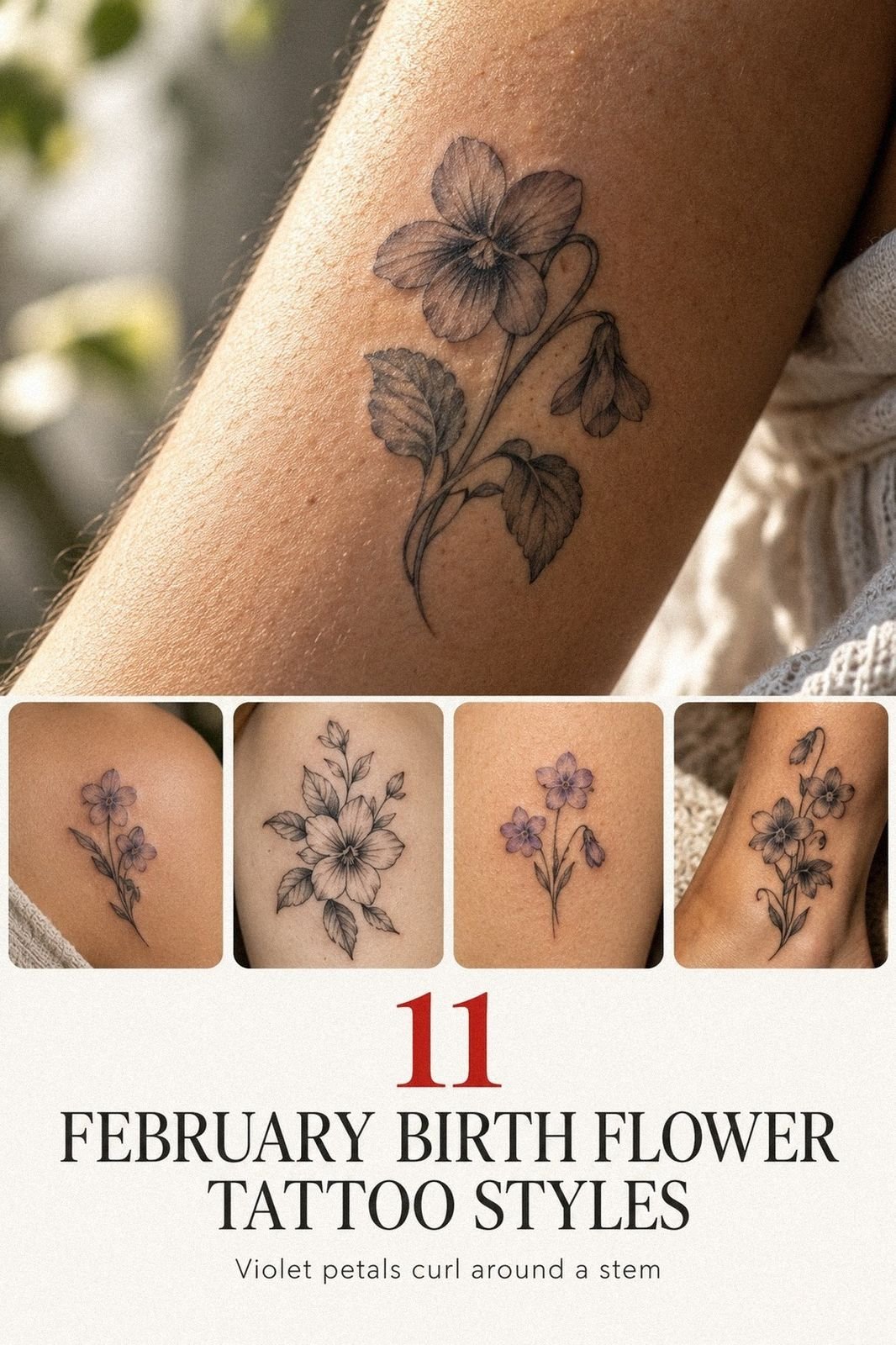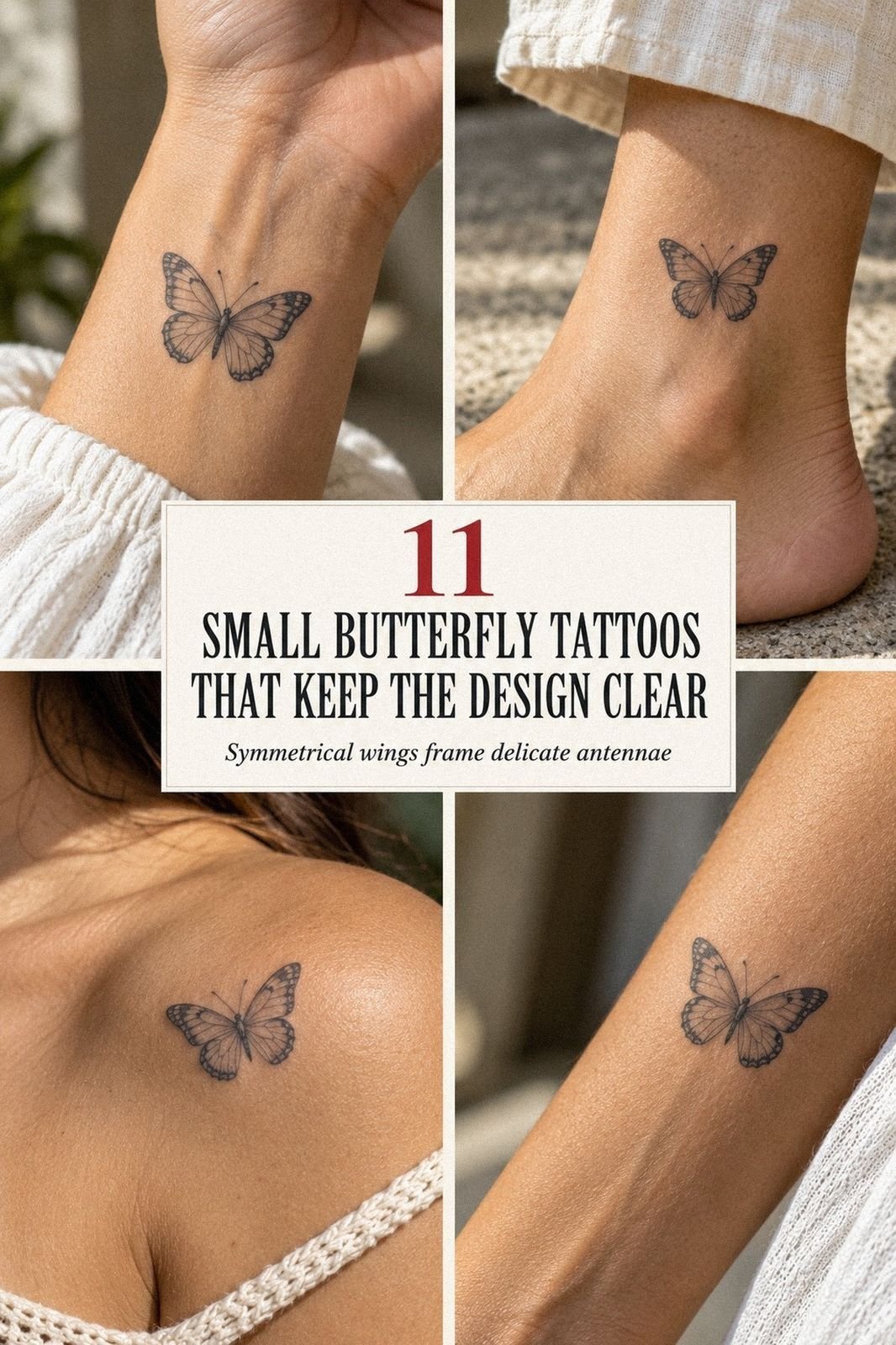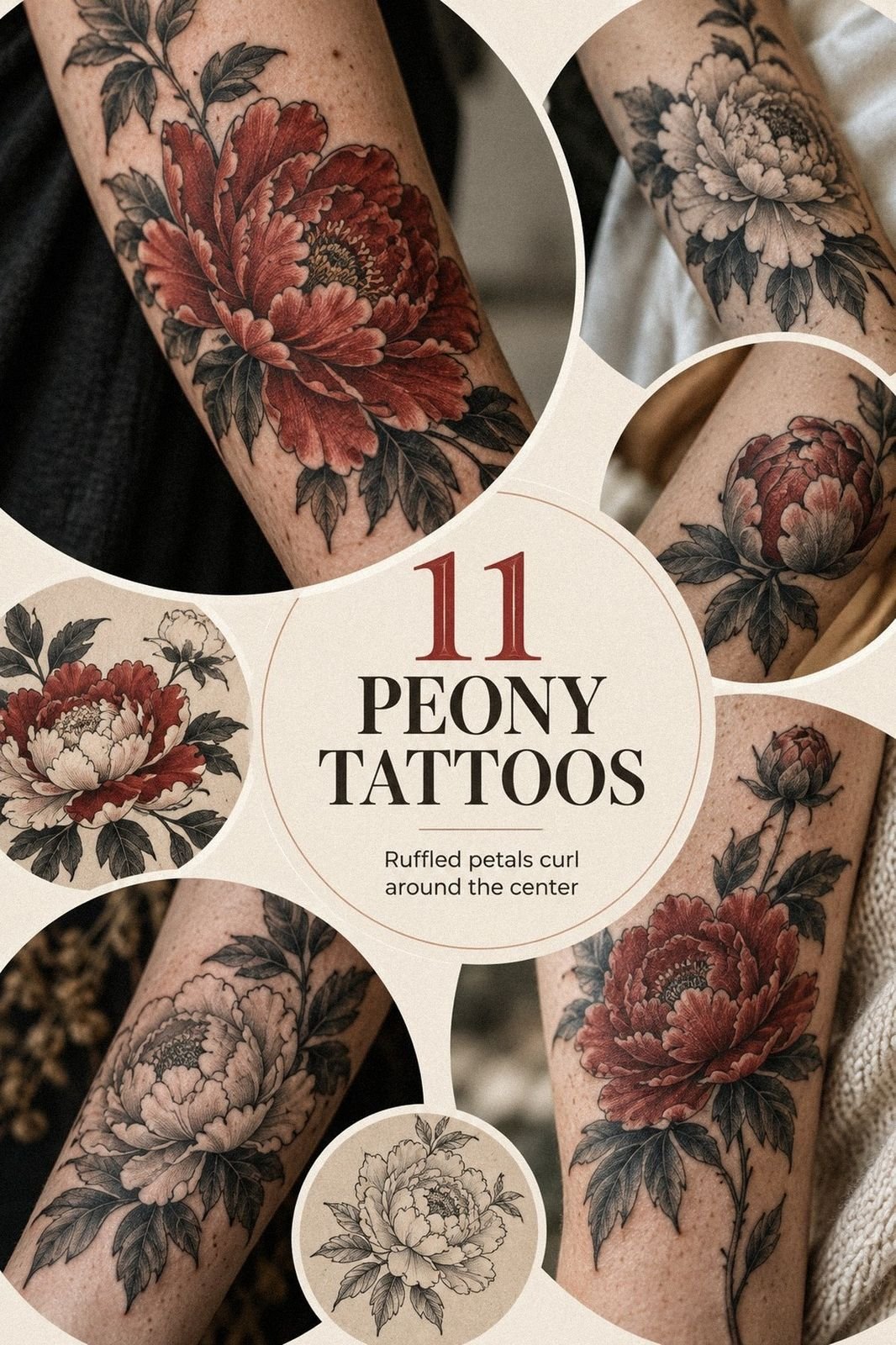
Nature tattoos heal clean and age well when you keep the linework simple, give the design enough open skin, and place it on body parts that don’t get chewed up fast. I talk first-timers out of tiny overworked leaves all the time because the idea is sweet, but the size is wrong. Fine line isn’t the problem. Bad scale is. If you want ink that still looks crisp in a few years, here’s the order I’d use.
Before You Start: The Two-Inch Rule
Before you book anything, give your design a minimum size target. For most fine line nature tattoos, I want at least 2 to 3 inches of height or length so you and your artist can keep one clean pull instead of ten fuzzy ones. If you squeeze pine needles, moth wings, or fern ribs under that, you’re asking for soup later.
Here are the numbers I use when clients ask what holds up, what hurts, what usually costs what in the US, and what is actually worth it for the money.
And if you are tempted by pale pigment, read these notes on white ink tattoos before you commit. Black is still your best friend for longevity.
- Start With A Fine Line Nature Symbol
- Pick A Woodsy Tattoo With Pine Needles
- Place Wildflower Ink Along Forearm Skin
- Keep Mountain Linework Clean And Sharp
- Plan A Meaningful Fern Tattoo Placement
- Choose A Whimsical Mushroom Tattoo Design
- Start With Tiny Leaves Behind The Ear
- Pick A River Tattoo With Soft Curves
- Place A Moonlit Moth Near Collarbone
- Keep Animal Tracks Small And Readable
- Plan A Botanical Sleeve With Native Plants
- Choose Black Ink For Forest Silhouettes
- Start With A Minimal Sunflower Tattoo
- Pick A Nature Tattoo With Personal Symbolism
- Place Delicate Vine Ink Around The Wrist
- Plan Healed Nature Tattoos Before Adding Color
1Start With A Fine Line Nature Symbol
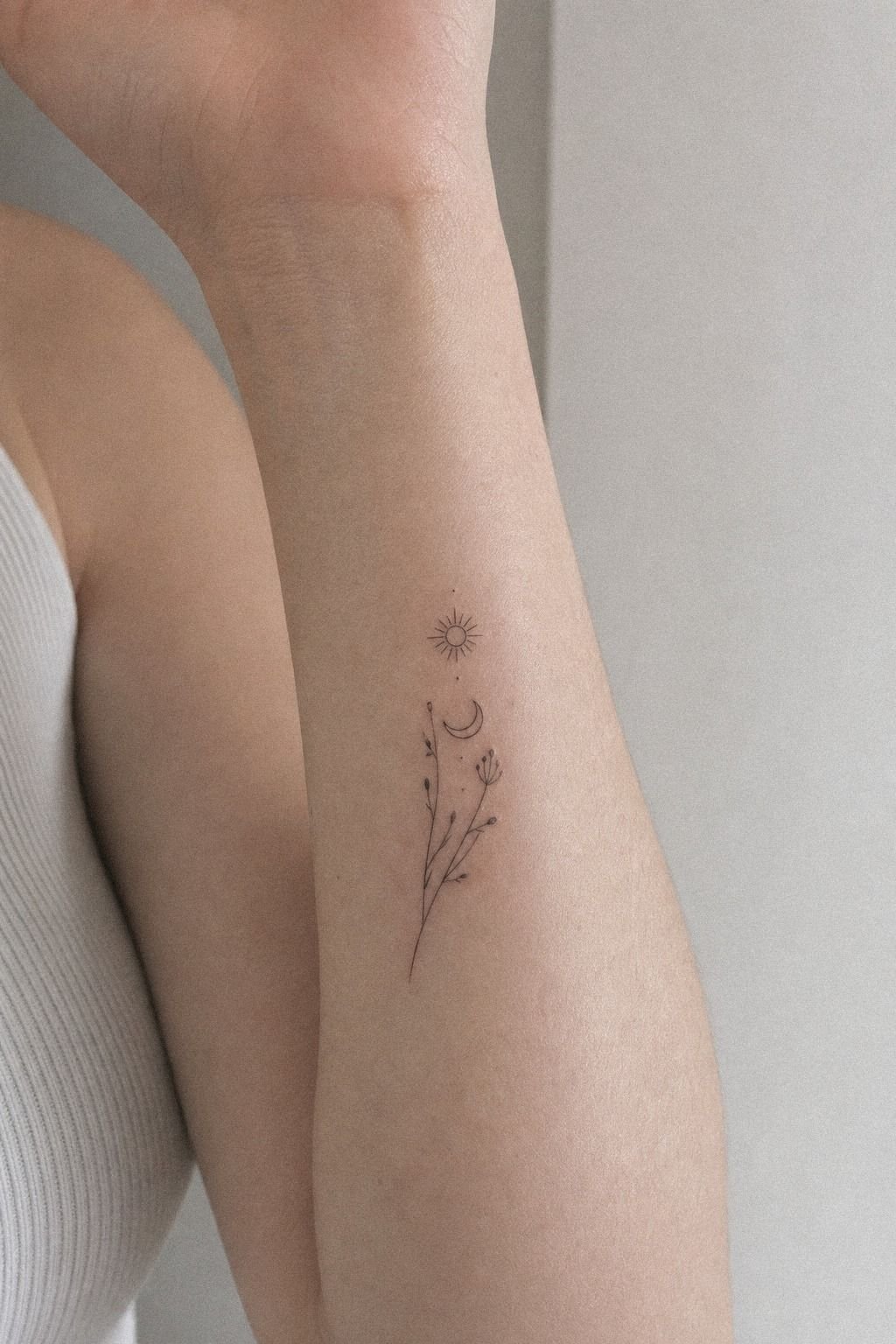
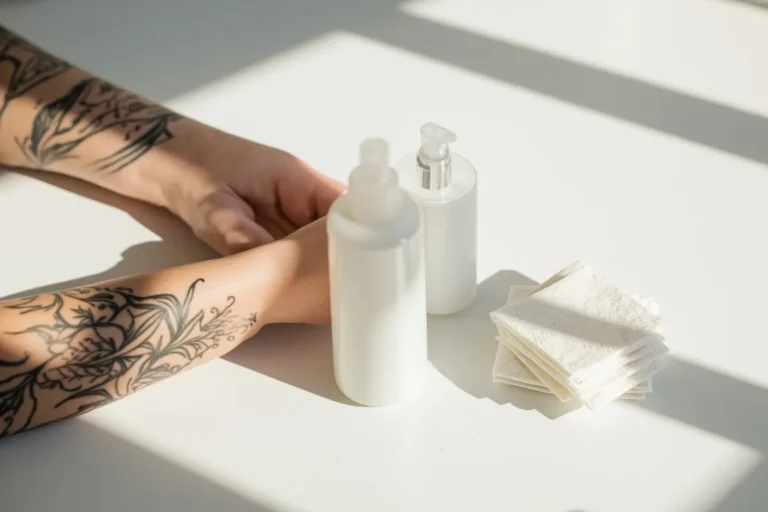
Pick one symbol before you pick style extras. A tiny fern tip, a crescent moon over a ridge, or a single leaf vein gives you something clean enough for a wrist and clear enough to heal nice on fair cool-pink skin. When I stencil a first tattoo on the wrist, I want you to see the shape in one blink, not hunt for details.
Use the wrist photo logic here. Keep the symbol narrow, keep at least a few millimeters of open skin around it, and let your artist run it with a 3RL liner or Cheyenne Capillary cartridge if that is their usual setup.
But do not chase micro-detail just because Pinterest zooms in hard. If you want more moving parts, bump it up the forearm and read why tattoos blur over time first. That move usually costs a little more, but it is worth it because the design gets room to breathe and heal clean.
2Pick A Woodsy Tattoo With Pine Needles
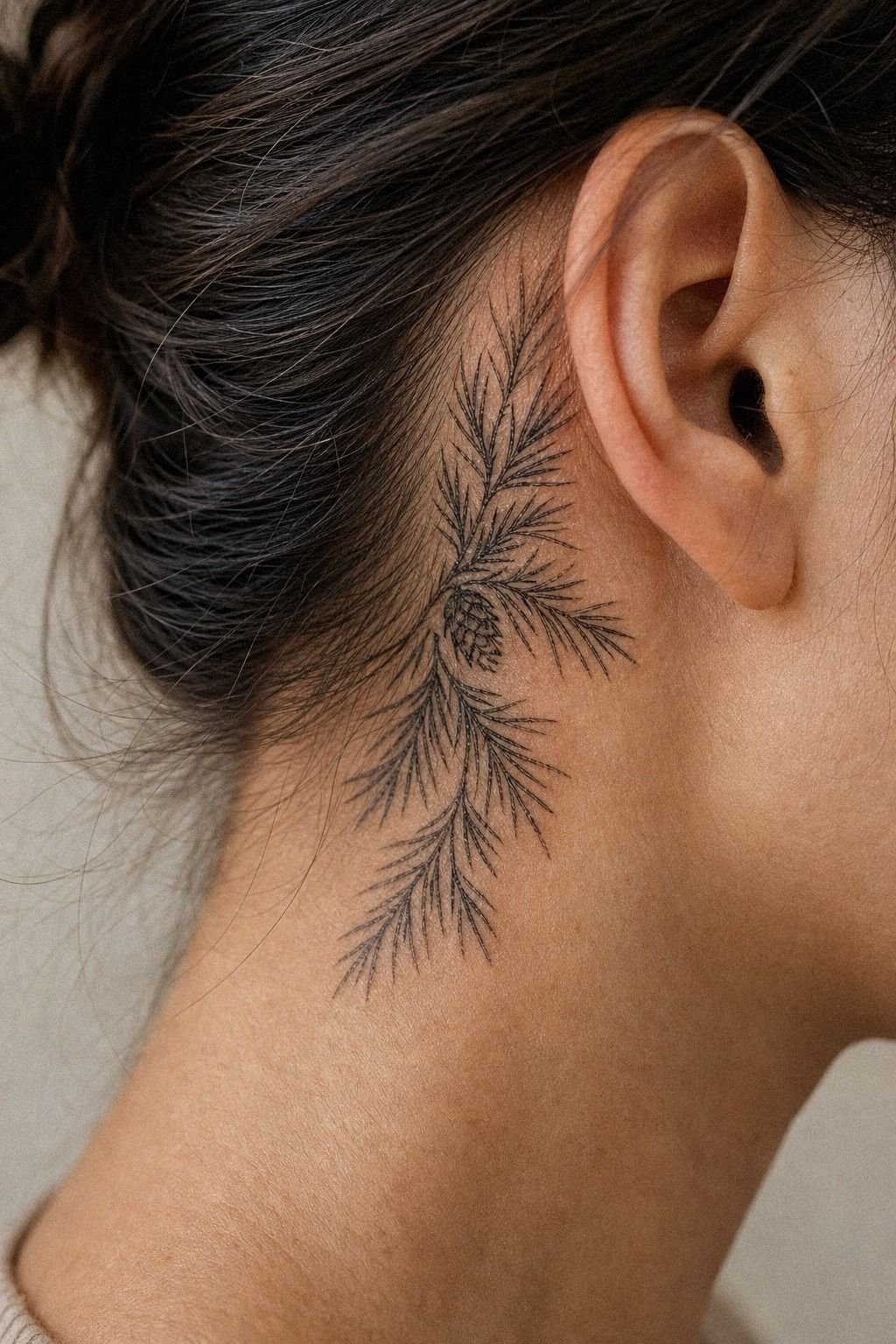
Pine needles look best when the artist edits them down. Behind the ear is tiny, warm, and high movement, so your woodsy tattoo needs a main stem, a few needle clusters, and done. If every needle gets doubled up, the whole thing heals muddy on medium warm ivory skin.
I like this placement for clients who want something private but not hidden. You can tuck it into the hairline, follow the angle of the ear, and keep the blackwork airy with Panthera Liner or another solid black that won’t heal gray and weak.
And yes, behind the ear is a little spicy! If you’re nervous about pain, compare it with calmer options in where tattoos hurt less.
If pale pigment tempts you there, read white ink tattoos first.
3Place Wildflower Ink Along Forearm Skin
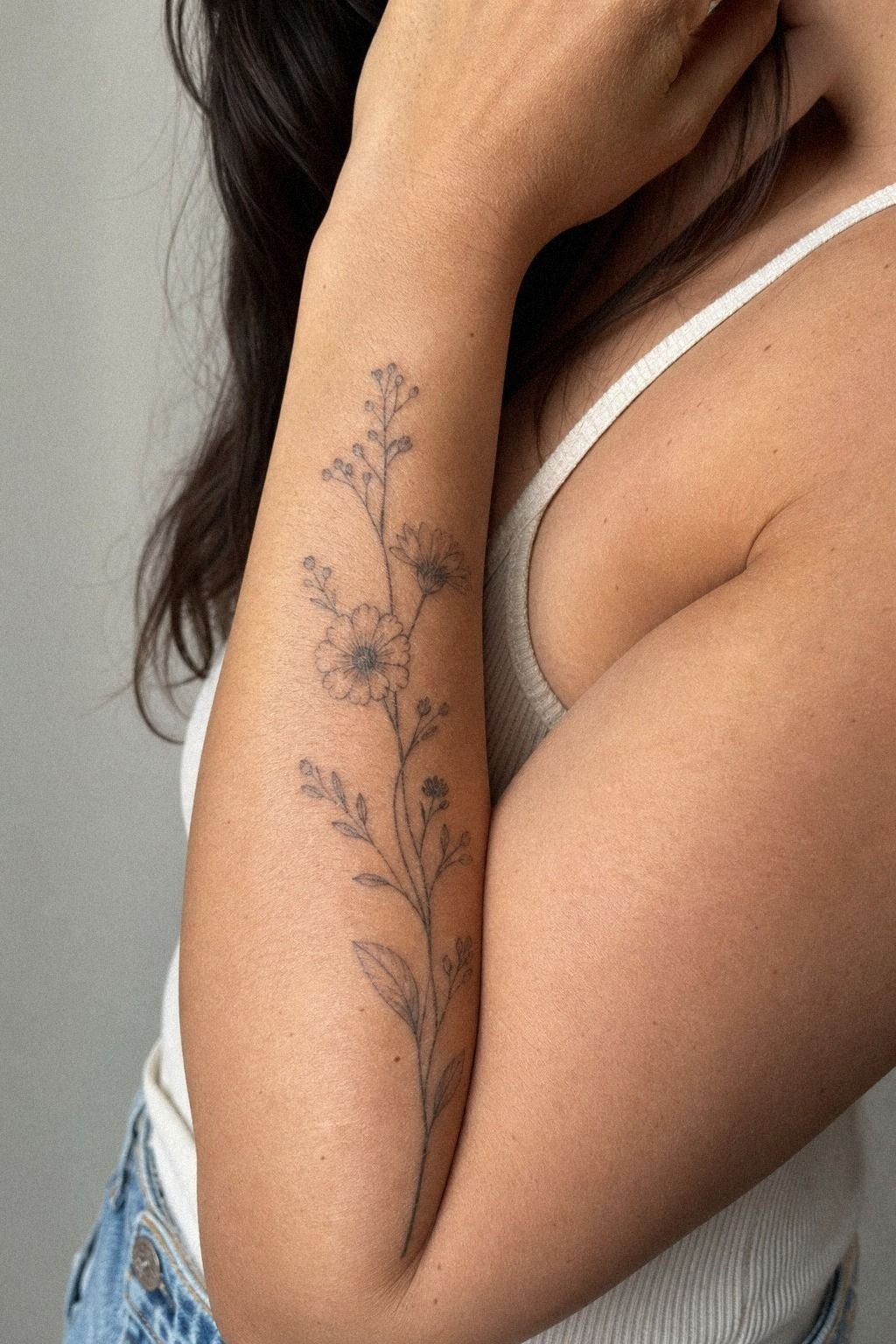
A wildflower tattoo needs stem length. That’s why the forearm wins. On medium olive skin, healed botanical linework looks soft and real there because the placement gives you a straight runway for daisies, lavender, or poppy stems without crowding the petals.
I tell clients to stop thinking flower first and start thinking flow first. Your forearm gives the design a direction, which is what keeps it from looking stuck on.
Use a 2.5 to 4 inch composition, let the bloom sizes stagger, and keep petal overlap light so each flower ages cute on you. For contrast lessons, old-school flash still teaches a lot, and traditional tattoos females guide shows why simplified shapes hold.
If you are weighing longevity, this placement usually heals prettier than fussier spots.
4Keep Mountain Linework Clean And Sharp
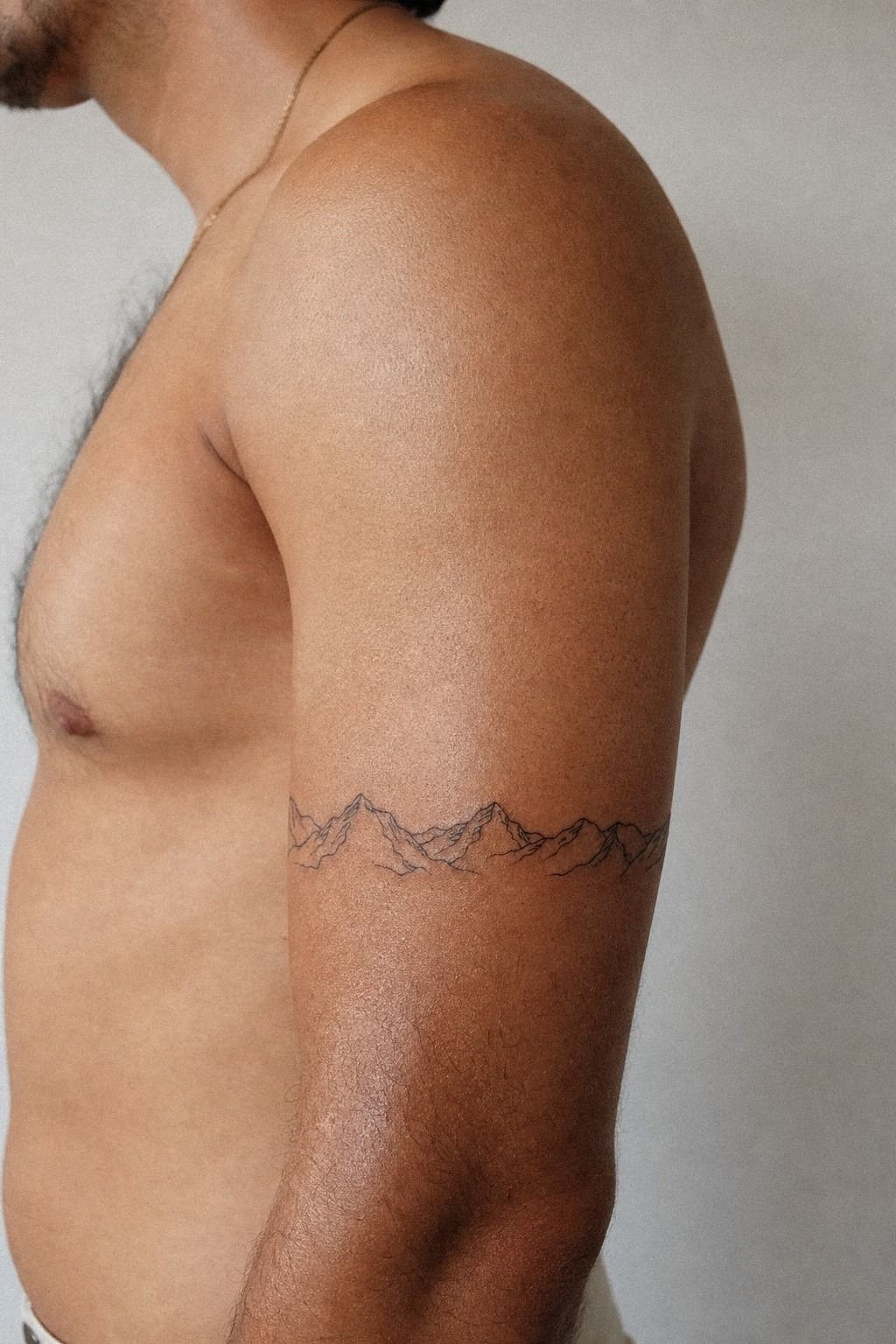
Mountain tattoos go bad when every peak gets fussed over. On an upper arm wrap, you want one horizon line, one secondary ridge, and maybe a moon or treeline if the skin still has margin. Golden tan skin can make soft gray lines disappear, so I push for a crisp black outline first.
This is where I use what I call the ridge-read test. If you step back a few feet and the mountain shape disappears, it needs fewer lines and stronger contrast.
Your artist may use a 5RL for the outer pass and a light grey wash for depth, but the outline has to stay confident. But skip snow texture, tiny cabins, and dotwork fog unless you are going much bigger than 4 inches.
For shape discipline, traditional ship flash tattoos is useful homework. It is a simple, rugged move, and that simplicity lasts.
5Plan A Meaningful Fern Tattoo Placement
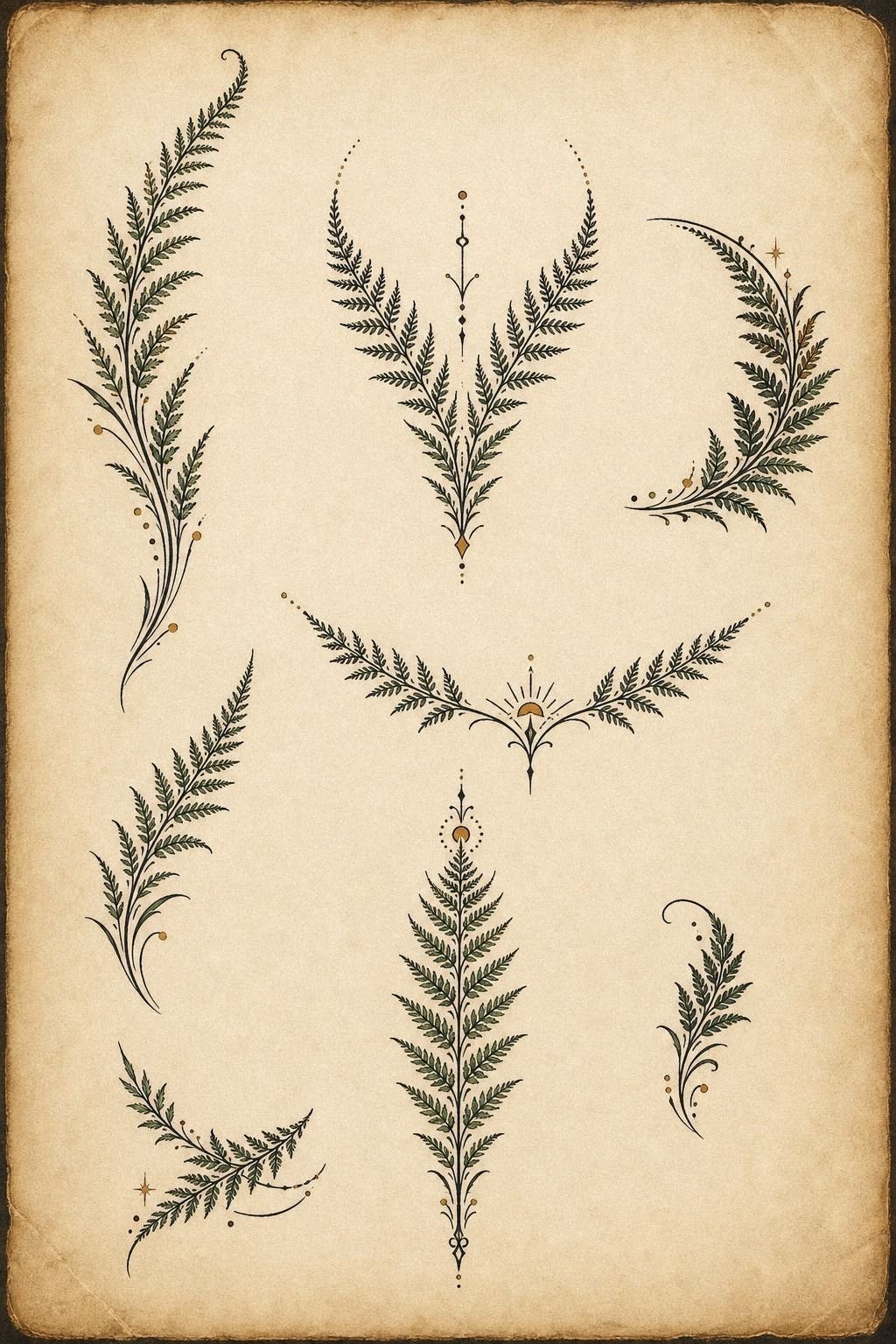
Fern tattoos carry meaning for a lot of people: resilience, new seasons, family roots, starting over.
6Choose A Whimsical Mushroom Tattoo Design
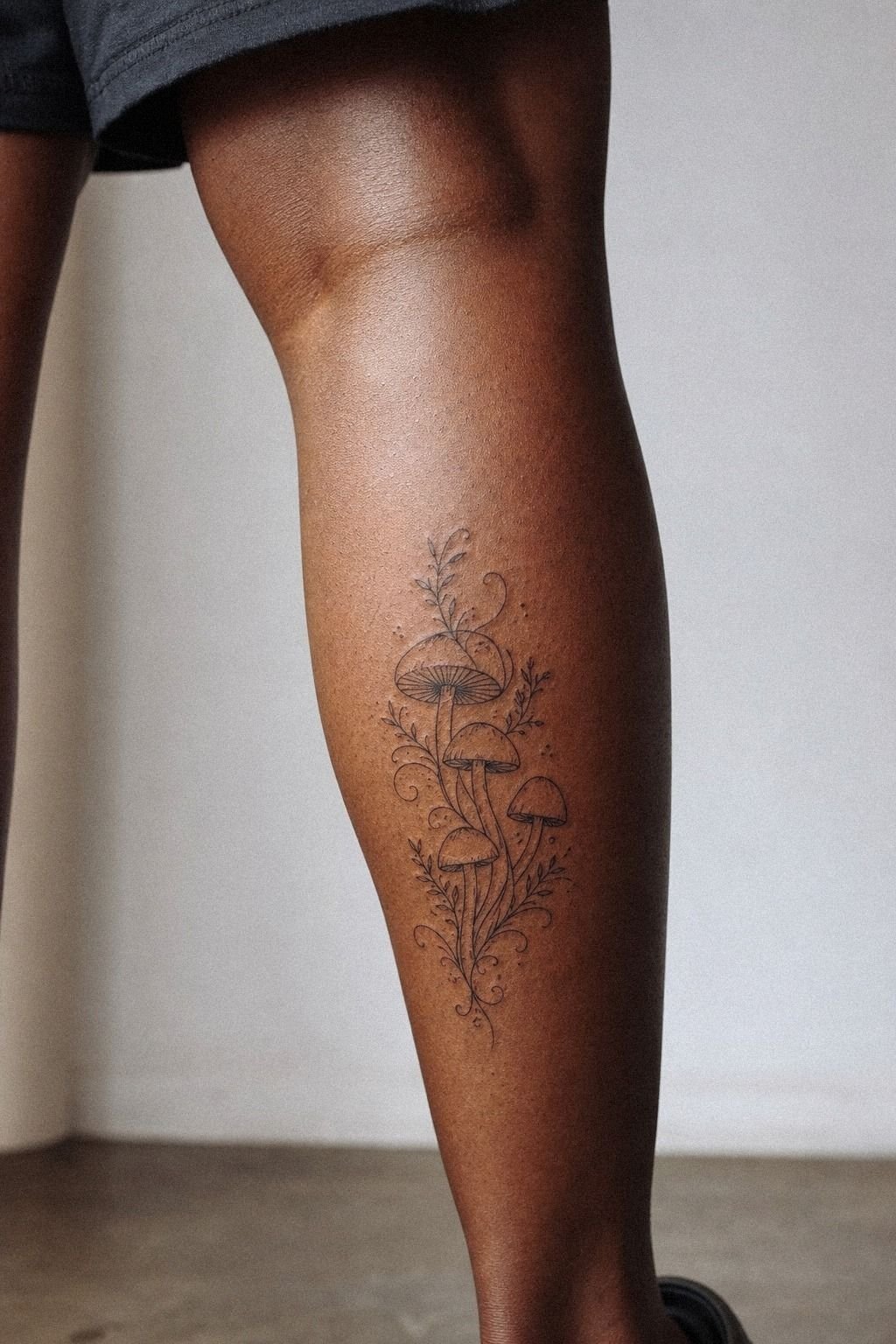
Mushrooms are fun, but whimsical doesn’t mean cluttered. On deep ebony skin, the calf is a strong call because the skin gives you a broad, low-wear panel and enough contrast for a cap, stem, and one small accent like grass or stars. A cluster of five tiny mushrooms sounds cute until it heals into soup.
I like one hero mushroom with a bent stem and a cap edge your artist can shade softly. Think black and grey wash under the cap, a few white highlights only if your artist knows when to stop, and solid black for the outline.
And keep the design at least 3 inches tall if you want those spots or gills to stay readable. For clients craving bolder silhouettes, traditional pirate tattoos guide is a good reminder that simple shapes win.
That cleaner setup usually ages better than paying for extra tiny details nobody will read later.
7Start With Tiny Leaves Behind The Ear
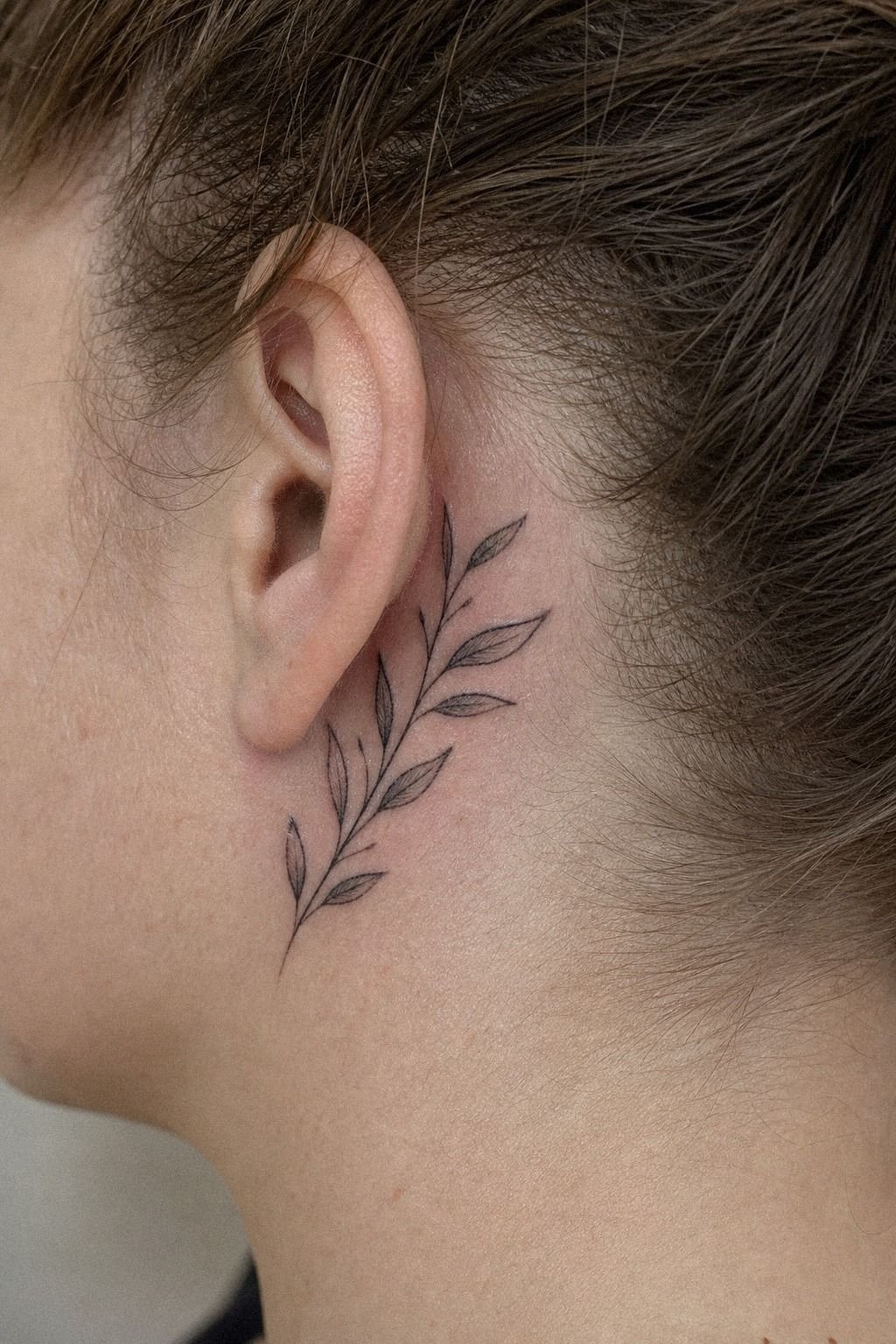
Tiny leaves behind the ear work when you treat them like a whisper, not a whole branch. Fair cool-pink skin can show every little wobble in that spot, so your artist needs crispy lines and a design that stops before it wraps too far into the hairline.
Three leaves. Maybe four.
That’s it.
Angle matters most. Tilt the stem to mirror the ear curve, keep the leaves slightly oversized for the placement, and leave enough open skin between each one that the tattoo still reads when healed.
I would rather see a clean three-leaf sprig done with a Bishop Wand and steady stretch than a busy vine chewed up by overworking. But if you want more length, move it to the nape or forearm.
It’s a delicate, pretty choice when you respect the limits.
8Pick A River Tattoo With Soft Curves
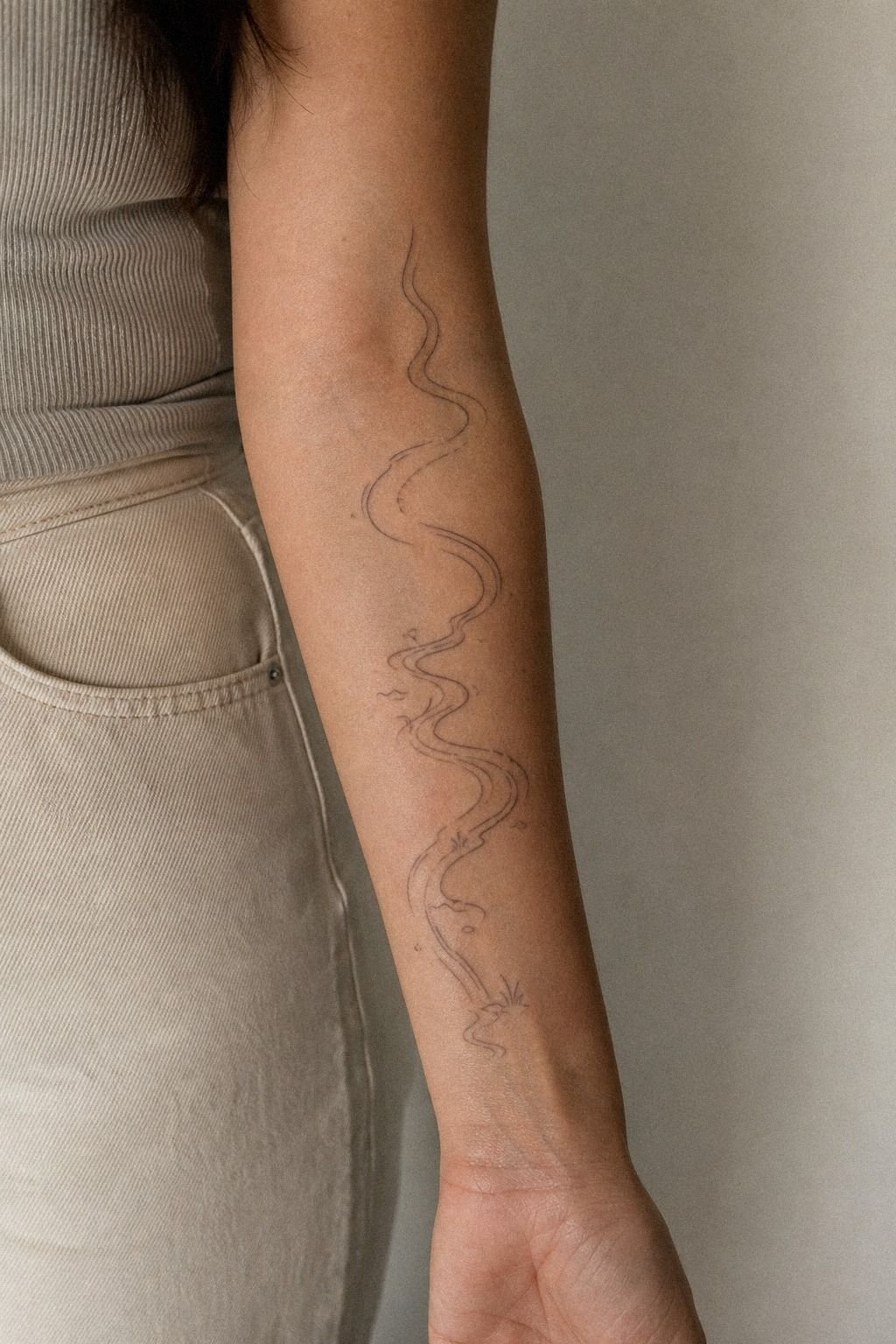
River tattoos need movement you can follow with your eye.
9Place A Moonlit Moth Near Collarbone
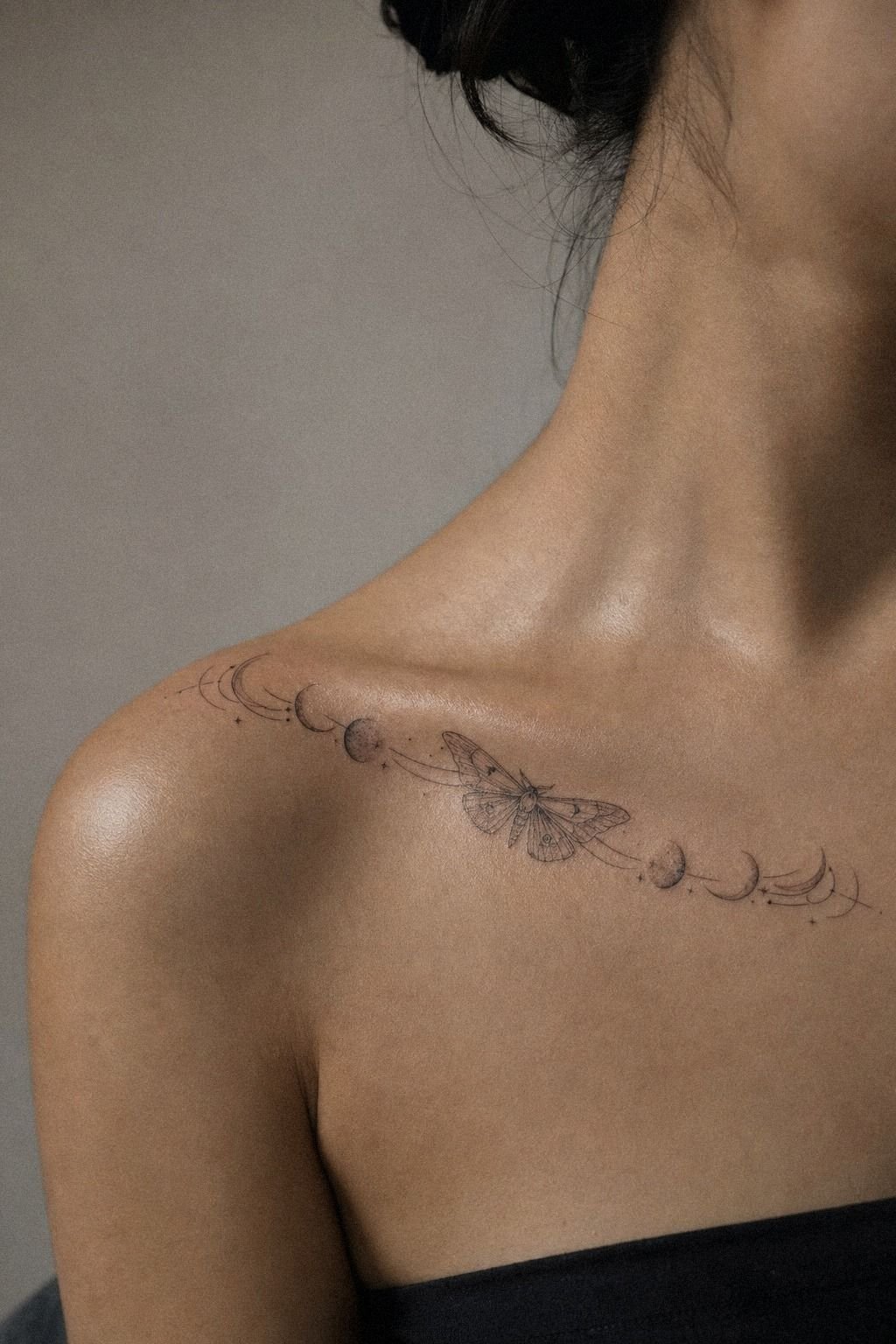
A moth near the collarbone can be gorgeous because the body gives you the arc for free. Medium olive skin takes this well when the wings follow the collarbone instead of fighting it, and the moth body stays centered so the symmetry feels intentional. That placement is visible, feminine, and a little spicy during the session.
Keep the wing markings bold enough to survive healing. I want larger eye spots, fewer tiny veins, and a body line that doesn’t get lost once the tattoo settles.
Use soft shading sparingly with grey wash, and let the outline do the heavy lifting. If you’re wondering whether the collarbone is worth the sting, where tattoos hurt less gives you a good pain baseline before you book.
10Keep Animal Tracks Small And Readable
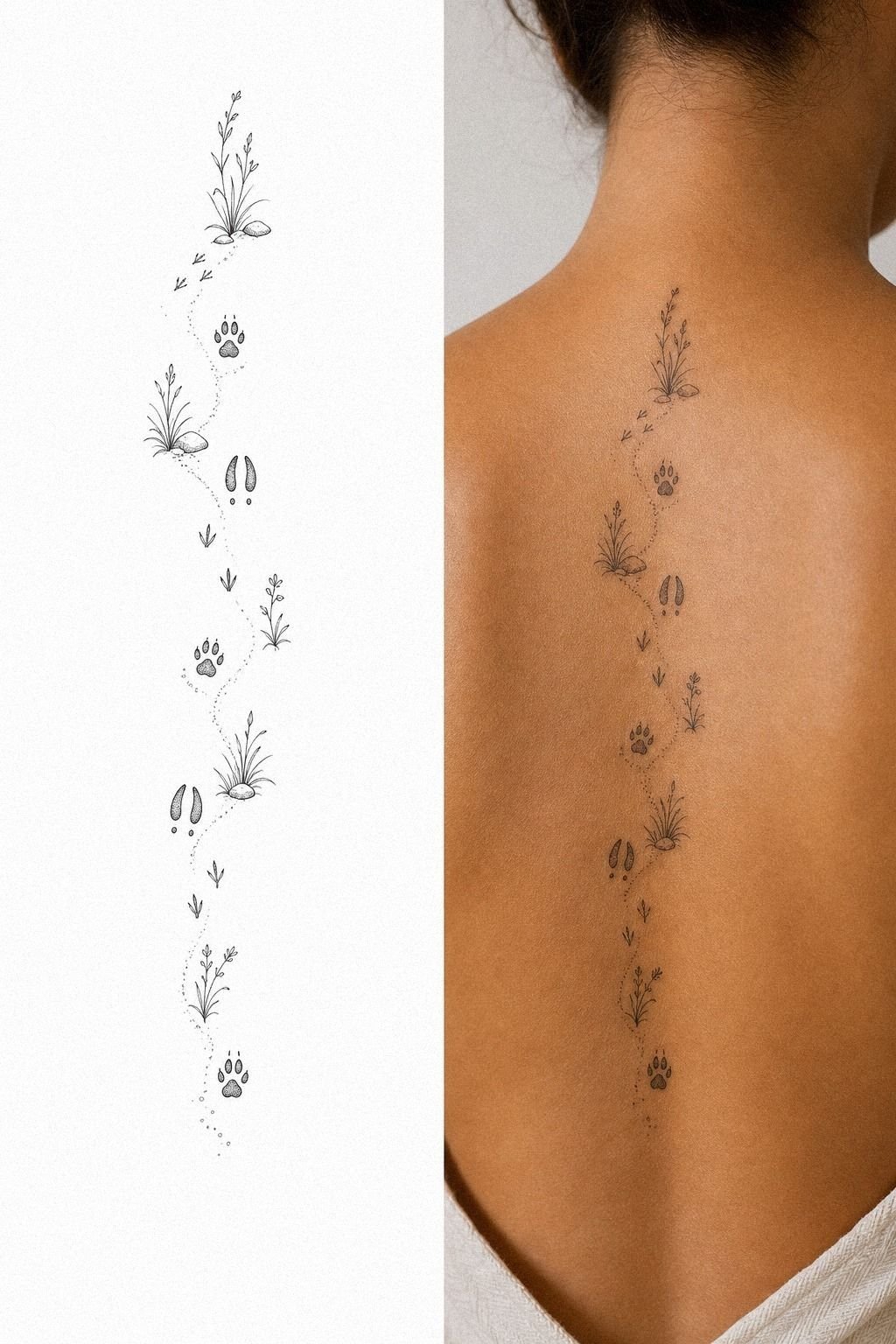
Animal tracks are one of the best small nature inspired tattoos because the design language is already simple.
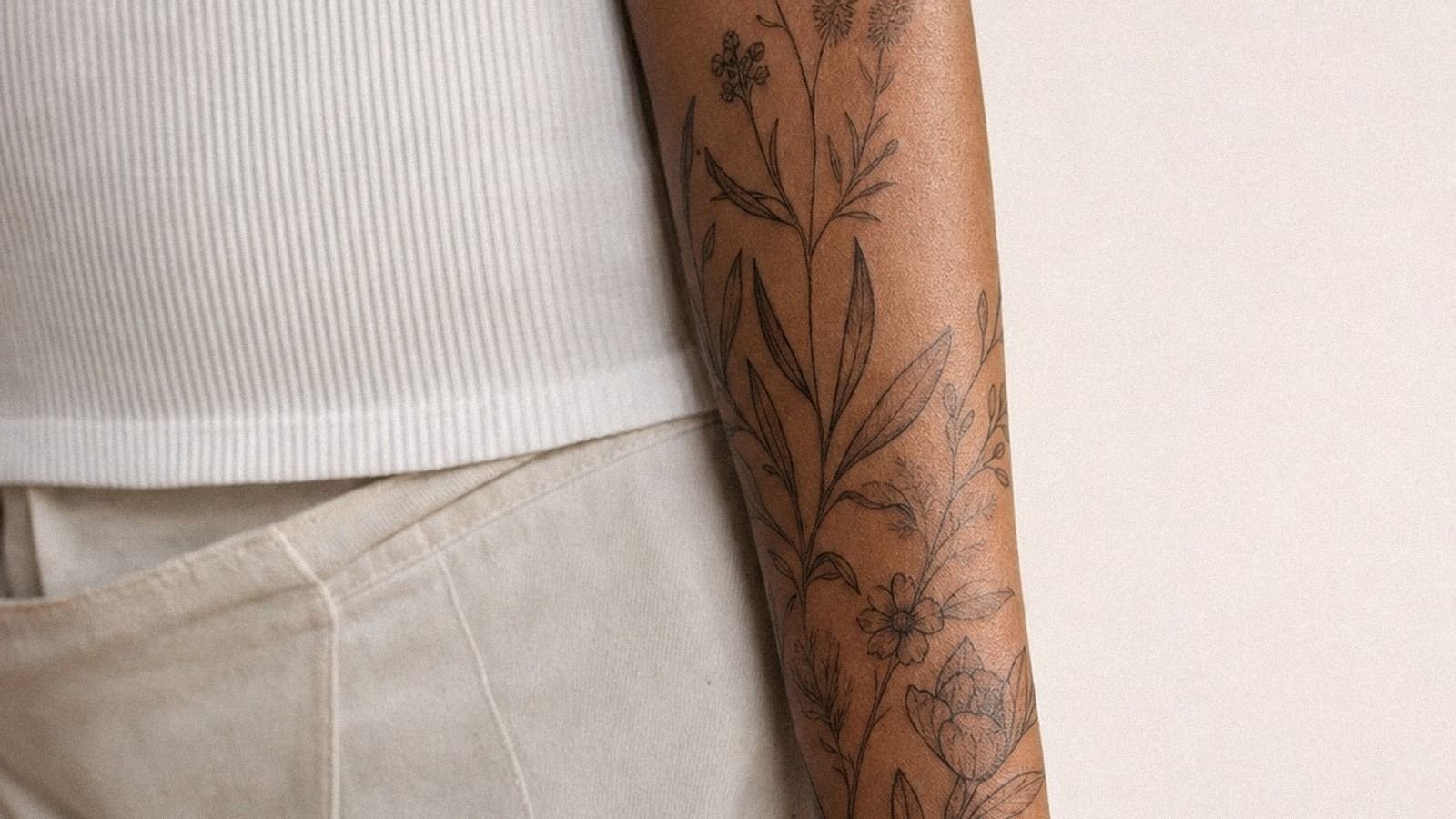
11Plan A Botanical Sleeve With Native Plants
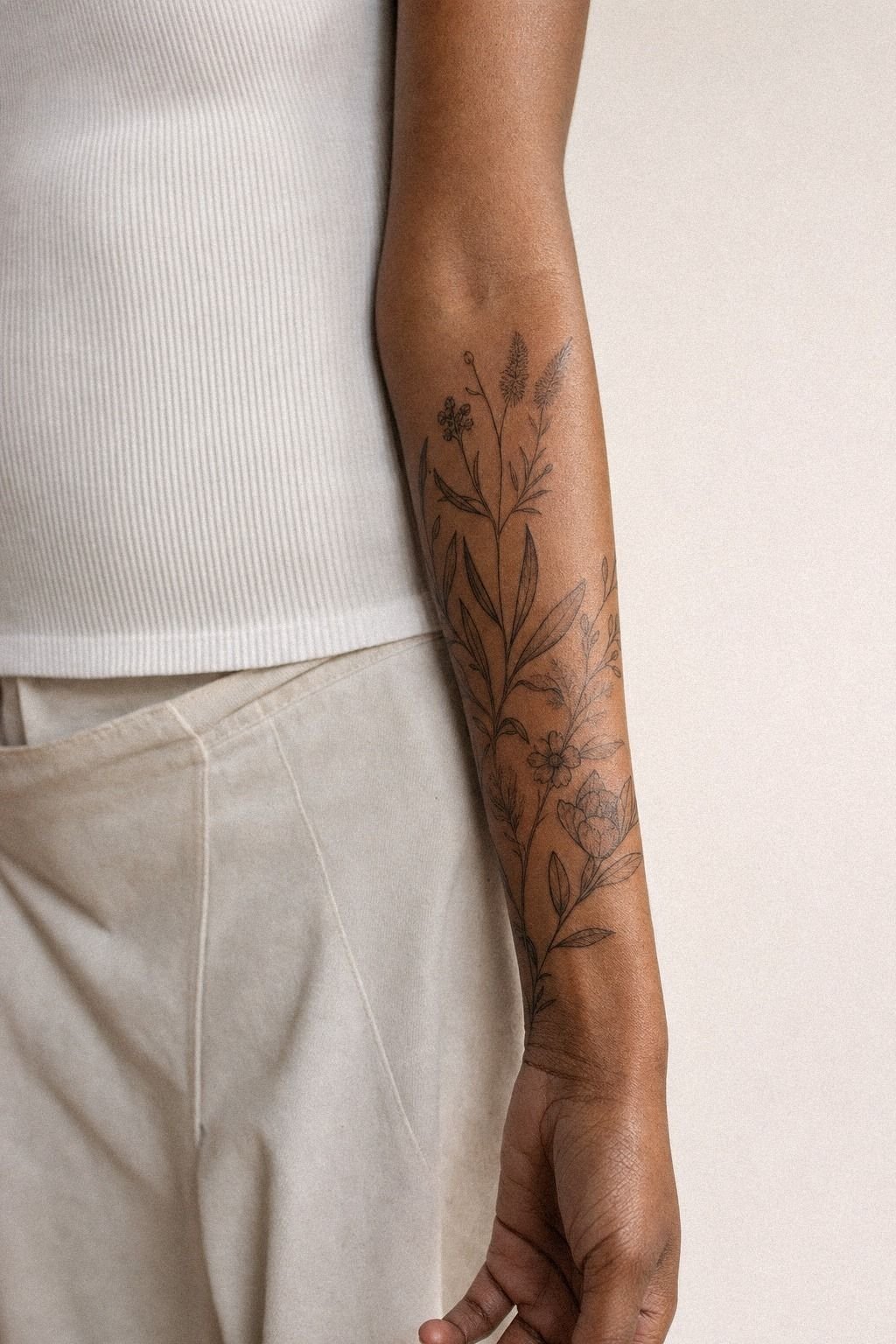
A botanical sleeve only works if the plants belong together. On deep brown skin with a warm undertone, I want bolder stems, leaf groupings that don’t tangle, and native plants that mean something to you, not a random mashup of wildflowers from three climates. Your sleeve should feel collected, not crowded.
Start with one anchor plant near the outer forearm, then build two secondary plants around it. I usually map sleeves in three passes: anchor, connectors, fillers.
That order keeps you from overstuffing the elbow ditch or wrist too early. Use clean black linework first, then decide later if you need soft gray depth.
And if your artist can’t show healed sleeve work on darker skin, keep looking. That’s non-negotiable.
For silhouette control, traditional tattoos females guide is useful even when your finished piece stays fine line.
A sleeve is a bigger investment, so I want the planning to be serious. Spend your time on composition first, not on random filler that makes the whole thing feel messy.
12Choose Black Ink For Forest Silhouettes
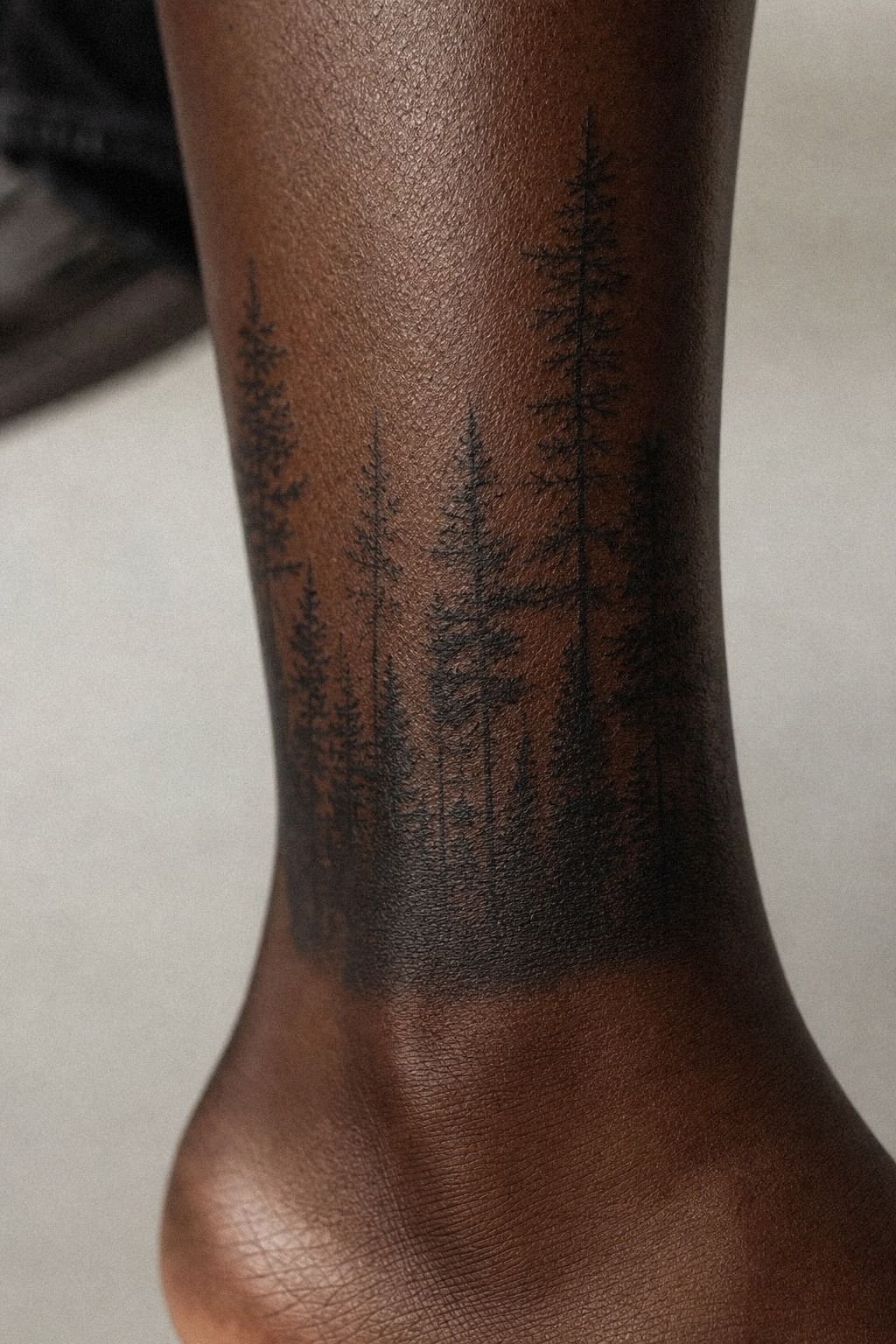
Forest silhouettes need punch. On an ankle, especially on deep ebony skin, black ink wins because the tiny tree edges need as much contrast as they can get.
This is not the moment for weak gray or trendy pale pigment. You want solid black that heals clean, not a forest that disappears after summer.
Ask for a clean silhouette with varied tree heights and a flat ground line. That’s enough.
I like Dynamic Triple Black or another trusted black for this kind of piece because saturation matters on an ankle where socks, shoes, and movement beat the skin up. But keep the width sensible, around 2.5 to 4 inches, or the trunks start collapsing into one dark bar.
Strong black matters! If you’re curious why pale pigment struggles more, start with white ink tattoos.
13Start With A Minimal Sunflower Tattoo
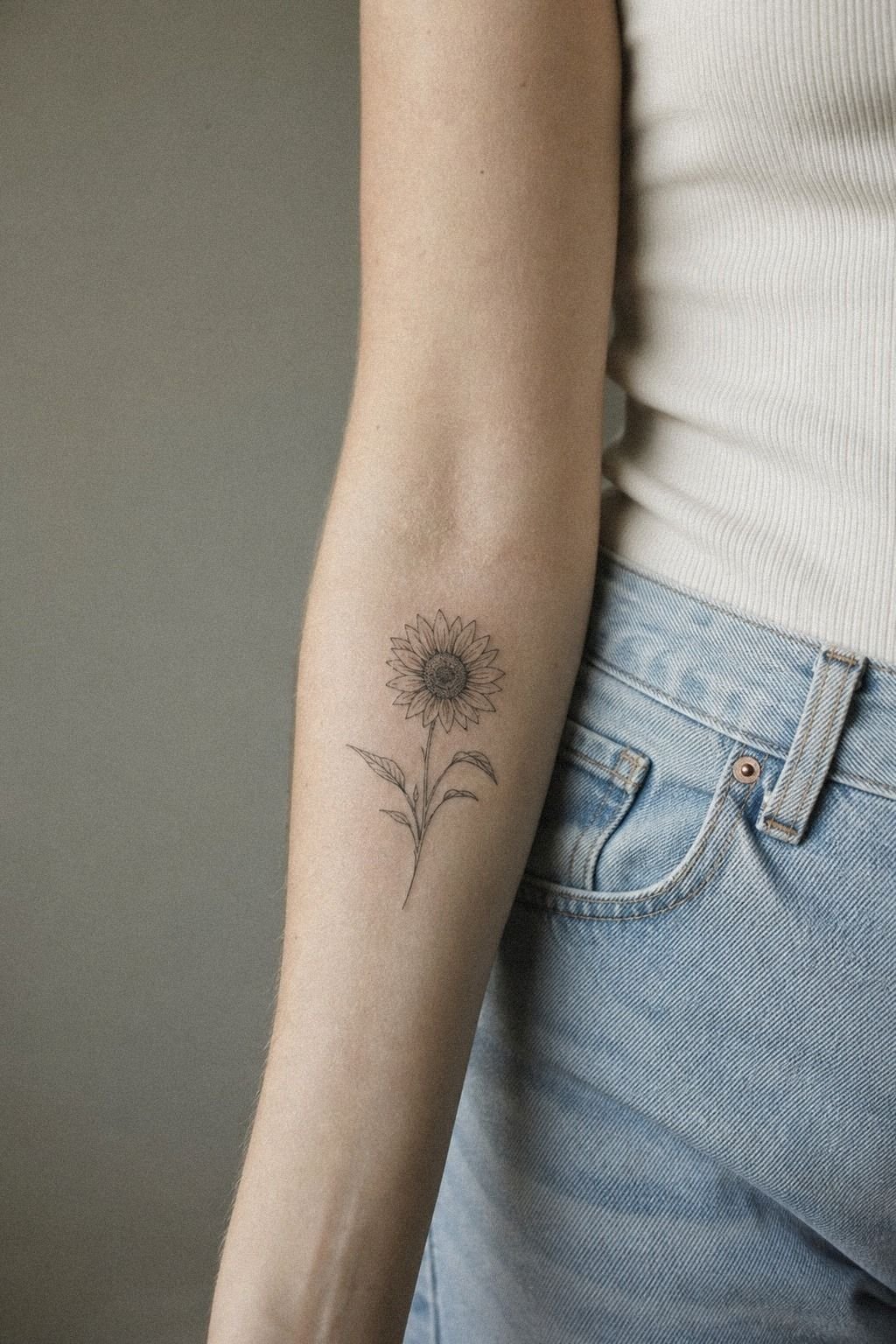
A minimal sunflower works because everybody recognizes the shape fast. On the inner forearm, fair cool-pink skin shows healed petals nicely if the artist keeps the center bold and the petals simplified.
You don’t need thirty petals. You need enough petals to say sunflower in one glance.
I push clients toward a clean circular center, maybe a little pepper shading, and petals with open gaps between them so the outline doesn’t fuse later. Make it 2 to 3 inches if you want the bloom to stay delicate without getting weak.
And please don’t let someone fill the center with micro-seeds unless you’re going bigger. For aging notes, why tattoos blur over time explains exactly what happens when details get packed too tight.
14Pick A Nature Tattoo With Personal Symbolism
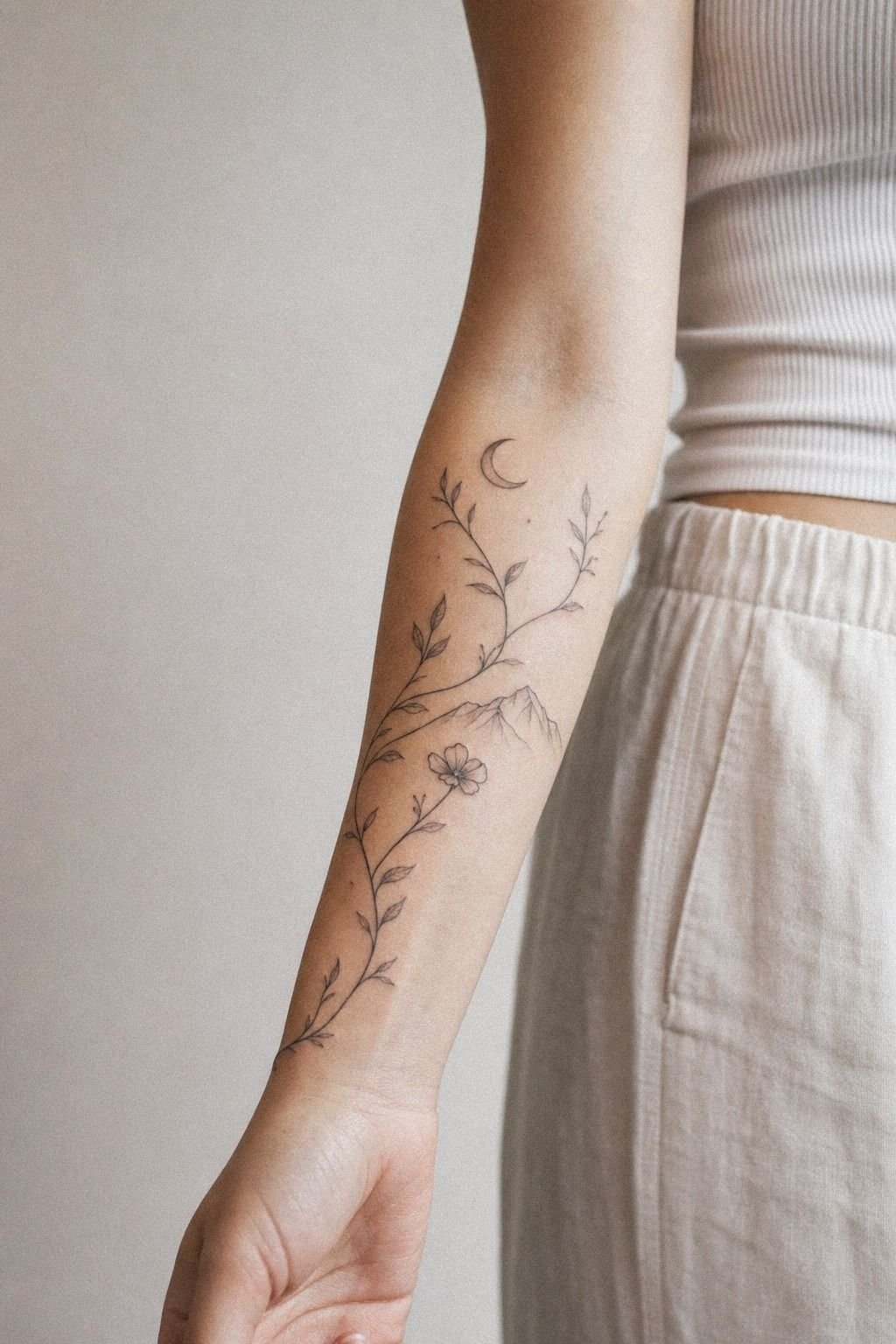
Personal symbolism is the part you keep. Trendy styling is the part that dates first.
On a forearm wrap, medium warm ivory skin gives you enough length for a branch, moon, river, moth, or flower to carry a story without turning into a diary page. Ask yourself one blunt question: would you still want this if nobody else saw it?
I have clients bring three reference images and one sentence about why the symbol matters. That’s enough.
More than that, and people start designing by committee. Use one lead symbol, one supporting detail, and stop there.
If you want Pinterest-exact, I’m not your artist, references are for vibe only. But if you want a meaningful tattoo that ages well, edit hard and let the symbol breathe on the skin.
For clean symbolic shorthand, traditional military tattoos guide is worth a look.
It is also the kind of tattoo that stays worth it because the emotional pull does not depend on trends. When the meaning is clear, the design feels stronger for longer.
15Place Delicate Vine Ink Around The Wrist
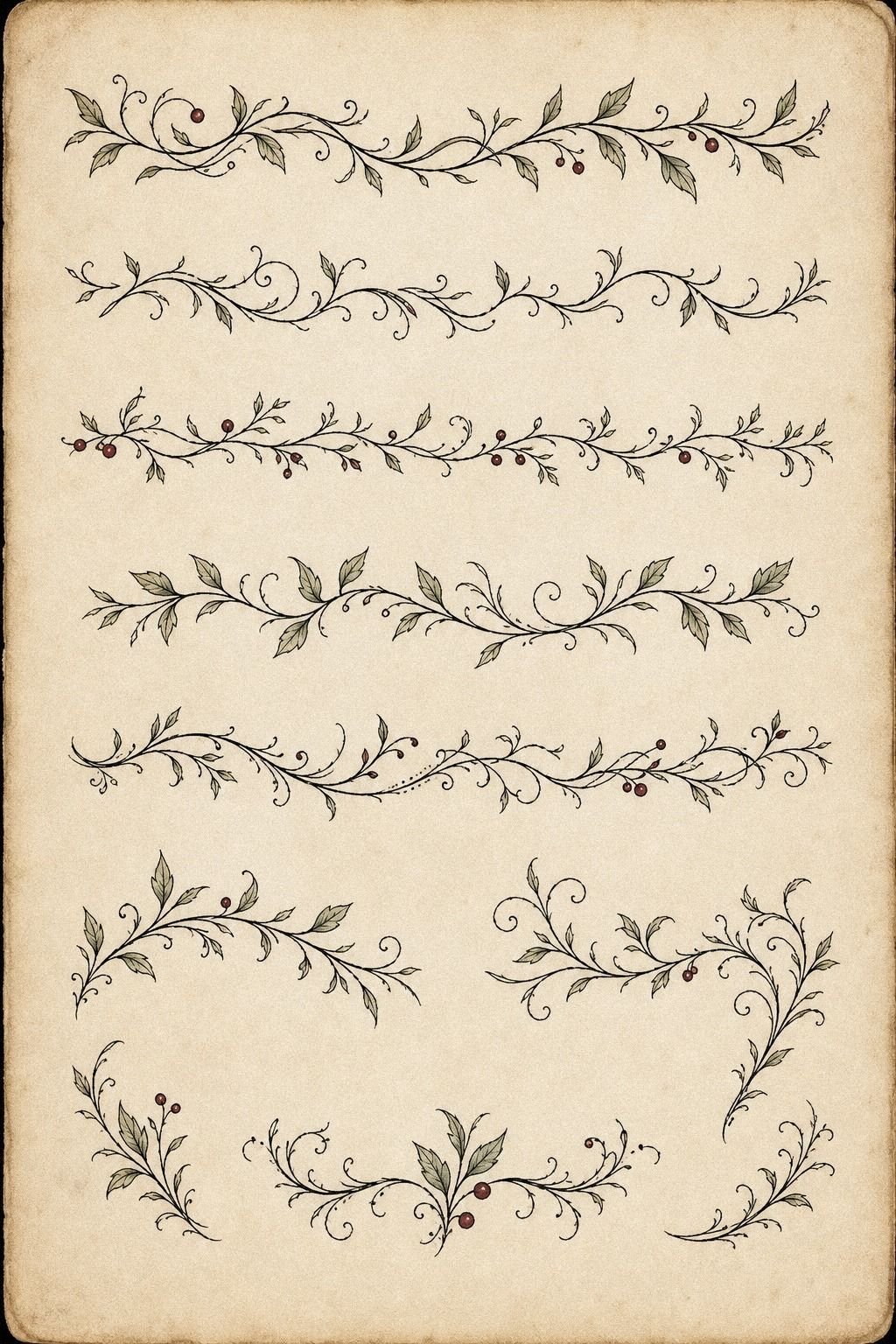
Vines around the wrist look sweet on flash sheets because the paper never bends, rubs, or swells. Real skin does all three. So if you want delicate vine ink, keep the wrap loose, keep the leaf count low, and accept that the wrist is a medium-maintenance placement compared with the forearm.
I prefer a broken vine instead of a full bracelet. Leave a gap on the inner wrist, size the leaves a touch larger than your first instinct, and use a line weight that won’t vanish.
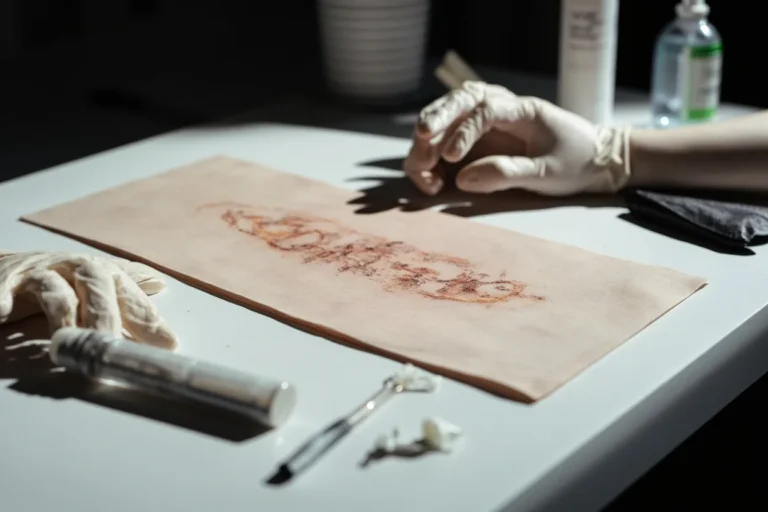
A vine with 5 to 7 leaves usually holds better than one with fifteen tiny ones. And if you love the bracelet look, ask your artist to mock it up both on paper and on your skin before the stencil goes down. That extra pass saves bad decisions.
If you are thinking about cost, remember that touch-ups can be part of the equation on the wrist. It is a charming placement, but it is not the cheapest one to maintain.
16Plan Healed Nature Tattoos Before Adding Color
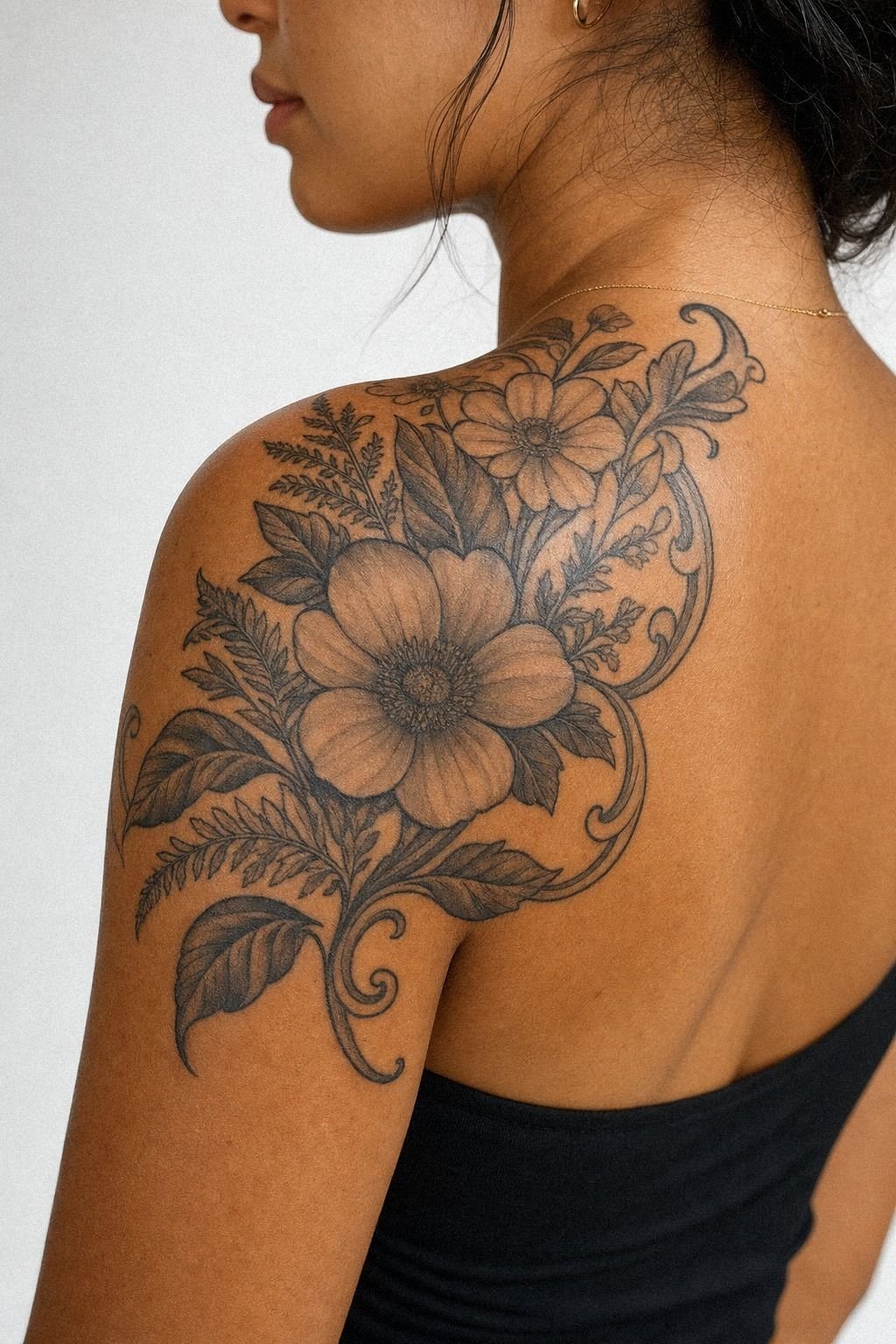
Color is spice, not structure. Your healed shoulder tattoo needs to work in black line first, then color can step in. On golden tan skin, a neo-traditional nature piece with bolder petals, leaves, or moth wings can look killer, but only if the drawing already reads clearly without the color fill.
I tell clients to wait until they can picture the tattoo healed, a little softer, and viewed in regular daylight. If the piece still feels strong then, add color with purpose: solid black, muted greens, warm rust, maybe one gold tone if your artist packs color clean and doesn’t overwork the skin.
But don’t use color to rescue weak drawing. Bold will hold.
Always.
And color changes the final price, too. More saturation, more passes, and more session time can raise it, so only pay for color when the design really gains something.
Why Use The Clean-Heal Filter?
Here’s the filter I use before I say yes to any nature tattoo, and it saves people from a lot of regret. First, I ask if the idea is clear in one glance.
If it isn’t, the tattoo probably needs editing. Nature pieces get romantic fast, and that’s where people start cramming in mountains, moons, ferns, stars, rivers, birds, initials, dates, and one quote for good measure.
You can love all of that and still not need it in one tattoo.
Second, I check whether the placement supports the design. A tiny wrist tattoo and a sprawling botanical story are not friends.
Same with ankles and super-fine forests, or behind-ear placements and double-layered pine needles. Your skin isn’t tracing paper.
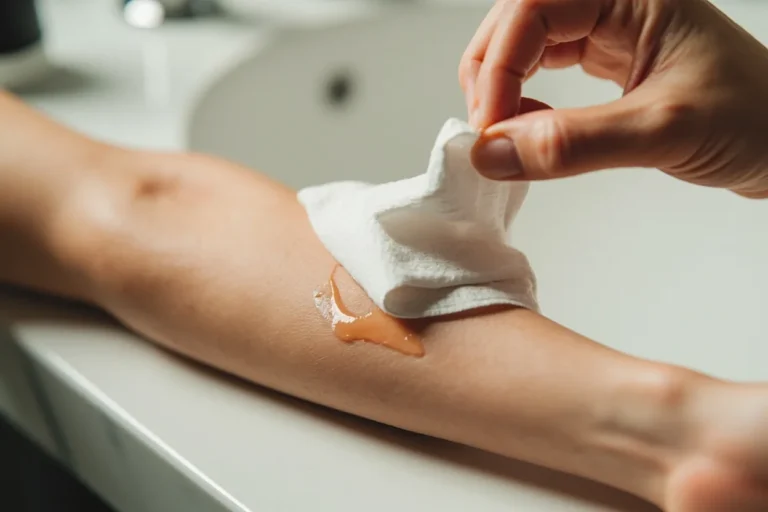
It stretches, flakes, peels, gets sun, gets friction from cuffs and socks, and settles over time. First few days it’s an open wound, treat it like that.
Wash with gentle unscented soap, use a thin layer of ointment, then switch to light lotion once your artist says it’s time. Don’t suffocate it.
Third, I ask how the tattoo will look healed, not fresh. This is where many people get fooled by zoomed-in photos.
Fresh tattoos are glossy, crisp, and loud. Healed tattoos are softer.
That’s normal. Good tattoos still read clearly after that softening because the artist built in contrast, shape, and open skin from the start.
Bad ones depend on tiny drama they can’t keep.
And last, I ask whether the design still feels like you without the trend wrapping paper. That is the whole game.
If the answer is yes, you are probably on the right track. It is the most practical check I know, and it keeps your money on the parts that matter.
The Questions I Get Asked Most
How much does a Nature Tattoos usually cost?
About $100 to $300 is common for a small to medium nature tattoo, though shop minimums can start around $50 to $100 and strong artists often charge $100 to $250 an hour. Size, placement, and city push the total. Clean linework is worth paying for.
Are Nature Tattoos a good idea for a first tattoo?
Yes, they can be a smart first tattoo if you choose a simple design and a low-wear placement like the outer forearm, calf, or shoulder. Clean leaves, flowers, and small symbols heal predictably when you don’t cram in too much detail. That’s a safe, reassuring way to start.
How do I choose a tattoo artist for Nature Tattoos?
Look for healed portfolio photos, not just fresh ones. You want crispy linework, solid black saturation, botanical shapes that still read clearly, and a studio that feels clean from the second you walk in. If the work looks scratchy, keep scrolling.
How much do Nature Tattoos hurt?
It depends on placement, but outer forearm, shoulder, and calf are usually more chill than ribs, feet, hands, or sternum. Lines feel sharper, shading feels like a dull burn, and color packing is often the spiciest part.
Tap out for five if you need to! Where tattoos hurt less gives you a fuller zone-by-zone breakdown.
How long does a Nature Tattoos take to heal?
Surface healing is usually 2 to 3 weeks, while full settling often takes 2 to 3 months. Wash gently, moisturize lightly, skip pools, and keep it out of hard sun. Don’t pick the flakes or you’ll pull color right out.
What’s the best placement for Nature Tattoos?
For most people, outer forearm or calf is the best call because the skin gives you clean visibility, decent pain tolerance, and better long-term wear than hands or feet. If you want delicate detail, low-wear zones are your friend. For a broader pain and placement map, see where tattoos hurt less.
The Placement-Over-Detail Rule
If I had to pick one step, I’d start with placement over detail. A clean forearm or calf placement fixes half the aging problem before the needle even starts. Pin that choice first, then build the symbol to fit your skin instead of forcing it small.