
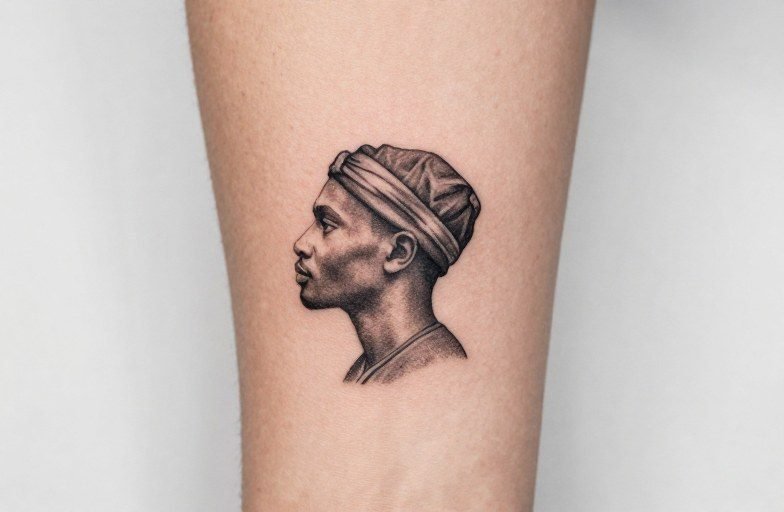
Nigerian tattoos encompass the body art traditions and symbolic markings of Nigeria’s diverse ethnic groups, primarily the Yoruba, Igbo, and Hausa-Fulani peoples. These designs range from historical scarification patterns reinterpreted in ink to Adinkra-inspired symbols, tribal marks, and spiritual iconography. The meaning shifts dramatically by specific design and cultural source, what reads as protection in one tradition might signify social status or ancestral lineage in another.
Symbolism & History
Pre-Colonial Markings and Their Modern Legacy
Before colonial influence, permanent body modification in Nigeria took the form of scarification rather than ink. These ila or tribal marks served concrete functions: identifying your village of origin, marking rites of passage, or signaling membership in a specific lineage. The Yoruba developed particularly elaborate facial marking systems, with patterns varying by sub-group, Owu, Oyo, Egba each carried distinct configurations. Today, tattoo artists translate these raised scar patterns into flat ink designs, often at the request of diaspora communities seeking connection without the physical trauma of cutting. The shift from scar to ink changes the visceral impact but preserves the visual vocabulary.
Adinkra and West African Visual Language
While Adinkra symbols originate with the Akan people of Ghana, they’ve spread widely across West Africa including Nigeria, and appear frequently in Nigerian tattoo requests. Each symbol functions as a compressed proverb or concept. Gye Nyame (the Supreme Being) shows a stylized spiral form representing divine omnipotence. Sankofa, often depicted as a bird turning backward with an egg in its beak, speaks to retrieving value from the past. These aren’t decorative flourishes; they carry specific philosophical weight. Someone choosing Adinkra for a tattoo typically knows the exact proverb they want to invoke, not just the general aesthetic.
- Gye Nyame: Recognition of divine supremacy, often placed where the wearer will see it during prayer or reflection
- Sankofa: Intentional return to past wisdom; popular among those reconnecting with heritage after generational displacement
- Duafe: The wooden comb, symbolizing feminine beauty and patience; chosen for inner-arm or collarbone placement
- Funtunfunefu Denkyemfunefu: The conjoined crocodiles, representing democracy and interdependence, complex design, usually scaled larger
Igbo Uli and Sacred Geometry
Uli patterns come from the Igbo tradition of wall and body painting, historically created by women using dark pigments from fermented plants. The designs are organic, flowing, and non-representational, curves and dots that follow the body’s natural contours rather than imposing rigid geometry. In tattoo form, Uli translates exceptionally well to rib placement, hip curves, or wrapping around limbs where the design can move with muscle and bone. The original context was temporary, applied for ceremonies and allowed to fade. Permanent uli tattoos carry that tension: the design meant to be ephemeral, now fixed.
Common Variations & Styles
Line weight matters enormously with Nigerian-derived tattoos. Fine single-needle work can replicate the delicate quality of uli or facial scarification marks, but ages poorly on high-traffic skin areas, finger tattoos of Adinkra symbols often blur within two to three years. Bold blackwork holds up better for designs meant to last, though it sacrifices some of the subtlety that makes these patterns distinctive.
Color usage varies by tradition. Adinkra tattoos typically stay black, honoring the stamped cloth origin. Some Nigerian diaspora clients incorporate green and white (the national flag colors) as a secondary layer behind traditional symbols. This reads clearly as Nigerian identity rather than specific ethnic affiliation, which matters for families with mixed heritage or those who don’t know their precise ancestral village.
- Blackwork tribal mark reproductions: Forehead, cheek, or temple placement mimicking historical scarification locations
- Uli-inspired freehand curves: Usually rib, side, or upper thigh where the body provides natural flow lines
- Adinkra with text integration: Twi proverbs lettered beneath or around the symbol, requiring a font that doesn’t fight the visual weight of the icon
- Nigerian coat of arms elements: The black shield with wavy white pall, horses, and eagle, more overtly political/nationalist
Best Placements
Where the Body Meets the Symbol’s Function
Historical Nigerian facial marks dictate some modern placement choices by inversion, people who want the reference without the social implications of actual facial scarring move those patterns to shoulders, upper arms, or chest. The visibility changes the meaning: a tribal mark pattern on a shoulder reads as chosen heritage display, whereas the same pattern on a face would carry entirely different social weight, especially within Nigerian communities where facial scarring still carries specific regional identification.
Uli-derived designs need placement that respects their organic nature. They fail when forced into straight rectangular spaces, ankle bands, wrist cuffs. They succeed when allowed to follow the body’s landscape, which means trusting the artist to adapt the pattern rather than replicating a reference image exactly. Thigh, side, and upper back provide the best canvas for this adaptation.
Adinkra symbols function well as smaller, focused pieces, wrist, behind ear, between shoulder blades, because each symbol stands alone with specific meaning. They don’t require surrounding composition the way uli patterns do.
Who Chooses This Tattoo / Personal Meanings
First-generation Nigerian immigrants often choose these designs during periods of deliberate identity construction, university years, first return trips to Nigeria, or after having children and wanting to pass visual heritage forward. The choice frequently follows a specific trigger: a grandparent’s death, a DNA test confirming regional origin, or encountering the symbols in a context that suddenly made them feel accessible rather than distant.
Second-generation and mixed-heritage wearers face different calculations. The tattoo often serves as a legible claim to identity in contexts where their Nigerian-ness gets questioned, too foreign for some spaces, not foreign enough for others. The specificity of the symbol matters here; a generic “African” tribal pattern carries little weight, while knowing your grandmother was Igbo and choosing uli-derived work creates a different kind of rootedness.
Non-Nigerian wearers raise complex questions. Some symbols, particularly Adinkra, have circulated globally enough that their origin isn’t immediately questioned. Others, especially direct reproductions of tribal marks, read as appropriation when worn without lineage connection. The difference often comes down to knowledge depth, whether the wearer can name the specific group, the historical function, and their personal reason for adoption beyond aesthetic appeal.
Similar Symbols
West African visual traditions overlap significantly. Akan Adinkra and Yoruba visual systems share geometric abstraction but differ in their social functions, Adinkra was more broadly accessible, while some Yoruba marks were restricted by lineage. This means similar-looking symbols might carry different accessibility expectations.
Compared to Maori ta moko or Polynesian tribal work, Nigerian-derived tattoos carry less established protocol in Western tattoo culture. There’s no equivalent to the Maori cultural gatekeeping around facial moko, which means both more freedom and more risk of trivialization. The symbols haven’t been as thoroughly commodified in global tattoo culture as Maori or Samoan patterns, but they’re moving in that direction as Nigerian music and fashion gain international visibility.
Diaspora African tattooing more broadly, Ethiopian crosses, Ghanaian kente-inspired color blocking, Senegalese serpent patterns, shares the tension between specific ethnic origin and pan-African identification. Nigerian tattoos often get chosen with more specific regional knowledge than some of these broader categories, partly because Nigeria’s size and global presence means more people know their specific ethnic affiliation.
Final Thoughts
Nigerian tattoo traditions carry the weight of actual historical practice, not invented ancient mystique. The symbols mean something because they functioned in specific social contexts, identifying the living, marking transitions, compressing philosophy into visual form. The best Nigerian-derived tattoos respect that specificity: knowing whether your pattern is Yoruba, Igbo, or Hausa; understanding if it was originally temporary or permanent, restricted or accessible; placing it where the body supports the design’s logic rather than fighting it.
The worst versions treat West Africa as interchangeable aesthetic source material, stripping symbols from their proverbs and social functions. Ink lasts decades. The question worth asking before committing is whether the meaning you’re attaching will hold up as long as the pigment does, and whether you’ve done enough work to attach meaning that isn’t solely your own invention.
Frequently Asked Questions
Do I need to be Nigerian to get a Nigerian tribal mark tattoo?
There’s no universal rule, but facial scarification patterns specifically tied to regional identification carry different weight than broadly circulated Adinkra symbols. Research your specific design’s origin and consider whether your connection is aesthetic or familial.
How well do fine-line Nigerian patterns age compared to bold blackwork?
Fine lines mimicking delicate uli or scarification blur faster, especially on hands, wrists, or areas with frequent movement. Bold blackwork holds definition longer but loses some of the subtle curve quality that makes these patterns distinctive.
Can Nigerian tribal marks be combined with other tattoo styles?
Mixing works when the styles share visual logic, uli’s organic curves pair with Japanese wave patterns or botanical work. Forced combinations with unrelated styles like American traditional or photorealism usually fight each other visually.
What’s the difference between Adinkra and specifically Nigerian symbols?
Adinkra originated with Akan peoples in Ghana and spread regionally, while Nigerian symbols derive from Yoruba, Igbo, and Hausa-Fulani traditions. They’re often grouped together in diaspora contexts but carry distinct ethnic origins and social histories.
Related Tattoo Meanings
- Nunu Tattoo Meaning: Symbolism, Styles Placement Guide
- OTF Tattoo Meaning: Loyalty, Family Street Codes
- Peach Tattoo Meaning: Symbolism, Styles Placement
- Explore more









