
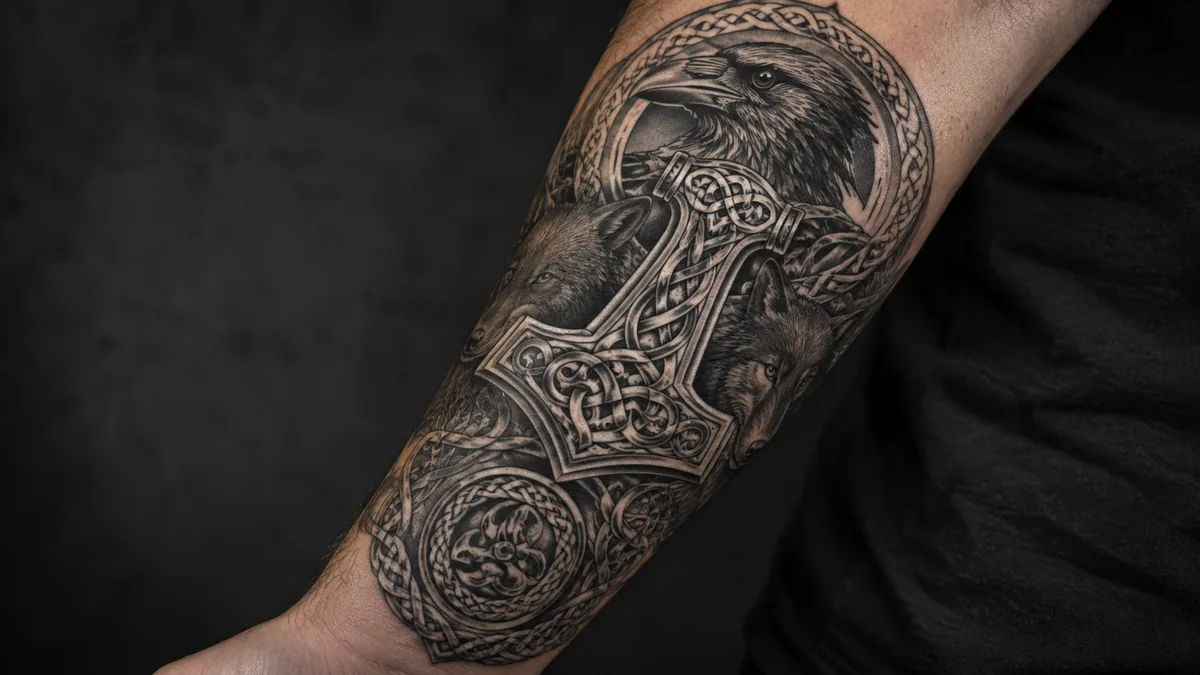
Norse tattoos aren’t just cool-looking ink. Every rune, creature, and symbol in the Norse tradition carries weight that goes back over a thousand years of Scandinavian mythology, warrior culture, and cosmology. When someone sits down for a Vegvisir or a pair of ravens, they’re tapping into a belief system that was dead serious to the people who originally used these symbols.
The meanings range from protection and navigation to fate, war, wisdom, and the cycle of life and death. Some symbols were carved into weapons. Some were worn as amulets. Getting them tattooed is a modern continuation of that tradition, and when clients ask what their piece means, the honest answer is usually layered. Let’s break it down properly.
Core Symbolism: What Norse Tattoos Actually Mean
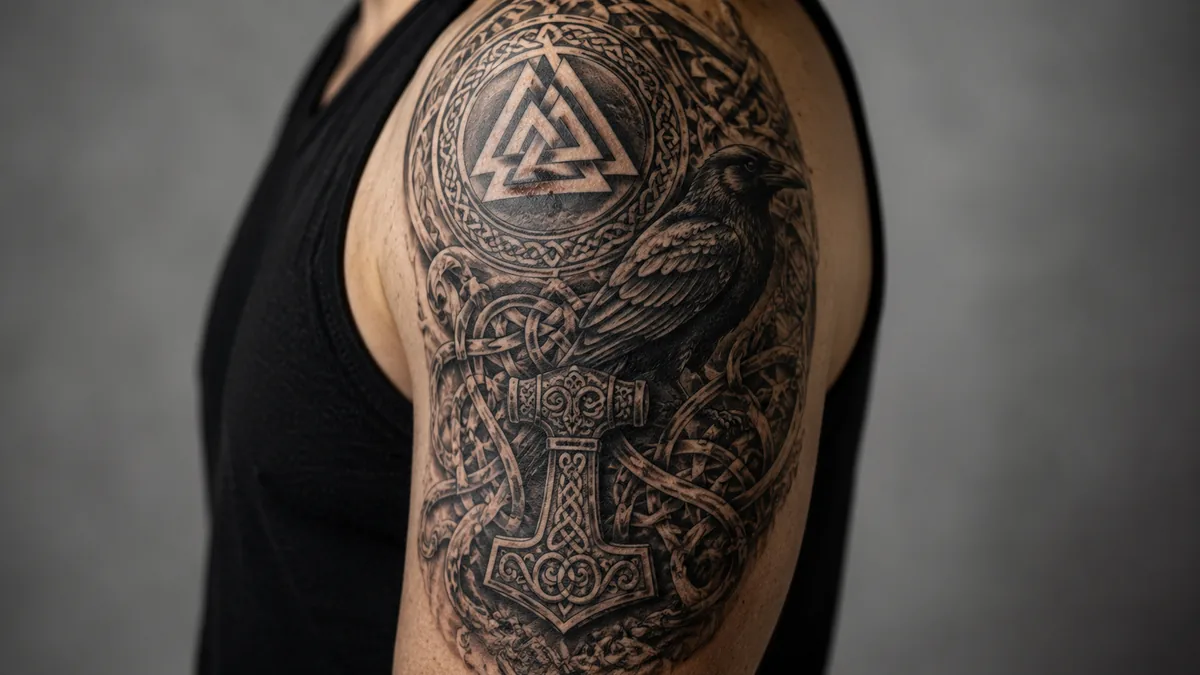
At the foundation, Norse tattoo symbolism orbits a few major themes: strength, protection, fate, and connection to something larger than yourself. The Norse worldview was built around the idea that life is a struggle worth fighting, that honor earned in battle outlasts the body, and that cosmic forces shape human destiny. Tattoos in this tradition almost always reflect one of those pillars.
Protection symbols like the Vegvisir (the runic compass) were meant to guide the bearer through storms. Ravens represent wisdom and the mind of Odin. The Valknut ties to fate and the afterlife. Mjolnir, Thor’s hammer, signals strength and defense. None of these are vague feel-good symbols. They each carry a specific, documented meaning in the Eddas and Icelandic sagas.
The Historical and Cultural Background
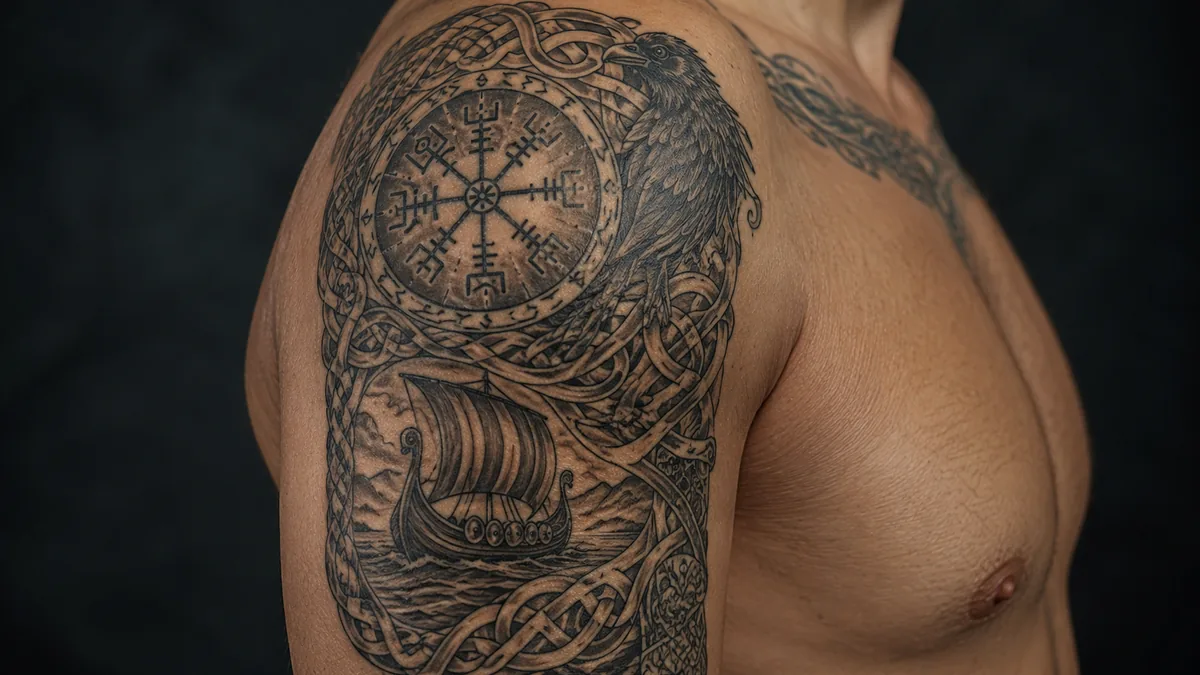
Every Norse symbol is a sentence. Make sure you know what yours says.
The Norse people, including the Vikings, inhabited Scandinavia roughly from 793 AD through the 11th century. Their mythology, preserved mainly in the Poetic Edda and Prose Edda, described a universe of nine worlds held together by Yggdrasil, the World Tree. Gods like Odin, Thor, Freya, and Loki weren’t distant figures. They were active participants in human fate, and the symbols tied to them were used in everyday life.
Archaeological evidence confirms that some Norse people used tattoos and body markings, though most surviving symbolic records come from runestones, woodcarvings, and manuscript illustrations. Runes specifically served a dual purpose: written language and magical inscription. When you tattoo a rune, you’re working with a system people once believed held literal power over reality. That context matters when you’re placing it permanently on skin.
Popular Norse Symbols and What Each One Means
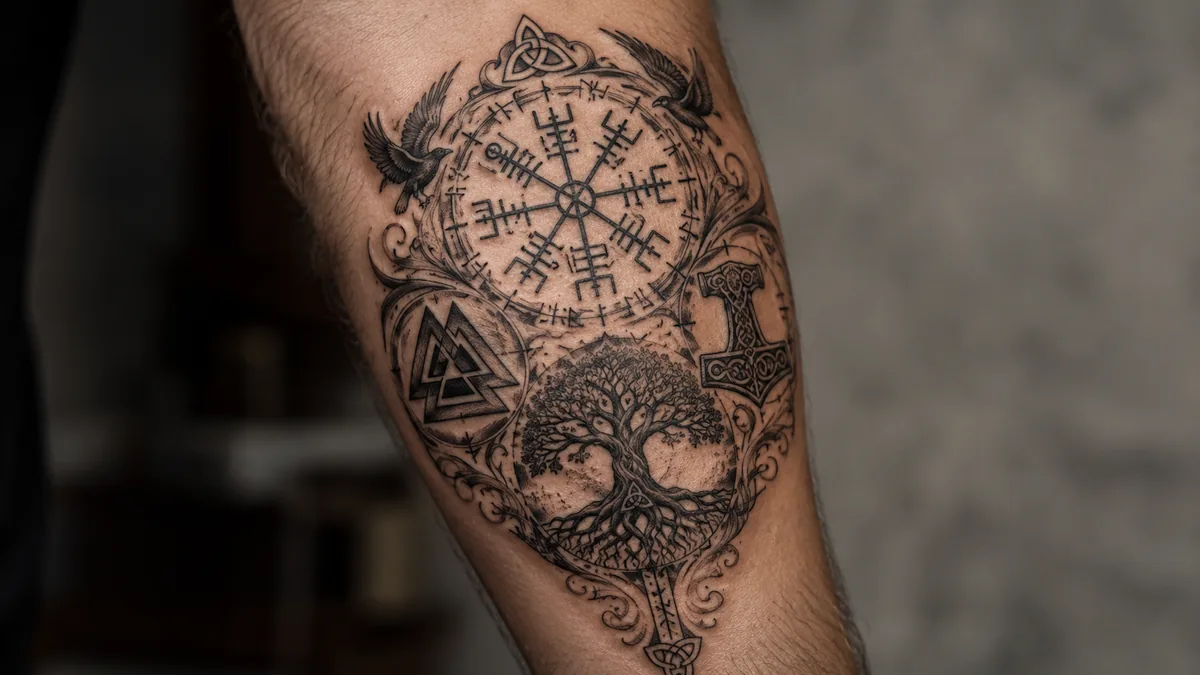
The Vegvisir is probably the most tattooed Norse symbol right now. It’s an Icelandic magical stave meant to help the bearer find their way, even in rough conditions. The Valknut, three interlocked triangles, is linked to Odin and the transition between life and death. It appears near fallen warriors in Viking-age art. Yggdrasil represents the interconnectedness of all existence, nine worlds, roots and branches, constantly in flux.
Huginn and Muninn, Odin’s twin ravens, symbolize thought and memory. Getting both means you value the balance of mind and experience. The Helm of Awe, or Aegishjalmur, is a radial symbol used for invincibility and terror in battle. Fenrir, the giant wolf, represents unbounded chaos and primal power. Runes like Tiwaz (justice, sacrifice, Tyr) or Algiz (protection, defense) each carry standalone meaning you can tattoo alone or build into a full sleeve.
Style Variations: How You Execute the Design
Norse imagery translates across multiple tattoo styles. Traditional Norse or Viking-style work uses bold outlines, heavy black fill, and geometric precision. Knotwork panels and interlaced animals, called Urnes or Mammen style after Viking-age art periods, look sharp in this execution. The lines need to be crispy and the fill solid, because these designs are all about graphic clarity. They read from across the room when done right, and bold will hold for decades.
Black and grey realism works beautifully for narrative pieces, like a full scene of Ragnarok or a detailed Yggdrasil with all nine worlds suggested in the roots and branches. Fine line is popular for runes, especially minimalist single-rune pieces on wrists or collarbones, but fine line fades faster and blows out on certain skin types, so placement matters more on those. Neo-traditional adds color and illustrative linework and keeps the mythological drama while giving the artist more creative room.
Color vs. Black and Grey
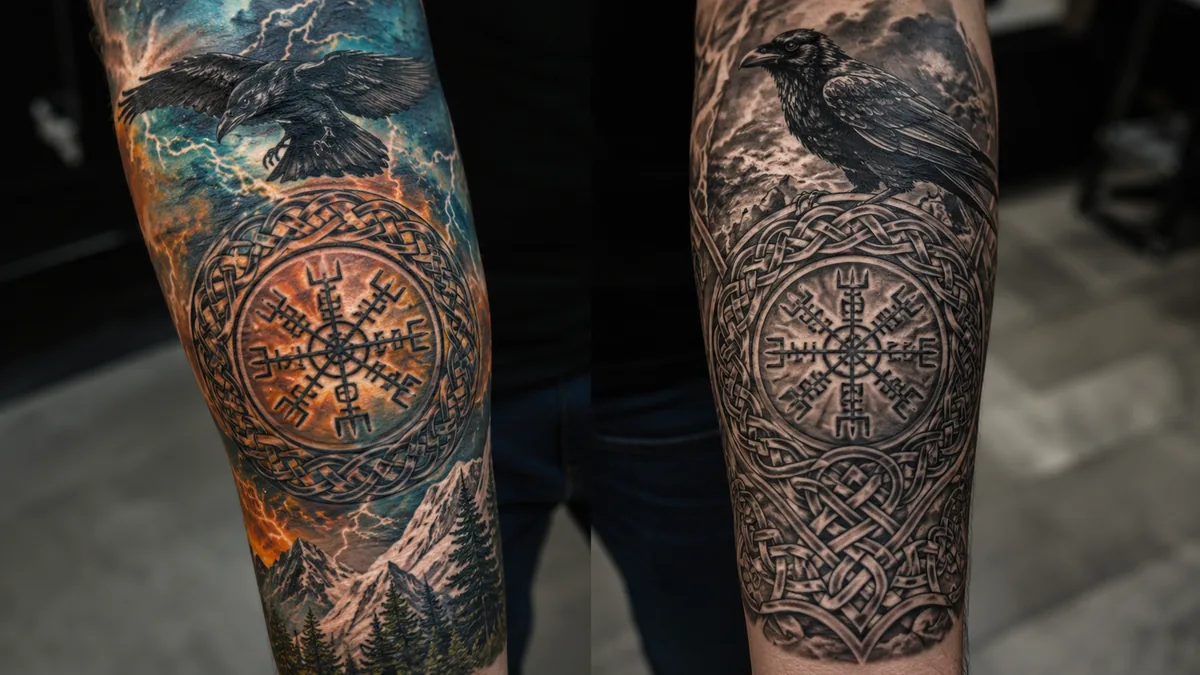
Most serious Norse tattoo work is done in black and grey or solid black. The geometric and knotwork elements that define this style are fundamentally graphic, and color can muddy the structure if the artist isn’t precise. A heavily saturated Yggdrasil with deep blacks and grey wash hits harder and stays cleaner over time than the same design in color on most skin tones. The contrast keeps the symbolism legible years down the road.
That said, color absolutely works in the right hands. Blue-grey tones for icy or oceanic pieces, deep reds for battle scenes, and muted earth tones for more naturalistic Yggdrasil compositions all land well. If you want color, go to an artist who specializes in saturated, bold color work, not someone who just adds it as an afterthought. Color Norse pieces that aren’t fully committed look muddy within five years, especially on high-wear zones.
Placement and How Norse Tattoos Age
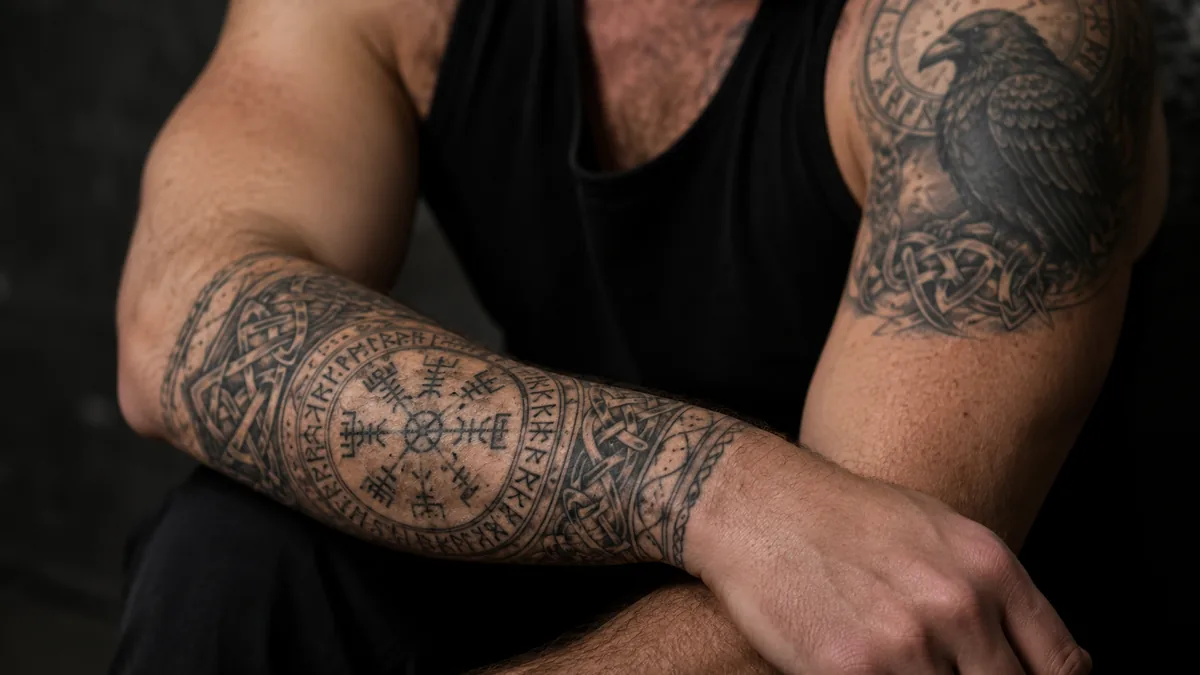
Upper arm, forearm, chest, and back are the strongest placements for Norse work. The geometric interlace and knotwork need flat, stable surface area to stay clean. A full back Yggdrasil is one of the most iconic Norse tattoo choices and ages incredibly well because the back is a low-wear, low-sun zone. Chest placements for the Helm of Awe or Valknut hold up strong, especially centered on the sternum or over the heart.
Avoid fine-line runes on fingers or the inside of palms. High-wear zones blow out and fade fast, and small intricate work disappears. Ribs are spicy, technically solid placement but the pain level is real, especially for larger panels. Inner bicep and behind the knee are also spicy. Outer thigh and upper back shoulder blade area heal nice and give your artist enough room to make geometric work breathe properly without crowding.
Who Gets Norse Tattoos and How to Make It Personal
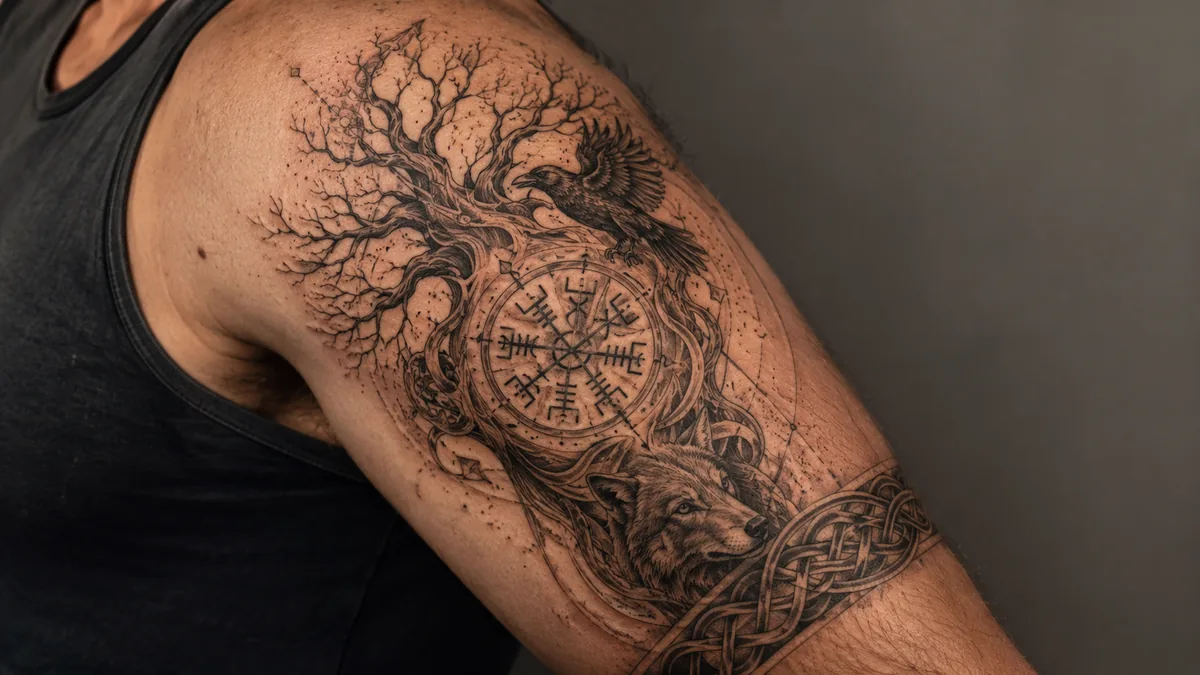
People get Norse tattoos for a wide range of reasons. Some have Scandinavian or Northern European ancestry and want to connect with that heritage. Others are drawn to the mythology itself, the stories of Odin sacrificing his eye for wisdom, Thor defending humanity, the inevitability of Ragnarok followed by renewal. Some people resonate with Viking-era values around courage, loyalty, and perseverance without any ancestral connection at all, and that’s a legitimate reason to get the work.
To make it yours, go beyond picking a symbol off a reference sheet. Talk to your artist about combining symbols that reflect your actual story. A Vegvisir paired with a specific rune that carries personal meaning, or Huginn and Muninn designed around a significant memory, turns a cool tattoo into something that speaks. Bring reference images, but let your artist interpret the style. The best Norse pieces feel lived-in and deliberate, not copy-pasted from a Google image search.









