I’ve been tattooing long enough to watch trends come, go, and sometimes come back ironically. The butterfly your aunt got in ’92? She’s covering it now. The fine-line florals everyone wanted in 2019? Some are holding up, some look like faint pencil sketches. Here’s what I’ve learned in my chair about popular tattoo designs that actually work on real skin, for real people, living real lives.
Popular Styles That Hold Up
Not every pretty Instagram post translates to a tattoo that ages well. I’ve had to explain this gently to clients who bring in screenshots of fresh work that’ll look completely different in five years.
Traditional and Neo-Traditional
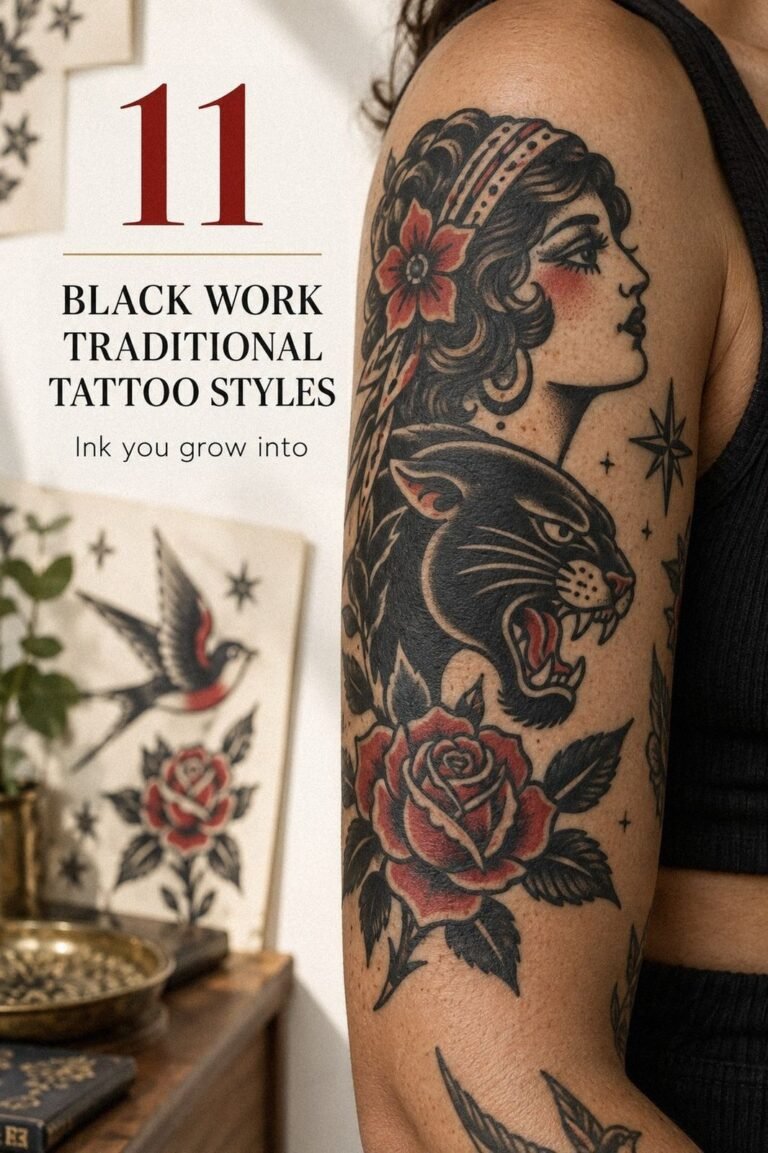
These designs have stuck around for a reason. Bold black outlines, limited color palettes, strong shapes. I tell clients: traditional roses, anchors, and eagles look basically the same at year one and year fifteen. The ink sits confidently in the skin. There’s no guessing. A traditional swallow on your forearm reads clearly from across the room. The line weight carries. I’ve tattooed flash sheets that were drawn in the 1970s and they still slap.
Japanese (Irezumi)
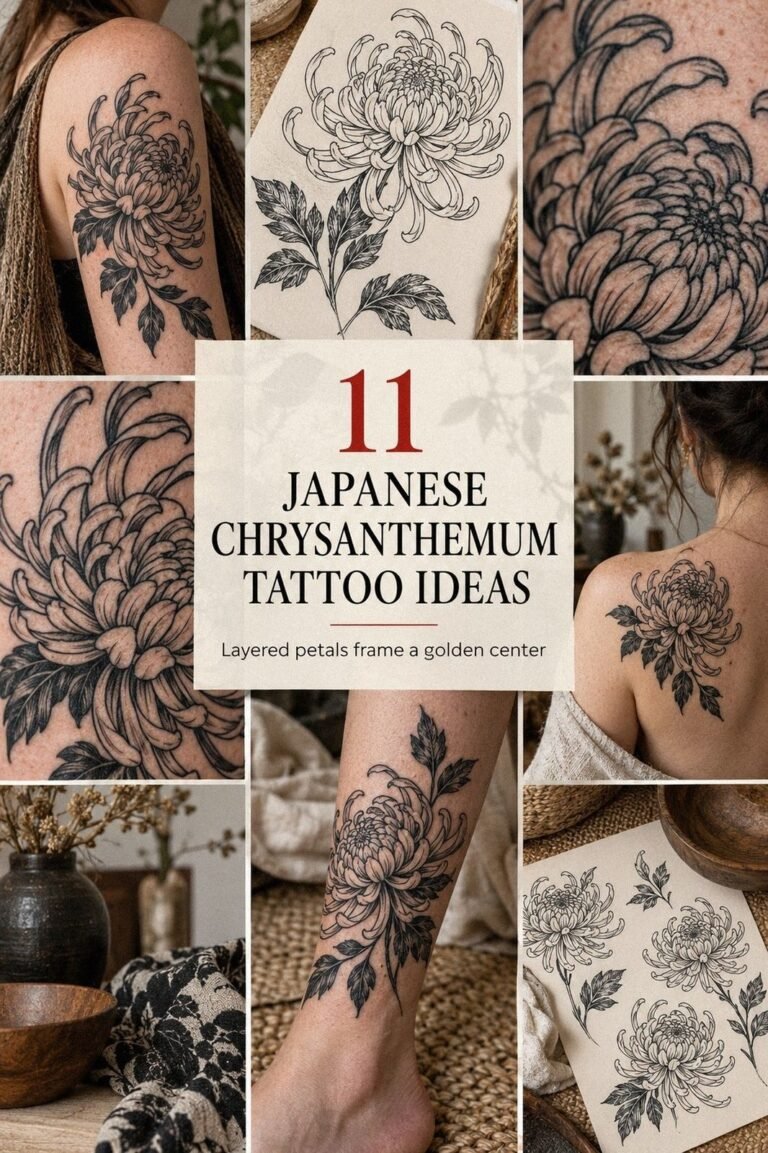
Dragons, koi, cherry blossoms, waves. The Japanese approach understands skin as a canvas with rules. Flow follows the body. Backgrounds hold everything together. I’ve done sleeves where the negative space is as important as the ink. These pieces age beautifully because they’re built to. The bold lines, the saturated color, the compositional logic, it all works together. Plus the symbolism runs deep. A koi swimming upstream isn’t just a fish; it’s a story about perseverance that resonates with people.
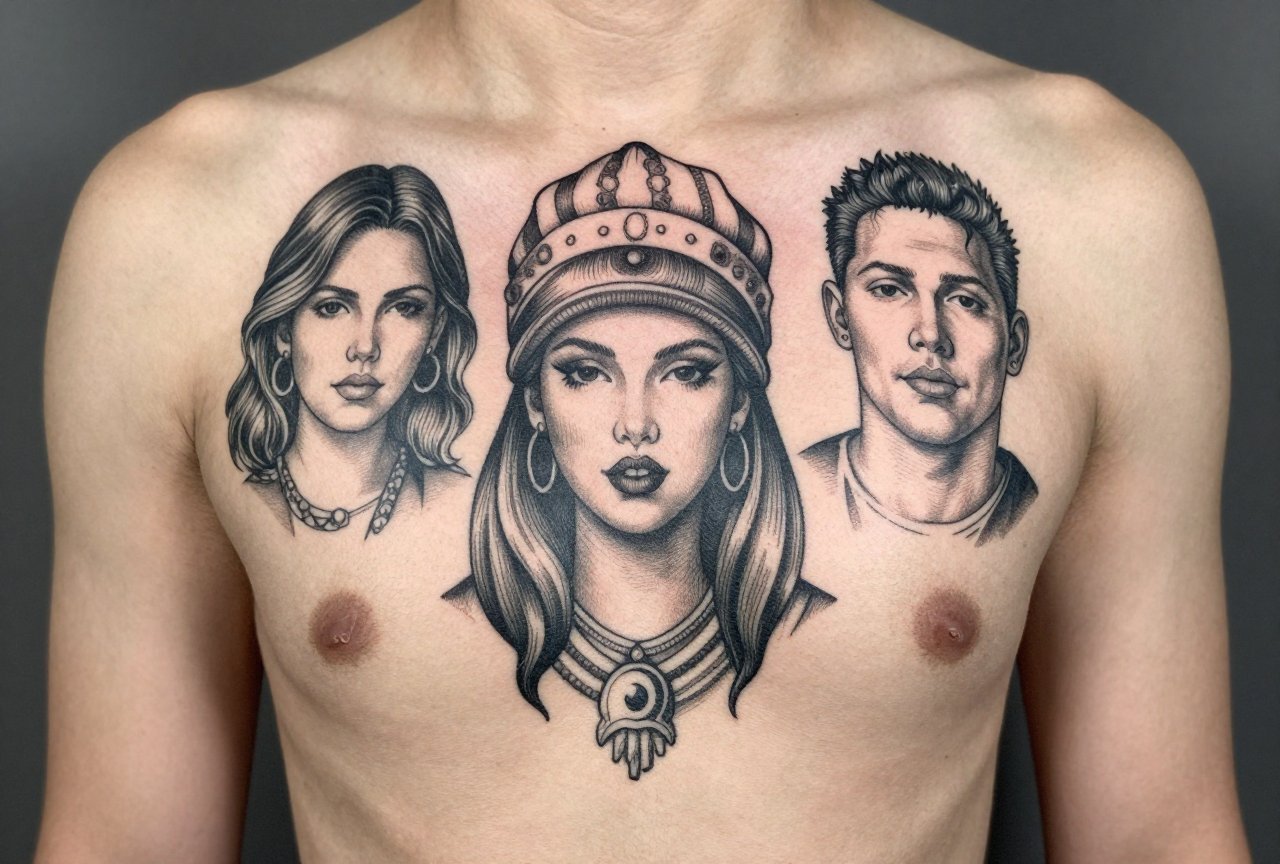
- Black and grey realism: portraits, wildlife, religious imagery. Needs an artist who understands value range, not just photo copying.
- Illustrative: looser than traditional, more structured than sketch-style. Think children’s book art meets tattoo. Holds up better than pure fine-line.
- Blackwork ornamental: mandalas, geometric patterns, dotwork. The density of ink means longevity, but placement matters for how it moves with you.
Design Ideas That Mean Something
Popularity doesn’t have to mean generic. The most requested subjects I’ve seen, flowers, animals, celestial imagery, text, can be deeply personal with the right approach.
Floral Work
Roses, peonies, lotus, wildflowers. I probably tattoo some form of flower weekly. The difference between a tattoo you’ll keep and one you’ll laser? Specificity. Your grandmother’s actual garden roses, not a generic rose clip art. The peony that grew outside your childhood window. I’ve had clients bring pressed flowers, old photos, even seed packets. We build from there. Color or black and grey both work; color pops initially but black and grey ages more gracefully on some skin tones.
Animals and Spirit Creatures
Wolves, lions, snakes, birds. The key is posture and expression. A wolf howling at nothing means less than a wolf with specific fur direction, specific eye contact, specific reason for being there. I’ve tattooed a client’s dog who died, rendered in her actual sleeping position. That’s different from a wolf stock image. Snakes work great wrapping around arms or legs, they follow anatomy naturally. Birds in flight read well on collarbones, ribs, across shoulders.
- Celestial: moons, suns, stars, planets. Trendy but timeless if done with weight and intention. Fine-line crescent moons are everywhere; a heavy black moon with texture lasts longer.
- Text and lettering: script, typewriter fonts, handwritten notes. I always warn clients: small text blurs. I won’t do anything under 10-point equivalent. Bold, simple fonts age better than ornate ones.
- Skulls and anatomical imagery: still popular, still striking. The difference is artistry, an actual human skull reference versus a cartoon.
Best Placements for Popular Designs
Where you put it changes everything. I’ve watched great designs fight bad placement and lose.
Forearms are the most requested spot in my shop. They heal relatively easily, they’re visible but coverable, and the skin is stable, not too thin, not too thick. Traditional designs, script, and medium-sized florals thrive here. The downside? Everyone sees it. Make sure you want that conversation.
Ribs and sides hurt more, heal trickier because of movement and breathing, but the canvas is expansive. Japanese back pieces extend onto ribs. Long vertical designs, snakes, floral stems, script, flow with the body’s natural lines. I always tell clients: bring a tight shirt to the appointment. We need to see how the design sits when you’re not standing perfectly straight in a mirror.
- Thighs: great for larger work, relatively low pain, easy healing. Popular for mandalas, portraits, big florals. Inner thigh is more sensitive and prone to rubbing.
- Hands and fingers: I do them, but I give the speech first. These fade fast, blow out easily, and are hard to hide. Small simple designs work better than detailed ones.
- Behind the ear and neck: trendy placements, but the skin is thin and mobile. Fine lines blur. Bold, simple shapes work better.
Color Choices That Last
Black and grey versus color is probably my most common consultation conversation. There’s no right answer, but there are realities.
Black and Grey
Always ages. Always reads. I’ve got black and grey pieces from my apprenticeship that look essentially unchanged. The trick is contrast, pure black next to clean skin tone, with a full range of greys between. Without that range, everything goes muddy. A design that’s all medium grey looks like a bruise in five years.
Color Saturation
Bold traditional colors, red, yellow, green, blue, last when they’re packed in solid. Watercolor-style pieces with light washes? I’ve seen them fade to almost nothing. We call it “tattooing like a T-shirt” in the shop: if the design would look good on a shirt with flat, bold colors, it’ll probably tattoo well. Pastels and neons are harder. White ink yellows on most skin tones. I use white for highlights, not as a main color.
- Skin tone matters for color vibrancy. I adjust palettes based on undertone and melanin. What pops on fair skin needs different saturation on darker skin, not less beautiful, just different approach.
- Color tattoos need more touch-ups over time. Factor that in.
Tips for Choosing Your Design
I’ve tattooed spontaneous walk-ins and clients who planned for three years. Both can work. Here’s what I actually say in consultations.
Live with the image. Print it, tape it to your bathroom mirror, your car dashboard. If you’re not sick of it in a month, that’s information. I’ve had clients change their minds after this step, better then than after the needle.
Consider your actual life, not your fantasy life. That massive chest piece looks incredible in the artist’s portfolio. Will your job allow it? Your partner’s preferences aren’t everything, but your professional reality matters. I’ve covered up pieces that were fine tattoos but wrong timing.
- Research your artist’s healed work, not just fresh photos. Everyone looks good at day one. Ask to see year-old pieces if possible.
- Be open to the artist’s input. I redraw almost every reference clients bring. Not because I’m difficult, because skin isn’t paper, and what works on screen needs translation.
- Budget for quality. Popular designs done cheap become expensive cover-ups. I’ve fixed enough bargain tattoos to know.
- Think about the long arc. What you’ll want at 25, 45, and 65 might differ. That’s okay. The tattoo doesn.t have to carry that weight forever. It just has to be honest.
Final Thoughts
Popular tattoo designs become popular because they tap into something real, beauty, memory, identity, rebellion. The difference between a tattoo you keep and one you regret isn’t usually the subject. It’s the execution, the placement, the reason, and the artist you trusted. I’ve watched clients cry happy tears and I’ve watched them sit silently with regret. The ones who love their work years later did the thinking beforehand. They respected the process. They treated their skin like the permanent, living canvas it actually is.
Frequently Asked Questions
How do I know if a trendy design will look dated in ten years?
Ask yourself if the design connects to something personal or if you’re just seeing it everywhere. I’ve noticed that tattoos tied to actual memory or meaning tend to outlast pure trend pieces. Also, bolder, more traditional execution ages better than hyper-specific stylistic fads.
Why do some artists refuse to do certain popular designs?
Sometimes it’s about technical feasibility, what looks good on paper won’t work on skin. Other times we’ve done fifty of the same Pinterest image and can’t bring fresh energy to it. An honest artist will explain why and suggest how to make it yours instead of a copy.
Is it okay to combine multiple popular elements into one tattoo?
Absolutely, but composition matters. I’ve seen beautiful pieces that combine florals, animals, and celestial imagery into cohesive sleeves. The key is giving each element enough space and visual weight. Crowding five trending ideas into one small tattoo usually means none read clearly.
How much should I expect to pay for a quality piece of a popular design?
There’s no universal rate, but in my experience, anything significantly below market rate in your area is a red flag. Most established artists charge hourly or by piece. A palm-sized detailed design from a skilled artist typically runs several hundred dollars minimum. This is permanent work on your body, budget accordingly.
More Tattoo Ideas
- Amazing Tattoo Designs That Actually Work
- Christianity Tattoo Ideas for Believers
- Fob Watch Tattoo Designs That Actually Work
- Explore more