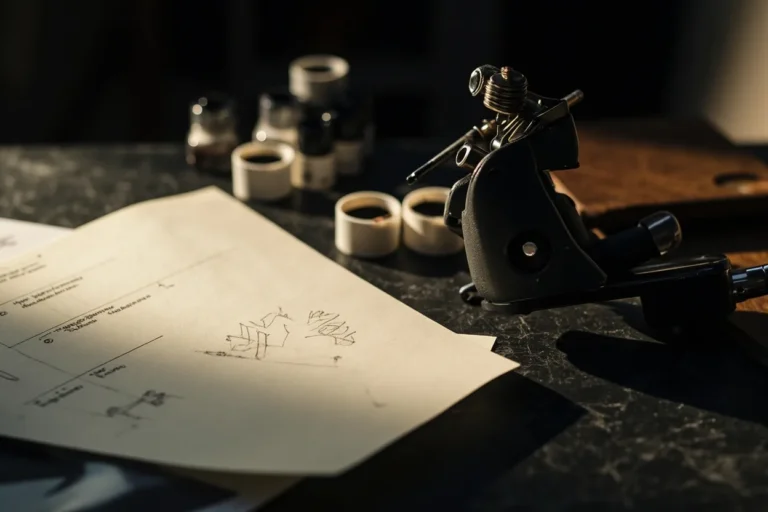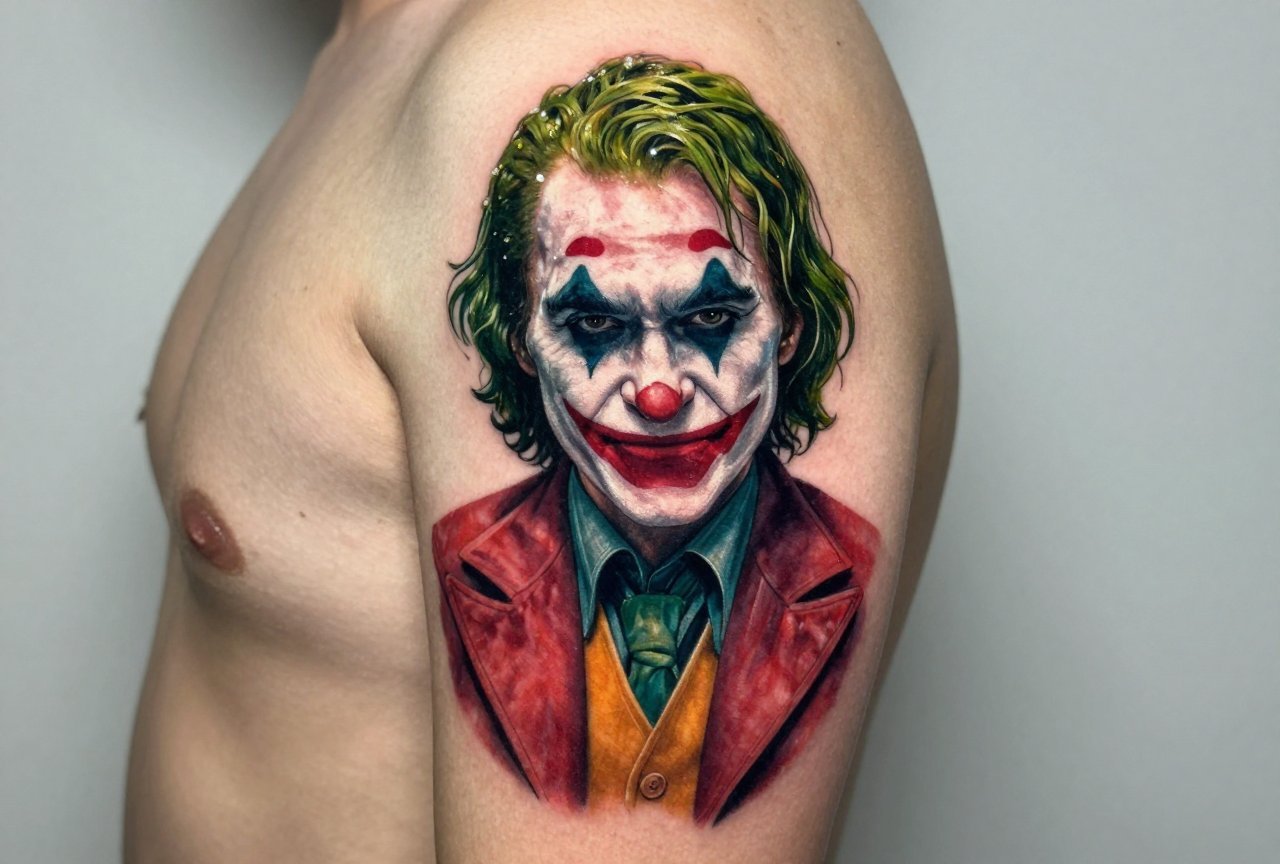
A realistic Joker tattoo isn’t some cartoon scribble you pick off a flash sheet. It’s a portrait study that demands technical precision, emotional range, and an artist who understands how to translate cinematic or comic-book chaos into skin that breathes. I’ve tattooed Heath Ledger’s smeared greasepaint grin, Joaquin Phoenix’s hollow-eyed staircase moment, and more classic Romero-inspired pieces than I can count. Each version hits different. The Joker endures because he mirrors something we recognize, the smile that doesn’t reach the eyes, the chaos beneath the surface. Done right, these tattoos become haunting. Done wrong, they become regrettable fast.
Origins & History
From Comic Panels to Cinematic Icon
The Joker debuted in 1940 as a grinning psychopath in Batman #1. Cesar Romero’s campy TV version gave him pop-culture legs, but Jack Nicholson’s 1989 turn started the tattoo trend in earnest. I still see older clients with faded Nicholson pieces from the ’90s, purple suit, that frozen rictus, sometimes paired with a playing card. The style back then was more illustrative, less photorealistic. Skin wasn’t ready for what cameras could capture.
Heath Ledger changed everything. His 2008 Dark Knight performance gave tattoo artists a reference with depth: the scarred Glasgow smile, the smudged makeup, the exhaustion in the eyes. Suddenly clients wanted that specific frame, the hospital explosion walk, the interrogation room lean, the dangling tongue. I tattooed three “Why so serious?” pieces the month that film dropped. The realism bar got raised permanently.
The Phoenix Era
Joaquin Phoenix’s 2019 Joker brought a different energy, fragile, emaciated, almost pitiable. The Arthur Fleck transformation scenes became instant reference material. Clients started asking for the bathroom dance, the staircase descent, the bloody smile against green hair. This version demands more from an artist: you need to render bone structure, malnutrition, the specific quality of fluorescent lighting on skin. It’s harder than the Ledger version in some ways because there’s less makeup to hide behind.
Key Characteristics & Motifs
What separates a realistic Joker tattoo from a generic clown portrait? Specificity. The devil’s in the details that casual viewers miss but fans clock immediately.
- The mouth: Ledger’s scarred cheeks with prosthetic texture, Phoenix’s hand-painted clown makeup cracking at the edges, classic Joker’s chemically bleached permanent grin, each requires different technical approaches
- The eyes: Ledger’s dark-rimmed exhaustion, Phoenix’s hollow sockets, Nicholson’s wild intensity, eyes sell the realism or kill it
- Hair: Stringy, green, often matted. I use whip-shading and negative space to suggest individual strands without overworking the skin
- Playing cards: The Joker card, sometimes burning, sometimes blood-stained, often integrated as background texture
- The laugh: Harder to render visually, but some artists incorporate sound waves, text, or the mouth mid-cackle
- Chaos symbols: Smiles, knives, graffiti tags, sometimes Gotham skyline elements
Line work here is minimal. Realistic Joker tattoos live and die by smooth gradients, precise value studies, and understanding how skin tone affects color perception. I always tell clients: the reference photo matters, but your skin’s undertone will change everything.
Color vs Black and Grey
Full Color Realism
Color Joker pieces pop. The green hair, the purple suit, the red smile, it’s instantly readable across a room. But color realism on skin is a commitment. Greens and purples are notoriously finicky. I’ve seen beautiful Heath Ledger color portraits fade to muddy olives within three years. The trick is saturation without over-saturation, packing enough pigment to last without blowing out the skin. I use a slower hand speed with purples, more passes with green, and always warn clients: touch-ups are almost guaranteed.
Phoenix’s Joker actually offers better color longevity in some ways. The palette is muted, mustard yellows, dirty greens, institutional beiges. These earth tones age more gracefully than comic-bright primaries.
Black and Grey
Black and grey Joker tattoos age like whiskey. The contrast holds. The expressions read even when color would have long since dulled. I personally prefer black and grey for the Ledger version specifically, the white face paint becomes negative space, the dark eye rims become pure black saturation, and the scar texture renders beautifully through greywash layering.
The trade-off? Less immediate impact. A black and grey Joker doesn’t shout across the beach. It rewards close looking. For clients who want something that reads at twenty feet, I steer toward color or high-contrast black and grey with heavy blacks.
Best Placements
I’ve tattooed Jokers on thighs, ribs, forearms, upper arms, calves, and one full back piece that took fourteen sessions. Placement changes the piece entirely.
- Outer forearm: Classic visibility. The rectangular shape suits portrait orientation. Easy to show, easy to hide with long sleeves. Watch the wrist bone area, thin skin there can blow out fine detail
- Upper arm/shoulder: More canvas for environmental elements, cards, smoke, cityscape. The curve of the deltoid can distort facial proportions if the artist doesn’t compensate
- Thigh: My favorite for large-scale pieces. Flat, stable, lots of real estate. The Joker’s face at scale, maybe mid-thigh to knee, with the card suit symbols trailing down
- Ribs: Painful. The skin moves constantly with breathing. Detail work here requires a client who can sit still through hours of vibration. I did a Phoenix staircase scene on ribs once, beautiful result, but the client nearly tapped out session three
- Chest: Bold statement. The sternum area works for frontal portraits. Be careful with nipple proximity, tattooing over areola changes texture and can affect future mammogram readings
Small Joker tattoos rarely work. Below four inches, facial features merge. The smile becomes a blur. I turn down palm-sized portrait requests gently but firmly.
Who It Suits
Not everyone should wear chaos on their skin. I talk through this in consultations. The Joker represents different things: anti-authority, mental health struggle, pure villainy, misunderstood genius, nihilism. I’ve had clients who connect with the character’s pain. Others just love the aesthetic. Both are valid, but I want people thinking past the Instagram post.
Professionally, visible Joker tattoos still carry weight. I’ve covered hand and neck Jokers for clients entering conservative fields. The face itself isn’t inherently threatening, but the association persists. Placement discretion matters for teachers, medical workers, anyone client-facing.
Skin tone affects rendering too. On darker skin, I adjust contrast ranges, use more solid black anchoring, sometimes shift toward illustrative realism rather than pure photorealism. It’s not limitation, it’s adaptation. The best Joker I saw last year was on deep brown skin, heavy black and grey, the smile rendered through negative space that let the natural skin tone shine through.
Modern Variations
Neo-Traditional and Stylized Realism
Some artists are pushing beyond pure photorealism. I’ve seen Jokers with ornamental frames, art nouveau hair flowing into green smoke, the face split between Ledger and Phoenix as a dual portrait. These pieces respect the realism foundation but add artistic interpretation. They age better in some ways, the stylized elements hold when micro-detail might blur.
The Joker and Harley Dynamic
Couple pieces still happen, though less since the relationship’s toxic coding became mainstream conversation. When I do them now, clients usually want separate but complementary pieces, her on one arm, him on the other, or both contained in a single composition with clear visual separation. The “mad love” narrative doesn’t land the same way in 2024.
Choosing an Artist
This is where I get passionate. A realistic Joker portrait requires specific skills: portrait experience, familiarity with the character’s nuances, and enough confidence to say no when reference won’t translate. I’ve fixed three Joker tattoos this year from artists who took on work beyond their range.
- Check portfolios for actual portraits: Not just one. Multiple. Faces of different ages, skin tones, expressions
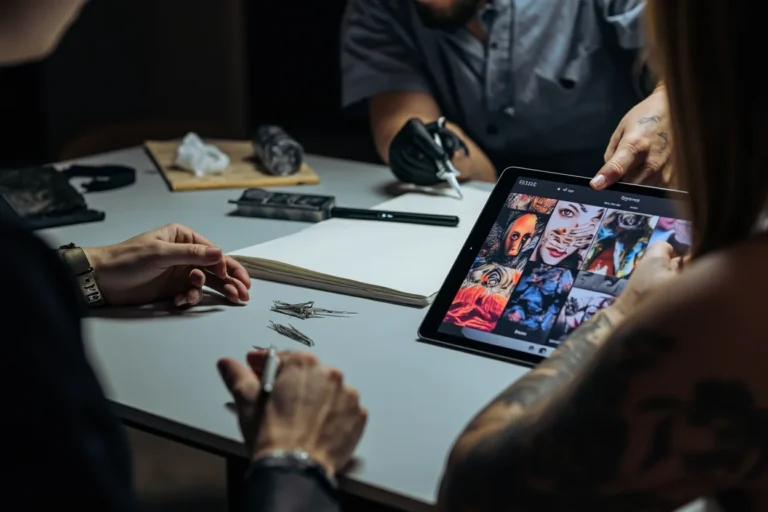
- Ask about their reference process: Good artists will discuss lighting, angle, resolution. I refuse to work from screenshots, minimum 300dpi, proper lighting, clear focus
- Discuss aging explicitly: How will this read in ten years? What details will soften first? Honest artists will point out problem areas
- Budget realistically: Quality portrait work runs $150-400 per hour depending on region. A solid forearm Joker might be 8-12 hours. The guy offering $200 full color is cutting corners somewhere
- Healing communication: Realistic tattoos need precise aftercare. Color packing requires different healing attention than line work
I always schedule a second consultation after the design draft. Joker tattoos carry emotional weight. I want clients sleeping on it, not impulse-committing.
Final Thoughts
A realistic Joker tattoo done well becomes part of your body’s architecture. The grin follows your muscle movement. The eyes catch light differently as you age. I’ve watched clients grow into these pieces, the character taking on new meaning as their lives shift. That’s the power of choosing something with cultural density over trendy emptiness.
The Joker persists because he’s adaptable, mirror, warning, celebration of chaos, depending on who’s wearing him and why. Get it for the right reasons, find an artist who respects the material, and sit still for the hours required. There’s no shortcut to a smile that convincing.
Frequently Asked Questions
How long does a realistic Joker tattoo typically take to complete?
A detailed forearm portrait usually runs 8-12 hours across multiple sessions. Larger pieces with background elements can stretch to 20+ hours. I never rush portrait work, skin can only handle so much trauma per sitting, and healing between sessions improves the final result.
Will a color Joker tattoo fade faster than black and grey?
Greens and purples are among the least stable tattoo pigments. Expect significant fading in 5-7 years without touch-ups. Black and grey holds substantially longer, often a decade or more before softening becomes noticeable. I always discuss this trade-off during consultation.
Can you combine different Joker actors in one tattoo design?
Absolutely, though it requires careful composition. I’ve done split-face designs, timeline progressions, and shadow-box style pieces with each actor in their own frame. The key is giving each portrait enough space to read individually, crowding destroys the realism effect.
What’s the most common mistake people make with Joker tattoo aftercare?
Over-moisturizing. Clients see flaking and panic, applying too much ointment. This suffocates the tattoo, pulls out ink, and causes patchy healing. I instruct thin layers, frequent gentle washing, and patience through the ugly phase. Realism can’t be rushed.
Related Style Guides
- Realistic Palm Tree Tattoos: A Working Artist s Guide
- Chicano Sleeve Tattoos: A Working Artist s Guide
- Traditional Military Tattoos: Complete Style Guide
- Explore more