
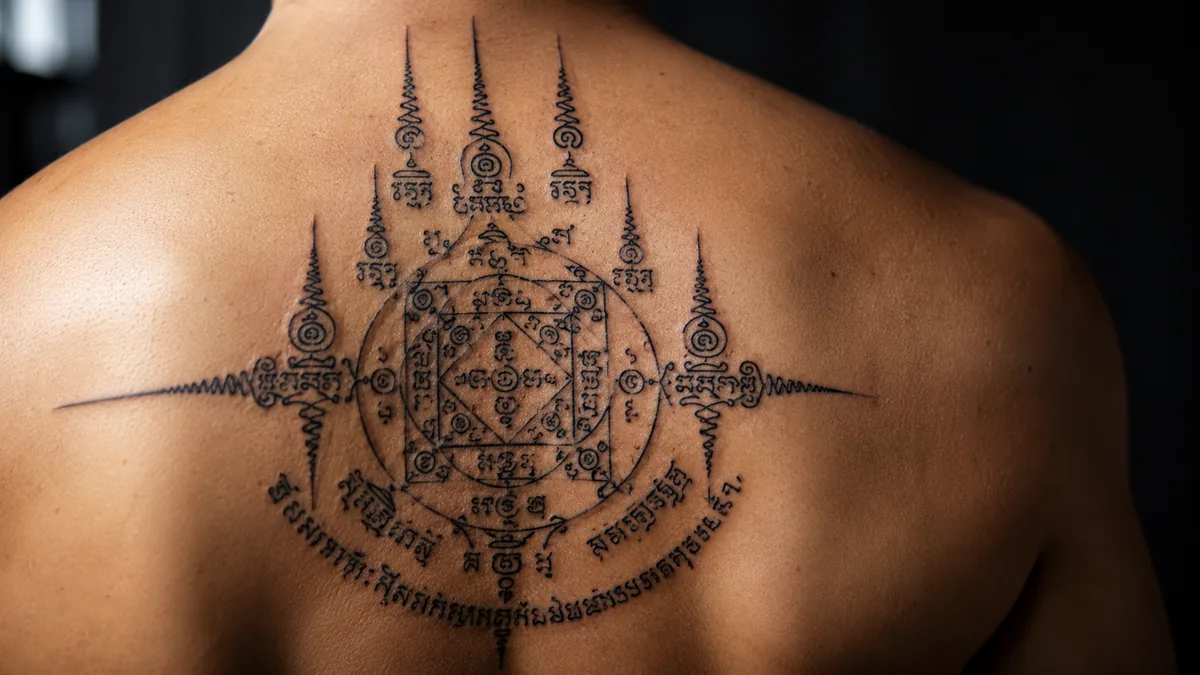
Sak yant is not just a tattoo. It’s a sacred geometric script from Southeast Asia, mostly Thailand, Cambodia, and Laos, that people have been wearing on their skin for over a thousand years. The designs are loaded with Buddhist and animist symbolism, and each one carries a specific intention.
If you’re thinking about getting one, you need to understand what you’re putting on your body. These aren’t decorative patterns somebody invented last week. They come with real meaning, real tradition, and a lot of cultural weight. Here’s the honest breakdown.
What Sak Yant Actually Means
“Sak” means to tap or tattoo by pricking in Thai. “Yant” comes from the Sanskrit word “yantra,” which means a sacred geometric diagram used for meditation or magical protection. Put them together and you get sacred geometric tattoo, essentially. That’s not a marketing label. That’s the literal translation of what you’re getting.
Each sak yant design is a combination of Khmer script, geometric shapes, and Buddhist prayers. The script is old Khmer, sometimes Pali, and it spells out specific blessings or mantras. The geometry amplifies those blessings. Nothing in the design is accidental. Every line, dot, and prayer row has a purpose.
The Cultural and Historical Background
Every line in a Sak Yant is a prayer, wear it like you mean it.
Sak yant goes back at least to the 11th century in Southeast Asia. Soldiers wore them for protection in battle. Monks and holy men called ajarns or ruesi tattooed them using long metal rods or bamboo needles, blessing the design as they worked. That ritual component is inseparable from the tradition. The blessing is part of what makes it a yant, not just a drawing.
Buddhism blended with older animist beliefs over centuries, and sak yant absorbed both. You’ll see protective spirits, mythological animals, and Buddhist cosmology all living in the same design. Thailand is where most Westerners encounter it today, especially around temple ceremonies and the famous Wai Kru festival where thousands gather to have their yants re-energized by monks.
The Most Common Designs and What They Mean
The Hah Taew is one of the most popular. Five vertical rows of Khmer script, each row carrying a specific blessing: protection from bad luck, protection from evil spirits, protection from dark magic, good fortune and success, and charisma or charm. Angelina Jolie’s sak yant made this one globally recognizable. The Gao Yord, sometimes called the nine peaks, represents the nine peaks of Mount Meru, the Buddhist sacred mountain, and is considered one of the most powerful protective yants.
The Paed Tidt is an eight-direction yant, offering protection no matter which way you travel. The Tiger yant, or Suea, brings strength, authority, and fearlessness. Twin tigers facing each other double that power and are common among fighters and people in physically demanding work. The Hanuman design calls on the monkey god’s loyalty, courage, and devotion. Each design has a clear, documented intention. Pick the one that matches what you’re actually after.
Traditional vs. Western Style Execution
Traditional sak yant is done by hand. A monk or ajarn uses a long steel rod with a pointed tip, dipping it in ink and tapping it into the skin in a rhythmic motion. The lines are crispy, the geometry is tight, and the script is precise. It’s a meditative process. The result reads clean and bold, and it heals surprisingly well because the hand-poke method doesn’t oversaturate the skin the way a machine can.
Western tattoo artists have adapted sak yant into machine work with mixed results. Fine line machine versions can be gorgeous, but if the artist doesn’t understand the geometry or the script, the design falls apart fast. A blowout in the Khmer lettering looks rough and loses the meaning entirely. If you’re going machine, find an artist who specializes in this style and can show you healed examples. Crisp lines that hold long-term matter here more than almost anywhere else.
Black and Grey vs. Color
Traditional sak yant is black and grey, almost always. The ink used in ceremonial tattooing historically contained sacred herbs, charcoal, and sometimes snake venom or other ritual ingredients. The aesthetic result is a deep, slightly muted black that settles into the skin beautifully. Black saturated well holds in the long run, and on most skin tones the contrast stays strong for years.
Color interpretations exist, particularly gold ink in Thai ceremonial contexts, which represents wealth and divine blessing. Some Western adaptations bring in color fills or watercolor washes behind the geometry. That’s your call artistically, but know that it moves away from tradition. If staying true to the original symbolism matters to you, stay in black and grey. The design reads from across the room either way when the lines are solid.
Placement and How It Ages
Back placement is traditional for many sak yants, especially larger pieces like the Hah Taew or Gao Yord. The upper back has great skin for holding fine script lines because it’s a low-movement, low-friction zone. The ribs are spicy but give you a clean flat surface. Upper arms and chest are popular too, and they hold well. Avoid high-wear zones like hands, fingers, and feet for intricate script work because the lettering will blur and fade faster than you want.
Sak yant ages well when placed correctly and executed with solid technique. The geometric lines stay readable for decades on low-wear placement. The script requires the most attention because fine Khmer letterforms need a confident hand and the right needle grouping. Thick, well-saturated lines hold their shape. Scratchy or underworked lines will spread over time and make the text illegible. Touch-ups every several years on high-detail areas keep it sharp.
Wearing It With Respect
This is a live conversation in the tattoo world right now. Sak yant carries genuine spiritual significance for millions of people across Southeast Asia. Getting one as a tourist at a temple is different from getting it at a tattoo shop with no context. Neither option is automatically wrong, but you should understand what you’re carrying. It’s a sacred prayer on your skin, not a geometric pattern somebody invented for aesthetics.
If you get one, learn what it means. Know which yant you chose and why. That’s basic respect for the tradition, and it also makes the tattoo more yours. People who understand their piece carry it differently. The intention behind a sak yant is part of its tradition. You don’t have to be Buddhist to wear one, but walking in informed is the right move every time.









