
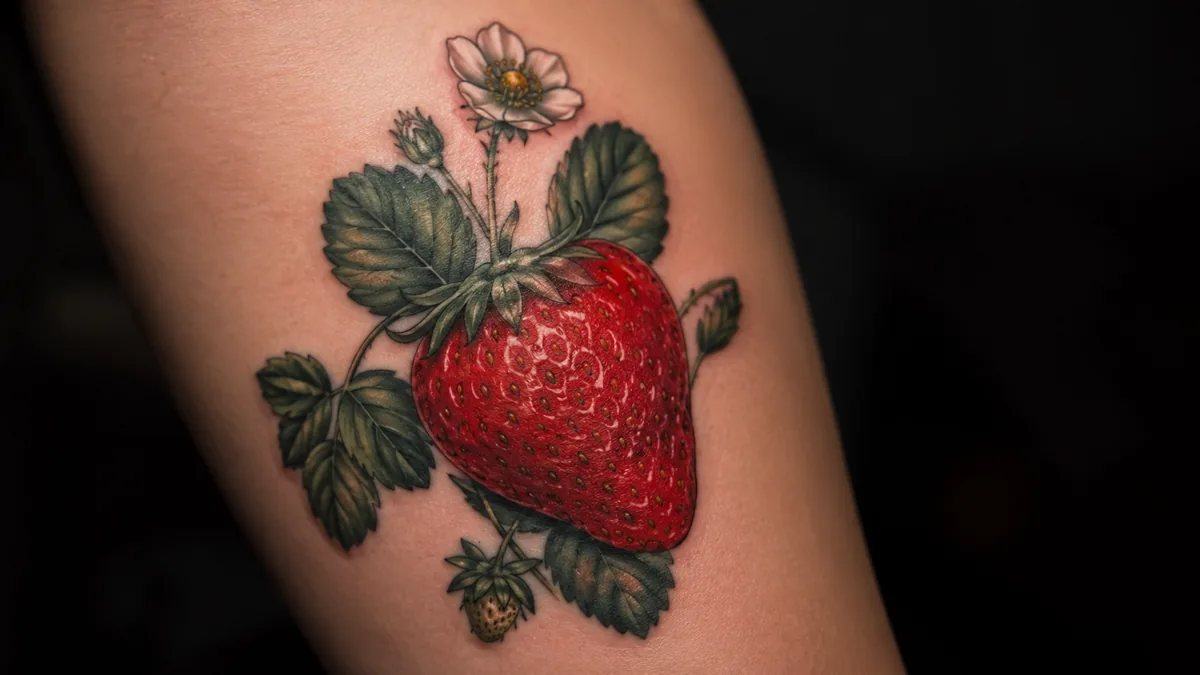
The strawberry tattoo is one of those designs that looks sweet on the surface but carries a lot more weight underneath. Across cultures and centuries, the strawberry has stood for love, desire, abundance, and the fleeting nature of good things. It’s not just cute fruit ink. It’s a loaded symbol.
People get strawberry tattoos for wildly different reasons, and that’s part of the appeal. Some want the sensuality angle. Some want the luck or abundance vibe. Some just have a deep personal connection to the fruit. Whatever the reason, it’s a versatile image that works across styles, body placements, and skill levels, from a crispy fine line ankle piece to a bold, saturated traditional forearm tattoo.
Core Meaning: Love, Desire, and Temptation
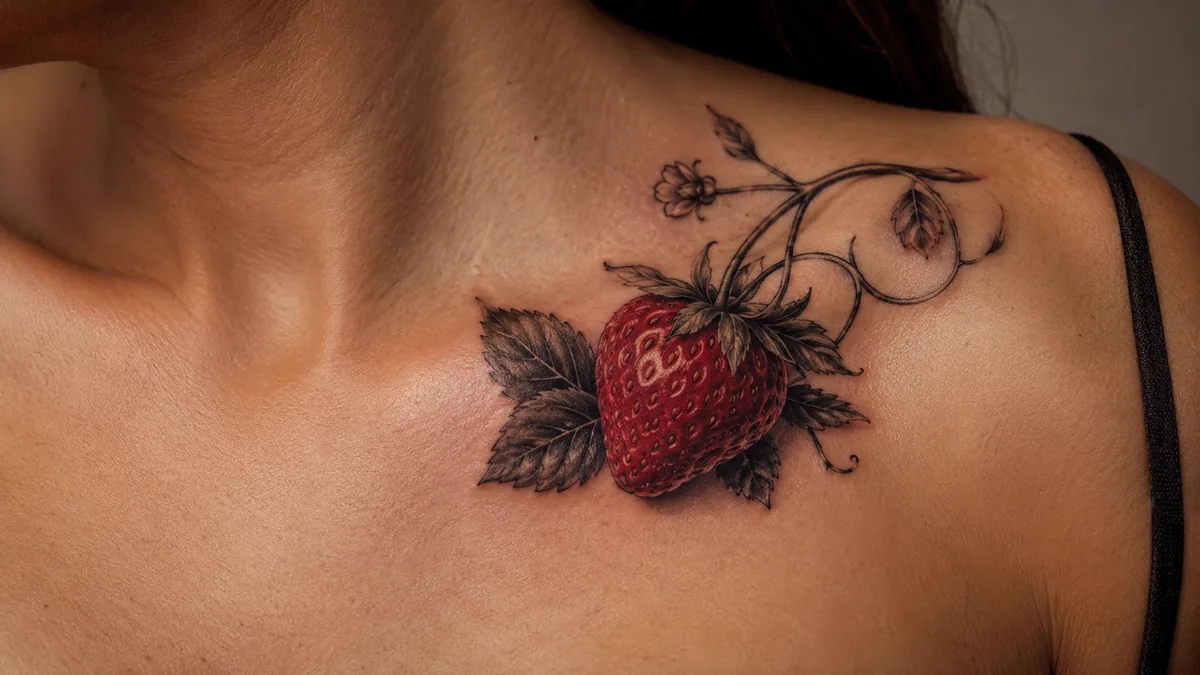
The strawberry’s most consistent meaning is tied to love and sensual desire. The heart-like shape, the deep red color, and the sweetness all point in the same direction. In Western symbolism, it’s been connected to Venus, the Roman goddess of love, for centuries. That association stuck. A strawberry tattoo today still carries that undercurrent of passion and romantic longing.
Temptation is the flip side of that coin. The strawberry sits right alongside the apple in the visual language of desire and forbidden pleasure. If you’re leaning into that angle, the design works. A single ripe strawberry with a bite taken out of it hits differently than a clean whole fruit. Context in the design shapes the reading, so talk with your artist about what you actually want to say.
Abundance, Luck, and the Good Life
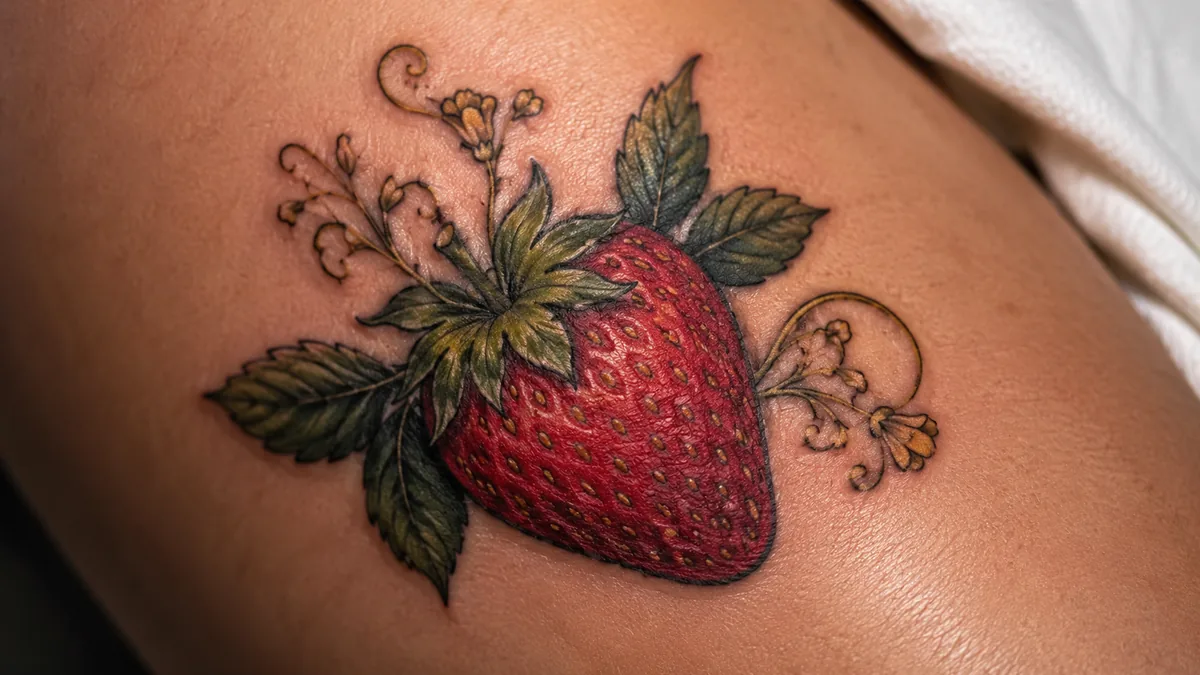
Sweet on the surface, loaded underneath, that's exactly the point.
Beyond love, the strawberry is a symbol of abundance and good fortune. In several European folk traditions, strawberries appearing early in the season meant a prosperous year ahead. They were associated with summer’s peak, with the earth giving generously, with enjoying what’s in front of you while it lasts. That meaning translates cleanly to tattoo culture.
People drawn to themes of gratitude, positive energy, or manifesting good things often land on the strawberry for this reason. It pairs well with other abundance symbols, sun rays, flowers in full bloom, bees. If you’re layering meaning into a larger piece, the strawberry holds its own in that context without looking out of place or forced.
Femininity, Sweetness, and Self-Expression
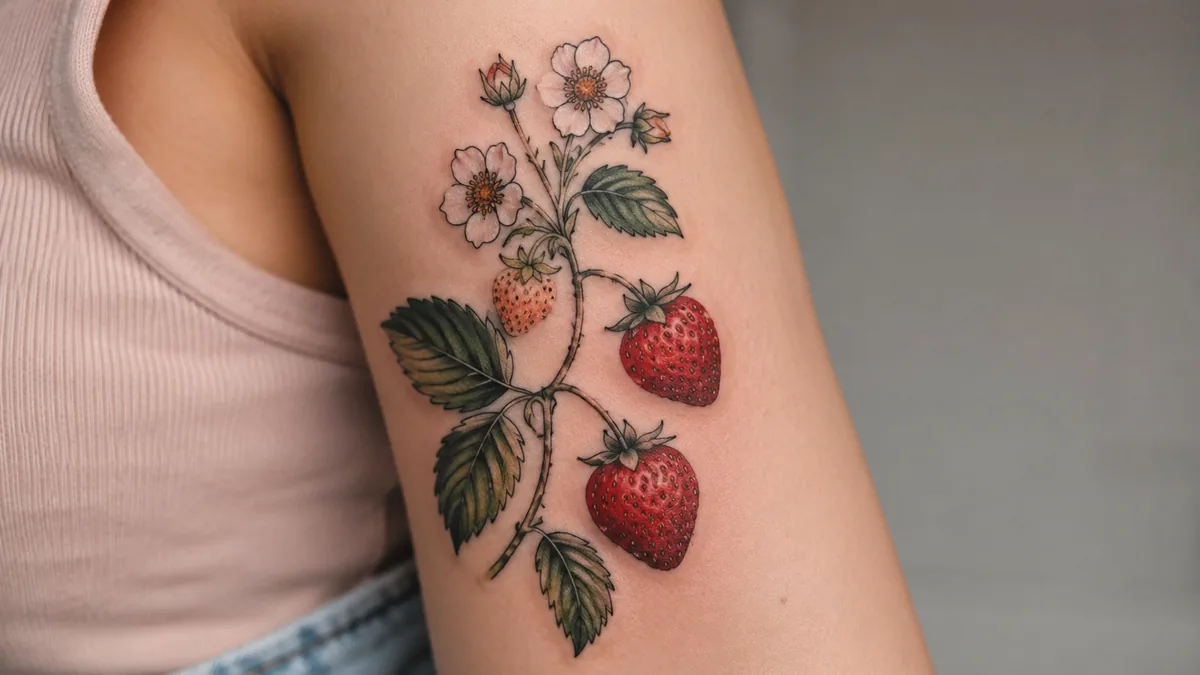
The strawberry has a long association with femininity. Not in a passive or delicate way, but in an ownership-of-self kind of way. It reads as soft on the outside and confident on the inside. A lot of women and femme-presenting people choose it for exactly that energy. It’s bold enough to mean something, gentle enough to stay personal.
That sweetness angle is also used intentionally as contrast. A strawberry paired with a knife, snake, or something dark creates that push-pull visual that tattoo culture does so well. The juxtaposition communicates complexity, something sweet that has teeth. It’s a classic compositional move and it works every time because both elements read clearly on their own.
Cultural and Historical Background
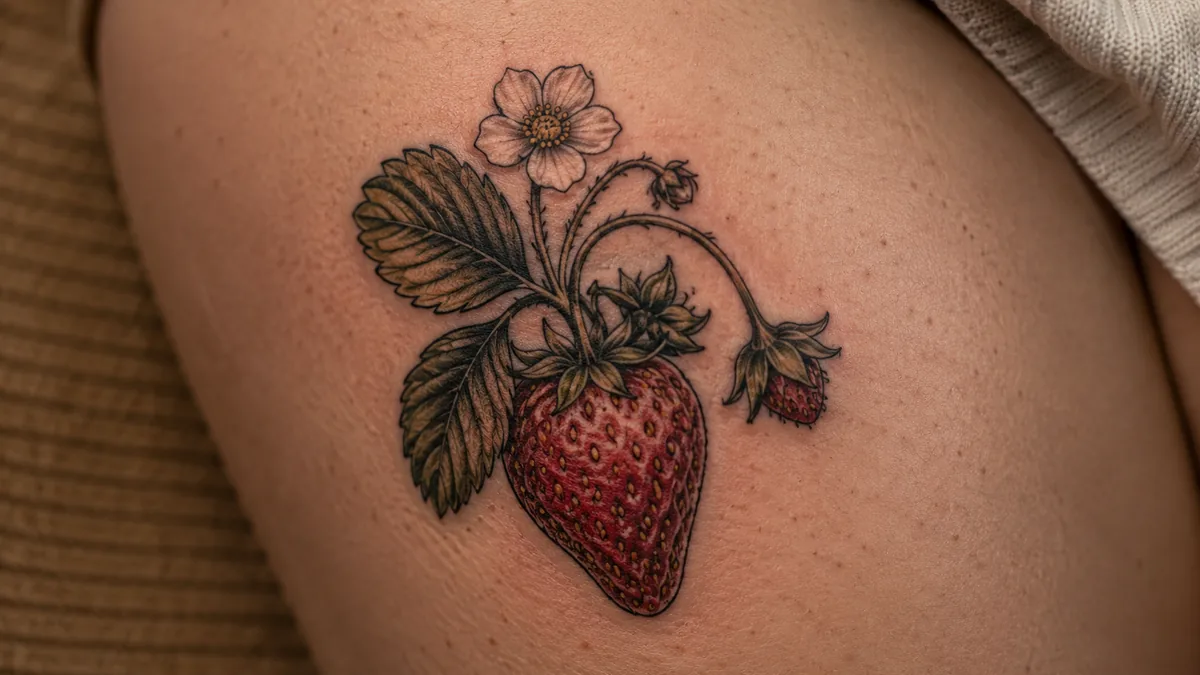
The strawberry shows up in European art going back to medieval times. In Christian iconography, it appeared in paintings as a symbol of righteousness and the fruits of good works. The Flemish and German painters used it regularly in still life and religious compositions. The three-leafed plant was sometimes linked to the Trinity. That’s the real history, grounded and documented.
In Japanese tattoo culture, the strawberry carries meanings of sweetness, good health, and seasonal abundance, aligned with the fruit’s summer harvest timing. It doesn’t carry the same spiritual weight as the cherry blossom or koi fish, but it’s a recognized positive symbol. Across the board, there’s no dark or threatening cultural reading attached to the strawberry. It runs clean symbolically in most contexts.
Design Styles and Variations
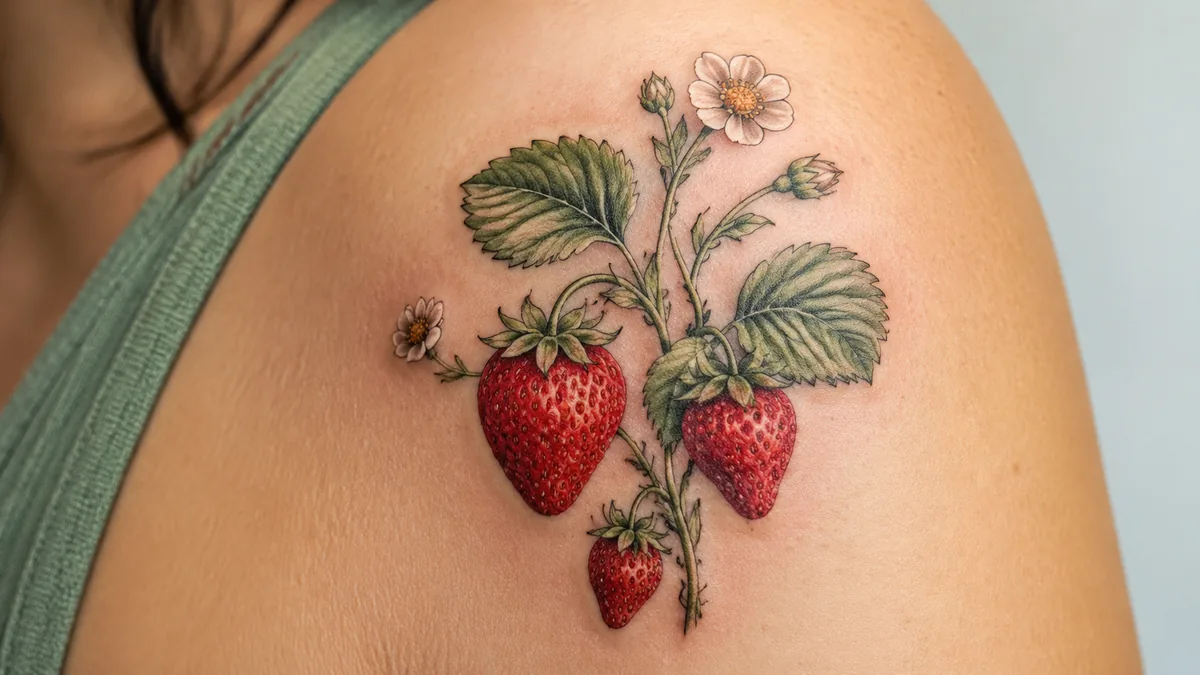
The strawberry translates across styles better than most botanical subjects. Traditional American style gives you bold outlines, saturated red fill, and a classic leaf cap that reads from across the room. It holds up over years because the lines are thick and the color is dense. Neotraditional adds depth and shading while keeping that punchy graphic quality. Both styles are strong choices for longevity.
Fine line and watercolor styles are popular too, especially for smaller pieces. Fine line on the wrist or collarbone looks crispy when it heals right, but be aware that thin lines in high-wear zones fade faster. Watercolor strawberries can look stunning fresh but need an experienced artist to maintain structure as they age. Black and grey realism is another solid option, especially for larger pieces where you want dimension without relying on color.
Color vs. Black and Grey
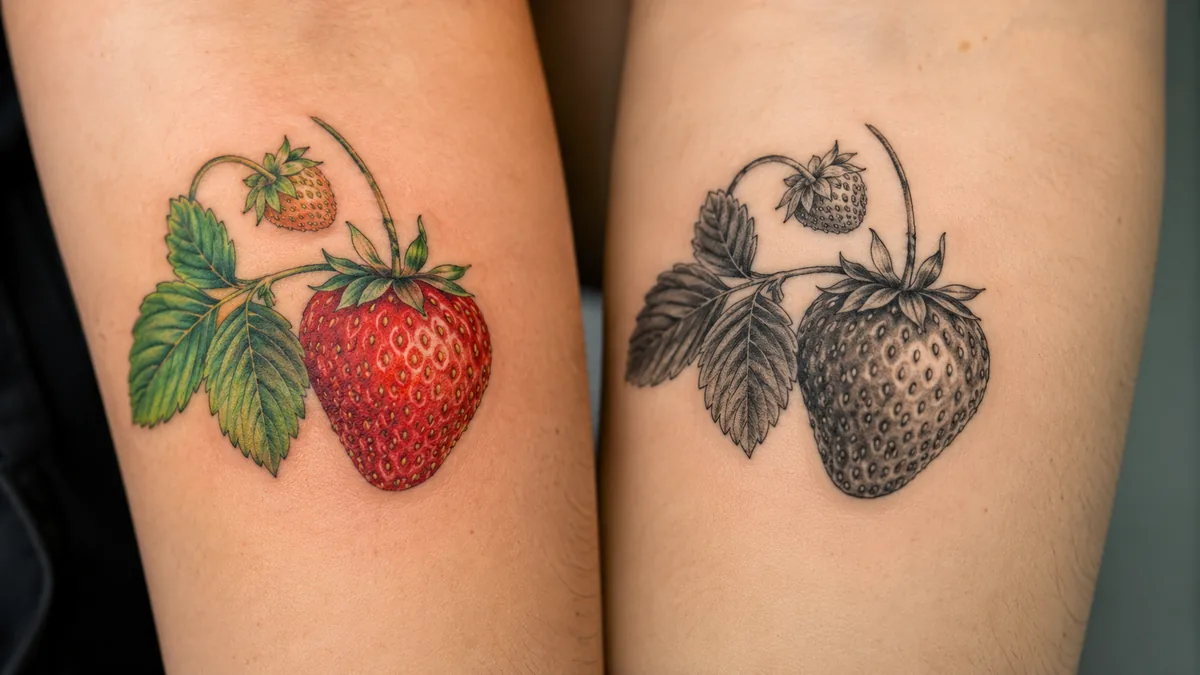
Color is the natural home for a strawberry tattoo. The red and green contrast is iconic and immediately recognizable. A saturated traditional piece in red, green, and a touch of yellow for the seeds reads clean even as it ages. If your artist can lay down solid, even color, a traditional or neotraditional strawberry in full color is going to look good for a long time with normal touch-up care.
Black and grey works well if you want something more subtle or if you’re building into a larger sleeve or panel where color consistency matters. A detailed black and grey strawberry with tight whip shading can look just as dimensional as a color piece. It also ages more predictably. If you’re on the fence, look at healed examples from your specific artist in both styles before you commit.
Placement, Pain, and Aging
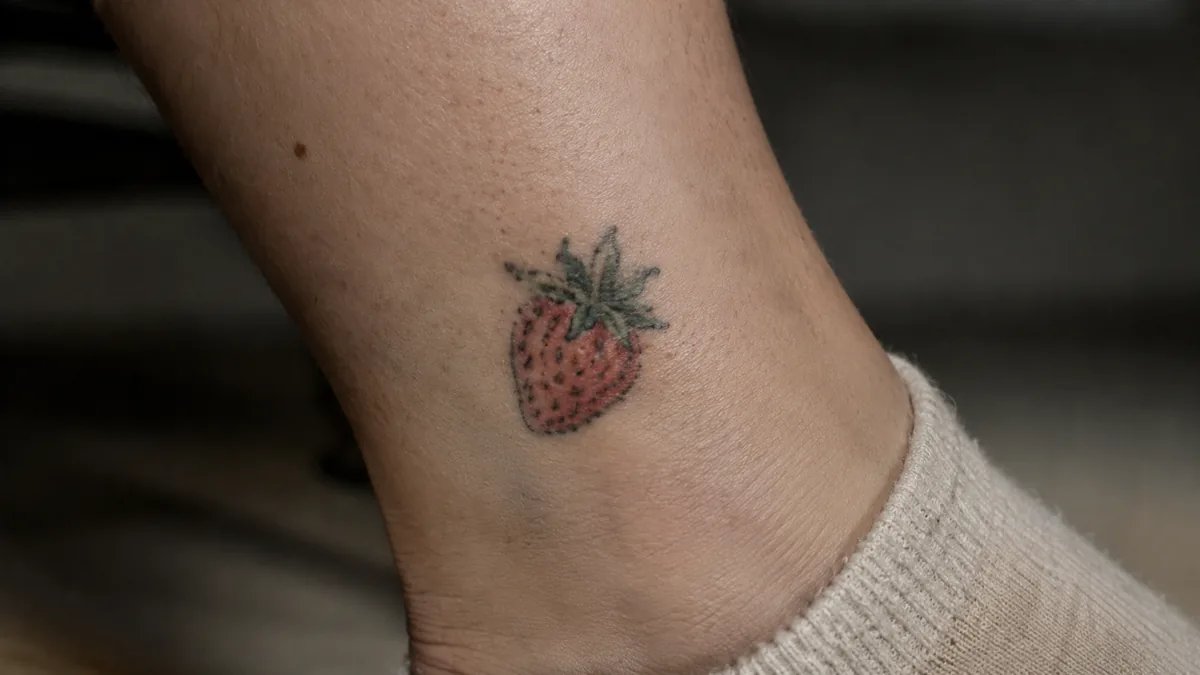
The strawberry is a flexible shape that fits a lot of placements well. Ankle, wrist, inner forearm, shoulder, and upper thigh are all solid spots. The thigh gives you the most canvas if you want a detailed piece with background elements. The ankle and wrist are high-wear zones, so fine line work there will need touching up sooner than something on the shoulder or upper arm. Keep that in mind when choosing your style.
Pain-wise, nothing here is unusually spicy unless you’re going for the ribcage, sternum, or inner arm. Ankle bone is uncomfortable. Inner elbow and inner wrist have some nerve sensitivity but are manageable. The forearm and upper arm are genuinely easy. For a small to mid-size strawberry, the session is short enough that placement pain is rarely the deciding factor. Pick what looks best on your body, then prep accordingly.
Who Gets It and How to Make It Yours
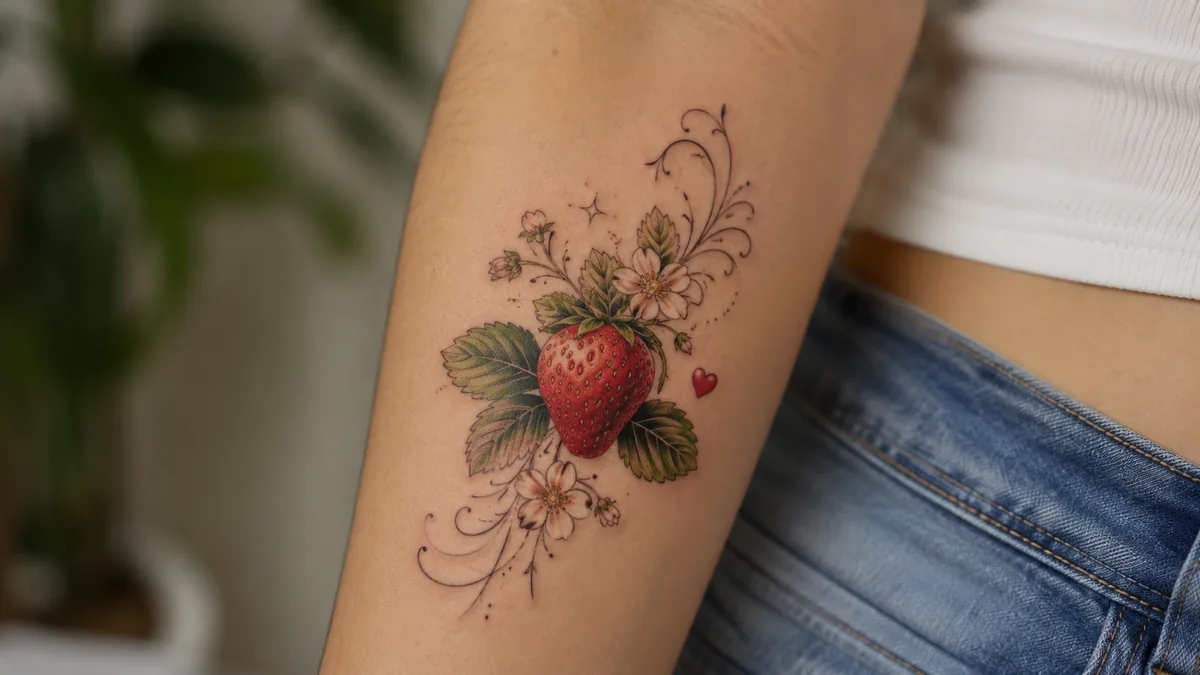
Strawberry tattoos attract a wide range of people. A lot of women get them as a personal symbol of femininity or romantic energy. People with a connection to summer, to sweetness, to enjoying life fully, gravitate toward it. Some get it to represent a person they love or a chapter of life they want to carry. It’s an anchor piece that can hold a specific personal story without needing to explain itself to strangers.
To make it feel personal, think about what detail changes the reading. Add initials inside the fruit. Replace the seeds with small stars or dots. Incorporate a birth flower alongside it. Give it a specific facial expression if your artist does character work. Use a color palette that means something to you instead of defaulting to classic red. The symbol is common enough that the details are what make your version yours. Work closely with your artist on the composition and don’t rush the design phase.









