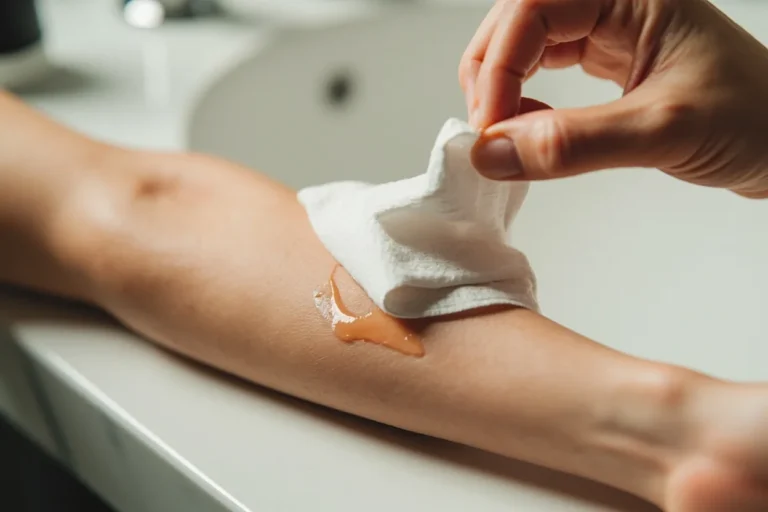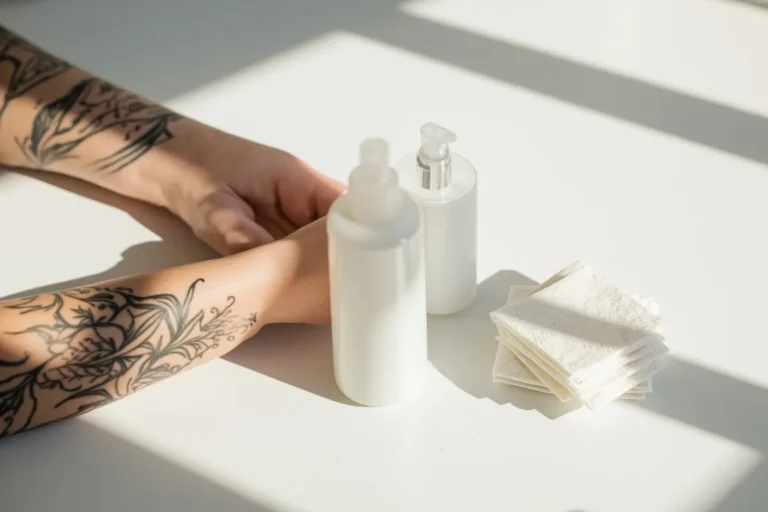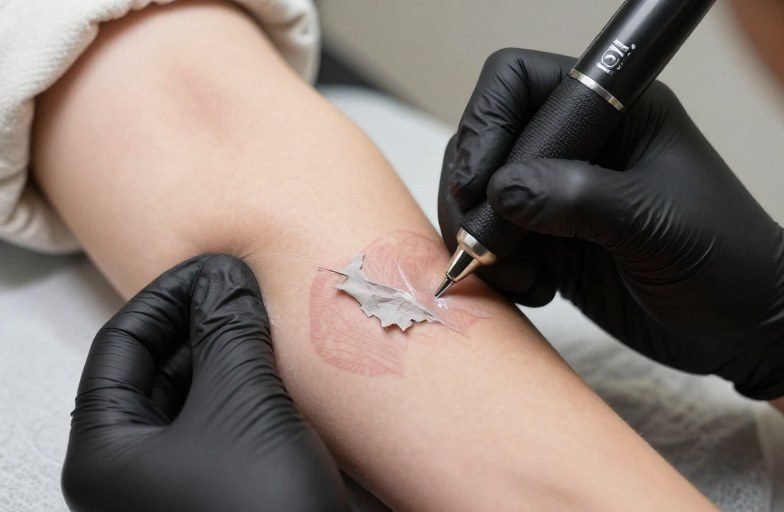
Right after the peeling stage, your tattoo will look dull, milky, or faded. This is nearly always normal. The top layer of dead skin is clouding the fresh ink beneath, and the bold colors or crisp blacks are still settling into their permanent depth. Give it two to four more weeks before judging the final result.
Realistic Expectations
Fresh tattoos go through a predictable visual rollercoaster. Understanding the phases keeps you from panicking at the mirror.
The Peeling Phase
Days five through fourteen, your skin flakes like a mild sunburn. The ink sits under this translucent, shedding layer, so contrast drops significantly. Blacks look gray; colors look pastel. This is not ink loss, it’s optical interference from dead tissue sitting on top of living skin.
The “Ghost” Stage
After peeling finishes, many tattoos enter a milky or hazy period lasting another two to four weeks. The epidermis is still regenerating, and new cells haven’t fully compacted into their final transparency. The tattoo can look worse now than it did during peeling. Patience matters here more than any product.
- Peeling: days 5, 14, visible flakes, dull appearance
- Ghost stage: weeks 2, 6, milky overlay, muted tones
- True settled look: weeks 6, 8, full color return
- Final assessment: 2, 3 months for complete skin turnover
How Different Ink Colors Behave During Healing
Not all ink colors look equally bad during the healing phase, and not all return to their pre-healing appearance on the same schedule. Knowing what to expect from each color prevents unnecessary alarm and helps you identify the rare cases where something actually went wrong.
Black and Dark Gray
Black ink looks the most dramatic during healing, which surprises a lot of people getting their first tattoo. While the skin is peeling and the ghost stage is active, solid blacks shift to a chalky, flat gray. The depth and richness disappear completely. This is optical, not actual fading, dead skin cells scatter light instead of allowing it to pass through cleanly to the ink layer. Once the new epidermis compacts over two to four weeks post-peel, the black returns to its full depth. Permanent grayness in black ink after three months of healing usually indicates it was placed too shallow rather than a problem with the ink itself.
Red and Orange
Red and orange inks tend to hold their visual presence better during healing than most other colors. They are among the more opaque pigments, so even with some light scattering from healing skin, they retain more of their character. They can look slightly dusty or less saturated during the peeling phase, but the shift is less dramatic than what black or blue goes through. These colors are also more prone to allergic reactions than black, so if red sections look raised, bumpy, or persistently irritated while the rest heals normally, that’s worth flagging to your artist or a doctor rather than attributing it to normal healing.
Blue and Green
Blues and greens go through a muted, dull phase during healing that can look alarming. Vivid cobalt blue flattens toward a gray-blue. Bright emerald green shifts toward an olive or khaki tone. Both colors are recovering pigments that have good long-term retention once healed, so this phase is genuinely temporary. The full saturation returns as the skin finishes regenerating. Deep blues and greens actually hold up well over years compared to lighter colors, which is worth knowing if you’re choosing between a bold blue tattoo and a pale version of the same design.
White Ink
White ink behaves unlike any other color during healing. While it’s settling, it can look almost translucent or completely invisible under the healing layer. Some people believe their white ink fell out entirely because it disappears so thoroughly during this phase. It hasn’t. Once healed, white ink typically shows up best as a highlight within darker ink or as a subtle raised effect on fair skin. On medium to deeper skin tones, white ink often fades to near-invisible within a year regardless of aftercare, which is a known limitation of the pigment rather than a healing problem. If you had white highlights added to a design, expect them to be subtle rather than bold after full healing.
Purple and Pink
Lighter purples and pinks go noticeably pale during healing, sometimes fading toward a washed-out lavender or barely-there blush. This shift can be dramatic enough that the design looks significantly different from what you walked out of the shop with. Both colors do return, but they return more gradually than black. Give pink and purple ink the full two to three months before making any judgments. These pigments also tend to have less long-term staying power than black or blue, meaning that even after full healing, they may require touch-ups sooner as the years pass.
Cost Factors
Aftercare products and touch-ups add to your total investment. Budgeting for these upfront prevents corner-cutting that can actually cause the fading you’re worried about.
Aftercare Supplies
Fragrance-free moisturizer, mild unscented soap, and clean bedding replacements run $20, $50 total. Some artists recommend specific balms or second-skin dressings that cost more. The cheap route, petroleum jelly with lanolin, or skipping moisturizer entirely, can dry the tattoo and extend the ghost stage.
Touch-Up Pricing
Most reputable shops include one free touch-up within six months for work done in-house. After that, or for work from elsewhere, expect to pay the artist’s hourly rate. Heavy saturation pieces or color work on darker skin tones sometimes need intentional second passes to achieve full vibrancy, which is normal and should be discussed during consultation.
The Direct Answer
Your tattoo looks faded because you’re seeing it through a veil of healing tissue, not because the ink has disappeared.
Here’s the mechanics: tattoo needles deposit pigment through the epidermis into the dermis, the stable layer below. During healing, your immune system sends macrophages to engulf the ink particles. Some ink gets carried away, that’s why tattoos lighten slightly over decades, but the bulk remains trapped in dermis cells and the surrounding matrix.
The peeling you see is epidermis only. The ink is deeper. The faded appearance comes from:
- Dead keratinocytes scattering light instead of letting it pass cleanly to the dermis
- Microscopic inflammation creating edema that diffuses color perception
- Plasma and lymph fluid creating a temporary milky film
- Scab formation physically blocking light from reaching the ink layer
Once the epidermis fully regenerates and compacts, light penetrates cleanly again. Blacks return to depth; colors regain saturation. This is physics, not wishful thinking.
When to See a Professional
Some fading signals real problems. Knowing the difference between normal ghosting and actual trouble saves your tattoo and your health.
Signs of Infection
Spreading redness beyond the tattoo border, warmth that increases after day three, thick yellow or green discharge, or red streaks radiating outward, these need medical attention, not more Aquaphor. Fever accompanying any of these symptoms means urgent care, not your artist’s DMs.
Actual Ink Loss
Patches where skin healed smooth and pale, with no pigment visible at all, indicate spots where ink didn’t take. This happens from overworked skin (too many passes), shallow needle depth, or scabs pulled off prematurely. These need professional evaluation for a touch-up, usually no sooner than six weeks after initial healing.
Contact your artist if: the tattoo remains uniformly pale after two months, specific shapes or lines disappeared entirely, or texture looks raised and shiny (possible hypertrophic scarring).
Common Mistakes
Most post-peel fading anxiety is self-inflicted. These habits actively worsen the temporary dullness or cause permanent damage.
Over-moisturizing suffocates the tattoo, trapping plasma and extending the milky phase. A thin, barely-shiny layer is enough. Goop that looks like you could fry an egg on it is too much.
Picking flakes pulls ink out with the attached scab. Let pieces fall naturally. If a hung piece bothers you, trim with clean scissors, don’t tear.
Submerging too early, baths, pools, hot tubs, softens healing tissue and leaches pigment. Showers only until fully closed, typically two weeks minimum.
Sun exposure during healing damages fresh skin and degrades ink before it stabilizes. UV penetrates window glass, so even driving uncovered can matter for arm or hand pieces.
- Keep clothing loose and breathable over the area
- Change bedding more frequently to reduce bacterial load
- Avoid gym equipment that contacts the fresh tattoo
- Don’t re-bandage with plastic wrap after the initial period
Pain & Comfort
The peeling phase brings a different discomfort than the needle did. Understanding it helps you avoid the scratching that ruins work.
Itch Management
Histamine release during skin regeneration creates intense itch, often peaking days 7, 10. Slapping the area gently, cool compresses, or distraction work better than scratching. Some artists recommend oral antihistamines, though these can dry skin further, balance with adequate moisturizer.
When Peeling Hurts
Normal peeling shouldn’t be painful, only itchy and tight. Sharp pain, burning, or stinging during this phase suggests infection or allergic reaction to aftercare products. Switching from petroleum-based to plant-based balms sometimes resolves contact dermatitis without compromising healing.
Sleep position matters more than people expect. Fresh tattoos on ribs, hips, or backs get compressed and rubbed for six to eight hours nightly. Loose, clean clothing and strategic pillow arrangement reduce this friction.
The Takeaway
That faded, milky tattoo staring back from the mirror is part of the process, not the final verdict. The ink is there, waiting for your skin to finish its job. Most apparent fading resolves by week six; what remains at three months is your baseline. Protect it from sun, moisturize intelligently, and resist the urge to judge prematurely. The best thing you can do for a healing tattoo is mostly nothing, time and your own skin do the actual work.
Frequently Asked Questions
How long until my tattoo looks normal again after peeling?
Most tattoos regain their true color by week four to six, though the full settling process continues for two to three months. The ghost stage that follows peeling is temporary and expected.
Can I put makeup or cover-up over a peeling tattoo?
Wait until the tattoo is fully healed and the surface is smooth, typically three to four weeks minimum. Makeup introduces bacteria and chemicals that can irritate open or recently closed skin.
Why does my black tattoo look gray during healing?
Black ink can appear gray when viewed through healing epidermis, scabs, or plasma film. True black returns as the skin compacts and clears. Permanent grayness usually indicates the ink was placed too shallow.
Should I get a touch-up if my tattoo looks faded after peeling?
Wait at least six to eight weeks before deciding. Most apparent fading is optical, not actual ink loss. Premature touch-ups damage skin that’s still remodeling and can worsen the outcome.
Related Tattoo Guides
- Do Colored Tattoos Fade? What to Actually Expect
- Do Tattoo Removal Creams Actually Work? A Realistic Guide
- Do Tattoo Removal Scars Go Away? What to Actually Expect
- Explore more