Tribal tattooing isn’t one style. It’s a family of bold, black-work traditions rooted in Polynesian, Maori, Filipino, and other indigenous cultures, then filtered through the 1990s Western boom that made barbed-wire armbands a cliché. Real tribal work demands an artist who understands negative space, body flow, and the difference between respectful adaptation and lazy appropriation. I’ve watched too many clients walk into my shop with heavy black bands that looked powerful at 25 and blur into muddy sleeves by 40. The right tribal tattoo artist saves you from that regret.
Origins & History
Before Instagram made every style searchable, tribal tattooing was passed down through families and ritual. Polynesian ta moko wasn’t just decoration, status, genealogy, and spiritual protection lived in those carved patterns. The tools were bone and shell, the skin was cut and tapped, and the healing process was part of the ceremony. When Western sailors encountered these traditions in the 1700s, they brought simplified versions home as exotic souvenirs. That colonial theft set up the tension we still navigate: appreciation versus appropriation, study versus stealing.
The 1990s Boom and Backlash
Leo on the beach in 1990. That Entertainment Weekly cover exploded tribal into mainstream consciousness. Suddenly every shop had flash sheets of generic “tribal”, interlocking spikes that looked vaguely Maori-ish but meant nothing. I apprenticed in the late 2000s when the backlash was in full swing. Old-timers would roll their eyes at tribal requests. But the style never died; it evolved. Artists like the Swedish group started studying actual malu and pe’a patterns, learning from Pacific elders, building bridges. The tribal tattoo artist worth your money today knows this history and can explain why your design choices matter.
Traditional vs. Neo-Tribal
Traditional stays close to source cultures: specific patterns for specific meanings, applied with cultural protocols. Neo-tribal borrows the visual language, bold black lines, organic flow, heavy saturation, without claiming ceremonial status. Both are valid when the artist is honest about which they’re doing. I’ve had clients who wanted “something tribal-looking” for the aesthetic, and others who needed to reconnect with Filipino batok heritage. Different conversations, different artists, different outcomes.
Key Characteristics & Motifs
What separates real tribal work from black clipart? These elements:
- Flow and fit: Patterns follow muscle structure and joint movement. A band that looks perfect on a flat flash sheet can twist awkwardly around a bicep. Good artists draw directly on skin, adjusting for your specific anatomy.
- Negative space: The skin left untouched is as designed as the inked areas. This is where cheap tribal fails, artists fill everything black, leaving no breathing room, and the tattoo ages into a blob.
- Pattern vocabulary: Ocean waves, shark teeth, spearheads, turtle shells, tiki figures, each carries specific resonance. An educated tribal tattoo artist can build custom compositions from these elements rather than repeating the same four flash designs.
- Solid saturation: Tribal demands consistent, deep black. Patchy grey heals to ash. I’ve fixed too many “tribal” pieces where the original artist was scared to push the needle deep enough or didn’t understand how black settles differently across body zones.
Color vs. Black and Grey
Purists will tell you tribal is black-only. They’re mostly right. Traditional Polynesian work uses soot-based black, period. But modern adaptations sometimes incorporate limited color, red accents in Filipino batok, subtle earth tones in neo-tribal sleeves. I’ve done tribal-based pieces with deep crimson highlights that referenced bloodlines and ancestry. The key is restraint. Color should support the black structure, not compete with it. If your artist wants to drop a rainbow gradient into your “tribal” chest piece, find another artist. That isn’t tribal; that’s something else with tribal pretensions.
Best Placements
Tribal work lives or dies by placement. The style was developed for bodies in motion, not flat display.
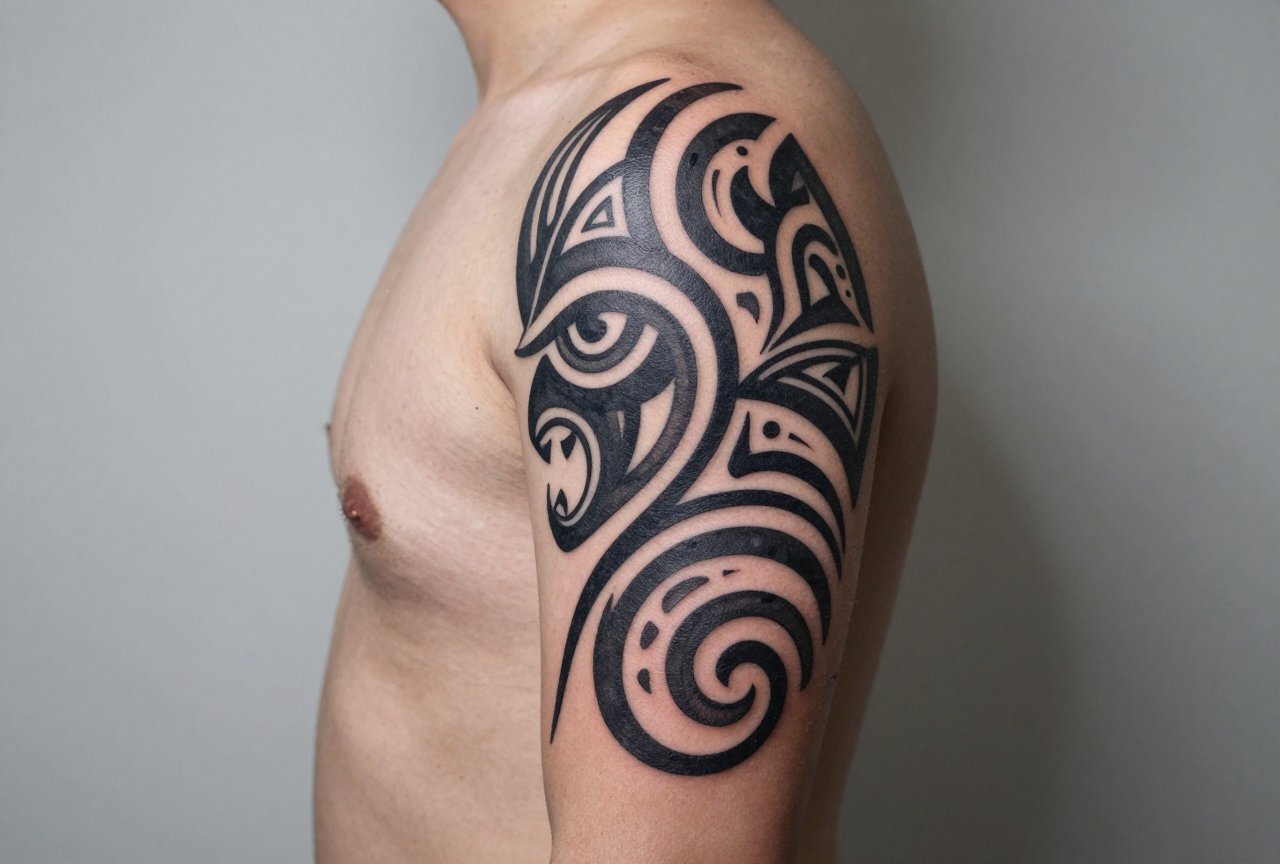
- Shoulder to chest: Classic for good reason. The natural curve of the deltoid accepts flowing patterns beautifully. I’ve done hundreds of Polynesian-inspired pieces here; the muscle movement animates the design.
- Full sleeves: Demanding but spectacular. Requires an artist who can maintain pattern consistency across multiple sessions and healing stages. The forearm twists; the pattern must accommodate that.
- Calves and thighs: Underrated. Large, relatively flat canvas with good skin stability. Tribal here ages better than on joints.
- Back pieces: The ultimate commitment. A full back pe’a or inspired work takes serious time and serious trust. I’ve seen clients tap out after twenty hours. Plan for thirty.
- Fingers, hands, neck: High visibility, fast fading, cultural weight. Think hard. I talk clients out of hand tribal regularly unless they already have substantial work and understand the commitment.
What Heals Well
Inner bicep? Soft skin, lots of moisture, black can settle unevenly. Elbow ditch? Constant flexing, tough heal. Your artist should know these specifics and adjust technique accordingly. I lighten my hand on inner arm tribal, build up saturation in passes rather than blasting it in one go. Patience prevents the touch-up nightmare.
Who It Suits
Physically, tribal works on most body types, but it reads differently. Heavy black can slim or bulk depending on placement and pattern direction. On darker skin, solid black tribal can be stunning but requires an artist experienced with how melanin affects black ink visibility. I’ve tattooed across the full spectrum; the technique adjustments are real and necessary.
Personality-wise, tribal suits people who want presence without busyness. It’s not delicate. It’s not hidden. If you need your tattoo to be easily coverable for conservative workplaces, tribal probably isn’t your friend. The commitment is visual and cultural.
Modern Variations
The style keeps mutating. Some directions I’ve worked in:
- Geometric tribal: Incorporating sacred geometry, dotwork, and precise linework into traditional pattern structures. Appeals to clients who want tribal’s weight with contemporary precision.
- Biomechanical tribal: That 90s fusion of H.R. Giger-inspired machinery with organic tribal flow. Niche now, but skilled practitioners still exist.
- Minimalist tribal: Stripped-down single lines suggesting traditional patterns without full commitment. Tricky to execute well, too little and it looks accidental, too much and it’s not minimalist anymore.
Choosing an Artist
This is where most people stumble. Not every blackwork artist understands tribal. Not every tribal enthusiast is honest about their cultural knowledge.
Red Flags
- Flash sheets of “Polynesian” patterns with no source attribution
- Inability to explain what specific motifs mean or why they’re placed where they are
- Portfolio with identical bands on every client, regardless of body type
- Defensiveness when asked about cultural consultation or education
Green Flags
- Travel history or apprenticeship connections to source cultures
- Custom drawing for every client, no repeated flash
- Honest discussion of if you’re seeking traditional, neo-tribal, or tribal-inspired
- Healed photos in portfolio, not just fresh work
I always tell clients: the best tribal tattoo artist for you might not be the one closest to your apartment. This style rewards research and travel. I’ve had people fly from across the country for specific artists who’ve dedicated years to Samoan or Maori pattern study. That dedication shows in the work.
Final Thoughts
Tribal tattooing carries weight that flash-and-go styles don’t. The history is alive, the cultural conversations are ongoing, and the technical demands are unforgiving. A mediocre tribal piece doesn’t just disappoint aesthetically, it can misrepresent traditions, age poorly, and require expensive, difficult cover-ups. But done right, by an artist who respects the source and masters the form, tribal work becomes part of your body’s architecture. It moves with you, asserts presence without shouting, and connects you to something older than contemporary tattoo culture. Take your time finding that artist. Your skin deserves the respect.
Frequently Asked Questions
How do I know if a tribal artist is culturally appropriating rather than appreciating?
Ask directly about their training and community connections. Real respect shows up as ongoing education, attribution, and humility, not claims of expertise after one vacation. Good artists will happily explain their learning path and refer you to cultural practitioners when appropriate.
Why does my old tribal armband look blurry now?
Heavy black bands on high-movement areas like the bicep often spread over time as skin loses elasticity and ink migrates slightly. Poor initial saturation and sun exposure accelerate this. Quality tribal work with proper negative space ages better than solid bands.
Can tribal tattoos be covered up with other styles?
Black tribal is notoriously difficult to cover because of its density. Laser lightening is usually necessary first, and even then, your options narrow to other heavy blackwork or strategic designs that incorporate the existing lines. Plan for the long game.
How much should I expect to pay for quality tribal work?
Experienced tribal specialists often charge premium rates, $200-400+ per hour in major US cities, with large pieces requiring 10-40 hours. The investment reflects both technical skill and specialized knowledge. Budget artists cutting corners on black saturation or custom design will cost more in fixes later.
Related Style Guides
- Gamer Tattoo Designs That Actually Work
- Realistic Jaguar Tattoos: Complete Style Guide
- Phoenix Tattoo Designs Male: Real Shop Guide
- Explore more