You want a warrior tattoo. Not some generic gym-bro tribal armband from 2004. Something that actually means something when you’re staring at it in the mirror ten years from now. I’ve watched thousands of these walk through shop doors, some aging like leather, some blurring into blue mush. The difference is always in the choices you make before the needle hits skin. Let’s talk about what actually works.
Popular Styles That Hold Up
Warrior imagery spans cultures and centuries, but not every style ages the same on human skin. Here’s what I’ve seen survive the long haul.
Traditional American
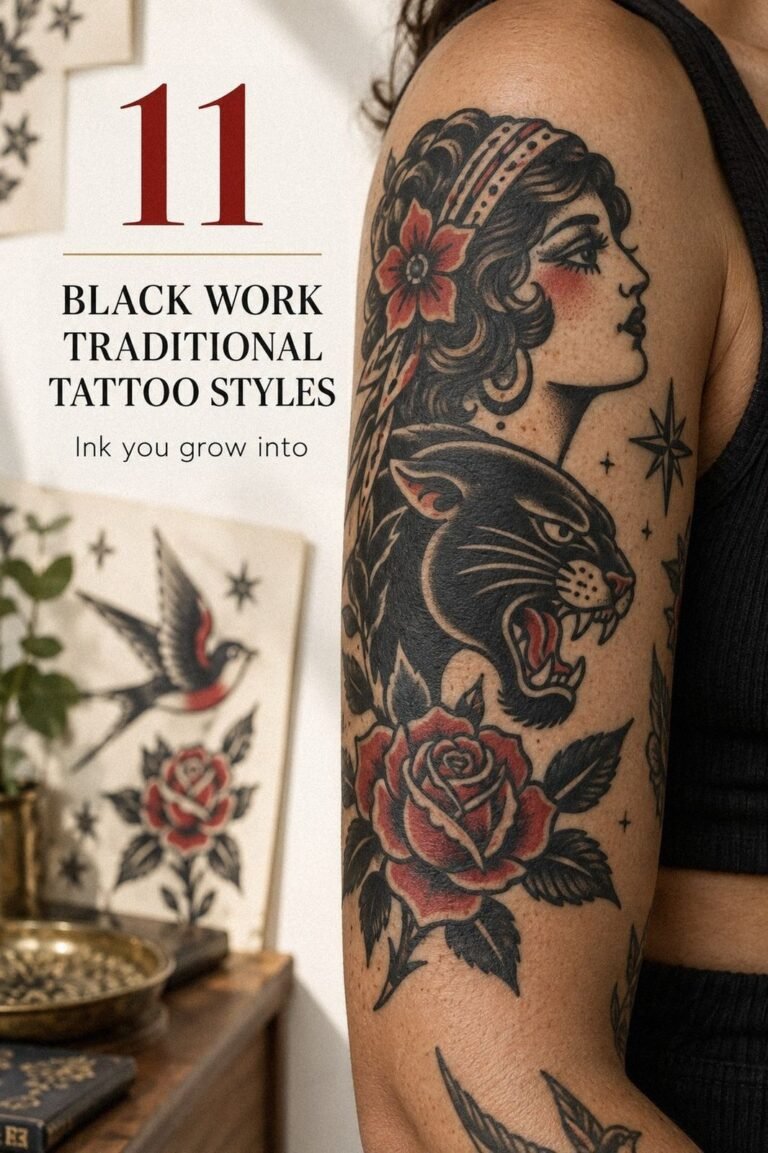
Bold lines. Limited color. That’s the formula. Traditional warrior heads, Roman helmets, Spartan shields, this stuff reads clean from across a room. The heavy black outlines act like armor against time and sun. I’ve got a client, Mike, whose traditional Japanese samurai mask still pops after eight years. No touch-ups. The secret? Thick lines, simple shapes, no tiny details that turn to gray soup.
Black and Gray Realism
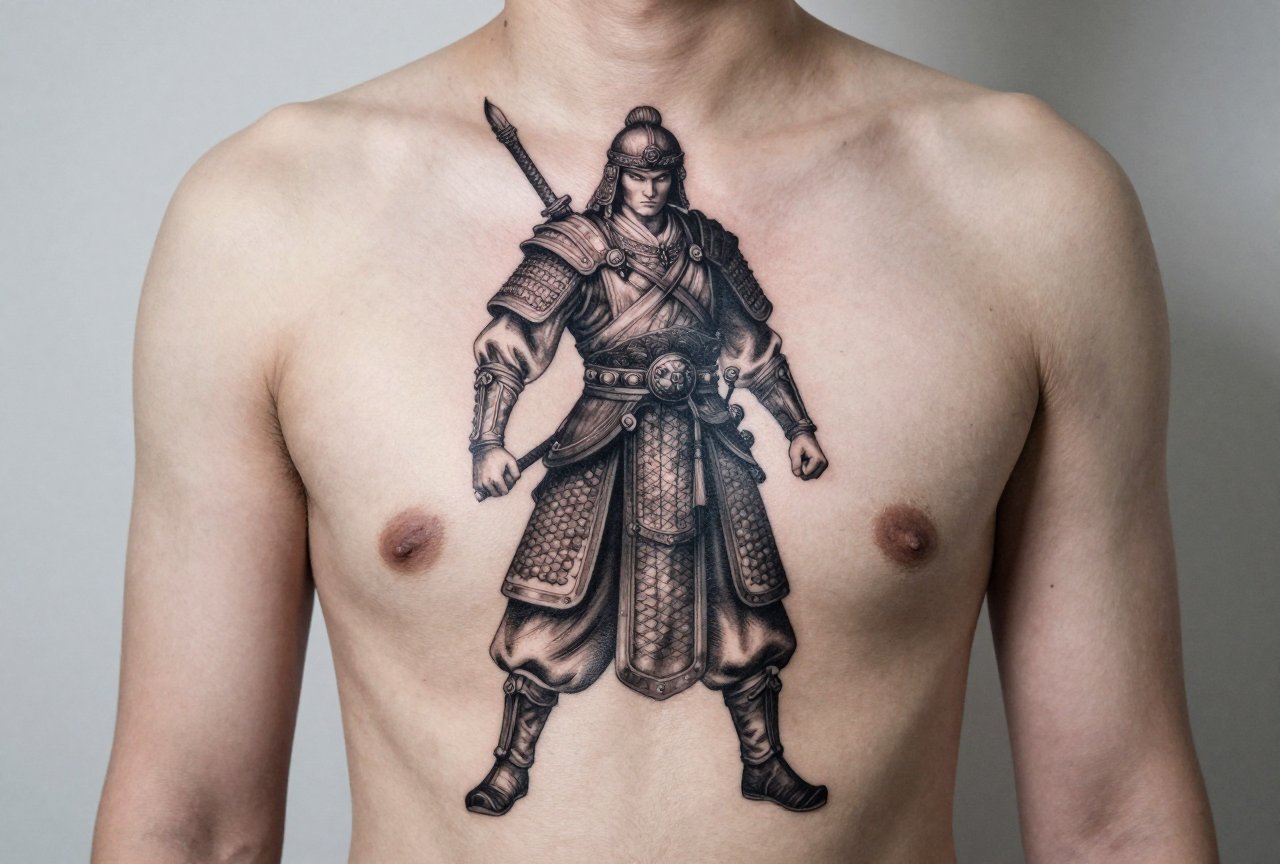
Portraits of warriors, actual historical figures or mythological ones, work beautifully in this style. But here’s the catch: realism demands large scale. A photorealistic Achilles on your forearm needs to be palm-sized minimum, or the facial features melt together. Shading creates depth, but skin isn’t paper. Over time, those subtle gradations between light and shadow? They flatten. Go slightly heavier on the contrast than the reference photo suggests. Your artist will know what I mean.
Neo-Traditional and Illustrative
This is where personality lives. Stylized warriors with exaggerated proportions, decorative elements, color palettes that don’t exist in nature. Think less documentary, more graphic novel. The linework varies, some artists use bold contours, others build forms entirely through color blocking. Healing varies too. Color-heavy pieces often need a session or two of reinforcement after the initial heal.
- Traditional: Best longevity, readable at distance, limited detail
- Realism: Stunning impact, requires size and experienced artist
- Neo-traditional: Most creative freedom, color may need future touch-ups
- Japanese (Irezumi): Flows with body contours, full narratives, serious commitment
Design Ideas Beyond the Obvious
Spartan helmets. Viking axes. Samurai in full armor. These are classics for a reason, but they’re also everywhere. Let’s dig deeper.
Weapons With Context
A standalone sword is boring. A broken sword with a wrapped hilt, cherry blossoms falling across the blade, that tells a story. I tattooed a gladius once, but the client wanted it emerging from a stone wall, mortar crumbling, as if Rome itself were being reclaimed by time. The weapon was almost secondary. That’s the move. Frame the tool within its moment.
Shields work similarly. The round Viking shield is iconic, but consider the battered edge, the splintered wood grain, the boss dented from impact. Those textures give an artist something to sink their teeth into. Line work for wood grain. Whip shading for metal fatigue. It becomes a landscape, not a logo.
Warriors in Repose
Everyone wants the battle cry, the raised weapon. But the most haunting warrior piece I ever did was a seated knight, helmet off, staring at a bloodstained gauntlet. Stillness carries weight. A warrior removing their armor. Tending to a wound. The moment after, not the moment of. These designs age well because they rely on posture and emotion rather than dynamic action that can look awkward as skin shifts.
- Warrior’s hands: gripping a weapon, releasing one, clasped in prayer or exhaustion
- Masks and helmets: the face beneath, the reflection in polished metal
- Animals as warriors: armored wolves, crows in battle regalia, the bear in chainmail
- Fallen warriors: the shield on the ground, the sword planted as memorial
Best Placements for Warrior Imagery
Where you put it changes what it says. And how it ages.
Upper arms and shoulders are the classic for a reason. Muscle movement animates the design, flexing brings a warrior to life. I’ve watched a client’s back-piece samurai seem to breathe when they row. The shoulder cap specifically frames the head like a halo of violence. Traditional Japanese bodysuits use this naturally, the warrior figures flowing across the deltoid and down the arm.
Thighs handle large-scale work beautifully. The skin is relatively stable, doesn’t sun as badly as forearms, and you can go big without committing to a full back piece. I’ve done full Achilles scenes wrapping the thigh, the heel as literal vulnerability. The client could show it or hide it. That matters for professional life.
Chest pieces hit different. Centered, a warrior face or helmet becomes almost devotional. Off-center, marching across the pec toward the heart, there’s narrative there. But chest hair, weight fluctuation, and sun exposure make this a high-maintenance zone. Plan for future touch-ups if you go detailed here.
Forearms are visible. That’s the point and the problem. Everyone sees them, including future employers. The skin here also takes abuse, sun, friction, the constant movement. Small warrior symbols work: a single helmet, a minimalist shield outline. But full sleeves of battle scenes? I’ve seen them blur within five years. The detail simply doesn’t survive.
Color Choices: What Lasts, What Fades
Black and gray is the honest default. It ages gracefully, costs less, heals faster. The metallic sheen of armor reads beautifully in grayscale through careful shading, white highlights for reflection, deep blacks for shadow, the full spectrum between.
Red is the warrior color. Blood, banners, the rising sun in Japanese pieces. But red fades to pink, then to a pale shadow. I always warn clients: that crimson cape will need refreshing. Budget for it. Or go darker, oxblood, burgundy, colors that fade to something still intentional rather than washed-out.
Gold and yellow? Beautiful for accents. Disastrous for large areas. It becomes mustard, then pale greenish beige. Use it sparingly. Helmet crests, weapon fittings, small emblems.
Blue holds surprisingly well for water, sky, certain armor patinas. Green for forest warriors, Celtic imagery. But the rule is always: less color surface area, more longevity. A black and gray warrior with red eyes and a red banner? Striking. A fully colored knight in heraldic splendor? Prepare for a decade of gradual muting.
Tips for Choosing Your Warrior
I’ve had the consultation conversation hundreds of times. Here’s what separates the tattoos people love from the ones they eventually cover.
Know your actual warrior, not the movie version. The 300 Spartans were real, but so were the Theban Sacred Band, the Maori warriors with their full facial tattooing, the Dahomey Amazons. Real history gives your artist richer visual material than Hollywood approximation. Bring reference. Actual pottery paintings, museum photographs, historical texts. Your artist will thank you.
Consider the body as landscape, not canvas. A warrior marching up your calf reads differently than one descending your ribs. The direction of movement matters. Upward suggests aspiration, struggle. Downward can feel like defeat unless composed carefully. A good artist maps this with you, using your body’s natural lines rather than fighting them.
Think about the second read. First impression: cool warrior. But what rewards closer looking? The specific battle damage on the shield. The enemy weapon still lodged in the armor. The exhausted eyes visible through the helmet slit. These details don’t need to be legible from ten feet. They exist for you, for the people who get close. That’s where meaning lives.
And please, don’t get a warrior tattoo because you’re “fighting” a breakup or a job loss. The metaphor is thin, and you’ll see through it in six months. The best warrior pieces I’ve done were for people who understood that warriors also lose, also protect rather than conquer, also carry weight that isn’t glamorous. The vulnerability is the point.
Final Thoughts
A warrior tattoo is a commitment to an image of yourself that includes struggle. Not victory. Not dominance. The willingness to stand in it. Pick an artist whose healed work you’ve seen in person, not just fresh photos on Instagram. Ask about their experience with your specific style. A realism specialist might fumble traditional lines. A traditionalist might simplify your detailed vision into something unrecognizable.
The best piece I ever did was a simple Roman centurion’s helmet on a woman’s forearm. She was a firefighter. The helmet had a visible crack, repaired with gold, kintsugi style, though she didn’t call it that. She’d been injured on the job, returned, carried the visible mark of survival. That’s what a warrior tattoo can be. Not the fantasy of invincibility. The reality of continuing anyway.
Take your time choosing. Live with the idea. Sketch it, or have someone sketch it. Tape a printout to your mirror for a month. If you’re still looking at it with something like need, then start calling shops. The right warrior is out there. Make sure it’s yours.
More Tattoo Ideas
- Panther Tattoo Meaning: Black Panther Symbolism, Old-School vs Realism
- Masculine Tattoo Ideas Without Generic Symbols
- Japanese Tattoo Ideas: Irezumi Motifs, Meaning and Placement
- Explore more
Frequently Asked Questions
What symbols make a warrior tattoo truly meaningful rather than just aggressive?
The most meaningful warrior tattoos combine strength with purpose. Symbols like the Japanese kanji for perseverance, Celtic knots representing unbroken spirit, or a Spartan shield paired with a loved one’s name ground the warrior theme in personal sacrifice and protection rather than mere violence.
Can a warrior tattoo honor mental health struggles I’ve overcome?
Absolutely. Many people choose warrior imagery to represent battles with depression, addiction, or trauma. A common approach is a cracked helmet with light emerging, or the semicolon integrated into a sword design, symbolizing that your fight continues and you chose to keep going.
Which warrior cultures offer the most respectful tattoo options?
Maori ta moko, Samoan pe’a, and Japanese samurai imagery are frequently requested, but respect requires research. Work with artists who understand cultural protocols, avoid sacred symbols unless you have genuine connection to that heritage, and focus on universal values like courage and loyalty rather than copying specific ritual designs.
How do I avoid my warrior tattoo becoming a cliché?
Skip the generic Pinterest warrior and instead tell your specific story. A meaningful warrior tattoo might feature the actual armor of a grandparent who survived war, the coordinates of a pivotal moment in your life, or an animal that represents your personal fighting style rather than defaulting to lions and wolves everyone chooses.