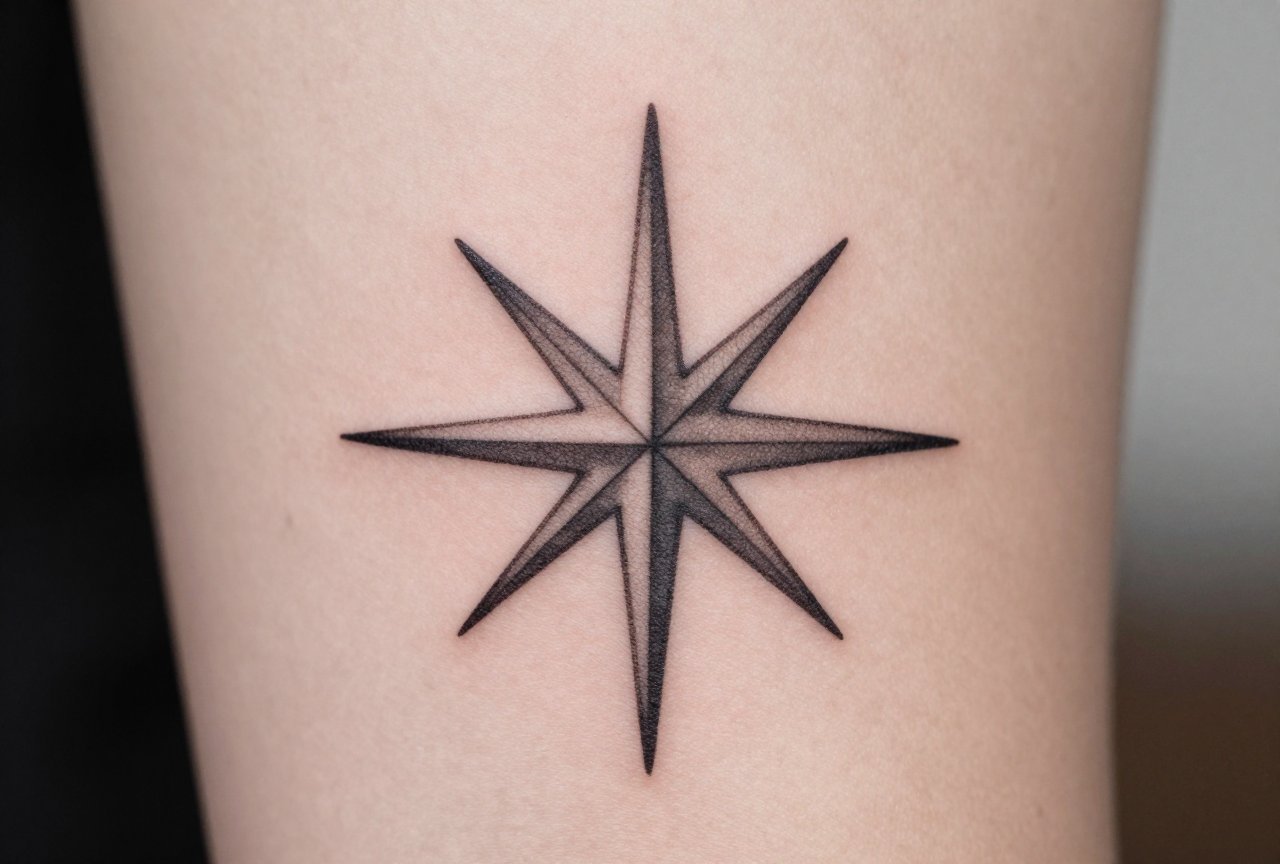
The five-pointed star, or pentagram, is one of the oldest symbols humans have put on skin. It represents protection, balance, and the connection between the human and the divine, those five points mapping to head, arms, and legs spread in a human form. But I’ve tattooed enough of these to know the meaning shifts dramatically based on who’s sitting in my chair and why.
Symbolism & History
People walk in asking for a five-pointed star thinking it’s simple. It’s not. This symbol has been scratched into cave walls, carved into church stonework, and inked on sailors for thousands of years. The meaning layers stack deep.
The Pentagram vs. The Pentacle
Here’s what I explain to clients: the pentagram is the five-pointed star itself, while the pentacle adds a circle around it. In my chair, I’ve seen Wiccan practitioners request the circled version for earth-based spirituality, while military guys often want the open star for guidance and protection. The circle contains and focuses energy, they tell me. The open star reaches outward. Both carry weight, but the distinction matters to the people wearing them.
Point-Up vs. Point-Down
This is where shop conversations get interesting. Point-up, the star represents spirit ruling over the four elements, air, fire, water, earth. Point-down, some traditions associate it with material over spirit, or in darker contexts, certain occult paths. I never judge what someone wants, but I always ask. I’ve had clients flip the orientation mid-design when they learn the history. Others double down. The symbol bends to intention.
- Protection: Sailors historically tattooed stars for safe passage; the tradition persists in nautical and military circles
- Balance: The five points represent harmony between the physical and spiritual planes
- Achievement: Stars mark personal milestones, sobriety, survival, graduation from something hard
- Guidance: The North Star, literal navigation through darkness
Common Variations & Styles
Walk into any shop and you’ll see five-pointed stars rendered a dozen ways. The style changes the meaning as much as the symbol itself.
Linework vs. Solid Black
Thin-line stars read delicate, celestial, almost floating. I did one on a woman’s ribcage last month, single needle, barely there, meant to feel like a whisper. Solid black stars hit harder. They ground the symbol, make it feel like a seal or a brand. We see this a lot in traditional Americana work: thick outlines, heavy saturation, built to last decades without going mushy. Line-only stars age faster; the gaps between lines spread and soften. Solid black holds its shape but can blow out at the edges if your artist rushes.
Added Elements
Clients layer meaning with surrounding imagery. I’ve tattooed stars wrapped in laurel for achievement, entangled with roses for love and loss, burning with trailing fire for transformation. A star behind the moon softens the symbol toward dreaminess and intuition. A star overlapping a compass rose brings it back to literal navigation, physical or metaphorical.
- Traditional/Americana: Bold lines, limited color, built for longevity
- Blackwork: Heavy saturation, geometric precision, modern and stark
- Fine line: Delicate, ethereal, requires touch-ups over time
- Dotwork/stipple: Texture and shadow without solid fill, contemporary feel
Best Placements
Where you put a five-pointed star changes how it reads to others and how it feels to you. I’ve watched people rub their star tattoos like talismans, placement matters for that reason alone.
Wrists and hands make the statement visible, almost declarative. The star faces outward, a signal to the world. I’ve had clients say they want it where they can see it during hard moments. Behind the ear, the star becomes secret, personal, something you feel more than display. Ribs and sternum carry vulnerability, the skin moves, breathes, makes the symbol feel alive.
Shoulder caps and upper arms give the classic military feel, especially in traditional style. Ankles and feet have that sailor heritage but also read feminine in contemporary contexts. The star scales well, which is part of its enduring appeal. I’ve done them dime-sized and I’ve done them palm-sized. The geometry holds.
One thing I tell clients: fingers and hands fade fast. The skin there sheds constantly, takes abuse. A star on the hand looks bold for two years, then needs serious refreshing. Plan for that.
Who Chooses This Tattoo / Personal Meanings
After fifteen years, I can spot patterns but never predict individuals. The five-pointed star crosses every demographic.
What People Actually Say
Military veterans often want the star as part of larger patriotic pieces, or standalone as a mark of service. I’ve heard “guided me home” more than once. People in recovery get stars to mark time, one point per year sometimes, though that’s less common than you’d think. Wiccans and pagans come in knowledgeable, specific about orientation and element correspondence. They teach me as much as I ink them.
Then there’s the person who just likes stars. No deep meaning, no spiritual claim. They find the shape beautiful, balanced, satisfying. That’s valid too. I never push for a story someone doesn’t have. The tattoo belongs to the skin it’s on.
Shop Culture Around This Symbol
Among artists, the five-pointed star is a test of fundamentals. Any apprentice can sketch one, but getting the proportions right, the golden ratio relationships between points, the clean intersections, that separates rough work from refined. I’ve watched young artists trace and retrace stars for hours. We all did. It’s basic geometry that reveals everything about your line confidence.
Similar Symbols
Clients sometimes confuse or combine the five-pointed star with related imagery. Worth knowing the differences.
The six-pointed Star of David carries specifically Jewish identity and divine protection. The seven-pointed star connects to faerie traditions and some Thelemic paths. The eight-pointed star appears in Islamic art and Native American symbolism, often representing hope or directions. The nautical star, five-pointed but with alternating light and dark halves, specifically references the compass rose and safe return.
I had a client once who wanted a pentagram and learned mid-consultation that her grandmother’s Star of David held the protection meaning she actually sought. We shifted the design. These conversations happen. Symbols carry collective weight beyond personal intention.
- Nautical star: Specifically maritime, split-color design, safe passage
- Hexagram: Six-pointed, Jewish identity, distinct cultural ownership
- Septagram: Seven-pointed, occult and faerie associations
- Octagram: Eight-pointed, broader cultural spread, less common in tattooing
Final Thoughts
The five-pointed star tattoo endures because it compresses massive meaning into clean geometry. It protects, guides, marks achievement, balances spirit and body. But what I’ve learned in my chair is that the meaning lives in the choice, orientation, style, placement, and the story the wearer carries. The symbol itself is a vessel. You fill it.
If you’re considering one, sit with why. Talk to your artist about the specifics. A good tattoo of this symbol takes fifteen minutes to execute and a lifetime to grow into. Make sure the geometry is true, the lines confident, and the intention clear. Everything else follows.
Frequently Asked Questions
Does a point-down five-pointed star mean something evil?
Not inherently. Some occult traditions use point-down orientation, but many people simply prefer the visual balance. Meaning depends on the wearer’s intention, not automatic symbolism. I always ask clients why they want a specific orientation.
How well does a fine-line star tattoo age compared to bold traditional work?
Fine-line stars soften and spread faster, expect touch-ups in 3-5 years. Traditional bold lines with solid fill hold crisp for decades. The trade-off is delicacy versus longevity, and I walk clients through this before we start.
Can a five-pointed star work in a cover-up tattoo?
It’s challenging. The symmetrical geometry limits how you can distort or expand it. I’ve used stars as elements within larger cover-ups, but rarely as the primary cover tool itself. Stars work better as original designs than solutions.
What’s the typical price range for a simple five-pointed star tattoo?
Shop minimums vary by city, expect $80-150 for something small and simple. Intricate dotwork, geometric precision, or heavy blackwork can run $200-400. You’re paying for the artist’s time and the permanence, not just the size.
Related Tattoo Meanings
- Asterisk Tattoo Meaning: Symbolism, Styles Personal Stories
- Blacked Out Tattoo Meaning: Rebirth, Grief, and Starting Over
- G59 Tattoo Meaning: Suicideboys, Underground Culture Ink
- Explore more