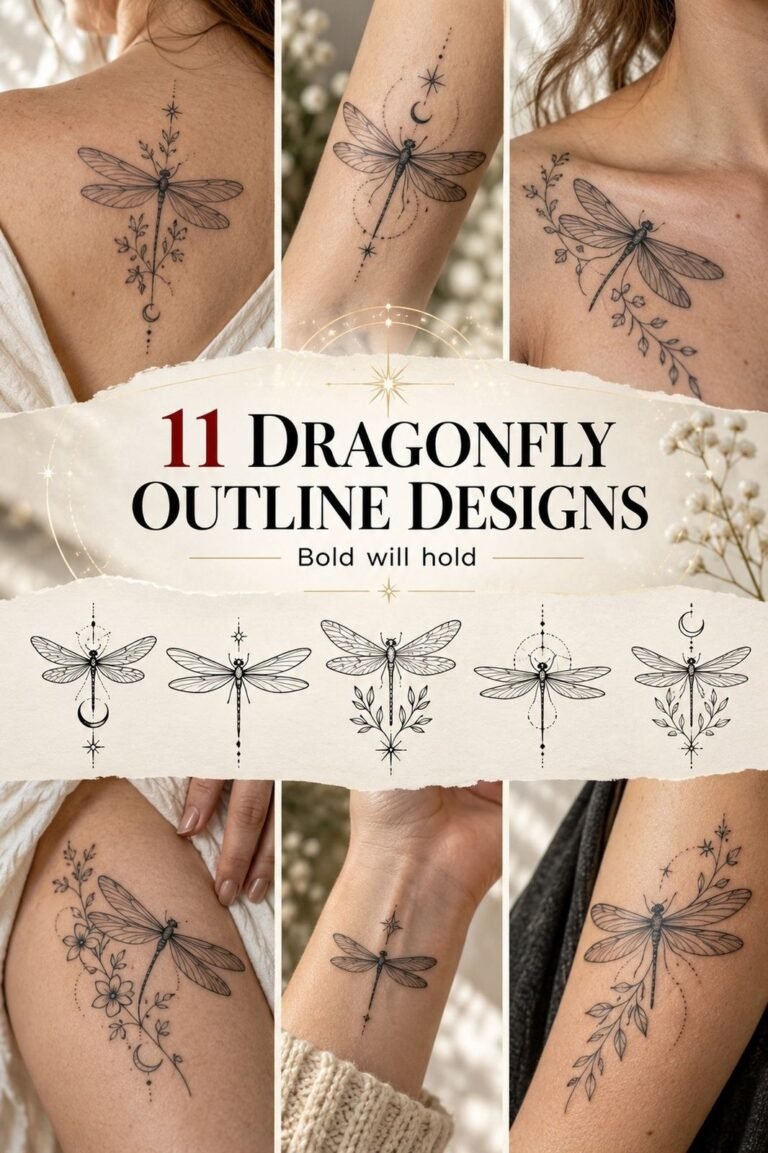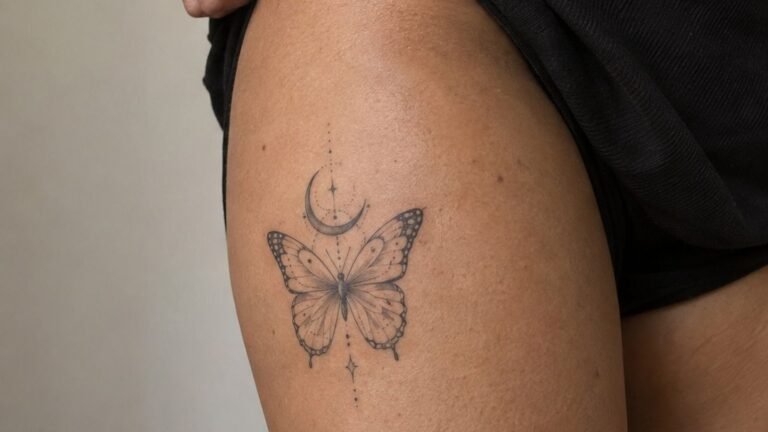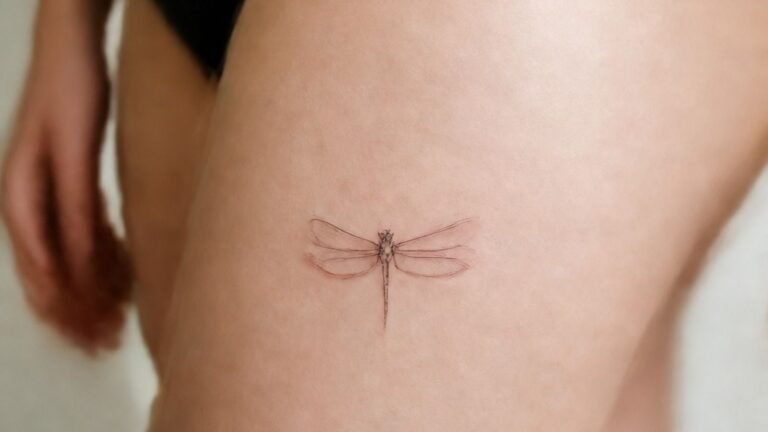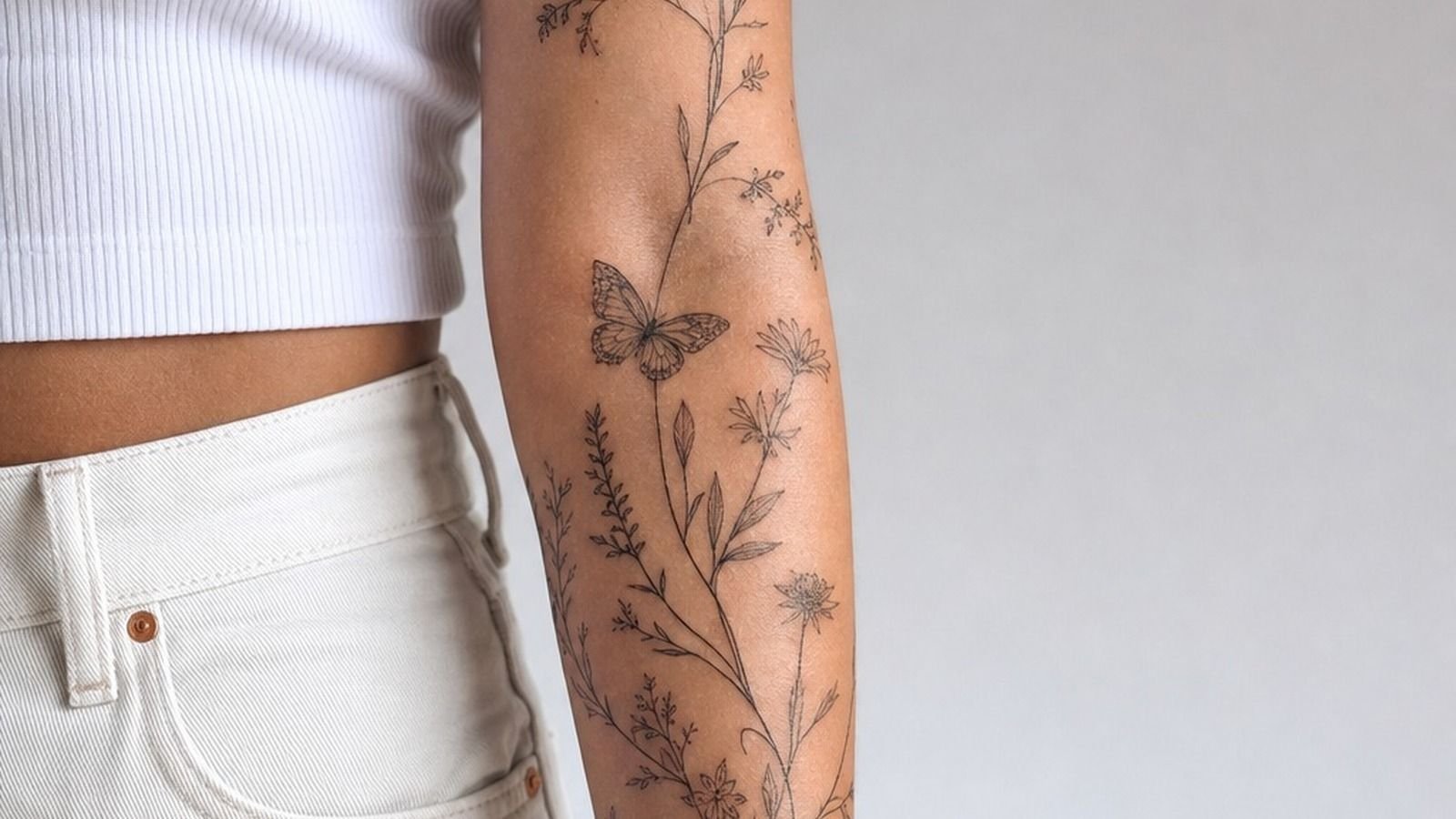
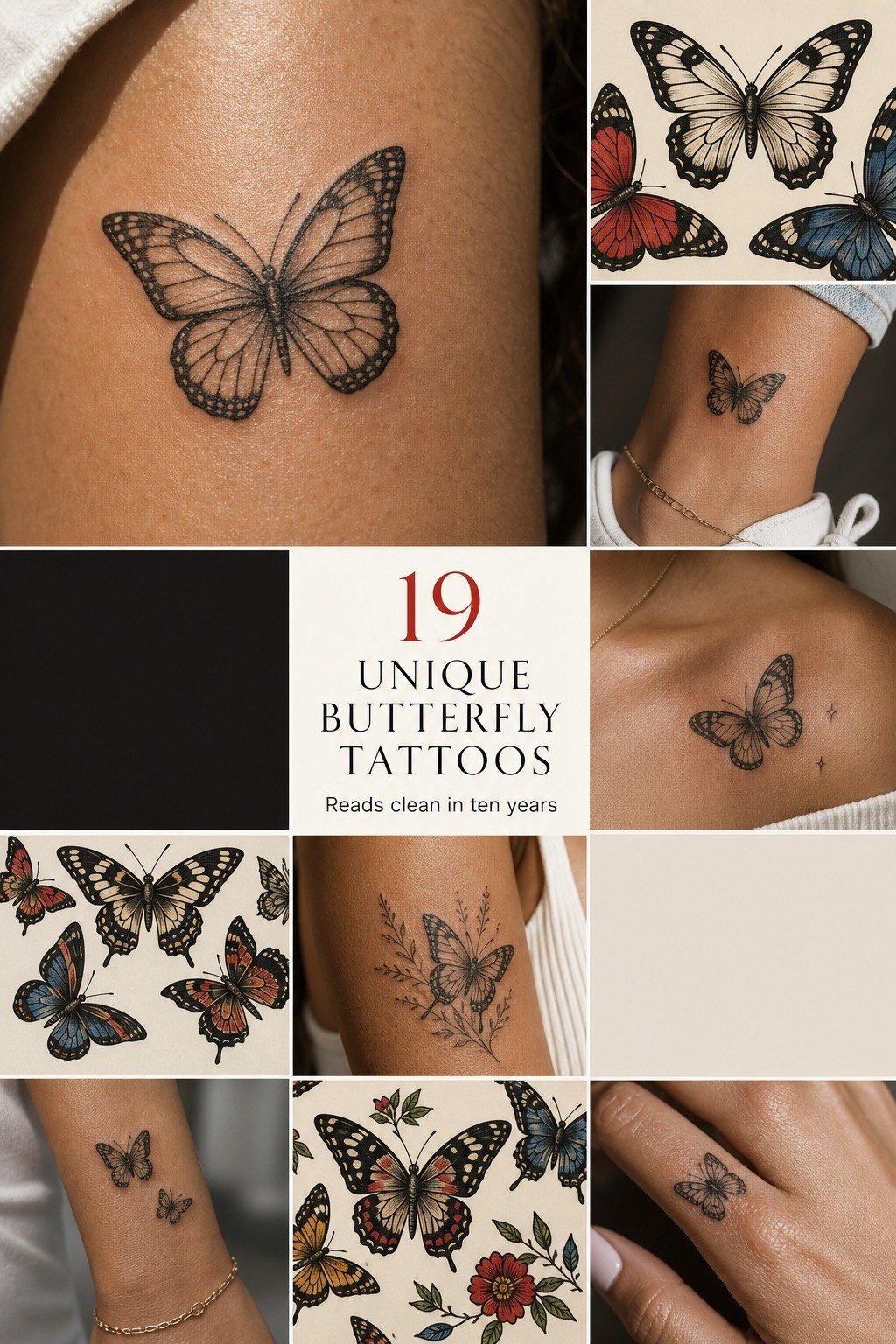
Unique butterfly tattoos stay clean when you plan the size, contrast, and placement before you book. I’ve watched tiny Pinterest copies turn to soup because they were forced into a wrist-sized space. Start with a design that can breathe, then make it personal.
- Start With A Butterfly Tattoo Meaning
- Pick An Unexpected Butterfly Wing Shape
- Place Tiny Butterflies Along Your Collarbone
- Build A Detailed Butterfly With Fine Linework
- Choose Blackwork For A Striking Butterfly Silhouette
- Add Birth Flowers Around Your Butterfly Tattoo
- Pair Two Butterflies With Personal Initials
- Select Watercolor Wings Anchored By Outlines
- Plan A Butterfly Sleeve With Botanical Details
- Match Butterfly Scale To Your Body Placement
- Use Red Ink For Delicate Wing Accents
- Create A Butterfly With Celestial Symbols
- Balance Symmetry In A Mirrored Butterfly Design
- Keep Fine Details Visible At Small Scale
- Choose A Shoulder Butterfly For Natural Movement
- Plan Pain Levels Around Sensitive Placements
- Protect Fresh Butterfly Ink During Healing
- Compare Butterfly Styles Before Booking Your Artist
- Save Reference Photos For Your Custom Butterfly
1Start With A Butterfly Tattoo Meaning
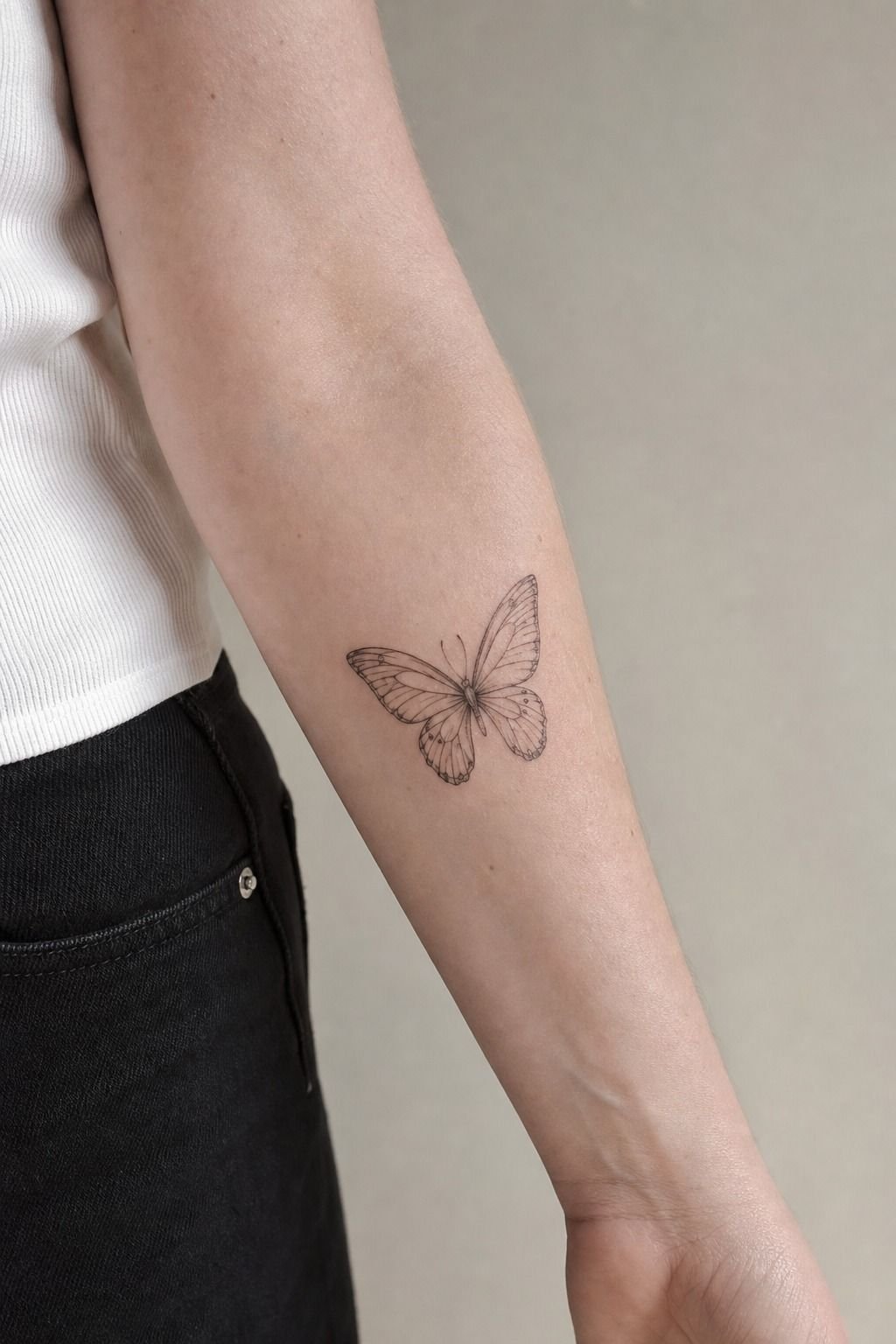
Pick the meaning before you pick the wing pattern. A butterfly can mark change, grief, recovery, motherhood, or simply a version of yourself you don’t want to forget. Your artist needs that context because it shapes whether your tattoo reads soft and intimate or bold from across the room.
I’d write three words before you save references. “New start.” “My sister.” “Still here.” Then choose details that support those words: birth flower stems, a date in clean lettering, or a small initial tucked under the body.
Don’t load every symbol into one 2-inch design. You want your meaningful butterfly tattoo to read clearly now and in ten years.
2Pick An Unexpected Butterfly Wing Shape
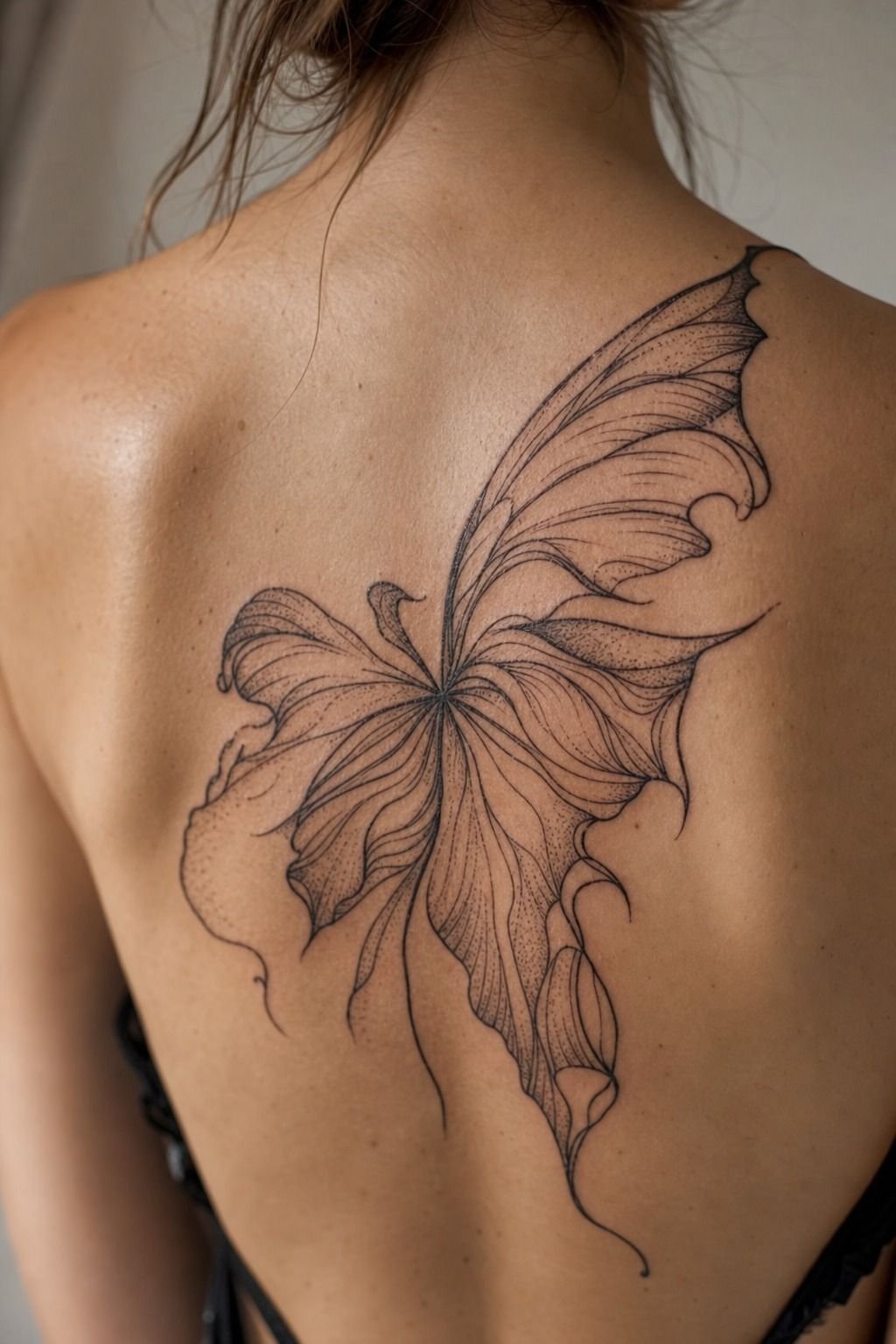
Skip the generic clip-art silhouette and look at real wing structure. Swallowtail points, luna moth curves, monarch panels, and broken-edge wings all give your artist something with more character than four matching loops.
For a detailed butterfly tattoo on an upper back, I like a wide wing span with a slightly uneven outer edge. It looks organic against shoulder blades and gives the linework room to stay crispy.
Bring references for vibe, not a screenshot you expect copied exactly. If you want Pinterest-exact, I’m not your artist.
Use single-needle black ink for delicate veins, but leave open skin between them. That negative space is what keeps the design airy instead of fuzzy.
3Place Tiny Butterflies Along Your Collarbone
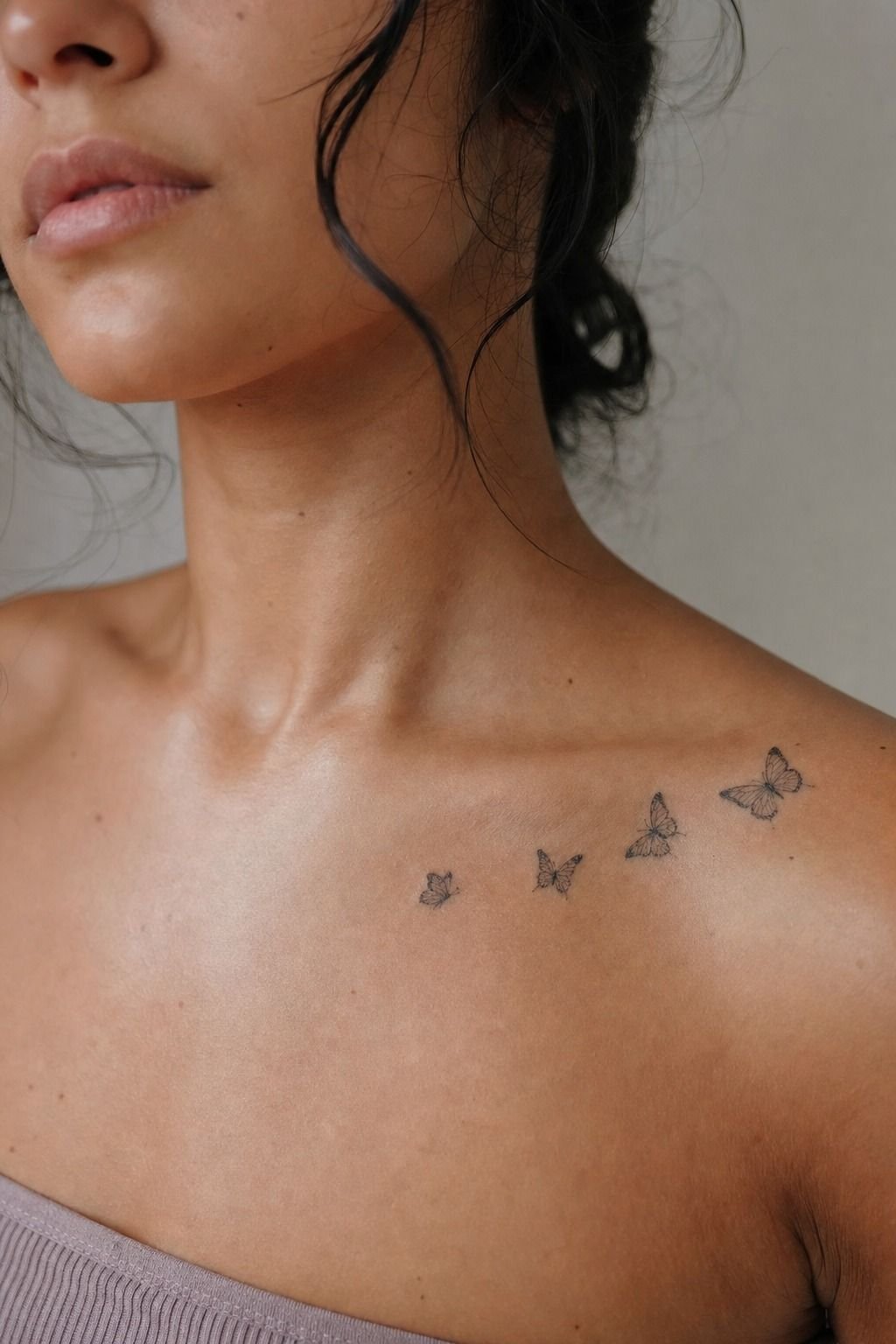
A collarbone trail works because your body gives it movement. Three tiny butterflies can drift from the shoulder toward the center chest, each around 0.75 to 1.25 inches, with enough gap that they don’t merge as your skin shifts.
Keep the smallest one simple. One solid body, two wing shapes, a few clean markings.
Your collarbone is visible, a little spicy, and prone to sun exposure, so you’ll need sunscreen once it’s healed. For more placement options, look through these small butterfly tattoos for women.
But don’t force a super-detailed design here. Fine lines over bone can heal soft, and too much tiny texture gets chewed up fast.
4Build A Detailed Butterfly With Fine Linework
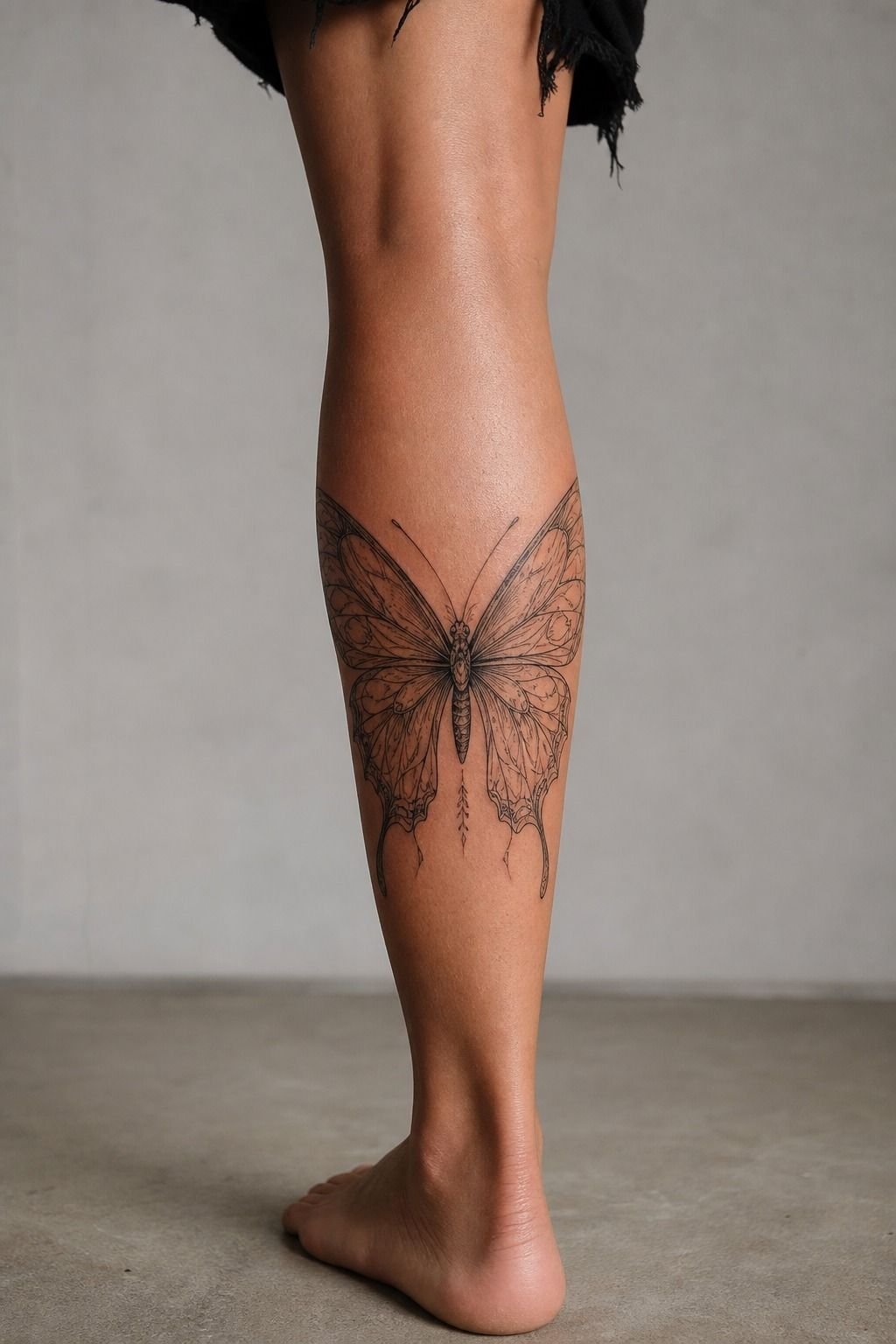
Fine line is not the same thing as faint line. Ask for crispy, confident outlines first, then soft grey wash or pepper shading inside the wings. On a calf, you have room for a 4- to 6-inch butterfly that can hold layered wing veins without becoming visual noise.
I tell clients to think in layers: outer silhouette, major wing panels, then only a few interior marks. That order matters. If your artist starts filling every empty spot, the tattoo may look intricate fresh but heal flat.
A calf is fairly chill for pain and low-wear for longevity. Your butterfly gets a better shot at aging cute when it isn’t fighting constant friction from rings, shoes, or handwashing.
5Choose Blackwork For A Striking Butterfly Silhouette
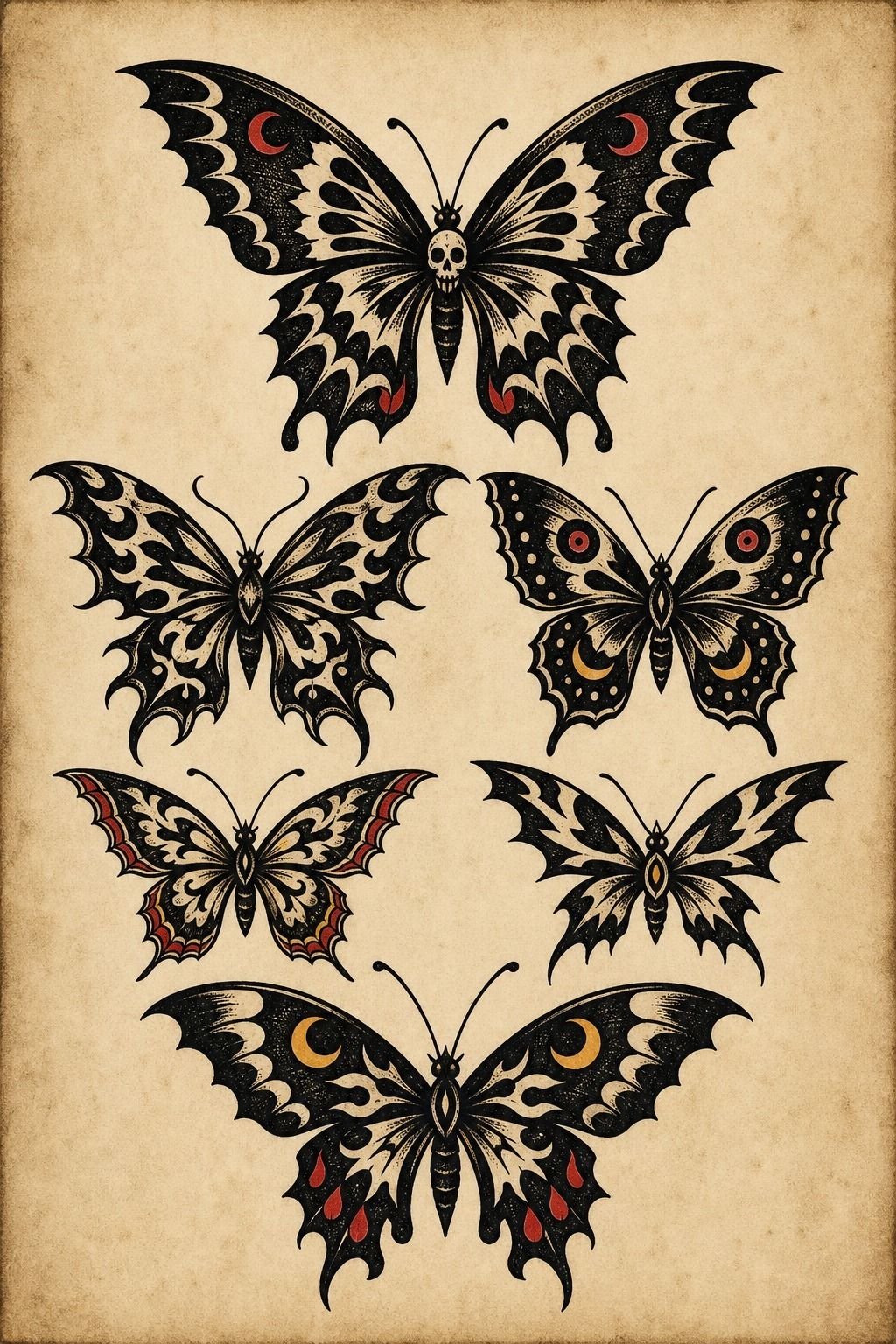
Blackwork is the move if you want contrast that lasts. A bold silhouette with skin breaks inside the wings can read from across the room without needing fifty microscopic lines.
Look at a flash sheet before you commit. You’ll see which shapes still work when they’re reduced: solid black outer wings, one or two open panels, maybe a graphic body in the center. Dynamic Black and other professional black pigments can heal dense when they’re packed correctly, but your artist still has to avoid overworking the skin.
I’d take a bold blackwork butterfly over a pale micro-realism piece every time for the forearm or upper arm. Bold will hold. That’s not boring, it’s smart.
6Add Birth Flowers Around Your Butterfly Tattoo
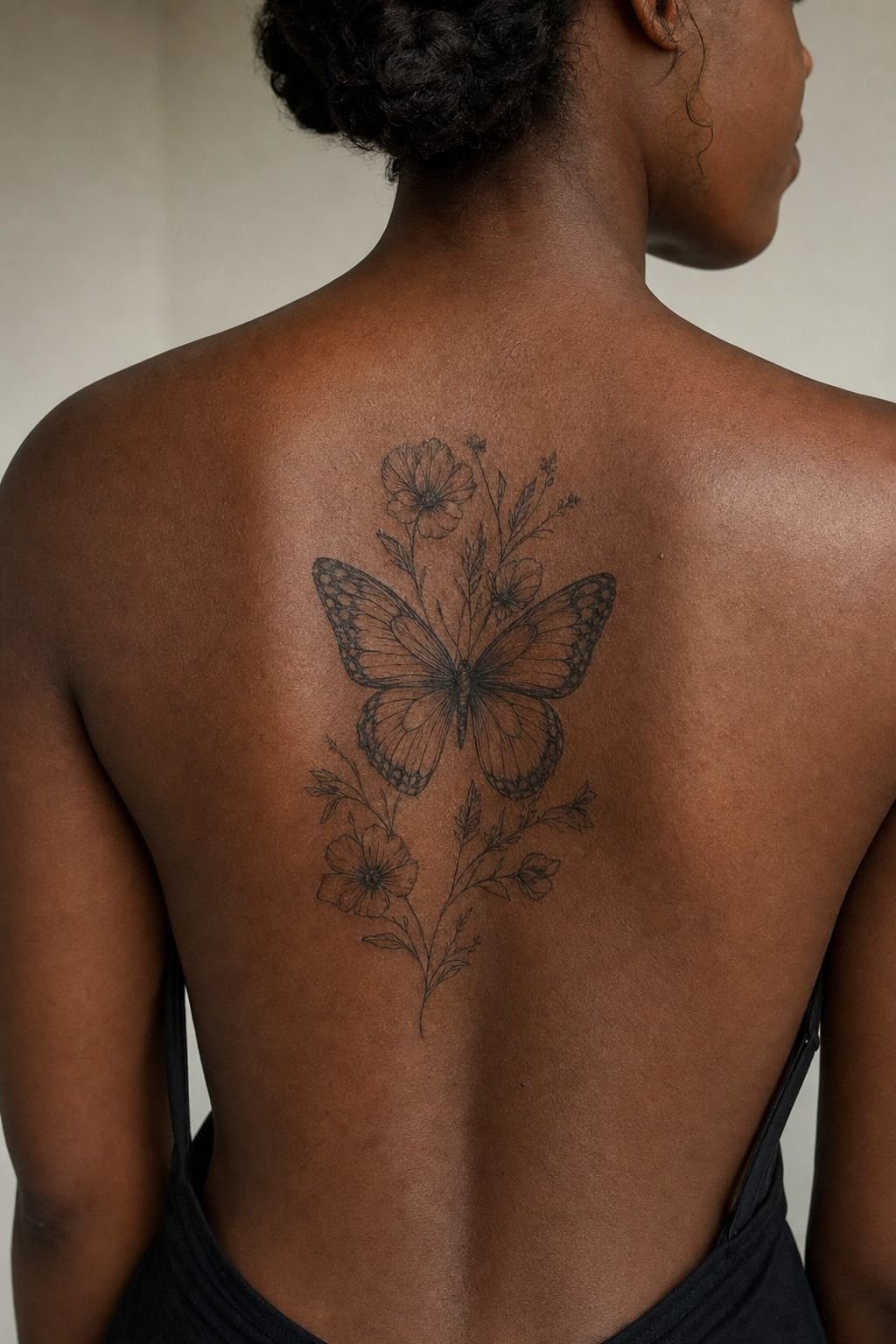
Birth flowers can make butterfly tattoo ideas for women feel personal without turning sentimental in a forced way. Use one flower type, not a bouquet of every person you’ve ever met. A butterfly framed by a few cosmos stems or a curved lily-of-the-valley sprig has more breathing room.
On deep skin, I’d keep the flower stems slightly thicker than you think. Fine line can look elegant across every skin tone, but low-contrast, hair-thin marks may disappear once healed. Your artist should design for your actual skin, not a filtered reference photo.
And let the stems follow your shoulder blade or upper back muscles. Straight botanical lines pasted across a moving body always look stiff.
7Pair Two Butterflies With Personal Initials
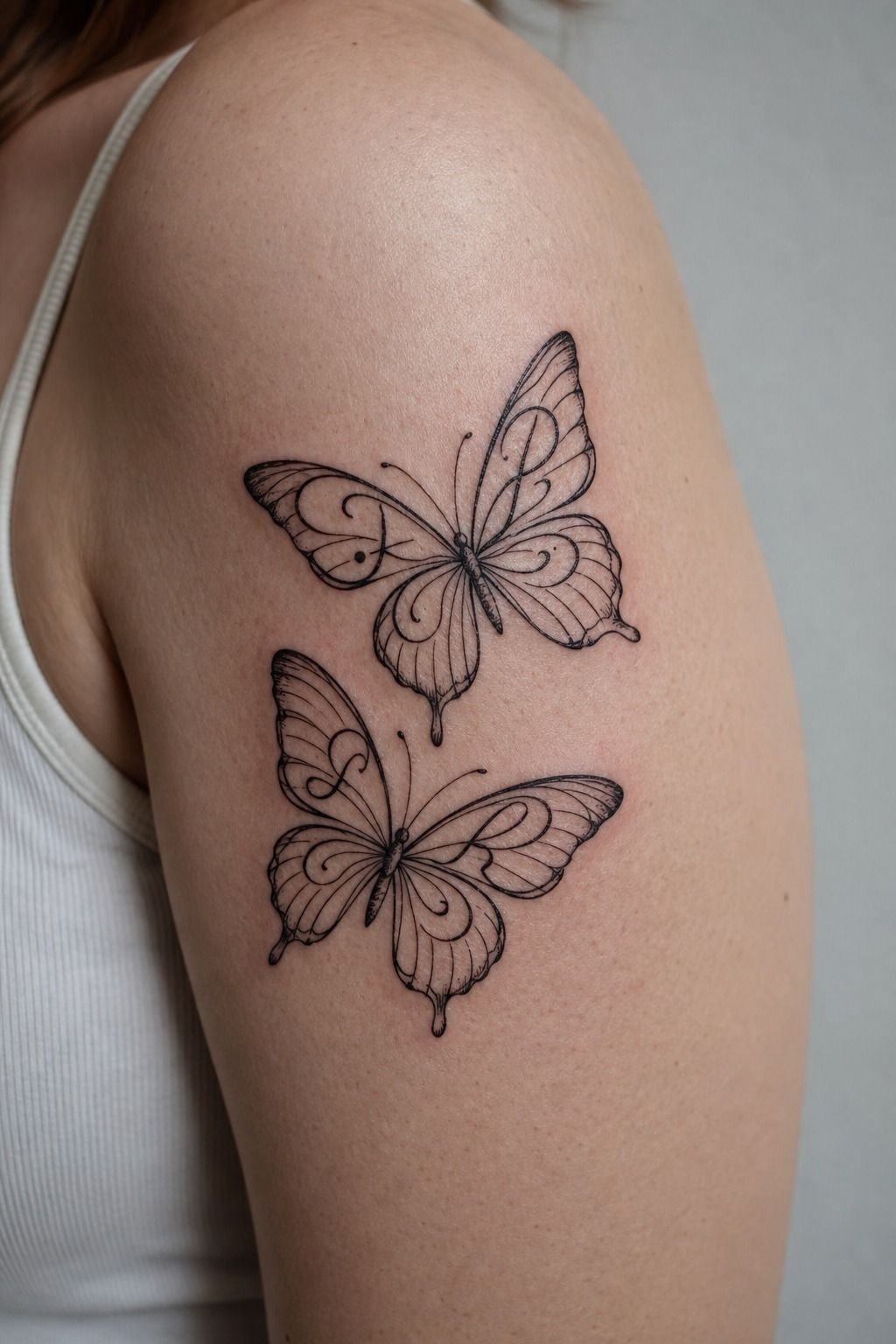
Two butterflies can stand for siblings, partners, a parent and child, or two versions of you. Keep the initials secondary. Tiny script squeezed inside a wing is a bad call because lettering needs room to stay legible.
Try two 1.5-inch butterflies on the upper arm, with initials below in fine serif lettering around 0.25 inches tall or larger. Your artist can make one butterfly slightly more open-winged, so the pair doesn’t feel like a mirror stamp. It’s subtle, but it gives the piece life.
If you’re deciding between initials and a full name, choose initials. Names can dominate the design; two clean letters let the butterflies remain the point.
8Select Watercolor Wings Anchored By Outlines
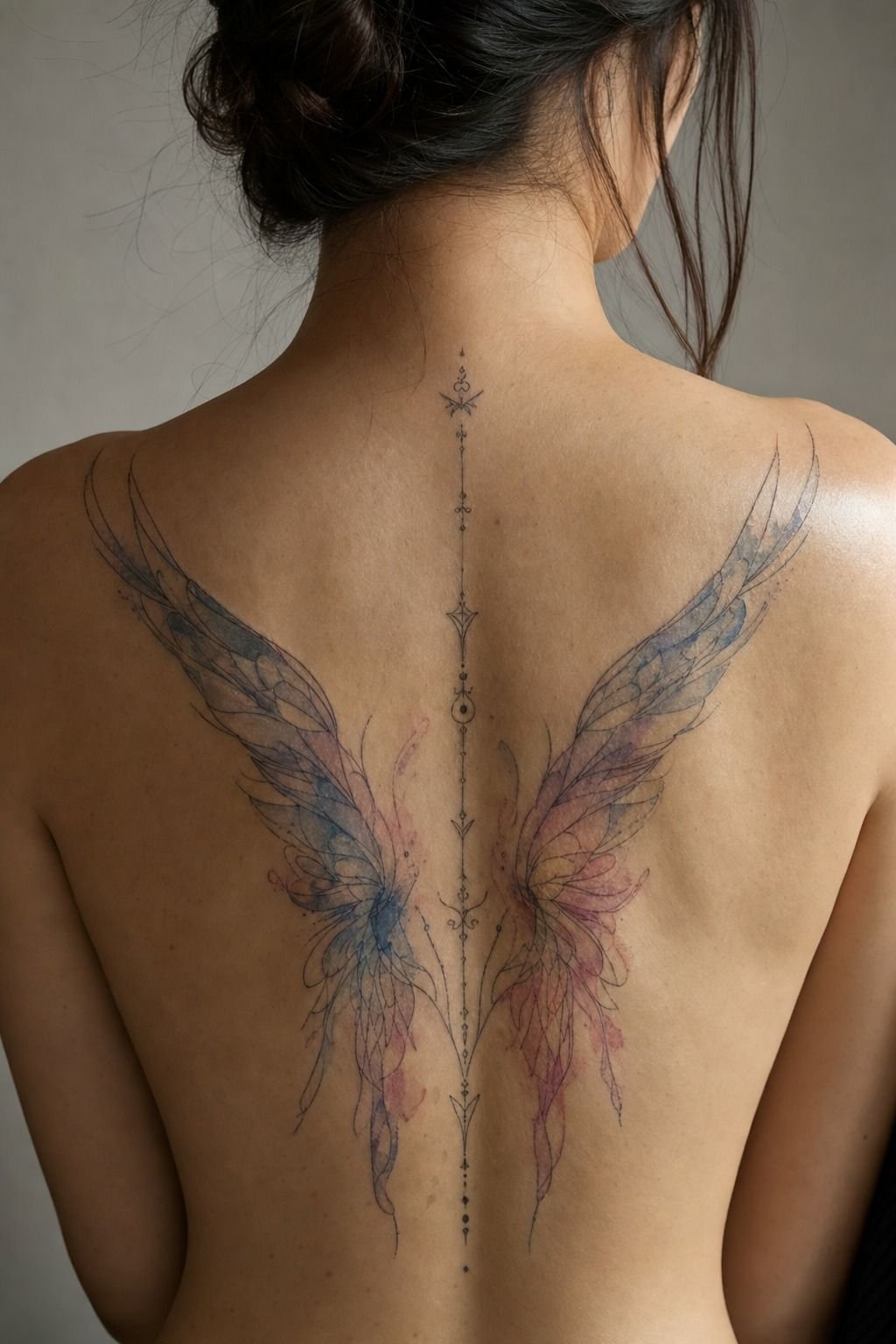
Watercolor wings need linework. Period. Color without a dark anchor can fade into a vague stain, especially in high-sun areas like the spine or shoulder.
Ask for a fine black outline, then soft color pulls in magenta, violet, or teal pigment that stay inside the wing structure. Your artist should build color in a solid pass, not scratch at it fifty times. Color packing is usually the spiciest part, so breathe and take breaks if you need them.
A watercolor butterfly can be dreamy, but it still needs contrast. Black is your best friend for longevity, and color is spice. You want both.
9Plan A Butterfly Sleeve With Botanical Details
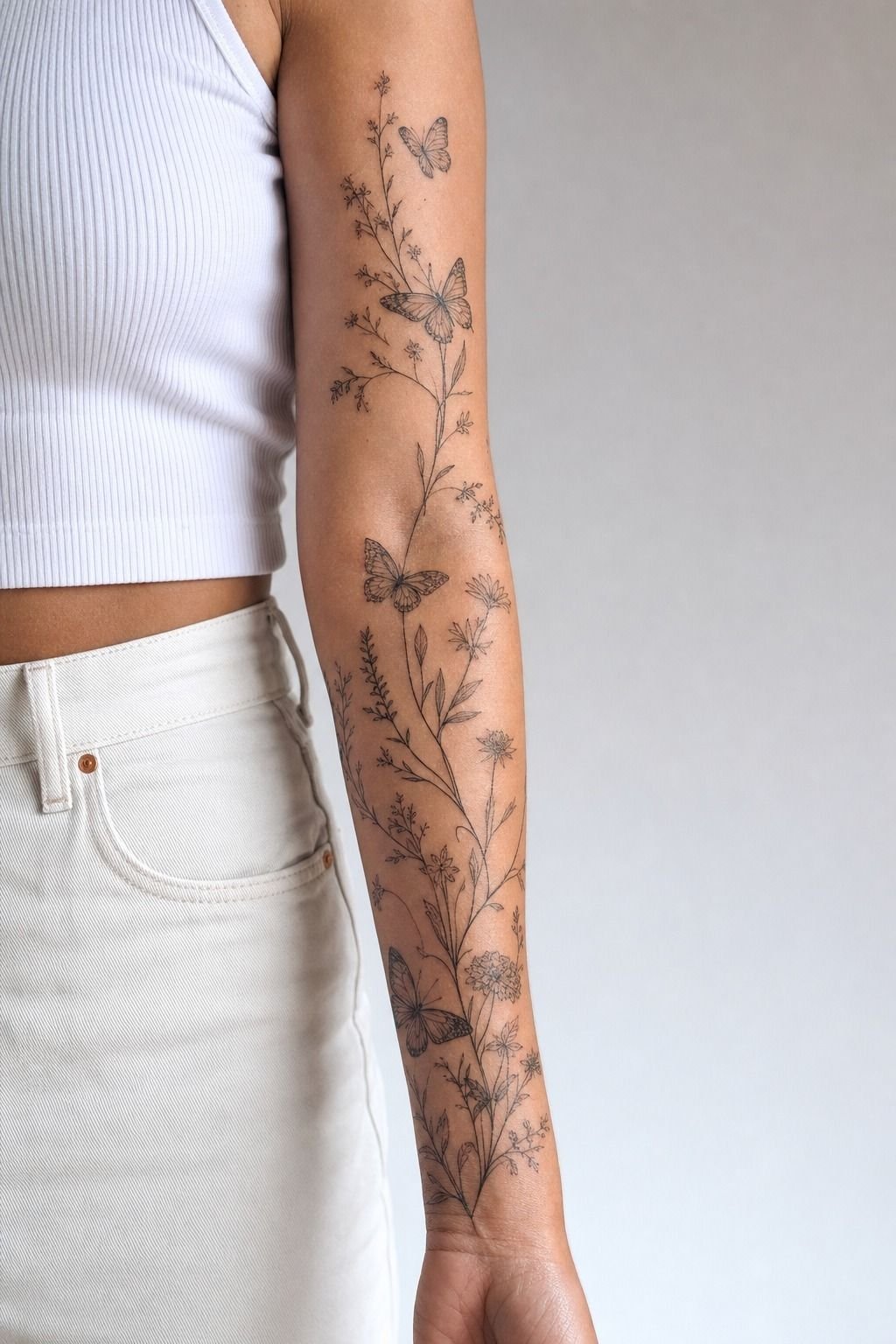
A sleeve needs a map before the first needle hits. Start with one main butterfly on the outer forearm, then leave open skin for smaller butterflies, stems, and leaves that connect later.
I usually want the main butterfly at least 4 inches across for a fine-line sleeve. Then you can layer eucalyptus leaves, wildflower stems, or loose dotwork around it without filling every inch. Your forearm twists all day, so place the strongest silhouette where it reads from the front and let the softer botanical details wrap around.
For a cleaner starting point, save a few minimalist butterfly tattoo references, then tell your artist which parts you like. Don’t build a sleeve out of copied tattoos. It’ll look stitched together.
10Match Butterfly Scale To Your Body Placement
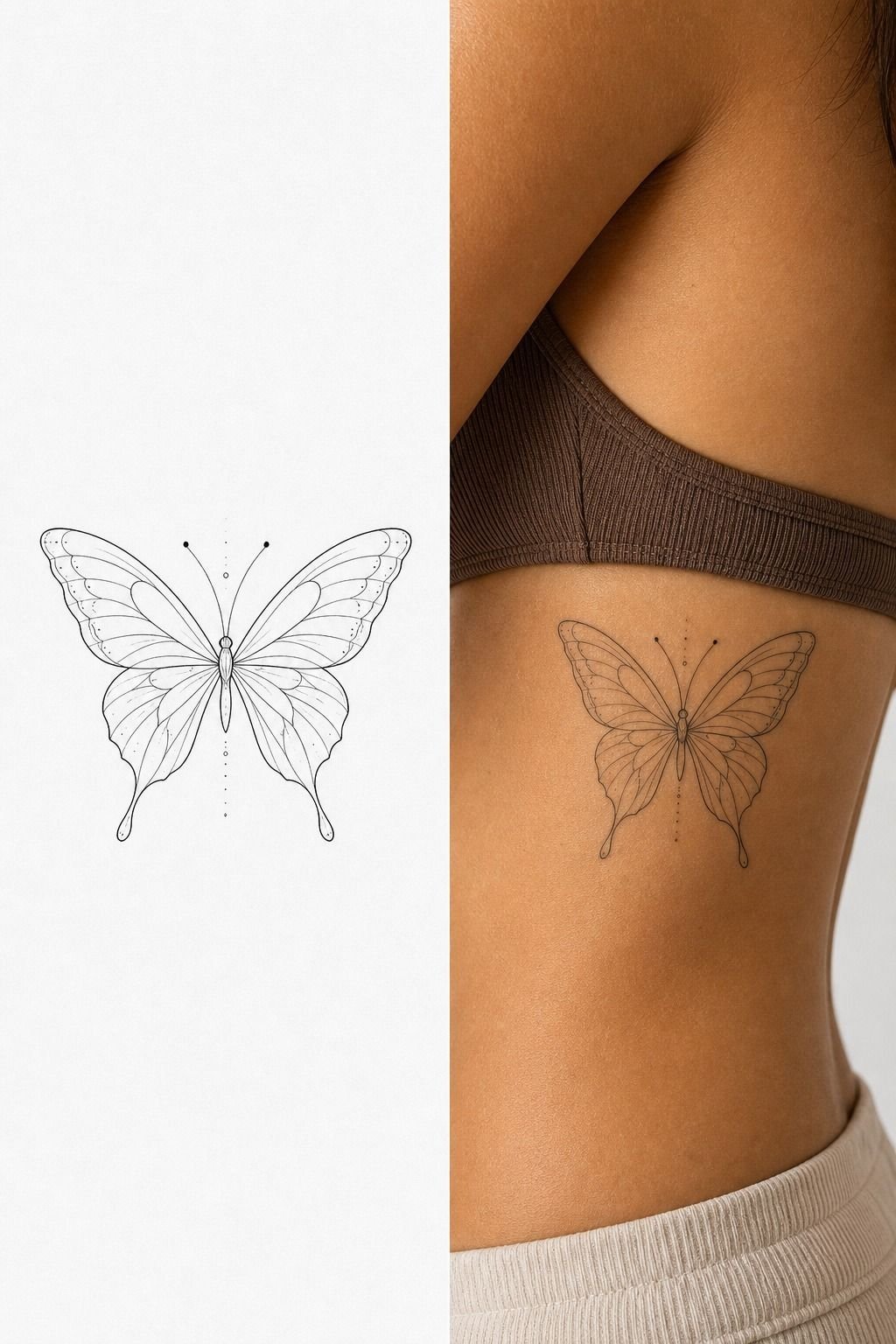
Size is the part people underestimate. That 1-inch butterfly may look cute in a stencil, but a wrist is a tight, high-wear zone. Put too much detail there and it’ll soften, spread, and lose its wing pattern.
Here’s the honest planning table I use with first-timers:
That size on a wrist is gonna mush out, so bump it up the forearm if you want wing veins. Your tattoo deserves room.
11Use Red Ink For Delicate Wing Accents
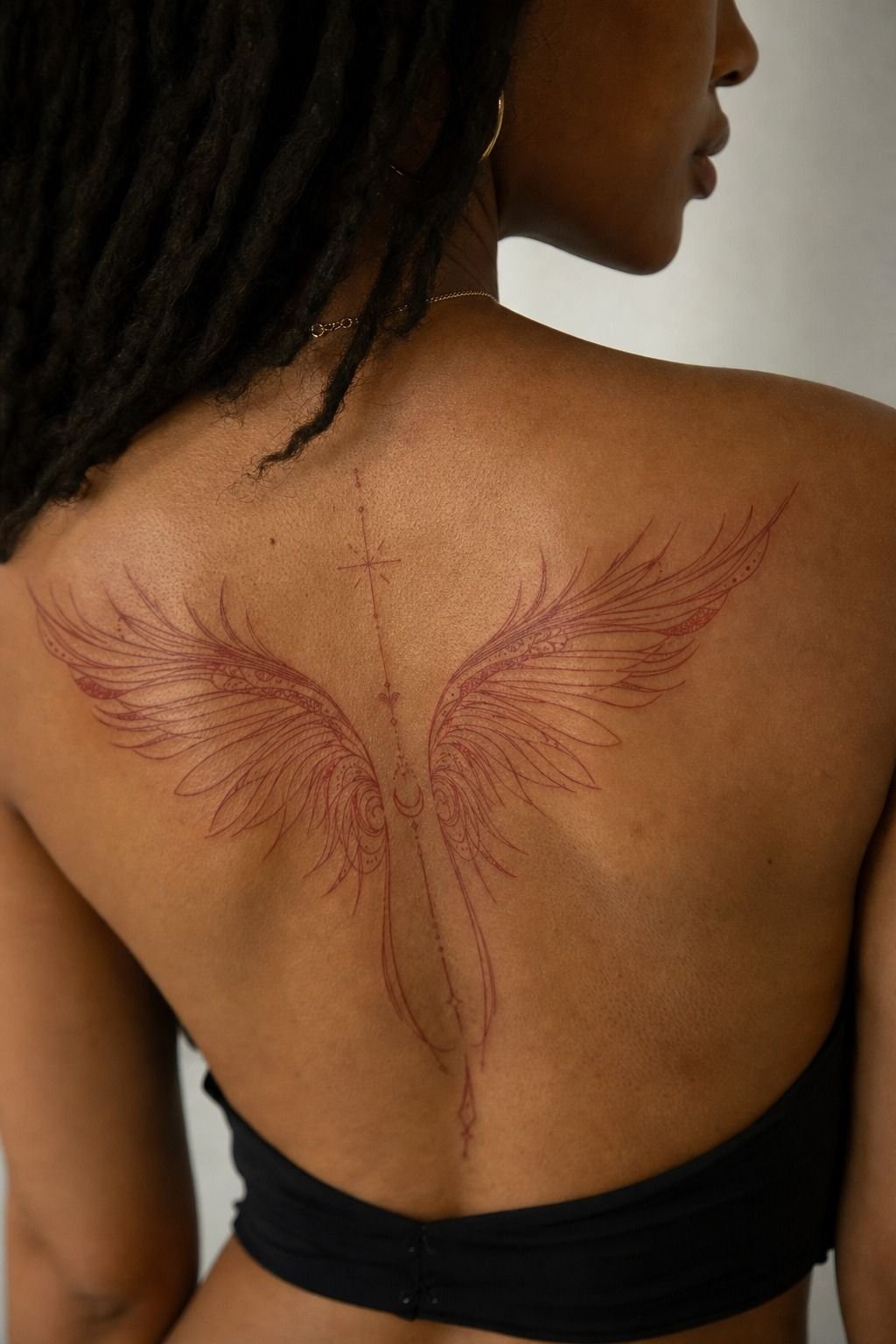
Red ink can look refined on a butterfly when it’s used as an accent, not the whole plan. Think red wing tips, a thin halo behind black outlines, or small dot clusters around the body.
On deep brown skin, red can show beautifully when the artist picks a saturated professional pigment and tests the contrast in their portfolio first. Ask to see healed red work, not only fresh photos under bright studio lights. Fresh red always looks louder.
But don’t choose red because it’s trending. Choose it because it supports the design. A black butterfly with restrained red wing accents will usually age more clearly than a fully red micro tattoo.
12Create A Butterfly With Celestial Symbols
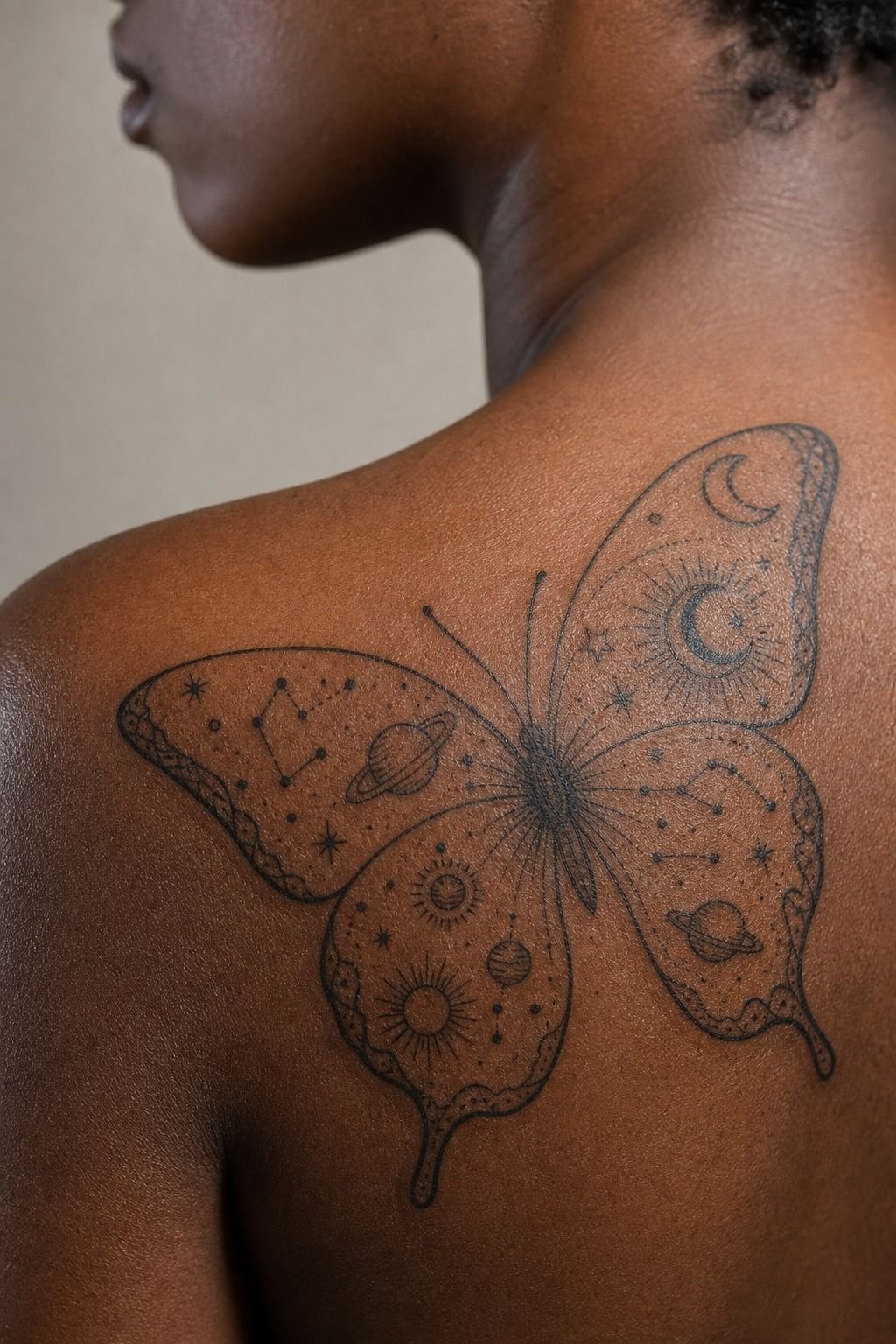
Celestial details can add meaning without making the tattoo look like a sticker sheet.
13Balance Symmetry In A Mirrored Butterfly Design
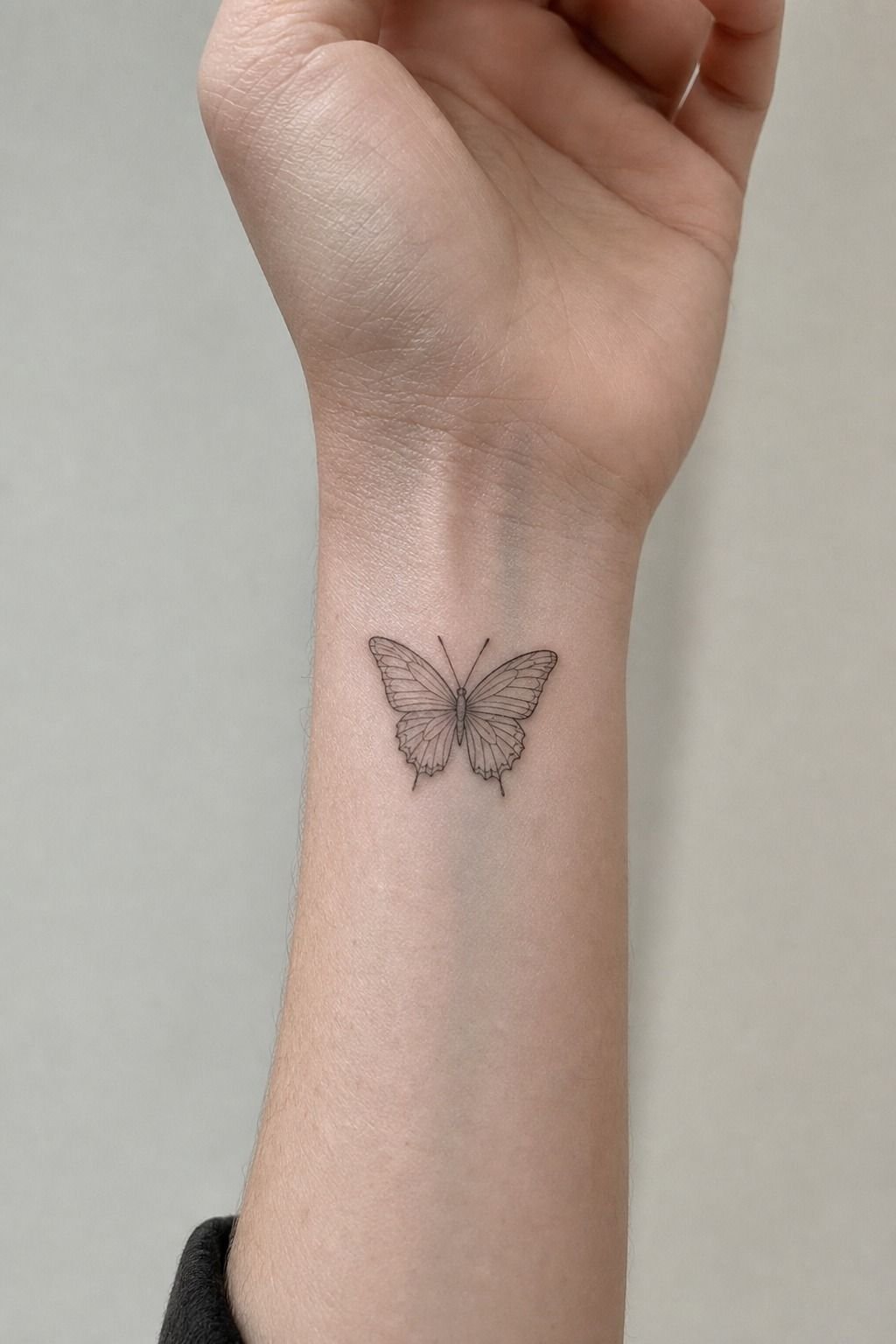
A butterfly is naturally symmetrical, but your body isn’t a flat sheet of paper. On a wrist, one wing may need a tiny adjustment so both sides look balanced when your arm rests naturally.
Ask your artist to stencil it, let you stand up, rotate your wrist, and check it from a few feet away. That’s where you’ll notice if the body line is leaning or the wings feel cramped near the crease. A clean carbon stencil transfer saves you from regretting a rushed placement.
I’ve seen people obsess over millimeters in a photo, then ignore how the tattoo moves in real life. Your skin moves. Design for that, not for a ruler.
14Keep Fine Details Visible At Small Scale
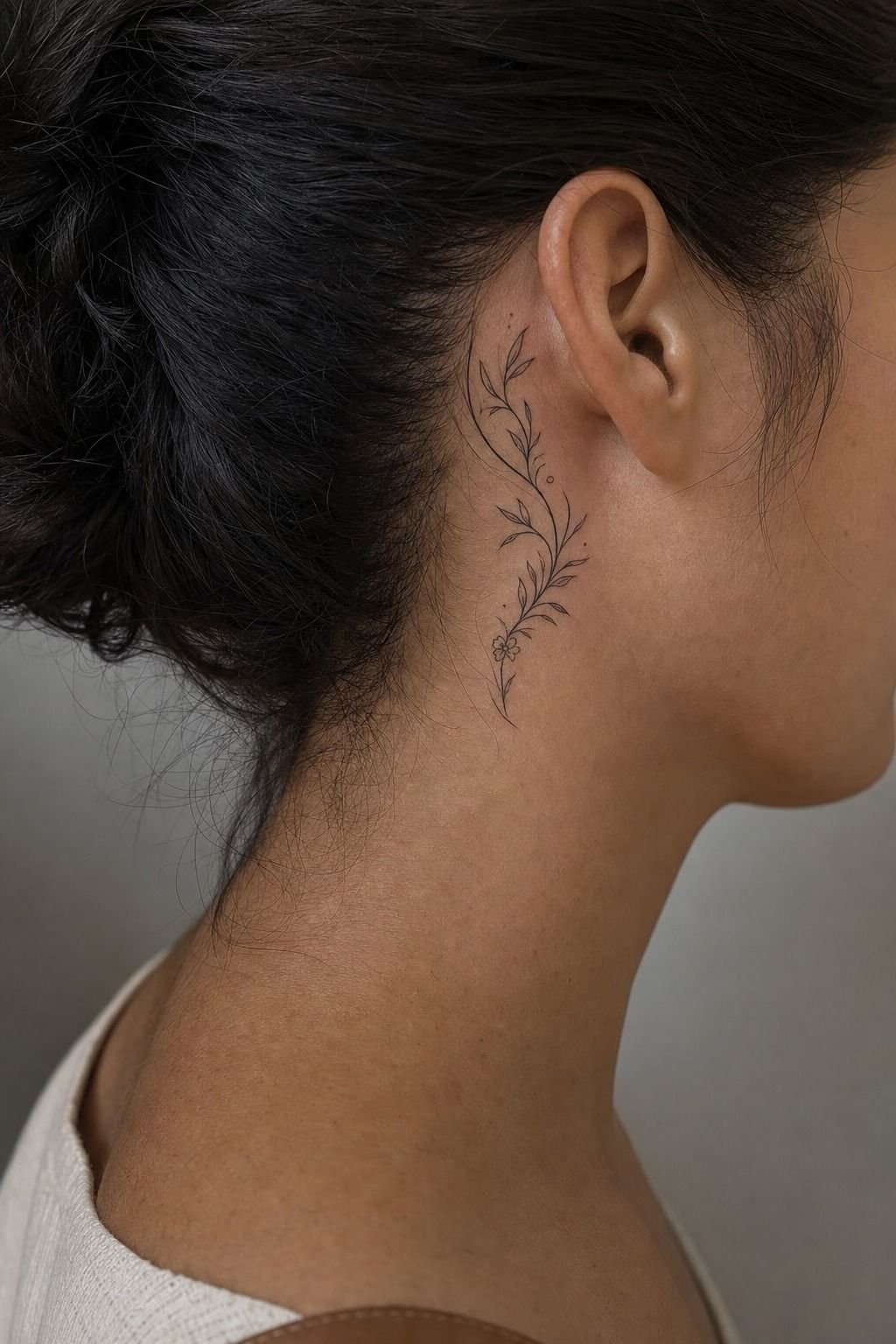
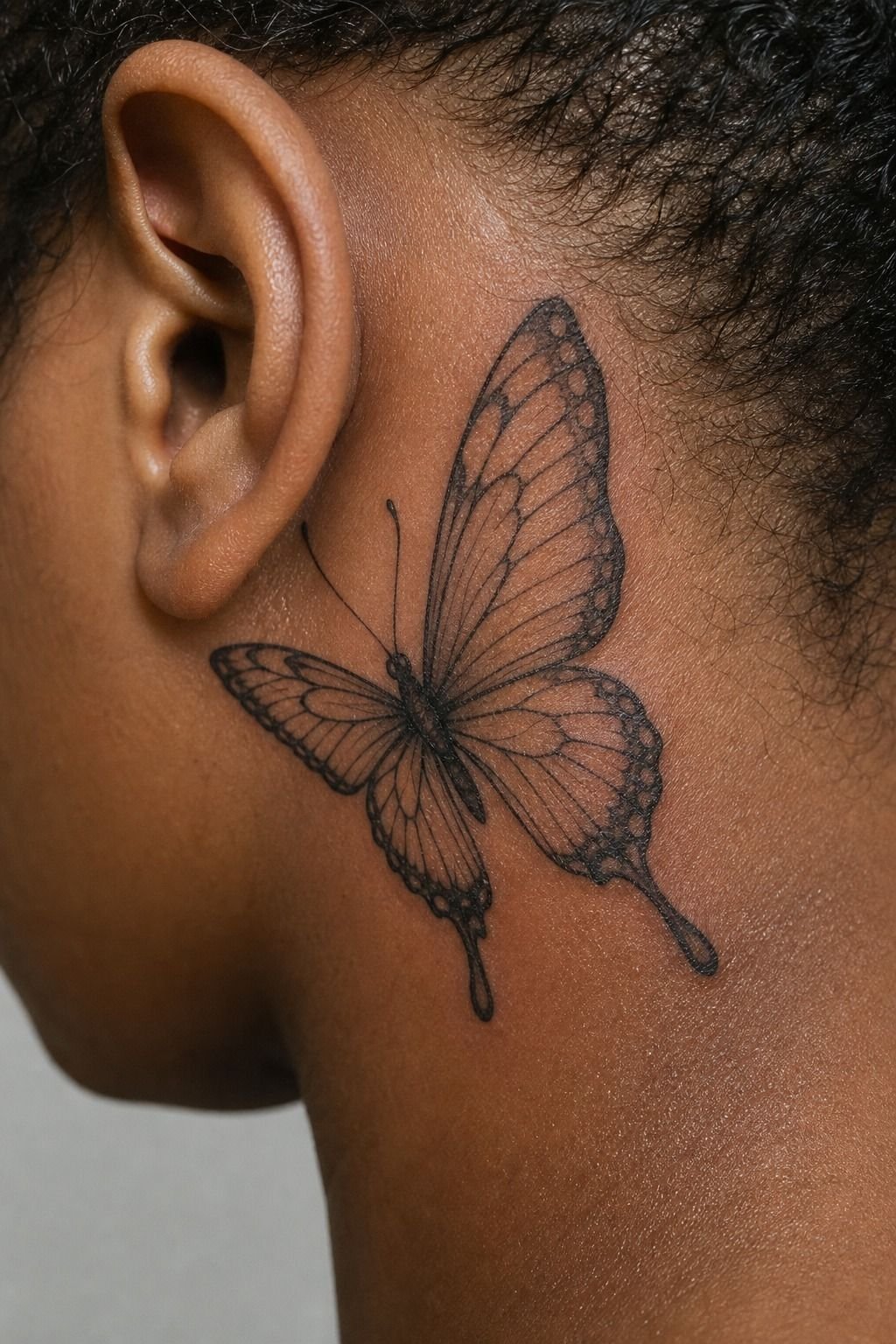
Behind the ear is tiny territory. Keep the design to a simple wing outline, a solid little body, and maybe two or three inner marks. That’s enough.
A 1-inch butterfly behind the ear can be charming, but it’s not the place for lace-like wing veins, dates, moons, and flowers all together. The area also gets hair product, pillow friction, and accidental rubbing, so you need clean line spacing from day one.
Read up on why tattoos blur over time before choosing a micro design. You’re not being dramatic by sizing up. You’re giving the ink somewhere to live.
15Choose A Shoulder Butterfly For Natural Movement
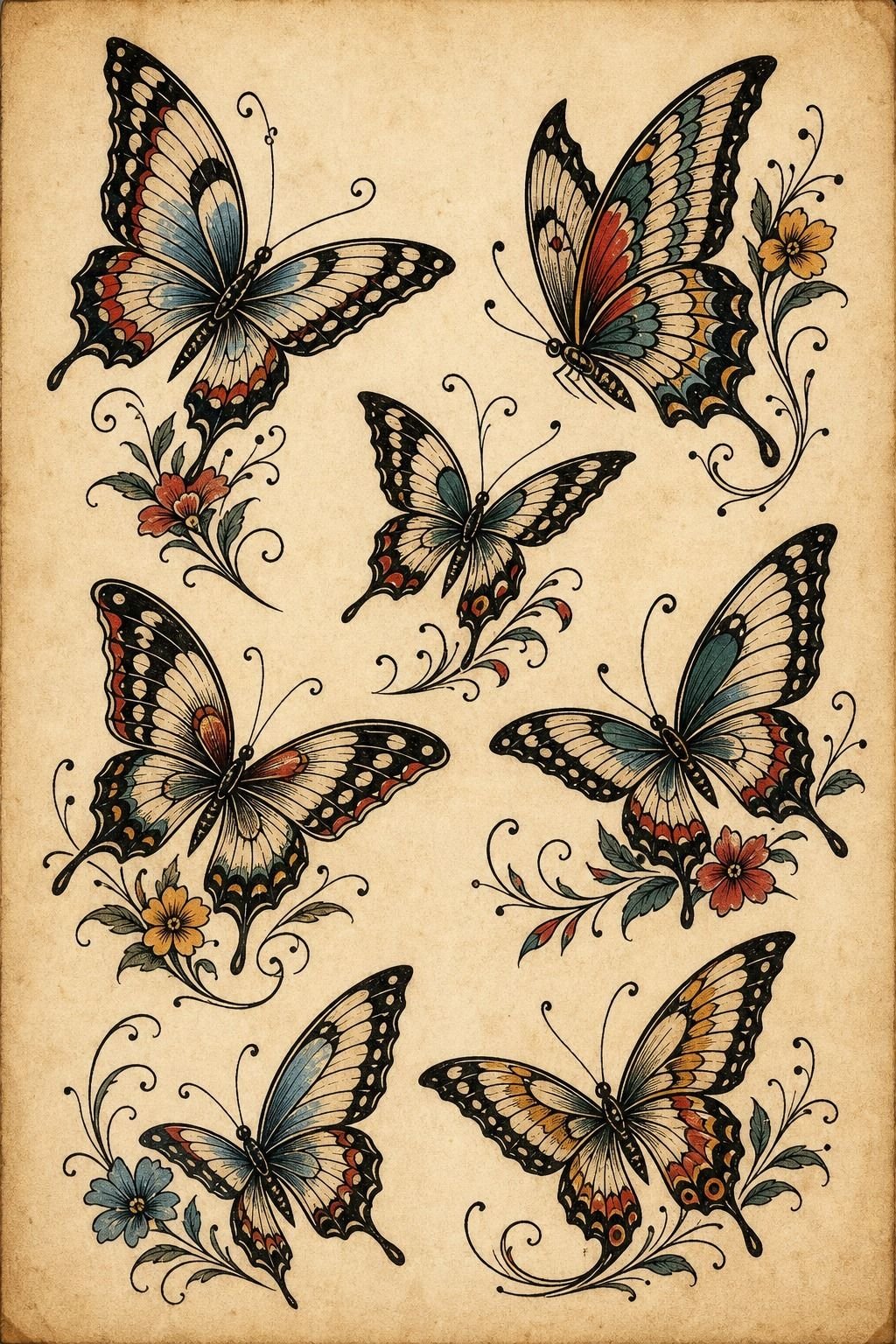
The shoulder is one of my favorite placements for elegant butterfly tattoo designs because the wing shape can follow the deltoid. A butterfly angled slightly forward looks like it landed there instead of being stamped on.
Use a flash sheet as a starting point, then ask for a custom adjustment to match your shoulder width. Fine-line black and grey works well here, but a small amount of stipple shading can give the wings depth without making them heavy. Your artist should place the body on a clean line of muscle, then let each wing curve with the shoulder.
And don’t make it too centered if you want motion. A slight tilt looks more alive.
16Plan Pain Levels Around Sensitive Placements
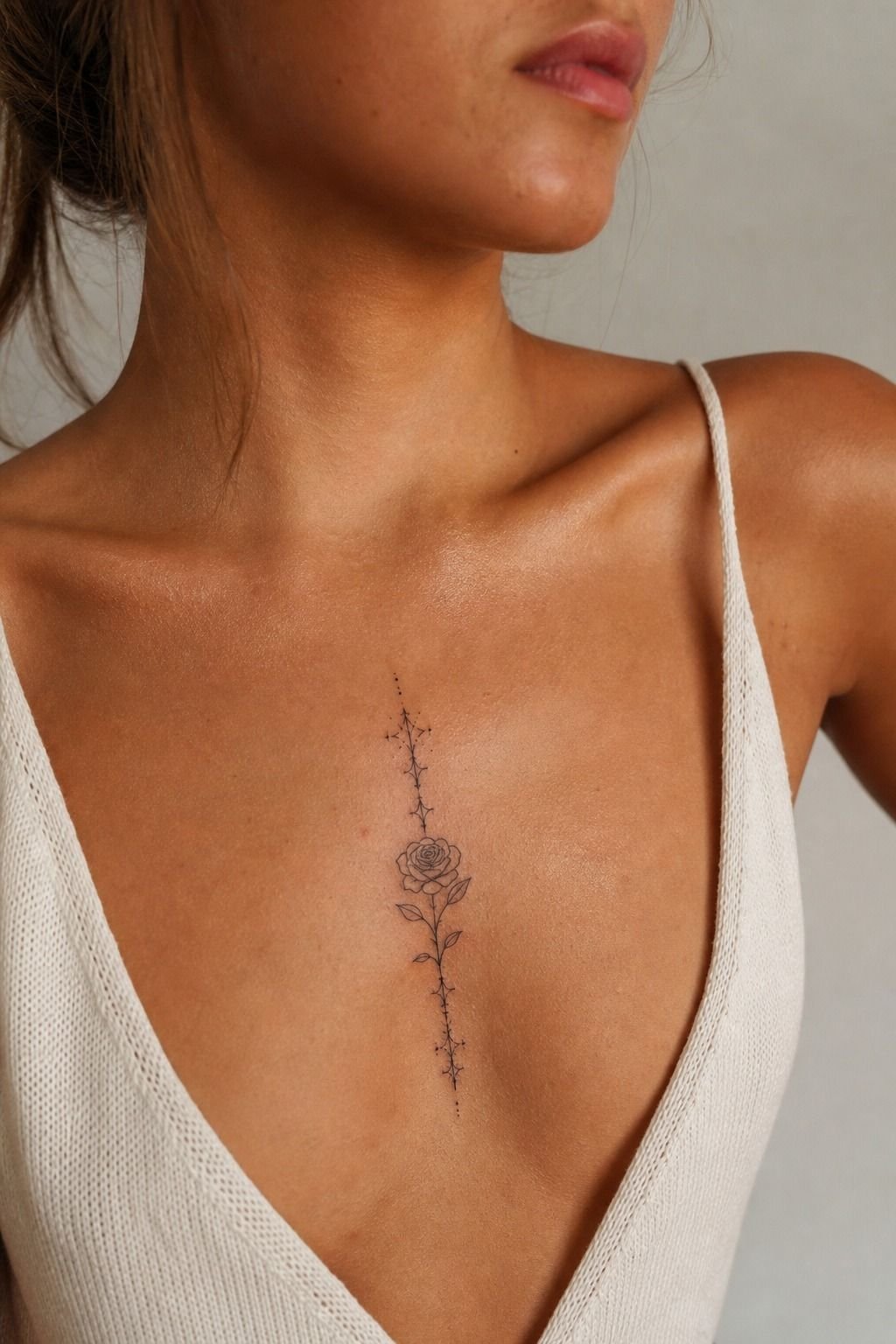
Pain is manageable, but some spots are spicy.
17Protect Fresh Butterfly Ink During Healing
First few days, it’s an open wound. Treat it like that. Wash with gentle unscented soap, pat dry with a clean paper towel, and use a thin layer of fragrance-free tattoo ointment or lotion as directed by your artist.
Your butterfly will peel like a sunburn around days 4 to 10. Don’t pick flakes, even when the wing edges look tempting.
You can pull color out and make fine linework heal patchy. Skip pools, hot tubs, direct sun, and gym friction while the surface heals, usually about 2 to 3 weeks.
Full settling takes roughly 2 to 3 months, including that shiny silver-skin stage. But keep sunscreen on it after that. UV is relentless.
18Compare Butterfly Styles Before Booking Your Artist
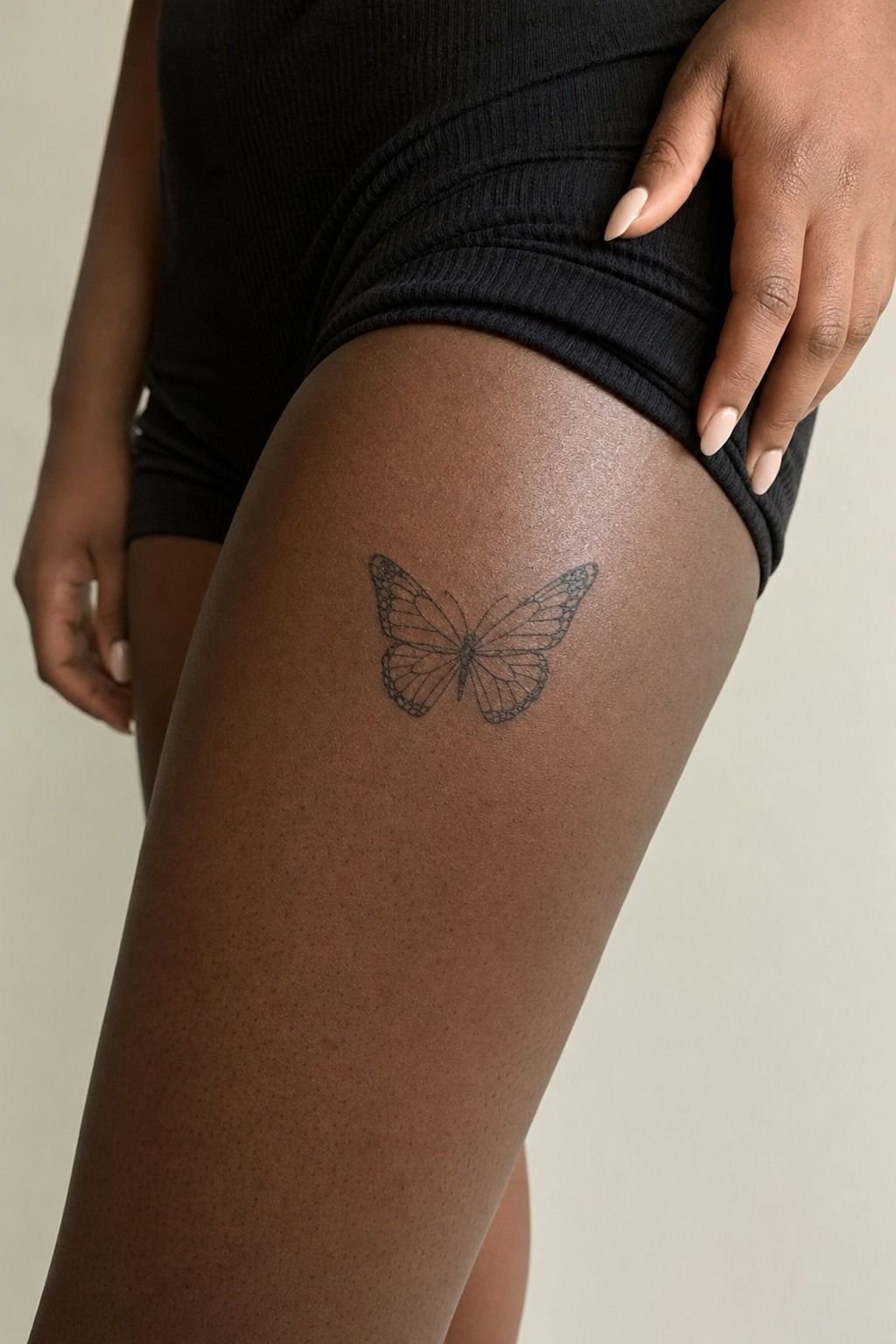
Book the artist whose healed work matches your goal. A fine-line specialist may crush soft botanical wings, while a blackwork artist may give you a stronger graphic silhouette. Don’t ask one person to do every style because you found one nice photo.
Look for healed photos, clean line consistency, and tattoos on different skin tones. You want one clean pull, not ten fuzzy ones. For a minimal piece, browse minimalist butterfly tattoo options and compare them with bolder blackwork references.
A shop minimum is typically about $50 to $100 in the US, while many artists charge around $100 to $250 per hour. Cheap work is expensive when you need cover-up work later.
19Save Reference Photos For Your Custom Butterfly
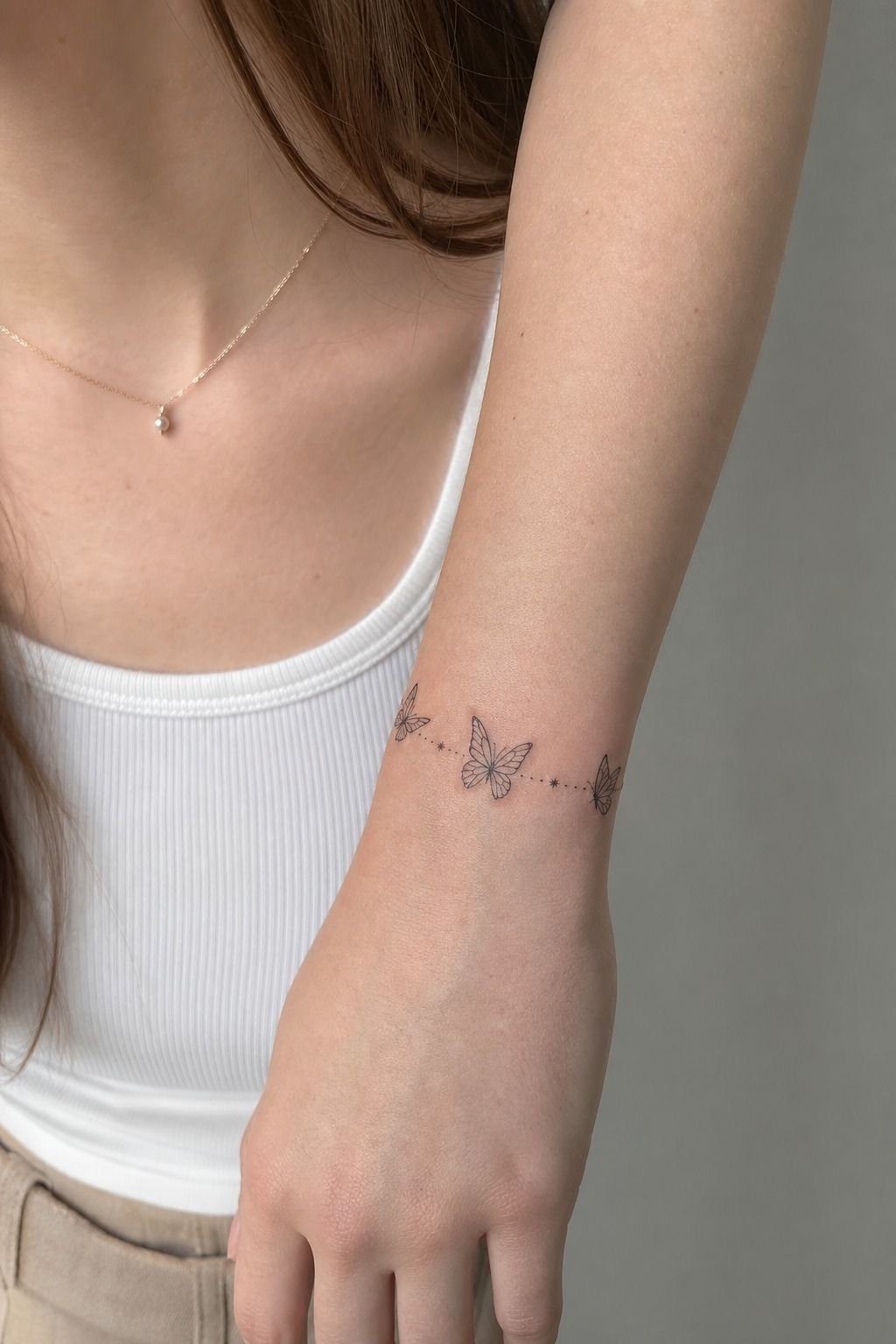
Save references in three folders: wing shape, placement, and line style.
The Crisp-Line Rule I Want Every Client To Know
I’ve tattooed enough fine-line designs to know the biggest mistake isn’t choosing a small butterfly. It’s treating small as if it means unlimited detail.
People see a fresh tattoo online, zoom in on the delicate wings, and assume every hair-thin mark will stay exactly that way. Skin doesn’t work like paper.
Ink settles. Lines widen a little.
Your body moves, gets sun, rubs against clothes, heals in its own weird rhythm.
The designs that hold up have a clear hierarchy. You can see the butterfly silhouette first.
Then you notice the wing sections. Then, close up, you find the smaller details.
That order is what makes a tattoo read from across the room and still reward you when you look at it in the mirror. A design with every detail screaming at once looks busy fresh and muddy later.
I’d rather simplify a client’s first sketch than promise something their skin can’t keep. That can feel like a buzzkill in the consult, I know. But it’s care.
If you want a 1-inch butterfly, we make it simple and solid. If you want botanical veins, moons, initials, and color, we make it bigger or move it to the thigh, calf, upper arm, or back.
No shame either way.
And this is why placement matters so much. Your outer forearm may let you keep details that a finger or behind-the-ear placement won’t.
A tattoo isn’t just art. It’s art living on you.
The Questions Worth Answering First
How much do unique butterfly tattoos usually cost?
Most small unique butterfly tattoos cost about $100 to $300, depending on size, placement, and artist. A solid budget protects your result.
– Shop minimums, roughly $50 to $100 – Hourly US rates, commonly $100 to $250 – Larger custom pieces, multiple hours
Are unique butterfly tattoos good for a first tattoo?
Yes, especially on your outer arm, thigh, or shoulder. Those placements give fine lines room to age well and are usually less spicy than ribs or feet. Keep your first design simple, and don’t make a tiny tattoo carry a whole life story.
How do I choose a tattoo artist for unique butterfly tattoos?
Choose an artist with healed work in the style you want. Clean healed photos matter more than fresh photos. Look for crisp linework, consistent spacing, safe studio practices, and designs on real bodies. Your artist’s specialty should match your butterfly idea.
How much do unique butterfly tattoos hurt?
Outer arm, thigh, calf, and shoulder are usually more manageable. Ribs, sternum, feet, hands, and collarbone feel sharper because of bone and sensitivity. You’ll get through it, but eat first and plan a break if the placement is spicy.
How long do unique butterfly tattoos take to heal?
The surface usually heals in 2 to 3 weeks, while complete settling takes around 2 to 3 months. Gentle aftercare keeps fine details cleaner. Wash gently, use a thin lotion layer, avoid pools and sun, and don’t pick the peeling skin.
What’s the best placement for unique butterfly tattoos?
The outer forearm and upper arm are my top picks for most people. They offer room, visibility, and lower wear than fingers or feet. A thigh is great for larger butterfly wings, while a shoulder gives the design natural movement.
Where I’d Start First
If I had to pick one step, I’d start with matching the butterfly’s size to your placement. Tiny details can’t survive a cramped wrist forever, no matter how pretty the stencil looks. Give the wings room, and your tattoo will stay readable longer.