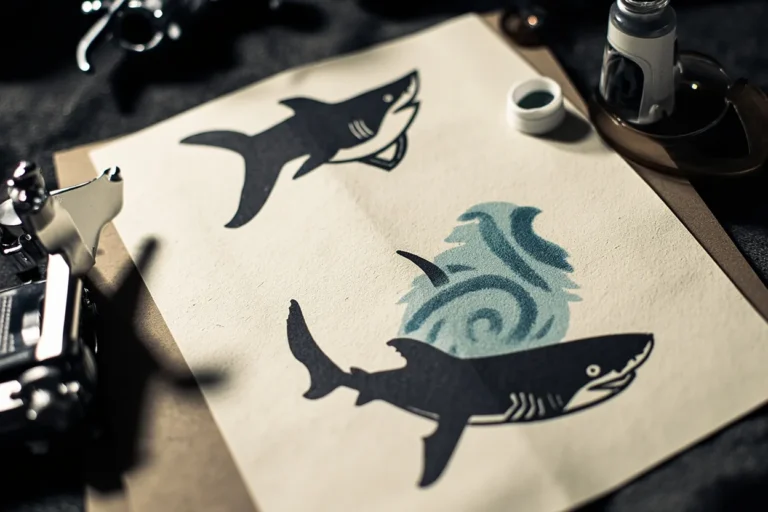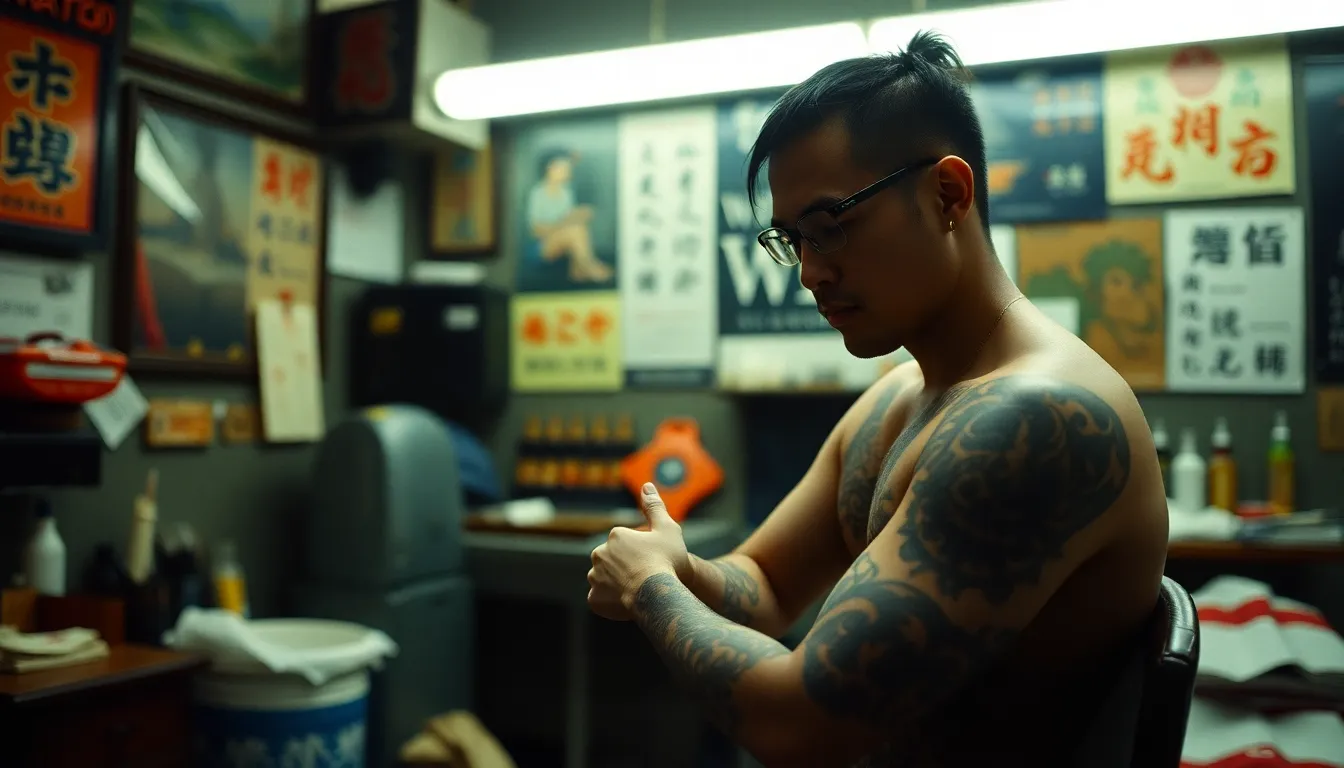
Irezumi is not a tattoo style. It is a discipline. To understand it properly — the imagery, the placement conventions, the technique, the sessions that stretch across years — you need to approach it as a collector, not a consumer. This guide covers everything you need to know before booking your first Japanese traditional appointment: history, motifs, technique, pain, time commitment, and where to find artists in France who genuinely understand the form.
Origins: Irezumi from the Edo Period to Today
The word irezumi (入れ墨) translates literally as “inserting ink.” Japan has a tattooing history stretching back at least 5,000 years — Jōmon-era clay figurines with facial markings attest to the practice. But the aesthetic vocabulary we associate with irezumi today crystallised during the Edo period (1603–1868).
During the early Edo era, tattooing served as criminal punishment — branded marks identified thieves and outlaws. The stigma was permanent and deliberate. But artisans, labourers, and chōnin (townspeople) reclaimed the practice, transforming penal marking into a sophisticated art form. The emergence of ukiyo-e woodblock printing, with its bold outlines and flat colour fields, gave tattooers a visual language to work with. Designs from the Suikoden — a Chinese novel translated into Japanese, featuring 108 heroes with elaborate tattoos — became standard reference material for the first great irezumi masters.
The Meiji government banned tattooing in 1872, fearing Western perceptions of Japan as barbaric. The ban drove irezumi underground, associating it firmly with the yakuza — organised crime syndicates who adopted full-body suits as markers of commitment, pain tolerance, and brotherhood. The ban was lifted in 1948. Today, irezumi sits in a legal grey zone: technically permitted, but many public bathhouses (sentō) and onsens still refuse tattooed customers, perpetuating the association.
In France and across Europe, irezumi arrived as a collector’s pursuit — sought after by those who understood tattooing as a long-term commitment rather than a one-session decision.
The Core Motifs: What Irezumi Images Mean
Irezumi motifs are not decorative choices. Each carries a specific symbolic weight, rooted in Buddhist, Shinto, and folk traditions. Understanding what you are choosing is the first step toward a coherent piece.
Koi (Carp — 鯉)
The koi is the most universally requested irezumi motif in Western studios. Its symbolism comes from a Taoist legend: a koi that swims upstream against the Yellow River’s current and leaps the Dragon Gate waterfall transforms into a dragon. The motif represents perseverance, ambition, and transformation under adversity.
Direction matters in traditional placement: a koi swimming upstream signals ongoing struggle; swimming downstream signals a battle concluded. Colour adds another layer — red and orange koi carry passionate, aggressive energy; black koi represent overcoming great odds; gold koi signify wealth and prosperity.
Ryū (Dragon — 龍)
The Japanese dragon differs fundamentally from its European counterpart. Where Western dragons are threats — creatures of destruction and greed — the ryū is a force of wisdom, protection, and natural power. It commands rain, water, and fortune. The dragon possesses a pearl (carrying wisdom) and typically has three claws in Japanese iconography (versus four in Chinese tradition).
Dragons coil around the body in full-suit work, their sinuous forms following the musculature of the arm, torso, or leg. A dragon paired with a koi frequently depicts the moment of transformation — the carp ascending toward dragonhood.
Hannya (般若)
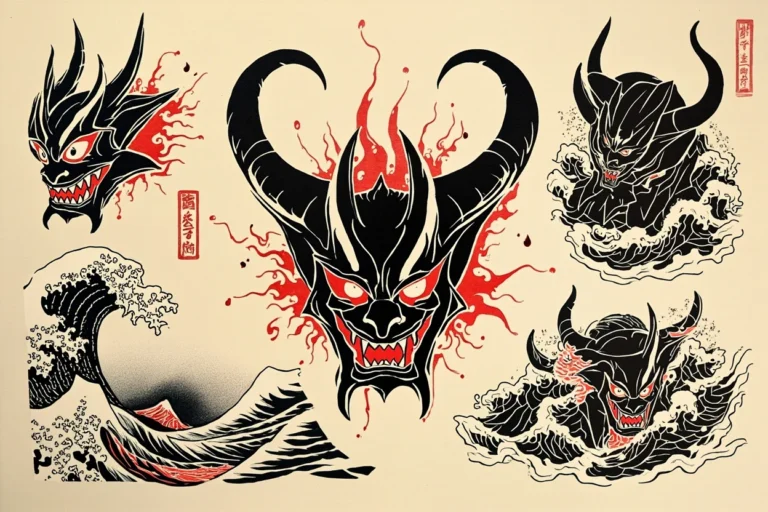
The hannya is a female demon of Buddhist theatre — a woman consumed by jealousy and obsession until she transforms into a horned, hollow-eyed monster. The mask is one of the most technically demanding motifs in irezumi, requiring precise shading in the hollow eye sockets and nuanced colouring: pale hannya indicate mild jealousy; deep crimson signifies full demonic possession.
The hannya is typically paired with a serpent (hebi) — together they represent the destructive power of obsession and the importance of emotional mastery. In protective contexts, the hannya paradoxically wards off evil spirits.
Sakura (Cherry Blossom — 桜)
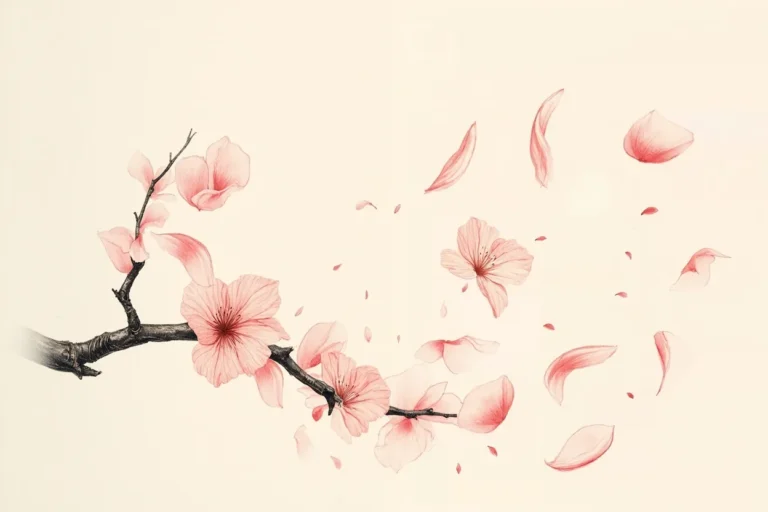
Sakura represents mono no aware — the Japanese aesthetic concept of life’s transient beauty, heightened by the awareness of impermanence. The cherry blossom blooms for barely two weeks. It is used in irezumi as a background element, scattering across a back piece or sleeve to suggest the passage of time, to soften the negative space between larger motifs, and to add movement to a composition.
Pink sakura on a black-and-grey background is a classical combination. The petals are often rendered mid-fall, never static — life caught at its most beautiful and most fleeting.
Extended Motif Vocabulary
The vocabulary extends far beyond these four. Oni demons — red or blue, wielding iron clubs — function as guardians and protectors despite their fearsome appearance. Fujin (wind god) and Raijin (thunder god) are dynamic figures whose robes and postures create natural movement across large canvas areas. Tennyo, celestial maidens descending from clouds with flowing robes, offer a counterpoint to the masculine aggression of demons and dragons. Each motif has prescribed companions, placement zones, and colour relationships in the classical system.
Tebori vs Machine: Two Routes to the Same Image
The most significant technical distinction in irezumi is the application method.
Tebori (手彫り — Hand Carving)
Tebori uses a wooden or metal handle with a set of needles attached at one end. The artist inserts ink manually with a rhythmic rocking and pushing motion — no electric power, no vibration motor. The pace is slower: a tebori session covers less area than a machine session in the same time. Tebori artists in Japan train for years as apprentices before touching a client.
The resulting healed tattoo differs subtly but perceptibly from machine work: tebori tends to produce softer gradients, a slightly different ink distribution under the skin, and — according to proponents — better long-term saturation in the grey washes. The subjective experience is also distinct: tebori’s rhythmic pressure is described by many clients as less sharp but more persistent than machine work.
Authentic tebori masters in France are extremely rare. You are more likely to find a French artist trained in the tebori technique at a Japanese studio, or a visiting Japanese artist hosting a guest spot.
Machine Work in Japanese Style
The overwhelming majority of irezumi produced worldwide — including by excellent Japanese-trained artists — is done with a tattoo machine. A skilled machine artist working in the traditional Japanese style can achieve results visually indistinguishable from tebori for most collectors. The machine allows slightly more control over very fine linework and faster shading coverage on large areas.
Do not choose an artist based on tebori versus machine alone. Choose based on portfolio quality, proven experience with large-scale Japanese work, and whether their healed work photographs match your expectations.
Session Length and Time Commitment
Irezumi is not a one-session commitment. A standard consultation involves the artist designing a coherent composition across your chosen body zone — sleeve, half-sleeve, back piece, chest panel, leg suit — before the first needle touches your skin.
- Quarter sleeve (upper arm) — 3–5 sessions of 4–6 hours each. Total: 12–30 hours of tattooing.
- Full sleeve — 8–15 sessions. Total: 40–80+ hours. Budget 1–3 years for completion.
- Back piece — 10–25+ sessions depending on density. The most ambitious single-piece commitment in tattooing.
- Full body suit (donburi) — A lifetime project. Horiyoshi III’s clients have spent 20+ years completing suits.
Individual sessions typically run 4–8 hours for experienced collectors. First-timers often cap at 3–4 hours as pain tolerance and focus wane. The pain scale is contextual: ribs, spine, armpits, and the ditch of the elbow are genuinely challenging zones. Upper arms, thighs, and calves are significantly more manageable. Background shading sessions — heavy black across large areas — are often harder than the outline sessions.
Pain Scale by Zone
On a standard 1–10 scale (1 = barely noticeable; 10 = intolerable for most):
- Upper arm (outer) — 2–3. The most popular starting point. Fleshy, manageable, long sessions possible.
- Forearm — 3–4. Slightly more bone-adjacent at the wrist end.
- Thigh (outer) — 2–3. Large canvas, excellent for detailed work.
- Calf — 3–4. Shin bone proximity raises rating toward the front.
- Upper back / shoulder blade — 4–5. Manageable fleshy areas; shoulder blade itself is higher.
- Ribs — 6–8. Bony, each inhale shifts the skin. Experienced collectors only.
- Spine — 7–9. The most universally reported difficult zone. Sessions are typically shorter here.
- Chest (sternum area) — 5–7. Bony zones spike the rating sharply.
- Armpit / elbow ditch — 7–9. Sensitive skin over nerve clusters.
Preparation matters for extended sessions: eat a solid meal beforehand, stay hydrated, avoid alcohol for 24 hours, and wear clothing that gives the artist easy access. Bring water, glucose (a banana or glucose tablets), and something to occupy your mind during long flat-colour sections.
French Artists and the Irezumi Scene
Horiyoshi III (堀義三) — Yokohama-based, born 1946 — remains the most internationally recognised irezumi master. His influence on Western Japanese-style tattooing is immeasurable: his books, workshops, and guest spots have trained and inspired a generation of artists. His work on the Bushido series and encyclopaedic treatment of irezumi symbolism remains essential reference material for any serious collector or practitioner.
In France, the Japanese tattoo scene has matured significantly. Paris concentrates the most studios with dedicated irezumi specialists, but excellent artists work in Lyon, Marseille, and Bordeaux. When evaluating a French artist for irezumi work:
- Review healed back pieces and sleeves, not just fresh work. Japanese-style black requires consistent ink saturation and clean shading after healing — this is where mediocre work reveals itself.
- Look for compositional coherence. A sleeve should have intentional negative space, a clear focal motif, and correctly scaled surrounding elements. Crowded, unplanned compositions are a red flag.
- Check the outlines. Traditional Japanese tattooing uses bold, consistent black outlines — these must be clean, even-weight, and properly separated from the shading.
- Ask about training lineage. Artists who have apprenticed in Japan or trained directly under a recognised irezumi master carry verifiable methodology.
Paris studios with strong Japanese portfolios cluster around the 11th and 18th arrondissements. The tag #irezumifrance and #japanesetattooeurope on Instagram provide starting points for research. Conventions such as Mondial du Tatouage (Paris) and Lyon Tattoo Convention regularly feature Japanese specialists for guest spots.
Budgeting for Irezumi
A full sleeve at Paris studio pricing typically runs €300–600+ per session, with 10–15 sessions required. Budget €3,000–9,000+ for a complete sleeve. A back piece from a reputable artist will exceed €10,000 total. These are multi-year financial commitments — build a realistic timeline and establish a clear payment structure with your artist from the start.
Do not prioritise price. Irezumi mistakes are correctable only through expensive cover-up work or laser removal — both disruptive to a large-scale piece. The additional cost of a skilled artist is trivially small compared to the long-term cost of regret.
Aftercare for Large-Scale Irezumi Work
Standard aftercare applies for each session: keep the fresh tattoo clean with fragrance-free soap, apply a thin layer of unscented moisturiser, avoid direct sunlight on healing skin, avoid submersion in pools or open water for 2–4 weeks. For large-scale work covering significant body area, each new session is a fresh wound requiring the same care.
The long-term care of an irezumi piece requires consistent sun protection. UV exposure is the primary cause of colour fading and black softening over time. SPF 50+ on exposed tattooed skin is standard practice for serious collectors. Touch-up sessions are normal after 5–10 years on heavy black backgrounds — budget for them as part of the long-term relationship with your artist.
For general wound care standards, the Haute Autorité de Santé publishes professional tattoo aftercare guidelines. The Syndicat National des Artistes Tatoueurs also provides industry-standard health protocols.
Irezumi as Commitment: The Final Word
The collectors who end up with the most powerful irezumi are those who approach it as a slow practice — a decade-spanning relationship with an artist, a motif vocabulary, and a body that gradually becomes a canvas of intentional meaning. The rush to “complete” a sleeve misunderstands what the form is. The Japanese tradition treats the body as a site of continuous, evolving work, not a project to be ticked off.
If you are researching Japanese traditional tattooing, that orientation — patience, study, relationship — is the only one that produces results worth the investment of time, money, and permanent commitment. Related: How to Choose a Tattoo Artist | Tattoo Placement Guide.
Sources: Fellman, Sandi — The Japanese Tattoo (1986); Richie, Donald and Buruma, Ian — The Japanese Tattoo (1980); Horiyoshi III — Bushido: The Way of the Samurai (2001); Syndicat National des Artistes Tatoueurs; Alliance of Professional Tattooists (APT) health protocols.
Our Pick
SPF Tattoo Sun Protection
Japanese tattoo colors — especially reds and yellows — are particularly vulnerable to UV fading. Apply a mineral SPF 50+ over healed tattoos before any sun exposure to preserve vibrancy for decades.
Shop Tattoo Sun Protection on Amazon →
Amazon affiliate link — price and availability may vary