A tattoo artist is not a printer. You are hiring judgment. The portfolio matters, but the conversation matters too: where they want to place the stencil, what they refuse to do, and whether they talk about healing before you ask.
Quick answer: Choose a tattoo artist by healed work, style match, clean studio practice, clear pricing, placement judgment, and communication. Do not book from a fresh Instagram photo alone. Fresh tattoos shine. Healed tattoos tell the truth.
Start with Healed Photos
Why Fresh Work Deceives
Fresh work is the billboard. Healed work is the receipt. Lines spread a little. Black settles. Color softens. Fine line can fade if it was too shallow or too delicate for the placement. A photo taken moments after the needle stops shows swollen, saturated skin that looks sharper than it will ever look again. Filters and ring lights make this worse. You are not seeing the tattoo. You are seeing the performance of the tattoo.
How to Ask and What to Look For
Ask to see healed examples in the style you want, on a placement close to yours. Say it directly: “Do you have healed photos of this style at this size?” A professional expects this. If they hesitate, offer excuses, or claim their clients never send healed photos back, that is information. Look for lines that stay crisp, color that remains in the skin without muddiness, and shading that still reads from a normal viewing distance, not only in macro close-ups. Skin texture should look healthy, not scarred or discolored.
If the artist only posts fresh work, that is not proof they are bad. But it means you need more information before you let them tattoo your ribs, hand, neck, or first visible piece. Some artists simply do not photograph healed work well. Others avoid it because the healed results do not match the fresh hype. Your job is to tell the difference.
Match the Artist to the Style
Reading a Portfolio for Technical Fit
Most strong artists have a lane. Some are built for American traditional, where bold lines and limited palettes do the work. Some are better at blackwork, where saturation and negative space carry the piece. Some understand fine line, but only on placements where fine line has a chance to last. A portfolio that jumps between ten unrelated styles without mastery in any of them is a portfolio of someone still learning, or someone who takes whatever walks in.
| Style | Portfolio signal | Watch out for |
|---|---|---|
| Fine line | Clean healed lines, not only fresh close-ups | Too much detail in too little space |
| Traditional | Confident lines, readable shapes, settled color | Weak black or muddy color packing |
| Japanese | Strong background flow and motif scale | Random motifs with no body movement |
| Blackwork | Even saturation and smart negative space | Patchy black or rushed fills |
| Realism | Contrast that still reads healed | Photo copies with no skin-tone plan |
Style Fit Over General Talent
A great realism artist is not automatically the right person for fine line script, Japanese background flow, or ornamental symmetry. Technical skill does not transfer cleanly across styles. Look for repetition, improvement, and specialization. If you are not sure which lane fits your idea, start with tattoo styles explained.
Ask Hygiene Questions Without Apologizing
What to Ask and Why
A good studio will not be offended by clean questions. Ask whether needles are single-use, how the station is wrapped, how ink caps are handled, and what aftercare instructions you will get. Watch whether the artist answers with specifics or deflects with confidence. “We are very clean here” is not an answer. “Needles are opened in front of you, everything is barrier-wrapped, and we use disposable ink caps” is an answer.
Regulatory Context and Real Risk
The FDA’s tattoo safety guidance warns that tattoo inks can be linked to infections and allergic reactions. The risk is low when the studio is serious, but low risk is not no risk. Licensing varies by state and sometimes by county. Ask to see the studio’s health department certificate. If it is not posted, ask where it is. An artist who acts insulted by this is telling you something about their professionalism.
Pricing Should Be Clear Before the Appointment
Get the Model, Not Just the Number
You do not need the exact final number for a large custom project, but you do need the pricing model. Hourly, half-day, full-day, flat rate, deposit, redraw policy, touch-up policy. Get the rules before you send money. Ask what happens if you need to reschedule, how many sessions are estimated, and whether the deposit transfers if you cancel with reasonable notice. Artists who have been burned by no-shows often have strict policies. That is fair. Policies that are not explained until after you pay are not.
Evaluating High and Low Quotes
If the quote feels high, compare portfolios, not only prices. A skilled artist with ten years of healed work and a booked schedule charges more because their time is scarce. If the quote feels suspiciously low, ask what is included. Some artists undercharge because they are building a portfolio. Others undercharge because they cut corners you cannot see. A tattoo that needs laser or a cover-up is not a discount.
Red Flags That Should Stop You
Portfolio and Practice Warnings
No healed photos for the style they are selling. They copy another artist’s custom design without changing it. They dismiss placement concerns on hands, ribs, fingers, feet, or neck with “it will be fine” instead of explaining the actual risk. They cannot explain aftercare clearly, or they give advice that contradicts what reputable studios recommend. The studio feels casual about sterile setup: no barrier film, no glove changes, no visible autoclave.
Pressure and Communication Red Flags
They pressure you to go bigger, smaller, cheaper, or faster without a reason you understand. They mock your questions or compare you to “difficult” clients. They want to tattoo the design you brought in without adjusting it for your body or skin tone. They promise to “fix it in the next session” when the current session is going poorly. Trust your discomfort. It is cheaper to walk away than to wear a mistake.
The Consultation Test
What the Right Artist Notices
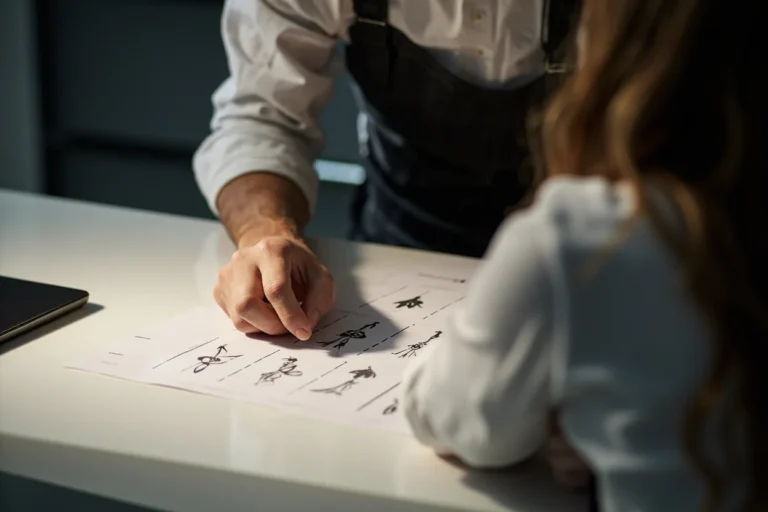
Bring your references and watch what the artist notices. The right artist will talk about body shape, flow, line weight, negative space, and how the tattoo will read from a normal distance. They may push back. That is often a good sign. “That will blur at that size” or “this placement will age badly because of how your skin moves” is expertise you are paying for. The artist who says yes to everything is not serving you.
Questions That Reveal Experience
Ask how they would adjust the design for your specific placement. Ask what they do when skin swells or bleeds more than expected. Ask how they handle touch-ups and whether they guarantee their work. For a first tattoo, you want the person who raises concerns before they take your deposit. Read first tattoo ideas if you are still choosing the concept.
What to Remember
Verification Beats Reputation
Social media followings can be purchased. Awards can be minor. A friendly personality does not mean clean technique. Your job is to verify what you can: healed results, sterile practice, clear terms, and honest communication. The artist who respects this process is the artist who will respect your skin.
The Long View
A tattoo is not a transaction. It is a collaboration that lasts hours in the chair and decades on your body. The artist you choose shapes not only the image but how you feel about it every time you see it. Choose slowly. Ask directly. Walk away freely. The right artist will still be there when you are ready.
Frequently Asked Questions
What should you look for in a tattoo artist portfolio?
Look for healed photos, consistent linework, skin that looks calm, designs similar to what you want, and work on body areas close to your planned placement. Ask directly for healed examples if you only see fresh work.
Is it bad if a tattoo artist is cheap?
Cheap is not automatically bad, but a price far below local norms should make you ask about experience, hygiene, licensing, supplies, and whether the artist has healed examples. A tattoo that needs cover-up is not a discount.
Should you choose a tattoo artist by style?
Yes. Style fit matters more than general talent. A great realism artist is not automatically the right person for fine line script, Japanese background flow, or ornamental symmetry. Look for repetition and mastery in the style you want.
How do you verify a tattoo studio is clean?
Ask specific questions: single-use needles, barrier-wrapped stations, disposable ink caps, and aftercare instructions. Ask to see the health department certificate. Specific answers are good; vague confidence is not.
What should you ask during a tattoo consultation?
Ask about placement adjustment for your body, how the design will age, pricing model and policies, and what the artist does when skin reacts unexpectedly. Pushback and detailed answers are signs of experience.