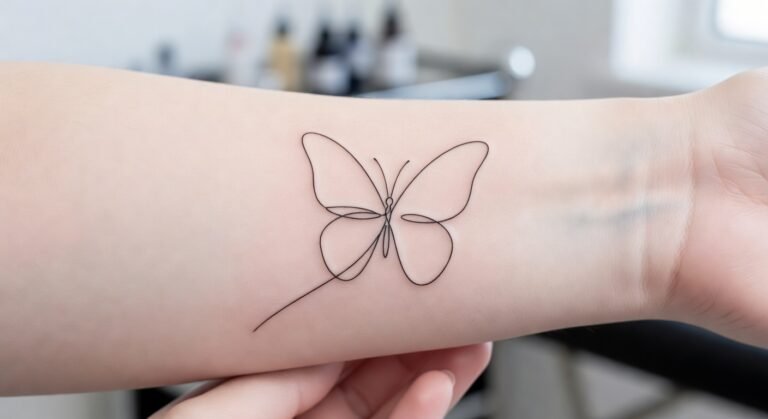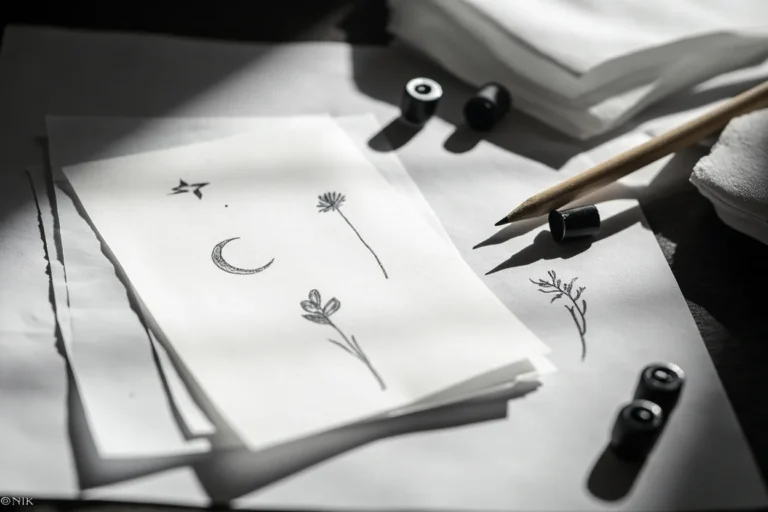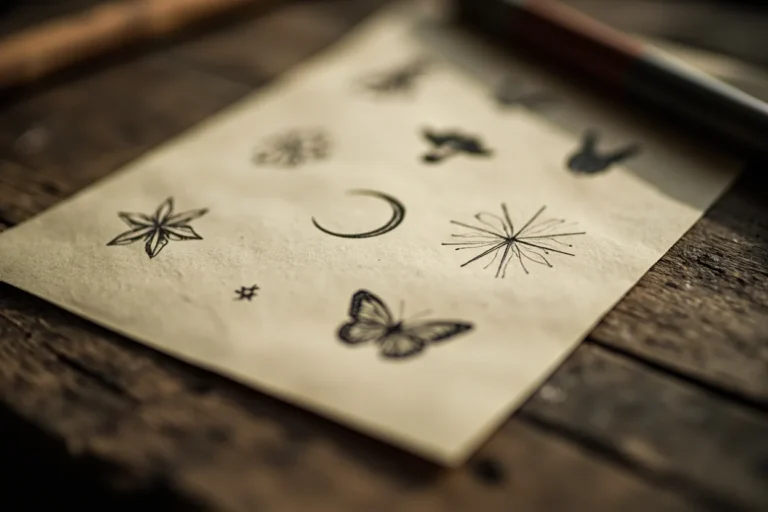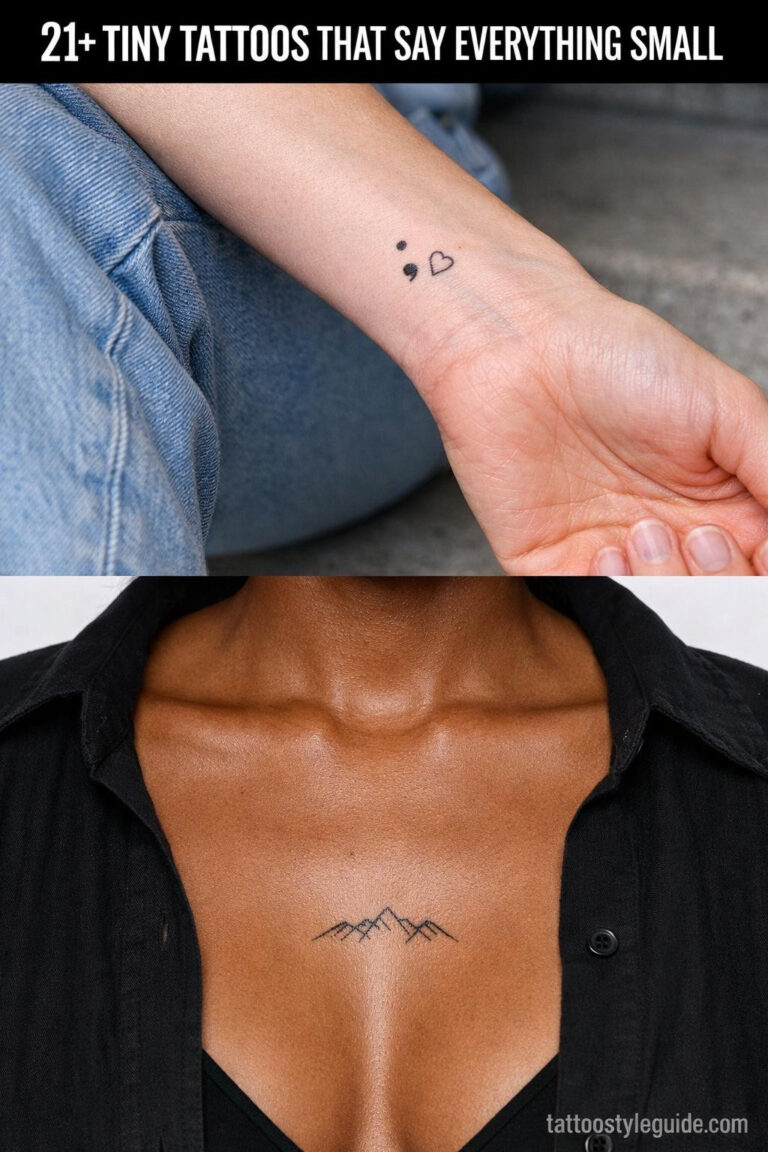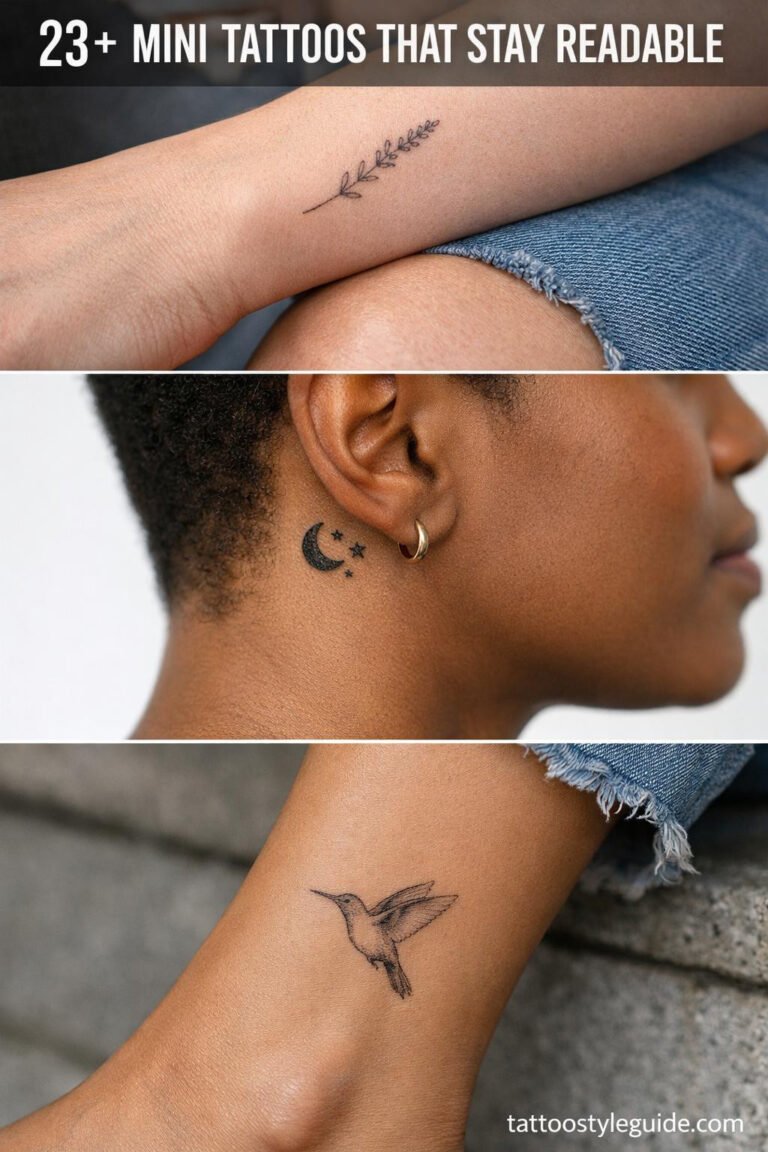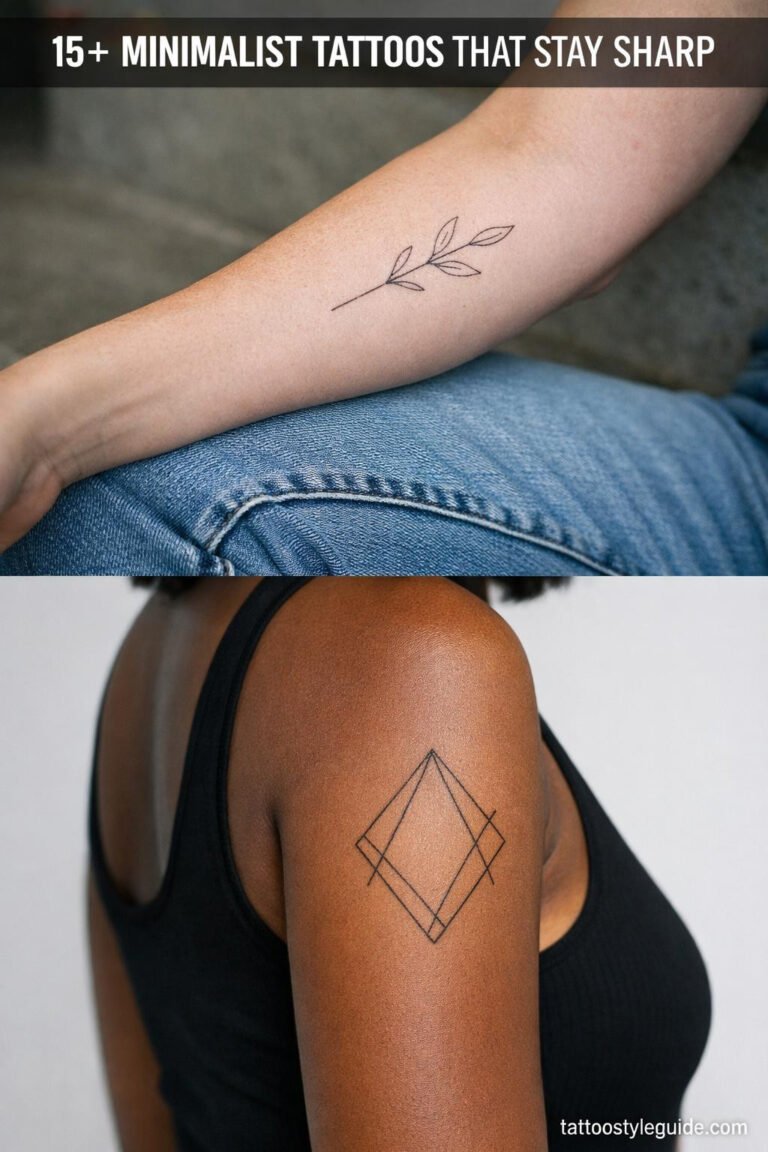
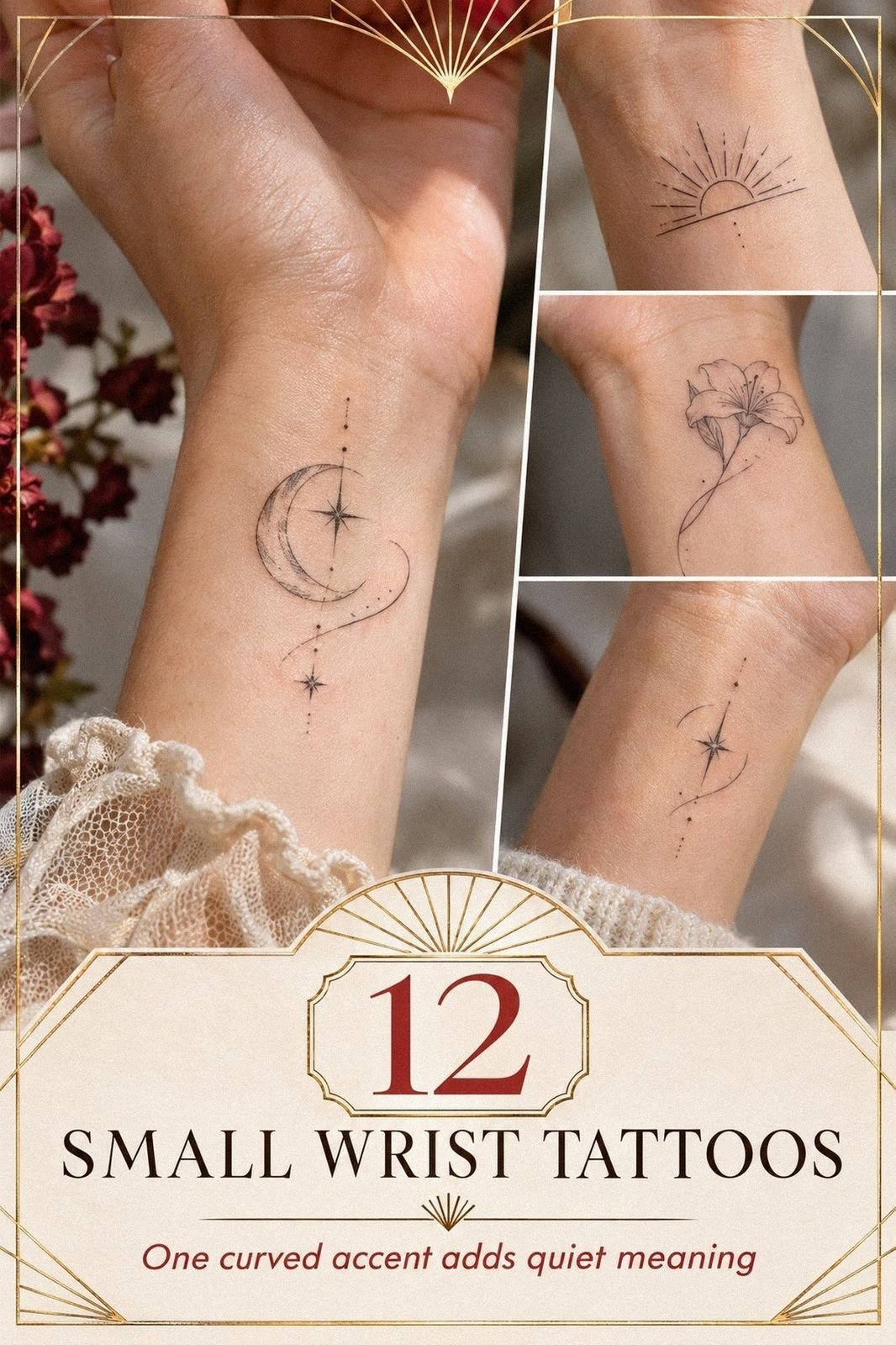
I almost talked myself out of my first wrist tattoo. The Pinterest board was full of single-needle linework, and every shop I visited gave me the same warning: wrist fades, wrist blows out, wrist is high-wear. So I waited two years. Then I sat with an artist who specialized in micro work, watched her pull one clean line on practice skin, and realized I’d been listening to the wrong people. The wrist isn’t the problem. Bad line weight is the problem, and so is skipping the steps that keep a small tattoo crisp past year three.
A small wrist tattoo lives or dies on three things: line weight under one millimeter, an artist who understands micro work, and placement that respects the vein map and the bone underneath. Get those right and your ink can still read clean in five years.
Get them wrong and you’ll be looking at a smudge by next summer. This guide walks through the 12 steps in order, from the first sketch to the one-month sun check, so your design stays crisp instead of turning into what we in the studio call “soup.”
- Start With a Single-Needle Fine Line
- Pick a Tiny Symbol Under One Inch
- Place Ink on the Inner Wrist Bone
- Choose a Delicate Floral Around the Wrist
- Sketch a Word in Lowercase Lettering
- Plan a Matching Pair Across Both Wrists
- Keep Line Weight Below One Millimeter
- Map the Vein Pattern Before Final Placement
- Why Does the Artist Matter More Than the Design?
- Wrap Fresh Ink with Second Skin Film
- Wash the Wrist Twice Daily for Healing
- Keep Sun Off the Healing Tattoo for One Month
1Start With a Single-Needle Fine Line
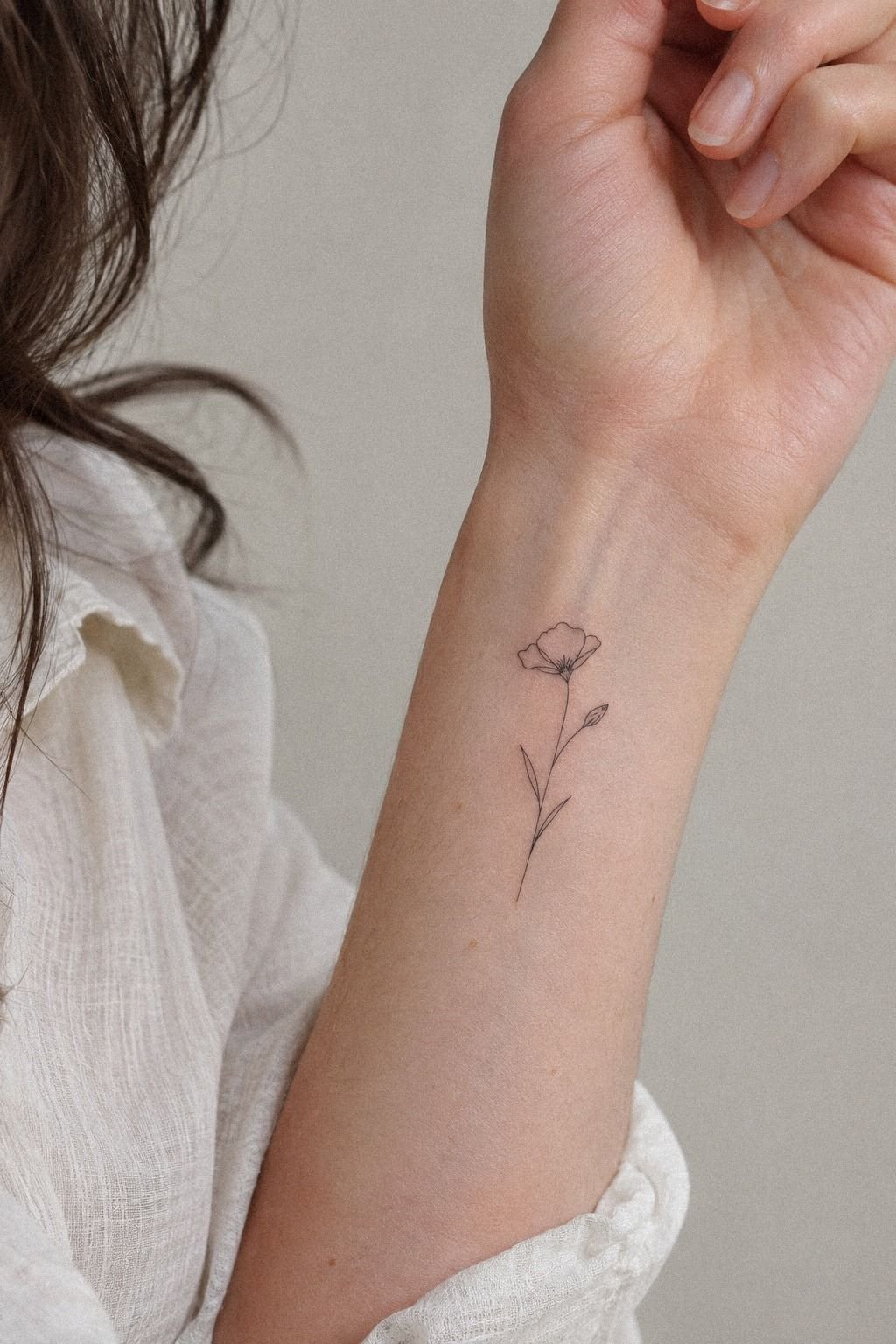
If you’ve ever examined a healed wrist tattoo and wondered why it looks like a soft pencil smudge instead of a crisp line, the answer is often the needle. A standard liner is a 3-round or 5-round, which means three or five needles soldered together.
On a wrist, that bundle is too broad for anything under an inch. You want a single-needle setup, which is exactly what it sounds like: one needle, one tube, one ink deposit at a time.
The line it lays down is closer to a pen stroke than a marker stroke, and that helps it age clean.
When you book the consult, ask the artist how many wrist tattoos they’ve done with a single-needle setup in the last year. If they hedge or say “it depends,” keep looking.
A dedicated single-needle artist will light up when you ask, because most clients don’t know to ask. They keep that needle in the autoclave for work that requires precise control. Expect to pay a bit more per hour for the precision, but the line count is small, so the total is often reasonable!
If you’re planning a small wrist tattoo, browsing our small minimalist tattoos roundup can help you compare healed minimalist work at six months, six years, and ten years.
2Pick a Tiny Symbol Under One Inch
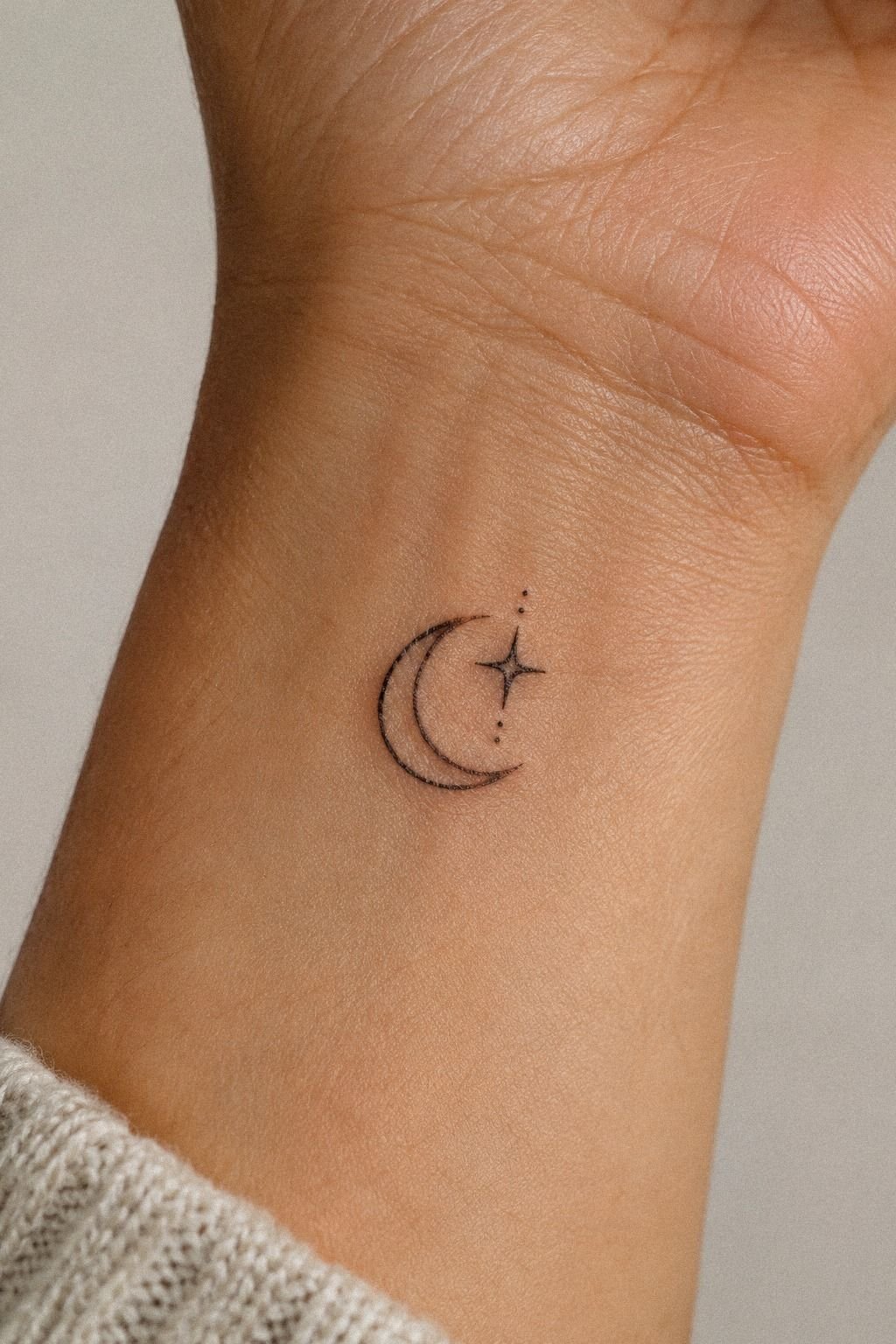
Size is the first decision, and it’s the one most people get wrong by going too small. A tiny wrist tattoo that’s actually going to age well sits between half an inch and one inch tall.
Anything smaller than that forces the line to become extremely thin, or compresses the detail until it turns into a blob by year two. The sweet spot is a symbol that fills about the width of two adult fingers stacked.
A few symbolic designs that hold up at this size include a small crescent moon, a five-petal flower, a tiny anchor, a single lowercase word, a Roman numeral, a minimalist wave, a geometric triangle, a tiny heart outline, a dot-cluster constellation, a sprig of two leaves, an open eye, or a small mountain range. Each can be drawn with fewer than ten lines, which lets every line stay confident enough to last.
The mistake I see constantly is someone bringing in a Pinterest image that was actually two inches wide and asking the artist to shrink it to one inch. The proportions collapse, the lines stack on top of each other, and the piece heals into a grey smudge.
Don’t be that client! If you want to compare size across placements, our small wrist tattoo ideas page can help you choose a meaningful scale for your wrist bone.
3Place Ink on the Inner Wrist Bone
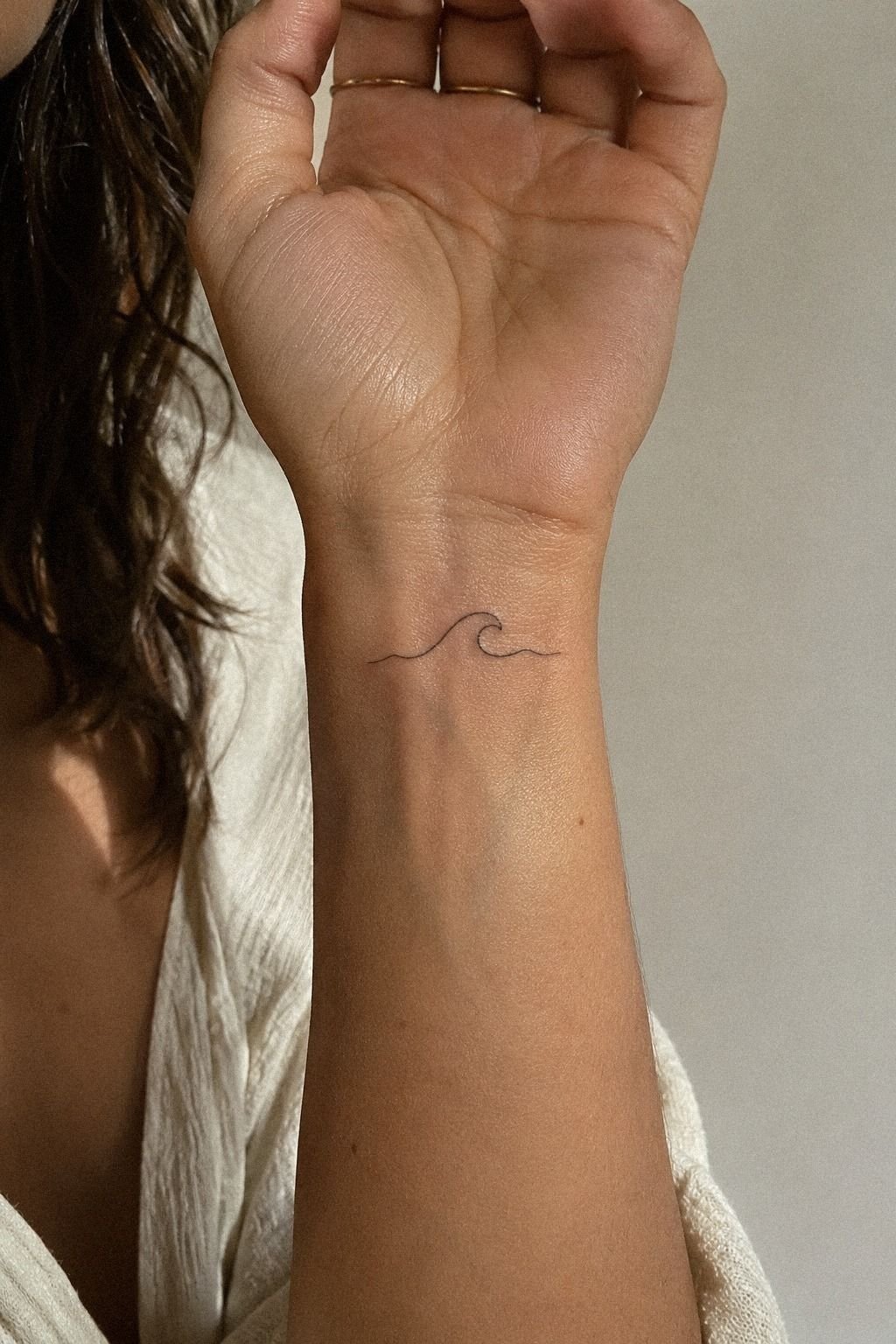
The inner wrist has two distinct zones, and most people pick the wrong one. There’s the flat plane between the tendons, the soft inner face you’d rest a watch on, and there’s the bony ridge near the palm where you can feel the pulse.
Both can take ink, but they heal differently. The flat plane is forgiving: the skin has enough give to absorb the line, the padding underneath keeps the needle from dragging into bone, and the line settles clean.
The bony ridge is more dramatic and can feel edgy, but it may fuzz sooner as the skin stretches whenever you bend your hand back to hold a phone or grab a cup. The third option, and the one I push most clients toward, is the side wrist just past the radius bone, where the wrist meets the thumb base. It hides easily under a watch or bracelet, shows when you want it to, and the skin doesn’t fold when you type.
Bring a skin-safe marker to the consult and have the artist draw three test dots in three zones. Live with them for 24 hours before you commit.
The place that feels invisible during your normal day is usually the place that heals cleanest. For a comparison of healed placements, our wrist tattoo ideas gallery shows how the same symbol reads in three wrist placements.
4Choose a Delicate Floral Around the Wrist
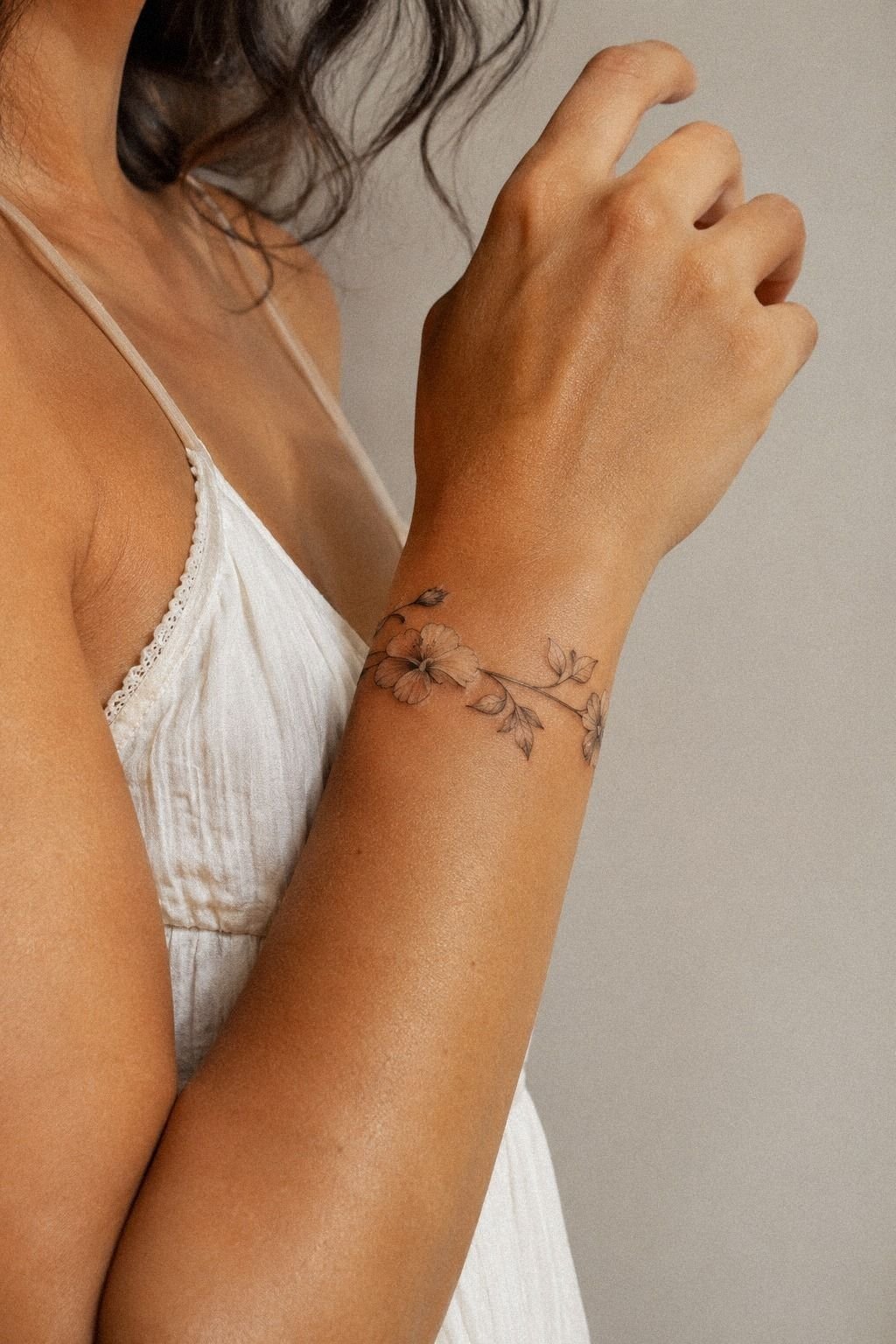
A floral that wraps the wrist sounds romantic in theory and can look graceful in practice, but it has one specific failure mode: the lines on the underside fade quickly because the skin folds whenever you close your hand. If you want a floral that lasts, anchor it on the side wrist or the top of the wrist, the back-of-the-hand side, where the skin doesn’t fold. Let the vine or stem travel around as a connector, not as the main piece.
A botanical sprig of two leaves and a stem reads cleaner at this scale than a fully detailed rose. A delicate floral can still feel expressive, feminine, or powerful without carrying every petal and vein. The most successful designs are often understated, with one flowing stem and enough open skin around it.
Color packing on a wraparound floral is tempting, but I’d skip it on the wrist. Solid black linework and soft grey wash age better than color on high-friction skin. Stick to black ink, a single-needle outline, and a little grey wash for shadow.
The result will feel like an elegant drawing on your skin, which is exactly the vibe many people want. For more inspiration, our minimalist flower tattoos roundup includes healed examples of wraparound florals.
5Sketch a Word in Lowercase Lettering
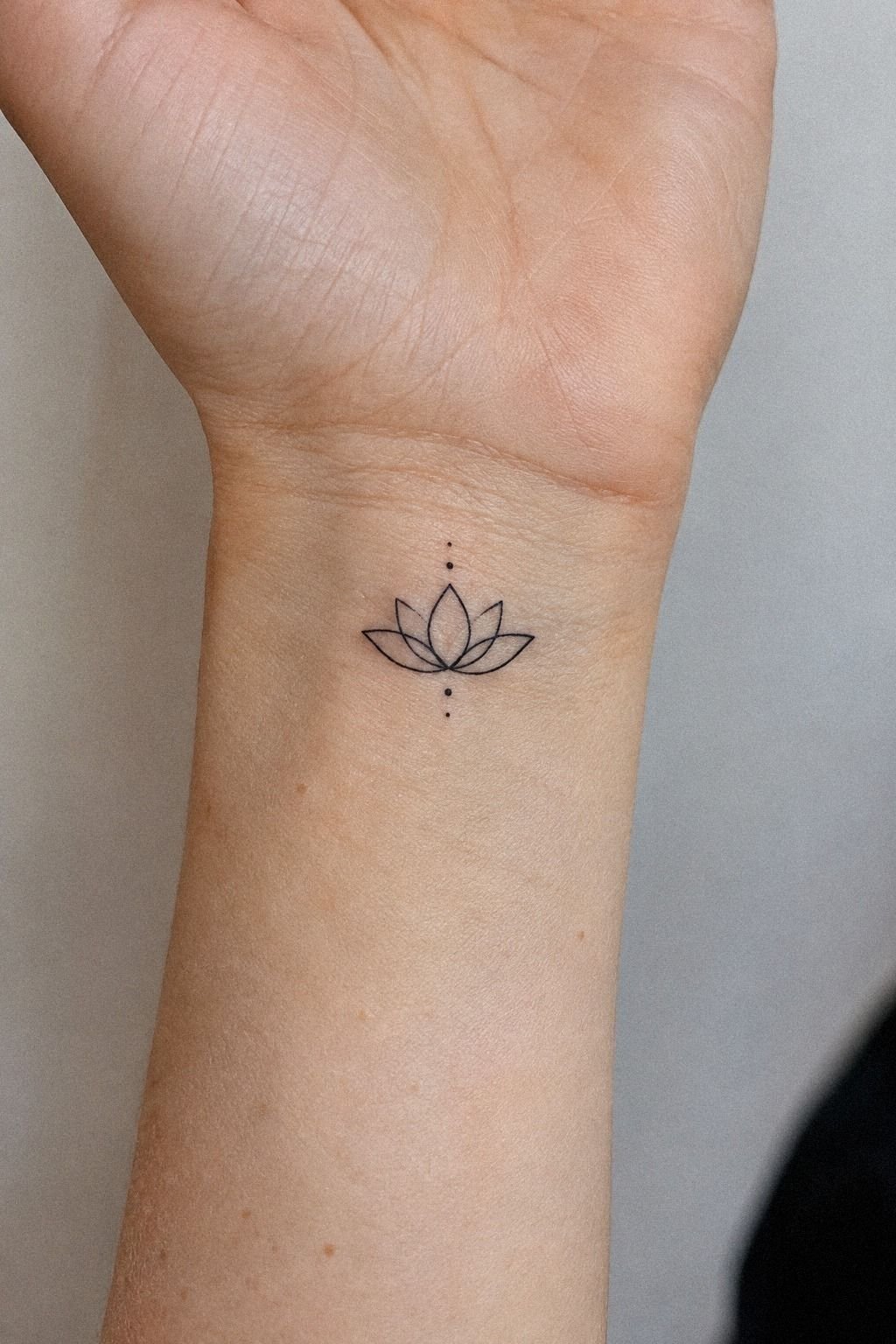
Lettering is where many wrist tattoos go wrong, and it’s almost never the artist’s fault. The client picks a script font from Instagram, asks the artist to shrink it to one inch, and the lowercase curls collapse into each other by month three. The fix is simple but specific: lowercase, single-weight lettering, generous spacing, and a typeface built for skin rather than screens.
My current favorites are hand-drawn single-weight scripts and clean geometric sans-serif forms.
Anything with hairline contrast, such as Didone, Bodoni, or swirly Pinterest scripts, blows out at small scale because the thin parts spread. You can still choose a sleek lowercase word with an expressive, romantic, or personal feeling. It just needs enough room for every letter to remain legible.
Three rules matter. First, draw it on paper at one inch tall and read it back to yourself.
Second, ask the artist to print the stencil at the actual tattoo size, not on a screen. Third, never put a name on a wrist unless you’ve lived with the word for a year.
I’ve seen more than a few “always” and “forever” pieces removed after a breakup. If you go with a word, keep it under six letters and choose one that ages with you.
For matching-font inspiration, our small minimalist tattoos ideas list has a section on lowercase lettering.
6Plan a Matching Pair Across Both Wrists
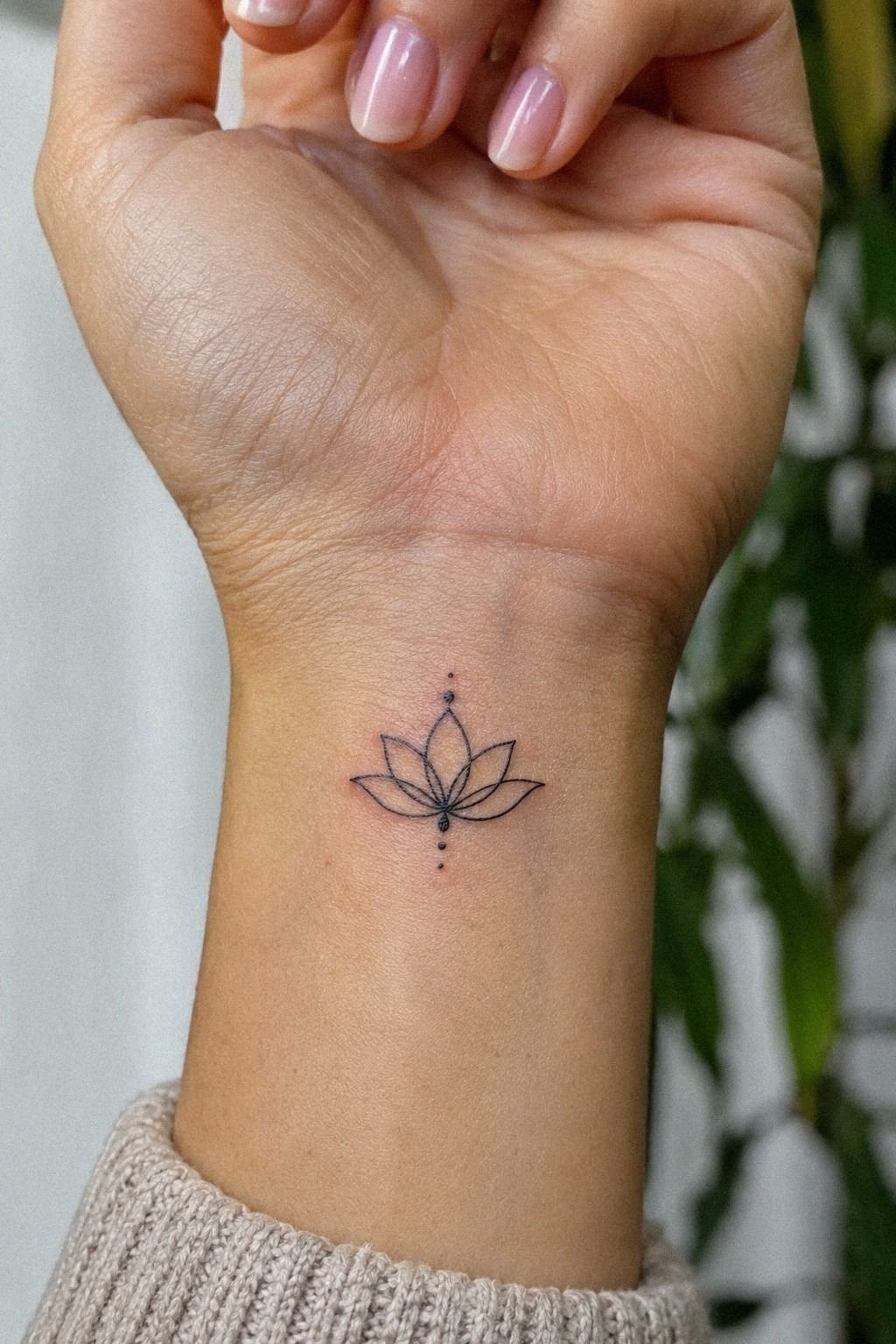
Matching tattoos across both wrists look iconic when they work and chaotic when they don’t.
The trick is to design them as a pair without making them identical. A crescent and a star, two halves of one symbolic mark, or the same tiny botanical detail facing inward can feel more meaningful than duplicated ink. Keep the scale, line weight, and placement height consistent, then let the two designs have slightly different personalities.

7Keep Line Weight Below One Millimeter
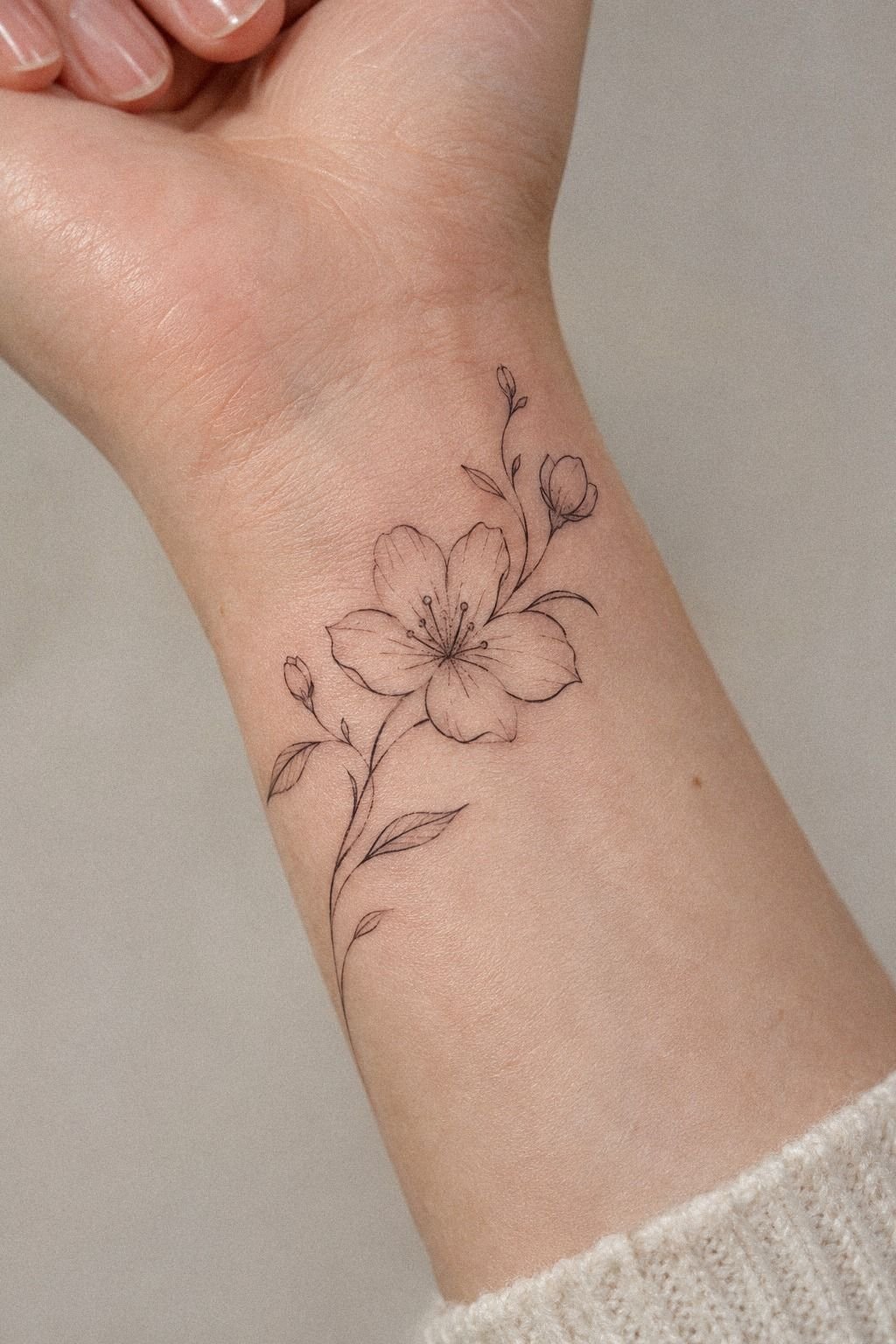
This is the single technical decision that determines whether your small wrist tattoo ages well or turns into a smudge. Line weight under one millimeter is the threshold.
Anything heavier reads as bold at week one and as a blurred ribbon by year three. Anything thinner than 0.4mm can spread into the surrounding skin as the dermis remodels.
The sweet spot is between 0.5mm and 0.9mm, measured with an actual caliper rather than estimated by eye.
The studio I trust uses a simple test. They print a reference sheet with line weights from 0.3mm to 1.5mm at 1:1 scale, hold it against your wrist, and let you choose the line that looks right for five years from now.
Most people pick 0.6mm or 0.7mm by instinct. The 0.7mm line is what I recommend nine times out of ten.
The artist should be willing to do this at the consult. If they wave it off or say “I’ll just draw it and we’ll see,” that’s a sign they default to whatever needle is loaded instead of measuring. You want the artist who defaults to measuring.
For the actual look of these weights after healing, our small minimalist tattoos collection shows healed line-weight examples at the three-year mark.
8Map the Vein Pattern Before Final Placement
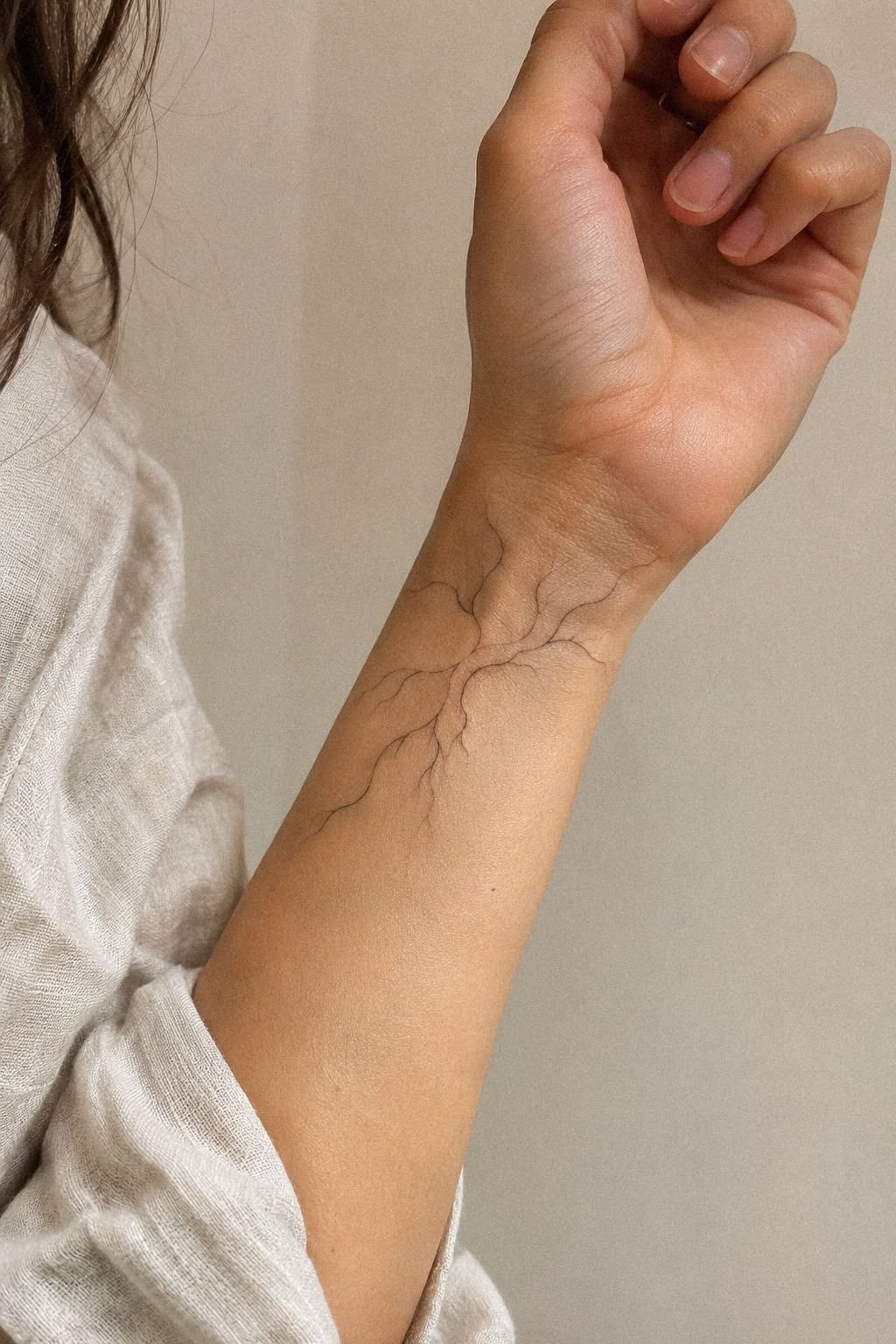
Here’s a step almost nobody takes, and it’s the one that separates a wrist tattoo you’ll love from one you’ll cover with a watch. Have the artist trace the visible veins and tendon paths with a skin-safe placement map before the stencil goes on. You don’t need to avoid every vein, but you do want to understand where the skin moves, folds, and receives the most daily friction.
A placement that looks striking on a still hand may feel awkward when you grip a phone, type, or bend your wrist. Test the stencil through those motions. A personal placement check takes minutes and can save you from moving a delicate, intricate design later.
9Why Does the Artist Matter More Than the Design?
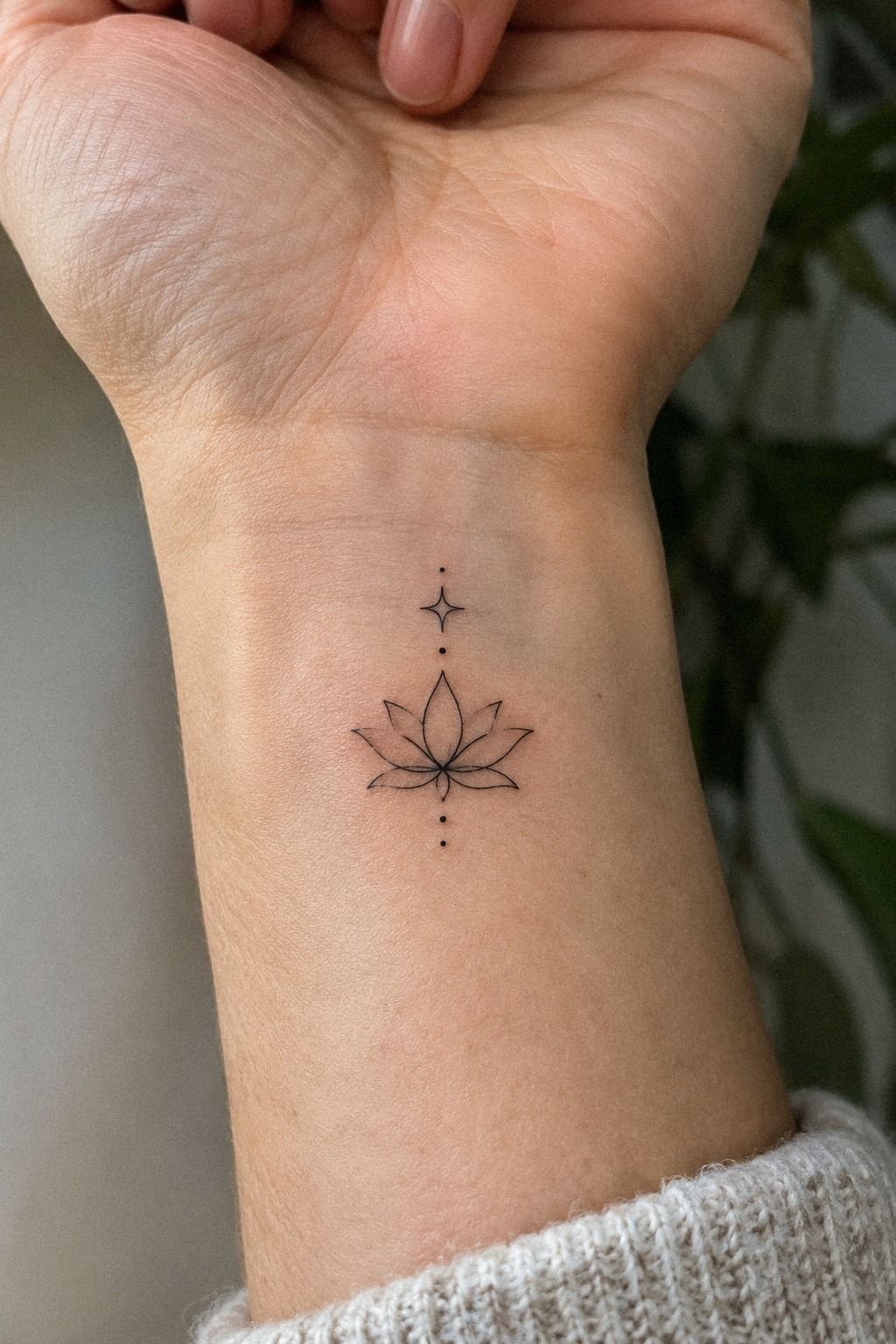
Tattoo artists are like doctors: a generalist can do many things adequately, but a specialist can become exceptional at one narrow skill. For a small wrist tattoo, you want an artist whose portfolio is mostly micro work, whose healed examples still look crisp at the two- or three-year mark, and whose booking waitlist is at least a few weeks out.
A busy micro artist is a good sign. Same-week availability may mean they haven’t built much demand yet.
During the consult, ask three questions. First, how many wrist tattoos have they done in the last year?
Second, can they show healed examples at the two-year mark? Third, what needle setup do they use for linework this fine?
The answer should mention a single needle, a 1RL cartridge, or a specific setup such as a 3-round micro configuration.
If they say “whatever works,” keep walking. The right artist for a small wrist tattoo isn’t the cheapest one or the closest one.
It’s the one whose healed portfolio matches the result you want. Our minimalist flower tattoos feature highlights artists who specialize in delicate healed work.
10Wrap Fresh Ink with Second Skin Film
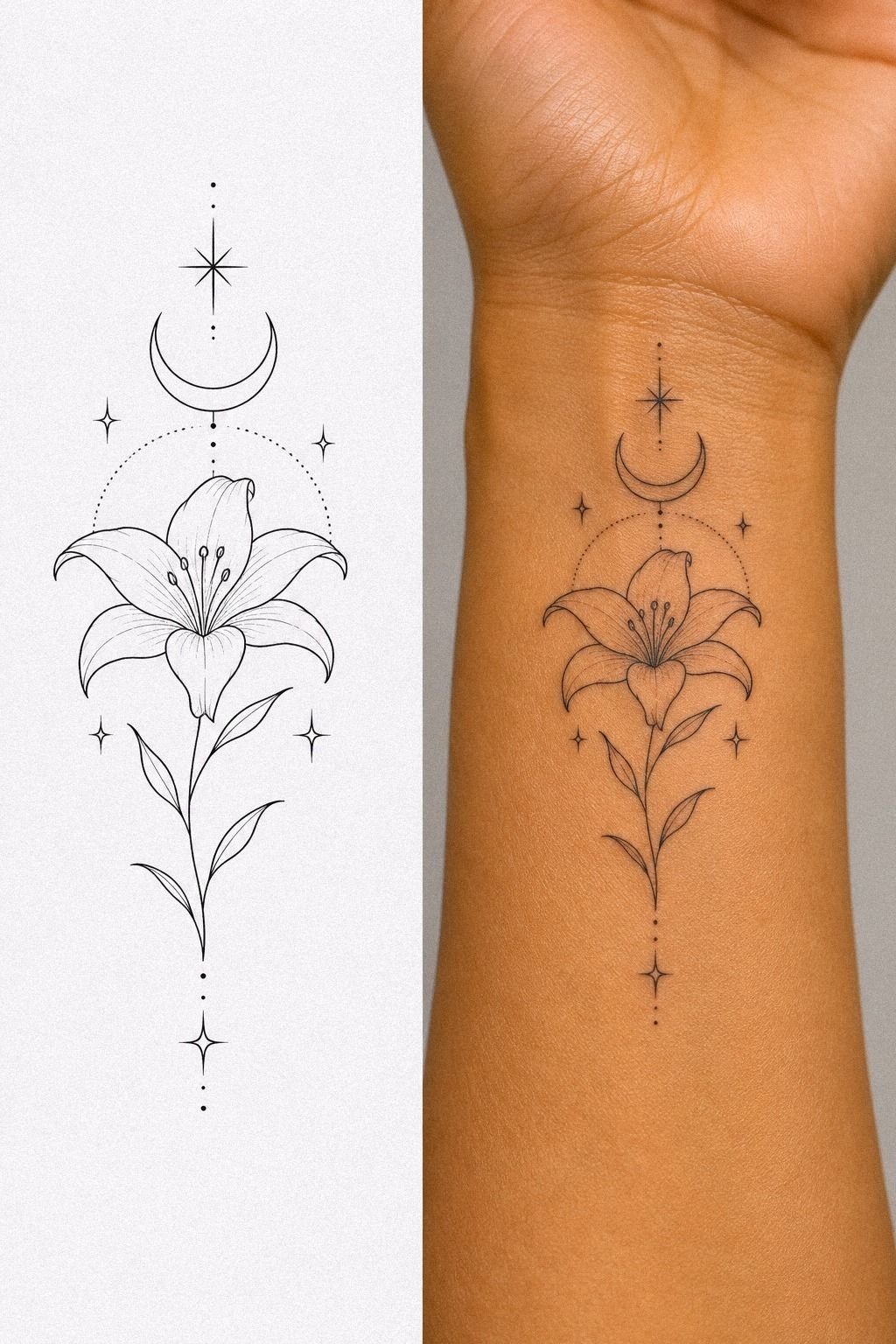
The first 48 hours after the tattoo are when the ink settles into the skin, and what you do during those two days shapes the early heal. Follow the artist’s instructions for second-skin film, keep the edges sealed, and remove it on the schedule they give you. Don’t replace it with household plastic or leave it on longer than directed.
11Wash the Wrist Twice Daily for Healing
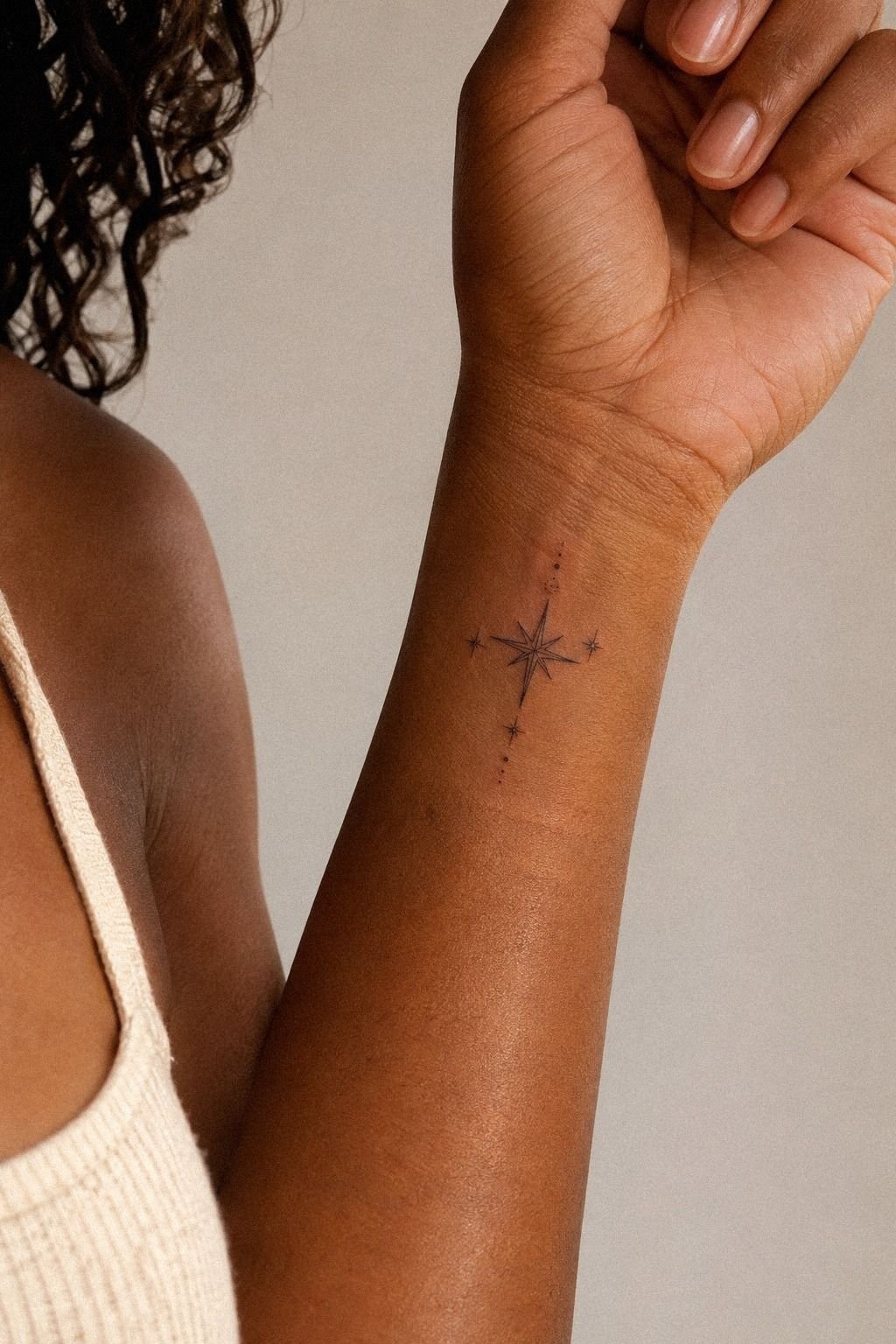
Aftercare on a small wrist tattoo is simpler than aftercare on a large piece, but it’s also easier to skip because the tattoo doesn’t feel urgent. Wash it twice a day for the first two weeks.
Morning and night, use lukewarm water, a drop of unscented soap, clean hands, and gentle circular motion with your fingertips. No washcloths, no loofahs, and no scrubbing.
Pat dry with a paper towel and let it air out for five to ten minutes before covering it. The whole process takes three minutes.
Easy!
What you don’t do is almost as important. Don’t soak the tattoo.
No baths, swimming, hot tubs, or long showers with water blasting directly on it. Don’t apply thick layers of ointment, and don’t re-bandage it after the first 48 hours unless your artist tells you to.
Don’t pick at peeling flakes when the tattoo starts to itch around day four or five, because removing them can leave light spots.
The tattoo can look worse before it looks better. It’ll go through a shiny tight phase called silver skin, a peeling dry phase, and then settle into its final healed appearance around week three. For the full day-by-day timeline, our tattoo aftercare guide covers both the surface heal and the deeper settle.
12Keep Sun Off the Healing Tattoo for One Month
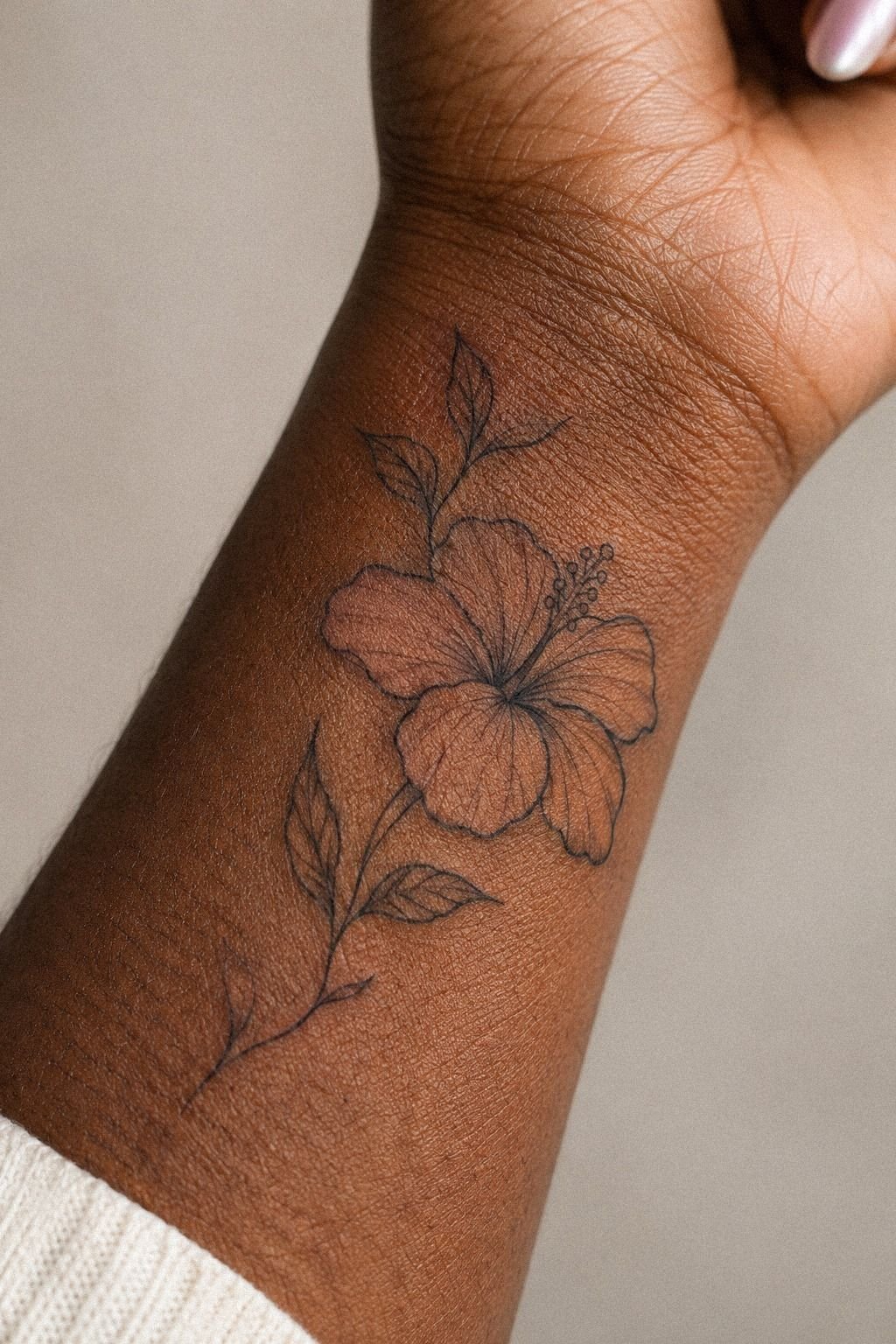
Sun is the tattoo killer. UV breaks down ink pigment faster than almost anything else, and a fresh tattoo exposed to direct sun during the first month can heal patchy and light. The rule for the first 30 days is simple: keep the tattoo covered or out of direct sunlight.
Long sleeves help in summer, as does a wrist wrap at the beach. Once the tattoo is fully healed, usually around one month, apply SPF 50 broad-spectrum sunscreen whenever the area is exposed.
The sunscreen rule matters if you want the piece to look similar in year ten and year one. Black ink fades toward grey under UV, fine lines spread faster in sun-damaged skin, and color packing shifts as pigment breaks down.
Wrist tattoos get incidental sun because we rest our arms near windows, tables, and laptops. A small swipe of sunscreen in the morning takes two seconds and adds years to the line.
For more on long-term aging, our small traditional tattoo ideas gallery shows how small wrist designs change over time.
Quick Reference: Wrist Tattoo Decisions at a Glance
Before you book the consult, here’s a quick table of the decisions that drive how your small wrist tattoo ages. Use it as a checklist when you’re talking to the artist.
If you’re comparing wrist tattoos with other small placements, our small ankle tattoos guide and small behind the ear tattoos guide cover similar variables. Our small finger tattoos piece covers one of the highest-wear placements.
The Questions I Get Asked Most
How much does a small wrist tattoo usually cost?
Small wrist tattoos in the US typically run $80 to $250, depending on the artist’s hourly rate, size, and detail. Most shops have a minimum, so even a tiny single-needle piece won’t fall below that floor. Custom work costs more than flash.
For real numbers across sizes and placements, our small wrist tattoo cost breakdown gives you the typical ranges.
Are small wrist tattoos a good idea for a first tattoo?
Yes, with the right placement. The wrist has a reputation for being painful and fading fast, but both concerns depend on location and technique. On the soft inner plane with sub-millimeter linework, the pain is usually manageable and the tattoo can heal cleanly. If you want a first tattoo you’ll see every day, the wrist can be a strong choice.
How do I choose a tattoo artist for small wrist tattoos?
Look at the artist’s healed portfolio, not only day-one results. Specifically, ask for wrist tattoos at the two-year mark or older.
A strong micro artist will have healed work, understand single-needle or 3RL setups, and discuss line weight during the consult. If they can’t show healed examples, you don’t yet know how their work settles.
How much do small wrist tattoos hurt?
Honest answer: it’s usually a mild scratch for 15 to 30 minutes. Lines can feel sharper than shading because the needle moves quickly and the skin is thinner.
Color packing is often more intense, but many wrist tattoos use black ink only. The inner wrist can feel more sensitive than the side wrist because of the pulse point.
How long does a small wrist tattoo take to heal?
Surface healing takes 2 to 3 weeks, while the deeper heal can take 2 to 3 months. The first week is the open-wound phase, so wash gently and avoid soaking.
Weeks two and three bring peeling and silver skin. Months two and three are when the ink settles into its final crispness.
What’s the best placement for small wrist tattoos?
The flat inner plane between the tendons, one inch below the wrist crease, is a strong option. It has enough padding to reduce blowout risk, doesn’t fold as much when you type, and remains visible during daily life.
The bony ridge near the palm is another possibility. Avoid the crease itself and areas directly under a watch band because friction can fade the lines.
The Step Most People Skip
Here’s the part that doesn’t fit on a flash sheet, and it’s the part I’ve seen make or break a wrist tattoo more than anything else. Book a consultation before you book the tattoo. A real consult, in person, for 15 to 30 minutes, lets the artist draw your actual design on your actual wrist with a skin-safe marker.
Live with it for 24 hours. Wear your watch, type on your laptop, and sleep on it.
If the placement still feels right after a full day of normal life, book the session. If anything feels off, the consult saved you from a tattoo you’d have covered by next year.
The second part is bringing references for the overall vibe, not an exact line. If you walk into a micro artist’s studio with a Pinterest pin and say “I want this exactly,” most good artists will tell you no. The reference is for energy, line weight, scale, and mood.
The artist will adapt it to your wrist, skin tone, and vein map. That’s not them being precious.
That’s them protecting the piece from becoming a copy that feels disconnected from you.
The third part is simple: don’t price-shop a wrist tattoo. The cheapest artist in town isn’t automatically the right artist for a single-needle micro piece.
The price difference between a $100 wrist tattoo and a $250 wrist tattoo is roughly the cost of two dinners out. The difference in line quality, healing, and aging can be the difference between a piece you’ll love for a decade and one you’ll remove in three years. Pay for the artist, not just the symbol!
Where I’d Start First
If I had to pick one step, I’d start with the artist, not the design. Book the consult first. Everything else is downstream.
A stylish, personal, and well-planned wrist tattoo begins with an artist who understands how small ink behaves on moving skin.