
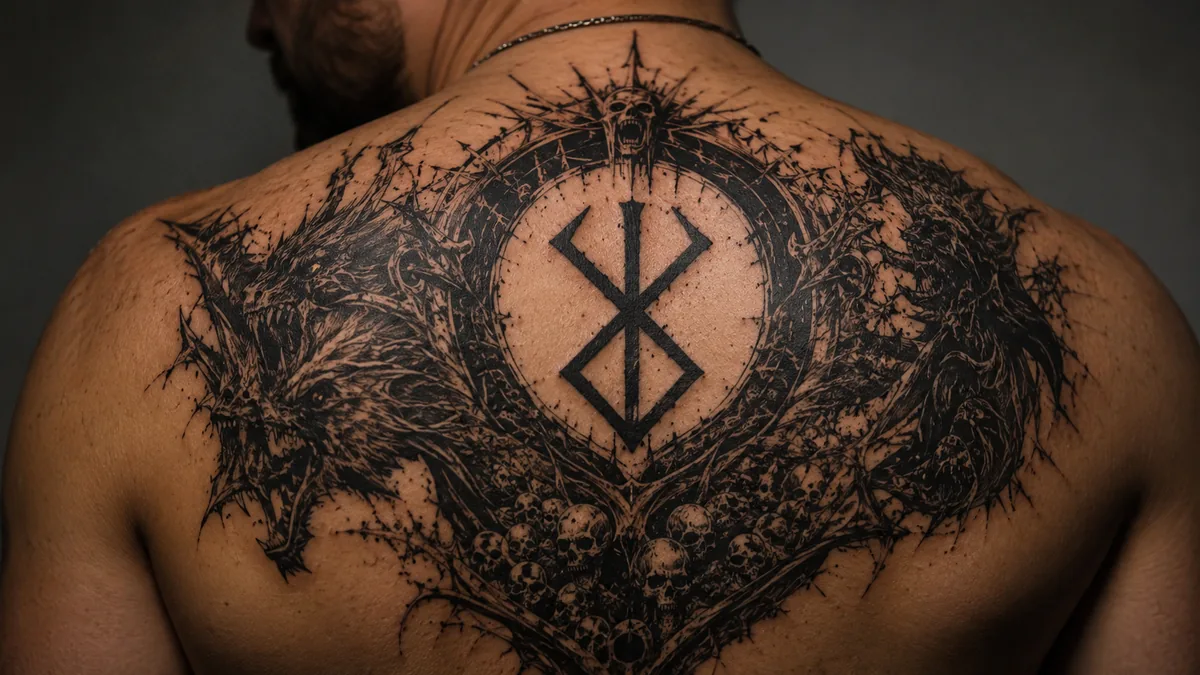
Berserk tattoos are not a trend. They are a statement. Whether it’s Guts hauling that massive sword through an impossible world or the Brand of Sacrifice seared into skin, people get these tattoos because the story hit something real in them. That doesn’t happen with surface-level media.
The manga by Kentaro Miura, which started serializing in 1989 and ran until his death in 2021, built a following because it does not flinch from suffering. The symbolism in a Berserk tattoo tracks directly back to those themes: endurance, betrayal, darkness, and the stubborn refusal to stop moving.
What a Berserk Tattoo Means at Its Core
The central read on any Berserk tattoo is perseverance through brutal circumstances. Guts loses almost everything and keeps going. That is the whole point. People who carry real trauma, chronic pain, mental health battles, or years of grinding in the dark tend to connect hard with that. The tattoo becomes a skin-level reminder that they are still here.
A secondary meaning sits right underneath: defiance of fate. Berserk as a story is about refusing a destiny that was written for you by something more powerful than you. A lot of wearers are not fandom-signaling. They are marking a personal vow. That distinction matters when you sit down with your artist to figure out the composition.
The Brand of Sacrifice: What It Actually Symbolizes
You don't wear Berserk because it's dark. You wear it because it kept going anyway.
In the manga, the Brand of Sacrifice is a curse. It is not chosen. It is carved into victims condemned to be hunted by demonic forces until death. That context is not decoration. Wearers tend to know it, and for many that is exactly why they get it. It represents surviving something you did not consent to, carrying a mark from damage done to you, and still fighting anyway.
On skin it reads two ways. Some people wear it as a trauma sigil, a visible acknowledgment of pain they did not choose but endured. Others wear it as pure Berserk fandom anchored to genuine love for the series. Both are valid. Be honest with yourself about which one you mean, because that conversation shapes how the design gets executed.
Guts the Black Swordsman as a Tattoo Subject
Guts is one of the most popular character tattoos in dark anime and manga. His silhouette is immediately readable: massive frame, one arm replaced with a cannon, carrying the Dragonslayer, a sword too big to be called a sword. That visual weight is part of the symbolism. He is not graceful. He is relentless.
Artists have landed Guts in every major style. Black and grey with heavy contrast and whip shading reads like a panel pulled from the manga. Neo-traditional work lets you push the armor detail and give it more graphic punch. Fine line versions exist but they require a placement that protects the detail long term. The meaning stays the same across all of them: lone warrior, chosen path, and the will to absorb damage without breaking.
Popular Design Variations Beyond Guts
The Dragonslayer sword alone makes a strong standalone piece. It reads from across the room, holds up with age, and communicates the core meaning without needing the full character. Bold linework with solid fill, ideally in black with minimal grey, keeps it clean after the first few years. Thick lines hold. Fine line on a weapon-shaped piece in a high-wear spot will blur.
The Band of the Hawk emblem takes the meaning in a different direction: brotherhood, shared ambition, and the specific grief of betrayal. Behelit pieces, those hollow-eyed egg-shaped relics, trend darker and signal a deep read of the source material. Full scene compositions featuring Guts against the Eclipse are ambitious and require an artist with solid black work because the negative space carries a lot of that image.
Black and Grey vs. Color
Black and grey is the dominant choice for Berserk work, and it makes sense. The manga itself is heavy with ink contrast, dense cross-hatching, and darkness. A well-executed black and grey piece captures that atmosphere better than color does. Good healed black and grey also ages more predictably. It does not shift the way saturated pigment does.
Color shows up in a minority of Berserk tattoos, usually in the Berserker Armor’s red glow motif or in stylized neo-traditional versions. If you go color, commit to bold saturated fills rather than watercolor washes. Muted color in a piece this dense will look muddy on healed skin. Talk to your artist about what their color work looks like six months post-heal, not just fresh off the chair.
Placement and How Berserk Tattoos Age
Upper arm, forearm, chest, back, and thigh are the most common placements, and they make practical sense. Full Guts compositions need real estate. The back gives you the space for a large-scale scene without compression. Upper arms are a solid middle ground, enough room for a strong portrait or weapon piece, and the skin there is forgiving to ink over time.
Hands, fingers, and necks are spicy spots and the detail in most Berserk designs will not hold well there. The Brand of Sacrifice is the exception since it is a simple geometric mark that survives high-wear zones better. Ribs and sternum are popular for meaningful placements but they are genuinely spicy spots for pain, and they shift slightly as the body changes. Inner arm is a lower-wear zone that stays softer in detail, worth considering for fine line work.
Who Gets Berserk Tattoos and How to Make Yours Personal
The Berserk tattoo crowd skews toward people who found the manga during a hard stretch. Depression, loss, burnout, recovery from abuse, years of feeling like they were fighting alone. That is not universal, some people just love the art and the world, but the deeper connection is common. It is worth knowing before you finalize your concept.
Making it personal usually means either a quote from the manga inked in an honest style, a specific scene that marked you, or a design that blends Berserk imagery with something else from your life. Talk to your artist. Tell them what chapter broke you or what Guts represents for you specifically. That conversation gets you a tattoo instead of a print. The best Berserk pieces look like they belong to one person. That is the whole point.









