
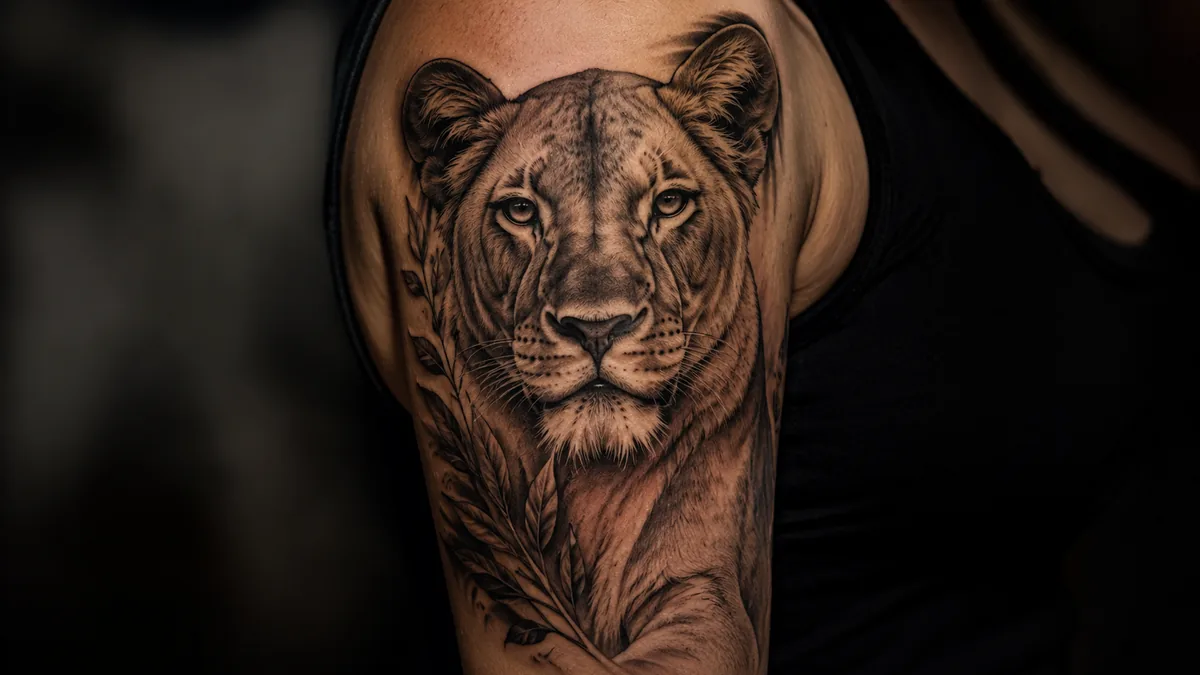
The lioness tattoo hits different from the lion. She’s not standing there waiting to be crowned. She hunts, she protects her cubs, she runs the pride. People who get this piece know exactly why they’re choosing her over him.
The symbolism is layered and personal, but it’s never vague. Lioness tattoos carry real, recognized meaning across cultures and generations. Here’s what they actually stand for and how to get one that holds up for life.
Core Symbolism: What a Lioness Tattoo Actually Means
The lioness represents strength without ego. She’s the primary hunter in a lion pride, responsible for feeding her family and protecting her territory. That combination of power and purpose is exactly what most clients are going for. Common meanings include fierce independence, raw courage, and the kind of quiet dominance that doesn’t need an audience.
She also carries deep ties to maternal protection. A lioness with cubs reads immediately as a mother-love piece. Even without cubs in the design, the association is strong enough that people wear her as a tribute to their kids, their family, or anyone they’d go to war for. This is a tattoo that communicates something real without needing a caption.
Cultural and Historical Background
She doesn't wear a crown. She is the crown.
In ancient Egypt, the goddess Sekhmet was depicted as a lioness. She was the goddess of war, healing, and protection, a deity of contradictions who embodied destruction and medicine in the same breath. Egyptian-style lioness tattoos draw directly from this imagery: stern face, headdress, strong profile. It’s a legitimate historical reference with documented symbolism, not invented lore.
In African cultures broadly, the lion and lioness figure into oral traditions and spiritual beliefs as symbols of royalty, community guardianship, and ancestral strength. Greek mythology paired lions with Cybele and Artemis, goddesses of nature and the hunt. The lioness as a female-power symbol has roots across multiple continents and thousands of years. That’s not marketing copy, that’s history.
Popular Design Variations
Realistic portrait lioness is the most requested style right now. Done well in black and grey, you get deep fur texture, expressive eyes, and a face that reads bold from across the room. A lot of clients want the gaze looking straight forward, which communicates confrontation and presence. Others go three-quarter profile for a more regal look.
Geometric lioness breaks the animal into shapes and linework, often incorporating mandalas or sacred geometry in the mane area. Fine line styles work for a softer, more delicate piece, though they require an experienced artist because thin lines in high-wear zones fade and blur fast. Neo-traditional adds thick outlines and saturated color, which holds longer and ages with more contrast. Know what you want before you sit down.
Color vs. Black and Grey
Black and grey is the dominant choice for lioness tattoos, and honestly it suits the subject. The fur, the shadows under the brow, the depth around the eyes, all of that renders beautifully in grey wash and whip shading. A skilled artist can build incredible texture with just black ink. It also ages more predictably than color, especially in high-wear zones like the forearm or shin.
Color work opens up options. Gold, amber, and warm orange tones are popular for the fur. Deep green or ice blue eyes add a focal point that draws attention immediately. Saturated color takes more maintenance over the years and benefits from touch-ups, but it pops in a way black and grey doesn’t. Either direction works. The style just needs to match the artist’s strengths. Look at their healed work, not just fresh photos.
Best Placements and How It Ages
The thigh is one of the best spots for a lioness piece. Low wear, good surface area, the skin stays stable over time, and it gives your artist room to build a full composition. Shoulder and upper arm are strong choices too. A forearm lioness gets a lot of visibility and reads clean, but the outer forearm is a higher-wear zone and fine line work there can soften fast. Bold lines hold. Fine lines blur.
Ribs are a popular placement but they’re spicy and the skin can move with weight changes over the years. Chest placements heal well and age well on most body types. Back pieces give you the most real estate for a full scene with cubs or background elements. Wherever you place it, the face of the lioness needs to be large enough that the eyes read clearly. Tiny faces in detailed portraits get muddy as they heal.
Who Gets This Tattoo and How to Make It Yours
Mothers get this piece as a tribute to their kids and their own ferocity as a parent. Survivors of serious life events get it as a marker of coming through something hard without breaking. Athletes get it for competitive drive. Women honoring their own independence, their refusal to shrink, their earned confidence. It’s a versatile piece with a consistent core message: don’t underestimate me.
To personalize it, think about what the lioness means to you specifically. Adding a birth date, initials, or a small portrait of your actual children alongside the design is common. Some clients incorporate flowers, specific to a culture or a lost loved one. The crown on a lioness reads as self-crowned, earned not given, and that lands differently than a lion wearing one. Tell your artist what it means to you. The best tattoos come out of that conversation.









