Gumamela is the Filipino name for hibiscus. If you grew up in the Philippines or have ties to the islands, you already know this flower. It grows everywhere, it’s bold, and it hits different in ink. As a tattoo it carries real weight, not just because it looks good but because it means something.
The gumamela tattoo sits at the intersection of beauty and brevity. The flower blooms hard and fast, then it’s gone. That tension between intensity and impermanence is exactly why people keep tattooing it. Here’s what it actually means and how to wear it right.
Core Meaning: Beauty That Doesn’t Apologize
The gumamela tattoo stands for beauty in its most unapologetic form. Not fragile beauty, either. This is a flower that opens wide, saturated and bold, demanding attention. People get it to say they’re fully present, fully themselves, and they’re not shrinking down for anyone. That energy reads across genders.
It also carries femininity in the real sense, not the soft pastel version but the kind with actual power behind it. Strength, sensuality, grace under pressure. Some clients pair it with a phrase, some let the flower speak alone. Either way, the statement is the same: I am here, I bloom on my own terms.
The Impermanence Angle: Carpe Diem in Floral Form
The gumamela does not whisper, it blooms at full volume or not at all.
Hibiscus blooms last about one day. That’s not a flaw, that’s the whole point. A lot of people get the gumamela tattoo as a reminder to live intensely and stop waiting for the right moment. The flower is proof that something can be short-lived and still matter completely. It’s a quiet philosophy tattooed in petals.
This ties it into a bigger tradition of floral tattoo symbolism, like the Japanese mono no aware concept, the awareness that beautiful things are beautiful partly because they end. You don’t need to explain all that to anyone. The tattoo holds it. Wear it on a high-visibility spot if you want that reminder front and center.
Filipino Cultural Roots
In the Philippines, gumamela isn’t exotic, it’s the backyard flower. Kids used to make bubbles out of the petals. It’s in folk medicine, used for cough remedies and skin treatments. That everyday familiarity is actually what makes it powerful as a tattoo. Getting a gumamela is a quiet nod to home, to childhood, to Filipino identity without being loud about it.
For Filipino diaspora clients especially, this tattoo functions as a cultural anchor. It says roots without spelling them out. Some add rice stalks, a sun, or Baybayin script to build out the cultural narrative. Others keep it clean and simple, just the flower, which lets the symbolism breathe. Both approaches work.
Color Meanings and How They Shift the Read
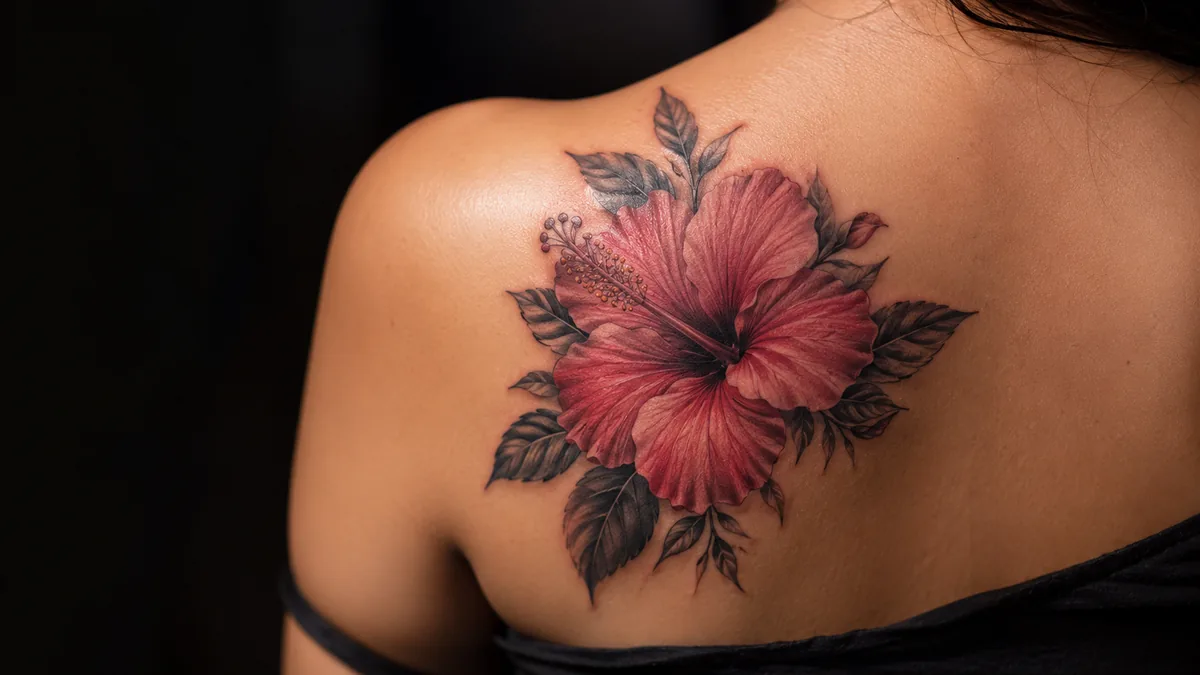
Color does real work here. Red gumamela reads as passion, desire, and romantic intensity. It’s the classic choice and it hits the hardest. Pink is softer, more about grace and admiration, less fire more warmth. Yellow carries joy and friendship, great choice for someone who wants the tropical energy without the romance coding. Orange projects confidence and creativity.
White or pale gumamela reads as purity and new beginnings, often chosen for pieces marking a life transition. Purple sits in the royalty and spiritual respect space. If you’re going full color, talk to your artist about saturated pigments that hold well long-term. Light yellows and whites fade fastest, especially in high-sun zones. Reds and deep pinks hold their saturation much longer.
Design Styles: From Fine Line to Neo-Trad
Fine line gumamela looks delicate and botanical, great on the forearm, collarbone, or ankle. The challenge is longevity. Fine lines spread over time, especially on high-wear zones like fingers, wrists, and hands. If you go fine line, pick a low-wear placement and be realistic about touch-up schedules. Your artist will tell you the same thing.
Black and grey realism gives the gumamela serious depth and ages with dignity. The petals have natural layering that whip shading handles beautifully. Neo-traditional keeps the bold outlines and saturated fills but adds stylized leaves and graphic shapes that read well from a distance. Traditional American or Polynesian-influenced styles work too if you want bold will hold energy that stays crispy for decades.
Best Placements and How It Ages by Zone
Shoulder, outer upper arm, and shoulder blade are the top-tier placements for longevity. The skin moves less, stays out of the sun better, and the natural curves of the anatomy complement the round shape of the flower. A large gumamela on the outer deltoid wrapping toward the shoulder blade is a classic for a reason. It reads well, heals nice, and holds for years.
Inner forearm and collarbone are solid mid-tier choices. Visible, personal, decent aging. Ribs are a popular pick for women especially, good visibility in certain outfits, but it’s spicy during the session and the skin can stretch if body composition changes. Feet, hands, and fingers are high-wear and blowout faster. Not off-limits, but go in with eyes open and budget for touch-ups.
Who Gets This Tattoo and How to Make It Yours
Filipino-Americans are a big part of the gumamela client base, getting it as a heritage piece. But this tattoo also pulls in people going through major transitions, people who’ve survived something and want to mark the moment with something beautiful that acknowledges how short and precious life is. Creatives, travelers, and people drawn to tropical aesthetics round it out.
To make it personal, think about what element resonates most. Is it the cultural identity angle? The carpe diem reminder? The femininity and strength? That answer shapes everything from size to color to add-ons. Ask your artist to incorporate leaves, a bud, or even a fallen petal to tell a story beyond just the single bloom. The more specific you get, the more the tattoo becomes yours.