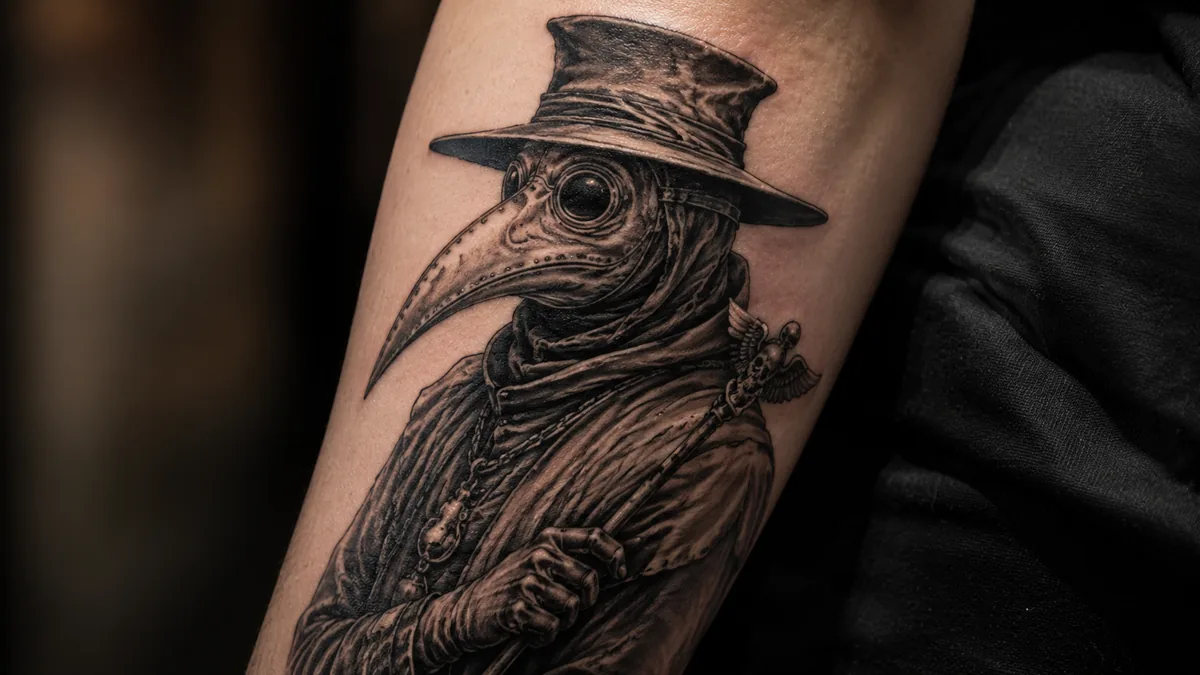
The plague doctor tattoo is one of those images that hits you from across the room. That long beaked mask, the wide-brimmed hat, the robes, it’s unmistakable. And it carries real weight. This isn’t just spooky aesthetic. There’s genuine history behind it, and people who get this piece are usually saying something specific about how they see the world.
the plague doctor represents walking straight into death and darkness without flinching. It’s morbid, sure. But it’s also about survival, resilience, and the strange courage it takes to face the worst and keep moving. Here’s what it actually means, where it comes from, and how to wear it well.
Core Symbolism: What the Plague Doctor Tattoo Really Means
The plague doctor is a symbol of mortality, protection, and endurance. The historical figures who wore those beaked suits were walking into dying towns, treating patients when everyone else ran. That makes the image about confronting death head-on. A lot of people get this tattoo as a reminder that they’ve survived something brutal, medical, personal, or otherwise.
It also reads as memento mori, a Latin phrase meaning ‘remember that you will die.’ That’s not bleak for its own sake. It’s a grounding philosophy. You’re going to die, so live deliberately. Paired with that, many wearers layer in meanings around healing, because the plague doctor was ultimately a healer, however limited and however grim the era.
The Real History Behind the Image
The beak is not about death. It is about who showed up anyway.
The plague doctor costume was a real thing. It developed in 17th century Europe during outbreaks of bubonic plague. French physician Charles de Lorme is often credited with popularizing the design around 1619. The beak held herbs and aromatic materials, a misguided attempt to filter ‘bad air,’ which people at the time believed caused disease. The long wax-coated robes, gloves, and hat were meant to avoid skin contact with infected patients.
These doctors were often hired by cities to treat the sick and record death counts. They weren’t saints. Some were inexperienced. Some were coerced. But they showed up. That tension between duty, helplessness, and persistence is exactly what makes the image so loaded as a tattoo. It’s historically grounded, and that matters to people who do their research before they sit.
Popular Design Variations
The classic full-body plague doctor in robes is the most common take. Usually rendered in black and grey, it reads as a tall, cloaked figure with that distinctive bird-beak mask, walking stick optional. Some clients want the bust only, mask and hat cropped close, which makes for a clean, intense portrait-style piece that works great on a forearm or upper arm.
Other popular variants include the plague doctor holding an hourglass or a crow, both traditional memento mori symbols that reinforce the mortality angle. Some people go more ornate, adding roses, anatomical hearts, or clock faces. Others strip it down to just the mask, almost logo-style. Geometric or mandala framing works if you want something more structured. And there’s a solid niche for illustrative styles that push the figure toward dark fantasy or horror.
Black and Grey vs. Color
Most plague doctor tattoos live in black and grey, and for good reason. The imagery is inherently dark and historical, and black and grey whip shading gives it depth without competing with the subject matter. A skilled artist can get incredible contrast in the robes, crispy detail in the mask’s seams, and moody atmosphere in the background. It heals cleaner than heavy color in most cases too.
Color versions exist, but they take a specific direction. Deep jewel tones, burgundy, forest green, aged gold, lean into the alchemical or apothecary vibe. Some people go fully illustrative with cool blues and greens for a sinister, plague-ridden atmosphere. Avoid soft pastels here. They fight the tone of the image. Whatever direction you pick, the linework has to be solid, because this design has a lot of fine architectural detail that blurs fast if the lines are thin and tight.
Best Placements and Aging
For a full figure, the forearm, upper arm, shin, and thigh all give you enough real estate. The forearm is popular because you can size it to fit the length of the arm and it reads clearly with the figure standing upright. The chest and ribcage work for larger, more detailed compositions, though the ribs are spicy and the sternum can distort as the skin moves over time. Upper back and thigh let you go big and bold with room for background detail.
Avoid putting intricate beakwork or fine line mask details on high-wear zones like the inner wrist, fingers, or feet. Fine lines in those spots blow out fast and you’ll lose the detail that makes this piece work. Bold outlines and solid black fill hold the longest. If your artist uses heavy blacks in the robes and keeps the detail at a readable scale, this piece will look clean for years. Saturated black holds better than grey wash on its own, so make sure those dark areas are really packed in solid.
Who Gets This Tattoo and What It Means to Them
Healthcare workers get this piece more than you’d expect. Nurses, paramedics, ER doctors, people who deal with illness and death professionally often connect with the historical plague doctor as a kind of dark patron saint. There’s gallows humor in it, but also real pride. You do the hard work nobody else wants to do.
Beyond healthcare, it’s popular with people who’ve come through serious illness, loss, or mental health struggles. The symbolism of walking through darkness and surviving it lands personally. Goths, history nerds, occult enthusiasts, and people drawn to memento mori aesthetics all find their angle here. It’s a versatile image that carries different weight depending on the person wearing it, which is part of why it’s held up as a strong tattoo concept for years without going stale.