
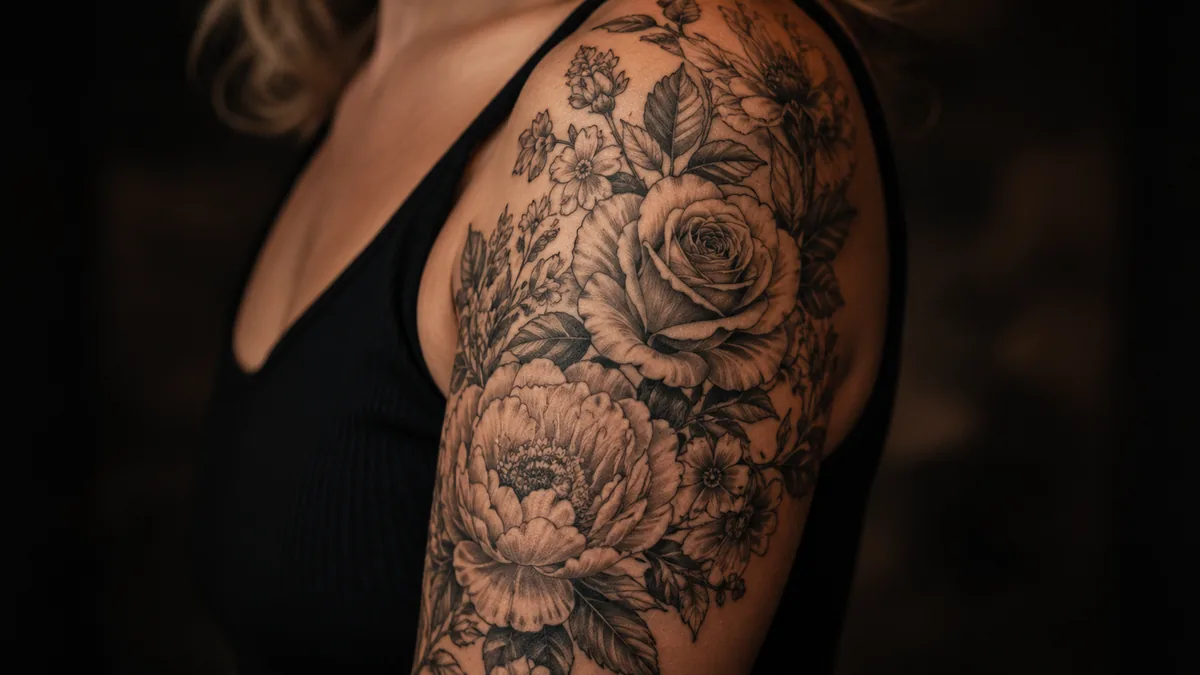
Flowers have been tattooed on skin for centuries. They’re not just pretty. Every bloom carries weight, and the meaning shifts depending on the flower, the color, the style, and where it sits on your body.
Floral tattoos are one of the most requested designs in any shop. That’s partly because they’re versatile and they read well on a lot of skin tones. But people keep coming back to them because flowers carry real symbolism. Life, death, love, grief, growth. Pick the right one and it says something that lasts.
What Floral Tattoos Actually Mean
Flowers have always been used as symbols. The meaning isn’t invented by tattoo artists. It comes from centuries of cultural use, botanical symbolism, and simple human experience. At the broadest level, floral tattoos represent life cycles. Flowers bloom, peak, and die. That’s exactly why they work as tattoos about birth, growth, loss, and memory.
The most common emotional themes are love, beauty, remembrance, and resilience. A single stem rising through concrete reads differently than a full bouquet wrapped around someone’s thigh. The arrangement and context matter. But the core message stays consistent: something beautiful exists, and it’s worth marking permanently.
Symbolism by Flower Type
Every flower has a dictionary. Most people skip straight to the picture.
Each flower has its own meaning, and most of those meanings are consistent across tattoo culture. Roses represent love and passion but also thorns, which people use to reference pain alongside beauty. Lotuses symbolize spiritual growth and rising from hardship. Peonies stand for prosperity, good fortune, and romance. Cherry blossoms represent the fleeting nature of life, borrowed directly from Japanese hanami tradition.
Dahlias mean inner strength. Marigolds are tied to death and remembrance, used heavily in Day of the Dead imagery. Lavender reads as calm and devotion. Sunflowers carry loyalty and positivity. Wildflowers tend to mean freedom, untamed personality, or a refusal to be cultivated. The client who picks wildflowers is usually not the same person picking a single perfect rose.
Cultural and Historical Roots
Japanese tattooing has used flowers for hundreds of years. In traditional Irezumi, chrysanthemums represent longevity and perfection. Cherry blossoms signal the brief beauty of life. Peonies are called the king of flowers in Japanese tradition and are used to show bravery and good luck. These meanings aren’t decorative choices. They’re specific, codified symbolism used by serious tattoo collectors.
Victorian flower language, called floriography, was a real communication system. People sent specific flowers to say what they couldn’t say aloud. Forget-me-nots meant true love. Daisies meant innocence. That tradition feeds directly into modern tattoo symbolism, even if most people today don’t know its name. A lot of what feels intuitive about flower meaning actually has documented roots.
Popular Styles and How They Change the Read
A traditional American rose is bold, outlined hard, filled with flat color, and reads from across the room. It ages extremely well because bold will hold. That’s different from a fine-line botanical illustration, which uses hairline linework and realistic shading to mimic a scientific drawing. Fine-line florals are popular right now but they require a skilled hand and a client who understands that thin lines can spread over time.
Black and grey florals tend to read as more somber or sentimental. Whip shading gives petals depth without color. Neo-traditional adds exaggerated proportions and painterly color fills. Watercolor style drops the outlines and layers translucent color washes. Realism captures the actual texture of a petal. Each style changes the mood of the same flower entirely. A black and grey rose hits differently than a saturated, warm-toned traditional one.
Color vs Black and Grey
Color florals can be stunning, but they require more commitment in upkeep. Saturated reds, pinks, and yellows pop hard when fresh but fade faster than black pigment, especially in high-wear zones like hands, fingers, and feet. Lighter colors like yellow and white fade the quickest. On darker skin tones, bold pigments like deep red and purple hold better than pastels, which can turn muddy.
Black and grey is the more forgiving option long-term. It ages cleaner on most skin types and holds contrast over decades. For memorial pieces or anything meant to carry serious emotional weight, black and grey is a solid choice. It also photographs well without color correction. If you’re choosing between the two, think about your skin tone, lifestyle, and whether you’ll be disciplined about sunscreen on the tattoo.
Placement and How Florals Age by Zone
Ribs, sternum, and thighs are popular for floral pieces because the skin is relatively flat, doesn’t see much friction, and holds detail well. These are also spicy spots, especially the ribs, which sit directly over bone with thin skin. Forearms, upper arms, and shoulders are more beginner-friendly in terms of pain and they age reliably. Sleeves and full legs built around floral motifs are some of the most cohesive large-scale work you’ll see.
Avoid highly detailed fine-line florals on hands, knuckles, necks, and feet if longevity matters to you. These are high-wear zones. Skin folds, friction from shoes, and sun exposure cause blowout and fading faster in these areas. A bold traditional flower on the outer forearm will still look crispy at fifteen years. A hairline botanical on the finger may need a touch-up within two. Know your zone before you commit to a style.
Who Gets Floral Tattoos and Making Yours Personal
Floral tattoos cut across every demographic in the shop. That’s rare. Young clients getting their first piece, collectors adding to full coverage, people marking loss or love or a milestone. The flower itself does a lot of the communication. A memorial piece for a grandmother often uses her favorite flower, whether that’s a gardenia or a simple daisy. That specificity is what separates a meaningful tattoo from a filler piece.
To make a floral tattoo personal, anchor it to something real. A birth month flower tied to a specific date. A bloom from the state where you grew up. A combination of flowers that each represent someone in your family. Add a bee if you want to signal hard work. Wrap the stem around a small object that matters. The best floral tattoos tell a story without using words. That’s the whole point.









