
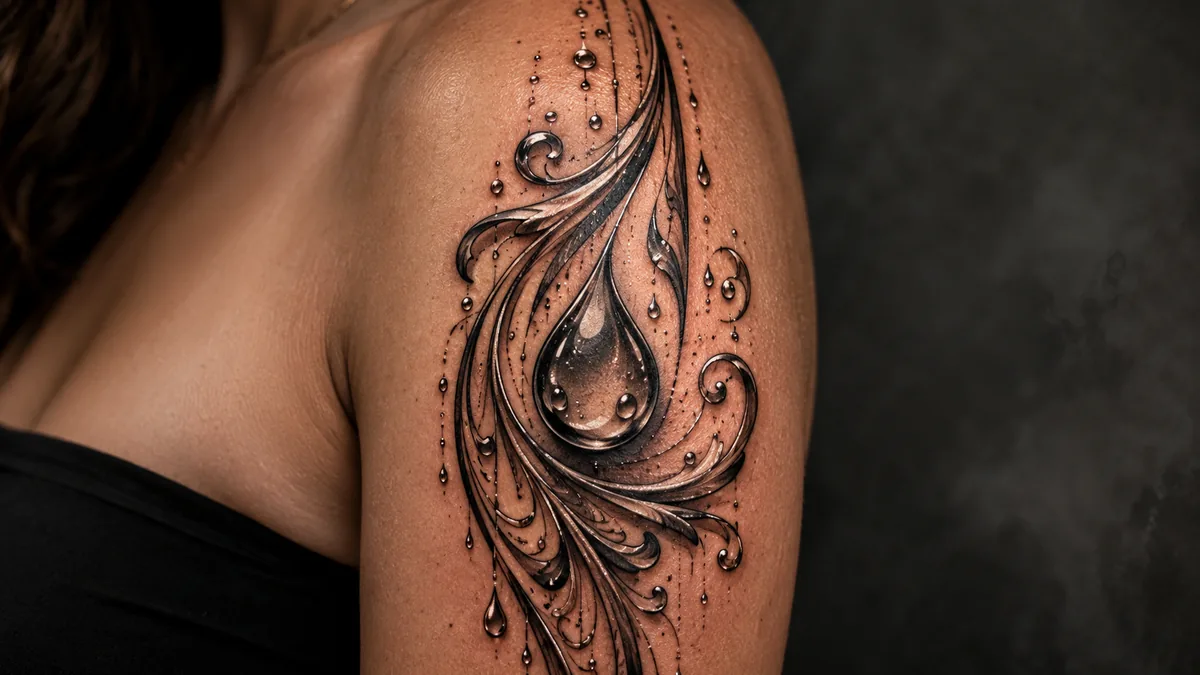
A raindrop tattoo looks simple. One small teardrop shape, maybe a few falling lines, sometimes a single droplet on the wrist or behind the ear. But people aren’t getting this because it looks cute, though it does. They’re getting it because it means something real to them.
The symbolism runs wide: cleansing, grief, resilience, emotional release, the start of something new. Rain washes things away. It feeds what grows. Depending on the design and the person wearing it, a raindrop tattoo can be about loss, rebirth, hope, or just an honest reminder that storms pass. Let’s get into what this tattoo actually means.
Core Symbolism: What a Raindrop Tattoo Means
The most universal reading is renewal and cleansing. Rain clears the air, ends droughts, resets the ground. People get raindrop tattoos to mark the end of a hard chapter, a fresh start after a breakdown, a relationship, a bad year. It’s a hopeful symbol even when the subject is pain.
The second major meaning is emotional release. Tears and raindrops share the same shape for a reason. A lot of clients come in wanting this piece after a period of grief or depression they pushed through. The raindrop becomes a quiet acknowledgment of what they carried, without being as on-the-nose as a crying face or a broken heart. It carries weight without screaming it.
The Teardrop vs. the Raindrop: An Important Distinction
One drop can mean a tear, a storm survived, or the rain that made something grow.
Here’s something you need to be straight about before you sit down. A teardrop tattoo on the face, specifically under the eye, has a long-documented association with prison culture in the United States. Depending on region, it has been used to signify a lost loved one, time served, or in some contexts, violence. That meaning is real and still recognized in many communities.
A raindrop tattoo placed elsewhere on the body, say the wrist, finger, collarbone, or shoulder, carries none of that baggage. Context is everything. Placement changes the reading entirely. If you want a teardrop under your eye, go in with your eyes open about that cultural weight. Anywhere else on the body, the raindrop reads as the personal, emotional symbol most people intend.
Cultural and Historical Background
Rain has been sacred across cultures for thousands of years. In Indigenous American traditions, rain symbols appear in pottery, textiles, and body art as prayers for fertility and harvest. In Hindu iconography, rain is associated with Indra, the god of storms and abundance. Water as a purifying and life-giving force shows up in nearly every major spiritual tradition on the planet.
Modern raindrop tattoos don’t usually claim a specific cultural lineage, and that’s fine. They draw on a broadly shared human understanding of what rain means, something most people feel in their gut without needing a textbook. That said, if you have a specific cultural tie you want to honor, talk to your artist about incorporating traditional motifs or linework from that tradition into the design rather than pulling generic imagery.
Popular Design Variations and Styles
Fine line single droplet is the most common request. Clean, minimal, usually small. Works well in black and grey or with a touch of blue. Whip shading inside the drop gives it dimension and that glassy, liquid feel without overcomplicating the design. Some artists add a small reflection highlight in white ink, though white ink fades faster and may not hold long-term on all skin tones.
Other popular takes include falling rain lines, clusters of drops at different sizes, raindrops on a leaf or flower, and geometric drops with clean faceted edges. Some people incorporate waves or a storm cloud above. Watercolor-style raindrops are eye-catching fresh off the machine, but the loose edges tend to blur and soften within a few years. Bold will hold. If longevity matters to you, a crisp black and grey or fully saturated traditional-style drop is going to age better than a pastel watercolor splash.
Color vs. Black and Grey
Black and grey is the workhorse here. A well-executed B&G raindrop with soft whip shading reads clean from across the room and heals beautifully. It ages gracefully, especially in low-wear zones. The contrast stays readable for years, and the simplicity of the design means there’s nowhere for sloppy execution to hide. If your artist’s linework is crispy and their shading is smooth, this piece will look good for a long time.
Color opens up more personality. Deep navy or cerulean blue saturated solid looks bold and classic. Pale baby blue fine line is delicate and soft. Some clients go for a clear or translucent effect using just white highlights and minimal grey, which is technically demanding and depends heavily on the client’s skin tone. For darker skin tones, leaning on black ink with a strong white highlight tends to read better than relying on light blue alone.
Best Placements and How It Ages
Wrist, inner arm, collarbone, behind the ear, finger, and ankle are the top placement requests for raindrop tattoos. The small, minimal designs fit perfectly in those tight spots. Inner wrist and collarbone are sweet spots because they’re visible but not high-wear, so the lines stay sharp longer. Behind the ear can be spicy for pain, and the skin there is thin, so blowout risk goes up if the artist isn’t careful. Find someone with experience in that zone.
Fingers and hands are high-wear. The skin folds constantly, rubs against everything, and the ink breaks down faster than almost anywhere else on the body. A finger raindrop will fade and may need touch-ups within a year or two. That’s not a dealbreaker for everyone, but go in knowing it. Ankle tattoos do fine on most people but can take a little longer to heal because of circulation. Anywhere on the torso or upper arm is going to hold for years with minimal fuss.
Who Gets This Tattoo and How to Make It Personal
Raindrop tattoos attract a wide range of people. Survivors, grievers, optimists, minimalists, people marking a move or a breakup or a year of sobriety. Also plenty of people who just love clean, simple ink and want something that means something without being loud about it. There’s no wrong reason to get one, as long as it’s yours.
To make it personal, think about scale, placement, and additions that carry your meaning. A birthdate worked into a droplet, your birth flower beneath it, a single drop falling from a larger storm cloud, or a design that mirrors a meaningful symbol from your culture. Talk to your artist about what the piece is for. A good artist isn’t just executing a shape, they’re helping you wear your story right. Give them the context and let them bring the craft.









