The iron cross is one of those tattoos that carries real weight. It’s not decorative filler. People get it because it means something, and that meaning has shifted across generations, subcultures, and countries. Understanding what you’re putting on your skin matters.
the iron cross tattoo signals strength, courage, and resilience. But the context around it, the era, the style, who’s wearing it, changes the read entirely. Here’s the honest breakdown of what this symbol actually means on skin.
The Core Meaning: Strength and Valor
The iron cross has represented military bravery since Prussia first issued it as a medal in 1813. People who get this tattoo are typically reaching for that energy, courage under pressure, endurance, not backing down. It reads as a warrior symbol, plain and simple. That resonates across a lot of walks of life, not just military.
For a huge portion of wearers, the tattoo is personal. It marks surviving something brutal, a deployment, a hard stretch, a loss. The symbol works because it’s blunt. Four arms, equal length, bold geometry. It doesn’t ask permission, and it doesn’t need explanation for the people who know.
Military Heritage and Historical Roots
Know exactly which Iron Cross you're wearing, because the world will read it whether you explain it or not.
Prussia’s Iron Cross medal dates to the Napoleonic Wars, awarded for battlefield valor regardless of rank, which was radical for the time. Germany carried the symbol through both World Wars, and that history is real and unavoidable. The Nazi regime adopted and distorted a lot of German national symbols, the iron cross included, which permanently complicated its reputation.
That association is why context matters with this tattoo. A straightforward four-arm iron cross in a classic Prussian style reads very differently from a version styled after WWII German military insignia. Tattoo artists field this question regularly. Know the difference before you sit down, and be honest with your artist about the version you want and why.
Biker Culture Adopted It Hard
Post-WWII, American bikers picked up German military surplus gear, helmets, medals, including iron cross imagery, partly as counterculture provocation and partly because they genuinely admired the outlaw-warrior aesthetic. By the 1960s, the iron cross was embedded in Harley and chopper culture. It showed up on bikes, cut vests, and skin.
For a lot of biker tattoos, the iron cross carries zero political meaning. It’s a brotherhood symbol, a nod to riding hard, living outside the mainstream. That reading is genuinely separate from WWII connotations for most people wearing it in that context. Still, be aware that the symbol reads differently to different audiences, and that’s just reality.
Action Sports and Skate Culture Claimed It Too
Von Dutch, Ed Roth, the whole kustom kulture scene of the 1950s and 60s ran the iron cross constantly. From there it filtered directly into skateboarding and surf culture. Independent Truck Company built an entire brand identity around an iron cross logo starting in the late 70s. If you grew up skating, that Indy logo is probably your first iron cross.
Tattoo clients from skate and surf backgrounds often want the iron cross as a pure lifestyle marker. No military angle, no biker angle. It’s about the culture they grew up in, the ramps, the spots, the crew. That’s a completely legitimate read, and it explains a lot of the cleaner, more graphic versions you see on younger clients today.
Design Variations and Style Choices
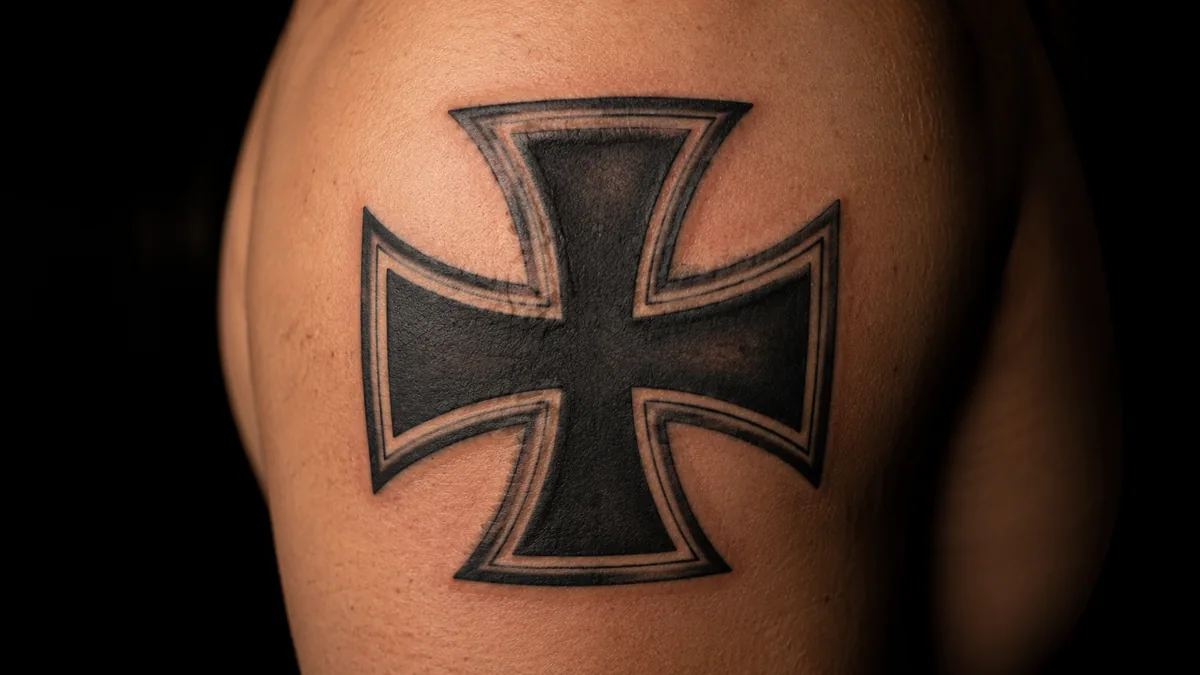
The classic Prussian iron cross has clean, flared ends and tight proportions. It holds up great as a tattoo because the geometry is strong and the negative space reads clearly. You can pack it with texture, add a banner, drop initials into the center, frame it with laurels, or keep it bone clean. Bold will hold either way because the structure is solid.
Black and grey is the most popular approach, especially for anything with a military or traditional biker lean. American traditional gives you thick outlines and flat black fill that heals crispy and reads from across the room. Neo-traditional opens up room for ornate shading and detail work. Fine line iron crosses exist but the thin strokes can blur over time, especially in high-wear zones like fingers or wrists.
Color vs. Black and Grey
Most iron cross tattoos land in straight black. The symbol is graphic and geometric, and black lets that geometry do its job. Solid black fill ages reliably, holds contrast through years of sun and healing, and stays legible decades later. For a symbol that’s supposed to read as timeless and tough, black is the obvious call.
Color versions exist and work well in the right hands. Red and black is a classic combination, high contrast, aggressive, ages decently if the red is saturated properly on the first pass. White highlight work can add dimension to grey-washed backgrounds. Avoid light, pastel colors on this one. They fight the symbol’s energy and they fade faster than you want.
Placement and How It Ages
The iron cross is a strong geometric shape, which makes it versatile for placement. Chest, upper arm, forearm, back of the hand, and calf all work well. The chest gives you room to go big and add surrounding detail. The forearm is classic for biker-style work. The hand is high-wear and the lines can migrate over time, so go bold if you put it there.
Upper arm and calf are low-wear zones where fine detail holds longer. The knee is spicy and the skin shifts a lot with movement, so simpler designs age better there. Avoid the inner elbow crease for anything with tight linework. As a general rule, bigger reads better. A two-inch iron cross will outlast a half-inch version by years before it needs a touch-up.