
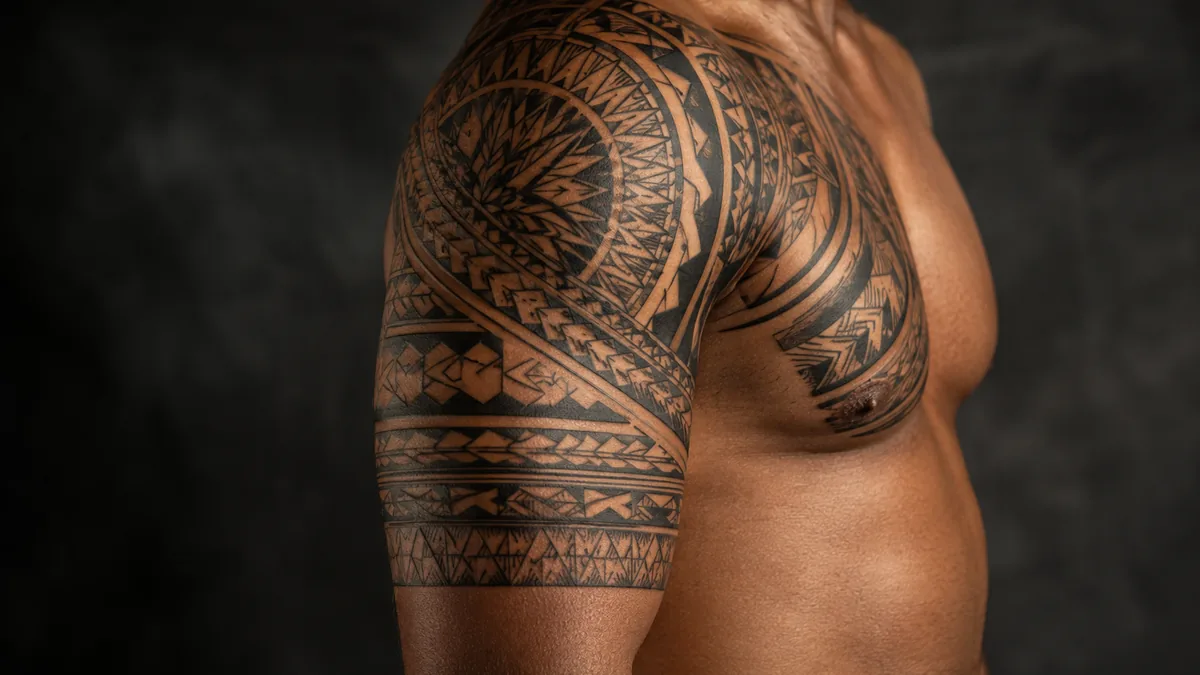
Samoan tattoos are some of the heaviest, most meaning-loaded work you’ll find in any style. Every element carries weight. The patterns aren’t decorative filler. They’re a visual record of who you are, where you come from, and what you’ve earned.
If you’re Samoan or just drawn to the aesthetic, you need to understand what these designs actually say before you commit. This isn’t tribal flash. It’s a living language, and getting it right matters.
The Core Meaning Behind Samoan Tattoos
Samoan tattoo imagery centers on identity, lineage, and social standing. The patterns communicate who a person is within their community, their family connections, their role, and their status. A traditional pe’a, the full body tattoo worn by men, is essentially a biography written in geometric form. Each motif answers a question about the wearer.
Protection is another major theme. Certain symbols are placed specifically to shield the wearer from harm, both physical and spiritual. Ocean motifs represent safe passage. Shell patterns signal prosperity. Spearheads read as strength and warrior readiness. Nothing is placed randomly. Placement and form carry as much meaning as the symbol itself.
Real History: Where This Tradition Comes From
A Samoan tattoo is not worn, it is earned, witnessed, and carried for life.
Samoan tattooing, called pe’a for men and malu for women, is one of the oldest continuous tattoo traditions on the planet. The word tattoo itself likely derives from the Samoan word tatau. Practiced for over two thousand years, this tradition survived colonization and Christian missionary pressure that wiped out similar practices across Polynesia.
The art is passed down through master tattoo artists called tufuga ta tatau. These artists train for years under a master, and the knowledge is guarded carefully within certain families. Traditional tools are made from boar tusk and bone, tapped by hand. Even today, many Samoans seek out a tufuga rather than a modern tattoo machine, because the process itself carries cultural weight.
Common Motifs and What They Actually Symbolize
Spearhead patterns represent the warrior spirit, courage, and protection. Ocean wave fills communicate the sea’s power and the idea of navigating through life. Turtle shells symbolize longevity, health, and family. Gecko motifs carry supernatural meaning, often representing a spirit guardian. Centipede bands indicate rank and respect in traditional compositions.
Enata, human figures common across Polynesian styles, appear in Samoan work to represent ancestors or community members. Inverted figures can signify defeat of an enemy. Shells represent wealth and abundance. Context always shapes meaning, and a skilled tufuga positions motifs according to the individual’s actual story. No element is filler.
Pe’a and Malu: The Two Traditional Forms
The pe’a is the traditional male tattoo. It runs from the waist to just below the knees, covering the entire area in dense geometric pattern. Receiving a pe’a is a significant cultural event, done in stages over multiple sessions. A man who stops midway is considered to have brought shame on his family. Completing it is an act of endurance and commitment.
The malu is the female equivalent. It covers the thighs and reads as lighter and more delicate in execution, though no less meaningful. The malu symbolizes a woman’s connection to family, her community role, and her femininity within Samoan culture. Both forms are traditionally applied by a tufuga using hand tools. Getting either without cultural ties is a decision worth thinking hard about.
Modern Style Variations in Contemporary Studios
Outside traditional hand-tap work, Samoan motifs get interpreted in several ways in contemporary studios. Some artists execute them with a rotary machine in bold black, keeping the geometry tight and solid. Others blend Samoan elements with Polynesian styles from Maori, Hawaiian, or Marquesan traditions. That’s technically a fusion, and being honest about that upfront helps your artist make better composition choices.
Fine line interpretations of Samoan motifs exist but age poorly. These designs are built for bold. Thin lines in heavy geometric work tend to blur and lose definition as the skin moves and time passes. A well-executed Samoan piece with solid black fill reads from across the room at forty years old. Whip shading can add dimension around key motifs, but the foundation has to be dense and committed.
Best Placements and How the Work Holds
Traditional Samoan work was designed for specific body zones, and that logic holds up anatomically. The thigh, calf, and upper arm are ideal. These areas have stable skin, minimal friction from clothing, and age predictably. The ribcage and inner bicep are spicier but hold well if the work is executed clean. Hands and feet are high-wear zones. Expect more touchup frequency there.
Bold Samoan geometry heals nice on larger flat surfaces. The back, chest, and shoulder-to-sleeve areas are natural fits because the scale of the design matches the canvas. Avoid cramming full patterns into small areas. The geometric structure loses its readability when compressed. Give the work room to breathe, keep lines solid and consistent, and this style will hold cleaner than most for decades.
Color vs. Black and How to Make It Personal
Traditional Samoan tattooing is entirely black. No color, no Western-style shading gradients. Authenticity in this style means committing to solid black fill. Color versions exist in contemporary studios, but they read as a personal interpretation rather than a cultural tattoo. Black and grey with subtle wash shading around motif borders can add depth without breaking the visual language.
If you don’t have Samoan heritage, focus on the symbolism that resonates honestly with you. Strength, protection, family, navigating hardship. Work with an artist who respects the tradition and can help you select motifs that fit your actual story. Build something that draws from the visual language while representing your own lineage, your values, and the life you’ve actually lived.









