
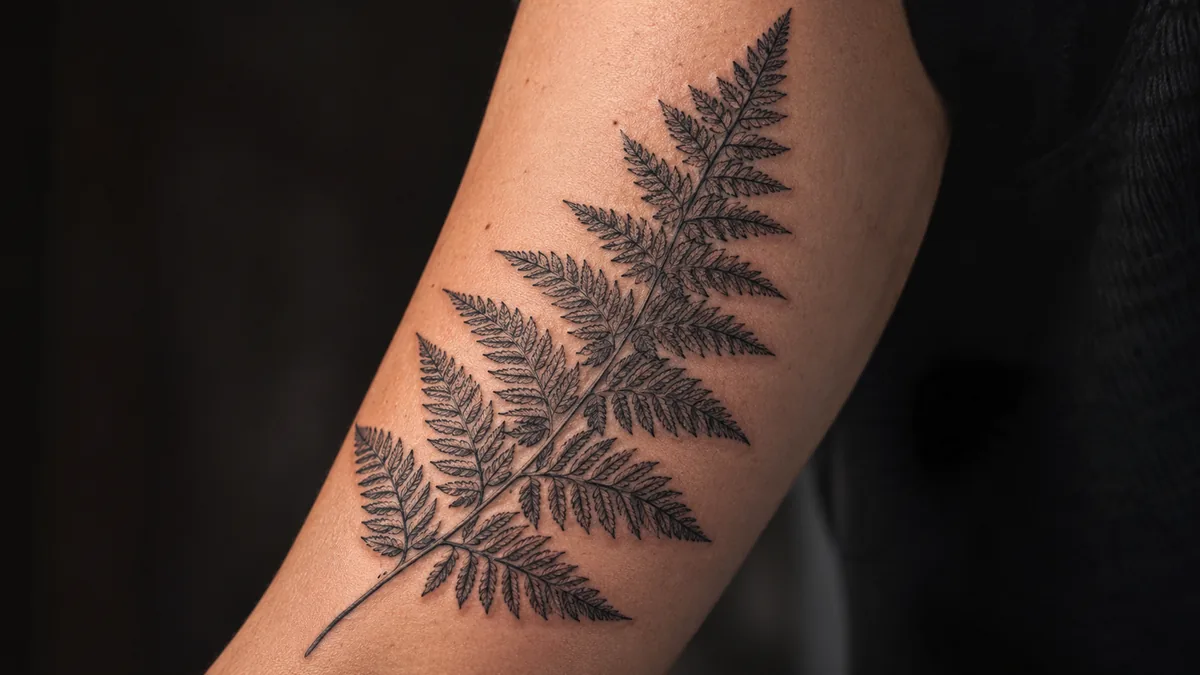
Fern tattoos hit different because they carry real weight without screaming for attention. The fern is quiet, persistent, and everywhere nature refuses to quit. People are drawn to it for a reason.
The symbolism runs deep across cultures, and the design options are wide open. Whether you want a tight botanical piece or a full sleeve filler, ferns deliver. Here’s what they actually mean and how to get one done right.
Core Meaning: Resilience and New Beginnings
Ferns are one of the oldest plants on earth, predating most flowering plants by hundreds of millions of years. They survived mass extinctions and kept growing. That backstory isn’t lost on people who get fern tattoos. The number one meaning attached to ferns is resilience, specifically the kind that doesn’t need an audience. Quiet survival. Steady growth under pressure.
New beginnings land just as strong. Fern fronds emerge tightly coiled, what botanists call a fiddlehead, and unfurl slowly. That unrolling shape reads visually as potential becoming reality. A lot of people get fern tattoos at turning points: after a rough stretch, a move, a loss, a fresh start. The image does the talking without being heavy-handed about it.
Growth, Hidden Strength, and Humility
The fiddlehead doesn't know where it's going, it just keeps uncurling.
Ferns thrive in shade. They don’t need direct sunlight to flourish, which sets them apart from most plants. That detail matters to a lot of clients who identify with doing the work quietly, without recognition. If you’re the person who holds things together from the background, the fern gets it. It’s a symbol of strength that doesn’t rely on visibility to exist.
Humility comes with that territory. The fern isn’t flashy. It doesn’t bloom or fruit. It just grows, spreads, and endures. For people who value character over performance, that reads as honest. The hidden strength angle also connects to the idea that real depth isn’t always obvious at first glance, same way ferns look simple until you study the structure of each frond up close.
Cultural and Historical Background
In Maori culture, the silver fern, native to New Zealand, is a major national symbol. It represents strength, stubborn resilience, and pride in identity. You’ll see it on sports jerseys and flags, and you’ll see it tattooed by New Zealanders as a direct cultural marker. If you have Maori heritage or a real connection to New Zealand, this carries weight. If you don’t, just know the context and wear it with awareness.
In Victorian-era England, ferns sparked a craze called pteridomania. People collected them obsessively, pressed them, and used fern imagery across art and craft. The Victorians assigned ferns meanings of fascination, magic, and sincerity in their floriography, the language of plants. Japanese culture also connects ferns to family and hope for future generations, tied to their use in ceremonial decoration. These aren’t invented meanings. They’re documented across multiple traditions.
Popular Design Variations and Styles
Fine line ferns are everywhere right now, and for good reason. A single frond rendered with clean, precise linework reads elegant and versatile. Botanical illustration style, detailed veining, accurate leaf shapes, it works beautifully on forearms, ankles, and ribs. The detail level is high, which means you need a tattooist who’s solid with fine line work. Ask to see healed photos, not just fresh ones.
On the bolder end, neo-traditional ferns with thicker outlines and saturated greens give you something that reads from across the room and holds up over decades. Blackwork fern clusters used as filler in larger compositions are a staple in the industry. The symmetrical spiral of a fiddlehead lends itself well to ornamental and geometric approaches too. Watercolor washes over fern linework can look crispy when done right, but they fade faster than solid black work, so factor that into your decision.
Color vs. Black and Grey
Black and grey ferns are the most common choice, and they’re timeless. A clean black and grey botanical fern heals nice, stays legible for years, and looks good on most skin tones. Whip shading on the fronds creates texture and depth without muddying the piece. If your tattooist is confident with a smooth grey wash, you’re getting something that’ll still look solid in fifteen years.
Color ferns open up range. Deep forest greens, muted sage tones, and earthy yellows can make a fern piece look genuinely alive. Saturated color holds well in low-wear zones, less well on hands, fingers, or feet where friction is constant. If you want color, go with a tattooist experienced in botanical color work. Avoid heavy black outlines around color if you want that soft natural look. The two approaches read completely differently, so pick based on your existing ink and your aesthetic, not just what’s trending.
Best Placements and How Ferns Age
Forearms, upper arms, and shoulder blades are prime real estate for fern tattoos. The elongated frond shape flows naturally along the length of an arm or down the spine. Spine ferns are a popular placement but they’re spicy, so go in knowing that. Ribs are another common spot, same deal on pain. Thighs give you more canvas and hurt less. Ankles and wrists work for single delicate fronds, but high-wear zones mean faster fade, especially on fine line work.
Ferns age well when they’re done bold enough. Fine line ferns are beautiful fresh, but ultra-thin lines can blur over time, especially if they’re packed too close together. If blowout happens in a tight fine line piece, it looks messy fast. Talk to your artist about line weight. A little thicker than you think you need is usually the right call for longevity. Keep it out of direct sun during healing and use sunscreen long-term if it’s in an exposed spot.
Who Gets Fern Tattoos and How to Make It Yours
Fern tattoos attract a wide range of people, but a few threads are common. Nature lovers, hikers, people with a Pacific Northwest connection, New Zealanders, folks going through major life transitions, and people who value quiet strength over loud proclamation. They’re popular across genders with no particular skew. The symbolism is universal enough that anyone can own it without explanation.
Making it personal comes down to specifics. Choose a fern species that means something. Boston fern, maidenhair, sword fern, silver fern, each has a different visual character. Add a companion element that’s personal: a moth, a moon phase, a specific flower, initials worked into the composition. Keep the fern as the anchor and build around it intentionally. Tell your artist what the piece needs to say and let the design serve that, not the other way around.









