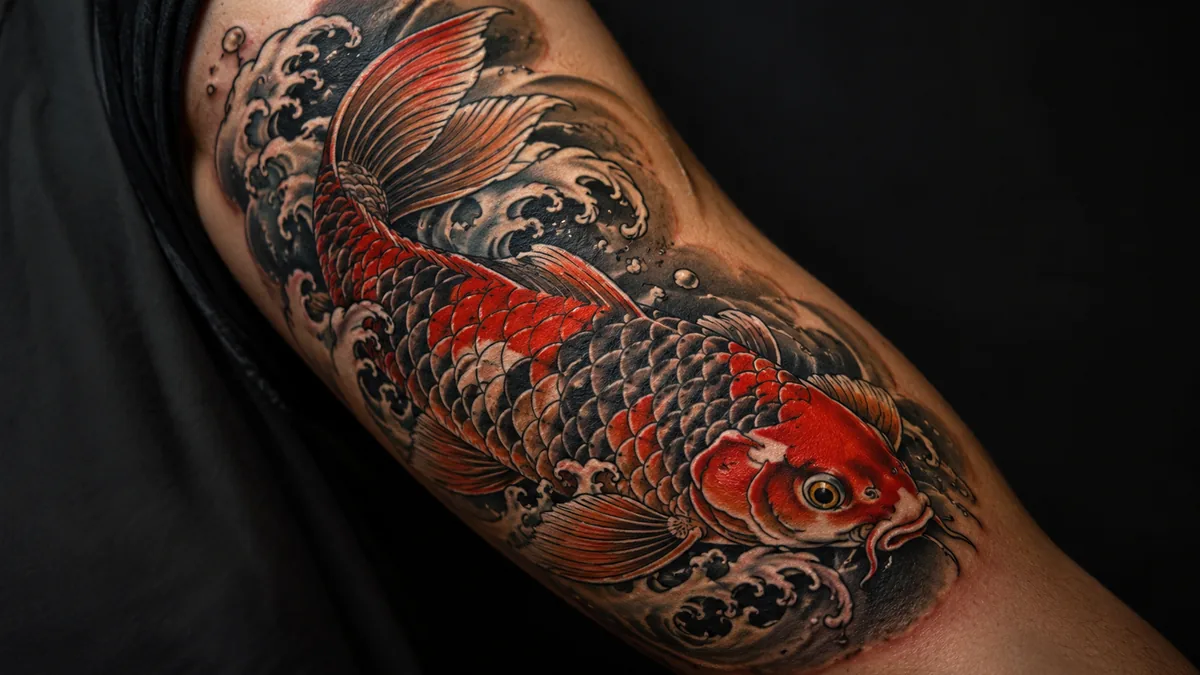
Koi carp tattoos are one of the most requested designs in any solid shop. And for good reason. The imagery is powerful, the symbolism runs deep, and the subject matter translates into stunning ink whether you go full traditional Japanese, neo-trad, or clean black and grey.
But a lot of clients walk in knowing they want a koi without knowing exactly what it means. That’s fine. Here’s the full breakdown so you get the right fish with the right read for you.
The Core Meaning: Perseverance Above Everything Else
The number one meaning behind a koi tattoo is perseverance. Koi are known for swimming upstream against strong currents without giving up. That fight is what people are tattooing on their bodies. It represents the refusal to quit when life gets hard, the grind through obstacles, and coming out the other side stronger.
It’s also closely tied to strength, determination, and ambition. A lot of people get this piece after surviving something rough, a health battle, a rough stretch, a major life shift. The koi says: I kept moving forward. That meaning is direct, personal, and holds up over a lifetime.
Luck, Wealth, and Good Fortune
A koi swimming upstream is not struggling, it is becoming.
Beyond perseverance, koi carry strong associations with luck and prosperity. In Japanese and Chinese traditions, koi are prized ornamental fish associated with wealth and abundance. Owning koi was historically a sign of status. That energy carried directly into tattoo symbolism. A koi tattoo can be a straight-up good luck charm on your skin.
Gold and yellow koi are especially tied to wealth and financial fortune. Red and orange koi are linked to love and strong relationships. These color associations are real within the tradition and matter if you want your piece to carry a specific meaning. Your artist can help you pick the right palette to match your intent.
Japanese and Chinese Cultural Roots
The most well-known story behind the koi is a Chinese legend. A school of koi swam upstream in the Yellow River and attempted to leap the waterfall at Dragon Gate. Most gave up and turned back. The ones that made it over were transformed by the gods into dragons. That story is the direct source of the transformation and perseverance symbolism that defines koi tattoo meaning.
In Japan, koi, called nishikigoi, became deeply embedded in culture as symbols of good fortune and masculine strength. Koi flags, called koinobori, are flown on Children’s Day to wish boys strength and success. Japanese tattooing, irezumi, adopted the koi as a major motif, combining it with water, waves, lotus flowers, and dragons to build elaborate, narrative bodysuit work.
Direction Matters: Upstream vs. Downstream
This is one detail that actually carries weight in the tradition. A koi swimming upstream represents an active struggle, fighting against difficulty, still in the battle. A koi swimming downstream represents someone who has already overcome their obstacles, who has made it through. Neither is better. They just tell different stories.
Before you finalize the composition with your artist, think about where you are in your journey. Still fighting? Point that fish upstream. Made it to the other side? Let it swim down. Most clients don’t know this distinction going in, but it’s one of those details that makes the tattoo genuinely personal rather than just decorative.
Design Styles: Traditional, Neo-Trad, and Black and Grey
Traditional Japanese irezumi-style koi is the gold standard. Bold outlines, saturated reds, oranges, and blacks, dramatic scales that read from across the room. This style is built to last. Bold will hold. The linework is clean and solid, the color blocks are thick enough to stay saturated as the skin ages. Pair it with water waves, peonies, or a dragon for a full composition.
Neo-traditional koi push the color range wider and add more stylized shading and illustrative detail while keeping bold outlines. Black and grey koi are a different animal entirely. Smooth whip shade, fine linework on the scales, subtle depth. They age beautifully on most skin tones. Fine line micro koi are popular right now but they demand a skilled hand and a low-wear placement or the detail bleeds out fast.
Color Choices and What They Signal
Color in koi tattoos isn’t random decoration. Red and orange koi are the most common and are tied to love, passion, and energy. They pop hard on skin and photograph well. Black koi represent overcoming adversity. If you want a piece that specifically says you survived something dark, a black koi is a direct statement. Gold and yellow carry that wealth and good fortune meaning mentioned earlier.
White koi with red markings, the kohaku pattern, are associated with success in career and life. Blue koi are linked to calmness, masculinity, and tranquility. Pink koi are connected to femininity and relationships. These aren’t rules you have to follow, but if meaning matters to you, color is a real design tool. Discuss it with your artist before the stencil goes down.
Best Placements and How the Tattoo Ages
Koi tattoos thrive in larger format placements. The thigh, back, ribs, full sleeve, and calf all give the fish room to move and the composition space to breathe. A koi cramped into a tiny spot loses the scale detail and the dynamic flow that makes the design work. If you want something smaller, a single koi on the forearm or upper arm can still hit hard with the right framing.
Placement affects aging significantly. Inner arm, inner thigh, and ribcage are high-wear and high-friction zones. Fine line detail in those spots will blur faster. Outer thigh, calf, and upper back are lower-wear and hold detail much longer. Saturated color koi on the thigh or back can look crispy for a decade with decent aftercare and sunscreen. Avoid fine line koi on the hands, neck, or feet unless you are committed to touch-ups.
Who Gets Koi Tattoos and How to Make Yours Personal
Koi are genuinely universal. Survivors, athletes, people in recovery, entrepreneurs, martial artists, anyone who identifies with the grind and the push gets this tattoo. It’s not tied to a single subculture or identity. That broad appeal is part of why it’s been a shop staple for decades without feeling tired.
To make yours specific, lean into the details. Direction, color, the companion elements, water style, florals, a dragon overhead, all of it can be tuned to tell your exact story. Bring reference images but let your artist build the composition for your body. A koi that fits the muscle, flows with the limb, and reads as a complete scene is always stronger than a flat clip-art transfer. Talk to your artist. That conversation is where the real tattoo starts.