
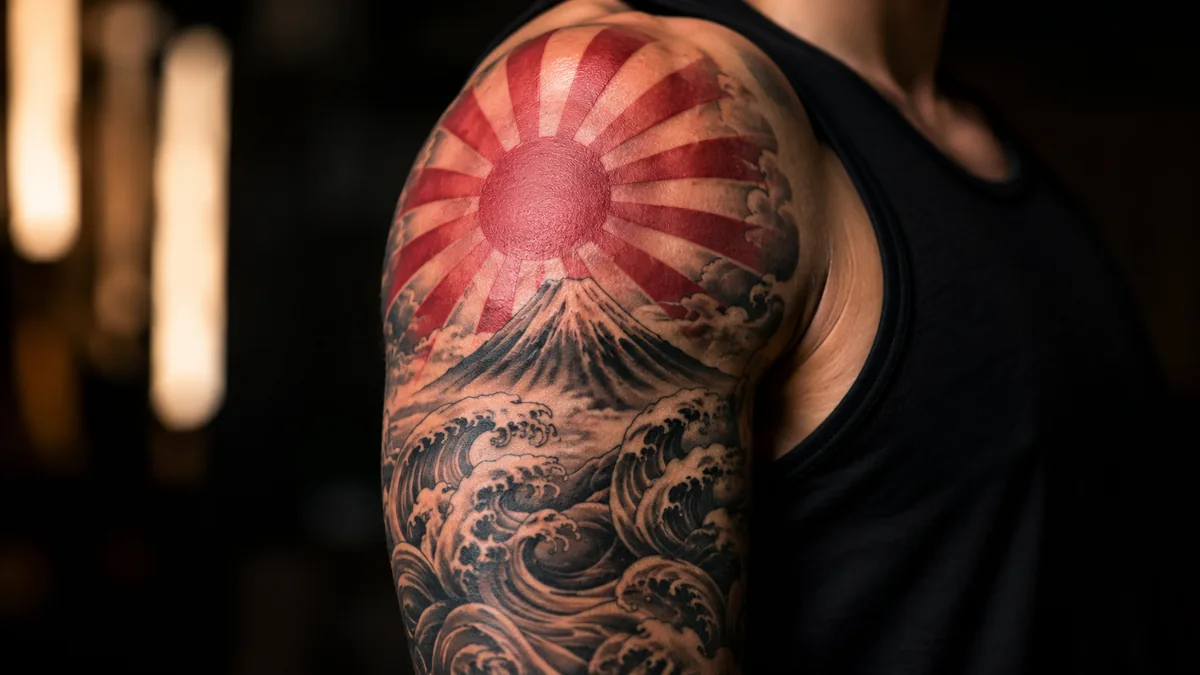
The rising sun tattoo is one of those designs that means something real. It’s not decoration for decoration’s sake. People get it to mark a turning point, a survival, a fresh start after something hard. That core idea crosses cultures and centuries, and it holds up on skin.
At its heart, this tattoo is about the sun coming up after darkness. That sounds simple, but the specifics shift depending on the style, the cultural tradition behind it, and how the wearer personalizes it. Here’s what the rising sun actually means and how to get one that lasts.
Core Symbolism: What the Rising Sun Stands For
The most universal reading is new beginnings. The sun rises every day without fail, no matter what happened the night before. That consistency hits different for someone who’s been through addiction, loss, illness, or a major life reset. It says: I’m still here, and today is different. That’s why this piece shows up so often as a milestone tattoo.
Beyond new beginnings, common meanings include hope, optimism, clarity, and the idea that darkness doesn’t last. Some people tie it to enlightenment or self-discovery. Others wear it as a daily reminder to stay present. The design works because the symbol is self-explanatory. It reads clean from across the room without needing extra elements to carry the message.
Japanese Rising Sun: Cultural and Historical Context
Every sunrise is a second chance, that's the whole point of wearing one permanently.
In Japan, the rising sun has centuries of meaning. Japan is literally called Nihon, which translates roughly to ‘origin of the sun.’ The Hinomaru, the plain red circle on white, is the national flag. In traditional Japanese tattoo culture, irezumi, the sun appears in full back pieces and sleeves, often paired with waves, koi, dragons, or peonies. It signals power, divine origin, and the natural world in balance.
There’s also the Kyokujitsu-ki, the military rising sun flag with rays radiating outward, which carries heavy historical weight tied to Imperial Japan and wartime. That specific design is controversial. If you’re not Japanese and you’re pulling that exact flag imagery, know what you’re putting on your body. Most tattoo artists will flag this. The softer radiant sun design without that exact flag format sidesteps the controversy while keeping the aesthetic.
Other Cultural Meanings Worth Knowing
Outside Japan, the rising sun appears across many traditions. In Native American symbolism, the sun is sacred, representing life, healing, and the cycle of existence. In Aztec and Mesoamerican cultures, the sun was central to cosmology, and sun imagery in tattoos from those backgrounds carries deep spiritual significance. Celtic traditions used sun motifs tied to the harvest, the seasons, and the wheel of life.
In modern Western tattoo culture, the rising sun pulls from all of these references loosely, and most wearers aren’t claiming one specific tradition. They’re using the symbol’s emotional weight. That’s valid, but if you’re specifically drawing from a culture that isn’t yours, it’s worth doing a little research so you know what you’re working with. Your artist can help you shape a design that feels right.
Design Variations and Styles
This tattoo lives in a lot of different styles. Traditional American gives you bold black outlines, saturated reds and oranges, maybe a face on the sun like the classic sailor flash. It’s chunky, graphic, bold will hold over decades. Japanese style goes for flowing rays, dynamic linework, and usually integrates into a larger composition. Neo-traditional adds detail and a painterly quality while keeping strong outlines. All three age reliably.
Fine line rising suns are popular right now, especially geometric versions with precise rays and minimal shading. They look stunning fresh but be real with yourself: fine line in high-wear areas fades and blurs faster than bold work. If you want a fine line piece, placement matters more. Blackwork and dotwork interpretations hit hard too, clean solid fills, whip shading for depth, great contrast that reads well long term.
Color vs. Black and Grey
A color rising sun, think warm oranges, yellows, reds, sometimes purple sky gradients, is visually striking and stays true to what a sunrise actually looks like. Saturated color work pops beautifully on lighter skin tones. On deeper skin tones, bold yellows can drop out and reds read better. Have this conversation with your artist honestly before you commit. A good artist will adjust the palette to work with your skin, not against it.
Black and grey rising suns are just as powerful and they age more predictably. Grey wash creates depth in the rays and sky without the color fade risk. Blackwork versions, fully filled blacks with no grey, are bold and graphic. The clean negative space in a blackwork rising sun does a lot of the work. Both approaches are solid choices, and black and grey is the safer long-game bet if you’re putting it somewhere that moves or sees sun.
Placement, Pain, and How It Ages
Placement depends on the size and style you’re going for. A large traditional or Japanese rising sun works beautifully on the upper arm, shoulder, chest, back, or thigh. These zones have enough flat real estate for the rays to breathe. Smaller designs do well on the forearm, calf, or behind the ear. The forearm is a high-wear area, gets sun, takes friction, but heals nice if you stay on it with SPF. The ribs and sternum are spicy, high pain, but the skin holds detail well.
For longevity: bold outlines and solid fills hold the longest. A rising sun with crispy lines and proper saturation will still read clearly in 20 years. Fine line geometric versions in joints or on fingers will blur faster, that’s just physics. Aftercare matters too. Keep it moisturized while it heals, stay out of the sun during healing, and once it’s healed, sunscreen is your best friend for keeping the color from washing out.
Who Gets This Tattoo and How to Make It Personal
Recovery tattoos, cancer survivor pieces, military commemorations, and breakup-to-breakthrough marks all land on this symbol regularly. It’s also common for people marking a move to a new country, a new chapter after grief, or just a commitment to showing up every day. The symbol is broad enough to hold all of that without feeling generic, especially when the design is tailored.
To make it yours, think about what you’re bringing to it. Add a date in the rays. Integrate it into a sleeve with imagery from your background. Pull a specific cultural reference if it’s genuinely part of your story. Work with an artist who understands composition, because a rising sun with poorly spaced rays or a horizon line that doesn’t sit right will bother you forever. Get a custom drawing, not a flash copy, and you’ll have something that actually says something about you.









