
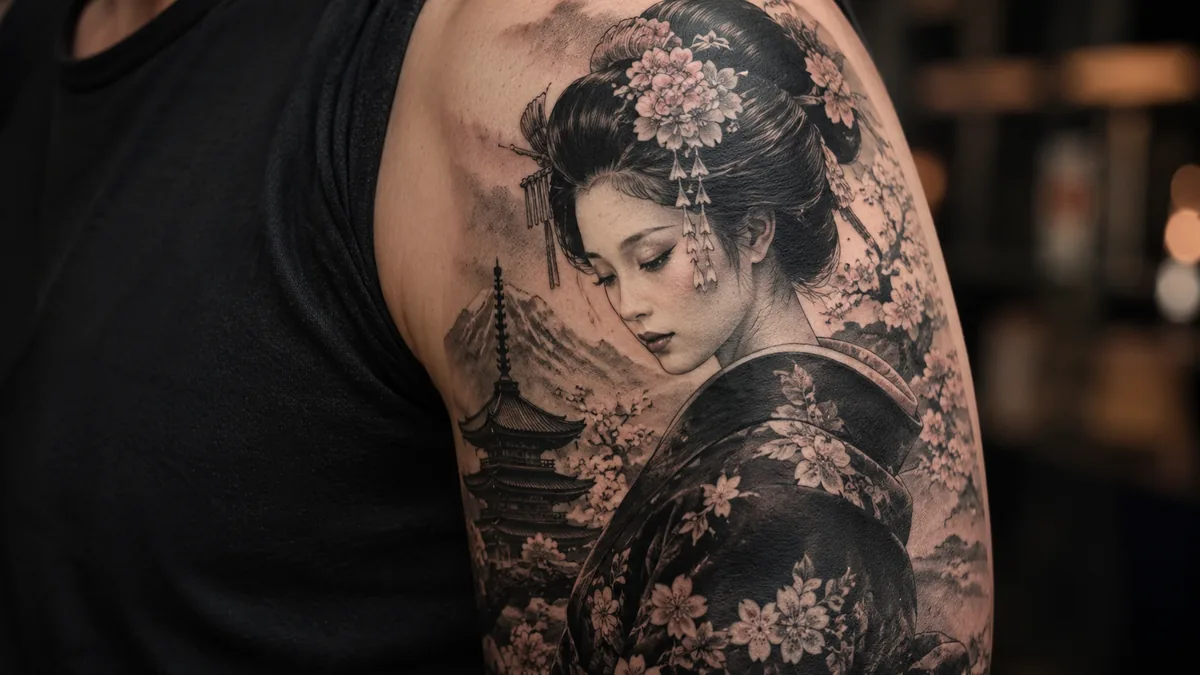
The geisha tattoo is one of the most recognizable images in Japanese-style tattooing. It carries real weight, not just visual impact. People get it for a reason, and that reason almost always comes back to the same core themes: beauty under control, inner strength behind a composed exterior, and the tension between public performance and private self.
If you’re drawn to traditional Japanese irezumi or a soft black and grey portrait, the geisha translates across styles without losing her meaning. She’s not decorative filler. She’s a statement about how a person moves through the world.
What a Geisha Tattoo Actually Means
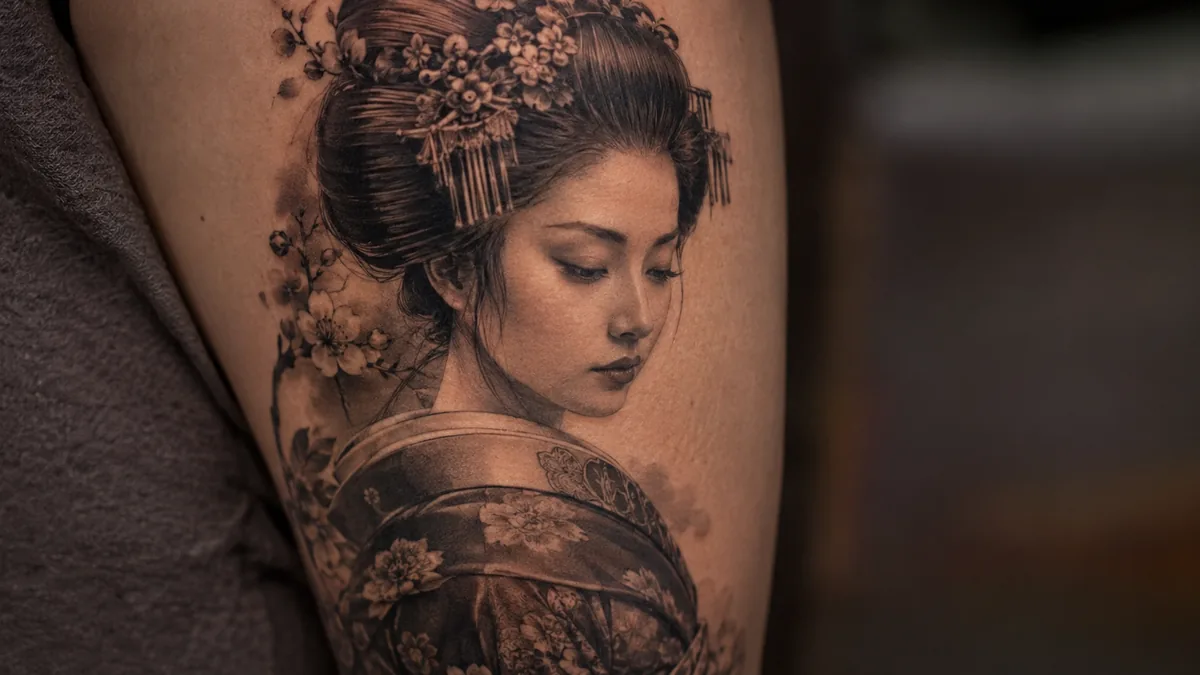
The geisha symbolizes discipline, grace, and the mastery of art through years of dedicated practice. She represents beauty that is earned, not accidental. In tattoo culture, she’s often chosen to reflect strength that doesn’t shout. The composed face, the deliberate posture, all of it communicates control. Many clients describe wanting something that honors resilience without being aggressive about it.
There’s also a mystery element. The geisha keeps things close. She reveals very little. For people who feel that they carry a lot internally but present calm to the world, this image lands hard. It’s one of those tattoos where the person wearing it knows exactly what it means to them, even if a stranger on the street only sees the surface.
The Cultural Background (and Why It Matters)
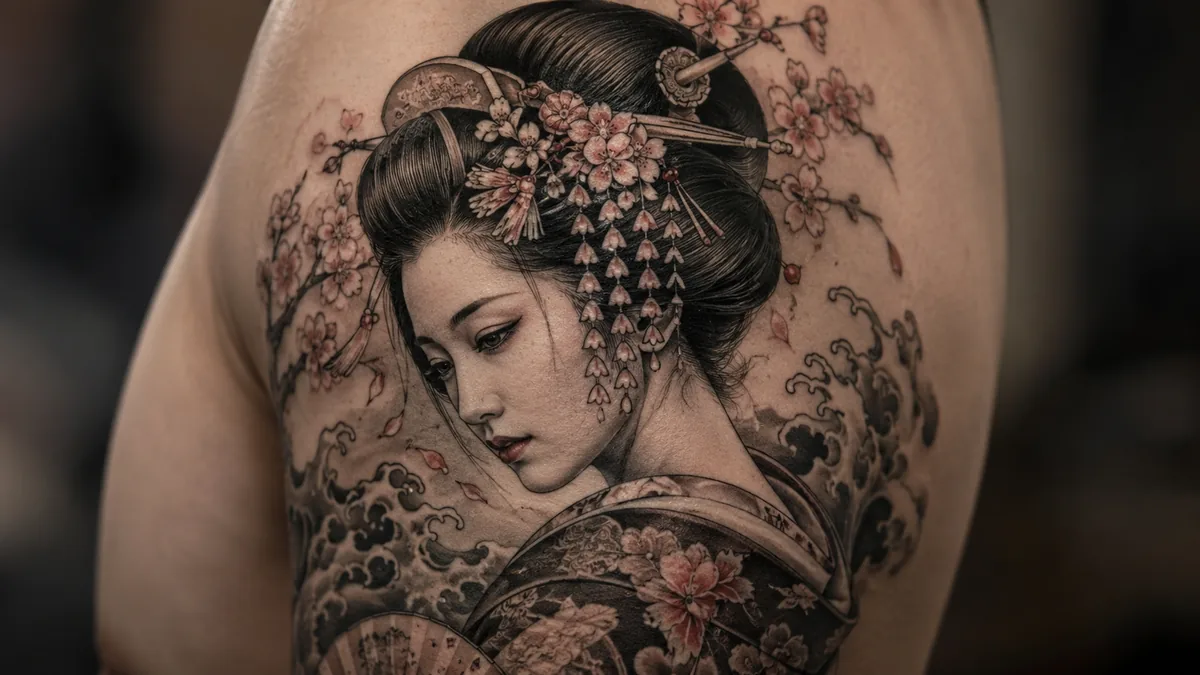
She is not waiting to be saved, she is the one holding the fan.
Geisha are traditional Japanese female entertainers trained in music, dance, conversation, and ceremony. The word breaks down to ‘gei’ meaning art, and ‘sha’ meaning person. That’s it. Artist. They were not what Western media often implied. The mischaracterization went wide after World War II and some famous novels, but the actual historical role was closer to a living expression of classical Japanese arts.
That context matters for the tattoo because it changes how you wear it. A geisha image rooted in accurate understanding carries a different energy than one borrowed from a stereotype. Most serious Japanese tattoo collectors know the distinction. If your artist knows irezumi traditions, they’ll respect that difference in how they build the composition and what supporting imagery they suggest alongside the figure.
Common Symbolic Readings in Tattoo Culture
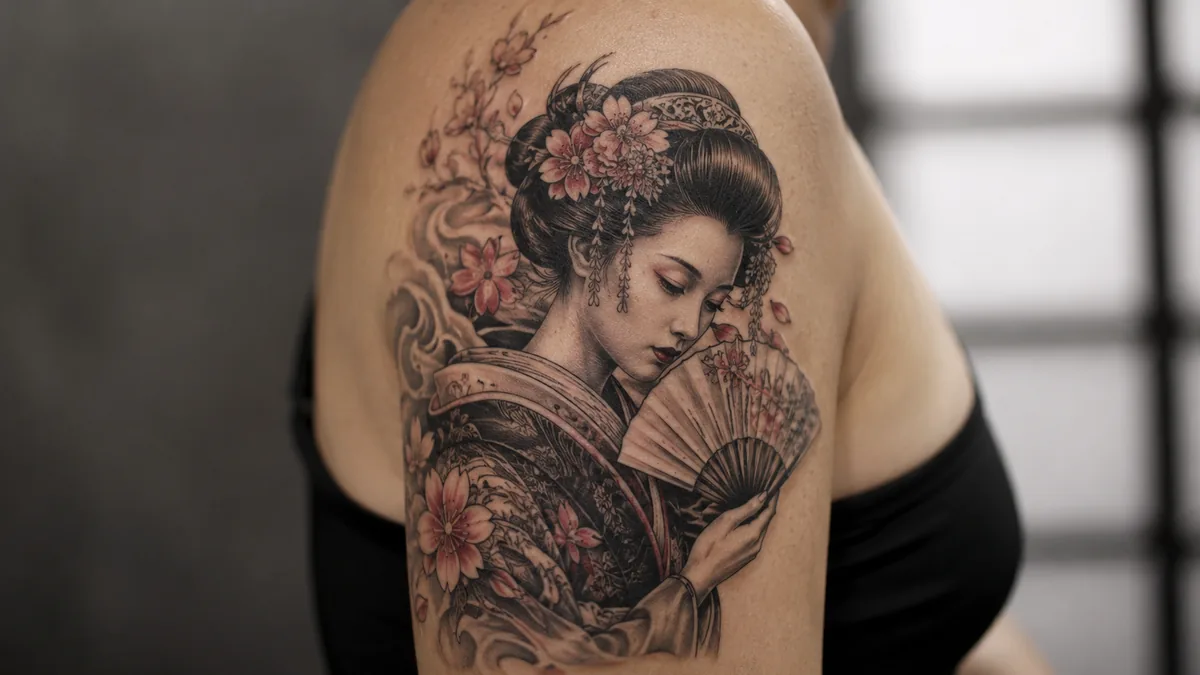
Beyond the broad meaning, specific design choices shift the symbolism. A geisha with a fan suggests discretion, the ability to conceal thoughts and emotions. A geisha with a shamisen, the three-stringed instrument, emphasizes the artistic devotion angle. Cherry blossoms around her reinforce the Japanese concept of mono no aware, the bittersweet beauty of impermanence. Everything in the image is a choice, and each element stacks meaning.
Some clients also pair her with a koi, a dragon, or chrysanthemums to expand the narrative. Others keep it clean, just the figure, and let the face carry all the weight. The face is where most of the emotional read comes from anyway. A downcast gaze reads differently than eyes that meet yours directly. Talk through that with your artist before you finalize the design.
Style Variations: Traditional, Neo-Trad, Black and Grey, Fine Line
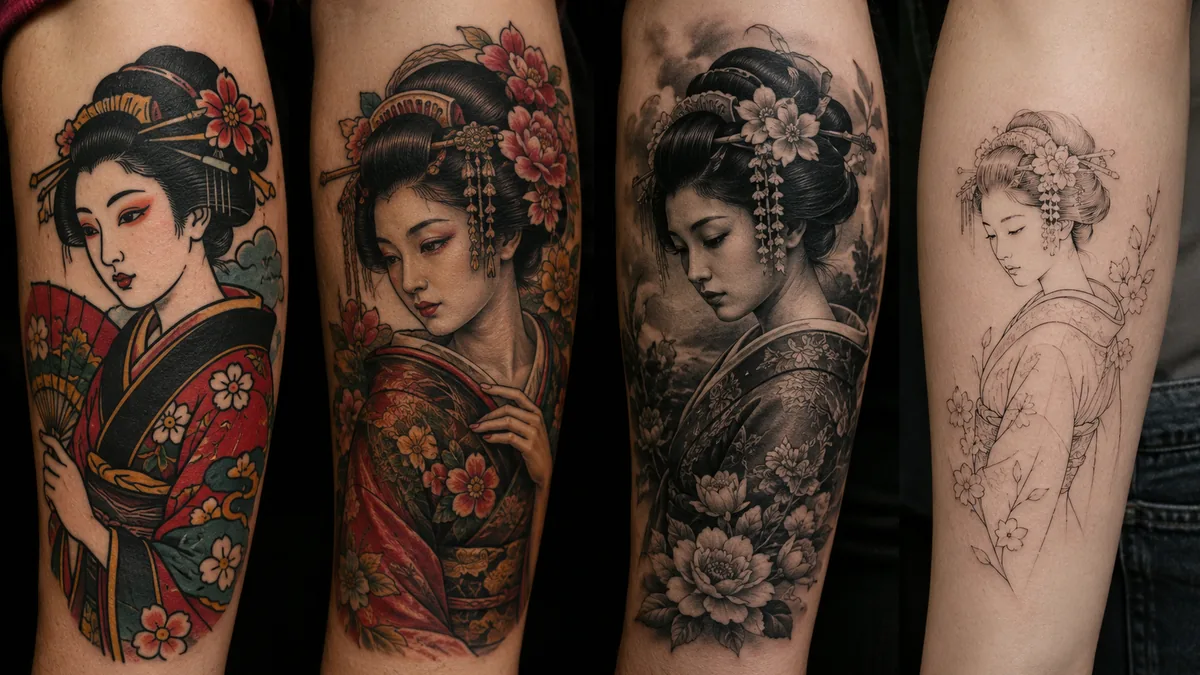
Traditional Japanese style, bold black outlines, flat saturated color, minimal shading, gives the geisha real staying power. Bold will hold. That style was built for longevity, and a geisha rendered in proper irezumi technique with solid blacks and clean color fills will still read sharp decades out. Neo-traditional takes that foundation and adds dimensional shading, richer color palettes, sometimes exaggerated proportions for visual drama. Both age well.
Black and grey is probably the most popular approach right now for standalone geisha portraits. Smooth whip shading on the kimono fabric, crispy lines on the facial features, soft gradients on skin tones. It reads quiet and sophisticated. Fine line work can produce stunning results but demands an experienced hand and a placement that won’t get wrecked by movement and friction. Fine line on a high-wear zone like an inner forearm will blur faster than the same design in black and grey with solid fills.
Color vs. Black and Grey: How Each One Ages
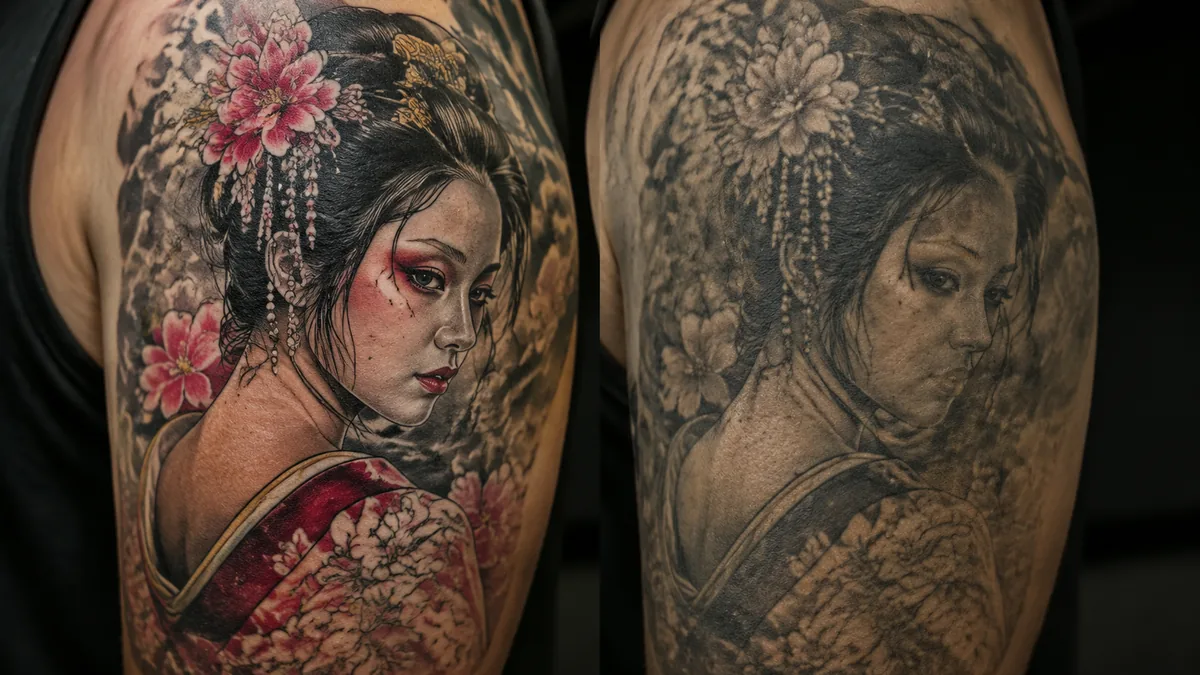
Color geisha tattoos are high-commitment. Reds, yellows, and whites in a kimono look incredible fresh out of the shop, but they need maintenance. White highlights fade and can turn cream or disappear entirely within a few years depending on skin tone and sun exposure. Reds shift over time. If you want that saturated, woodblock-print look to hold, plan on touch-ups every several years and keep the tattoo out of direct sun with SPF.
Black and grey heals more predictably on a wider range of skin tones and tends to age with more dignity. The contrast stays readable even as the softer grays settle into the skin. If you’re getting a large back piece or a sleeve where touch-ups are expensive and time-consuming, black and grey is the practical call without giving up visual power. For a smaller piece, color can absolutely be worth it if you’re committed to the upkeep.
Placement, Pain, and How the Image Holds
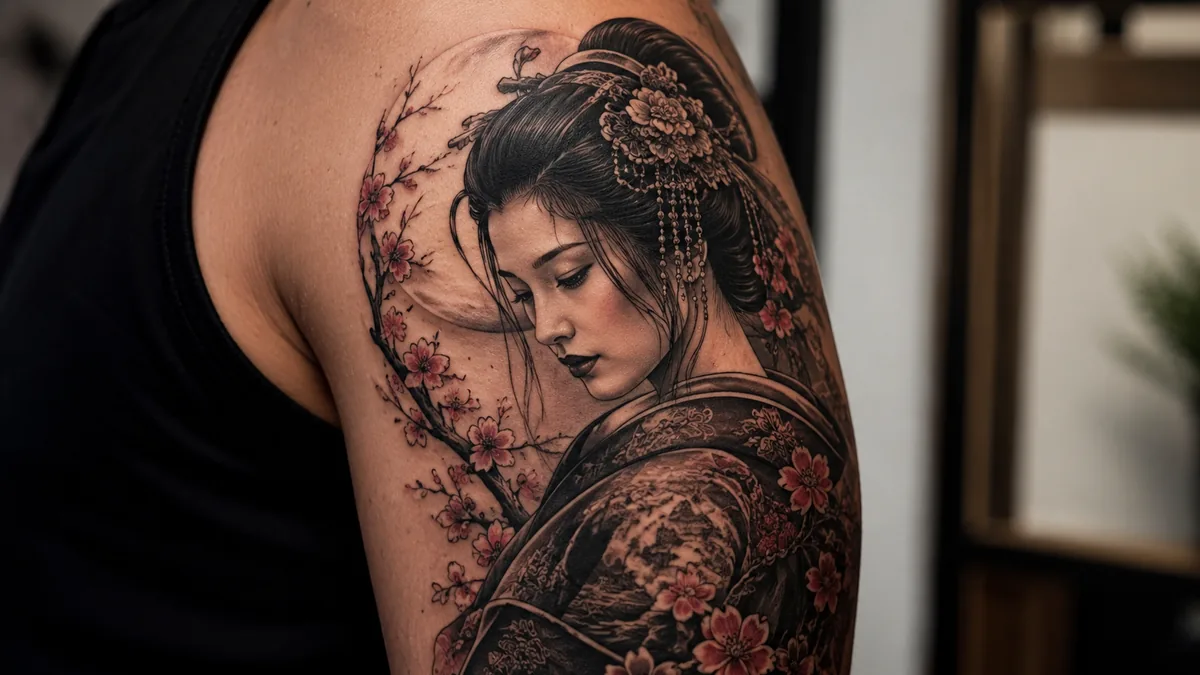
A full geisha figure with kimono, hair ornaments, and background elements needs space. The back, thigh, and upper arm are the classic placements for a reason. They give the artist room to build the composition correctly and allow the figure to breathe. A crammed geisha on a small canvas loses the elegance that makes the image work in the first place. The detail in the face alone needs real estate to stay crispy as it heals.
Pain-wise, the thigh is generally manageable. The ribs are spicy, especially as you move toward the lower ribs and spine. The back is a marathon more than a sprint, but the flat surface means cleaner, more consistent lines. Backs age well because the skin sees less daily movement than joints and extremities. Whatever placement you choose, avoid spots with constant friction from waistbands or bra straps, those areas can cause premature fading and blowout risk on fine detail work.
Who Gets This Tattoo and How to Make It Yours
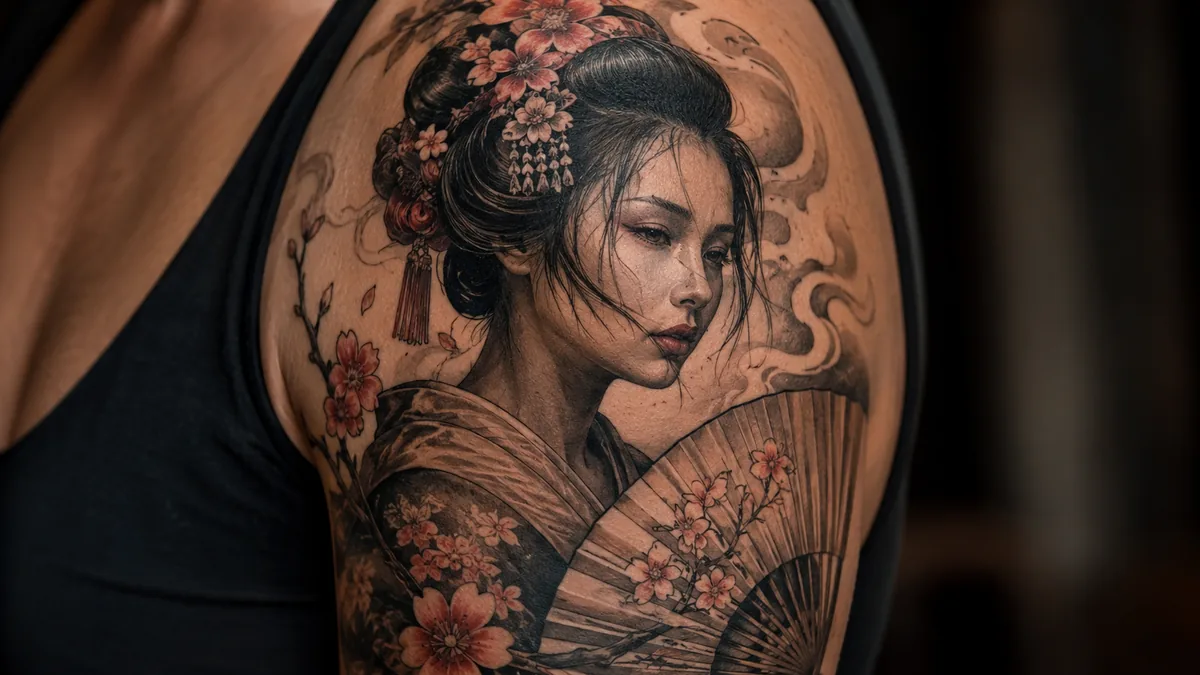
Geisha tattoos cross a wide range of clients. People with deep respect for Japanese art and culture get them as part of larger traditional sleeves or body suits. People with no Japanese heritage get them because the symbolism speaks directly to something they’ve lived. Women often describe it as reclaiming the idea of performing strength gracefully under pressure. Men often connect to the discipline and artistry angle.
To make it personal, think about what specific element of the meaning you’re anchoring to. Then build the design around that. If it’s resilience, a storm background or cracked porcelain detail in the face can underscore that. If it’s artistry, the shamisen or calligraphy integration reinforces it. Bring reference images, not to copy exactly, but to show your artist the emotional tone you’re after. A good artist will take that and build something that actually fits your body and holds its meaning for life.









