
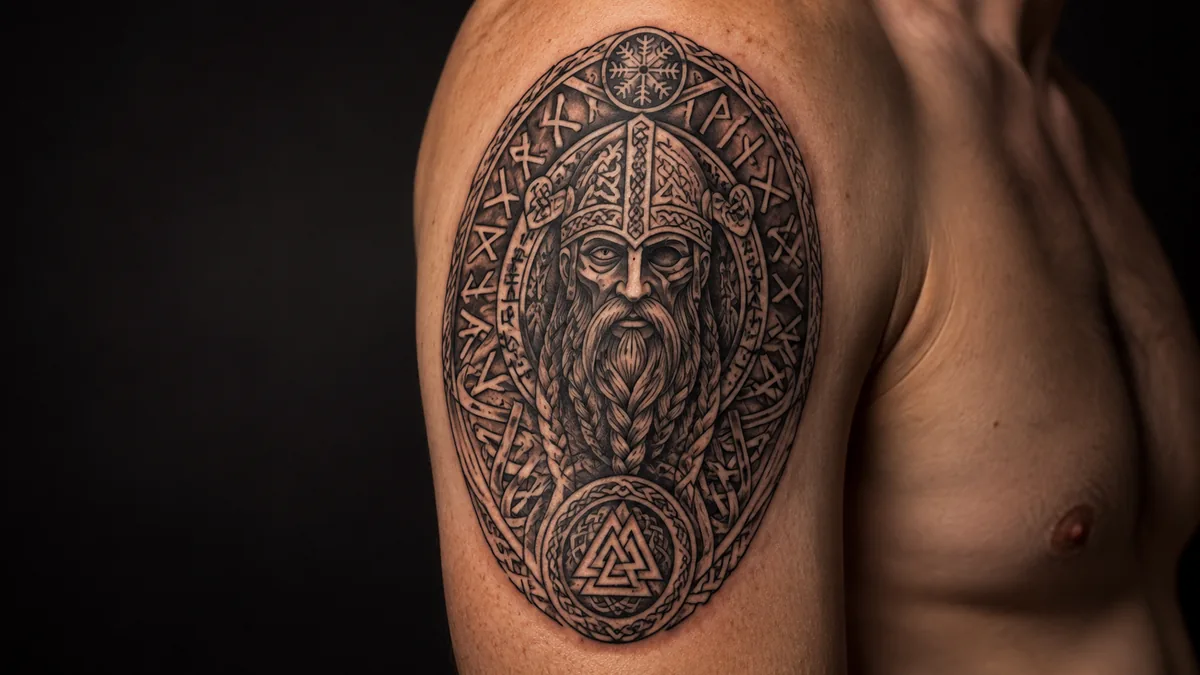
Nordic tattoos pull from one of the richest mythological traditions on earth. We’re talking Norse gods, Viking-age symbols, runic alphabets, and a worldview built around fate, honor, and the acceptance of death. These aren’t decorative squiggles. Every symbol has a story, and most of those stories go back over a thousand years.
People get Nordic tattoos for a lot of reasons: heritage, spirituality, a connection to warrior philosophy, or just because the imagery is bold and reads clean on skin. Whatever your reason, knowing what you’re putting on your body matters. Here’s the real breakdown.
Core Symbolism of Nordic Tattoos
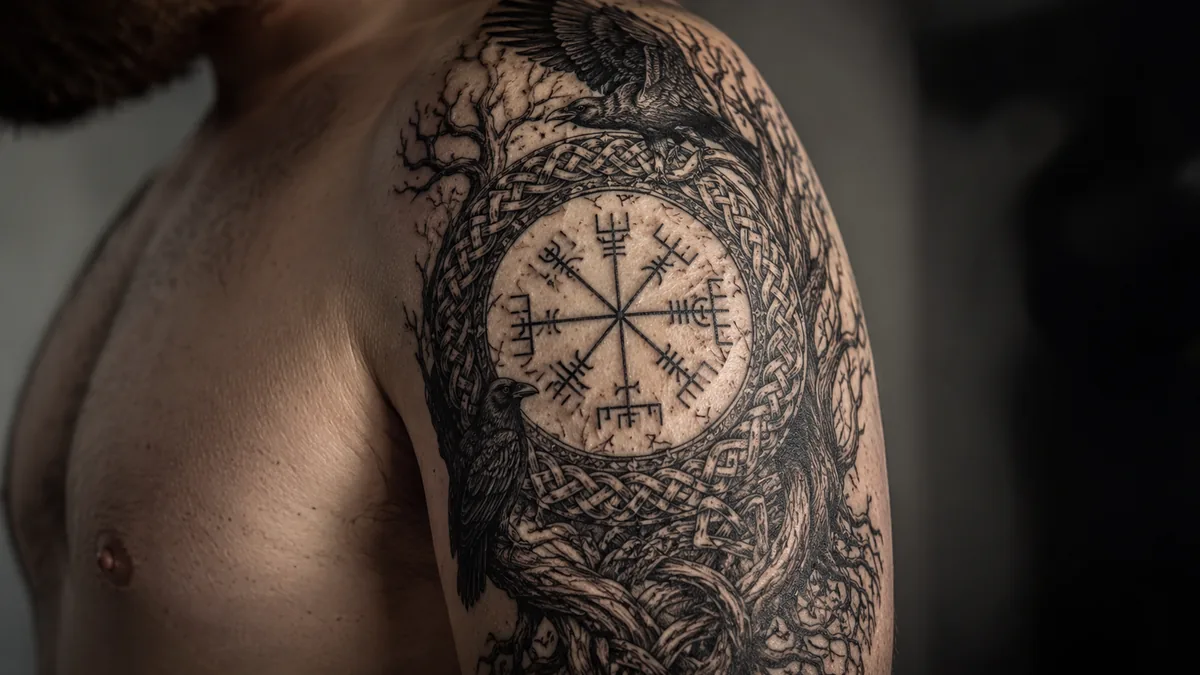
At the heart of Nordic tattoo symbolism is the Norse worldview called the cosmology of the Vikings. Life, death, fate, and chaos all coexist. The Norns spin your fate. Odin sacrifices his eye for wisdom. Thor protects mankind with his hammer. These aren’t feel-good myths. They’re about accepting a hard world and meeting it straight on. That ethos, raw strength paired with earned wisdom, is what people are tattooing when they go Nordic.
Common themes across Nordic tattoos include protection, strength, wisdom, connection to ancestors, and spiritual guidance. The symbols aren’t interchangeable. A Valknut means something different from an Aegishjalmur. A single rune means something different from a full runic script. If you want your piece to actually say what you think it says, learn the specific symbol before you sit in the chair.
The Most Recognized Nordic Symbols and What They Mean
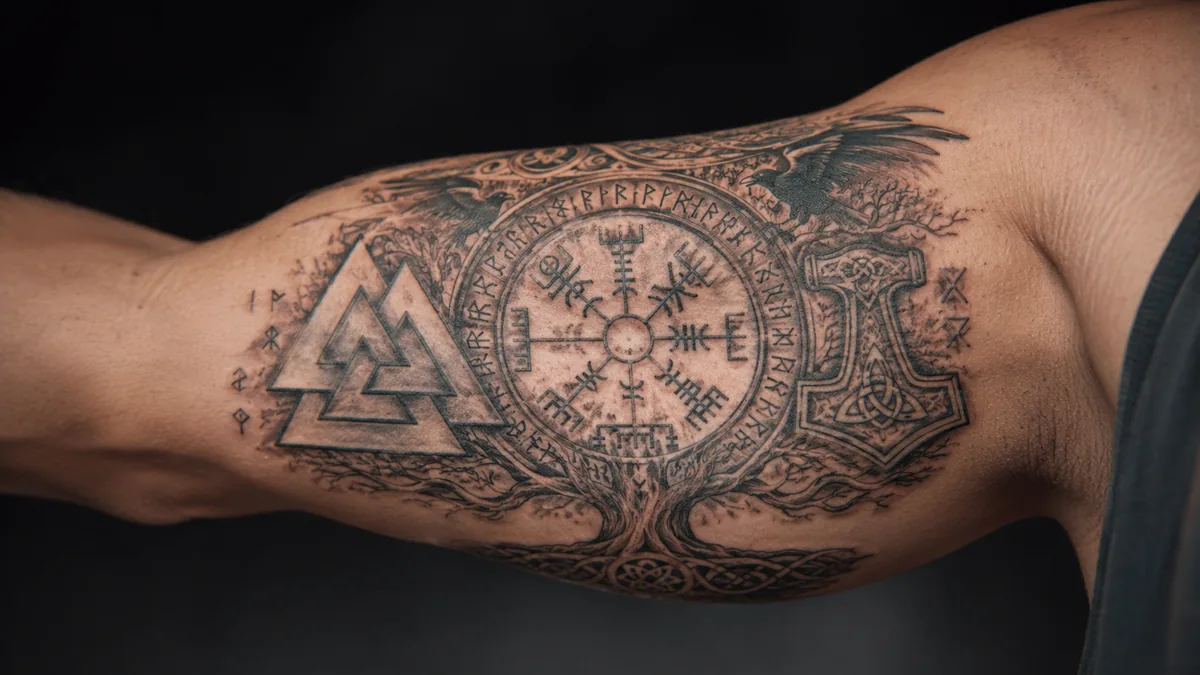
Every Norse symbol is a sentence, make sure you know what yours says.
Mjolnir, Thor’s hammer, is probably the most requested Nordic symbol in any shop. It stands for protection, strength, and consecration. Vikings wore Mjolnir pendants as a direct counter to the Christian cross, so there’s a layer of identity politics baked into that history. The Valknut, three interlocked triangles, is tied to Odin and the world of the dead. Many historians read it as a symbol of a warrior’s willingness to die in battle. It’s a heavy piece, and clients should know that going in.
The Vegvisir, often called the Viking compass, is meant to guide the bearer through storms and rough seas. It’s a sigil from a 17th-century Icelandic grimoire, not strictly Viking-age, but it’s genuinely rooted in Norse magical tradition. The Aegishjalmur, or Helm of Awe, is an eight-armed symbol meant to induce fear in enemies and protect the wearer in combat. Yggdrasil, the world tree, represents connection between all worlds, the roots of existence. Each one carries weight.
Runes as Tattoos: Meaning and Responsibility
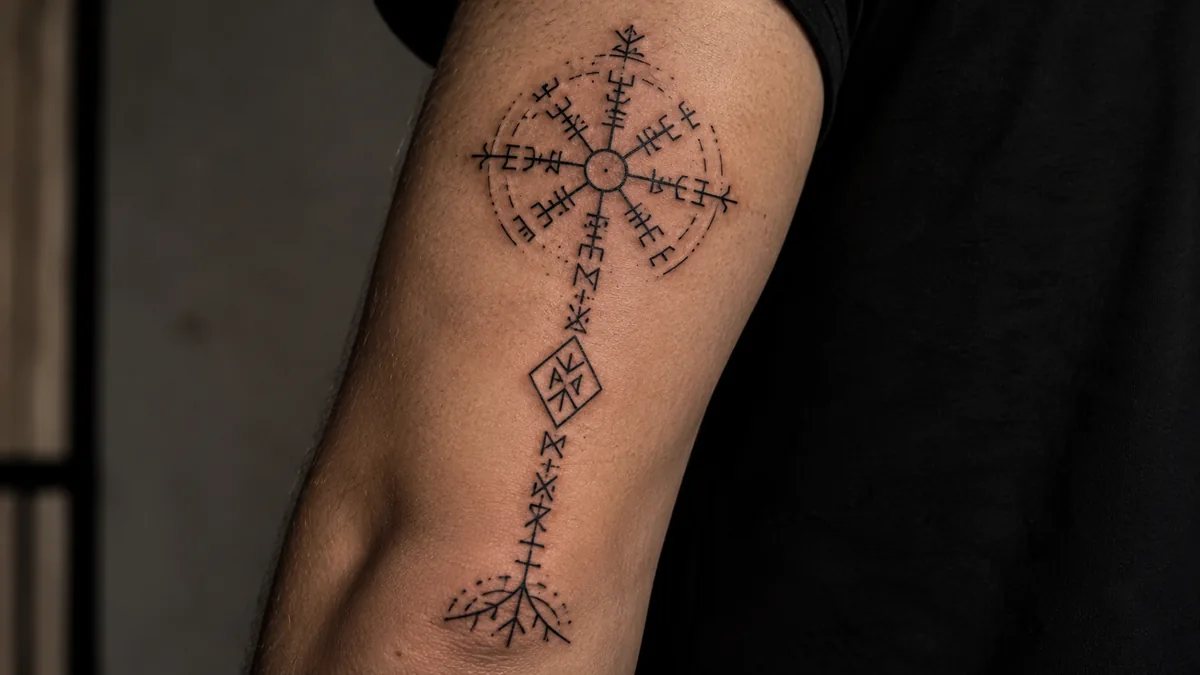
Runic alphabets, primarily the Elder Futhark, are a popular choice for Nordic tattoos. Each rune is both a letter and a concept. Tiwaz, shaped like an arrow pointing up, represents justice, sacrifice, and the god Tyr. Algiz looks like an upward hand and means protection. Othala, a diamond with legs, relates to heritage, home, and ancestral property. Getting a single rune tattooed is a serious statement. It’s not just decoration. You’re wearing a word with deep roots.
Be straight with your client or yourself: rune misuse is a real concern. Some runes have been co-opted by white nationalist groups, particularly the Othala and Tiwaz runes in certain configurations. A good tattoo artist will flag this. If you want a rune for its genuine Norse meaning, go for it, but know your symbol’s current cultural baggage. Research the specific rune, check its connotations today, and be intentional about how it’s rendered and placed.
Historical and Cultural Background
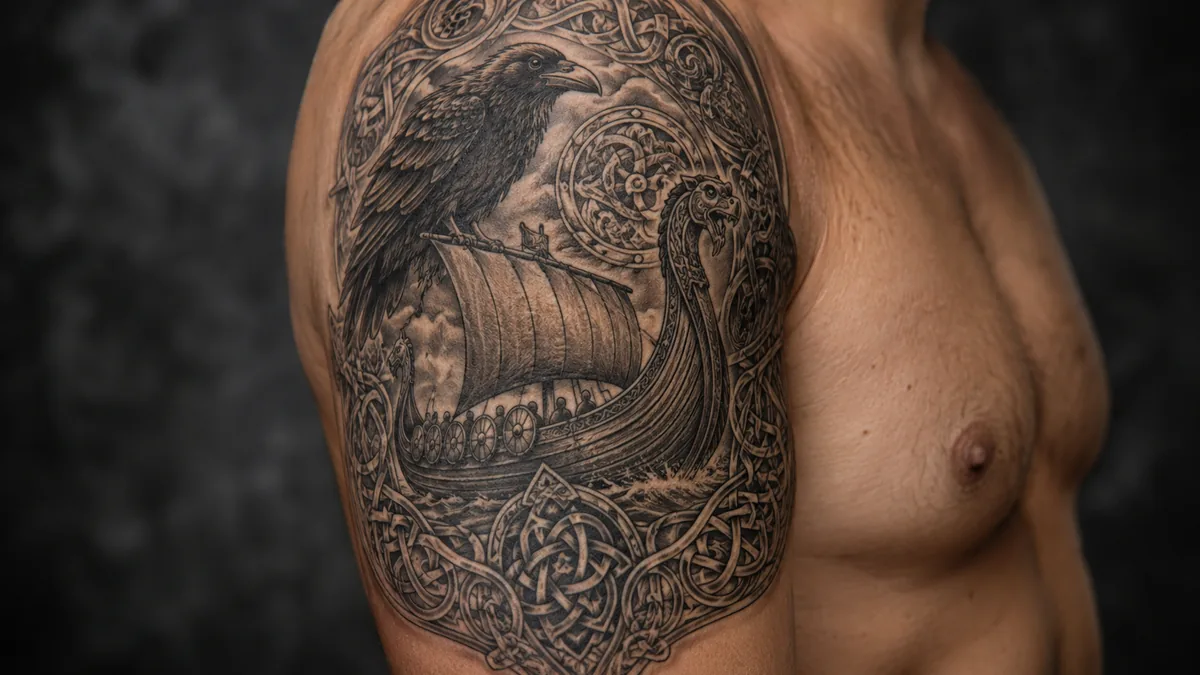
The Norse people, active roughly from 793 to 1066 CE across Scandinavia, Greenland, Iceland, and parts of the British Isles, left behind a rich visual culture. Direct evidence of Viking tattooing is limited, though an Arab traveler named Ahmad ibn Fadlan described Rus Vikings in 922 CE as covered in dark tree-to-neck markings. The symbols we associate with Nordic tattoos, runes, god imagery, serpents, knotwork, come primarily from runestones, jewelry, carvings, and manuscripts.
Modern Nordic tattoo style draws heavily on these archaeological and literary sources, including the Eddas, which are the primary texts recording Norse mythology. The imagery is genuine. The gods, cosmology, and symbols are all from the historical record. What you’re getting tattooed has real roots. That’s actually rare in tattoo culture and it’s a big part of why Nordic work resonates so deeply with so many people.
Style Variations: From Blackwork to Illustrative
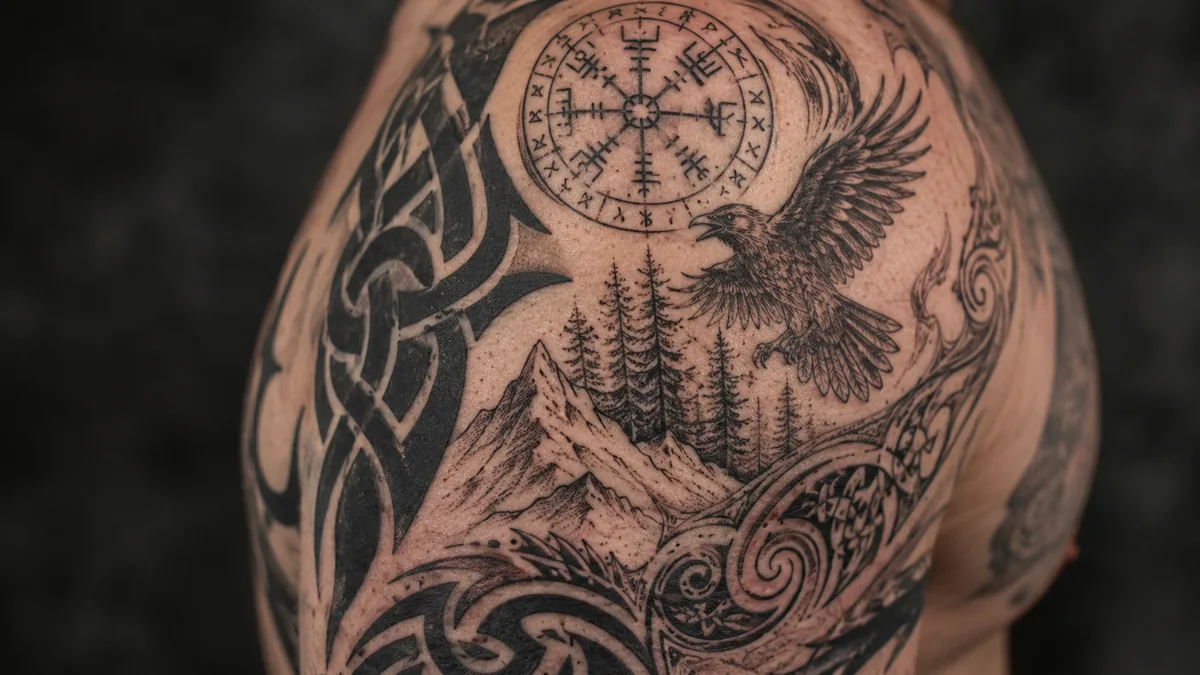
Nordic tattoos live comfortably across multiple styles. Traditional blackwork is the most natural fit. Bold outlines, solid black fill, minimal shading. It reads from across the room, heals clean, and holds up over decades. Geometric Nordic work is also popular, especially for runes and symmetrical symbols like the Vegvisir or Aegishjalmur. Crispy lines, precise angles, zero room for blowout. These need a steady hand and a client who stays still.
Black and grey realism works beautifully for narrative pieces. Think Odin flanked by his ravens Huginn and Muninn, or a detailed Yggdrasil with roots and branches filling a chest panel or back piece. Fine line Nordic is trending right now. It looks stunning fresh but can be tricky long-term, especially in high-wear zones. If you go fine line, keep the symbol itself bold enough to hold its shape. A faded rune five years out isn’t serving anyone.
Best Placements and How Nordic Tattoos Age
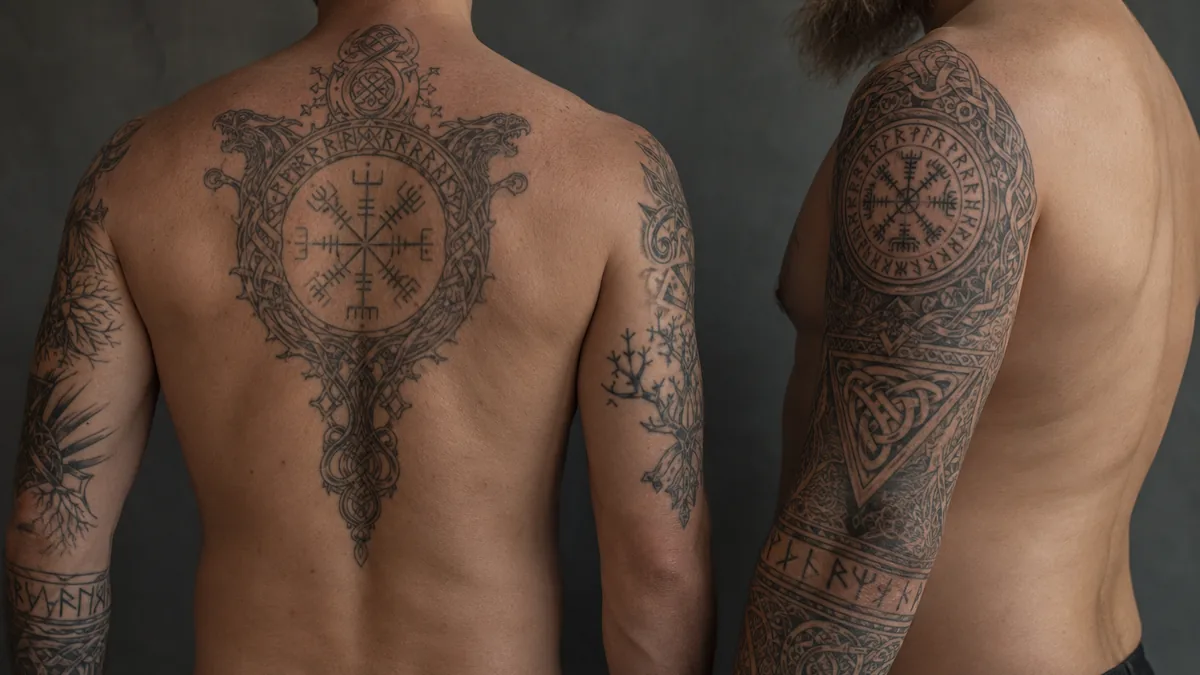
Nordic symbols tend to be geometric and bold, which makes placement more forgiving than script or portrait work. The upper arm, forearm, shoulder, chest, and upper back are all solid real estate. Larger pieces like Yggdrasil or full back Viking scenes thrive with space. Smaller runes or single symbols work well on the wrist, behind the ear, or on the collarbone. Just know your zones. Hands and fingers are high-wear, they’ll fade and blur faster. The ribs are spicy but give you a flat canvas that reads clean.
Nordic tattoos age well when done right. Blackwork bold fills, thick geometric lines, and solid knotwork are basically built for longevity. Bold will hold, that’s not a slogan, it’s physics. The ink has mass. Overworked fine line pieces in soft tissue areas, inner bicep, back of knee, ankle, are where you’ll see degradation. Touch-ups on Nordic geometric work are usually straightforward since the design logic is clear and clean. Pick an artist who specializes in this style and your piece will still be sharp in twenty years.
Who Gets Nordic Tattoos and How to Make Them Personal
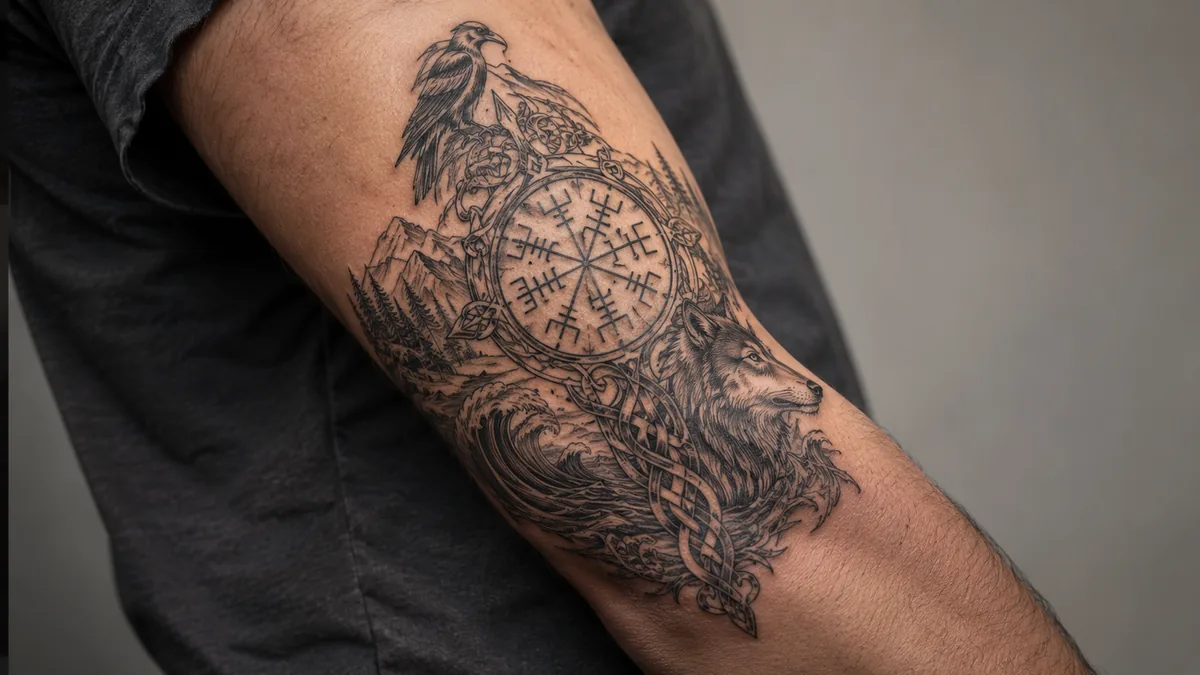
Scandinavian heritage is the most common entry point. A lot of clients want to honor Norwegian, Swedish, Danish, or Icelandic roots with a piece that’s more meaningful than a flag. That’s completely valid and there’s a deep well of imagery to pull from. Others come from a Norse paganism or Asatru spiritual practice and want their symbols to function as devotional marks. And plenty of people are just drawn to the aesthetic, the bold geometry, the mythology, the sense of earned toughness.
To make a Nordic tattoo yours, get specific. Don’t just say you want something Viking. Pick a deity whose attributes mirror something real in your life. Pick a rune that reflects a value you actually carry. Connect the imagery to your story. If your family’s from Norway, research your region’s specific runestone tradition. If you’re drawn to Odin for his pursuit of knowledge at great personal cost, sit with that and build a piece around it. That specificity is what separates a meaningful tattoo from a cool-looking placeholder.









